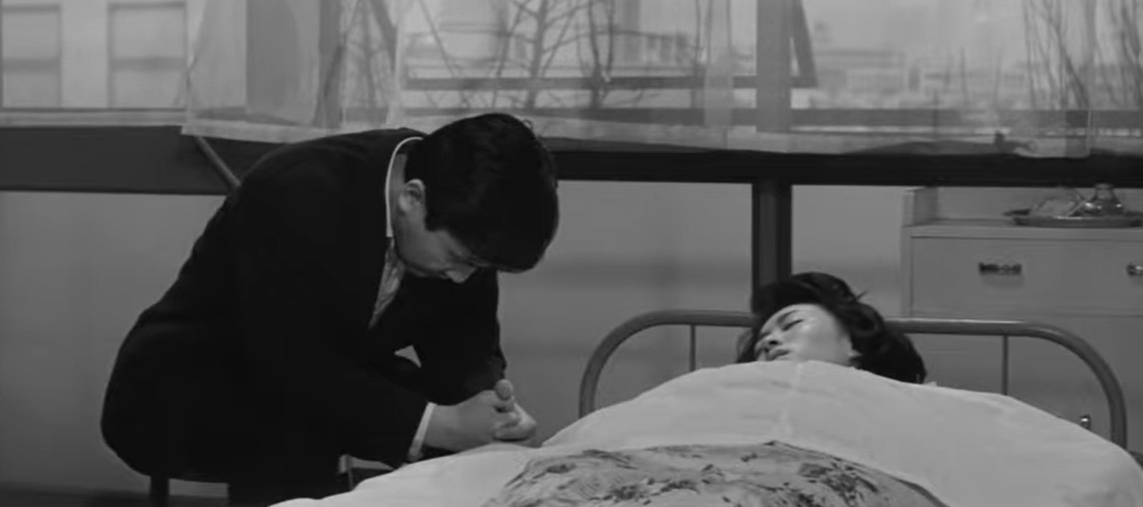
The audience know they have sat down to watch a film called Cruel Tale of Bushido. They are expecting samurai and swordplay, and yet the opening shot is a contemporary ambulance haring through the streets of Shibuya. A heartbroken girl has tried to kill herself with sleeping pills, and an entirely modern melodrama plays out as her fiancé rushes to the hospital to check on her.
Are we in the right cinema? The grief-stricken Susumu Iikura ponders what possible shift in their relationship could have led to her decision to end it all. And he realises that it was the change in his own character, brought about by his reading of old family records in the aftermath of his mother’s death.
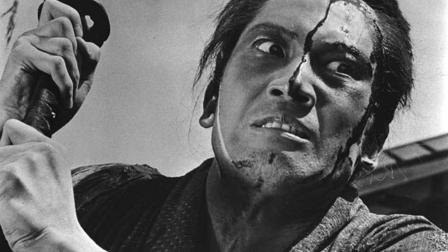
Cruel Tale of Bushido is relentless in its take-down of late samurai culture, dismissing 250 years of the Shogunate as a wrong-turn in history, a terrible torment for the Japanese people, a nightmare from which they should be grateful to have awoken. Except we begin at the end, with the nightmare still enduring.
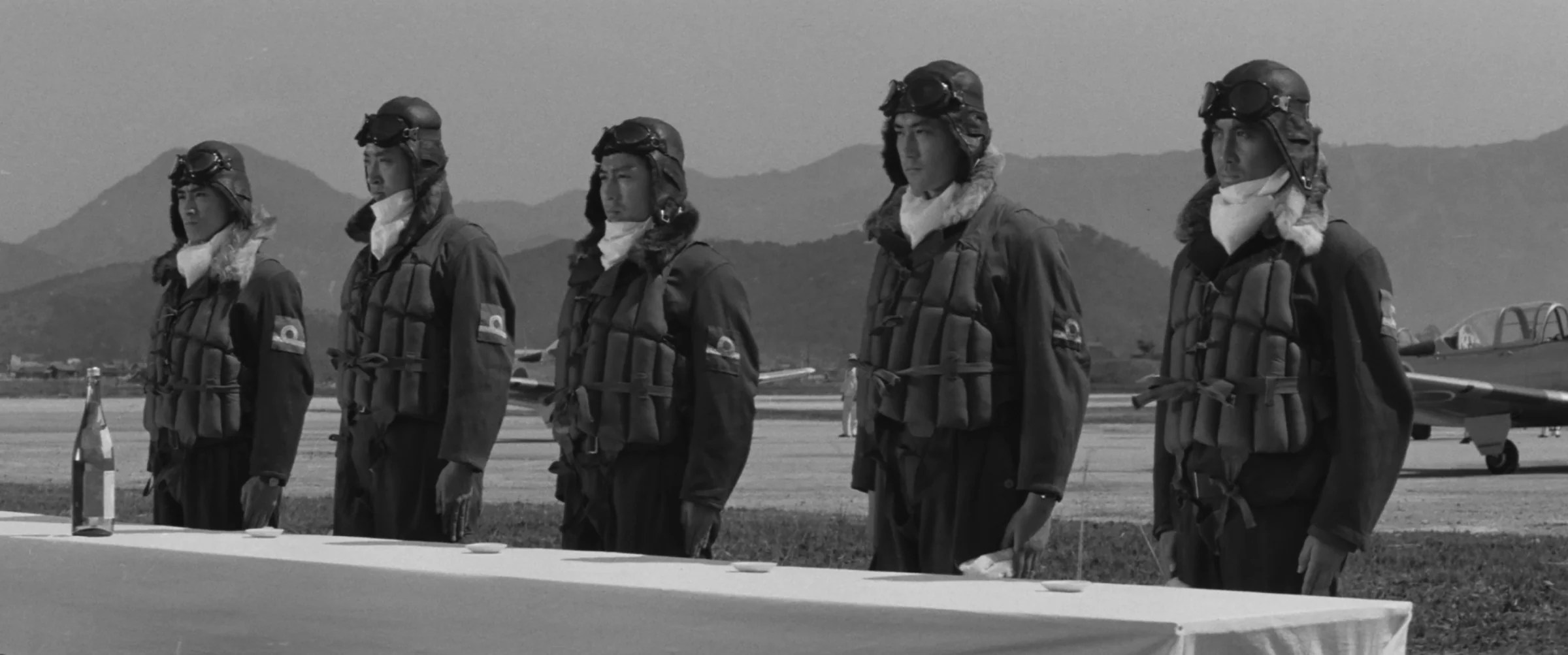
Director Tadashi Imai is here to remind us that the past is so poisonous that it can even unsettle those who were not there to see it, dropping in at seven points in a dozen or so generations of the family history.
“Tony’s magnum opus, sufficient to occupy him in various incarnations for the rest of his life, was Dominator the movie. Depending on whom he was talking to at the time, it was either a jokey fannish effort ‘made for the cost of a fridge’ or a computer-generated masterpiece on the cusp of attaining world-class funding.”
I am a little bit amazed to discover that it has been ten years since Tony Luke died. Resharing my obituary of him in his memory.
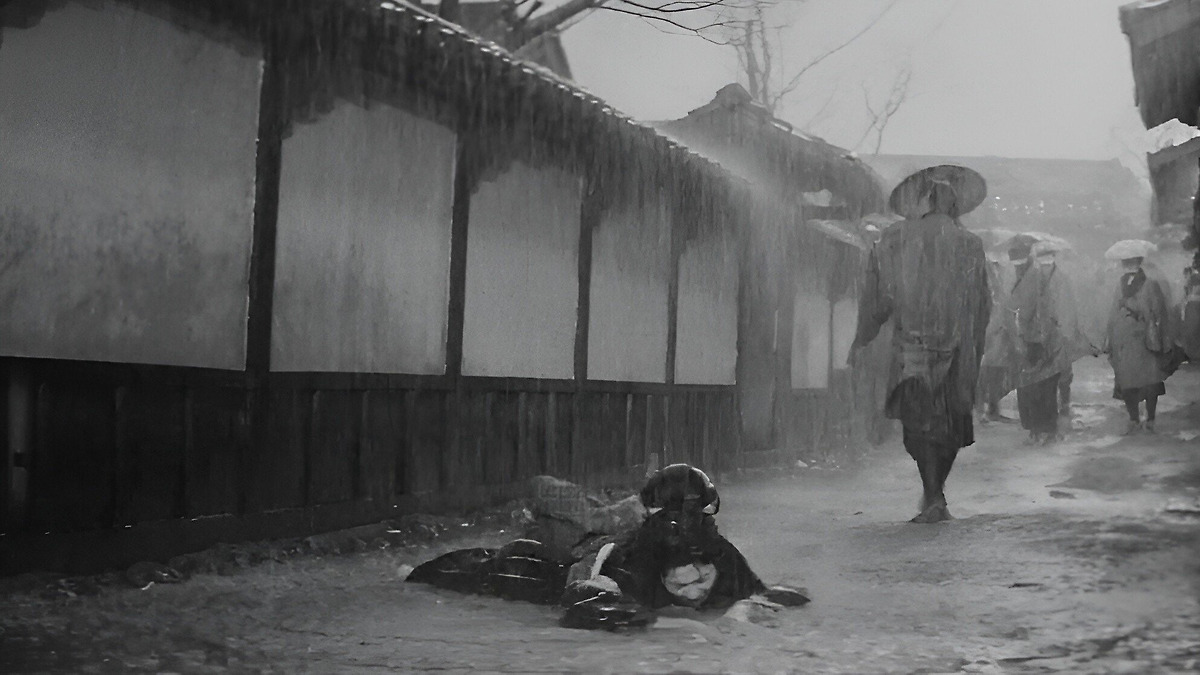
We are in the twilight of the samurai. Most of the castles have been dismantled and fallen into ruin, not because of war, but from two centuries of enforced peace and martial law. Samurai wives wave their husbands off to work as if they are going to the office, and indeed, many of them are. The cities thrum with bars and brothels, and the nobles ignore the rules restricting showy clothes and fine living.
The samurai don’t even want to be samurai any more. They resign commissions to become merchants. They tinker with musical instruments. They grasp at arts and culture that are denied to them because they are still supposedly members of a death cult that has seized the government, but is now ossified and stagnant.
The gap in time, for example, between the events of The Great Killing and Eleven Samurai is 160 years, a similar distance between today and the 1860s. It is as if our own society was effectively unchanged from the time of Dickens, Darwin and the American Civil War until the present day. Director Eiichi Kudo is unafraid to re-use some footage from film to film, but that is partly because literally nothing has changed from year to year under the authority of the Tokugawa.
And what of swordsmanship? What of that skillset that served the samurai so well for 800 years of fierce warfare? Now it is evolving into a martial art – a series of sporting demonstrations and bloodless practices, as a warrior elite that comprises 10% of the state finds itself increasingly idle and unoccupied. The samurai are turning into parasites on the body of a Japan that relies increasingly on farmers and urban merchants. But every day, they still train for battles that never come.
Jonathan Clements is the author of A Brief History of the Samurai. This text is an excerpt from the video essay Fighting the Poison, included in Arrow Films’ forthcoming Samurai Revolution trilogy box set.
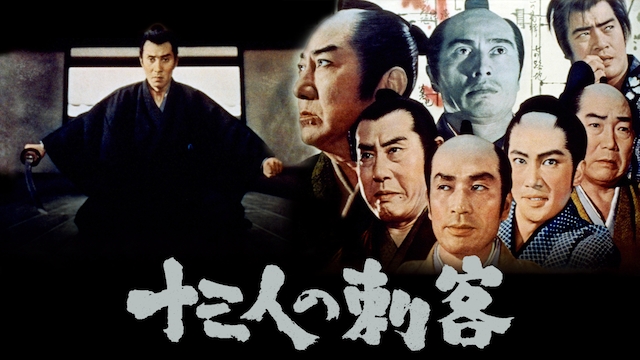
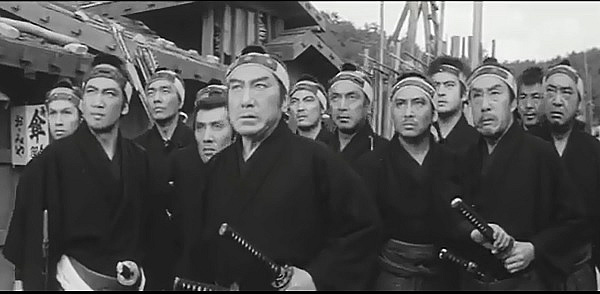
The inspiration for Thirteen Assassins was the assassination of the Austrian Archduke Ferdinand that led to the outbreak of the First World War. Storyliner Kyo Watanabe, eventually superseded on the writing credits by Kaneo Ikegami, was intrigued by the idea that the would-be killers had failed in their first attempt, but still managed to get the job done. He proposed a plot to murder a samurai nobleman – one of the many local warlords obliged to march up and down Japan for “alternate attendance” on the Shogun in Edo. What if, he argued, “there is an assassination attempt on the way, but some people die and it fails. So they have to lay in wait for him on his way back, and it succeeds.”
Watanabe’s idea was that the samurai would overcome vastly superior forces, in much the same way as the legendary 47 Ronin, by kettling, neutralising and ambushing them. He envisioned a prolonged closing battle in which thirteen wily warriors outwitted “a hundred” assailants (actually fifty-three) in order to get to their target.
The problem would be finding a director prepared to work on such a movie, since it was usual for fight choreographers to handle the battle scenes. The producers hit upon the thirty-four-year-old Eiichi Kudo, a director who frequently surprised his crews by coming up with ideas of his own for sword fights.
Kudo was dragged in, and the film was scheduled to go into production as one of Toei’s second-string features: low-budget double-bill filler, lacking big-name stars or an appreciable budget. But the film veritably demanded an intricate set for its big finish – that climactic fight in a hastily fortified post-town. Unable to secure the financing for his set, Kudo stole someone else’s, having heard that his art director had previously built a village at a nearby army base for Sadatsugu Matsuda’s Duel of Blood and Sand (1963) and had “forgotten” to dismantle it. It was still sitting there, slowly falling apart, and nobody would mind if a bunch of samurai turned up and wrecked it.
Although he was not yet the overall boss at Toei, Shigeru Okada’s responsibility for approving budgets gave him a de facto power to control productions. By the early 1960’s, he’d had enough of the diminishing returns from period dramas, particularly since the “price of horses was going up” and audiences seemed uninterested in more samurai films.
“Television has completely kidnapped all the children, housewives, and the elderly,” he announced at a production meeting. “The only people coming to the cinemas now are youths and men over thirty, and they are drawn by a delinquent sensibility. Wholesome films for the whole family at Toei just won’t get an audience anymore.”
Instead, Okada pushed for his writers and directors to knock up films about yakuza, set in the late 19th century or later, so that they could use the tail-ends of period sets, or real-world locations.
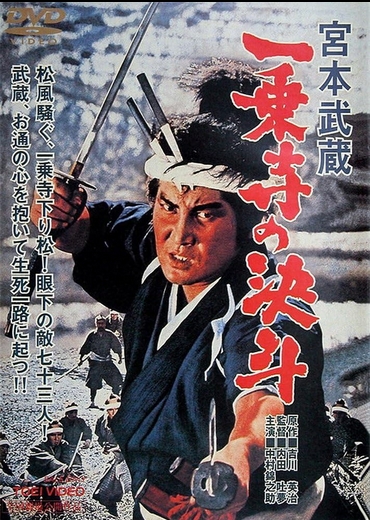
The last major exception at Toei was the five-year span of the Miyamoto Musashi series, for which Tomu Uchida would direct a complete adaptation of Eiji Yoshikawa’s brick-sized novel. The first three films all made it into the top five annual box office scores, leading Uchida to pull out all the stops for the fourth, Duel at Ichioji, in which Musashi would have to face his nemeses at the Yoshioka school in a massive fight.
Uchida became obsessed by a phrase in the script, which he felt obliged to reproduce exactly: “The thick morning mist gradually disappears, and the topography centred around a drooping pine clearly emerges.”
Intent on coming up with a moody swordfight amid rice paddies covered with a thin sheet of ice, Uchida proclaimed that “if it doesn’t exist, we will have to invent it.” Selecting a location near Japanese military training grounds in Shiga, he ordered the art department to make a tree, fixing cedar bark to a steel frame, and then planting it in the soil.
Concrete was poured all around the paddy fields, in order to allow pathways for cast and crew. The art department, realising that water and ice wouldn’t show up on the film stock being used at the time, repeatedly poured wax over the fields so that something would be visible when warriors’ feet kicked through the mud.
Eventually, it took two months to prepare the ground for one twenty-minute fight sequence, which Uchida further extended by insisting on filming for a single “magic” hour each day, so that the dawn light would remain constant. “I want to film the duel only at the time when the sky begins to whiten,” he said, “the same time the actual duel took place.”
This, in turn, meant they had to leave their equipment in place every day, and start setting up at three each morning so as not to waste the day, every day, for two weeks. Unfortunately, Uchida’s efforts amounted to little, since Duel at Ichioji failed to outperform the previous three movies at the box office, and barely broke even. A fuming Okada refused to approve the full budget for the fifth and final film, which was completed with a number of corners cut and shots fudged. It would take years for Okada to be persuaded to return to the samurai epic on film in any big-budget way.
My agent recently asked me a question on behalf of another author, whose book had been refused from a printworks in China. The author had been discussing the natural habitat of certain flora, and made the mistake of saying in, rather than on Taiwan. It was left to me to explain the concerns of the Chinese printer – it was unlikely that there was some kind of censor shouting at him down the phone, but Beijing had just made “support of Taiwanese sovereignty” a crime that carried a maximum penalty of death. Printing the word “in” rather than “on” would imply that Taiwan was not merely an island, but a country and it was more than the printer’s job was worth.
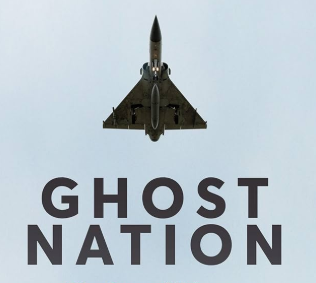
Chris Horton’s book, Ghost Nation: The Story of Taiwan and its Struggle for Survival, is printed and bound in Croydon, nowhere near any fretful Chinese printers. It charts the shifting sense of who owns Taiwan and who speaks for it across the centuries, and offers many examples of roads not taken or paths less travelled. Horton notes, for example, that whereas the Dutch ruled Taiwan for 38 years, the Ming-loyalist Zheng family only held it for 22. However, in that brief time, the Zhengs introduced many indelible elements of the island’s “Chinese” identity, including the very plum trees that provide the blossom that serves as the national flower emblem of the Republic of China. Then again, he also notes that when imperial China signed the Treaty of Shimonoseki in 1895, it ceded Taiwan to Japan in perpetuity.
Horton devotes two chapters to the delicate dance of “One China” from the moment in Cairo when the Allies agreed that the Republic of China could have Taiwan back from Japan, through Beijing’s claim that as the inheritor of the Republic’s ruler and power, Taiwan should hence default to the People’s Republic, and if it did not do so, it was a rebel province. The story is liable to be well-known to anyone reading this blog, but Horton’s approach deals with it through the lens of fluctuating American political will, with time out for some entertaining rants about the editorial policy of some of his bosses. The issue of whether or not Taiwan can be called a “country”, remains a hot political potato, and Horton seethes about the way that the world is locked in step to the American position, and has to constantly come up with “awkward workarounds.”
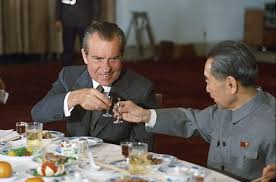
While it is fashionable these days to blame the Americans for absolutely everything, I feel the need to point out (as does Horton), that the 1972 Shanghai Communiqué deliberately used language that neither Beijing nor Taipei could dispute – that both governments agreed that Taiwan was part of China. They just didn’t agree who was in charge of China itself. It took a regime change in Taipei itself, with the Democratic Progressive Party challenging the rhetoric of the mainlanders who had been in charge for 30 years, for the language to begin to creak.
Horton eschews much of the traditional book-cracking in libraries for a research methodology that rarely strays far from a computer with an internet connection. This does him little harm with a focus that does cover the early history of Taiwan, but rushes through it in favour of the later twentieth century. As one might expect, he is particularly good on the various media splashes and spats that he has witnessed personally, and there is some lovely coverage of the semantics of junketry, such as the time in 2020 that representatives of the People’s Republic gate-crashed a Taiwanese event in Fiji, complaining about the presence of the ROC flag on a cake, or the domestic impact of Tsai Ing-wen’s public apology for the treatment of indigenous people, to which she invited not only representatives of the surviving tribes, but those of the “Pingpu” peoples whose cultures had been so thoroughly assimilated that they still struggle for official recognition.
Horton zooms in on the ethnically meaningful menu served at William Lai’s inaugural banquet, which makes for fruitful comparison with the similarly politicised food served at Chen Shui-bian’s twenty years earlier. He also has an eye for all sorts of interesting details, such as the fact that Chiang Kai-shek fled mainland China on a private plane donated to him by the United States, and named after his wife. Occasionally, the rhythm of the text slows to single human-interest moments, forming memorable illustrations of broader historical points, such as an old lady’s quest to discover the fate of her grandfather in the Cold War purges, or the fact that KMT political officers are still a common presence on campuses, even though their activities today rarely extent beyond stopping kids smoking outside the gates.
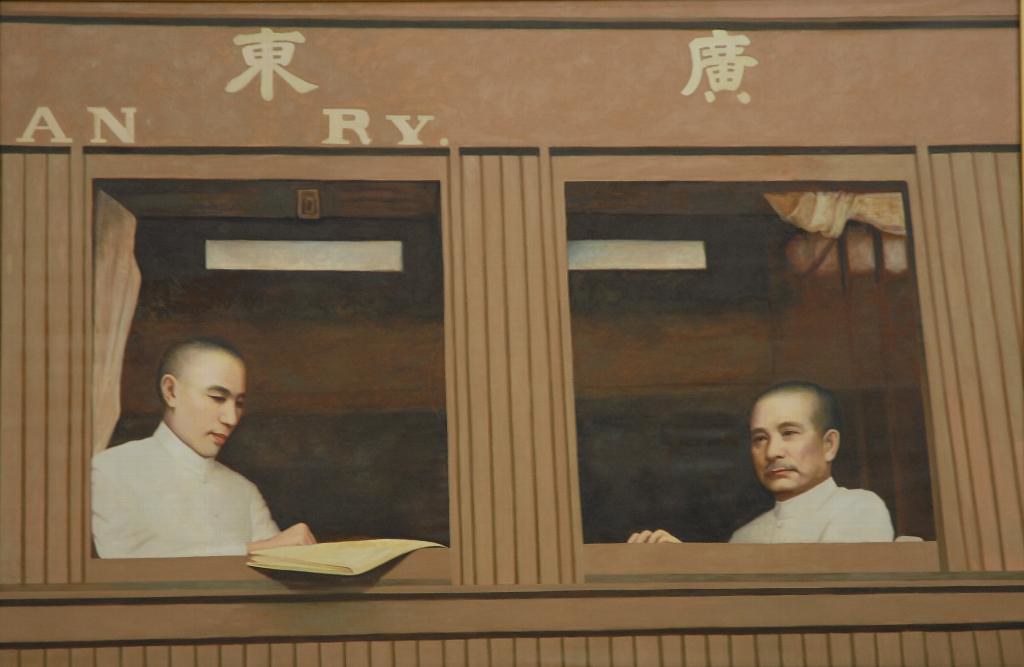
Horton buys an iced tea at a convenience store, and observes in 2025 that the date shown on his receipt is year 114 of the Republic, because the Taiwanese authorities’ desire to manipulate reality extends to the marking of time. He strokes his chin at statues in Chiang Kai-shek’s memorial park, and observes that the late dictator is often posed in bronze in conversation with the Republic’s founder Sun Yat-sen, as if the pair of them were far more chummy than they really were.
He dwells on the initiation of the “White Terror” in 1947, which he terms the Kuomintang’s “original sin”, and describes in Taiwanese terms as yidu, a “residual poison.” He proclaims that Peter Huang’s assassination attempt on Chiang Ching-kuo in New York in 1970 was literally the “first shot” of the decade’s anti-KMT protest movement, and devotes ample space to its grand moments, such as the war on Formosa magazine, the Kaohsiung Incident, and the assassination of the journalist Henry Liu by a Triad hit squad in California. These events are all well-known today, but were not even whispered during my own student days in Taiwan in 1991.
Like others, Horton foregrounds the importance of the TSMC, the company that makes so many of the world’s computer chips, but relates this solidly to the modern world’s obsession with Artificial Intelligence, for which TSMC also produces the latest chips for Nvidia.
This is very much a book of the moment, concentrating on the immediate fall-out from the re-election of Donald Trump at the end of 2024, and its likely impact on the money that the US sends to China. Horton has facts and figures on hand about the immense amount of money spent by the previous Trump administration on shoring up Taiwan (three times the amount spent by Biden), and also on the collateral politics, such as the degree to which Vladimir Putin needs Xi Jinping’s help in Ukraine, and how that affects Russia’s stance on Taiwanese sovereignty.
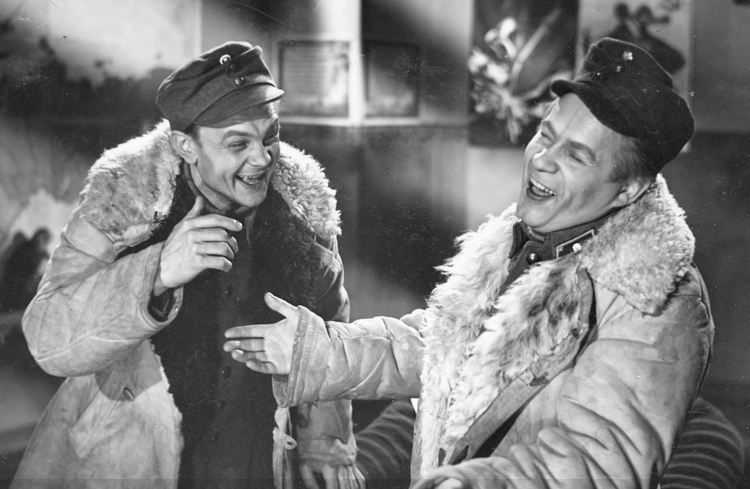
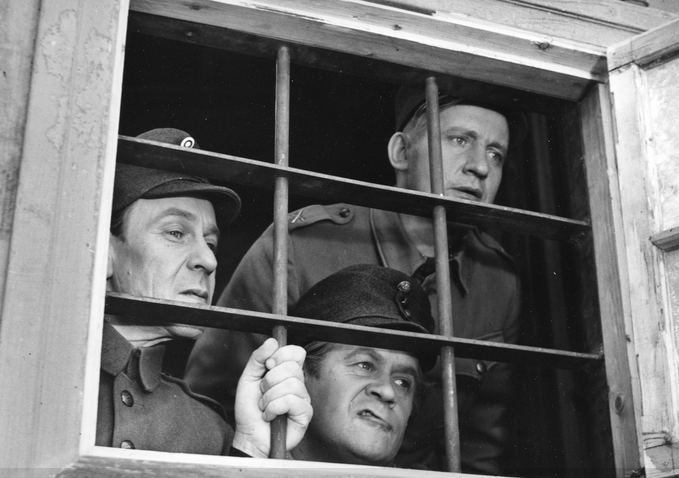
Lieutenant Romppiainen and his ever-present sidekick, Sergeant Ryhmy, are tasked with blowing up a Russian ammo dump, but are captured when a shell hits their dugout. Thrown into jail, where they run rings around their captors, they team up with their cellmates (a former prisoner and former jailer) to break out. As they sneak out of trouble, they accidentally rescue Peikko (Kullervo Kalske) and Eila Kaija Rahola), two Finns being interrogated by Natalia Vengrovska (Kirsti Hurme), the tough but vampy Russian commissar.
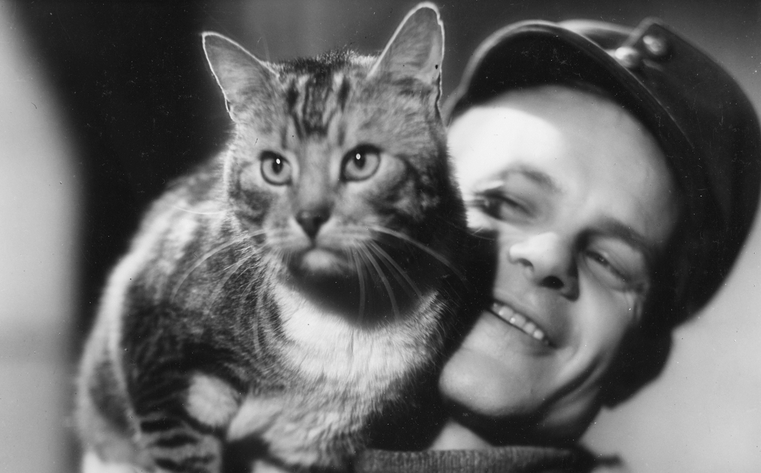
They run into members of the Kuusinen Finnish People’s Army, a division of ethnic Finns that in the real world, performed a lot of the occupation duties in captured Karelia. Stealing their uniforms and posing as Red sympathisers, they blag their way out, and set the charges for the ammo dump. Ryhmy, his pointless cat, and the ever-smouldering Vengrovska are trapped inside, but make it out seconds ahead of the explosion. Abandoning the unconscious Vengrovska in the forest, Ryhmy makes it back to Finnish headquarters, where they receive little thanks for their heroism, and are instead put to work making an inventory of everything they have lost.
“Even farce has its limits,” commented Salama Simonen in Uusi Suomi. This second movie adaptation of Armas J. Pullas’ novel series after Ryhmy and Romppainen (1941) was intended as a comic diversion, but crashed straight into a recurring issue with wartime movies – whether to make light of the enemy or take them seriously. Finnish authorities were not amused by the depiction of Russians as merry fools, and Finnish officers as bumptious moustaches. Seven decades later, the most shocking thing is the sight of Finnish collaborators working for the Russians – a realistic reflection of history, but not the sort of alternative image one expects from propaganda. Despite this, Jees ja juust was regarded as so problematic, and so riddled with slurs against the Russians, that it was pulled from cinemas in the summer of 1944 and not seen again until its video release in 1988. Compare such redactions to the similar fate of That’s How it is, Boys (1942), another wartime hit that was quietly cancelled in a changing political climate.
The film’s characters form a familiar line-up in forties film. The leads are rude mechanicals, salts-of-the-earth, who in peacetime were a vacuum-cleaner salesman and a bus driver – a skillset that is presumably intended to make them readily identifiable to audiences. The drippy romantic B-plot between Peikko and Eila is tacked on to fill some sort of snogging quota. But the stand-out star is Kirsti Hurme, who obligingly plays Commissar Vengrovska not as a snarling enemy, but as a frustrated vamp in need of a good cuddle, all torture and interrogation scenes presented more as some sort of dress-up bondage game. This, presumably, is why she became such a hit with army audiences, the most-requested star for public appearances on military bases.
Ryhmy and Romppainen would return in one further film, “Give Us the Olympics,” said Ryhmy (1952), in which trouble would still find them in peacetime.
Jonathan Clements is the author of A Short History of Finland. He is watching all the Finnish films so you don’t have to.
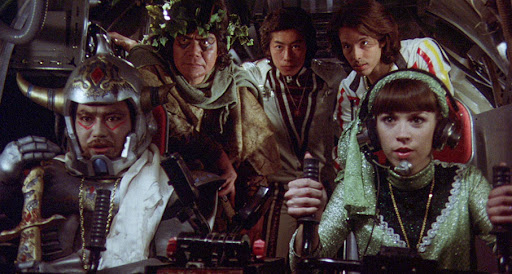
Despite lacklustre reviews from the American press, Message from Space endured far beyond what might have been expected, buried in the children’s slots at American theatres, paired on a double bill with Luigi Cozzi’s Star Crash (1978). Message from Space might have sunk below the radar of mainstream film, fading into the background noise of Saturday morning screenings for the next decade, but that gave it an oddly broad footprint with an audience of 1970s and 1980s children.
To put such American numbers in context, the smash-hit Pokémon – the First Movie (1999), was shown on a mere 3,041 screens, although that was a first-run record in the United States. The cross-over hit Shall We Dance? (1997) barely managed 268 screens. Kurosawa’s acclaimed samurai epic Ran (1985) was shown on a mere 30 screens. Unloved and largely unappreciated, Message from Space ultimately ran in over 17,000 theatres, where adults left their kids for a couple of hours’ respite, unaware that they were watching a fantastic swordfight finale between Shinichi Chiba and Mikio Narita, or the height of Tōei’s SFX work onscreen.
From my sleeve notes to Message from Space (1978), released by Umbrella in Australia as part of their Out There by Toei collectors’ box.
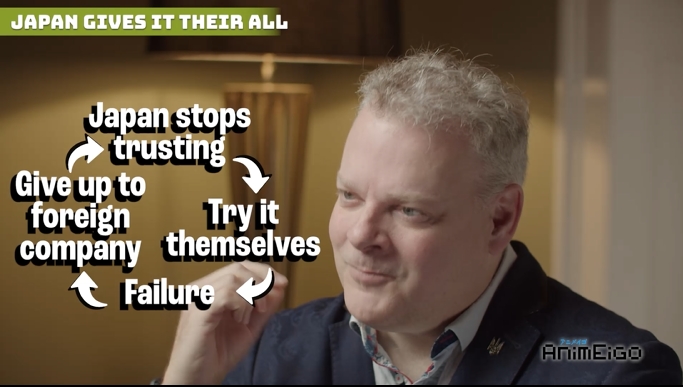
Justin Sevakis’ oral history of the anime industry gets around to interviewing me about the development of anime in the UK, the philosophy of memorabilia, “a bunch of women called Glenda,” the agonies of Dark Myth and the concept of Silver Otaku.
There’s also a bonus for AnimEigo subscribers, with further footage in which I discuss the logistics of festival guests and interviews, gossip about Leiji Matsumoto, Naoko Yamada, Mamoru Hosoda and others, the creation of Smith Toren and foreigners in the anime business.
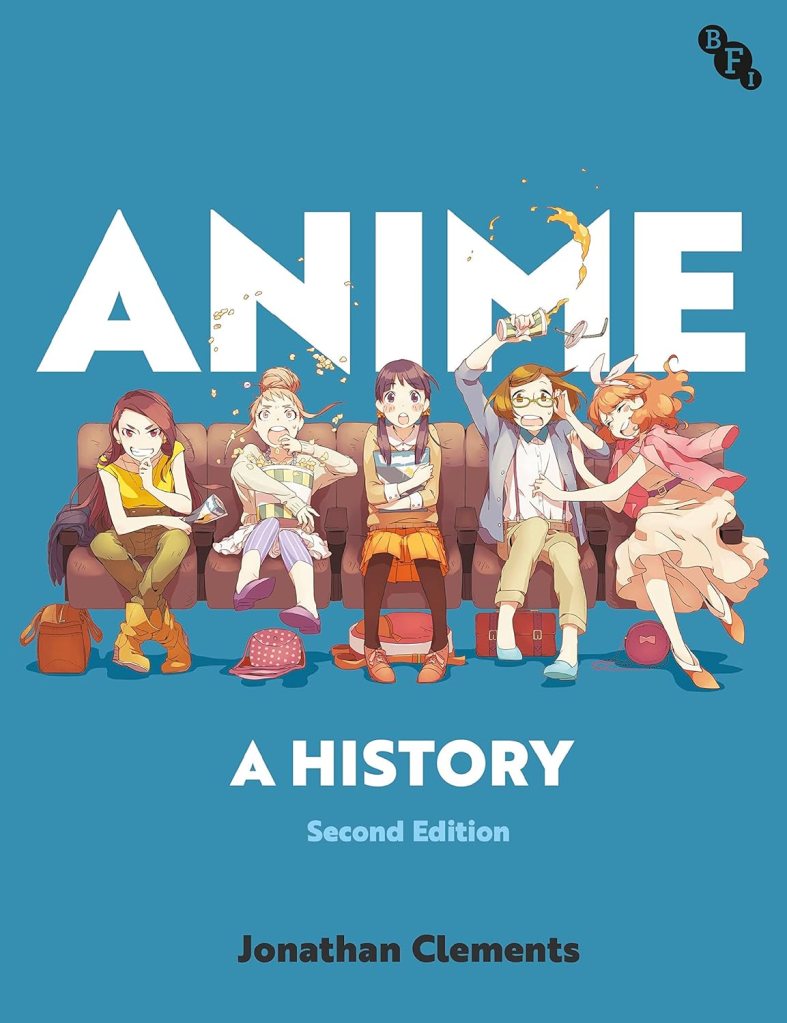
Further details of the anime business from the inside, of course, can be found in my book Anime: A History.
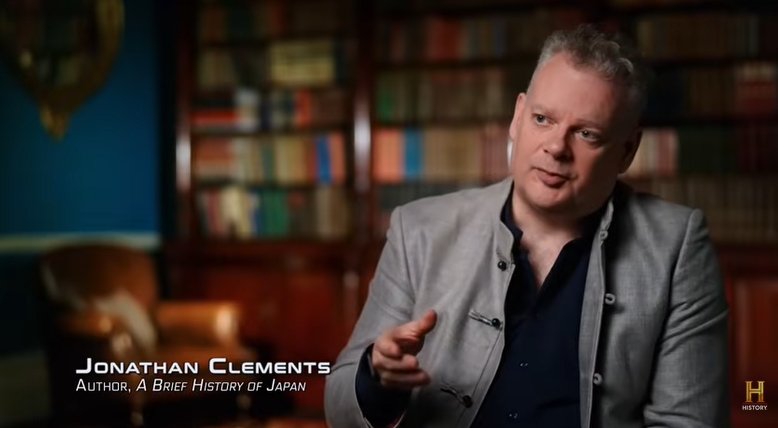
The History Channel’s Ancient Aliens series gets to Japan, which means I get to sound like the voice of reason when discussing the possibility that the Japanese imperial family’s ancestors came from space. It’s all in my Brief History of Japan.