“Hong Kong remained his home thereafter, but his antipathy for the Communist regime did not slacken in later years. In a 2009 interview, he provocatively announced that he was less afraid of China during the purges of the Mao era, since the worst possible danger to the world would be presented by a predatory capitalist system run by a dictatorial elite.”
Ni Kuang, who died yesterday, is the subject of a long entry I wrote for the Encyclopedia of Science Fiction.
One of Master Wei‘s children has gone into business with one of the nephews, thereby proving that although they look normal, they are just as much mentalists as Master Wei. They have set up a bespoke restaurant that only serves products that have been made with tea. The clientele is somewhat exclusive, restricted to coach parties of tea nutters doing the Tea Tour, as well as visiting Party bigwigs and foreign film crews.
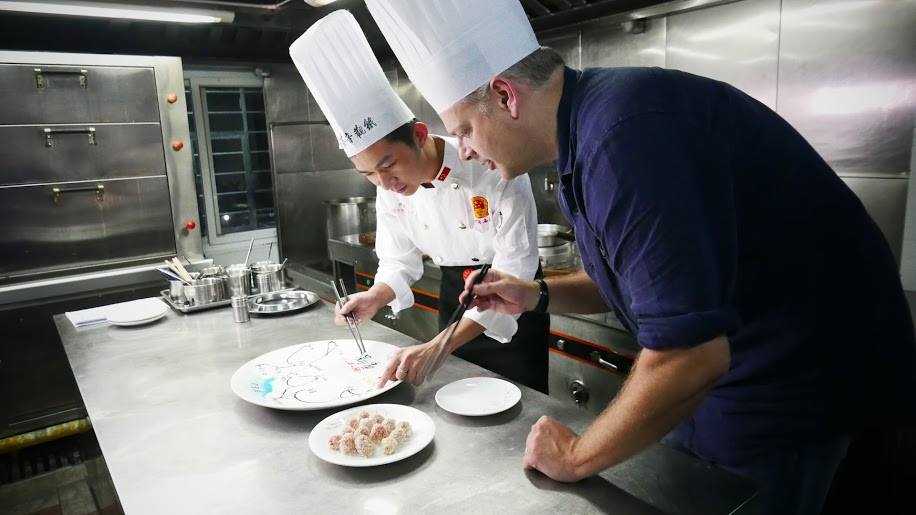
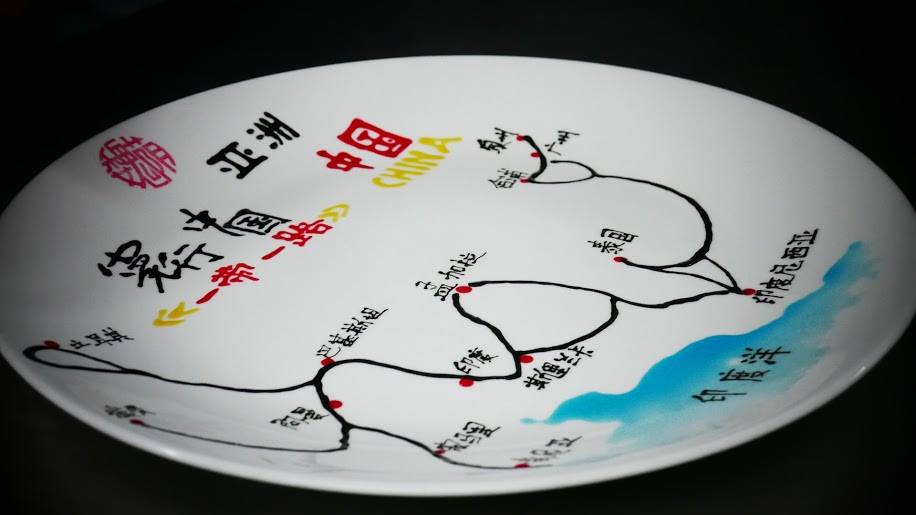
Chef Chen, the cousin, has drawn elaborate displays on each plate, picking out the National Geographic logo in custard, and drawing a map of the Silk Road in chocolate sauce. He shows me around his brushed-steel kitchen, and fires up the volcano stove, so named because it whooshes into life like a lost jet engine, and heats up his wok in half a minute .
Chef Chen is decked out in all his funny-hat finery, and a chef’s hat is found for me as well so that I can look ridiculous next to him. He treats me to a selection of amuses-bouche, many of which have the slightly desperate taint of a man trying to find an excuse to put tea in things. There are deep-fried tea leaves in batter; goose feet braised in tea, lamb soup with a tincture of tea… you get the idea. I am forced to down far too many spoonfuls of his deep-fried bee larvae with crisped tea leaves for my liking, and there is no beer. Only… tea.
What first appears to be some sort of candy for dessert turns out to be balls of deep-fried salad cream, lightly dusted with… tea.
“You place them here on this map I have done in chocolate that shows the Silk Road,” he says. “There’s Quanzhou, where we are now, and Hong Kong, and Indonesia, Thailand… where are you from?”
“England,” I say. “So on this scale, that should be somewhere over there behind the fridge.”
For a lot of the time, I am mercifully excused from the kitchen while the crew film B-roll of Chef Chen at work concocting his masterpieces from ingredients that might as well have been randomly selected with a dartboard. This leaves me downstairs in the plush foyer, decorated with golden statues of elements of the tea-making process, and photographs of Master Wei shaking hands with a bunch of Chinese people I don’t recognise. There are also displays of the various Iron Guanyin teas that can be bought from the Wei family collective, including the infamous £36,000/kilo “Wei 18,” the most expensive tea in the world.
This leaves me for an hour in the company of the Wei son and his cronies, who while away the evening sipping little cups of… wait for it… tea, made by a prim young lady in business attire. My experiences in Yunnan have taught me the basics of the Chinese tea ceremony, and so I watch as she goes through the motions of cleaning, refreshing, boiling, washing… all seemingly quite common sense to me now, although they seemed impossibly intricate only a month ago. The men witter about nothing, while their serving girl remains impassive and silent. The time passes pleasantly enough, until midnight, when we are then informed that Chef Chen has now finished the food preparation for the documentary, but that now he expects us to eat it.
A tense and malevolently quiet banquet then ensues as we all try to force down as many bee larvae and deep-fried salad cream puffs as we can, before we are finally permitted to leave.
It is half past midnight, but that is of little help to us, since we have been consuming TEA all evening. I don’t get to sleep until 4am.
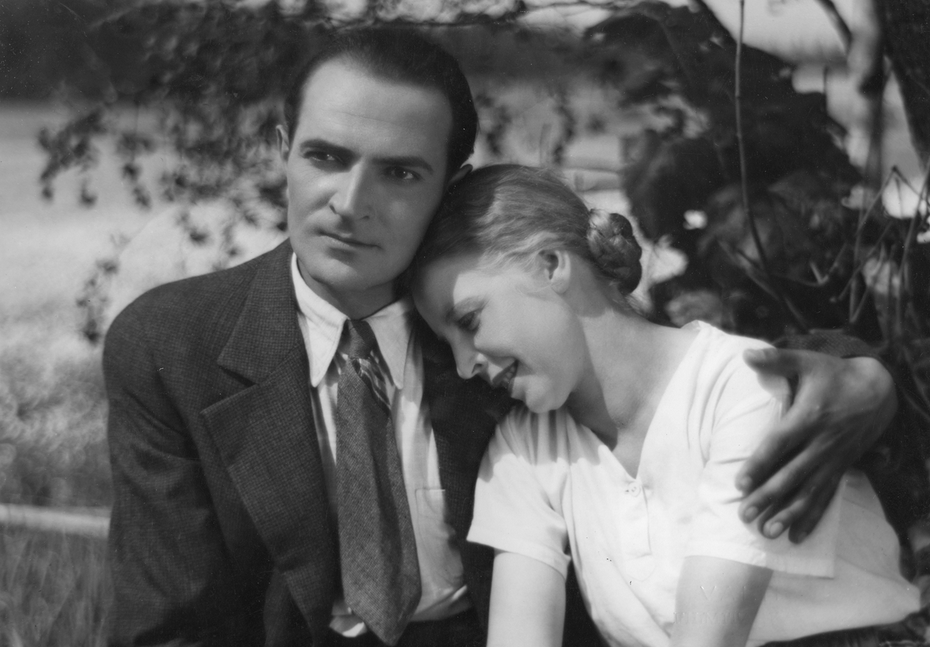
Orphaned Karelian girl Anu (Henny Valjus) is reluctant to follow through on her late mother’s promise that she will marry the nice-but-dim rich boy Junu (Reino Valkama). Instead, she has eyes only for the handsome carpenter Mikko (Santeri Karilo), even though Mikko backs off in the mistaken belief that Anu loves Junu. Mikko runs away to the big scary city of Helsinki, where he hits on the idea of returning home to start a furniture factory – shades here of the woodtastic prospects of Green Gold (1939).
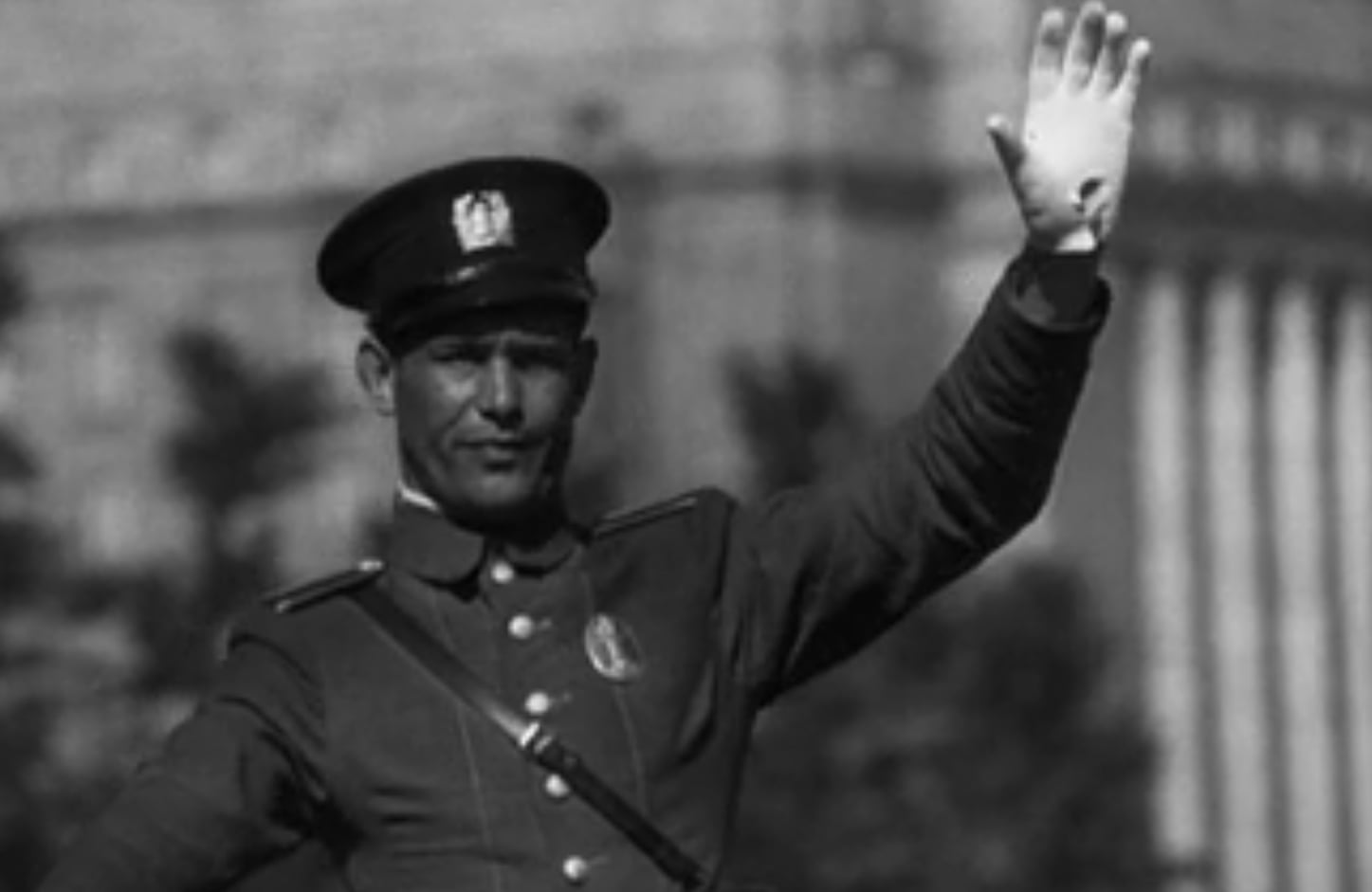
Based on a 1932 play by Kersti Bergroth and subsequently remade with the same title in 1956 and again for TV in 1975, Orvo Saarikivi’s Anu ja Mikko is an initially baffling choice for so many productions. It was shot at Suomi-Filmi’s Munkkisaari studios, but also features a number of exteriors showing off Nurmijärvi in the summer of 1940 – Finnish cinema audiences had almost nothing to chew on for half the year, and then a sudden rash of titles either mothballed during the Winter War or rushed into production that spring. There are also some lovely exteriors of 1940 Helsinki as Mikko gets off the train to seek his fortune, although his exit from the station is rather compromised by the camera’s sudden interest in a woman in a white dress, so much so that Mikko in his dark clothes practically teleports into focus only when she is out of shot. There’s also a lovely moment in which the camera lingers on a tanned cop outside the parliament building, irritably functioning as a human traffic light for the local trams. Both these striking figures in the film appear to be members of the public who happened to be caught by Uno Pihlström’s camera.
There is a certain return of the mixed messages of Bergroth’s earlier Rich Girl, along the lines of “money isn’t everything (BUT IT REALLY HELPS).” We are supposed to believe that Anu and Mikko are made for each other, but that Mikko is only worthy of Anu when he is a humble carpenter. When he tries to better himself by going into business, Anu finds his industrial mind-set off-putting. When his business fails, it’s Junu’s family money that bails him out. Junu finds love with Heti the maid (Anitra Kartro), but would she really have been all that interested in him if he hadn’t been the lord of the manor? Meanwhile, Anu is something of a drip and a wallflower – her most characterful moment in the film is at a dance, where everybody expects her to sing, but she is so heartbroken that she can’t get the words out.
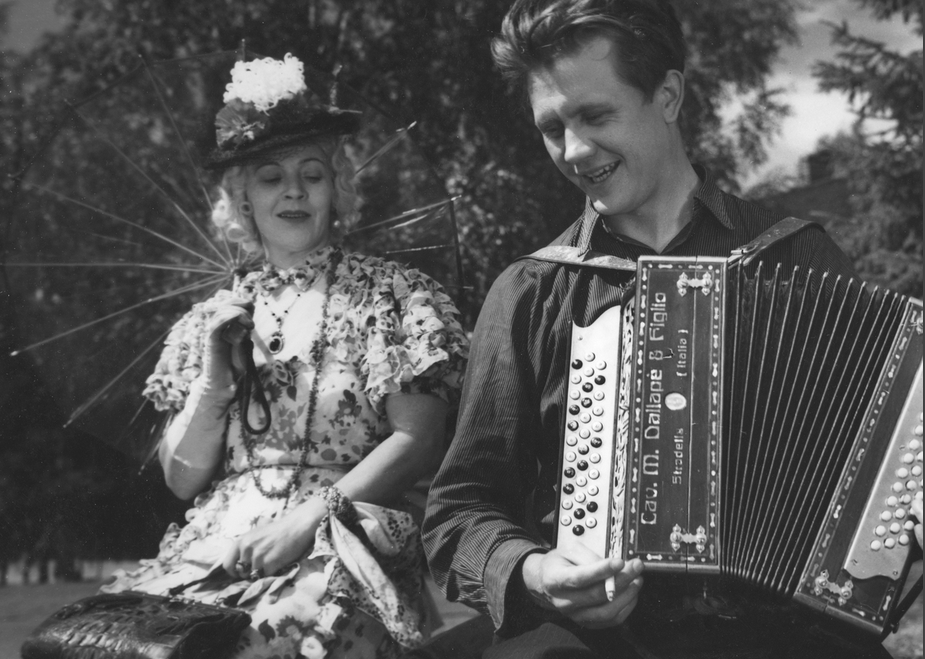
Repeatedly in Anu ja Mikko there is the assertion that there’s no place like home. Mikko leaves for the big city, but returns to his hometown girl and his hometown dreams (whatever they are, since apparently making a living isn’t one of them), as does “American” Mari (Aino Lohikoski), a local girl recently returned from New York, who fills everybody’s heads with tales of international travel, but ends up marrying a local accordion-player. Mari is a fantastically uppity snob in an impractically frilly dress, who insists on using English words and trills excitedly about the talking pictures she has seen (this film is set in the 1930s, when such things would have been more new-fangled).
It is precisely the sort of drama one might expect to find a ready audience after a wartime disruption, gently soothing the viewer that things will soon be back to normal and everyone can go home. Except everyone can’t – author Bergroth was a native of Viipuri and director Saarikivi was born in Sortavala, both now on the Russian side of the border, along with the village of Antrea (now Kamennogorsk), the real-world inspiration for Bergroth’s fictional “Kaunuskala”. Many of the cast members were themselves of Karelian origin, although the degree to which they were refugees is questionable – Viipuri was Finland’s second city, so having been born there was a bit like having been born in Birmingham or Glasgow, hardly a matter of note until the day it was suddenly rebranded as Russian territory.
Paula Talaskivi, the hard-to-please movie critic, was totally taken in, writing in the Ilta Sanomat that even hard-bitten Helsinki urbanites would love the rural, Karelian snapshots of a time past and a land lost. Salama Simonen, the critic for Uusi Suomi, thrilled to the sound of the Karelian accent (something that would also charm viewers of the same year’s Lapatossu & Vinski’s Department Store), singling out Santeri Karilo as a genuine Karelian… all gentle nudges largely lost on the average modern reader, but reminding 1940s Finns that the Winter War has displaced thousands of Karelians, and lost much of the Karelian heartland celebrated in this film. The allusions and evocations of a lost land, which by my ad hoc reckoning, has an immediate family connection for one out of every four modern Finns, is a primary contributor to this story’s enduring presence.
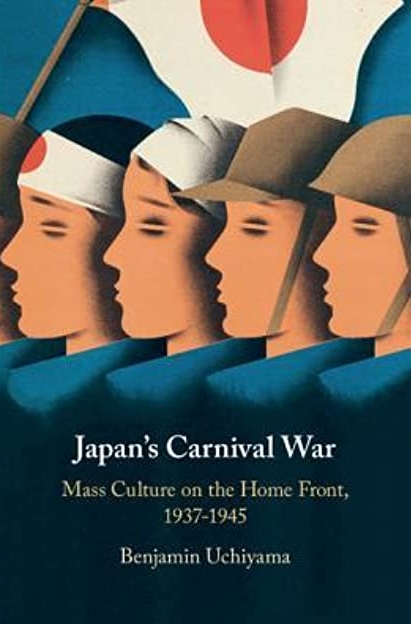
“The situation made celebrities not merely of the soldiers on the frontline, but of the ‘industrial heroes’ toiling to supply them. As Uchiyama observes with his customary originality of angle, it also made villains out of some of them, with various government big-wigs griping that Japanese teenagers had become a gaudy and reckless social underclass, with fathers away fighting, mothers working in factories, and the teens themselves earning big money in the wartime factory economy, and blowing it all on ‘reckless spending and foolish carousing.’ Some of them, it was alleged, were even travelling around Japan in disguise, donning school uniforms in order to avoid difficult questions.”
Over at All the Anime, I review Benjamin Uchiyama’s book Japan’s Carnival War.
Over at the Encyclopedia of Science Fiction, I write up the author Georgiy Savitsky, whose works include a hero of the Soviet Union returning as a cyborg to help Russia conquer the Moon, and a whole bunch of curiously predictive novels about the likelihood of a big war in Ukraine.
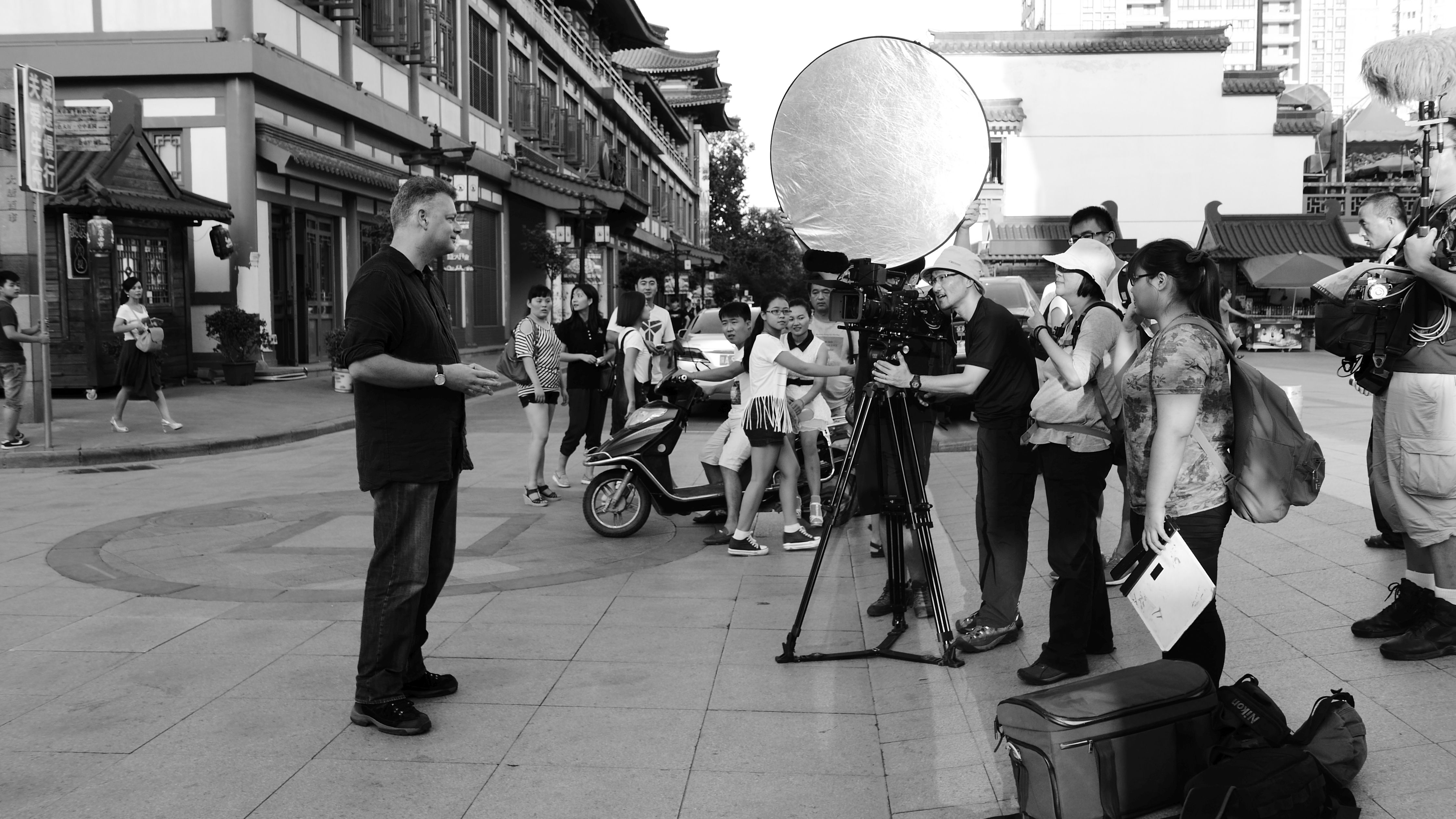
They woke up before dawn and drove for three hours to be here in time for the start of your business hours. Since then, they have been standing all day.
Why are they standing still?
Because footsteps or the rustling of clothes may interfere with the sound and ruin the take. Movement behind the camera may distract the talent and ruin the take. Moving shadows unrelated to onscreen action may interfere with the shot and ruin the take.
Why are they clearing away the gawpers?
Because every extra body near the shoot is an extra chance of a shuffle, or a belch, or a sneeze, or a cough, or a ringtone. See above.
Why won’t the grips let me help them?
They’ve got a job to do, and it’s a matter of pride. And if you drop a £3,000 lens, you’re paying for it.
What are they waiting for?
They are not waiting. The boom mike is recording ambient sound or “room tone” just in case they need to drop it in under a voice-over later.
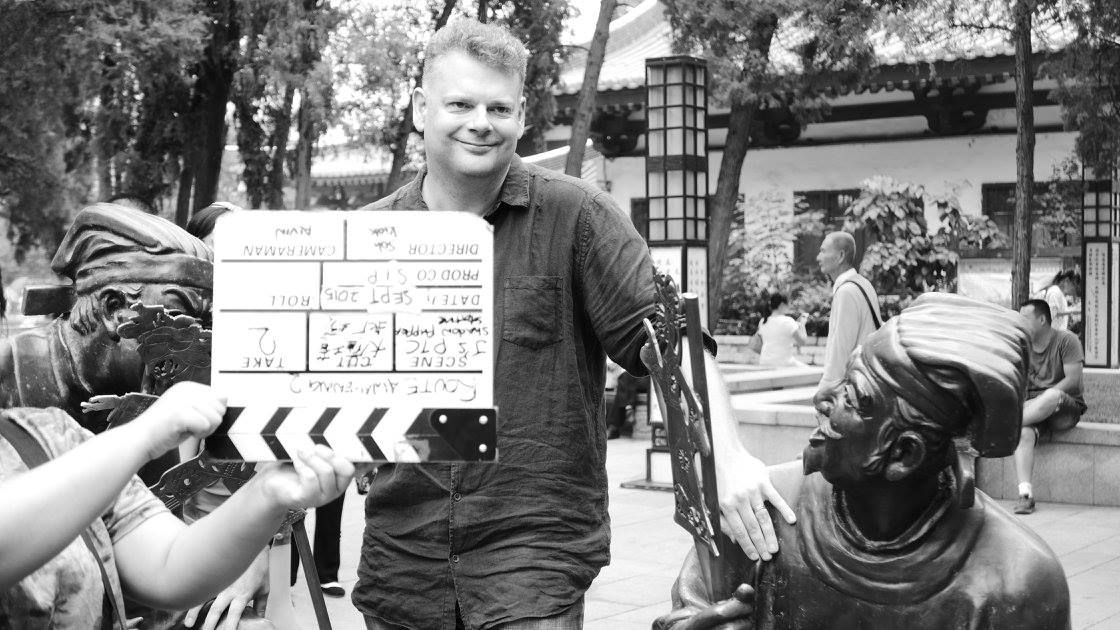
Why is the clapperboard upside-down?
Right way up for the start of a shot; Upside-down for the end of a shot. All so that the editor can spool through on fast-forward looking for the next take.
Why won’t they try our exciting local delicacies?
Because if someone has the squirts tomorrow it will cost thousands in lost time.
Can he use chopsticks?
He has three degrees and published an acclaimed translation of The Art of War. He has been using chopsticks since before you were born.
Why is the talent nodding at nothing?
The A-camera was on the interviewee for the first take, while the B-camera was focussing on anything she pointed at. For cutaways of the interviewer listening, they need to go back and film a second time, of him doing “noddies.”
Is he wearing the same clothes every day?
He has five duplicate sets of clothes, so that the continuity matches from day to day.
Why is the director annoyed with me…?
Are you wearing jangly keys? Is your phone off? Did you just try to sneak a photo of the shot, and forget that your phone makes a clicking noise? Are you just… there?
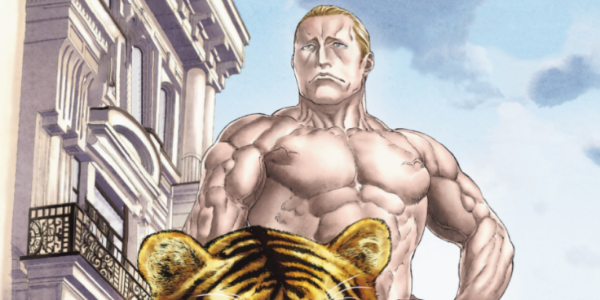
Ride-On King by Yasushi Baba is properly mental. No teenage boys letching after a bunch of witch-girls here. Instead, our leading man is Alexander Plutinov, president-for-life of the small Central Asian “Republic of Prussia”, who is transported to another world one day when he is crushed by a falling chunk from a massive statue. And in this new fantasy kingdom, Plutinov has magic powers, can ride around shirtless on a wyvern, and put his martial arts skills to a new and noble use, saving a bunch of teenage girls from marauding orcs, wild boar and dragons or something. It is, for the world-weary politician, something of a holiday in a fantasy realm, an extended tour of an absurd fantasy realm accompanied by jailbait half-elves.
No, no, wait for it. There’s more. Because your correspondent had to scurry off to double-check that Ride-On King didn’t have a Russian-language Wikipedia page. Fortunately, it doesn’t, because if it did, I think there would be tanks in Tokyo by tomorrow morning – in case you didn’t already guess from the synopsis above, this manga epic is nothing less than “In Another World with Vladimir Putin,” its protagonist a cheeky allegory for Russia’s favourite shirtless martial-arts-loving president-for-life. I just loved the premise of this ridiculous manga, not so much for its off-the-peg D&D adventuring, but for the sheer gumption of casting an older man in the role so often snagged by ungrateful teenagers who, frankly, never make the most of it. The whole thing is a refreshing change from the norms of the so-called isekai genre, and makes me think about all the wonderful possibilities for similar celebrity spin-offs: Is it Wrong to Try to Pick Up Girls in the White House?, That Time I Got Reincarnated as Michael Gove, or Sorcerous Stabber Joanna Lumley. Admit it, you would read all of those.
Jonathan Clements is the author of Anime: A History. This is an excerpt from the Manga Snapshot column on Sirius magazine that appeared in NEO #217, February 2022.
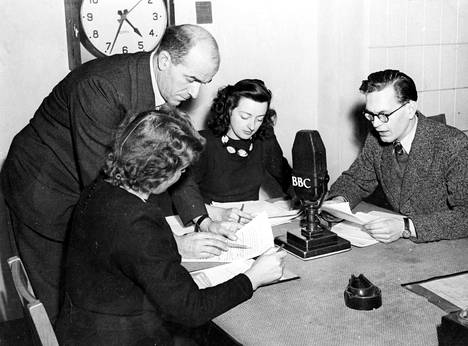
After the Russian attack on Finland in 1939, BBC producers scrambled to rustle up some Finnish speakers to produce programming. It took them so long that by the time the first broadcast went on-air in 1940, the Winter War was already over. Reasoning that there was still a value in pandering to the Finns and correcting whatever nonsense the Russians were telling them, the BBC broadcasts kicked off anyway, and were hence already up and running when the Continuation War broke out.
Moscow tried to seize the airwaves with their own stooges, including Armas Äikiä, who had briefly been the Minister for Agriculture in the short-lived “Finnish Democratic Republic” proclaimed in what is now the St Petersburg suburbs. The real star, however, albeit for all the wrong reasons, was Aino Kallio, a.k.a. “Moskovan Tiltu”, bestowed with a name that recalled, for Finns, imagery from a popular 1920s song of credulous teenage cluelessness. While “Tiltu” harangued the Finns about their co-belligerency pact with the Nazis, (a style ridiculed in a popular song as nothing but “soup and rattling”) the BBC also entered the fray, with broadcasts from Greta Kivinen, a.k.a. “London Jenny.” She also slagged off the Finns for getting into bed with Hitler, but tried to warn them off Stalin as well.
In the Finnish-language book This is London: the BBC’s Finnish Broadcasters in the Information War Between East and West (Lontoo Täällä: BBC:n Suomalaistuomittajat Idän ja Lännen Välisessä Informaatiosodassa) editor Ilpo Salonen and contributors Risto Uimonen and Hanna Rajalahti present a bitty grab-bag of reminiscences and anecdotes. There are, in fact, dozens of authors, with almost every surviving journalist seemingly given a couple of pages to reminisce about their challenges and careers. This can occasionally lead to chapters that repeat themselves, but represents a fascinating patchwork of accounts of the changing requirements of these obscure cogs in the Bush House machine, who referred to themselves as the bushfinnit.
During the Cold War, it was not even clear if anyone was listening. The Soviets began jamming the BBC’s short-wave radio frequency, such that many Finns reported nothing but a crackle of static when they turned the dial to the correct point. Up until 1956, when the Soviets returned the Porkkala peninsula to Finland, “you had to strain to listen carefully if you wanted to hear something through the noise.” By the 1960s, the journalists had got the hang of it, and worked out what sort of news stories would be catnip to the Finns. In the face of ongoing BBC bureaucratic stone-walling, they fought for extra time to do justice in Finnish broadcasts of Churchill’s funeral (1965) and the state visit to London by the Finnish leader Urho Kekkonen in 1961.
A new generation of staffers arrived in the 1970s, determined to shake up what they saw as a stuffy establishment. As the old guard retired, their younger replacements, raised on sixties radicalism, began to argue that while they understood that it was the mission of the BBC’s foreign service to report on the world from a “British” perspective, they would secure a larger audience if they tried to pander, at least a little, to Finnish interests. There were, for example, substantial arguments behind the scenes over the BBC’s intended coverage of Vatican matters, since Finland hardly has any Catholics who would give a toss. The Finnish section was also somewhat wrong-footed by the occupation of the Falkland Islands, which they regarded for several days as an eye-rolling “And Finally…” joke, until Thatcher sent a task-force to counter-attack.
Many of the correspondents are plainly incredible Anglophiles, and there are many touching stories about Swinging London and the early rumblings of Cool Britannia. Not to mention a cringe-worthy Alan Partridge moment, as, after the broadcast of Paul Macartney’s glasnost-era concert in Moscow, famously featuring the triumphalist “Back in the USSR”, the Finnish section’s Petri Nevalainen spots Macartney coming out of a studio, and sees the chance for doorstepping journalistic gold.
He grabs the former Beatle, shoves a microphone in his face, and demands to know why he has never performed in Finland.
“I did,” says Macartney. “With Wings.”
For many years, the BBC maintained at least one stringer in Finland, but from 1996 had a dedicated Helsinki office in Kaisaniemi, effectively moving much of the Finnish broadcast operations in-country. There was, however, a less obvious need for the BBC to stick its oar in at all, and in the face of cutbacks and increasing competition from the Finns themselves, the short-wave broadcasts shut down for good in 1997.
A closing essay by Jyrki Kokki takes the story of the foreign languages section up to 2020, amounting to a litany of funding cuts, ill-conceived revenue-generation initiatives, and the slow shuttering of a service once deemed vital by government and administrators. In some cases, this was a matter of changing demographics – there seems, notes Kokki, little point in running German-language broadcasts if all the Germans speak English anyway. But there is also a note of quiet concern, as a national broadcaster is undermined by its own government, slowly chipped away into nothing, even if nation still needs to speak unto nation.
Jonathan Clements is the author of An Armchair Traveller’s History of Finland. Lontoo Täällä: BBC:n Suomalaistuomittajat Idän ja Lännen Välisessä Informaatiosodassa is published by WSOY.
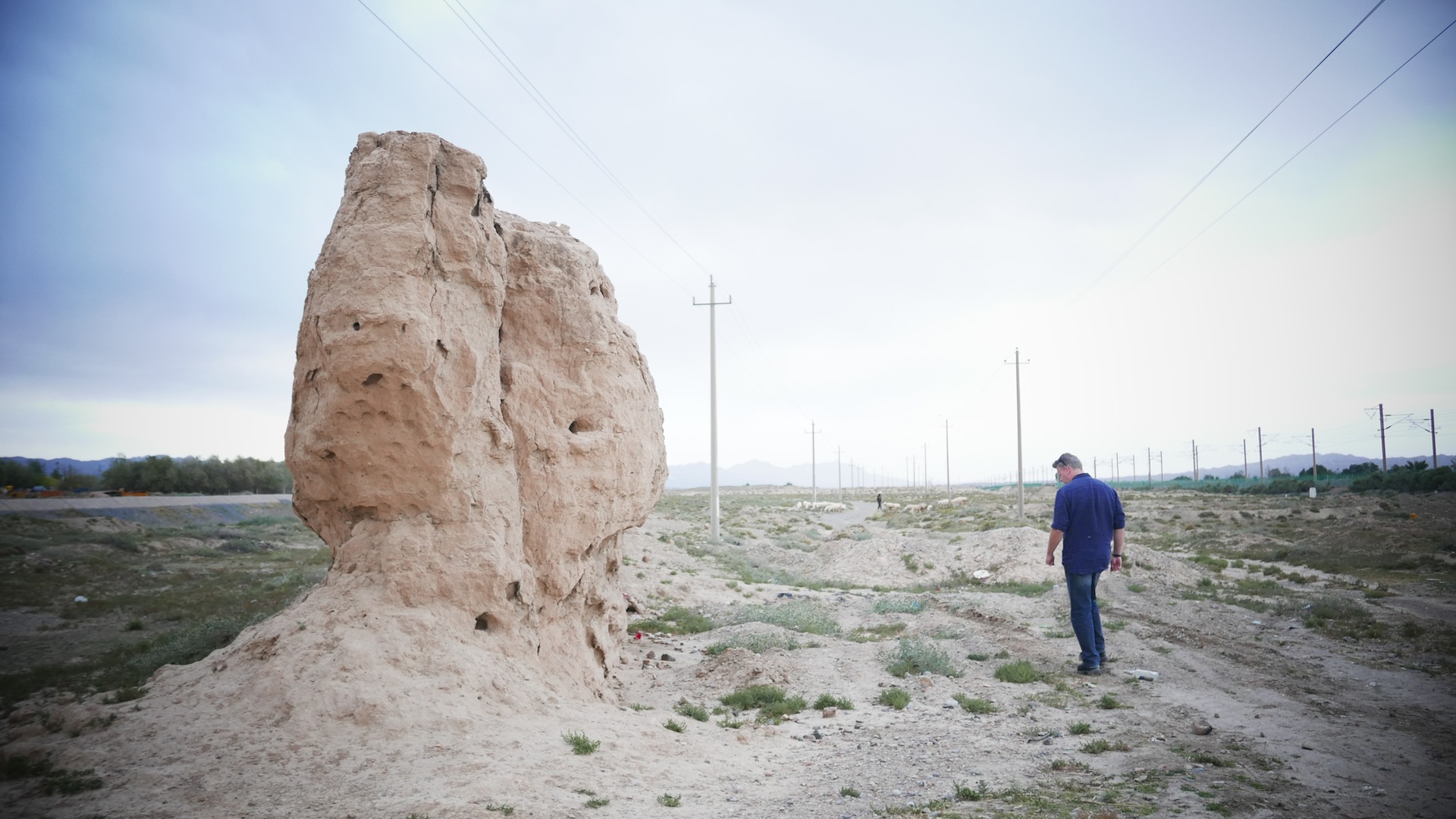
The Gansu end of the Great Wall is nothing like the posh Ming-era wall near Beijing. This is the Han-era wall, made of rammed earth, two thousand years old, and barely three metres high. It takes us the rest of the day to get there, and we lose our minibus to a broken gear-box on the way, forcing us to cram into the loaner Buick and the chase car just to get there before sunset. This is, I think, the fourth or fifth time that I have been at the Great Wall, although this version might be easily mistaken for a pile of mud.
I have to deliver a complex piece to camera which may form the opening speech of the series, and will certainly have to do for the opening of the trailer to be shown at the publicity event in October. I have to walk between a road and a railway, revealing that the Great Wall sits between them, and explain that the Great Wall here is “on the other side of China”, a gritty and real place, a thousand miles away from the tourist brochures. And then, I have to explain that I am a historian whose experience of China is really only from books, and that I am being forced to get my hands dirty finding about all these Chinese icons, and their place in a global trade network, past, present and future.
I have to do this in a single take, keeping my face to camera while my body is walking away from it, while the light is changing, while trains are zooming past on one side, and while trucks are zooming past on the other, while families of yokels keep stopping at the roadside and wandering over to see what is happening, and while a swarm of sandflies attack the crew, forcing me to deliver my lines while trying not to be distracted by the sight of nine people gesticulating wildly as they fight off a bunch of insects.
The Buick drivers take pictures with their cellphones, and I see a look in their eyes which is becoming increasingly familiar. They have spent all day watching the gangly fat foreigner, and wondering what the hell it is that he gets paid for. And then they have seen me deliver six passes at a 45-second monologue, while walking backwards beside the Great Wall, through broken glass and sandflies and passing dickheads.
The sun sets, we lose the light, and we have to pack up. The director has maybe three clean takes to work with, as well as several broken ones that might be stitched together in post. Considering the pressure (train, train, truck, truck, yokel, flies, light change, train, truck, GO!), I am pleased that we managed anything at all.
To Dublin, the one in Georgia, not the one in Ireland. That’s Georgia, the one in the United States, not the one on the Black Sea. Okay, to America, where a man has been sentenced to three years in prison for using a COVID relief loan to buy a $57,000 Pokémon card.
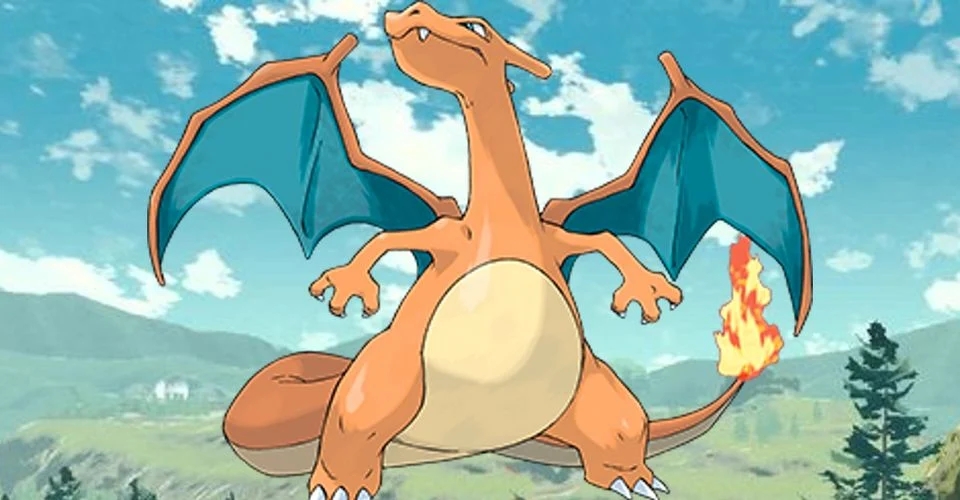
Vinath Oudomsine had told the Small Business Administration last year that he owned an “entertainment services” company with a high turn-over and a growing staff, and pleaded for $85,000 to keep things going during the pandemic. Then, he spent two thirds of the money nabbing himself a highly collectable Charizard card.
This was not what the Small Business Administration had in mind, and Oudomsine was obliged to hand over the ridiculously high-priced card, which I can only assume was one of the ultra-rare, first-printing Japanese basic sets from 1996. So, unlike the 1999 Holographic Charizard #4 ($36,000) or the 1999 Shadowless Holographic #4 Charizard ($25,500), the first-printing lacks a rarity symbol, because it was printed in the first two weeks of the existence of the game, before anyone thought rarity symbols would be necessary. It would have been literally one of the first Pokémon cards ever printed, which is apparently worth something to someone.
The issue of trading cards is even a matter of some academic speculation, as covered in Gilles Brougère’s “How Much is a Pokémon Worth?” in Pikachu’s Global Adventure (2004, you’re welcome, media students). Back in NEO #165, this column expressed my doubts about the collectability of many collectables. But Oudomsine’s case demonstrates that there was at least one person in the world prepared to assign such a value to a “trading” card.
Oudomsine wasn’t sent to jail for placing notional value on a rare Charizard – that is still not a crime. He was sent to jail for defrauding the US government to be able to afford one, so don’t worry, the Poké-police will not be knocking on your door any time soon. But what I want to know is what happens to that card now? Will the Small Business Administration will be trying to sell it off to get its money back, and if so, does it come with a new bill of provenance, increasing its value even further by noting that it was that card, from that case, that got all the international press coverage?
Jonathan Clements is the author of Anime: A History. This article first appeared in NEO #219, 2022.






 The Official Schoolgirl Milky Crisis Blog