Over at the Subject to Change podcast, it’s part two of our deep-dive into my book Japan at War in the Pacific, as Japan seeks to secure a puppet state in Manchuria, and then ends up bombing Pearl Harbor. Includes a ready-mix emperor, banking shenanigans, my Admiral Yamamoto comedy routine, and a crate of ceramic squirrels.
Mortified that I twice refer to Changchun as Chongqing; it was early.
There is an edgy staff dynamic at the Nanchang Museum, which has three times the usual number of security guards because of all the gold in it. This makes them jumpy at the best of times, but one also suspects that they are already all too aware that when the new Marquis of Haihun museum opens in the hinterland [it is now open], they will be surplus to requirements. Or rather, they will be offered a chance to keep their jobs, but only if they are prepared to commute an hour each way to what is currently a slum in the countryside.
This helps explain why the curator is so arsey with Clarissa the fixer, initially refusing to cooperate, then only ringing her back with oleaginous solicitude after he gets a bollocking from his boss. But he is still obstructive, refusing to allow us in to film on Monday, when the museum is usually closed to the public. Everywhere else we have shot, the staff have happily let us film on Mondays, when a Chinese museum is blissfully free of people, give or take the occasional cleaners. Clarissa even offered to pay overtime for the security guards if they would come in, but no, the curator would hear nothing of it.
So we are obliged to fit in my pieces to camera around a huddle of bumbling old couples who have inexplicably turned up with their week’s shopping in rustling bags; breathless girls who giggle at the sight of a film crew and insist on repeatedly taking selfies in the camera’s line of sight, and the constant jabber, key-jangling and walkie-talkie interference of the security guards themselves, who seem blissfully unaware that the harder they watch us, the longer we will take.
I only have a few pieces to do today, but each of them has to be carefully tailored to deal with the available information. One is about a boiler uncovered from the tomb, seemingly an object of zero interest, but suggesting that the Han Chinese had alcohol distillation more than a thousand years before it supposedly arrived in China. The fact that a whole film crew has set up next to an unassuming metal drum soon brings throngs of tourists over, crowding to read the signage and trying to work out why we are filming this and not the gold ingots.
Another piece is about a goose-shaped lantern that contains an ingenious smoke absorption chamber. Here, I earn my money by refusing to call it ecologically friendly, as it is still burning carbon, just not filling the room with smoke.
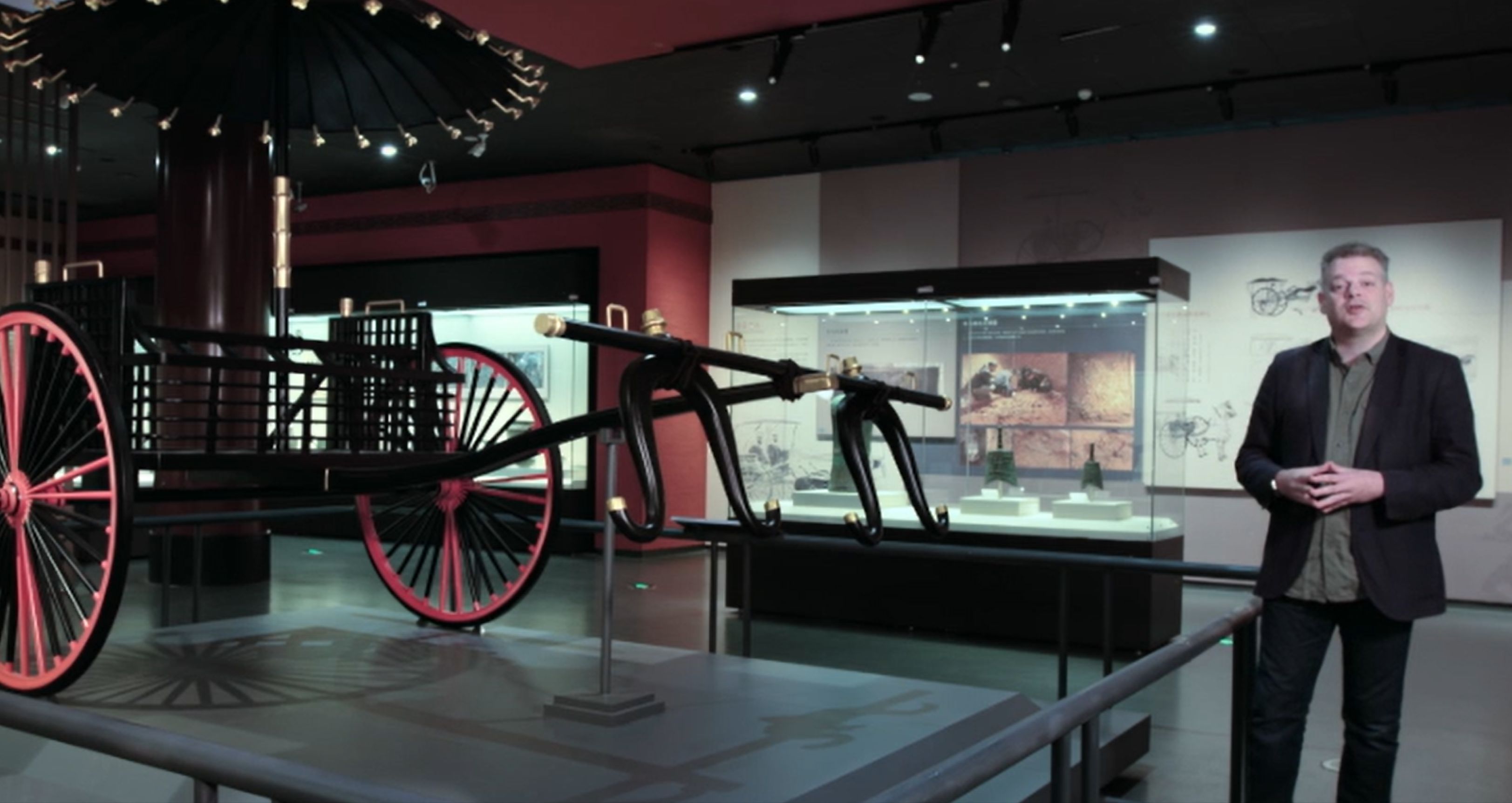
And in a scene that I, and I alone, regard as a hilarious Top Gear parody, I put on my best Clarkson impersonation and discuss the Marquis of Haihun’s pimped-out ride, the Well-Dressed Chariot, a “top-of-the-line sports utility vehicle with gold trimmings, a roaring four horse-power and a built-in drum to annoy the neighbours.” I have to think up this speech on the fly, rehearse it while the director is getting pick-ups elsewhere, and take the assstant producer to one side to photograph the signage for certain terms, so that our Chinese broadcast, when back-translated, matches what the museum says. I pace around the chariot, shuffling the words of my speech to avoid repetitions and redundancies, triple-checking facts and figures and terminology, shadowed by a glaring security guard, who plainly believes that I am just about to vault the fence and hotwire it, presumably driving it away with magic horses. After a while, I decide to see how many times I can walk around the same display before he stops following me. It takes thirty-three circuits.
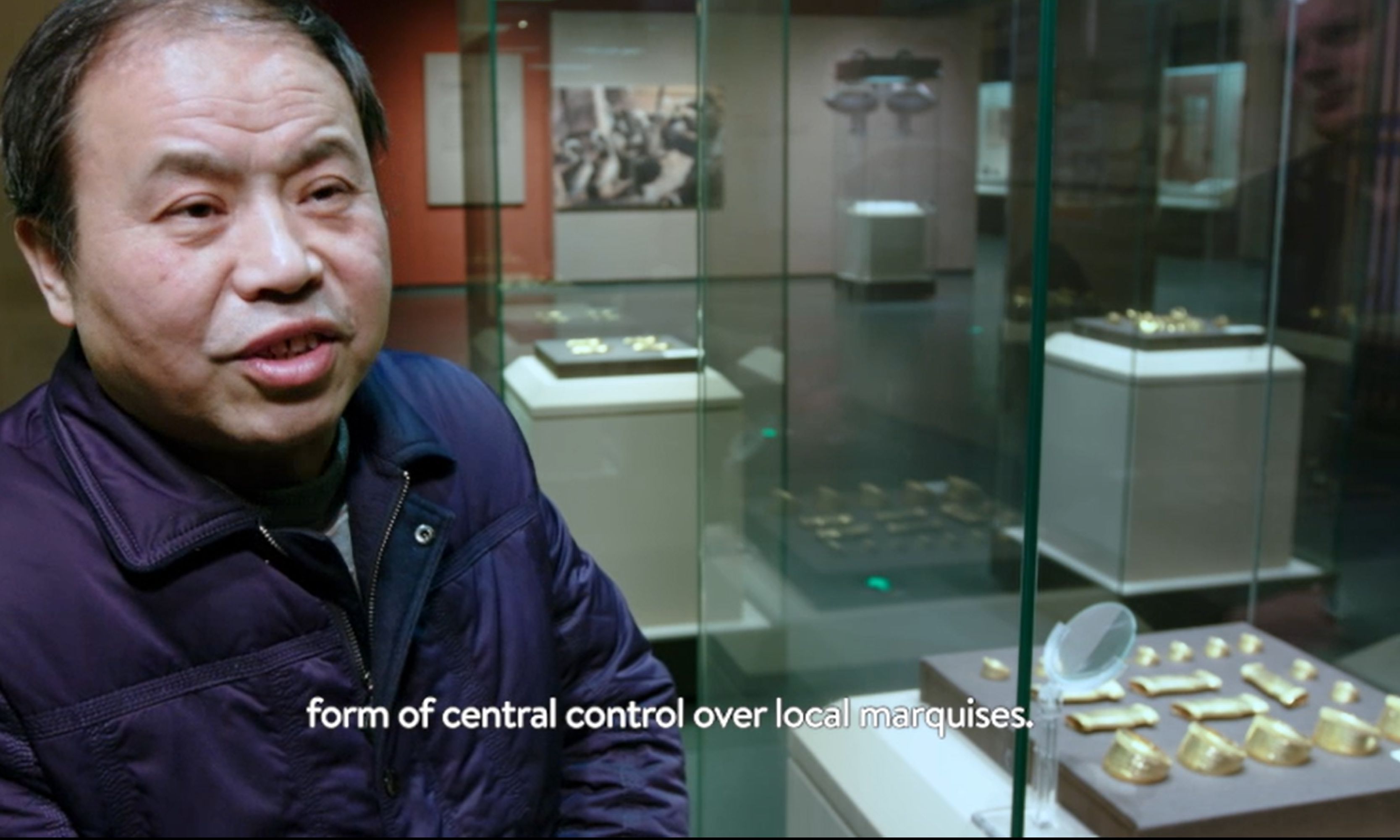
Today’s interviewee, the archaeologist Yang Jun, hasn’t helped by kiting his arrival time from morning to lunchtime, to afternoon, such that a good two hours of my fee today was earned sitting on a bench reading a book. But when he turns up, he is chubby, happy man, ready to talk about how funny it is for him to revisit the Haihun artefacts, separated from him now by bulletproof glass, whereas when he first saw them he was digging them out of the ground with his bare hands.
You would think that the arrival of the man who, to all intents and purposes, found the Haihun tomb, would cause the museum staff to prick up their ears, lean in for some gossip, or otherwise chill out, but they regard him with the same sneering disdain that they have for everybody else.
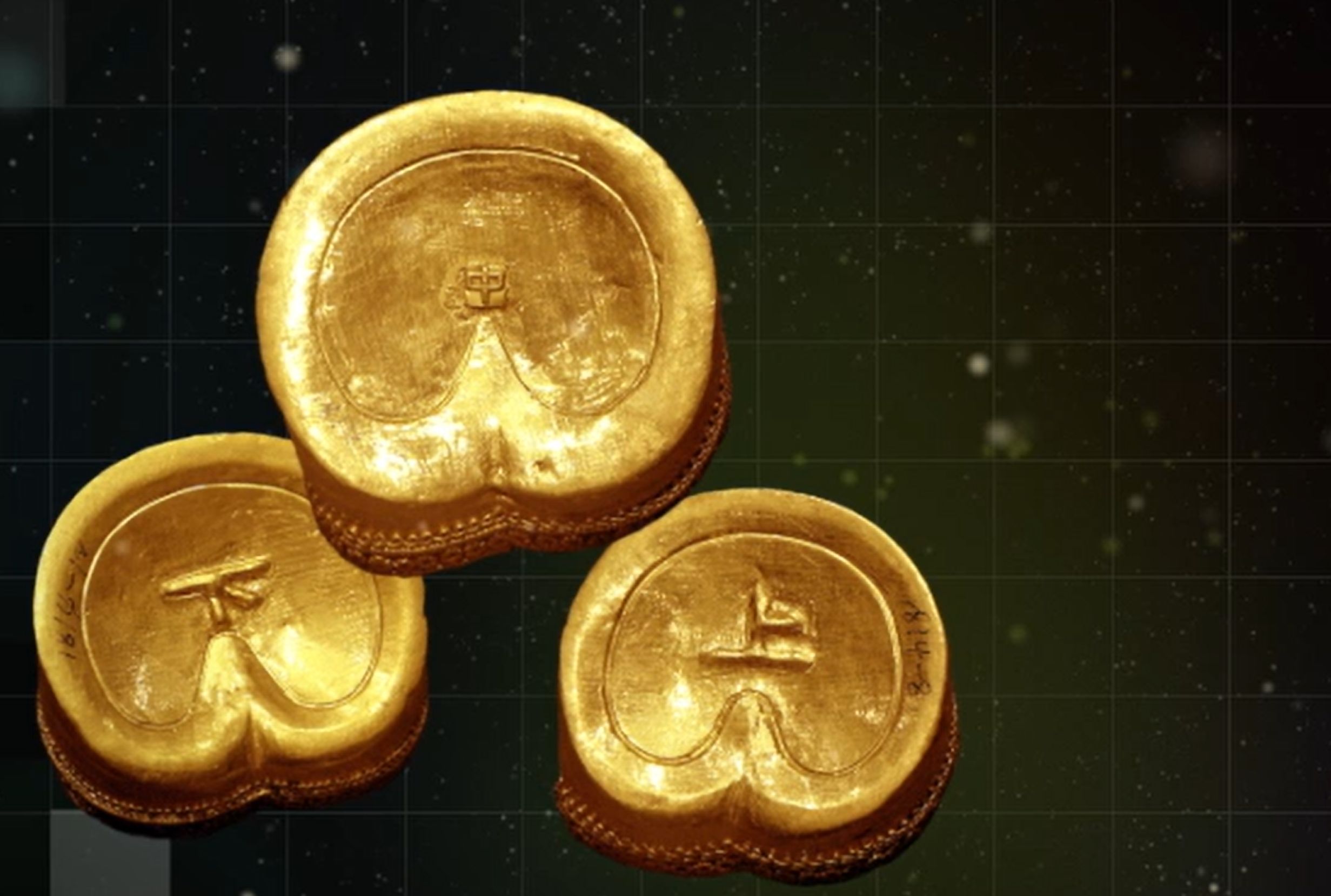
We’re here specifically to talk about the matijin (Horse Hoof Gold), a collection of odd-shaped gold ingots, some filled with Roman glass, that were buried with the Marquis of Haihun. “They weren’t money, as such,” explains Yang Jun, “because he couldn’t spend them. They were imperial gifts, really a reflection not of him, but of his dad, who was the favourite son of the Han Emperor Wudi, and Wudi’s most beloved consort, the Lady Li.” Lady Li was a famous beauty, of whom it was once said that “one look would make a city fall, a second would bring down a kingdom.”
“The thing is that we already know that there was a precipitous decline in the amount of gold in China during the Han dynasty, and I’ve got three theories for that. One is the rise in Buddhist statuary and accoutrements, that hoovered up all the gold around. Another is that trade with Rome was eating away at it.* But the most obvious explanation is that funereal customs changed to the extent that people were buried with their wealth, which the Marquis of Haihun’s grave seems to bear out.”
(*I find this one hard to believe, as the ‘trade with Rome’ was really all about silk going west, and the flow of silver out of Europe into Central Asia. As regular readers of this parish know, there were indeed commodities travelling from the Mediterranean to China, but it’s hard to believe that the Chinese were paying anyone for them in gold).
Although literary finds rarely make for good television, I also bullishly insist on quizzing him about the books found in the tomb. It’s one of those rare moments when the director is sure to dump the footage, but I want to know. Is it true that the tomb includes a copy of the Confucian Analects with the fabled two bonus chapters only found in the state of Qi, and believed lost for the last 1800 years?
“Oh yes,” says Yang Jun, eyeing me curiously as if I am a hamster that has suddenly started discussing Brecht. “So we’ve got the Qi Analects, which has two ‘new’ chapters of Confucius: they’re called Wen Wang (Asking the King) and Zhidao (The Knowledge). But we’ve also got some classics of the Yellow Emperor that people haven’t read before. But everything you see around you is only a part of the find. The gold might be shiny and impressive, but it’s also relatively easy to get out of the ground and put on display. I think the real treasures will take years to become manifest – the previously unseen books, for example, or all the exquisite lacquerware.”
Ah, there it is. The lacquerware, which when this episode airs will be the thing I go looking for more information on. We’ve finally shot the early scene that will send me off to other places, even though chronologically we have already shot those parts. And tomorrow, in fact, will be our final day of shooting, six weeks and 1,500 miles after we started.
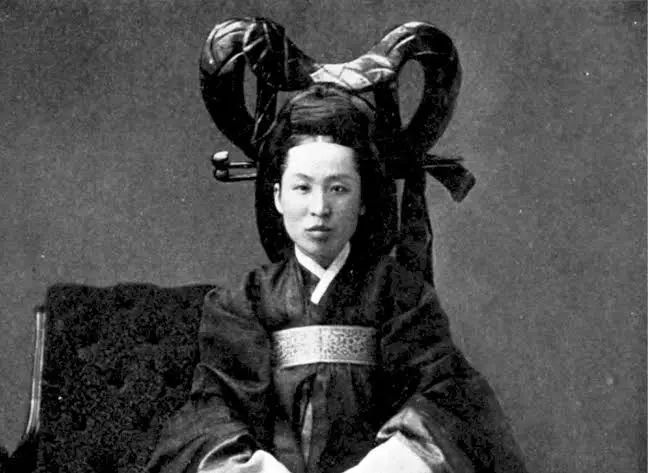
Over at the Subject to Change podcast, I discuss the history of Japan in the late nineteenth century in the first of three episodes based on my book, Japan at War in the Pacific. Includes China and Japan compared to two tramps fighting over a cardboard box in a skip; the false imperial proclamations of the Meiji Restoration; the sing-along revolution, and the scandalous story of the murder of the Empress Myeongseong, so-called vampire queen of Korea.
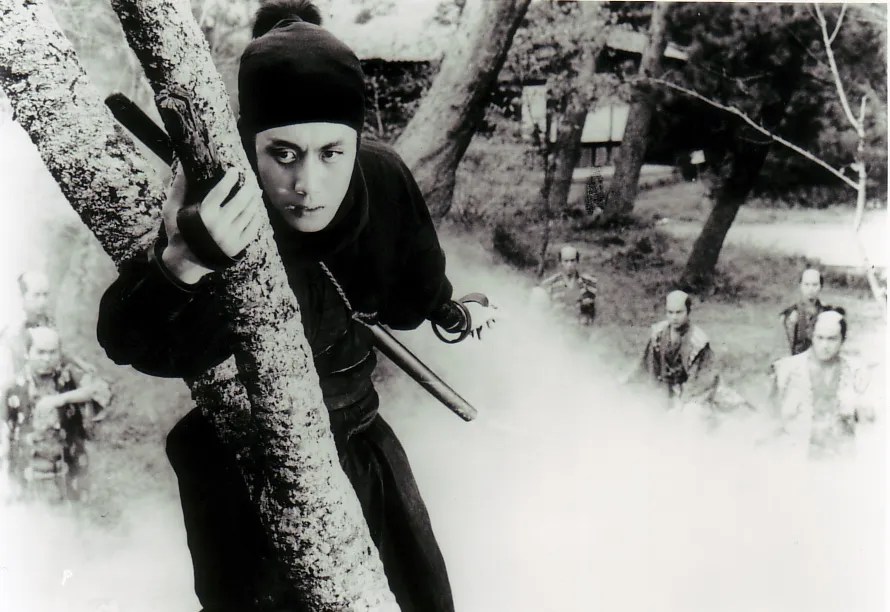
“It is a typical case of ninjutsu fake news, citing a historical incident, shoving ninja into it, and shrugging if no-one was left alive to confirm the claim. Shinobi no Mono demands that the viewer accept its central conceit – as if a newly made Robin Hood movie wanted everyone to agree he was also a vampire.”
Over at the Radiance Films substack, they have reprinted my booklet essay on the Shinobi no Mono films from the now unavailable collectors edition.
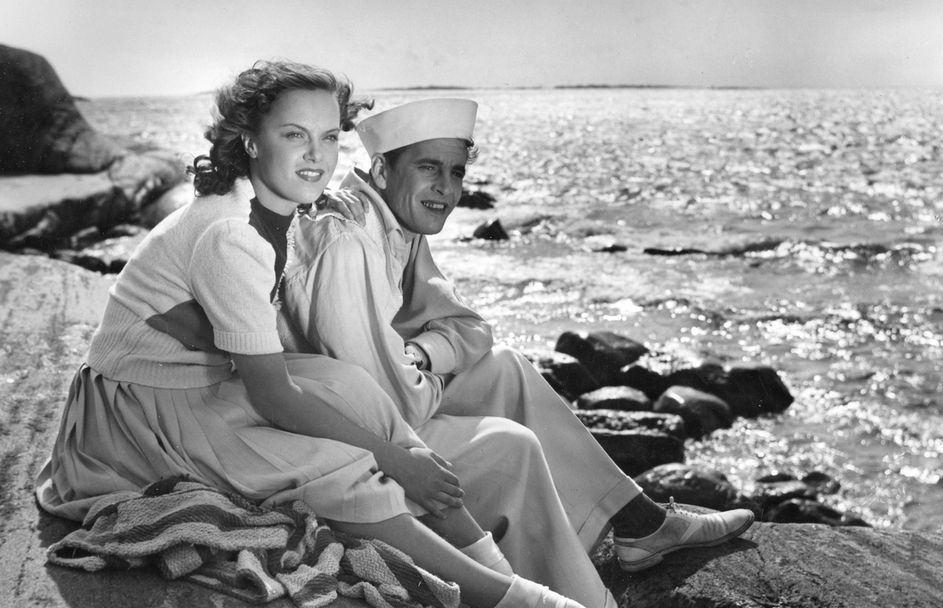
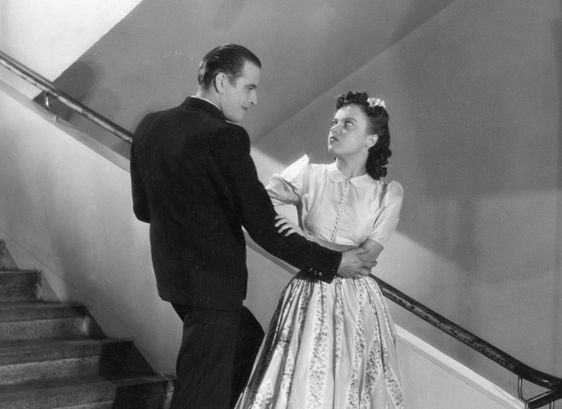
Teenage firebrand Lotta Koskimaa (Liisa Tuomi) has had enough of Deputy Judge Arvo (Pentti Saares), and deserts him on the dancefloor at her school’s spring ball after he tries to get handsy. She tries to get the local pastor to dance, and the flustered man of God orders her from the school gym. She obeys but cheekily blows him a kiss on the way out.
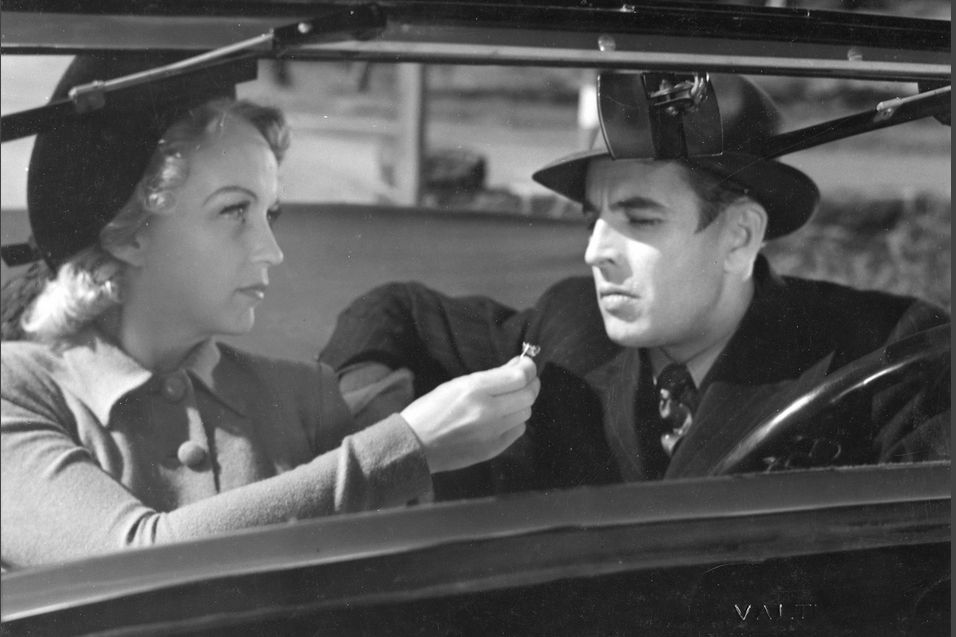
Arvo slinks off for a second date with trainee dentist Raili Tervola (Lea Joutseno), who happens to have met Lotta’s brother Viljo (Tapio Nurkka) while waiting for him at the restaurant. Raili, too, hectors Arvo over his womanising and leaves him to it.
The Koskimaa family slink off to the countryside for a tense semi-holiday, with Lotta fuming about her school reprimand, and her father Einar (Paavo Jännes) discovering that her behaviour has put his own appointment, as a professor of dentistry, into doubt. Meanwhile, Einar and his wife are experiencing marital difficulties, and even as the love polygon of the younger cast members resolves into a standard Finnish happy ending, they face the prospect that the elder generation is about to split up, even as the eve of their twenty-fifth anniversary approaches.
Hopeakihlajaiset is based on a script by Klaus U. Suomela, which placed second in Suomi-Filmi’s notorious New Writers competition in 1940. As regular readers will know, the winner was The Dead Man Falls in Love (1942), described on this very blog as “ a garbage fire,” so how much worse was the runner-up? I note with interest that Finnish Wikipedia doesn’t even attempt a plot synopsis, possibly because the story is all over the place.
The production manager didn’t want to make it at all, and since the author had submitted it as a play rather than a screenplay, it had to be polished up by Martti Larni before it was even camera-ready. Suomela kited his competition win into a theatrical run for the play as well as a novelisation before the film even appeared – the film’s director Wilho Ilmari had also helmed the run at Helsinki’s National Theatre a year earlier, in which Aku Korhonen played Einar. For some reason, he did not come back for the screen adaptation.
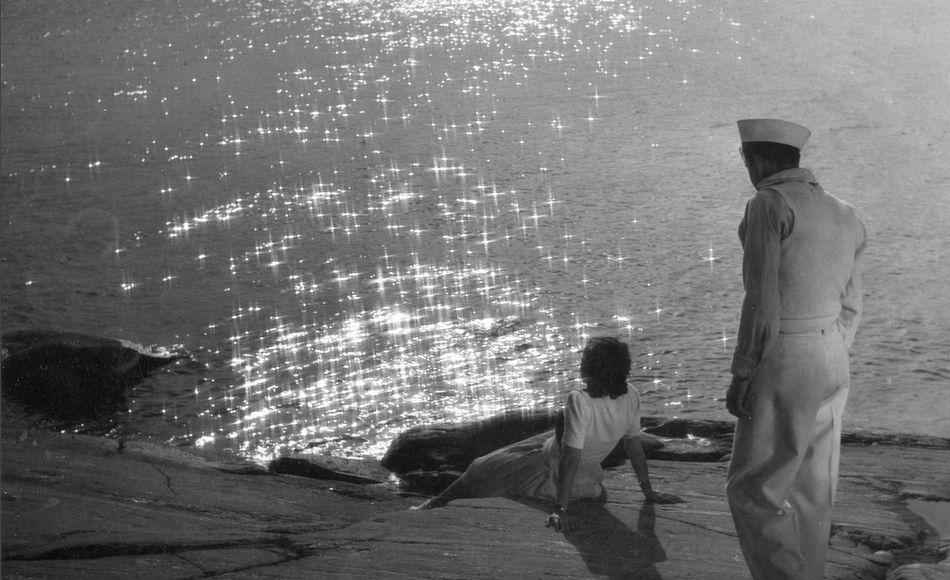
Films of the era had to make a judgement call on whether to reference the war or not – would it be gauche not to mention it, or unwise to assume it would still be ongoing by the time production was complete? Like Ilmari’s previous August Fixes Everything (1942), The Silver Betrothal Anniversary simply pretends that the war isn’t happening at all, and so there are no references to rationing or the draft. Larni’s rewrite at least gets the cast out of the studio, for several location scenes, including Lea Joutseno bursting into song on a sailboat, wringing the most out of the scenery of the Finnish summer. The marine footage, in fact, is the thing that really marks this film out eighty years later, with fantastic shots of Sörnainen harbour and sailing sequences shot off Espoo’s Vapaaniemi. One of the production stills even features the film crew setting about their lunch by the sea, while a warship in fantastic dazzle camouflage lurks sinisterly offshore.
The critics, however, still found something to moan about. After only complaining a couple of weeks earlier that August Fixes Everything was too theatrical, Olavi Vesterdahl in Iltalehti complained that The Silver Betrothal Anniversary was too, well, filmy, citing numerous cut-up techniques and sudden cutaways as disruptions to the telling of what ought to have been a simple story. Meanwhile, Salama Simonen in Uusi Suomi said the exact opposite, that the film played way too much like a stage play that happened to be on camera. The film, certainly, is nothing to write home about, particularly considering the terrible sound quality of some of the school scenes, which were shot on location rather than on a set. But while the critics might have carped about the story, some of the framing of the shots still looks arty and compelling even today.
Screenwriter Martti Larni, previously seen here adapting Over the Border for Suomi-Filmi, is a fascinating figure in Finnish literary history. Although he adapted several screenplays during the 1940s, his real reputation was founded on his biting satires, not only of Finland, but of the United States of America, most notably in The Fourth Vertebrae, about a Finnish conman who finds a ready supply of victims in the Land of the Free. Unbeknownst to Larni, the book was extensively pirated in the Soviet Union, where the authorities were so enamoured by its take-downs that it was given away free at airports. After his brief wartime career in the movies, he would spend several years in the USA, where he eventually became the editor of a Finnish-language journal in Wisconsin, Työväen Osuustoimintalehti (the Worker’s Cooperative Magazine). He also wrote several books about the Finns of North America, including The Fire of Minnesota and A Camera Tour Among the Finns of America. Almost none of his work is available in English, although his books were translated into over 20 other languages.
Wilho Ilmari hoped to make another film, The Vanishing Border, but it was stuck in production hell after the military authorities refused to allow for the filming of scenes near the front line. He sloped off back to the theatre and would not direct another film until Love is Even Quicker Than Piiroinen’s Ram (1950).
Jonathan Clements is the author of A Short History of Finland. He is watching all the Finnish films so that you don’t have to.
The Chinese are building a posh, modernist museum near the grave site of the Marquis of Haihun. The nearby village has been sinisterly evacuated, the houses already fallen into ruin. The archaeological site is closed to the public, and the museum is just a hole in the ground, but we are here to visit the preservation office, where wood and lacquer items are prepared for restoration.
It’s the closest thing I have ever seen to a prison. A police station stands incongruously in the field outside. The facility itself is a squat white former factory, surrounded by a wall, razor wire and an electric fence. It boasts an inner and outer gate, as well as a guard dog. Inside there are over three hundred motion sensors that beep enthusiastically whenever you try to go out for a wee, as well as uncounted security cameras and a separate echelon of security guards.
“It’s about the gold,” says Xia Huaqing, the head restorer. “Well, sort of. The grave site is famous for all the gold that was found there, so naturally anyone with a criminal intent is going to assume that this place is piled with it. But all the gold’s in the museum.”
Instead. Mr Xia’s facility patiently hosts shelf after shelf, in room after room of lacquer objects. Endless rows of tupperware containers hold goblets, tables and bowls, suspended in a chemical solution that is apparently so toxic that we cannot be in the room with it for more than thirty minutes, even wearing protective gear. Another larger chamber holds the wooden outer slats of Liu He’s sarcophagus, which need to soak for four or five years before they can be allowed to dry… only then will they be ready for restoration.
The longest room, packed with a couple of hundred sealed Tupperware trays that each seem to contain a dozen decayed chopsticks, contains the bamboo slats of the books unearthed from Liu He’s tomb, including the Qi Analects. We are there on the day that one of the archaeologists who uncovered the tomb turns up with two super-watt lamps and a digital camera. Wearing a face mask and googles, his trouser legs wrapped in cling-film against accidental splashes, he straddles each box, trying to get a super high-definition photograph so that his people can start to translate it. I suggest that maybe these two missing chapters from the Analects are the ones that have all the jokes in, but nobody is interested.
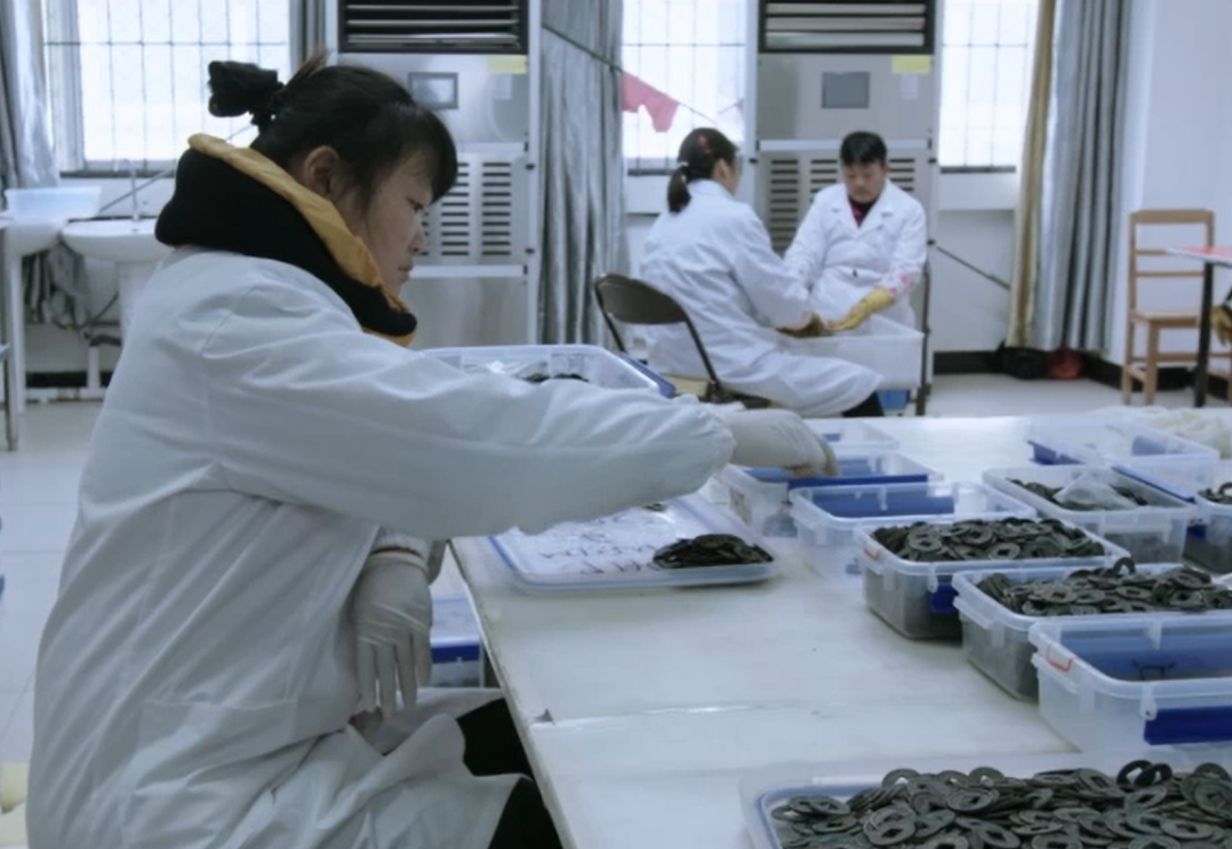
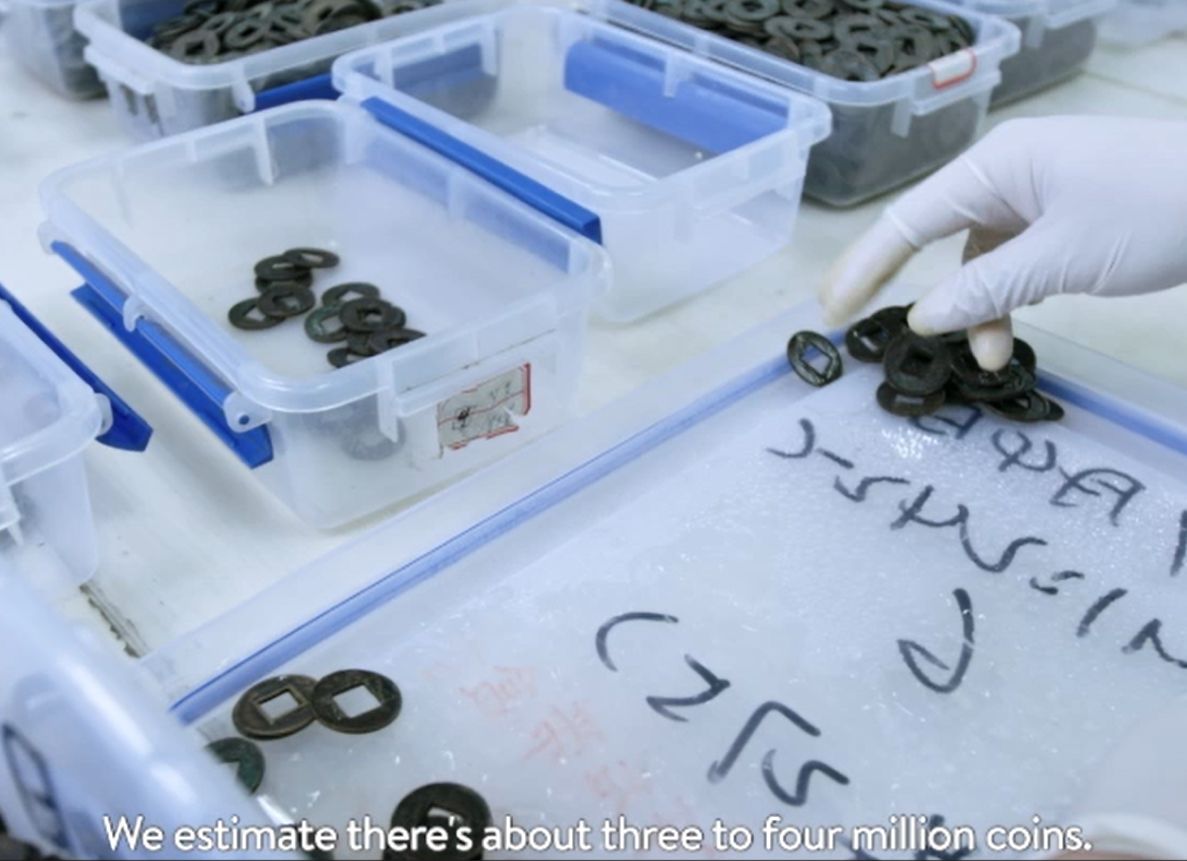
And there are the coins, piles of bronze coins, normally the wuzhuvariety, named for weighing the same as 500 grains of millet. Entirely unassuming, everyday bronze Chinese coins that you see all over the place, except the Marquis of Haihun’s tomb contained at least two million of them. Two stern-faced women sit in little aprons, wearing rubber gloves, grabbing a couple of wuzhu coins from a bucket and giving them a desultory scrape with a hard-bristled brush.
“I see you’ve got a pair of scrubbers on the job,” I say to Mr Xia.
“Oh yes,” he says, “they’re at it all day, every day. In fact, this place is so remote, and the security is so tight, that we usually just come here for a whole week, and just live inside the facility. That’s why we’ve got the little allotment.” Little vegetable patches are all over the ground, and in the most unappetising sight apart from the guard dog’s loose bowels, slices of daikon radish are stretched out all over the basketball court and the bins to dry.
It’s Christmas Eve, and so the crew are squired out to the Shangrila Hotel for a Cantonese meal, which includes a roast piglet, its eyes gouged out and replaced by Satanic glowing lamps. Christmas Day, if my memory serves me correctly, begins in a drunken haze at a karaoke bar, with the director and I murdering Ice Ice Baby while the rest of the crew look on aghast.
Jonathan Clements is the author of A Brief History of China. These events featured in Route Awakening S05E04 (2019), although mercifully not the karaoke.
On the fifth anniversary of his untimely death, I remember Zac Bertschy and his noble attempts to keep Helen McCarthy and me on-message in a gloriously rambling 2015 episode of ANNcast.
“Helen McCarthy, in a hat, outrunning a giant boulder made of porn.” I finally unlock the achievement of being interviewed on an Anime News Network podcast, about the world of the Anime Encyclopedia, the misery of Dog & Scissors, and other excitements, in a feature-length rant with my co-author about the state of the industry and the unkindnesses of readers.
“On top of the usual information about cast and crew, Clements provides useful historical and cultural context to the film and its setting. It’s a wonderfully informative and engaging track. Clements is becoming one of my favourite commentators, and I hope to see him get the opportunity more often.”
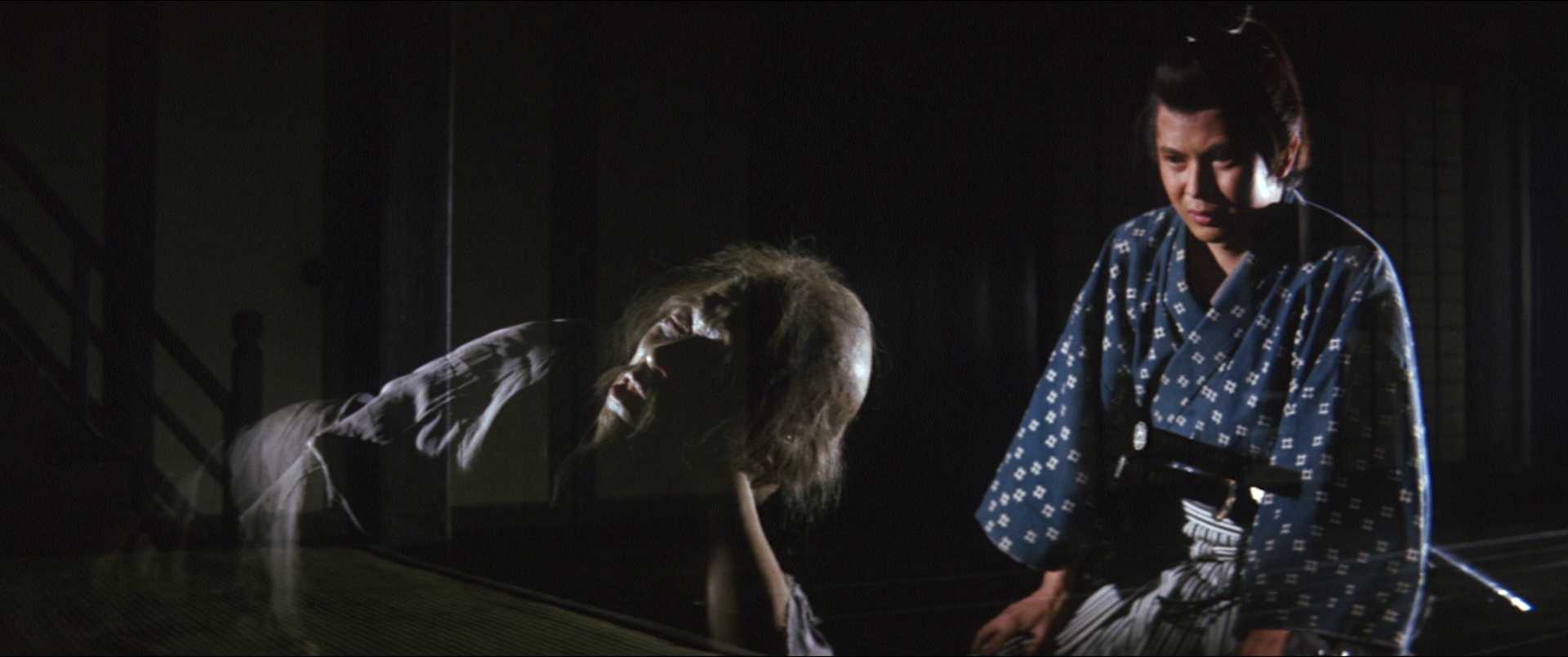
David Brook at Blueprint review goes looking for The Invisible Swordsman from Arrow Films.
“Among the new politicians voted into office, a stand-out was Freddy Lim Tshiong-tso, a man who might reasonably be described as the Nationalists’ worst nightmare. Born in 1976, and hence growing up with no memory of the martial law era, Lim ceased to follow the KMT party line during his school days, instead becoming an enthusiastic supporter of Taiwanese independence. He initially entered the public eye as the convenor of pro-independence rock concerts, and would eventually serve as the head of Taiwan’s branch of Amnesty International, and a key figure in the Sunflower movement.
“Throughout the late 1990s and the early years of the 21st century, he was also the lead singer of the death-metal band Chthonic, releasing a series of politically charged works, including a concept album about the 1930 Musha Incident (2005, Seediq Bale), allusions to the February 1947 unrest as an earthly manifestation of Hell (2009, Mirror of Retribution), and an album dedicated to the conflicted loyalties of indigenous soldiers serving in the WWII Japanese military (2011, Takasago Army).
“Donning a suit instead of his habitual leathers and tribal face-paint, Lim became one of the founders of the New Power Party, and proved to be enough of a diplomat to shoo away other DPP-leaning candidates in a western Taipei suburban district, where he defeated the KMT incumbent. He then aligned his New Power Party, its emblem in stark Sunflower-yellow, broadly within the ‘Green’ policies of the victorious DPP.”
– excerpted from Rebel Island, by Jonathan Clements.
And now he is Taiwan’s new envoy to the world’s most metal country, Finland.








 The Official Schoolgirl Milky Crisis Blog