There will never be a 100% historically accurate Confucius movie. It would be in a dialect of ancient Chinese that literally nobody could understand. The manners and customs would be more alien than the wildest science fiction, and the character motivations truly inscrutable. And no matter how careful the scholarship, it would be open to attack from all sides, because the original source material is already riddled with holes, assumptions and later interpolations.
Our prime source for Confucius, The Analects, is a grab bag of anecdotes and quotations, assembled long after the famous philosopher’s death. A diligent scholar can rearrange the stories in a rough chronological order, revealing a narrative basis for Confucius’s life: his early career as a civil servant, his early successes, his fall from grace in his native state of Lu and his years of wandering. Take things to extremes, applying true academic rigour to the materials, and the historical Confucius evaporates altogether.
Hence, literally any biography of Confucius must involve dramatic licence. As with the First Emperor of China, we are forced to work from the thinnest of material, little more than snatches of overheard dialogue: a cluster of old sayings, and a few incidental details about the history of the period. Hu Mei’s film Confucius, starring Chow Yun-fat, is a brave effort that meticulously walks a difficult tightrope between historical accuracy and entertainment. Continue reading →
An excerpt from A Brief History of the Samurai by Jonathan Clements, available now in the UK and US.
—-
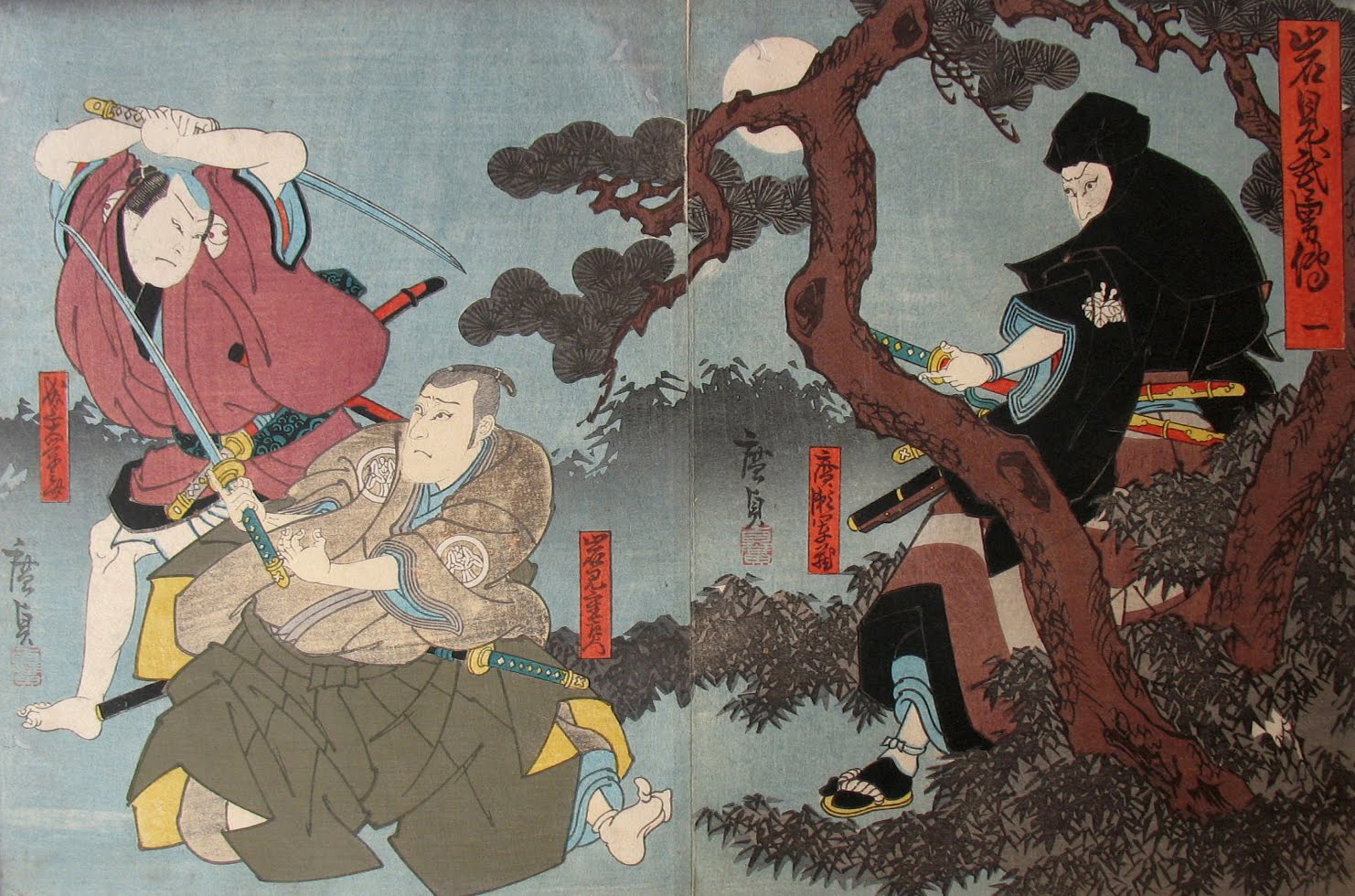
The year of Mitsukuni’s death saw one of the defining events of eighteenth-century Japan, the infamous vendetta of the ‘Forty-Seven Ronin’. As part of the endless rounds of ceremonial and courtesy calls of the Tokugawa period, Asano Naganori, the young feudal lord of the Ako domain was ordered to entertain envoys in Edo who had freshly arrived from Kyoto. As part of the preparations, he met Kira Yoshinaka, one of the Shogun’s high-ranking officials. The men do not appear to have hit it off, and, reading between the lines, Kira was expecting substantial bribes and honoraria from Asano, even though it was his job to instruct him. Whatever the nature of the tensions between them, Kira had mastered the art of the snide comment, and seems to have made one allusion too many about Asano’s country origins. On 21 April 1701, under a covered walkway at one of the Shogun’s mansions, Kira pushed too far, and an enraged Asano drew his short sword and knifed him in the face (or shoulder, depending on the source).
The wound was minor and guards soon separated the brawling men, but the damage was done. Regardless of claims of the right of samurai to defend their honour, drawing a weapon within the Shogun’s palace was a capital offence. Asano was ordered to commit seppuku, his lands were forfeit, and his followers were outcasts – ronin. When the news reached Asano’s castellan Oishi Yoshio, Oishi obediently shut down the castle, disbanded the soldiers, and handed the keys and manifests to the new lord appointed by the Shogunate. Where once there might have been war, the Tokugawa rule was supreme, and a lord could be unseated by simple decree.
However, while Oishi had done his duty to the Shogun by obeying orders, he was also determined to do his duty by the wronged lord Asano. In the company of several dozen fellow retainers (traditionally forty-seven, but possibly more), he plotted his revenge against Kira. Over the two years that followed, Oishi gave every appearance of being a discredited samurai. He was seen in Kyoto brothels, he was publicly drunk, and he was conspicuously on the Tokugawa-era scrapheap. In a move that has often been cited as an indicator of his true nobility, he even divorced his wife and disowned his children, to ensure that they would not have to bear any consequences for his coming vendetta.
Slowly, the Forty-Seven Ronin converged on Edo. One married the daughter of the man who had built Kira’s house, obtaining in the process the plans for the inside of the mansion. Others secretly smuggled weapons into Edo. The vengeful assassins struck on 14 December 1702, in a double-pronged assault on Kira’s snow-bound house.
The mansion erupted in a savage battle between Oishi’s men and Kira’s underlings, which saw sixteen of Kira’s men killed and another twenty-two wounded. Kira, however, had fled through a secret exit, leaving his bedclothes still warm. Oishi bested two other retainers in a dark, secluded courtyard, before dragging the man they were protecting into the light. Beneath the warm glow of the lantern, Oishi saw the scar left by his master’s knife. He had his man.
In one of the strange turnabouts of the samurai world, Oishi dropped to his knees and bowed before Kira, explaining who he was and humbly offering him the chance to atone for his misdeeds by committing suicide. It was only when the cowering Kira refused to respond that Oishi dragged him up by his hair, and hacked off his head. Their job done, the samurai carefully extinguished the lamps in the house in order to avoid accidental arson, and then ran for Asano’s grave with Kira’s head.
As the sun rose, word spread of their action, and they made their way to the temple grounds of Sengakuji amid something of a carnival atmosphere, congratulated and fêted by the townsfolk. They laid Kira’s head on Asano’s grave, and then turned themselves in to the authorities – all except one, who had been sent to Asano’s old domain to pass on the news.
The vendetta was an awful embarrassment for the Shogun’s government – the samurai had behaved impeccably according to samurai tradition, but had also defied a Shogunal prohibition. Edo locals did not help by petitioning the Shogun on behalf of Oishi and his men, pointing out how true they were to the nebulously defined samurai code of honour. Eventually, the Shogun ordered that instead of the death penalty as common murderers, the ronin would be offered the chance to commit seppuku as a gesture of respect. This they did in early 1703, with the exception of the messenger in Ako, who was spared. Their act cleared the name of their late lord, restored the reputation of their many fellow retainers, and eventually led to the restoration of the house of Asano, albeit with a greatly reduced size of fief.
The men were held up as heroes by many, although one noted commentator gruffly wondered how ‘true to tradition’ it would have been if their target had died of an illness during the prolonged execution of their two-year plan. Instead, one samurai theorist suggested that the true samurai way would have been to attack Kira on the day of the original insult. They would still have died, but the process would have been quicker and more conspicuous. Such a comment, made by Yamamoto Tsunetomo, encapsulates the contradictions of the samurai era. Taken at face value, there often seems little difference between a samurai dispute over honour and a fight in a pub between football hooligans over who has the nicest scarf.
A Brief History of the Samurai, by Jonathan Clements is available now in the UK and US.
From A Brief History of the Samurai, by Jonathan Clements — available now in the UK and in the US.
——
Considering the ubiquity of the ninja in twenty-first-century popular culture, it is remarkable how fast they appear to have sprung out of nowhere in the 1950s and 1960s.
At first, they were imagined in black – the default colour of stagehands and puppeteers, whom traditional theatre-goers were supposed to blank from their sight. Ninja were proletarian heroes, peasants and underlings in the interstices of times past, literally invisible from a military history that had been dominated by the samurai. However, despite the claims of ninja apologists, it is difficult to find any concrete discussion of them long before the novels of Yamada Futaro (1922–2001) and the comics of Shirato Sanpei (1932–2021). Any attempts to make a scholarly study of ninja lead down a series of false trails, with modern sources that end up only citing each other, and credulous populist works that claim any reference in an old account to shinobi (stealth, spies, assassins) was in fact a reference to one of several secret ninja societies that stayed in the shadows. This fad achieved global recognition with the appearance of ninja in the James Bond film You Only Live Twice (1967) – reaching, by nature of its genre and franchise, a far wider audience than any more reasoned, less fantastic account of Japanese martial traditions.
As colour television took hold in Japan, ninja gained more garish colours, as well as a conveniently rediscovered martial art. The TV series Ninja Butai Gekko (1964, released abroad as Phantom Agents) gave them superhuman abilities born from simple camera trickery, and gadgets inspired by James Bond and Cold War espionage. Although ninja were found in some 1960s entertainments for adults, their most enduring legacy has always been in the children’s medium, where every generation seems to have a ninja series to imitate in the playground and the park – Ninja the Wonderboy (1964), Legend of Kamui (1969), Battle of the Planets (1972), Hattori the Ninja (1981), Red Shadow (1987), or Naruto (2002).
A Brief History of the Samurai, by Jonathan Clements is available now in the UK and US.
At the request of the Czech convention Animefest earlier this year, I reprised my infamous speech on the Anime Erotic — a transcript of which can be found in my book Schoolgirl Milky Crisis (US/UK). The speech has now been uploaded onto Youtube with English subtitles and, soon, I am told, subtitles in Czech. You can watch it here.
And of course, my Wrong About Anime speech from the Animefest two years earlier, is still available here.
With a press release cunningly put out in silly season, when all the real journalists are still only struggling back from vacation, August’s announcement that Tom Cruise was going to get a J3C Award managed to make it onto a lot of news sites desperate for something that didn’t involve shootings or revolutions.
The 2nd Japan Cool Content Contribution Awards, to give them their full name, seem to be a Hollywood-based feather-stroking exercise by JETRO and METI, two Japanese government bodies with a vested interest in fostering overseas industry ties. They’re doled out at the Tinseltown consulate, and seem designed to point the eyes of the press at those media splashes that have some sort of connection to Japan. Tom Cruise, of course, has recently starred and produced in Edge of Tomorrow, the inanely retitled but rather fun adaptation of Hiroshi Sakurazaka’s novel All You Need is Kill. Another award is going to Doug Liman, producer of the Godzilla remake.
Wait, there was a 1st J3C awards? In 2013 the gongs were handed out to Tim Heroes Kring, presumably for creating the character of teleporting time-traveller Hiro Nakamura, Don Murphy, the producer of Transformers, and Vicki Shigekuni Wong, who produced Hachi, the Richard Gere vehicle about an abandoned dog.
J3C is an interesting restatement of a topic that this column has monitored for the last five years – Japan’s ever-increasing belief in and, indeed, reliance on the power of its intellectual property to earn money overseas. It’s been eight years since Peak Anime in 2006, but initiatives like J-LOP (NEO #123) continue to push Japanese comics, novels, games and movies as blue-chip rough diamonds, waiting to be honed into globally-locally acceptable jewels.
This won’t come as news to any NEO reader. Media splashes with a connection to Japan comprise most of the content of this magazine in any month, but J3C seems to have a more ardent purpose, to remind Hollywood that Japanese intellectual property is a powerful, world-beating commodity that really deserves their attention. A cynic might suggest that they have been inaugurated just as Hollywood’s attention has turned away from Japan to the potential of a market with one billion pairs of eyes – stop looking at China! Look back at us!
Jonathan Clements is the author of Anime: A History. This article first appeared in NEO 129, 2014.
Necromancy, ten years of NEO, and the carrot of continuations on our 27th podcastJeremy Graves is joined by the fragrant Gemma Cox of NEO magazine, the pungent Andrew Partridge from Anime Ltd, and the newly doctored Jonathan Clements to discuss Scotland Loves Anime, the Boom Boom Satellite Distraction Device, and rogue robot tanks. You can download the podcast here.
0:00 intros and hellos
04:30 Dealing with a film festival in the shadow of Ghibli.
09:30 Bad hair days and uncanny valleys on Appleseed: Alpha.
11:30 The miseries of live television.
14:00 Appleseed: Alpha, the jury’s view.
16:30 The true nature of the Golden Partridge Award, soon to be renamed the SLA Glass… Thing.
20:00 Déjà vu and original dialogue in English.
22:00 Bayonetta and evocations of the beer-and-curry era.
25:00 Trigger warnings in TheWings of Honneamise. Berserk 3 and the “carrot of continuations.”
32:00 A young lady’s primer to fan service and fighting the patriarchy. Questions on the nature of the Noitamina target audience, and plugs for Psycho-Pass and Rolling Girls. Why do less women get promoted to anime director?
41:00 Gender demographics at NEO and Scotland Loves Anime. The flexibility of the female audience, and the desirability of girls in bikinis saving the world from aliens.
45:00 Just how involved is a “supervising” director?
46:30 The audience turn-out for Ghost in the Shell. The suggestion that fandom is a non-renewable resource. The longevity of Cowboy Bebop, outliving the television technology that originally screened it.
52:00 Celebrating ten years of NEO magazine with the 130th issue. The haptic luxury of print magazines, versus beaming digital data into your brain. The international reach and originality of the long-running Manga Snapshot feature. Deciding what goes on the cover, and the perennial problems of timing content to available releases and images.
68:00 Why commissioning your own artwork isn’t always the answer.
73:00 Paper quality, fonts and leading – a bunch of things that nobody ever thinks about.
76:00 Let’s go on a journey, a journey into NEO time… where did the name come from?
79:00 One more round on the whirligig of the “Manga” Entertainment name controversy.
81:00 The scandalous secret behind NEO’s recipe column. The tax-deductible nature of a “research” trip to Hooters.
85:30 The difficulties of knowing more than one’s readers when the readers have got all weekend to torrent, stream and binge the latest shows.
87:30 The desirability of “balanced” reviewing. What can we learn from Australian Vogue…? Would you buy a DVD compared to “colonic irrigation with cheap caustic soda” or with a review that promised “another shouty advert for stuff you don’t want”?
94:00 How do you define a star rating? We are 87.5% certain we know the answer to this question. The spoilerific nature of Sight & Sound and “the conversation.”
102:00 The need for necromancy in reminding fans of forgotten simulcasts. “Not all people live in the same Now.”
105:00 The perils of online search bubbles. Sting’s informational message for the future and the nature of the “closed circle of consumption.”
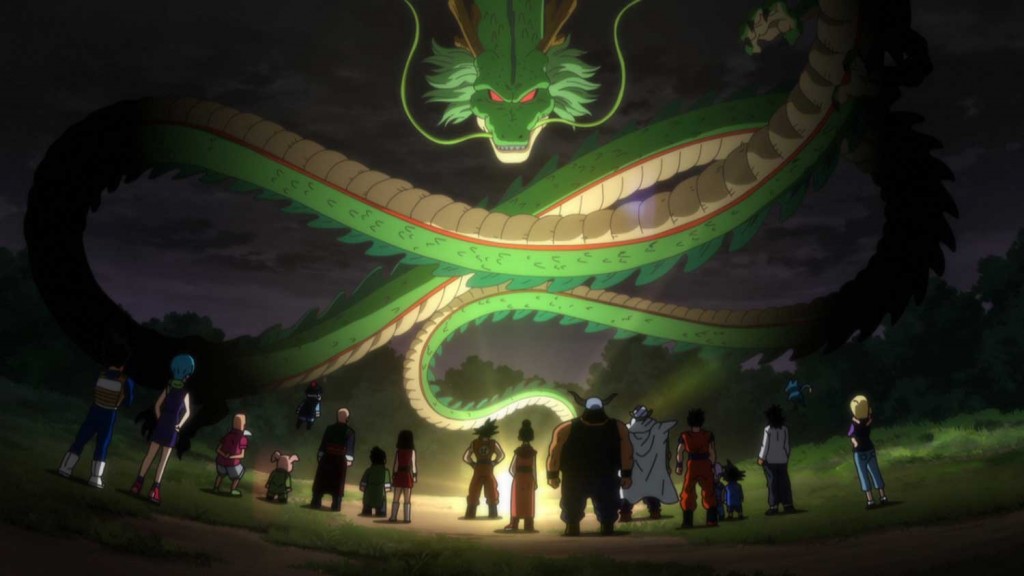
110:00 Dragon Ball Z: Battle of Gods.
117:00 Giovanni’s Island – the festival winner.
127:00 Jeremy returns from his dead battery to plug MCM Expo and events pertaining thereto.
And we’re out. The Podcast is available to download now HERE, or find it and an archive of previous shows at our iTunes page. For a detailed contents listing of previous podcasts, check out our Podcasts page.
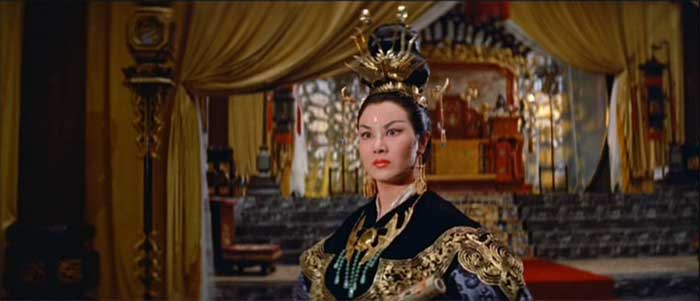
After many years of waiting and wrangles, my book on the controversial medieval Chinese Empress Wu is finally re-released on Kindle and paperback from Albert Bridge Books (US/UK). As the blurb recounts:
Empress Wu Zetian (624-705 AD) was the only woman to be the sovereign ruler of imperial China. A teenage concubine of the Tang Emperor Taizong, she seduced his son while the emperor lay dying. Recalled from a nunnery as part of an intricate court power-game, she caused the deaths of two lady rivals, before securing her enthronement as the Emperor Gaozong’s consort. She ruled in the name of her husband and two eldest sons, presiding over the pinnacle of the Silk Road, before proclaiming herself the founder of a new dynasty. Worshipped as the Sage Mother of Mankind and reviled as the Treacherous Fox, she was deposed aged 79, after angry courtiers murdered her two young lovers.
The subject of countless books, plays and films, Empress Wu remains a feminist icon and a bugbear of Chinese conservatism. Jonathan Clements weighs the evidence of her life and legacy: so charismatic that she could rise from nothing to the height of medieval power, so hated that her own children left her tombstone blank.
Meanwhile, it’s a condition of my doctorate that my thesis be freely available to other researchers, but to spare you the bother of going to the Library of Wales and photocopying it, here’s a PDF. The title is A History of the Japanese Animation Industry: Developing Technologies, Changing Formats and Evolving Audiences. I’m afraid what blurb there is is couched in significantly more sesquipedalian prose:
This thesis offers a discursive genealogy of the Japanese animation, or ‘anime’ industry, outlining changes to its prevailing form caused by successive disruptions – fluctuations in economic conditions, applications of new technology, and changes in available formats. Instead of focussing on the content of the anime texts themselves, it addresses the form of the content – treating the anime texts as manufactured ‘objects’ or as performative ‘events’ that are created, refined, marketed and sold.
The approach is historiographical, favouring published testimonials and memoirs from the participants in the Japanese animation industry, and assessing them in terms of possible errors of historical practice. The participants’ activities are categorised as points on a chain from Ownership of the intellectual property to Access to the text, prompting not only consideration of changes in the processes of production, but also in the oft-neglected areas of distribution and exhibition.
Spanning the 67 years from 1945 to 2012, in overlapping periods defined by developments in formats and technology, a picture is presented not only of the anime industry, but of its participants’ changing sense of what that industry is, its traditions and potential. This will present a foundation for future research into anime’s history, not only through this narrative of events, but also through consideration of the theoretical issues deriving from the nature of the sources.
And of course, if you like what you see there, a significantly expanded version, losing a lot of the theory and introduction, but adding four extra chapters, has been published by the British Film Institute (US/UK).
One almost doesn’t want to comment, lest it amount to either feeding the troll or mocking the afflicted. But in the interests of chronicling Japanese popular culture, warts and all, this column reluctantly reports that a Tokyo judge has sentenced Hirofumi Watanabe (36) to the full four-and-a-half year jail sentence called for by the prosecution. The crime: being a colossal douche.
Since 2012, Watanabe had been harassing manga creator Tadatoshi Fujimaki, and anything connected to the artist’s popular manga Kuroko’s Basketball. I say “popular”, although it is bitterly ironic that Kuroko’s Basketball, the tale of a high-school sports team trying to make it to nationals, has barely attracted any foreign attention apart from the hate campaign directed at by Watanabe.
Seemingly jealous that Fujimaki was successful, and determined to drag him into a suicidal vortex of his own making, Watanabe sent poisoned packages, including one containing hydrogen sulphide to Fujimaki’s alma mater, and threatened terror attacks on any convention or event that included coverage of Kuroko’s Basketball. Japanese stores, fearful of some sort of big-eyed al-Qaeda, removed Kuroko’s Basketball from their shelves, and cinemas started demanding ID and proof of invitation from anyone older than 16 trying to get into an anime roadshow.
Why? Because Watanabe was jealous of Fujimaki’s success. Jealous and, frankly, mentally disturbed enough, and idle enough to send 250 threatening letters in a single calendar month, signing himself The Fiend with 801 Faces (a punning reference to 8-0-1 = yaoi). Watanabe was carted off in handcuffs to begin the sentence, still bragging that the whole exercise was a “good revenge” against his parents, and that as soon as he was out of prison, he intended to kill himself.
Stories like this break my heart. In a fandom that crowd-funds artists and has whip-rounds for local charities, in a subculture that welcomes and embraces all lifestyles and all kinds of weirdo, it saddens me that press column inches get expended instead on nutjobs like Watanabe. The Japanese system now has four-and-a-half years to get to the bottom of his problem before he’s out to cause more trouble. Like life isn’t difficult enough. His life, your life, mine…
Jonathan Clements is the author of Anime: A History. This article first appeared in NEO 128, 2014.
On my way to Glasgow today for my annual film festival obligations. I’m up on the Scotland Loves Anime blog with a piece about being the jury chairman, and a rundown of the films in competition for this year’s Golden Partridge award. Meanwhile, festival director Andrew Partridge and I are interviewed on the Daily Record website about the festival, and I talk solo to TV Bomb.







 The Official Schoolgirl Milky Crisis Blog