The Waiting Game

Evangelion-3.0-Asuka-ShinjiAnd with apocalyptic inevitability, Evangelion 3.33 is delayed in the UK. Fans must now wait several more months to see the world end on their TVs, although the hiatus is liable to allow for more cinema screenings, of what is, after all, a cinema film.

Identifying as a fan brings a sense of active entitlement. You love your favourite shows so much that you wear them on your chest and your pencil case. Their logos decorate your desktop. But that’s not enough, you want to get up inside the gubbins and see how they’re made. You want Making Ofs and interviews, and advance news of what will happen. Modern media encourages this; it practically demands it, and we can all agree that this is what fans sign up for.

But does it really have to be so quick? Any artistic achievement in localisation is becoming almost impossible. Simulcasts and lightning-fast schedules have turned translation and dubbing into desperate triage. This whiplash turnaround, supposedly, is designed to thwart pirates. But the pirates are serving a market of viewers who want everything yesterday.

I guarantee you, if you made watching anime your lifelong career, you would never have the time to see it all. So take it easy. Smell the flowers. Delve in the backlists for shows you might have missed. I’m shocked at the number of self-proclaimed otaku, clutching the latest 13-episode flash-in-the-pan fanbait, who have never seen Akira, or Cowboy Bebop, or as a bunch of big-name podcast pundits recently confessed, Voices of a Distant Star.

I wonder what these people think they are fans of. Presumably it’s That Thing That’s On Right Now, and they get angry because someone in a London office has to change an entirely notional date on a spreadsheet. But if you do really need it that much, that soon, maybe you need help. Let’s make this five-month gap an Anime Spring, when everyone can try something that’s new to them even if it’s old to Amazon. The delay has bought you five months to do something else. So pick something you’ve never seen and give it a whirl. And write in to NEO to say what you’ve found.

Jonathan Clements is the author of Anime: A History. This article first appeared in NEO #121, 2014.

Anime: A History Review Round-Up

41bkTuP9TdL._SY445_Some very nice new reviews recently for my Anime: A History, out now from the British Film Institute. I don’t think I’m able to point you directly at the very positive reviews in print mags such as Neo, MyM and Sight & Sound, although the online ones are just as complimentary.

Over at Cartoon Brew, Neil Emmett notes that: “Anime: A History is heartily recommended for anybody who wants an insight into the industrial politics that lie behind the on-screen images.”

PD Smith at The Guardian says: “This study is authoritative and detailed, and will be essential reading for anime fans and scholars alike.”

At the London School of Economics blog, Casey Brienza says it’s: “a magisterial effort and will undoubtedly prove invaluable for scholars, particularly in the social sciences, who are interested in the political economy of anime production. Indeed, while Clements may profess to be skeptical of history as a narrative project, his book may well shape the discourse on the subject for years, if not decades, to come.”

Andy Hanley at UK Anime net says: “[T]hese links from the past to the present, and the insight they present towards how the industry may change in the future, that make Anime: A History such an important book — it’s educational, but the information you glean from it extends well beyond a historical appreciation of the medium, enabling a deeper understanding not just of the anime that we all love but also how, and why, it has come to exist in the form that we recognise as anime.”

And a woman I have never met before says: “Anime: A History is no tedious chunk of verbiage made purely to advance a clueless academic’s quest for tenure.  From the earliest days of the medium, whose date of origin, first screened title and first auteur still have enough ambiguity around them to drive whodunnit lovers crazy, to the current century where fluidity of formats and markets has introduced whole new areas of uncertainty, Clements takes us on a thrill-ride through a hall of mirrors where nothing is quite as it seems and fifty shades of undisclosed lurk in the shadows.”

Hugos and Gareths

More than one way to skin a catbus, in our 24th podcast

manga_uk_podcast_logo.jpgJeremy Graves is joined by Jerome Mazandarani, Andrew Hewson and Jonathan Clements, for a series of rants and ill-informed commentary about anime, manga, the storm over the Hugo Awards, and your most awkward convention moment. Download it HERE.

01:00 Delays, to Fairy Tail The Movie and Jormungand. Jonathan Clements is accused of being a complete Cnut. Stuff that will be happening at the Birmingham Comic Con and Kitacon.

04:00 Breaking out the world’s smallest violins for Torrent sites. and BBC3. The exciting world of “back catalogue”.

10:00 What counts as “good sales” in Japan? 500 Nutters? How can a film make a loss in cinemas but still profit its production committee? The mysterious case of Heartbeat and Emmerdale Farm (not anime, but just imagine…).

16:00 The Ghost in the Shell live-action movie, and the chances of everyone being crushingly disappointed again. Who would you pick to direct a notional GITS movie? As promised, a link to our interview with the director of The Raid.

19:00 Speaking of people called Gareth, we’re back to Godzilla. The chances of Martin Scorsese directing GITS (unlikely). The prospects for Tom Cruise’s Edge of Tomorrow, “based on the book that looks like a manga.” The chances of Kurt Sutter beating up Jerome, and a bizarre tangent about the script-writers for The Shield.

25:00 The politics of handing out a Lifetime Achievement Award to Katsuhiro Otomo, and other issues to do with enticing Japanese guests to foreign events.

29:40 The ridiculous scandal over the Hugo Awards, in which Jonathan Ross is appointed to host, SF fandom kicks off, Jonathan Ross withdraws, SF fandom kicks off again, and Jerome Mazandarani goes through the fall-out arising, beginning with the press coverage and working backwards.

41bkTuP9TdL._SY445_36:00 The ridiculous scandal over the Hugo Awards, this time from the perspective of Jonathan Clements, who has brought up the Worldcon twice before on this podcast and got nowhere. A very different version of events, beginning with the fight on the committee and working outwards (and ending with a plug for Anime: A History for Best Related Book).

44:00 The quest for panel parity, the gender division within fandom and whether or not that is reflected in film festival juries and, er… podcasts like this one. The hidden influence of Jonathan Ross on Ghost in the Shell: Innocence and its UK sales.

48:30 Will you be releasing season two of xxxHolic? And an answer that transforms into a plug for Blood C.

50:25 Pros and cons of releasing something on Blu-ray before DVD. Why do we have to keep releasing stuff on PAL when modern TVs can handle NTSC conversion…? Why not make everything a Combi-pack?

59:00 Netflix makes it to the Consumer Price Index, thereby suggesting that our secret masters believe “the next format is no format.” The problems of marketing collectibles to people who cannot afford to collect very much.

63:00 Releasing classic films on Blu-ray. The origins of the Blu in Blu-ray: can the Japanese just not spell?

64:00 Prospects for Star Blazers 2199, a.k.a. Space Cruiser Yamato 2199. Tweet us if you want it. #2199uk

kumadori.jpg65:20 How would Scottish independence affect an anime company, if at all?

69:00 Top of the Pod! This month: what’s your most awkward convention moment? Here’s a picture of Jeremy’s. Tell us yours by tweeting #mangatotp

The Podcast is available to download now HERE, or find it and an archive of previous shows at our iTunes page. For a detailed contents listing of previous podcasts, check out our Podcasts page.

The Irish in Iceland

vikings audibleFrom A Brief History of the Vikings, by Jonathan Clements.

The Icelanders’ own records mention around 400 original settlers, over fifty of whom had names that implied mixed Irish ancestry, or Celtic nicknames denoting considerable time spent outside Scandinavia. Their slaves and concubines (the mothers of many later generations) were also predominantly Irish, some of impressively noble birth. The Saga of the People of Laxardal mentions a haughty slave-girl with no appreciation of her duties, brought to Iceland already pregnant with the child of her Viking captor. She is eventually revealed as Melkorka (Mael-Curchaich?), the daughter of the Irish king Myrkjartan (Muircertach?), kidnapped at fifteen years of age. Faced with feuding women and clearly unable to control his Irish mistress, her owner eventually installed her in a homestead of her own across the river, recorded as the now-deserted site of Melkorkustadir.

Not all of the Irish who accompanied the first settlers were ill treated. The Norse matriarch Aud the Deep-Minded, who figures large in the Icelanders’ tales of the first settlers, brought many Irish slaves with her from Dublin where her late husband Olaf the White had been king. After unsuccessfully relocating to Caithness, where her son Thorsteinn the Red was killed, Aud and her entourage gave up on the harsh life on the Celtic fringe and set out for pastures new.

Aud would eventually free several of her slaves and set them up on their own – freedmen including Vifil, whose great-grandson would become the first European to be born in America, and Erp, a thrall whose mother was supposedly Myrgiol, an Irish princess sold into slavery in Britain. Although such tales often have the ring of truth, it is important to remember who was telling them – later generations of Icelanders hoping to put a polish on concubine ancestors by inventing noble backgrounds for them. Irish names certainly persisted among the Icelanders for many generations, including Njall, Kormakr, Brjan and Patrek.

Buy online from Amazon UK
Buy online from Amazon US

The Enemies of Thor

From A Brief History of the Vikings by Jonathan Clements, available in the UK and in the US.

There were a number of ungodlike enemies with which the Viking deities found themselves in conflict. A major group of rivals, for example, are the Jotnar, or Giants, a race whose names often contain elements of shifty duplicity, cunning, and braggadocio. If the Jotnar were a race supplanted by proto-Scandinavians, then we might even guess at their original home, Jotunheim, in south central Norway. The Jotnar are despicable to Norse eyes, violent and uncontrollable, creatures of the mountains, formidable foes, yet whose females are often regarded as desirable brides – a conqueror’s view of the conquered. A leading adversary of the Jotnar is Thor himself, whose legends contain many hints that associate him as an unwelcome guest in the Jotunheim region. His mother, for a start, is a giantess herself, Fjörgynn, a mistress of Odin. In an area where goat herding is a paramount local industry, we find that Thor quarrels with his neighbours over deaths of his flock. He rides in a chariot pulled by goats, and is sometimes referred to as Oku-thorr, the Charioteer ­– in both Old Norse and Sámi, the words for thunder and a wheeled vehicle are punningly similar.

In Lapland, some shamanic drums show a male figure bearing a hammer in one hand and a swastika (thunderbolt) in the other, said to be Horagalles, the Norse Thor-Karl, or ‘old man Thor’.One of the most famous stories of Thor tells of his fight with a giant who leaves a piece of stone permanently embedded in his head. This may be a reference to a ritual at sacred sites of Thor, involving the striking of flint. In other words, with his red hair and beard, and his mastery of lightning, Thor may have been a fire god, whose trials in myth are allegories of the kindling of sacred fires, and the smiting of foes.

Other races in the Viking mythos can be seen as similarly conquered peoples, associated in the Viking mind with a native mastery of the local woodlands and hills. Such peoples are the huldufólk, the ‘hidden folk’ identified in different parts of Scandinavia by different names, and ultimately combined by later writers to form a menagerie of supernatural creatures.The álfar or elves, for example, and their dark cousins the dvergar, or dwarves. Both are occasional allies of the gods, the dwarves renowned for their skills in metalwork, the elves as occasional bedmates and tormentors. At no point during the Viking age was there any implication of diminutive size in either of these races – their role as the ‘little people’ of later centuries is thought to have been a function of the suppression of old religions with the onset of Christianity.

WAai! Boys in Skirts

This blog only republishes a mere 10% of the wordcount I write for Neo magazine every month, but with the news just out that WAai! Boys in Skirts magazine has suspended publication, I’ll take the opportunity to upload my Manga Snapshot article about it from issue 92, back in 2012. As you can see, I was deeply suspicious of its motives, but also wary of the etiquette of even voicing that suspicion.

——

waai 6Issue #6

Debut Year: 2010

Page Count: 270

Publisher: Ichijinsha

Price: 950 yen (£7.96)

I Want to See Your Smiling Face, by Kamiyoshi, seemingly lifts its opening gambit from the Train Man series. A boy finds himself falling in love with the girl who often sits opposite him on the train to school. One day, he finally plucks up the courage to talk to her and ask her out, only for the “girl” to reveal that she is really a he. A standard school romance then unfolds, with a shared gender being the only discernable difference between this story and any other tale of snogging behind the bikesheds.

Just when you thought that the manga world couldn’t surprise you any more, there’s always some new odd niche that springs into life. And this month’s topic is the oddest yet. WAai! Boys in Skirts is exactly what it says on the cover: a manga magazine for and about transvestites!

I’m sure you’ll agree, this is something of a subgenre of a subgenre. But ever since spinning off from the boys’ magazine Comic REX in April 2010, WAai has still had enough faith in the size of its readership to punt out 270 pages of glossy, high-quality printing four times a year – that’s once per season, in order to ensure varying uses of colours and imagery. The cover to this issue by Akira Kasakabe has two attractive ladies in a state of summery deshabillé, sorting out their lippy and watching the midsummer fireworks. Oh, except they are not ladies. They are both blokes, it says here.

If at first you can’t believe your eyes, the strapline at the top makes it as clear as possible: “Inside this publication are cute kids, but they are not girls. This is a new magazine for otoko no ko of the new generation.” The Japanese otoko no ko literally means Man-Girl or Mannish Girl, but is it intended here to mean “ladyboy”? We are back in the fascinating world of the implied reader – is this a magazine for boys who like dressing up as girls, or is it a magazine for girls who like to look at boys dressed up as girls?

waai 2The advice page doesn’t help. Mitsuba, the pseudonymous author of Wanna Be a Pretty Girl, offers tips on make-up and hair stylings. Even if Mitsuba is actually a man, as her biography implies, there is nothing unusual in Japan about men hectoring women on their looks. Indeed, in the kabuki days, the onnagata female impersonators were widely regarded as the arbiters of taste for how women should behave. The title of Mitsuba’s column uses the verb naritai (“want to become”), but the nature of the “becoming” is nicely vague. Is this a column for plain janes who want some top tips, or is it actually a crash course in femininity for boys who want to look like girls?

In Reversible School Life, by Suemi Tsujikka, an all-boys’ school makes the odd decision to force half of its attendees to dress up as girls on any given day. Transfer student Shu is thrown in at the deep end, since he has no clue how to coordinate his clothes. He is aided and abetted by the more experienced Tsubaki, in a school story that dispenses with the usual “hidden boy” trope in favour of an environment in which cross-dressing is openly encouraged, in fact mandated, as part of school life. As with I Want to See Your Smiling Face, there is a sense that the protagonist is entirely clueless and lacking in experience. The usual mystery of unattainable girls is replaced here with boy-on-boy crushes, but also with initiation into the rules and regulations of living life as a woman. For the generation raised on the arcane taxonomy of Pokémon and the shifting fads of cosplay, perhaps cross-dressing really is the final frontier. It’ll probably keep some people busy for years. Just remember, boys, stripes aren’t slimming.

WAai’s niche is still small – it is half the size and double the price of mainstream magazines, and is not included in the online sales figures of the Japanese Magazine Publishers Association. But this is how all new niches start; the publisher Ichijinsha would be mad to print a million copies and hope that the readership to match it magically arrived out of nowhere.

The Japanese mainstream has treated the otoko no ko “phenomenon” with a degree of suspicion – perhaps wisely, considering the penchant of the media for making up new fads on the spot and hoping the herd will follow. In 2010, the Engan bus company offered spoof free tickets to transvestites as an April Fool’s joke. Later in the year, the same company offered a free ticket promotion for real, but only to female passengers who would dress up as sexy “moe” girls. The transvestites should sue!

The use of the term otoko no ko has been gaining ground in Japanese for the last ten years. But it’s only in the last two years that it has suddenly blossomed into a definable subculture, with its own publications, slang, traditions and inevitable media attention. WAai isn’t even the only magazine for otoko no ko. Already in the last year, the Japanese market has seen the arrival of Change H, Oto(star)ko and Otoko no Ko Club magazines. Meanwhile, Enterbrain has test-marketed the manga anthology Super Otoko no Ko Time, and Square Enix has tried Joso Shonen Anthology (Boys in Girls’ Clothing). Newtype, the trend-setting anime magazine, has already tested an experimental title for the otoko no ko market, with the release in August 2011 of a live-action photography special featuring boys dressed as girls. It sold out on the day of release – but was that a sign of an untapped market, or simply of deliberate under-printing to manufacture headlines?

Its aficionados are keen to point out that these characters are not transsexuals – they are transvestites, dolled up in women’s clothes as an attempt to show a sensitive side. They are, we are assured, boys who like the idea of softness and silkiness, experiments with lipstick and girlish pursuits – an assertion which places them firmly on a timeline that reaches back for several generations, to the manga revolutions of the 1960s that valorised flower-sniffing sensitive types in reaction to the ludicrously macho heroes of the day. Japanese Wikipedia even has its own page on the phenomenon, which goes to great pains to point out that otoko no ko have absolutely nothing to do with sexuality. Just because a boy wears women’s clothes, he is not homosexual, nor does he “want” to be a woman. The artwork in WAai makes that abundantly clear, with images of characters in bikinis and lingerie, pouting for the camera but displaying telltale flat chests and posing pouches that leave nothing to the imagination.

waai 4Meanwhile, many of the stories simply refashion old manga saws with all-male casts, such as Secret Devil-chan by Rumu. This is yet another magical-“girlfriend” tale, in which a hapless Japanese boy called So lands himself with a mini-skirted bedmate who turns out to be a cross-dressing devil-boy called Demon Kogure. School high jinks, knicker flashing and snogs soon ensue, while So’s girl-next-door (an actual girl) fumes at the arrival of her supernatural competition. To coin a phrase, it’s Urusei Yatsura with nobs on. Also, there are nuns in it.

In Past Future by Tsukasa Takatsuki, a girl called Mirai becomes increasingly irritated with her brother Kago’s habit of “borrowing” her clothes. She drags in her friend Ran in an attempt to wean Kago off, but instead inadvertently encourages him. Instead of chasing after Ran and trying to get into her knickers in an altogether different way, Kago instead starts asking her for fashion tips. Meanwhile, people keep shouting Mirai’s name all the time – it literally means “future”, and hence imparts a sci-fi resonance to everything that’s going on, even though it is resolutely set in the present-day era of iPhones and Nintendo DS. That’s as close as the mag gets to SF, although there is more scope for fantasy in the ghost-busting, tentacle-heavy tale Yorishiro, written and drawn by Muranako. Presumably, some of the “girls” in it are boys.

However, there is a flipside. Is this really a magazine for transvestites? The editorial content delivers one message, but the advertising tells a different story. If we want to be cynical for a moment, let’s not immediately assume that otoko no ko materials reflect a grass-roots demand that Japanese conglomerates are sweetly serving. Let’s instead assume that a bunch of large cosmetics companies have realised that heterosexual men represent a bogglingly large untapped market for sales of make-up. Has some bright spark at Shiseido or Nivea suggested that the marketing team take a step beyond “metrosexual” and try to flog lip-gloss and crimpers directly to absolutely everybody? WAai’s concept of femininity does appear oddly and over-enthusiastically consumerist. In other words, its attitude is that women are “made” by buying stuff. Shopping maketh the woman, in WAai’s eyes – it’s a beautician’s idea of beauty, and seems largely materialist and product-orientated.

This is a no-win situation for critics. If we question the motives of the publishers, we are attacking transvestites’ right to be different. But if we report on a “phenomenon” that isn’t really a phenomenon at all, but a cynical appropriation of a subculture as an excuse to bootstrap a new fashion fad, then we are mere stooges of the marketing machine. Meanwhile, it is arguably the height of cynicism to latch onto someone’s heartfelt beliefs and lifestyle, merely because you want to shift a job-lot of depilatory cream. If it’s “in” to be a transvestite this season, that’s all very well, but that’s like saying its fashionable to be Asian, or short-sighted, or tall. What happens next year?

waai 3Mitsuba’s make-up tips aside, why haven’t the WAai ad sales team placed oodles of adverts for face creams and blushers, make-up brushes and powdery things? WAai is a magazine with definite, blunt views on femininity, even though the advertisers aren’t playing along. Where are the adverts for clothes? Surely, the interests and concerns of the average transvestite (whatever that might mean) present myriads of possible attractions to several subcultures, but there is no evidence at all that anyone has taken the bait. Instead, the adverts in WAai are exactly the same sort of material you might expect to find in a teenage boys’ magazine – online gaming, and the Tora no Ana dojinshi shop.

Meanwhile, there is a heavy and frankly boyish concentration on new anime series, with larger-than-normal features dedicated to modern serials such as Astarotte and Baka & Test: Summon the Beasts. Games reviews also take up a substantial proportion of the front matter, including self-explanatory titles such as The Boy Loves Dressing Up as a Maid and Bokukano: Ladyboy Sex Chat.

Regular readers of this magazine may have noted on several occasions that the Japanese comics market is embroiled in a massive argument about the depiction of minors. Its most recent incarnation was in September 2011, when two members of the Japanese parliament presented a petition calling for anime, manga and games to adhere to the same sort of censorship rules as other publications. In other words, there is still a massive fight about the depiction of little girls in print, and it is your correspondent’s suspicion that a large part, if not all of the otoko no ko phenomenon is not about reader demand at all, but merely a new way of circumventing the censor. Just as white panties and blank crotches, tentacles and robots formed new and odd tropes in anime and manga, could it be that bluntly stating that these “girls” are really boys is a sneaky way for certain publishers to hang onto images of flat-chested dollymops, without incurring the wrath of future censors? If so, it’s a very sneaky trick, but let’s not assume it’s a sign of sea-change in attitudes towards cross-dressing… Unless it is.

Jonathan Clements is the author of Schoolgirl Milky Crisis: Adventures in the Anime and Manga Trade and Anime: A History. This article first appeared in NEO 92, 2012. The Manga Snapshot column has been reviewing a different manga magazine every month since 2005.

Goodbye to All That

wind rises crashIt must have been a very earnest meeting. I like to think of them sitting round a table in a smoky, high-end restaurant, plenty of beers in, so that the producers and money-men think they have an edge on their quarry.

“Please,” one of them might have said. “Just make one more film for Studio Ghibli. Just one. You can do anything you like.”

And Hayao Miyazaki, for it is he, raises a querulous, bushy eyebrow and says with a puckish smile: “Anything…?”

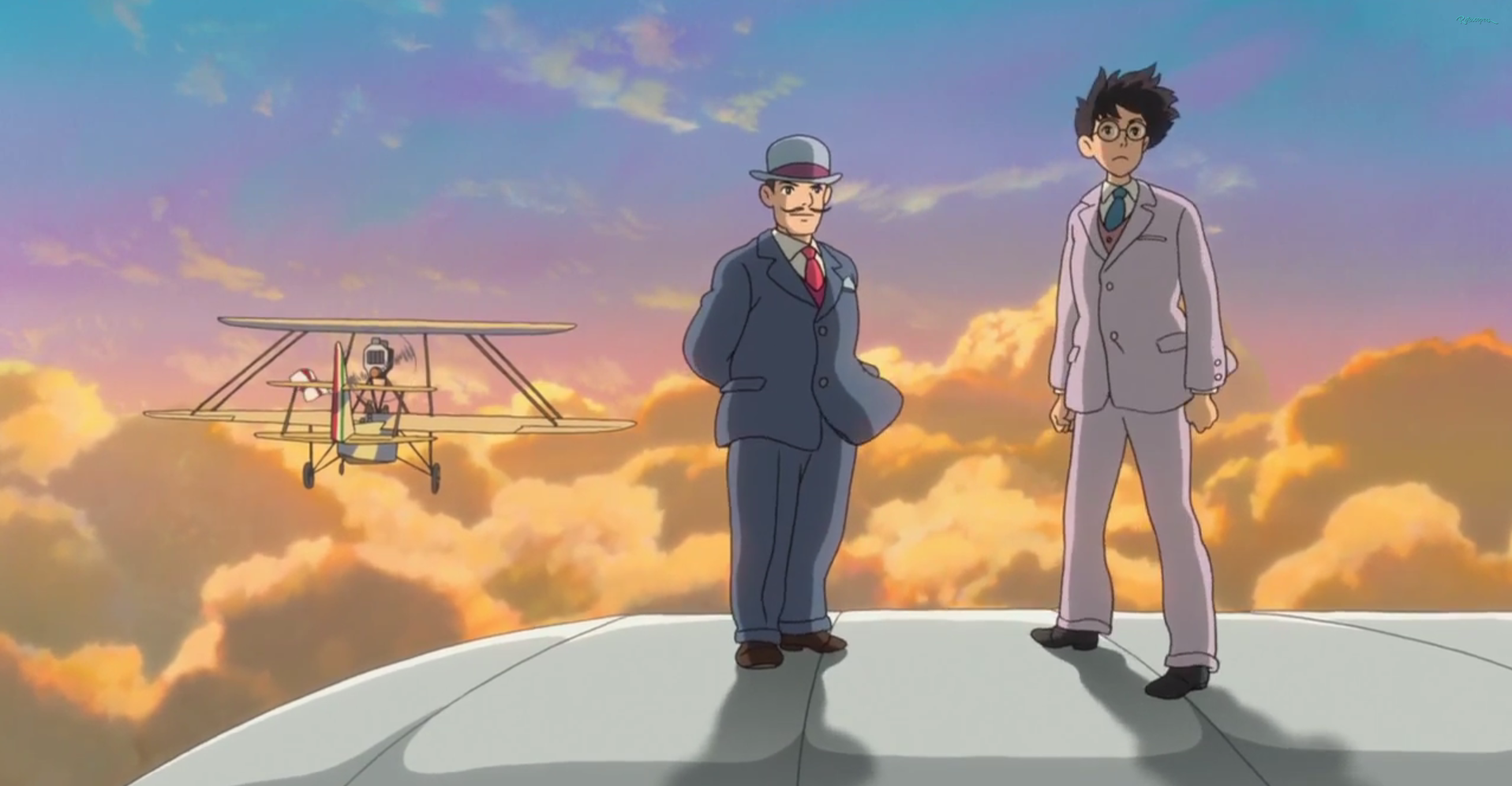
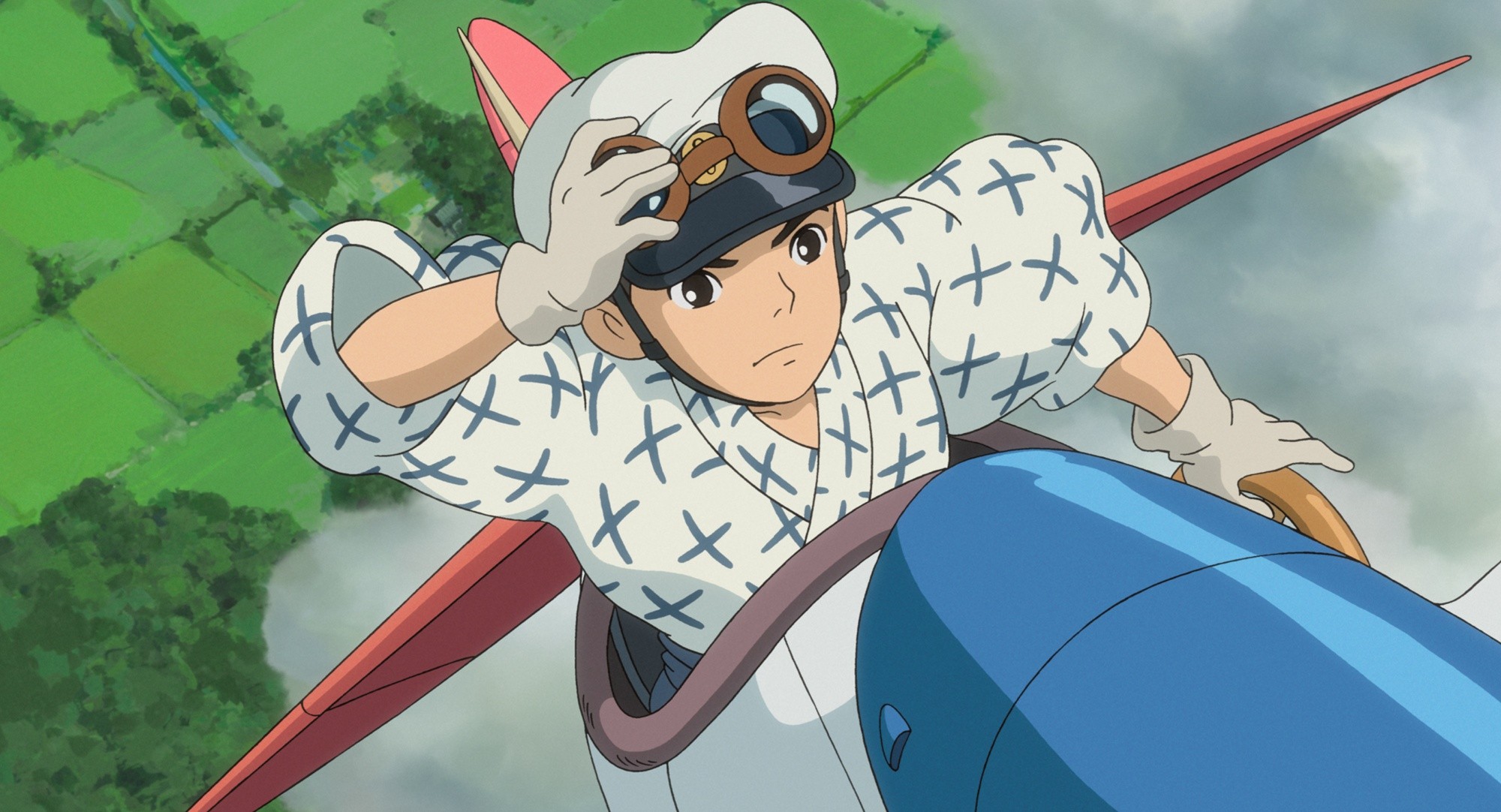
Fast forward a couple of years, and the world-class director’s latest and last film hits cinemas, a fictionalised bio-pic of Jiro Horikoshi, the designer of the Mitsubishi Zero fighter plane. From retirement, producer Toshio Suzuki must have laughed his adenoids off, because for once, it wasn’t going to be his problem.

The Wind Rises has achieved a remarkable feat, managing to annoy both the left and right wing in its native Japan. Denounced by Korean critics for its “moral repugnance,” it is already making waves in America, where the Miyazaki love-in has been disrupted by a movie about, in a sense, one of the architects of Pearl Harbor. But Horikoshi is presented as a simple inventor and dreamer, horrified at the uses to which his work is put.

Whereas Tales from Earthsea infamously played out tensions between Miyazaki and his son, The Wind Rises alludes to memories of his own father, Katsuji, director of the Miyazaki Airplanes factory. It celebrated a man who loved flight and flying, who made simple widgets that happened to get used in military machines. But perhaps it also celebrates Miyazaki himself, as the artisan who just wanted to make nice things, only to discover he was the poster-boy for an industry that also made Pokémon and porn.

He’s been grappling with this subtext for several movies now – the distracted, conscripted wizard of Howl’s Moving Castle; the muttering boiler man of Spirited Away, toiling behind the scenes but forbidden from escaping. He is saying goodbye to all that, at long last, and getting his life back.

I’d wish Miyazaki a long and peaceful retirement, but honestly, I still don’t think we’ve seen the last of him.

Jonathan Clements is the author of Anime: A History. This article first appeared in NEO magazine #120, 2014. The Wind Rises will be part of the Studio Ghibli season at London’s BFI Southbank this spring.

The Valkyries

From A Brief History of the Vikings, by Jonathan Clements.vikings audible

Death in battle in the name of Odin was not a bad thing, at least in the eyes of the devout follower. For Odin was also the Chooser of the Slain, the valkojósandi. He had female assistants who bore the same name in the feminine form, valkyrjur, or valkyries, the terrifying furies of the Viking world. On several occasions in the sagas, there are comedic moments when Viking men seem meekly accepting of a situation, only to have a woman goad them into action – a woman’s worth was heavily reliant on that of her man, and the Viking wives could be fierce in their attempts to preserve it. The last bastion of Viking machismo, it often seems, lay not with themselves, but in their wish to appease their women.

The Valkyries were this furious nature personified, betraying a surprising terror and reification of female power. Their names are a catalogue of the things prized most by the belligerent Vikings, the famous Brynhildr is Bright Battle, but there are 51 others in extant sources. As with the Eskimos and their apocryphal twenty words for snow, the Vikings had many terms for discussing conflict. There was a Valkyrie of drunken brawling, Ale-Rune, and another of Taunts. To the Viking mind Battle herself was a woman, as were War, Tumult, Chaos, Devastation and Clash. The names of other Valkyries invoke images of war-goddesses to be appeased, or moments of belligerence personified: Extreme Cruelty, Sword-Time, or simply Killer. The most ominous is the Valkyrie that invokes that moment just before all hell breaks loose, Silence. Even Skuld, the Norn of Necessity, is numbered among the Valkyries on three occasions, her name perhaps better translated there as Blame. More prosaic misogyny may be found in others: Unstable, and the minor but still influential figure of Bossy.

Buy online from Amazon UK
Buy online from Amazon US

Assassin’s Creed: The Manga

assassins creedMy article about the Assassin’s Creed manga, seemingly disowned by the original author, but smuggling in a distinctly Japanese bit of Mary Sue fan fiction, is up on the Manga UK blog.

I don’t write about Japanese comics very much online, as much of my monthly efforts go into the ongoing Manga Snapshot column in Neo magazine. This would have appeared there, too, were it not for some logistic issues that prioritised other titles ahead of it.

Viking Smackdown

From A Brief History of the Vikings by Jonathan Clements, available in the UK and in the US.

The crucifix began to compete with the hammer of Thor as the must-have fashion accessory, and missionaries soon followed behind the trendsetters. In distant Iceland, for example, where missionaries had been visiting the remote communities since 980, the news of the conversion of Norway as a whole led many of the die-hard heathens to believe they were missing out on something.

When Thangbrand, a Saxon priest in Crowbone’s retinue, was dispatched to Iceland to spread the word, many Icelanders began to seriously consider converting. Others, however, spoke out against the Christians in the same manner as the Trondheimers of old. One Hedin the Sorcerer was slaughtered by Thangbrand the Christian soldier, along with all his retainers. A similar fate awaited Veturlidi the Poet, who composed a satirical verse about the missionary, for which he was cut down in front of his son.

Thangbrand met his match when his ship, the Bison, was wrecked on the eastern coast near Bulandness. There, he got into an argument with a devout heathen lady by the name of Steinunn, who asked him where his Christ was when Thor was causing his ship to be smashed on the rocks. According to Steinunn, Thor had challenged Christ to a fight, but Christ had not shown up.