
Economies of Knowledge

Ten years ago, I was a presenter on a short-lived TV show called Saiko Exciting. It was a two-hour umbrella under which huddled pop videos, games reviews, and two anime tentpoles – Evangelion and Nadesico. Like many organisations, the Sci Fi channel had believed the hype about anime taking the world by storm, and was hence rather surprised when its anime-themed prime-time show failed to attract significantly high ratings.

So they called in a consultant.

He crunched the numbers and evaluated the footage, and delivered his report, which, as far as I could tell, amounted to a suggestion that life would be a lot easier if the channel threw out all that irritating anime crap… from their anime-themed prime-time show.

I am sure that he made other recommendations, too. One of which may well have been that the two young ladies were very easy on the eye, but perhaps that unsmiling nerd spouting anime statistics was best moved to a late-night slot where only anime fans would see him – certainly, that’s where I soon ended up. But the Unhelpful Consultant has always been something of a running gag ever since, particularly after similar encounters in my Manga Max days, with another boffin who recommended to Titan Magazines that the thing that was really holding the title back was all the stuff in it about manga.

I have had to think managerially a lot more these days. Since starting my own company in 2003, I have had to think more commercially about culture and the arts, and parse ideas in terms of monetisation, amortisation and other words I may have just made up. I have long been fascinated by the early 20th century management theorists – Taylor suggesting that workmen be given bigger shovels in order to move more stuff with each heft; the Gilbreths noting that it would really help if the employees were happy; and Mayo realising that he was getting particular answers because he was there asking questions. The Gantt organisational chart, pioneered during the First World War, was soon adopted in the 1920s by numerous industries, not the least animation, where it formed the basis of the ‘dope sheet’ used to plan productions to this day. If you work in a company of any significant size, someone has sat in a room with a Power Point presentation where someone lectures them about ‘hierarchies of needs’ or ‘aristocracies of the capable’, and it has knock-on effects on all sorts of things from where the coffee machine is to what time you start work in the morning.

After reading The World’s Newest Profession, I have come to regard consultants in a new light. Christopher McKenna’s book goes a long way towards explaining what management consultants actually do, beginning with the shop-floor ‘scientific management’ of the early 20th century, right through the corporate trouble-shooting of modern times. He chronicles the strange admixture of accountancy and engineering that distinguished the early consultants and shows them at work fixing companies all around the world by trumpeting new buzzwords and shaking things up a bit.

As readers of Schoolgirl Milky Crisis know, I often work as a consultant myself these days, as institutional memory or advising on storylines for media companies. And I like to think that people get their money’s worth. I remember once being sat in a room with a producer for a Thursday and Friday, hammering out the outline of a computer game. He went off home, and I spent the weekend typing it up. On the Monday, he had a 13,000-word story breakdown, with characters and assets. I mention this because it had been assessed at the company as a job that would have probably been possible to do in-house, but would have taken up nine man-months. Thanks to my freelancer’s blindness to weekends, he had it in two working days. This is what Christopher McKenna calls an ‘economy of knowledge’, wherein a company realises that despite the high cost (and I was not cheap), it will still work out cheaper to bring in outside expertise. It’s easy to see how that might work with writers and artists. It’s easy to see how it works in everyday life – after all, what is a hairdresser if not someone who can do it better than you, for the hour that you need her? The real trick with the management consultants of the 20th century is that they applied to managing itself – whatever your company does, however it works, they can come in and make it work better. Some companies were so sure of this that they even offered to work for nothing if their fee was not justified by the saving.

The World’s Newest Profession talks through numerous incidences of corporate intrigue and subterfuge over the last century, including the rise of NASA, which McKenna provocatively parses as a committee that sub-contracts almost everything to outsiders. He paints a picture of grim-faced men in grey flannel suits, deliberately designed to mark them out as serious players in any corporate face-off, whispering suggestions in the chairman’s ear for loopholes, tax havens and legal wriggles that can help a company shave the bottom line. Although is the profession really that ‘new’? – elements of McKenna’s narrative are uncannily similar to tales of Confucius and Sun Tzu.

Sometimes, management consultants are necessary in a corporate environment for speaking unwelcome truths. Nobody at Sci Fi was going to say that a prime-time anime show would never get a million viewers in a country of only 60 million people, with 100 other channels to choose from. Irritating though the consultant’s comments were, they seem in hindsight to be rather honest. Sci Fi didn’t ask him to fix their anime show; they asked him how to make more people watch their channel. And he pointed out, with unwelcome precision, that the ratings went down every time the anime came on.

That doesn’t tell you that anime is toxic. It tells you that the people who watched Sci Fi were not keen on anime. Someone producing an anime show was never going to like hearing that, but they got the answer they needed to hear. Of course, he would have been more useful to me if he’d offered advice on how to sell what we already had, rather than giving what was, to a certain extent, the easy answer, that we should be selling something else.

I am not sure who advised them to change their name to SyFy, though. Sometimes management consultancy really is just bollocks.

Jonathan Clements is the author of Anime: A History. The World’s Newest Profession: Management Consulting in the Twentieth Century is published by Cambridge University Press.

[Time travel footnote: eight years after writing this article, I know exactly why they changed the name to SyFy. Just as Sony deliberately mis-spelled Blu-ray, the switch to a term not already in common use meant it was possible to trademark and guarantee optimal tagging in social media.]

Kickstarted

Pity the poor anime pundit, busily making predictions about stuff that’s in the distant… I mean near… I mean tomorrow… I mean just happened. Only last month I was merrily giving an interview to Variety magazine, predicting crowd-sourced anime within the next two years. I was inspired by the sight of the Kickstarter funding for the manga of Osamu Tezuka’s Barbara, which swiftly rustled up the required ten grand. You could probably squeeze out a crappy anime video one-shot for $20,000, I mused, so what were the chances that someone decided to hit up forty wealthy fans for $500 each? It’s already what the Japanese charge for some DVD box sets, so why not?
Within a couple of weeks, San Francisco developer Double Fine announced that it had managed to scrape $480,000 to go into production on a new game, a “Double Fine Adventure”. That’s enough to make a 12-episode anime television series! If you really want to make an animated tentacle-invasion version of the Iron Lady, now all you need is to rustle up 10,000 like-minded friends.

Except! You don’t need to be a genius mathematician here to see that some of the Double Fine investors were putting in a lot more than the minimum $15. In fact, if there were 10,000 of them, their average investment was the price of a posh car, each! So this isn’t quite the grass roots investment funded solely by potential end-users that some are pretending it to be. There are still some big investors behind the scenes, but not many! Just think, what if you could write off the cost of a convention weekend and put it towards actually making an anime? And since there are stepped levels of involvement, you’d also be likely to score some exclusive, personalised merchandise, too, and your name on the credits. Beats standing around a car park dressed as an elf!

So, for now, my prediction still stands. I still see a crowd-funded anime production happening within the next two years [Time Travel Footnote: there was a wait of only eight months or so before this happened]. Probably a crowd-funded anime translation substantially sooner than that. But if you had a personal say in which new anime actually got made, which would you choose?

Jonathan Clements is the author of Schoolgirl Milky Crisis: Adventures in the Anime and Manga Trade. This article first appeared in NEO #97, 2012.

Eurovision Shouty I-Spy 2012

Hello, Woki Mit Deim Popo, and welcome to the Eurovision Shouty I-Spy Game, back for the first-ever final to be held in the immensely gay-friendly town of Baku.

Step One: you will probably need to be quite drunk. Step Two: The following sights will be seen during this Saturday’s Eurovision Song Contest. Can you see them first? Remember to shout it out. Party hosts will need to keep score of who gets what first, or otherwise dish out the forfeits to those that aren’t quick enough. As ever, there is more than one key change, and plenty of orbital cleavage. Keep your eyes (or ears) open for any of the following. And when you notice it, SHOUT IT OUT!

With great disappointment we have had to say farewell in the semi-finals to Montenegro’s fat rapper and his onstage Trojan horse, as well as the fantastically named Trackshittaz from Austria, with their neon knickers and pole dancing. We shall also miss the chance to shout “SPLITTER!” every time the Finnish entry opens her mouth and sings in Swedish. But that still leaves us with the best/worst Eurovision in years, with a bunch of certified mentalists bringing you the trancey, oddly cyberpunky fun. Occasionally dressed as refugees from Assassin’s Creed.

In no particular order, in Saturday’s final you should look out for:

Winking

Is it snowing?

Sergeant Pepper’s Epaulettes

One glove (doesn’t make you cool)

Hammer Time (sideways footy shuffle)

ACCORDION!

Cloaks!

Na-na-na-na-na-na-na-na

Onstage fountain

“SING WITH ME, MY CHILDREN!”

Rotating oven

La la la la la la la la la la la la la la la la

Instant boat!

KEY CHANGE! (every time you hear one)

Backflips

Blindfold

Oh no! An Oboe!

Very very small xylophone

Dancing onscreen rubber gimps

Bimbling*

Onstage baking

ORBITAL CLEAVAGE**

Men in skirts playing trumpets!

Muffins for everybody!

Assassin’s Creed on Keyboards

Blacksmith’s Apron

Bagpipes

Synchronised Swimming (without water)

Bronze tights

Breakdancing on plinths

Fingers make a heart

Hair stuck to her chest

Moonwalk (have to be fast to catch this one)

DRUM-SITTER (she’s sitting on a drum!)

FLAME ON! (every time there’s pyrotechnics)

We include our traditional category of COSTUME CHANGE, just in case someone actually changes costumes, although nobody did in rehearsals.

(*swaying one’s head from side to side in a snakey fashion. This is particularly difficult to spot this year, so I’ll give you an extra clue: SHIPBOARD BIMBLING).
(**ostentatious cleavage sufficient to see from a satellite in orbit, which, according to Eurovision bra consultant Tom Clancy, requires a minimum of C-cup).

Bonus item: A LITTLE BIT OF POLITICS

A point every time the presenters claim that Azerbaijan is in Europe.

Special bonus points all round if one of the acts decides to self-destruct on the night and inject some sort of live protest. Look out for rainbow flags or badges at the very least.

Are Armenia voting…? If they are, you can be sure someone says something cutting…

Apologies to American readers, who will have to just imagine what the world’s biggest, gayest song contest is like. Just imagine, for one day every year, Europe gets to behave the way that Japan does all the time!

For hard-core players, Shouty I-Spy is now available in Finnish.

Digital Disruption

My review of Iordanova and Cunningham’s Digital Disruption: Cinema Moves On-Line is up now on the Manga UK blog. It’s a very interesting walk through some of the issues facing “cinema” and “broadcasting”, in a globalised economy where nobody wants to pay for anything.

I particularly like the authors’ decision to eschew content, access and production, and to talk about matters of exhibition and distribution, which are all too often overlooked in film studies.

Scooby-Who?

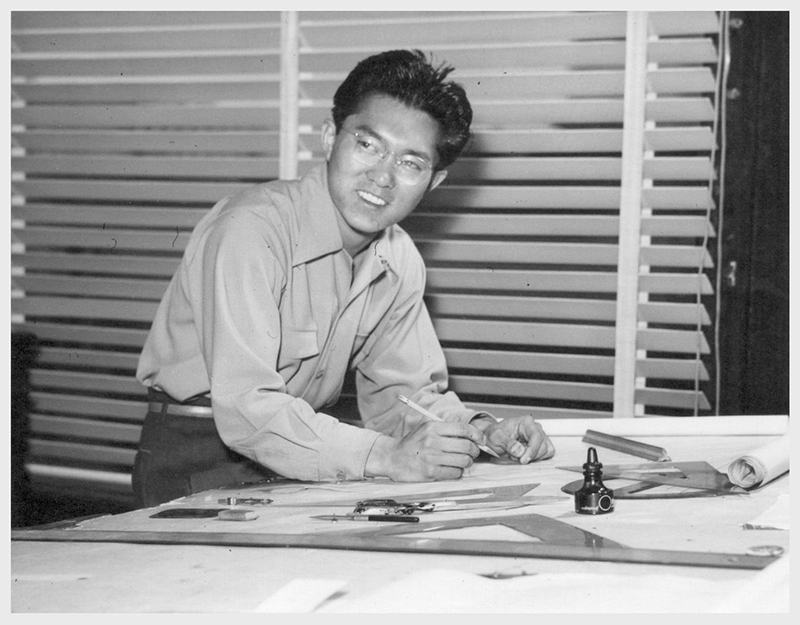
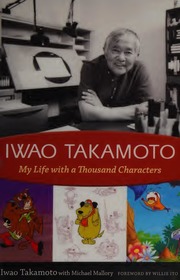
From the very outset, Iwao Takamoto (1925-2007) was torn between his parents’ birthplace of Japan, and his own homeland of America. His autobiography, Iwao Takamoto: My Life With a Thousand Characters, notes the uneasy situation in 1930s America, where Japanese immigrants were not permitted US citizenship, effectively ensuring that Takamoto grew up with a different nationality to his parents.

As a Japanese-American growing up during WW2, Takamoto’s dual ethnicity was a constant concern. He and his family were carted off to an incarceration camp in 1942, and spent the latter years of the war kicking their heels in the middle of the desert. As one inmate waggishly commented, if the Japanese win the war, Takamoto will be sent back to the camp, this time because he is American.

In 1945, Takamoto guilelessly turned up with a hastily drawn set of samples at Disney, where he was hired on the spot – it turned out that his ability to knock out a book full of sketches to order actually trumped the more considered portfolios of his fellow applicants. He arrived at a cash-strapped studio that had only made it through the 1940s on wartime government contracts, and which suddenly had to make money from entertainment cartoons again. His contributions included sequences and designs in Cinderella and Lady & the Tramp. There’s one intriguing aside where Takamoto brings up the subject of Yusaku Nakagawa, an animator sent from Japan to Disney to learn how things are done (and although Takamoto does not mention this, also the little brother of a famous Japanese film star). This is the same “Steve” Nakagawa who ends up a generation later working on a number of Japanese-American co-productions, including Frosty the Snowman and the ill-starred Metamorphoses, although there are allusions to behind-the-scenes skulduggery which kept his name off the credits.

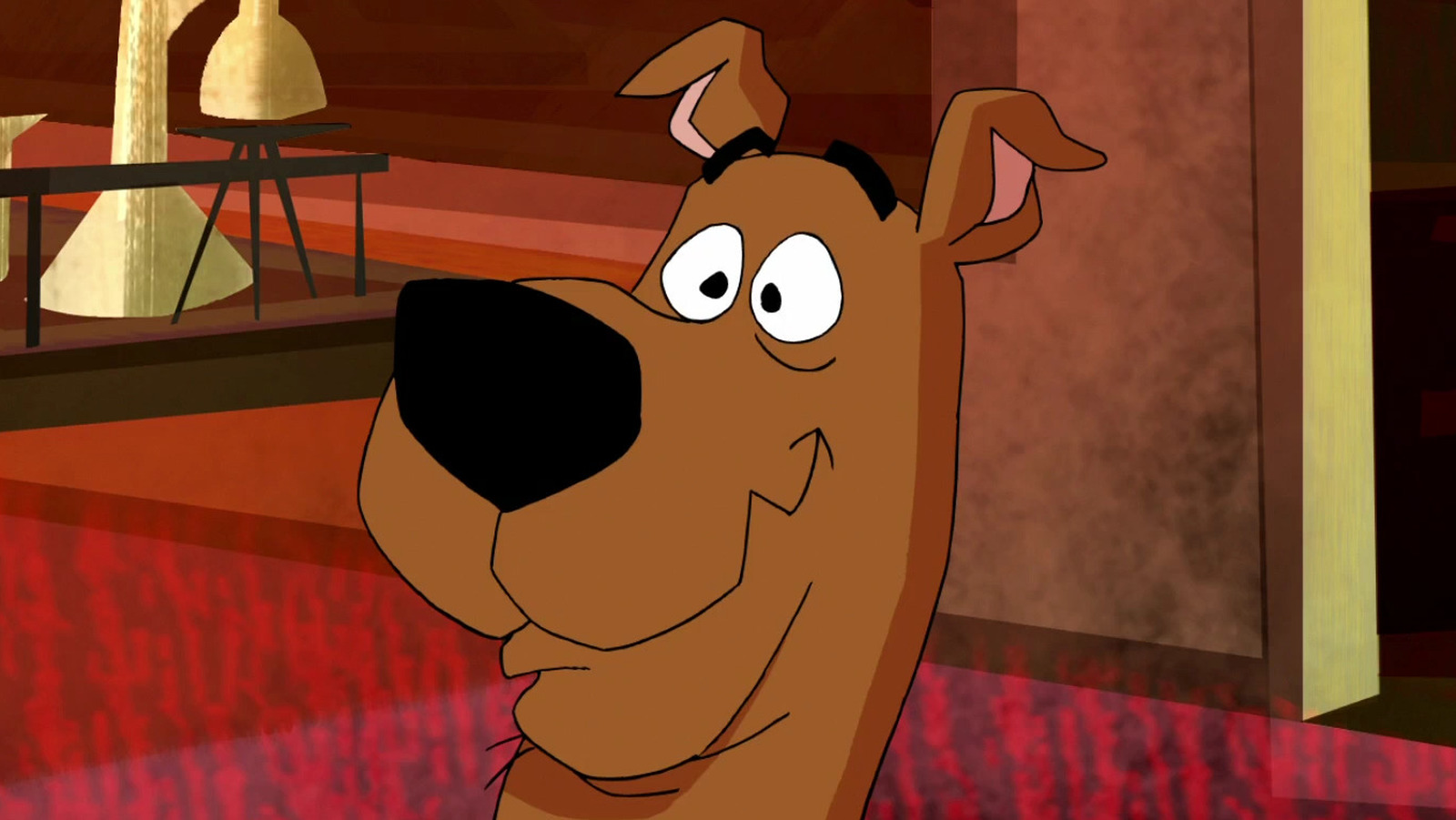
In 1961, Takamoto ended up at Hanna-Barbera Productions, where he would eventually become “creative producer” – a made-up title for a series of responsibilities that, in Japan, would be parsed as character designer and supervising director. Takamoto would often be the point man who created specific looks and characters, storyboarded early shows, and then departed to set up the next project, leaving his creations to live on without him. He threw himself into work on The Flintstones, a show that had already established that it was, much to many animators’ surprise, possible to make a half-hour weekly TV show. He created characters for Wacky Races and Hong Kong Phooey, and most memorably came up with the “comedy dog” for a detective show who soon took over. Scooby-Doo, Where Are You!, with its counter-intuitive exclamation mark, is surely Takamoto’s most enduring creation, and dominated kids’ TV in America for decades. For what it’s worth, Takamoto also notes that he has always thought Scrappy-Doo was “a crummy idea.”

The autobiography itself is a work of academic brinkmanship. Takamoto died as the book was being laid out, which only adds to the sense of legacy and elegy in this excellent memoir. His collaborator Michael Mallory is deftly invisible, leaving Takamoto himself to do all the talking, in a story that spans six decades of animation, as well as tall tales of indoor archery and abuse of thumbtacks. Although of Japanese ancestry, Takamoto was never a “Japanese” animator, but his life-story only goes to demonstrate the transnational quality of the animation business – as The Jetsons is aired in Japan, in turn inspiring Tezuka to make Astro Boy, Go-Bots is made by the Taiwanese studio set up by Hanna-Barbera’s own James Wang, and Scooby-Doo ends up dubbed into Japanese under the hands of Satoshi Kato, an alumnus of Tezuka’s Mushi Production, who also worked on anime such as Berserk, Space Adventure Cobra and Tomorrow’s Joe.

In later years, Takamoto became less of an animator and more of a brand. Following the takeover of Hanna-Barbera by Warner Bros in 2001, Takamoto was wheeled out in countless public appearances at Warners stores around the world, to sign sketches and shill for merchandise. He seems to have embraced this “ambassadorial” role with great gusto, and gleefully reports his unexpected celebrity late in life, even down to the “respect” accorded him by unnamed rap stars when he appeared on The Big Breakfast.

Jonathan Clements is the author of Anime: A History. Iwao Takamoto: My Life with a Thousand Characters is published by the University Press of Mississippi. This article originally appeared on the Manga UK blog in May 2012. It has been reshared here after that site was disappeared in the 2021 Funimation putsches.

Zombie Hitler

I’m writing today’s post in Brno, the vowel-deficient capital of Moravia, where I’m a guest at the Czech convention Animefest 2012. We’ve just done my workshop on the way that anime are put together, adding two more bonkers ideas to the catalogue of previous pitches. As regular readers of this blog will know, my notorious hothouse rantathon, as seen at the Irish Film Institute and Media Academy Wales, as well as for numerous academic and private clients, dumps an unsuspecting group of creatives in at the deep end and forces them to come up with a pitch for a non-existent anime show.

In the past we’ve had Decontaminators, which sold soap to unwashed urchins, and the Egyptian-themed Hattie Bast: Mummy’s Girl, the post apocalyptic eco-drama Fallen Angels and the time-travelling Chronokids. Not forgetting Choc Shock, in which alien space pirates attempt to liberate Earth’s reserves of cocoa.

Today in Brno, the rival teams came up with Miracle Dance: Dimensions, in which feuding nobles control fighting robots through the power of dance, and Capek’s Machine, a steampunk time-travel epic in which two brothers square off against a zombie Hitler, with the aid of an Egyptian princess. And I think there was a pirate in there, too.

The finish was such a frenzy that I forgot to give them my usual speech about “monocultures”, but I think they had worked it out for themselves by that point. And then just a couple of hours rest before my big speech, delivered in the round, to a standing-room-only crowd of catgirls, Vash the Stampedes and Hollows.

Cook It Yourself

In the last couple of years, the Japanese consumer goods market has offered cheaply priced document scanners that can read both sides of a page. Some bright spark in an office realised that he could use the company’s heavy-duty guillotine to trim off the gluey, spiney bit of his book, and suddenly it was possible to feed a whole book into the scanner.

This activity has become so prevalent in Japan that it has gained its own neologism: jisui, or “self-cooking”. They slice up books, magazines and newspapers and shove them into a digital format, all the better to read them on their phones and iPads. It’s not about piracy, it’s about simple space and convenience – an infinite e-library like a manga Kindle. A habitual manga reader with a two-hour commute is going to add a foot of comics to their personal shelf space every week. Books might furnish a room for some people, but for others they just get in the way, and now you get the best of both worlds.

I’ve been self-cooking for several years now, ripping all my CDs onto MP3 files. I keep the CDs, because I like physically owning a format, particularly for obscure Japanese artists, and as an author, it’s handy to have access to the sleeves to check names and lyrics. That’s all very well, someone might say, but the intellectual property of the CD rests on the disc itself. And theoretically, now that I have ripped a copy, I’m cheating if I sell the original on. In copyright terms, is a personal copy an illegal reproduction? And even if it isn’t, how can you stop people passing their digital copy round?

This is where the jisui problem becomes an issue. Because double-sided document scanners have made digitising a book as easy as making a Pot Noodle, and digitised books are as easy to share as sending an email. Great for the book-lover who can “lend” a book without losing his own copy of it. Not so great for the author on the day that someone is data-mined, or lends to a third party, or just forgets to wipe their hard-drive, and a book that took a year to write migrates to the Internet for all eternity. For free.

Jonathan Clements is the author of Schoolgirl Milky Crisis: Adventures in the Anime and Manga Trade. This article first appeared in NEO #96, 2012.

The Shadow Line

My review of Ramon Lobato’s Shadow Economies of Cinema is up online now at the Manga Entertainment blog. There’s plenty of food for thought there about copyright enclosures, informal distribution networks, and what exactly pirates get up to. It’s not a student with two linked video recorders… there’s much more to it than that.

J-Pod Redux

I’m a guest once more on the Manga UK podcast, discussing Miyazaki’s Heidi, Joss Whedon’s Cabin in the Woods, the unexpected pleasures of Battleship, and stirring smells on the London Underground. Download and listen for free, here.

Now available from iTunes.

Brought to Book

I’m off to the London Book Fair tomorrow to appear on a panel about Chinese science fiction, alongside Ah Lai, the former editor of Kehuan Shijie magazine, and novelist Liu Cixin, whose name I last dropped on the first Manga UK podcast, when enthusing about the likelihood of ever seeing a good science fiction cartoon from the People’s Republic. John Clute moderates, probably with big words.