Back to Variety

Back in March, Mark Schilling interviewed me as part of a piece he was writing for Variety. As ever, a long answer gets distilled into a couple of soundbites, so here is the unexpurgated version of my replies.

Deals are being signed between Japanese companies and their Korean and Chinese partners, but I’m hearing the pace is slower that might be expected due to everything from structural barriers (the Japanese production committee system) to political and cultural issues (Japanese fan criticism of Japanese anime adaptation of the Korean web novel “Solo Leveling” due to latter’s supposed anti-Japanese bias).

Ten years ago, Chinese investment was looking like it was going to be a game-changer in Japanese animation. We had Chinese companies bailing out troubled productions and snapping up ailing studios, and the potential market for Japanese animation in China was conservatively estimated at twenty times the size of that in Japan.

But China has become increasingly restrictive for foreign media. There was a lot of celebration in the foreign press about the likes of Kung Fu Panda and Mulan making it through to Chinese audiences, but they have come to be derided in China as unwelcome distortions of Chinese culture. The People’s Republic is becoming increasingly bullish about “cultural security” and there are calls in recent Five-Year Plans for it to become a “strong film nation”, in control of its own cultural content rather relying on whatever leaks in from overseas.

In 2020 China introduced the new Law on the Protection of Minors. There were a whole bunch of clauses in that law that gutted the potential for anime in China, including the banning of ownership of a streaming account for anyone under sixteen, and the forbidding of “obscenity, pornography, violence, cults, superstitions, gambling, inducements to suicide, terrorism, separatism, or extremism” for any viewers under eighteen. Now, of course, not all anime is sex and violence, but a good half of modern productions are aimed a late-teen demographic sweet-spot that is now forbidden.

That doesn’t destroy Chinese investment by any means, but it heavily skews the willingness of Chinese corporations to get involved in Japanese production. Pre-COVID, many were happy just to throw in some cash and distribute the result in their home territory. Now, they are well aware that if they pay out for the wrong sort of anime, their investment is worthless in the Chinese market. So, we get an increased focus on “anime with Chinese characteristics,” which won’t necessarily play well in Japan.

That’s the politics. Structurally, I think the real issue that we’re facing (and this applies to both Korea and China as outside investors) is an incredible choke-point in labour flows at the moment. There isn’t just the ongoing aftermath of COVID; there’s the fact that the big streamers like Amazon and Netflix have booked some studios up years in advance.

Meanwhile, Japan has introduced the new Work-Style Labor Reforms. These were actually passed six years ago, but they only phased in during 2020-1, and they severely curtail the amount of overtime that companies are allowed to authorise. Anime companies used to work miracles by working around the clock, but now they have their hands tied. They could bring in more freelancers, but freelancers are hobbled by changes to Japanese tax law (October 2023), which obliged them to collect sales tax on all their invoices. So, if you are a Korean or a Chinese company hoping to lean on Japanese labor, you have all these issues to contend with before someone’s even picked up a mouse.

It’s only then that we get to the content issues. Anime has been through many transformations in the last few decades, with a widely fluctuating relationship to overseas demand, or rather to the degree to which the producers were ready to acknowledge it. There was a point in the 2010s where it was all about making local, domestic content for Japan, and if foreigners liked it, too, that was gravy. Now anime companies talk about foreign investors as the “Black Ships” – comparing them to the American gunboats that rammed open the doors to Japan in the 1850s, imposing an international outlook on a nation that was trying to stay shut away in its own little world.

People are drawn to anime because it’s different. But so many overseas investors are trying to use anime talent to make shows that are focus-grouped to within an inch of their life to appeal to audiences in 70 countries at once. And if you are trying to please viewers in London and New York, Nairobi and Dubai, Buenos Aires and Beijing it can be incredibly limiting, artistically.

I don’t know if I want to get involved in the hoo-ha over Solo Leveling. Because you have people online getting offended at a hand gesture that they think means animators are making insinuations about Koreans having small penises, even though the studio that made the opening animation was Korean…. I mean, I am already boring myself. One of the corollaries of truly international, immediate streaming productions is that you now have the chance to offend several million people at once, and that they have the ability to make a stink about it in real time. Companies can be quick to pivot, not only in how they steer their content in production, but also in reaction to such drama after broadcast before their share prices drop. That’s the problem when everything is connected: everything is connected.

Do you consider Japan’s production committee system a co-production barrier? Or have foreign partners learned to live with it and even use it to their advantage?

In my experience, it is often a terrifyingly tedious chicane of obstacles, particularly with old shows where things that you could once agree with a handshake and a whisky now have to be run past a group of disparate strangers, some of whom are inheritors or purchasers of someone else’s intellectual property, with no real interest in making useful decisions. It’s one thing to be dealing with the original manga creator and the woman who runs the studio. It’s another to have to track down the dead producer’s ex-wife and the venture capitalist who accidentally purchased a dormant animation company.

I suppose the one way in which foreigners were able to use the production committee system to their advantage was by buying into one as a means of securing overseas rights without having to get into a bidding war. Manga Entertainment did that with Ghost in the Shell in 1995 in order to head off local competition in UK and European markets, and there were some similar shenanigans recently over who got to own the new Shinkai. So, in that sense, the ability to buy into the “ownership” of a new anime while it is being made can save a canny investor hundreds of thousands of dollars at the distribution end.

Jonathan Clements is the author of Anime: A History.

Interview: Anime History

This interview with me by Shelley Pallis about my book Anime: A History was conducted for the Anime Limited blog, but got bumped and re-bumped and re-re-bumped as more pertinent topics got placed before it, until there was nowhere for it to go. I reprint… well, print it here with permission.

I want to talk about those moments in the book when you “break character” as a historian and talk about stuff that’s happened to you, in the context of anime history.

You mean Kyoto Animation?

Sure, that’s one.

That’s from the otaku economics chapter, where I talk for several pages about the particular way that Kyoto Animation was run as a studio, and the way in which it encouraged interactions with fans, offering the chance to be creators. Of course, that backfired terribly when one self-styled would-be creator burned the studio down.

I had to go on stage at Scotland Loves Anime to introduce a screening, I think it was of A Silent Voice, and I had no idea how I was going to do one of my usual stand-up routines about such a serious subject. So instead, I just explained that usually Andrew Partridge would introduce the final film of the festival, but he just couldn’t face talking about people that he knew personally in such a dire situation… and then I decided to read out the names of the people who had had died. I didn’t explain that was what I was going to do, I just said: “And so we’re going to do this…” and started.

You got this ripple through the audience as people realised at different times what I was doing, who these seemingly random names were. But also, the list goes on and on, and on… it takes a long time to read out all those names, and that starts to add real weight to the sense of loss in the business. So, yes, I kind of break the fourth wall in the book to talk about that, because these were real people, and we knew some of them, and someone killed them because they didn’t rush to adapt his isekai novel or something.

Your book is dedicated to Andrew Partridge, is that why?

It’s dedicated to him because he has so consistently put me in the middle of anime history to observe it. We’ve been all over the UK shilling for anime, and it’s put me into some situations that come back to form data in a history book. Scotland Loves Anime is hard work, but it also puts me in a room with some of anime’s movers and shakers. Ryosuke Takahashi takes me to one side to gossip about Sunrise. Mamoru Hosoda sits across from me at an Indian restaurant and reminisces about Gunbuster. Naoko Yamada needs someone to subtitle Garden of Remembrance in a hurry, and starts crying when I read out my translation. I don’t directly quote any of these incidents in the book, but you can bet that they inform so much of what I say, and the directions I choose to investigate.

You also drop in a mention of your Death Note audio drama.

I think it’s a really good example of “post-anime”, where the licensors rake off 5% of something someone else is doing in another medium. Lübbe hired me to write a ten-episode adaptation of Death Note, and said they wanted to go slowly, and to get the first two episodes to the Japanese for approval. When the notes came back from the licensors, they said that there were elements in the script that had clearly derived from the manga.

“Yes,” I said. “You hired me to adapt the manga of Death Note into an audio drama.”

“No,” they said. “The licence we granted was to adapt the anime of Death Note into an audio drama.” Which was something that Lübbe had neglected to mention, because like a lot of mainstream producers, the difference between anime and manga wasn’t something they really appreciated.

As it happens, it took about ten minutes to change my scripts. I think there were two scenes or something in my first two episodes that derived solely from the manga. After that, the licensors were super-happy, and let me get away with all sorts of stuff.

Like making the American president Donald Trump?

I didn’t do that. America did that. In the original, the American president is just an anonymous, patrician white man. But if Hillary Clinton had won, I would have totally made it about her. Instead, we were stuck with Trump, so I thought: how would someone like him react to this kind of weaponised curse, to the revelation that magic existed, and that demons did, too? How would he try to steer it to his own advantage? How would he let it affect US foreign policy?

Did that date the show? I mean, he’s not president any more.

I have often wondered if that’s the reason it never got picked up for an English-language broadcast. It was released in German and in French, and Audible contacted me to ask for casting suggestions for an English-language version, but I never heard anything more about it. I was writing Death Note as a contemporary drama, in the year 2017, and that’s what the American president looked like then. [Subsequently, a Trumpalike president also appeared in the 2020 one-shot Death Note spin-off a-Kira, pictured].

It was very important to me that I wrote Death Note in the context of the new times, not simply repeat what the anime people came up with in 2006. There were new factors to consider, like social media, metadata and privacy, #MeToo, and I threw all those in.

Your Death Note deviates considerably from the original by the end, particularly by keeping L in it all the way through. There’s a really goose-bumpy scene where he has that interview with the counsellor…

That was a total rip-off from Hirokazu Kore-eda’s After Life. The film starts off with this entirely everyday, bureaucratic person-to-person interview, with a guy going through someone’s papers, and checking date of birth, and name-spelling or whatever. And then he says, very matter-of-factly: “And just to be clear, do you know you’re dead?” And the person he’s talking to nods in a similarly matter-of-fact way.

And this is going to sound super-weird, but the other thing that inspired me was the last-ever episode of One Foot in the Grave, where we all know that Victor Meldrew is going to die, and [the writer] David Renwick completely wrong-foots the audience by beginning with him already dead.

And so, when we reach the episode where L dies, I figured that in the world of this story, death is no obstacle. Things just keep on rolling, and L gets to comment upon and steer the action back in the real world, like a kabuki ghost. And that starts to push things off kilter in a way that I thought was interesting.

Did the listeners in Germany agree?

Most of them!

You seem a bit bitter in your materials section, when you talk about Funimation taking over Manga Entertainment.

Well, I think it’s an interesting element of the “archive” of anime studies. Over the years, Jerome Mazandarani spent about £17,000 of the company’s money on articles about its products and anime in general, for the blog. When Manga Entertainment was acquired by Funimation, they also acquired all this third-party comment – reviews, obituaries and commentary – and it clearly didn’t fit their idea of what sort of sticky content a website should have. The rights situation was unclear, there was clearly nobody at Funimation who wanted to curate it, and so they just erased it from the web. I guess some of it might be on the Wayback Machine, but that’s a lot of content to suddenly disappear. And of course, if you can do that with some article I wrote about Yoshiyuki Tomino, you can do it with an entire anime series as well, as many fans are observing today.

You think streaming is vulnerable?

Sure it is. If you want to be sure you can watch your favourite anime whenever you want, you need to keep investing in Blu-rays.

Anime: A History by Jonathan Clements is published by Bloomsbury.

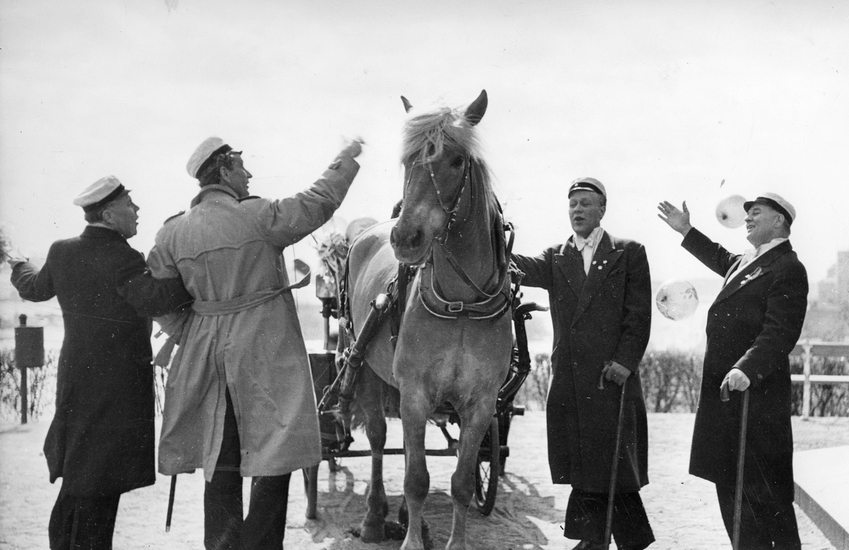
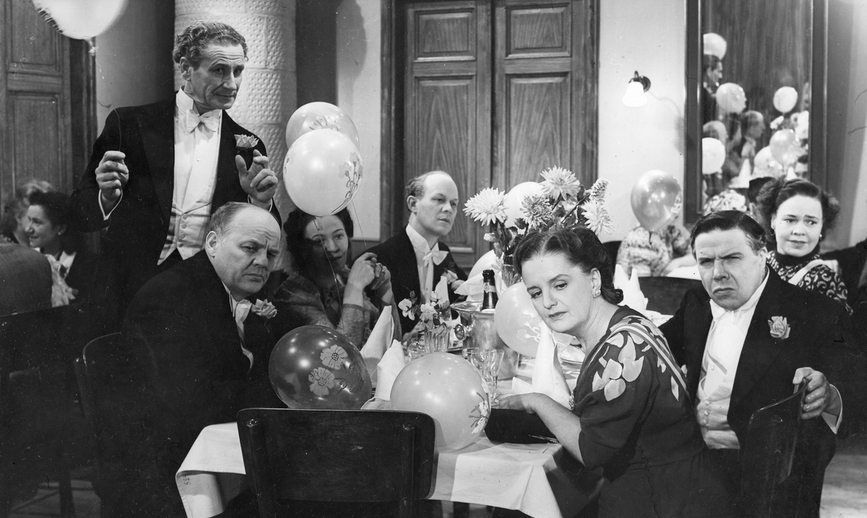
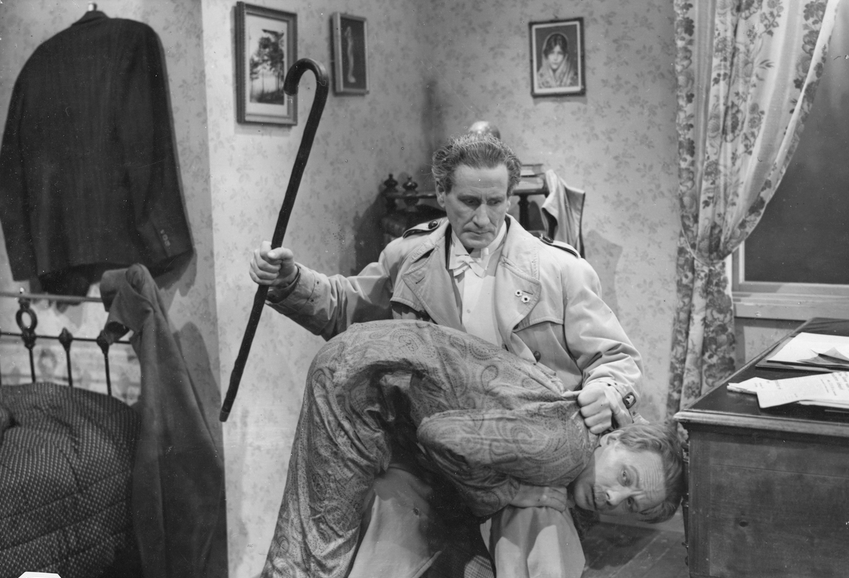
The Lucky Minister (1941)

Unexpected controversy arises after the Original Advertising Agency’s new underwear poster is a hit all over town, leading to claims that the pert model featured in it is actually Margit Helleheimo (Birgit Kronström), the daughter of a government minister facing a mid-term election. Hoping to weather the storm, agency head Bruno Blomster (Toppo Elonperä) arrives at Mr Helleheimo’s office to pitch his ideas for a new campaign to push government bonds. This only drags him into political skullduggery, as underling Hilpeläinen (Thure Bahne) schemes to bring down cabinet minister Helleheimo (Sven Relander) by any means necessary, including slut-shaming his daughter.

Summoned to account for his artwork, advertising executive Kalevi (Tauno Palo) lies to spare Margit’s reputation, and claims that he based his pictures on a dancer he met in Helsinki. The doubting minister demands that he present the real model within 48 hours.

Thrashing about in search of a suitable Finnish woman, Kalevi lurks at the theatre company of the impresario Oikero (Ossi Elstelä), where he is amazed to discover Manta Mutikainen (a.k.a. Baby Peggy), a dancer who is the spitting image of Margit, mainly because she is Margit, who has donned an unlikely disguise to audition for the role of her own double. After a series of quick-change farces that threaten to reveal her true identity, “Peggy” wins over the ministers and drags everybody into a sing-along, whereupon Minister Helleheimo awards the advertising contract, and all is well…

But no! Because Hilpeläinen arranges a dinner date with “Peggy” where he tries to enlist her help with bringing down the government. Later, Kalevi escorts her home and makes his feelings plain by snogging her face off and giving her a dog (not a euphemism). You would think that this might be a happy ending, but now Margit is incensed that Kalevi is is cheating on her with another woman, even though she is the other woman. Eventually, all such concerns are settled, and Kalevi and Margit seek her father’s blessing to get married. When Helleheimo seems about to refuse, Kalevi blackmails him, threatening to disclose his daughter’s modelling past after all unless he relents.

“All is fair in love,” says Margit. “You’re a lucky minister.” And the couple kiss as the thespians kick off in a song-and-dance celebration, presided over by Oikero, who is inexplicably dressed as Napoleon.

Turo Kartto’s script for Suomen Filmiteollisuus’ Onnellinen ministeri was lifted from the 1937 German musical Das Ministerium ist beleidigt, and had previously been performed onstage in Turku in 1938. Suomi-Filmi’s last movie of 1941 turned out to be a remarkably clockwork intersection of daffy plots, jettisoning all the songs from the stage version and replacing them with a bunch of new ones, including “Katupoikien laulu” (Song of the Street Boys), which has become a much-covered classic, albeit with the original reference to the streets of Soho [London] snipped out to make it sound more Finnish.

In fact, the film is crammed to bursting point with songs, starting off in the opening scene at the Original ad company, where the wartime starlets, the Harmony Sisters, cameo as singing telephonists, in a four-part harmony about how the boss can’t come to the phone right now. We’ve seen many musicals before over the last couple of years of this watchathon, but this one is the first to my mind that does anything more than ramming songs into the narrative. In The Lucky Cabinet Minister, dance and song are used to tell the story in all sorts of innovative and impressionistic ways – old news in the theatre, but rarely utilised in Finnish cinema until this point.

Take the opening number, “Mainostoimistolaulu” (Song of the Ad Agency). It doesn’t merely set up the bustle of the agency, but incorporates the arrival of Kalevi’s poster, and its distribution all around town. Proud of his company’s handiwork, Blomster walks briskly past admirers of the poster on the street, and buys a newspaper, and the camera focusses on his feet as he walks while reading, his jaunty pace coming to a shocked stop as he reads of the possible collapse of the government he hopes to take on as a client, flanked by a picture of the minister’s daughter in frilly knickers. Back at the office, the secretaries and their busboy (Lasse Pöysti, of The Suominen Family) are dancing around the poster in a Busby Berkley-esque group, alternately worshipping it and imitating it, as if to encapsulate the media fever around it… until the song is brought to a crashing stop by the arrival of Blomster.

Director Toivo Särkkä smartly leaves much of the singing in the hands of bona fide singers, as seen in a reprise in which Tauno Palo talks his way through his lyrics in a duet with Sirkka Sipilä and the Harmony Sisters. But that’s okay, because we know the Big Guns are waiting in the wings – Palo does eventually acquit himself in singing terms, but Birgit Konström, still coasting on her success after For the Money, has the dual singing and acting chops to carry the film all by herself. One expects that’s why she gets top billing, with a role that seems to have been written for a teenage ingenue, but which only the 36-year-old Konström could reasonably be expected to deliver.

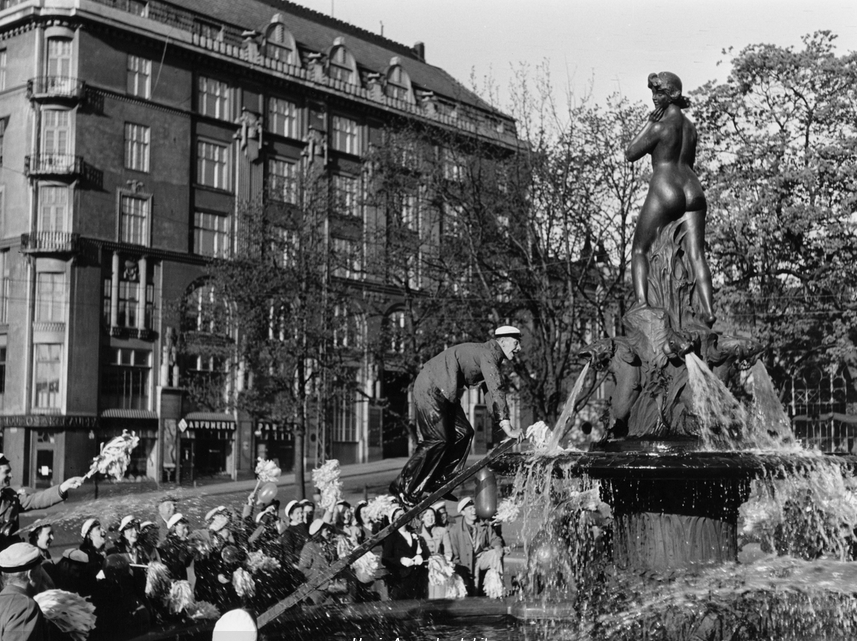
We might detect some vestige of the original theatrical production in the way in which the actors are given times to rest. The Harmony Sisters fade from view after the first hour, to make way for Konström and the Swing Sisters, who obligingly perform a shuffle-dancing striptease while the lead sings “Katupoikien laulu”. Much of the film’s location shooting comprises entertaining but unnecessary sights of the billboard all over contemporary Helsinki, cheekily shoved into a number of iconic spots, including all around the central statue of the Forging of the Sampo.

You would think that several stage incarnations would let the plot and execution be nicely matured by the time it made it to the screen, but this appeared to set many critics against this 124-minute film. Paula Talaskivi, in the Ilta Sanomat, bragged that she’d seen it twice on stage, and was left bored by this cinema version. Toini Aaltonen in the Suomen Sosialidemokratti commented that the original’s Parisian setting had been excised for Helsinki for no good reason, a comment which seems to deliberately misunderstand how films work. Olavi Vesterdahl in Aamulehti offered a far more incisive contextualisation of the film in terms of its era, noting that “idle celebrations and infidelities” seemed to be the touchstones of contemporary Finnish cinema, and that the film did itself no favours by relying so heavily on pratfalls and plot holes. “As such, the film is the lightest kind of entertainment, hardly even that, perhaps more correctly a waste of time from the viewer’s point of view.”

Posterity has been far kinder, with reviewers of the film’s later appearance on TV, untroubled be memories of the theatrical original, universally praising its vim and verve. I certainly found it much more enjoyable than I had been led to expect by the faint-hearted reviews of the 1940s, although in the woke 2020s, it is difficult not to take umbrage at the subtextual hand-wringing about a woman’s freedom to display her body. To be fair, the script depicts Margit as entirely uncaring about it, while the people of Helsinki, upon recognising her while out riding in public, literally break into applause. It is only the menfolk immediately around her who get in a tizz, before revealing how shallow their own perceptions are by failing to realise that Peggy and Margit are the same person. Meanwhile, there are some subtle suggestions of hypocrisy at work, particularly in a scene at her father’s home where Margit has a long conversation with a maid, in front of a massive rococo painting of a bunch of ladies with their baps out.

There is indeed, a certain class of Finnish women who all look the same, and it’s the thin, wriggly bright-eyed blondes usually favoured by foreign husbands (although not me). So much so, that at one Christmas party in 2003 for my beginner’s Finnish class when everybody brought along their Finnish wives, the pixie parade on display was so homogenous that I was genuinely worried someone might go home with the wrong Finn.

I asked our Finnish teacher if there was an equivalent language course where a majority of female students all had identical husbands.

“Yes,” she said with a sigh. “Swedish.”

Jonathan Clements is the author of A Short History of Finland. He is watching all the Finnish films, so you don’t have to.

Rebel Island in the FT

Kathrin Hille in the Financial Times includes Rebel Island in her run-down of new books on Taiwan.

“Clements delves into the creation myths and languages of Taiwan’s different indigenous groups and discusses their similarities with certain Pacific island peoples but also with some tribes in southern China. He describes the complexities of Chinese migration to Taiwan since the 17th century and the different settler groups’ interactions with each other and with indigenous groups.

“The reader encounters the powers that over the centuries landed on Taiwan’s shores and made shortlived attempts at setting up colonies — the Spanish and the Dutch — or otherwise exploiting its natural riches and strategic location — the British and the French.

“Clements, a British writer who has authored both fiction and history books about east Asia and benefits from his literacy in Mandarin and Japanese, makes all this come alive through the key characters whose stories he tells.”

Singing Madly in the Mountains

Mr Jiao, the chieftain of the Yi village, wants to have dinner with us to discuss the shooting tomorrow. I dread these occasions, but it goes very well. He turns up wearing a regulation issue tribal nylon anorak, brings his big brother, who is the designated driver. Our own driver, unlike the sullen anti-socials we have had before, joins the talk (a huge benefit having another Mandarin speaker at the table), and they are clearly pleased with the attention they are getting. The chief is a small, small man with dark brown skin, more Burmese than Chinese, and with a high-pitched voice that could easily be mistaken for a woman’s. He will be interpreting for me, because his mother-in-law, who is the hemp spinner, only speaks Yi, an antiquated version of Chinese that sounds like someone throwing a pot of alphabet soup down some stairs.

The food is Chinese, but recognisably distinct – lantern-shadow beef, fried squid, a soup of river fish and mountain greens. Mr Jiao orders a bottle of Damaijiu, a local malt firewater that is supposedly 45% proof, and from which the crew recoil in terror. It is smooth and tasty, like vodka, and between us we down the whole (small) bottle until he is red-faced and giggly.

Our director looks Chinese, but she grew up speaking Teochew and Malay, and her Mandarin is understandable but error-riddled, such that if she gets tipsy she sounds like the policeman in Allo Allo. On the last shoot, she apparently mixed up her vowels so much that she ended up wishing a departing artist “a trip in which you suffer from permanent influenza.” Our fixer pleads with her not to open her mouth at all. Tonight at dinner with the village chief, she realised that he was making his own personal documentary about his tribe’s way of life, and offered to share with him whatever drone footage we got tomorrow. However, owing to some chance mispronunciations, she ended up saying: “And tomorrow, if you like, we will masturbate all over your village.” I thought he was going to spit out his tea.

But he seems nice enough, and toasts me with a story of his international friends. “You are only the third English person I have ever met,” he says to me. “The second was an ethnomusicologist who came to study our songs. And the first was Margaret Thatcher, your Iron Lady.” Apparently, she came to see some sort of ethnic dance he was in many years ago.

Today we are shooting the collection of wild huocao, literally fire-grass, i.e. tinder. It looks like a white-backed dock leaf, and forms the weft of their traditional clothing. The warp is hemp, which we will also have to harvest.

Mr Jiao has assured us that collecting the huocao is a two-man job. But by the time we set out, we have somehow acquired a dozen Bai Yi women in black wimples and blue tabards, clutching baskets and giggling at the thought of being on telly. The director is ready to blow a gasket, because she knows what will happen next. The Yi women’s love of telly will proceed in inverse proportion to the amount of time they are to stand there, no there, no over here, no, please be quiet. Nobody say anything; please stop moving; go and do that thing again; now go and do it over there. Only one of them actually speaks Mandarin; the rest only speak Yi, which means all the spoken directions wander at a leisurely pace through several stages of Chinese whispers, and are often countermanded before they reach the last in line.

Meanwhile, two men, wearing traditional hemp clothes over their tracksuits, burst into song on the mountainside. It’s a yodelling song, about how happy one is collecting huocao, wondering if there is anyone else on the mountainside of the opposite sex, who wishes to sing a refrain in response. It’s all very idyllic for about ten seconds, but then the women’s refrain drifts up as well, ruining the immediate sound recording. We go for another take, but now the men are singing in response to the women, and by the time we have shut them up, the women are singing back. This medieval tinder hook-up continues until it starts to rain, but Alvin the cameraman grabs some footage of the women puttering around in the grass, and of them trying to teach me their song with comedy clumsiness.

Gwyneth, my name for the only woman who speaks Chinese, is determined to stand close by, because she is the one who can show me what huocao is. Meanwhile, a cowherd wanders across the back of the shot with clanging cowbells. The director is starting to regret ever saying that she was looking forward to shooting in the countryside, since there is soon just as much noise pollution as in a built-up urban area, except here we are also hot and clammy with mosquito repellent and sun lotion, and there is nowhere to have a piss. You would think there would be handy bushes everywhere, but behind every one is a black-wimpled woman in a blue tabard, singing a song about grass.

Dinner is back at their quaint farmhouse, sitting on benches in the courtyard. The women eat separately, chattering in Yi about whether or not this will make them famous. The men dish out the Damaijiu malt firewater, and serve Yunnan food – succulent local ham, chicken and garlic, pumpkins and potatoes, and punguent home-made pickles. A sullen two-year-old boy wanders between the tables, gnawing balefully on a chicken’s head. He’s teething, explains his mother, and the beak is good for him.

“I can’t help but notice,” I say, “that your tribe is called the Bai Yi, meaning ‘white clothed’, but everybody’s wearing blue.”

“Ah yes,” says Mr Jiao brightly, “making the white clothes is such a faff, we can’t be arsed any more.”

Jonathan Clements is the author of A Brief History of China. These events appeared in Route Awakening S02E04 (2016).

Meet the New Boss…

To America, where Robert Woodhead and Natsumi Ueki, owners of the fan favourite video label AnimEigo, announce that they are selling their company and retiring. This would usually be where fandom clutches its pearls in horror and starts bemoaning the fate of a good company snapped up by some conglomerate, but this time the buyer seems ideally suited.

Founded in 1988, AnimEigo were the people who first brought Urusei Yatsura, Bubblegum Crisis and Otaku no Video to the west, initially as a subs-only boutique distributor – their titles first made it to the UK under the aegis of their sub-licensee, Anime Projects.

Justin Sevakis, whose disc-mastering company Media OCD is responsible for many of the Blu-ray presentations that eventually show up in the UK, has offered to take AnimEigo off its owners’ hands, kiting it along for another generation. Somewhat appropriately, the story broke on Anime News Network, the website that Sevakis founded back in his student days, long since sold on to other owners. The deal was done some time ago, but the parties involved first wanted to do a grand tour of all the anime companies in Japan, introducing the new boss and pleading for the change in ownership not to shut down contracts that dealt specifically with Woodhead and Ueki, rather than whoever it was that would take over their company.

So, this is no leveraged buyout or corporate takeover. Instead, it’s two much-loved fans-turned-pro, gently handing their company over to another fan-turned-pro, and sticking around to ease the transition along.

Sevakis announces that he intends to continue the AnimEigo policy of crowd-sourcing bespoke collectors’ editions of niche titles. Woodhead and Ueki will guide him through to the completion of whatever projects they had underway at the time of the sale, but I suspect that once Sevakis is fully in charge, the acquisition of his own distributor is sure to tempt him with new prospects. If you suddenly found yourself with a Blu-ray label, what would your dream acquisitions be…?

Of course, it might also Turn Him to the Dark Side. Watch out for the sudden appearance of a Mirror-Universe goatee, and a sudden desire to dub everything with silly voices and swearing. I suspect, however, that AnimEigo is in safe hands, and this is one acquisition that fandom won’t decry as the worst evarrr.

Jonathan Clements is the author of Anime: A History. This article first appeared in NEO #239, 2024.

Rebel Islander

I’m popping up at London’s School of Oriental and African Studies on Wednesday 29th May (7pm at the Khalili Lecture Theatre) to talk about one of Taiwan’s most famous residents:

Jonathan Clements discusses the life, death and strange afterlife of the “pirate king” Koxinga (1624-62), the Ming loyalist and conqueror of Taiwan, variously derided as a pirate and a rebel; lauded as a resistance leader and prince, twice deified, spuriously reclaimed as both a Japanese patriot and a Chinese “People’s Hero”. 

Along the way, there are some unlikely legends, some suspicious shenanigans, and his co-option into a 2010 mayoral campaign that threatened to turn into a fistfight among historians.

*All SOAS Centre of Taiwan Studies events are open to all and not needing to register.

Jonathan Clements has presented three seasons of Route Awakening for National Geographic, a TV series about icons of Chinese culture and history. His latest book is Rebel Island: The Incredible History of Taiwan.

Let’s Do the Show Right Here

An 0545 start, up for breakfast and in the van for the two-hour drive to Weinan, the home town of Xi Jinping’s dad. For this reason, this city in the middle of nowhere has an incredibly swish hotel, in which every room looks like a suite. I have another robot bathroom with automatic, motion-sensitive lights, and two complimentary condoms, courtesy of the Weinan Health & Safety Initiative. What on earth do they imagine goes on this hotel? Not a lot tonight, because the film crew will be the only people staying.

Our merry band of nine (the crew and two drivers) has now swelled to eleven, since the guy from the Buick dealership (our sponsors) has decided to bring his parents along. Christ knows what he must have said to them when he got home yesterday, but presumably they were very excited to sample the glamour. It’s a ridiculously unprofessional thing to do, and makes us look like a convoy of muppets.

They are underfoot all morning, soon as bored as only a spare wheel on a film location can be, and largely have to be left at a remote farmhouse while the rest of us shuttle backwards and forwards on a mountain road through fields of corn.

The morning is dedicated to getting shots of me driving the Buick up hairpin turns on mountain roads – a disastrous prospect remedied by getting the driver to do all the hard work, and me to do all the bits that are straight lines and close-ups. We are in the foothills of the Qinling mountains, in sight of Huashan, with the peaks in the misty distance, and endless fields of ripening corn. It’s going to look great, although we still manage to attract eleven dicks on mopeds who stand around pointing at us and asking what we are doing.

Mickey the Mic is the sound man, so spends all day with eight kilos of recording equipment strapped to his front like a cybernetic beer-gut. You can tell which one he is, because his regulation-issue floppy sunhat has holes cut in the brim for his headphones. He is Singaporean, with the odd lilt that makes him sound Indian lah, and has the Singaporean habit of injecting the Chinese particle denoting a change in circumstance into the end of any sentence where it would be relevant. I have started to pick up the pidgin English of the crew, and was heard at one point today saying: “Soon be dark lah.”

Mickey is also the drone man, which means that he swaps his sound rig for a complex remote-control tray, with which he joysticks our robot team member Yuneec Q500 Typhoon, a squat, sleek metal dragonfly with four rotors and a gimbal-mounted camera with a 16-gigabyte memory card. Unfortunately, its batteries only last for ten minutes at a time, which means the crew need to be absolutely, totally sure where everybody is, and that the shot is ready, before they send the Typhoon into the air. It can hover with almost perfect stillness if the wind is low, and even has a nifty function called Follow Me, whereby it will zip along at a pre-set distance from whoever is holding a thumb-operated remote-control beacon.

This is how we pay the bills. Buick are fronting the cost for the entire series, as long as their vehicles get 30 seconds of screen time in each episode, which apparently still works out cheaper for them than making an actual TV commercial. We’ve given their car advert-level exposure as it roars up the mountain road and skids around corners, occasionally with me at the wheel, occasionally with my stunt double while I duck in the back seat with a walkie-talkie, yelling instructions in Chinese.

We are up in the hills to see Master Wei Jinquan, who performs Huaxian Shadow Plays. I am dreading it, but he turns out to be very chatty and a perfect interviewee, ready to rattle on without pause for five minutes after the most minimal of prompting. He is the nth generation of his family to make, paint and perform shadow puppetry and lives in a village that was once home to dozens of performers. Today, it is a cluster of huts populated almost solely by the elderly and their grandchildren – the adult generation having migrated to the city to work.

We talk for an hour on his roof terrace in the sun, and then he leads me down to his workshop, where he attempts to teach me how to cut the translucent cowhide that makes the puppets. The hide has the look and consistency of an A4 sheet of human fingernail, and he tuts and fusses over me while I hold the knife wrong, put it at the wrong angle, and fail to move the leather (you move the leather, not the knife) on the wooden palette. The crew are all snickering as he calls me a moron, and I protest to the camera that every time he instructs me, he adds an “and one more thing…” that I could have done with knowing before I start. I am also mic’ed up and able to mutter asides regarding my fear that he is going to stab me with his awl if I get it wrong again. It should be quite funny, and only two days in, we are already establishing a general tone of arch sarcasm that I think I can probably keep up.

At one point, the crew are repositioning the camera to zoom in on my hands at work, so I attempt to explain to him what’s going to happen.

“Now I’m going to do it wrong again,” I warn him.

“Well, you don’t seem capable of doing it any other way,” he mutters.

For me, the great relief is that I am able to function fully in Mandarin all day without holding up a professional film crew, although I am probably operating right at my ceiling of competence. It doesn’t help that I keep forgetting the word for shadow puppet, which is pi’ying. The clock sneaks towards six, and I realise that we are done for the day, suffusing me with a great sense of relief and tiredness, and what appears to be ten or fifteen minutes of material for the final edit – a good haul for a day in which we banked maybe three hours of footage.

Then it turns out that there has been a miscommunication. He hasn’t realised that we are staying the night in Weinan, and thought we would be filming a performance at a Xi’an theatre tomorrow. No, says the director, we will film you here tomorrow. But if she wants it traditional, it has to be at night, and by tomorrow night we will be on our way to the airport. Reluctantly, she decides to stay and shoot a performance in the village, which means waiting until after dark while Master Wei’s teammates set up the travelling theatre in the car park in front of his house.

The local villagers come out to gawp, and a gaggle of little girls sit in a line on a log for a while, looking cute until one of them initiates a farting competition. Others lurch and stamp around the car park, trying to catch crickets in their hands. Alvin the cameraman sets up the back-up camera to shoot in time-lapse, as four old men lash together a rickety series of trestles to create a giant punch-and-judy shed, faced by a white cloth the size of a very large widescreen television. They all clamber inside, with screechy Chinese instruments and gongs, with Master Wei sitting at the centre, his puppets at the ready. They then start clattering out a wailing Chinese song, and the shadows start moving, with the story of Pigsy Eats Some Watermelons, and some martial arts thing about two generals and a comedy horse fighting each other until someone dies.

Alvin clambers into the staging area to film among the team as they perform, and so we get the same play from two different angles. Reaction shots, however, are all going to be mine, because the crowd seems indifferent. The little girls are soon ignoring the play and instead crowding around each other to take selfies of themselves not-watching the play. A boy on roller skates trips over the power cable, and a small sausage dog starts eating someone’s discarded snotrag. Master Wei finishes to no applause, which seems to be how these things are done, and the crowd melts away back to their shacks.

Jonathan Clements is the author of A Brief History of China. These events featured in Route Awakening S02E05 (2016).

Eurovision Shouty I-Spy 2024

Hello, Bonsoir, and Rim Tim Tagi Dim. Well, I’ve sold my cow in preparation for Eurovisiontide — greetings to our many readers from Vancouver to Helsinki, ready for another round of the greatest event on the planet. This year it’s being held in Malmerrr, where the host country is sure to crow relentlessly about Abba’s 1974 win with “Waterloo”. Abba themselves, however, are trying to enjoy a graceful retirement, so there will be points every time someone mentions them, or some fragment of the group reluctantly shambles onscreen. Shout ABBA! once for each visible member, every time they show up, and FAKE ABBA every time someone dresses up as them.

We’ve already lost Australia, who finally showed up with their own didgeridoo, as well as Belgium’s doom-laden “Before the Party’s Over.” Belgium, man. Belgium. The bookies favour Switzerland with its transgender message and peach miniskirt, but there’s every indication that there is huge popular support for my own favourite, Croatia’s Baby Lasagna with “Rim Tim Tagi Dim”, a catchy song with a dance that even an idiot could do, about the experience of leaving home and going to the big city.

Audience reaction at the semis would suggest that it’s between Croatia and Netherlands [Time Travel Footnote: since disqualified] with their trying-too-hard “Europapa”, with a lot of love for Spain. But there is everything to play for in the voting rounds, as well as the usual prospect of pity points for Ukraine. There’s also liable to be a tussle over Israel, with literally everybody voting purely on politics, so they might as well have sent three minutes of white noise for all the difference it will make to their score.

Step One: you will probably need to be quite drunk. Step Two: The following sights and sounds will occur during this Saturday’s Eurovision Song Contest. Can you spot them first? Remember to shout it out. As ever, there is more than one key change, and plenty of orbital cleavage. Keep your eyes (or ears) open for any of the following. And when you notice it, SHOUT IT OUT! Points can be scored all through the contest, on and off stage, including during the voting and in the greenroom.

In no particular order, in Saturday’s final you should be ready for:

  • KEY CHANGE!
  • COSTUME CHANGE!
  • “Let us prance”
    “I sold my cow”
    Big white box over her head
  • Towering blue entryway
  • “LET’S COME TOGETHER!”
  • “CROWN THE WITCH!”
  • People who’ve brought their own rock to sit on
  • People who’ve brought their own hill to climb
    Onstage washboard (blink and you’ll miss it)
    Nose furniture
    “OUT THE WAY!” every time something coincidentally obscures Windows 95 Man’s genitals.
    Dancing on the Ceiling
  • Irish girl in a pentagram
  • SPLITS!
  • Face smeared across a crucifix
  • Actual onstage bin fire
  • Topless Spaniards in actual basques
  • Pointy shoulder pads
  • Pauldron (a single piece of shoulder armour. Impress your friends by knowing that)
  • Singer through the keyhole
  • Busby Berkley overhead dance with Giant Hands
  • Lookalikey Andrew Tate rapping for Estonia
  • Lookalikey Alexei Sayle rapping for Estonia
  • Swiss upskirt
  • Actually Giant Hands! Several times.
  • Giant Bluebird on keyboards
  • IT’S ABBA!
    FAKE ABBA!
    Very Big Braids
    Giant Leopards
    Shoulder dancing
  • STEADY ON! Every time Olly Alexander’s dancers appear to be actually bumming each other.
  • Pointing
    Hands make a heart
    FLAME ON! (every time there’s pyrotechnics)
    WINKING
    COSTUME CHANGE
    Bimbling*
    ORBITAL CLEAVAGE**
    Buddha Jazz Hands***

Someone says “Jaja Dingdong!” — An oldie but a goodie, liable to crop up during the voting.

Greece awards 12 points to Cyprus / Former Yugoslavian Republic awards 12 points to Former Yugoslavian Republic.

(*swaying one’s head from side to side in a snakey fashion)
(**ostentatious cleavage sufficient to see from a satellite in orbit, which, according to Eurovision bra consultant Tom Clancy, requires a minimum of C-cup)

(***the dancers all pile behind the singer in a line and then fling their arms out, creating a multi-limbed oriental deity-look)

We would have included a Sound of SIlence category but apparently the organisers have cued up canned applause ready to play over Israel’s big finish in case nobody makes any noise at all. They are, however, likely to have the opposite problem, as Thursday’s semifinal was compromised not only by a protest on the Bridge that links Denmark to Sweden, thereby delaying many of the audience, but also boos and heckles as Israel’s entrant took to the stage. Eurovision is no stranger to Palestinian protests (and indeed, people trying to get Israel off the stage, or even pretending they aren’t competing) — long term fans may remember that Iceland was fined in 2019 for a mid-voting unfurling of a Palestine banner, and that the same contest saw Madonna rebuked for getting her dancers to sport Palestinian and Israeli flags. Sweden’s Eric Saade, who is of Palestinian ancestry, was reprimanded for wearing a keffiyeh during his semifinal performance this week.

Ireland’s Bambie Thug smuggled in “Ceasefire” and “Free Palestine” written on their face and legs in ancient Ogham script, but someone spotted this and made them take it off. So get ready to award bonus points for every Palestinian flag (they are banned in the arena but someone’s sure to smuggle one in), shout of “free Palestine” or conspicuous boo…. It would not surprise me if there is an attempted stage invasion. Finland’s jokey inclusion of a faked producer running on stage to argue with the singer about “rules” might get a real-life counterpart somewhere during Eden Golan’s performance.

Israel’s own entry was only allowed in after careful redacting of its original title, “October Rain” and lyrics alluding to last year’s Hamas attack. Eurovision is supposedly free of politics. But as well all know, it’s all about politics. And glitter. And orbitals. And an Armenian woman with a cock in her hands.

On another note, I am mildly suspicious that this year’s contest marks the first occasion when a number of entries are competing not with humans, but with AI that has been fed samples of previous hits. There’s a certain sameyness not only to some of the songs, but also some of the choreography and design choices that makes me thing we might be watching a contest not between the usual suspects, but between a handful of prompters on Chat GPT. See what you think. Host country Sweden’s “My Lovely Horse” (the entry designed to not-win with honour) features two yoofs dancing in a self-made tunnel, but it left me with the feeling that someone had typed a series of prompts based on Eric Saade’s “Popular” — pretty Nordic men / wiggly dance / unnecessary spatial restrictions / and a song title that wags will suggest is the exact opposite of the song’s effect = “Unforgettable.”

Spain’s drummer is welcome to drop by for a cup of tea.

The Distracted Diner

Thomas David DuBois’ deceptively chatty introduction to China in Seven Banquets artfully digests a bunch of important food-studies concepts for the general reader, including the nature of sources, the metadata of meals, and precedents in the study of foodways. Before giving examples from China, he dazzles the reader with a bunch of examples that are liable to be closer to home, including Irish folklore that prevented butchers from obtaining meat from cows that were away with the fairies (i.e. “mad”), and an old working-man’s stipulation that labourers should not be fed something so common as lobster for lunch… this was back when lobsters weren’t so scarce.

With only seven meals to distil the 5000-year span of Chinese history, DuBois takes what I suspect to be a tutorial delight in using different research methods. Sure, anyone can take a recipe from a Ming dynasty cookbook, but DuBois wants to investigate where the ingredients came from, and which ones were new. He pokes around the foods seen on display in Ang Lee’s film Eat Drink Man Woman to illustrate what constituted a home-cooked meal in the yuppie 1990s, and in a lovely 21st century touch, deconstructs the menu for a modern phone-based hotpot restaurant.

DuBois even gets his hands dirty with forensic archaeology, trying to recreate Zhou dynasty booze in his home with some millet, barley and mold. I would have liked to have seen more of such experimentation, along the lines of Serra and Tunberg’s Viking cookbook, in which our earnest academic tries to get to grips with ancient cooking methods, and is forced to confront ancient standards in taste.

DuBois is particularly good at reading between the lines, with abductive analyses of everything that’s missing from cookbooks and recipes. He points out, for example, the basic processes that are omitted from classical texts, because it is assumed that the average reader already knows them, as well as the rudiments that have to be reintroduced in the 1980s for housewives who have never had a chance to learn. He also luxuriates in the many processes and techniques that today we farm out to third parties – a traditional Chinese cook might make their own pickles and ferment their own sauces, transforming the nature and time-stamp of food preparation in all sorts of ways.

For his second chapter, he jumps ten centuries ahead, to a China reeling from the impact of Silk Road contacts – tea-drinking Buddhists, dairy-loving Persian traders, and new food stuffs from the barbarian West, as well as a shoreline that introduced a diversity of new seafoods, and even exotica like romaine lettuce, arriving from Japan and hence still known today as Woju – i.e. lettuce from the land of the dwarves of Wa. He also points to the absolutely revolutionary impact of fast-growing rice in the Song dynasty, doubling or even tripling the annual output of Chinese farms.

When it comes to the “Columbian Exchange” – which is to say, the transformative Ming dynasty, when new crops flowed into China from the New World – DuBois reminisces about his student days in north China, where he was forced to subsist on a diet of maize-based porridges and derivatives. He notes how corn remained a largely foreign element in cookbooks, but still became an integral part of the Chinese diet, flung into local recipes to create enduring hybrids like the baba cakes of Guizhou and Yunnan.

DuBois makes welcome statistical forays into Chinese recipes, observing, for example, that the ingredients for a particular Manchu dish would amount to a vanishingly small amount of spice per diner by the time it was eventually served. It is a recurring theme in his history – that today’s chili- or pepper-heavy dishes, our salty fast food and sugary snacks, would be almost entirely alien to many of our forebears, and possibly even inedible to them.

As he enters modern times, DuBois alludes to the “culture war” as China was exposed to European ways and technologies, such as the sudden spread of canned condensed milk after its invention in the 1850s, introducing a particular kind of sweetened dairy product to far-flung places that had never seen it before. Chinese authors scoff that foreign food is “raw and primitive” and that even the most lavish meal at Buckingham Palace pales in comparison to a “budget banquet” in Shanghai. DuBois takes an entertaining detour through the 1925 book Secrets of Western Cooking, which tries to educate Chinese chefs about exotica like cold salads, bread pudding and fried chicken.

He mentions the desire of Chinese arrivistes to be seen in Western restaurants, even if they found the food unpleasant – a comment which suddenly instilled in me a powerful memory of winter 1991, when my students at the China Trust bank in Taipei decided to give me a send-off by taking me out for an expensive meal at an American steakhouse, and I was forced to smile wanly through the very opposite of the kind of food I liked, looking longingly across the street at a Sichuan restaurant.

Feigning ignorance of the concept of the Chicken Kiev (or these days, Kyiv), DuBois recounts the preparation of one at Beijing’s Moscow Restaurant as it must have looked to incredulous Chinese eyes, wastefully packing a chicken breast around a puck of butter, and repeatedly frying and rebreading it. He observes that butter in the 1950s was only available to foreign customers at the Friendship store, rendering a home-cooked version of the meal as likely as a sprinkling of moon dust.

As China opens up, DuBois is present in person to remember some of the anecdotes that might have otherwise been lost to history. He recalls, in his student days, the national excitement over the opening of a Nestlé factory in north China, and the subsequent migration all over the country of unopened tins of powdered milk, repeatedly gifted and regifted as prestige items with no obvious use. For DuBois, the continued success of McDonald’s in China is partly due to a sense of nostalgia among the grown-up “Little Emperors” for whom a childhood trip to the newly arrived Golden Arches was a rare and welcome treat.

After China joins the WTO in 2000, DuBois identifies a “firehose” of exports, indirectly changing local foodways by putting more money in everybody’s pockets. He also identifies some of the perils of industrialised food production and franchising, and has a refreshingly cynical eye when it comes to certain legal clampdowns. He scoffs at the possibility that street markets might be shut down for reasons of food safety – far more likely that it’s hard to get them to pay tax. He adopts a novel business-based approached to the famous duck restaurant Quanjude, discussing not its signature meal, but the catastrophic attempt to grow it into a franchise big enough to float on the Shenzhen stock market. The whole point of Quanjude was that it was bespoke; you couldn’t just open one in every town like a Pizza Hut and expect to keep the same quality or cachet. I was also fascinated to read about the business models of the Luckin coffee bars, which charged exorbitant prices on the premises, but actually functioned as home delivery points, offering coffee to your door so cheaply that it was cheaper to order one than make one yourself, with the bonus feeling that you were getting something at a high discount. Even then, seven years after being founded, Luckin still isn’t in profit.

In the 2020s, DuBois has plenty to say about modern trends, such as the waimai custom of ordering out, and the army of delivery drivers that has sprouted up to support it. There is a melancholy cast to the recipes in his penultimate chapter, which lack the verve of days past and instead favour sad little hacks to pimp up a Cup Noodle, and the concept of the “distracted diner”, who is too busy gazing at her phone to pay much attention to the food anyway.

He mounts an impassioned defence of the hotpot as a dish to savour outside the home – DuBois argues that they belong in restaurants, because of the ridiculous faff of having to get all the ingredients yourself. He supports his thesis with a potted history of the Haidiliao chain, which not only industrialised “chefless kitchen” hotpot meals at franchises all over China, but even diversified abroad – I was quite boggled, walking along London’s Piccadilly one day, to find the local branch advertising for a ”Noodle Dancer.” Today, Haidilao will even come to your house, and pick up the hotpot when you’re done.

He finishes by looking into his crystal ball at what Chinese meals might look like a decade hence, steered by food security, food safety and green concerns. He points to the highlighting of “Green Biomanufacturing” as a key R&D issue in the last Five-Year Plan; localised hydroponics, and A.I. steering algorithms that condense big data on everything from weather patterns to football matches to predict which food products need to be ordered on a daily Just-in-Time system. DuBois foresees the ultimate end of waimai trends – the removal of kitchens entirely from newly built apartments, by architects desperate to save space.

Inspired by the sight of Russian economic trends post-Ukraine, DuBois imagines supplies sourced entirely from friendly nations, and familiar retail sites thinly rebranded as patriotic chains with names like “Rising China”, even if they still have the old McDonald’s interior designs. As China’s surveillance society even begins to invade eating habits, he wonders if some futuristic café will greet each arrival with a personalised menu, based in part on what its algorithms have decided the customer needs after what he was up to last night, and what he had for breakfast this morning. With a perceptive science fictional eye, DuBois imagines sitting down to a meal made with “freshly printed shrimp.”

Jonathan Clements is the author of The Emperor’s Feast: A History of China in Twelve Meals. China in Seven Banquets: A Flavourful History by Thomas David DuBois, is published by Reaktion Books.