The Wedding Crashers

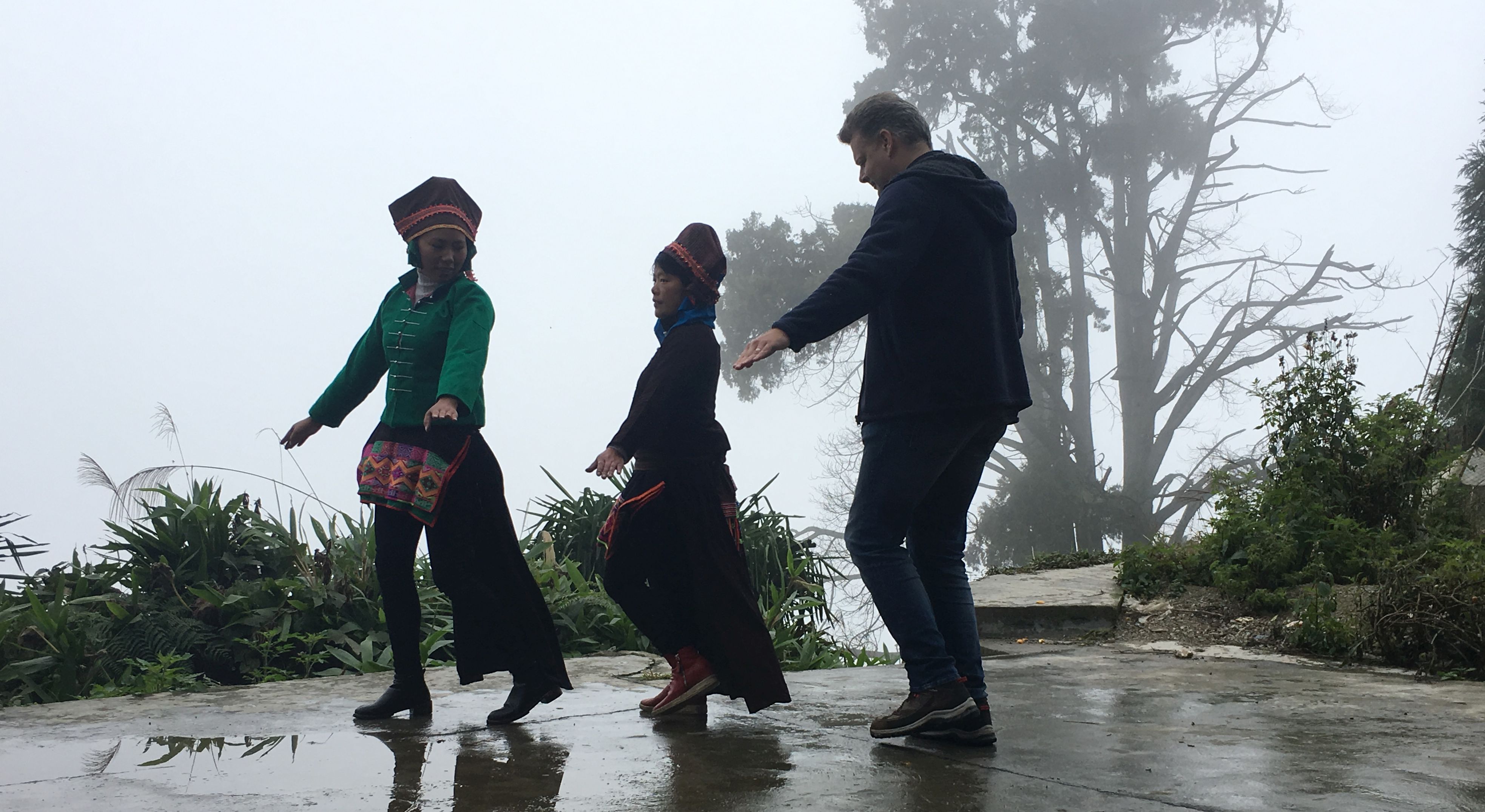
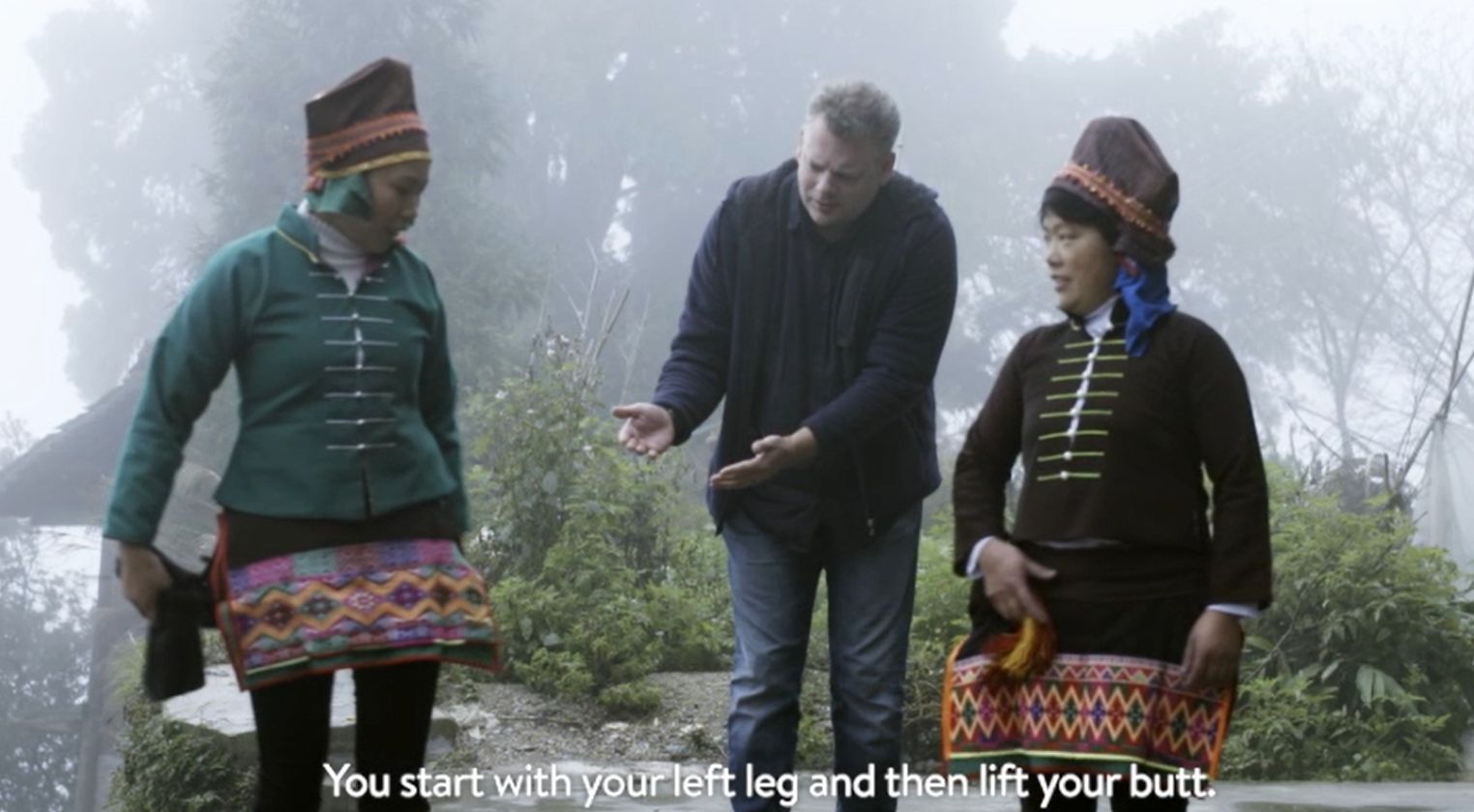
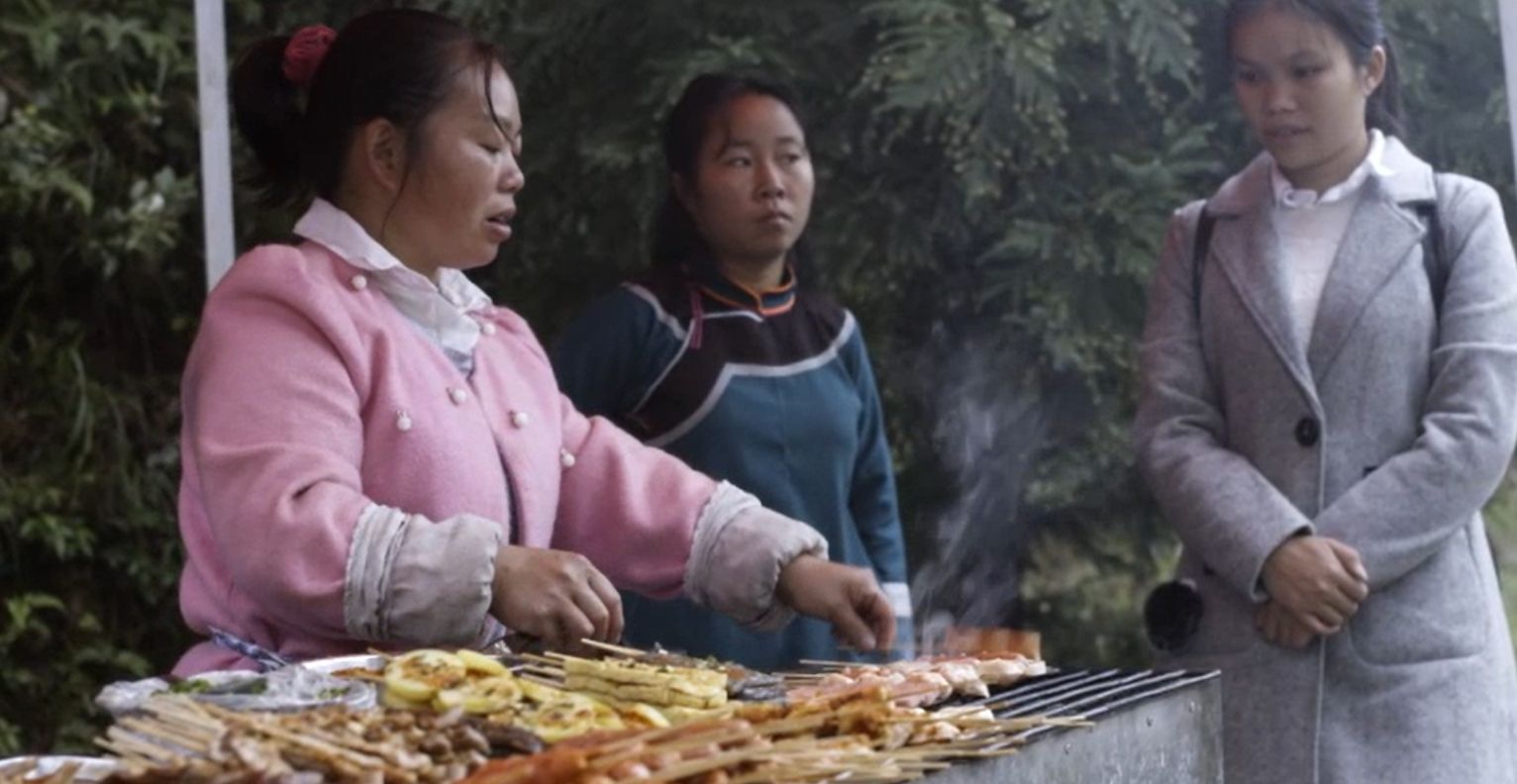
Bored with the two-hour wait for everybody to get their stuff together for breakfast, the director storms off back towards our hostel, thereby stumbling across a bunch of peasants slaughtering a pig in a field. It is a wedding party, getting ready for a blowout tomorrow where 1000 guests will work their way through a quarter of a tonne of pork, 184 chicken feet, 40 chickens (feet included), and by my calculations, about 30 carp. A conga line of assistants is bringing in one-gallon containers of vegetable soup, which until last week appeared to have contained industrial paint. The film crew swiftly invades the scene, with Mack the fixer running point to befriend the responsible parties, armed with several packets of fags to hand out.

We get footage of the production line of chickens being slaughtered, boiled, plucked and skinned; the fish being gutted; the pigs being blowtorched, much of it in the open air on the waste ground by the power station, which is apparently where the happy couple’s home has been built. The blushing bride is four months pregnant, and reveals that there is no ceremony as such. Just her and her husband welcoming guests at a jerry-built arbour, she handing out melon seeds, and him handing out fags. If we’re lucky she will put on new tracksuit. Then they will stage eight or nine sittings for dinner to get through their thousand anticipated guests, and in the evening there will be some dancing.

So, not actually a wedding at all. Two common-law cohabitants are staging a dinner party presumably to get their hands on some gifts, as every one of the thousand guests is expected to hand over some money. But it’ll do. The director, who has been ill for a week and miserable for most of the shoot, is so pleased with herself for discovering this ready-made big finish for the episode that she smiles for a whole ten minutes.

We manage to interview the bride in her family’s restaurant in the afternoon. She turns out to be one of those people the camera loves, and goes from plain to gorgeous when Daniel the cameraman fiddles with his lenses. However, two other crew members have take over the interview, because I am temporarily indisposed, groaning on the throne back in the hotel (probably too much information for you, but nothing I have eaten has stayed inside me long for the last three days). Although I rush back to take my spot as the interviewer, they tell me to stay out of it, because they have “already established a rapport.” Which leaves me with nothing to do but grin like a loon at the back, as they crash the interview into the floor, distracting the subject, leading her into one-word answers, fluffing their questions and failing to pursue any new openings revealed in the answers.

I’d been feeling for a couple of days that I was not achieving much, but watching them tank it reminds me that I do often contribute to the production, sometimes in almost imperceptible ways like knowing what questions to ask. The ingredients list for the wedding menu above, for example, was something I assembled on my own initiative, sending Mack the fixer into the kitchen to get the precise numbers while the director was still trying to decide where to place the camera. It formed the basis of my 20 seconds on camera which would have otherwise been simply “Ooh, look, a wedding!”

The director growls a warning that I am starting to sound like Fluffy, her term of abuse for a presenter on another series who tried to turn everything into a cooking show. Before you ask, her term of abuse for me is either Chicken Wings, because of the way I stand, or Treediot, because I don’t know anything about plants.

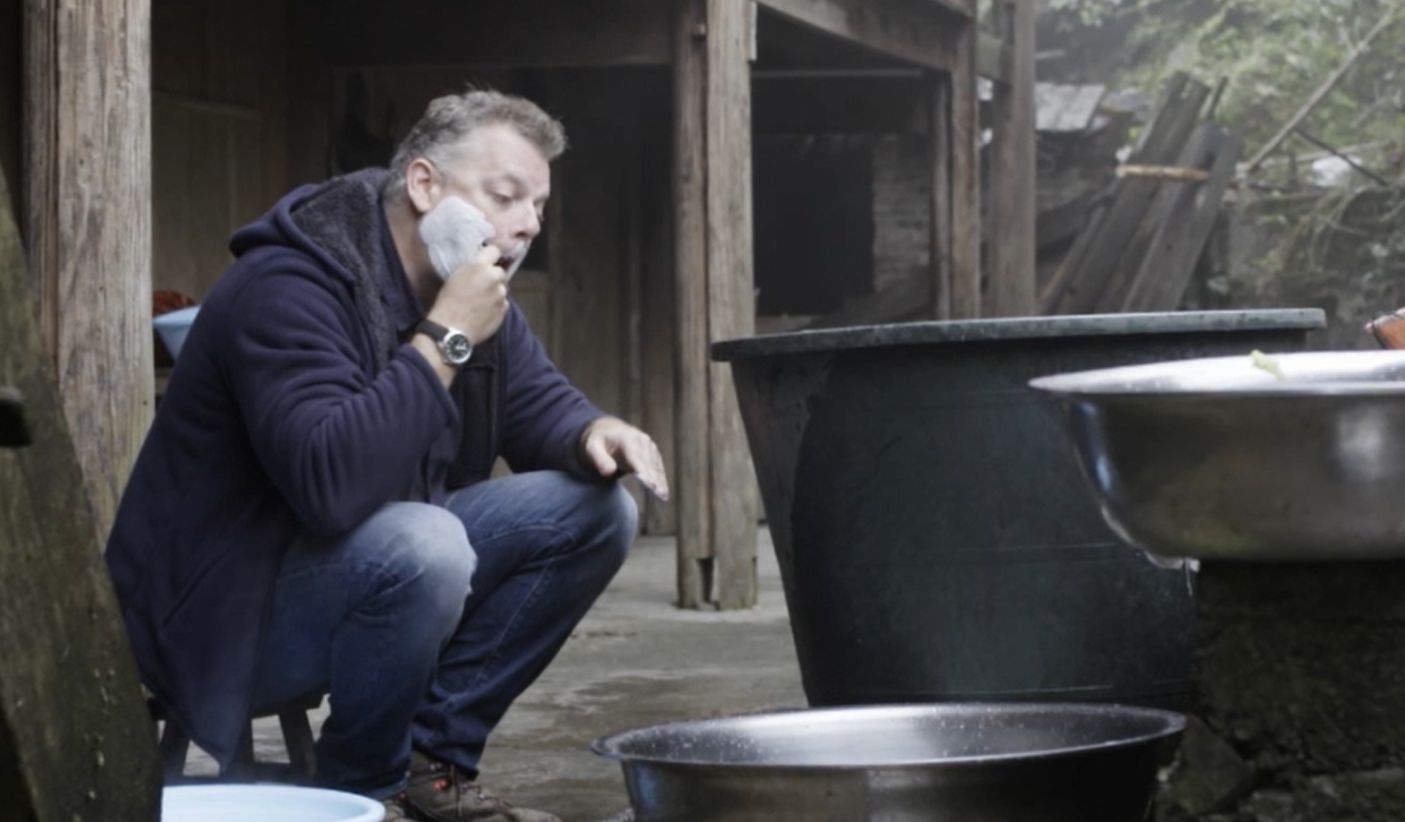
I try very hard to enjoy myself on location. I see places that I would never in a million years even think of going to, and on the good days, there is lovely Chinese food. But on this trip we have been particularly out in the boonies, away from good restaurants and flushing toilets, and that has taken its toll. So instead I keep my mind on the money.

If we were better embedded in the village, it would have been fun for me to be one of the kitchen skivvies trying to feed a thousand people, but the best we can do is gawp at the industrial production-line quality of such a large-scale meal.

Mickey the sound man is waylaid by three girls plying brownish, gloopy local ale, and forced to drink three cups of it before he is allowed through the front gate. I myself have to keep moving to avoid similar aggressive hospitality. The director succumbs to a couple of the niblets in the kitchen, but soon cries off the food when she sees leftover soup being poured back into the industrial paint containers from whence it came, ready to be ladled out again to some other guest.

Jonathan Clements is the author of The Emperor’s Feast: A History of China in Twelve Meals. These events featured in Route Awakening (S03E04), 2018.

Subject to Change

“And while it is a serious and meticulously researched history it is also genuinely gripping with ‘Blimey! I didn’t know that!’ moments on every other page. Really terrific stuff.”

Over on Russell Hogg’s wonderful podcast Subject to Change, I discuss the history of Taiwan, with reference to an unexpected appearance by the Daleks, things to do with a dead deer, genocidal acts, the pirate king, the Zombie Ming dynasty, a “racist excuse”, “the most shameful thing the British have ever done” and a bunch of other things to be found in my book Rebel Island. Part one can be found at this link.

And then there is part two: How to take over an island chain by invading somewhere else; a world-class stamp-collecting scam; the “uncrowned king” of Taiwan; the Musha Incident reconsidered as a high-school shooting, the rise and fall of the Takasago Volunteers; uses and abuses of Triad assassins, and the rise of the “outside the party” movement.

A Bird in the Hand

Mr He has nut-brown skin, burned like the Tibetans by the hot sun in the thin air of the Himalayan foothills. He is wearing the ankle-length scarlet robes of a Dongba shaman, and a five pointed cardboard crown decorated with visceral images of deities and animal spirits. There is a long necklace of coloured beads around his neck. He carries a sprig of mountain fir, a tambourine-like shamanic drum, a necklace made of bones and an ancient book of Naxi spells, written in tribal hieroglyphs. He is sitting in the back of the Buick, next to another Mr He, who is also nut-brown but with a dark, piratic moustache, clad from head to foot in army surplus camo gear. He is wearing a single leather glove, and perched on it is a hawk… which is also in the back of the car, occasionally flapping its wings in the shaman’s face.

Mickey is crammed into the passenger seat with all his sound gear, including a large fluffy boom mike that the hawk keeps mistaking for an otter. Luckily for us, there wasn’t enough room in the car for the three hunting dogs, because it already feels like I am driving down a bumpy mountain path with the cast of a Fellini film in the back. All we really need is a couple of dwarves and a pantomime horse’s head protruding from the sunroof. The glassy lake beneath us is called Yuhu, and we bump and jostle along a track that is usually reserved for ponies and quadbikes. It is the oddest and least enthusiastic session of carpool karaoke yet devised, as Mickey starts to sing Bohemian Rhapsody.

Just as a confusing week with the Kam was ultimately saved by a mud fight, our lacklustre showing with the Naxi is pinning all its hopes on a day on the mountain heaths with a bunch of falconers. Mack the fixer has asked Big Li to fix something up, and Big Li has reached outside the Li circle to the He family, who have rustled up some men with birds of prey and Swiss army knives, and a wizard. The idea is for the Dongba shaman to perform a ceremony to the gods of mountains and hunting, and for us to then go looking for pheasants among the rock-strewn meadows beneath the snow-capped peak of Jade Snow Mountain — original inspiration for Shangri-La and alleged home to the many couples from Naxi history who have committed double-suicide rather than submit to the pressure to marry their cousins.

But somewhere in all the fixers fixing with other fixers, something has been lost in translation. We wanted the hawking party for the whole day, preferably with a menagerie of spare pheasants we could release into the meadows for their own little version of the Hunger Games if the wild ones wouldn’t cooperate. For some reason, the bunch of dodgy-looking Naxi have shown up armed with little more than excuses. The hawk isn’t hungry enough. There are too many people on the hillside. The hawk is scared of Mickey’s boom mike. And they have only turned up with two spare pheasant-like birds as possible prey.

The hawk resolutely flies in precisely the opposite direction from any wild birds that the dogs faithfully root out, and is literally unable to grab a pheasant when one is held up in front of it. The director glumly gets some footage of me holding it (its talons remarkably gentle on my wrist, as if it is afraid of leaving a mark), and of Mr He the army-fatigues guy blowing his whistle and largely failing to get it to return. After half an hour, the pheasants have caught more prey than the hawk, and He the Hawker has resorted to using his GPS locator, which beeps angrily whenever it works out where the transponder on the back of the eagle is.

Daniel the cameraman is in a filthy mood. The director says it is because he has a cold, but I suspect it’s because of the crushing weight of wasted opportunity. Today’s set-up, if the fixer’s fixer’s fixer had got his ducks in a row, would have offered any cameraman a shot at an international award — wizards in the forest, and hawks coming out of the sky. But the prey won’t run, and the hawk won’t hunt, and the rare moments when there’s some action or chasing, Daniel invariably has the wrong lens on his camera, or ends up focussing on the wizard having a fag behind a tree. Then the hawkers reveal that this last half hour is all they have scheduled. Far from spending the day on the mountain, they have another hawking party to go to, and are ready to pack up and run off, observing with something of a hungry glint in their eyes that maybe we can come up with something better the day after tomorrow. The hawk has been so hapless at chasing the pheasants that we still have both of them alive, staring at us with what only can be described as avian sneers. We have barely seconds of footage, which causes Sohkiak to suggest that before the hunters go, we set up a scene where I drive the Buick across the mountainous landscape, with a camera stuck to the front of the car for a good view of our mad passengers.

The hunters all bugger off to a more interesting hunt somewhere else, and we are left with the Dongba shaman. He is as friendly as any wizard might be when offered a week’s wages to set fire to some twigs on a hillside, and gamely talks me through the career path of an exorcist and sometime children’s entertainer. He lights a pile of fir branches and intones dour prayers in Naxi to the gods of the mountain. He is much too polite to suggest that we might have avoided a lot of palaver if he had asked the gods’ permission before we started chasing a couple of pheasants around a lake, and that in terms of prioritising wizardry, we might have got what we deserved.

Jonathan Clements is the author of A Brief History of China. These events featured in Route Awakening (S03E05), 2017.

3, 2, 1, Let’s Jam!

On the original, terrestrial broadcast of Cowboy Bebop, the disgruntled production team signed off with the message: “This is not the end. You will see the real Cowboy Bebop someday.” Shinichiro Watanabe’s vision had been trammelled by a series of restrictions, including timid broadcasters still reeling from the 1997 Pokémon epilepsy incident, and a jumpy censorship regime hyper-sensitive after several widely publicised real-world incidents of supposedly media-inspired violence.

As this book recounts, Cowboy Bebop existed in two versions – the defanged, episodic 12-part light version as first seen on TV Tokyo, and the uncut, adult-focussed 26 episodes with a complete story arc and more mature content that was broadcast four months later on WOWOW. It’s this latter version that was exported abroad, most notably to the United States.

The Cartoon Network had been waiting for months. The Cartoon Network, in fact, had bought it purely on the strength of the opening credits, and in the words of producer Jason DeMarco, “didn’t even know what it was about.” As episodes began to drift in, channel buyers knew it was too racy for the daytime slots, and the arrival of Cowboy Bebop helped propel CN into creating a new late-night block of animation: Adult Swim. Cowboy Bebop closed out the first night’s broadcast, and stayed on the channel for over a decade.

If you were watching the Cartoon Network in the 2000s or the 2010s, at some point you were going to see Cowboy Bebop. You might only catch a single episode, but you’d be sure to remember it. With little merchandise to cash in, its US following was not immediately obvious. The ratings remained a trickle in the graveyard slot, but whereas the average terrestrial anime comes and goes in thirteen weeks, Cowboy Bebop lived on Adult Swim for thirteen years.

Watanabe’s vision was sufficiently retro to be future-proof. The animation didn’t suffer from shonky turn-of-the-century CG or Digipaint. The sci-fi diaspora was suitably diverse to weather changing attitudes. As each fresh crop of viewers identified as anime fans, Cowboy Bebop was one of their gateway anime, not just for them, but for the parents who asked what this anime thing was, and could be shown something that wasn’t cringeworthy.

Even within the industry in Japan it was widely understood that Cowboy Bebop was lightning in a bottle — a fantastic synergy of creative talent that you couldn’t explain with a spreadsheet and copy with a focus group. Cowboy Bebop wasn’t something that you could cynically recreate, and that’s part of its classic status, suffused with, as Yoko Kanno so memorably put it: “the smell of fermentation, like natto.”

This book delves into the whys and hows of such a phenomenon came about, and the nooks and crannies of its various spin-offs. It’s a fantastic account of a show that is now demonstrably older than its current crop of new fans on Netflix. It’s been a long wait, but Cowboy Bebop finally has a critical appraisal that delves deep into its inspirations and effects.

But enough from me. I think it’s time we blow this scene. Get everybody and the stuff together. Okay…

Jonathan Clements is the author of Anime: A History. This text forms the introduction to Satoru Stevenson’s new book 3, 2, 1, Let’s Jam: The Unofficial and Unauthorised Guide to the Original Cowboy Bebop.

Inner Senses

“Hong Kong is so crowded already. Where do ghosts live?”

Asian psychiatrists learn their trade in English. Like Dr Jim Law (Leslie Cheung) in Inner Senses, the books on their shelves are in a foreign language, as are their lessons and interactions with their peers. They have a scientific, westernised outlook that differs from the countrymen they often treat. Jim takes this to extremes, reducing even happiness to simple terms of chemical secretions.

His patients, like the audience for Inner Senses, are steeped in folklore and movies, such as Dracula and the Legend of Sleepy Hollow, with which Jim taunts his fellow psychologists at a conference. When Yan (Karena Lam) says “I see ghosts”, her words echo not only The Sixth Sense, but also its Asian imitators, particularly The Eye.

Inner Senses is concerned with the spinning of tales and the active imagination. Yan only seems to see ghosts after she hears scary stories; she is primed to believe. A failed writer who must subsist as a translator, she retains a writer’s readiness to be spooked and inspired by what goes on around her. And yet Jim tells stories, too. In their first meeting, he lies about his belief in ghosts, and helps her construct an alibi for her attendance, ostensibly to placate her cousin, but actually to lure her back for further sessions.

Inner Senses teases its audience with false trails of movie folklore. Its early moments invoke Dark Water or The Amityville Horror with creepy scenes of house-buying. Jim alludes to a wartime graveyard below his building – an Asian variant on the old “Indian Burial Ground” cliché. Even the leads’ first meeting seems contrived along B-movie horror lines, with a new patient dumped on Jim by a vacationing psychologist. But there is a reason for everything, and the bad lie of Jim’s fellow doctor is the white lie of Chinese match-making – even though he risks breaking the rules of psychiatry by encouraging a relationship with a patient, the deceptive doctor is still doing what he can to set up his wife’s cousin with a suitable spouse.

Inner Senses places so much value on stories because its leading man believes in the power of suggestion. It is not spirits that bother Jim, but the people who believe in them, for their hysteria can be contagious. Jim speaks like a psychologist, but also like a filmmaker, of inspirations and memories that write and draw themselves. Part of his planned therapy involves a video camera, the chance for Yan to exorcise demons by proving they aren’t real on film.

There are two films within Inner Senses. Its first hour relates the case of Yan, before turning on the case of her therapist – Jim’s own inner Scully telling him that there must be a perfectly rational explanation. But his inner Mulder wants to believe that there are ghosts, for such a romantic decision would mean that Yan was sane, making her more of a potential mate.

But even the calm, rational Dr Jim Law has skeletons in his closet, and whether he believes in ghosts or not, he is certainly being haunted by something, something not from the spiritual world at all. Inner Senses takes an hour to set up Jim’s relentless rationality, and then confronts him with a terror born of the mundane world. Despite its obvious parallels to Sixth Sense, it is part of a psychological horror tradition that goes back to The Shining and beyond, of men who haunt themselves.

If one is truly mad, one is often too mad to tell. Therapists pity the mild or worsening cases, aware that they are losing their minds but unable to stop it. Leslie Cheung himself wrote of “experiencing emotional difficulties” in his personal life during and after the filming of Inner Senses. Shortly after his haunted performance in this movie garnered him a Best Actor nomination in the Hong Kong Film Awards, Cheung went into the 24th floor café of the Mandarin Oriental Hotel and asked for a notepad. He wrote a brief message thanking his own psychotherapist for his efforts, but complaining of a year of suffering. He then jumped from the balcony to his death.

Jonathan Clements is the author of A Brief History of China. This article originally appeared in the sleeve notes to the Tartan Video release of Inner Senses.

Sword of the Titans

For fans of epic fantasy and supernatural battles between gods and demons, this manga will take you on an epic quest, as the young boy Tsuchimaru acquires a powerful sword for a mysterious artisan and joins the gods to fight fiends himself.

In a time when gods and humans live and fight together the young boy Tsuchimaru was helpless, a mere child in the face of those mighty struggles… until a mysterious wandering artisan came by with a sword they had forged and gifted it to the child, enabling him to take up arms in the titanic conflict!

Out tomorrow from Titan Manga, volume one of Kishidashiki’s Sword of the Titans, a fantastically bonkers re-reading of ancient myths as borderline sci-fi, translated by Motoko Tamamuro and me.

Safety Valve (1942)

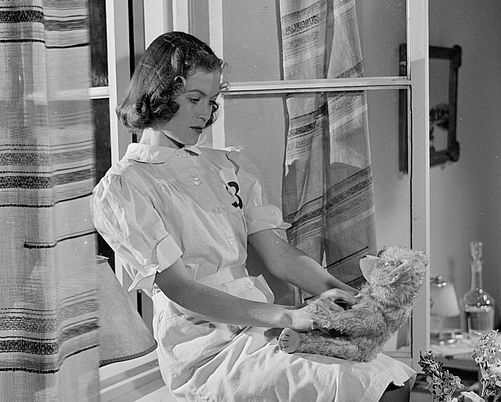
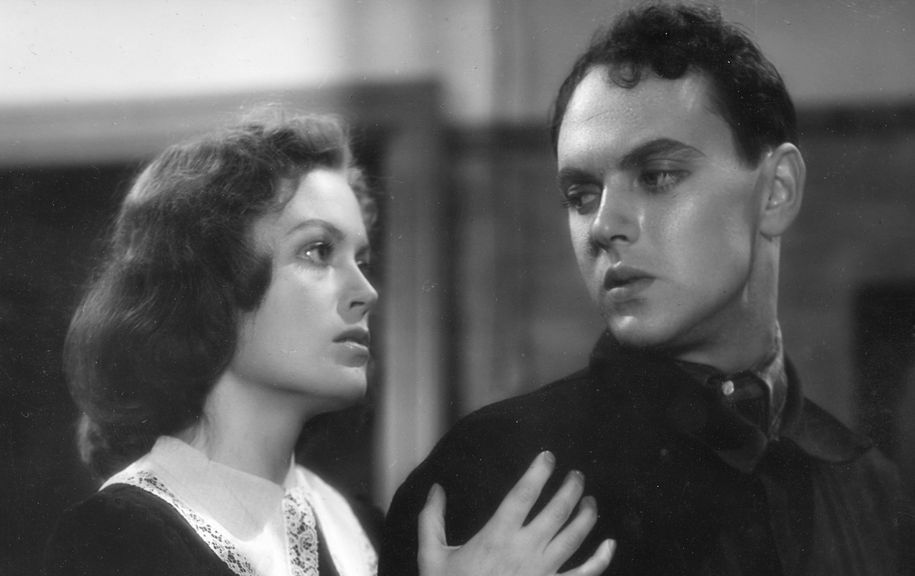
Liisa Harju (Lea Joutseno) is a quick-witted, vivacious girl from Savo who has been posted to Ostrobothnia, the uppity west coast of Finland where the locals think that she is no better than she ought to be. She thinks she is just being friendly to the handsome local doctor Eino Korpinen (Tapio Nurkka), but their increasingly flirtatious interactions meet with umbrage and annoyance from local womankind, who regard Eino as theirs to fight over. In particular, her arrival seems to irritate the school principal Mr Iipo (Eino Jurkka), whose snooty wife Kristiina (Elli Ylimaa) expects Eino to propose to her insufferable daughter Ester (Rakel Linnanheimo, sister not only to the more famous Regina, but also to the woman who is playing her own mother!).

We have, in a sense, been here before. The tensions and conflicts in Varaventtiili are almost exactly the same as those in Suomi-Filmi’s earlier The Women of Niskavuori (1938), and indeed, Niskavuori’s fearsome matriarch Olga Tainio has a far less substantial role here as a sulking matron. Both films are based on novels written two decades after Finnish women won the right to vote in 1907, grappling in their own way with the impact and attitudes of the first generation to grow up in such an environment. Whereas The Women of Niskavuori ultimately presented its go-getting lady teacher as a clueless, home-wrecking hussy, Safety Valve is more sympathetic to the fact that times are changing. True enough, Liisa doesn’t turn up and steal another woman’s husband, but in the eyes of the townsfolk, she pretty much steals another woman’s potential fiancé. The difference is that Eino is there for the wooing, and if the local girls don’t like it, they’d better up their game and bring something to the party.

Safety Valve wonderfully encapsulates the town-versus-country issues that lie beneath many a Finnish movie of the era, here landing firmly on the side of urban urbanity. The Ostrobothnians think of the people of Savo as uncultured hicks, whereas the Savonians find themselves in close proximity to the growing new towns of Kuopio and Tampere, and Jyväskylä, the “Athens of the North”, the site of the first Finnish-speaking teacher-training college, and hence the engine that churned out thousands of women like Liisa to go out into the world and force gurning farmers’ children to learn about stuff.

The children are the low point of the film – listless child-actors bored by their own lines in the scenes where Lea Joutsena is obliged to pretend to be teaching them. Meanwhile the locals harp on about “traditional values” and the “way things are done” to a ridiculously obsessive degree, acting as if they are preserving the heritage of Western civilisation, but coming across like drunken tramps fighting over a cardboard box in a skip – much of the drama circles around whether the teaching staff are allowed to use the school sauna.

An intriguing subtext of the film revolves around the application of reading and writing. Eino’s true love is destined to be the woman who reciprocates his bizarre interest in “a volume of Chinese poetry, translated into German”, while Liisa’s constant companion is her “safety valve” – the diary that allows her to blow off steam about some of the outrageously dismissive things that the local women say to her.

At least Liisa isn’t left alone to face the yokels. Her fellow teacher Rauha is played by the lovely Irma Seikkula, still displaying the vim and poise that brought her fame as the similarly pro-active Juurakon Hulda (1937). There are moments when the film threatens to break out into genuine humour, with Liisa and Rauha as a pair of icon-busting jokers, like Melissa McCarthy and Sandra Bullock telling everyone to go eff themselves, but sadly that potential never quite manifests.

Safety Valve was based on Hilja Valtonen’s debut novel The Safety Valve of the Young Teacher (1926), a roman à clef about the life of a young woman transplanted to a distant Ostrobothnian town, that had somehow made its way into eight reprintings. This adaptation by scriptwriter Yrjö Kivimiehen sets the action in a timeless rural setting entirely untroubled by the rumblings of the Continuation War that clearly concerned the production team. While the cast of Valentin Vaara’s film go about their business without a care in the world, the backstage crew are dashing feverishly to get the film in the can and into cinemas before wartime austerity bites again – a behind-the-scenes panic that can largely be held responsible for some rushed shots, shaky camera work from a moving train, and substandard location work, clearly shot on cloudy days.

Jonathan Clements is the author of A Short History of Finland. He is watching all the Finnish films, so you don’t have to.

Mercy Me

Mr Wang’s studio is literally next door to our hotel, which gives everybody a lie-in. I start to wish, however, that I had never got out of bed, since Mr Wang’s studio appears to specialise in pictures of pets. Why UNESCO accorded him intangible cultural heritage, I’ll never know, because his output seems to include funny pandas, twee scenes of traditional mountains-and-water, and the silk-weave equivalent of a painting of two dogs playing billiards.

The people in Mr Wang’s studio are heartily sick of film crews, and would really much prefer to be left to get on with their work. Mr Wang makes himself scarce when we arrive, thereby depriving us of the chance to interview anyone but his flunkies. But they tsk and tut and bend over their looms as I wander around them, enthusing to camera about the not-particularly-lost art of kesi, in a single 45-second speech that I manage to get right more often than not.

We drop in on a dye factory for more B-rolls, and then stop off at a water-town to send up the drone to get pictures of little pagodas and winding, flagstoned streets. This particular one, Shantang, stretches along either side of a seven-mile stretch of canal, and is infested with pushy rickshaw drivers and people who want to shout hello and/or stand behind the camera peering into the viewfinder.

The day finishes up back in Suzhou proper, next to another picturesque canal populated by fan shops, ice cream parlours and dumpling shops. We’ve come to see Chen Yingqin, a lady whose kesi is way, way better than Mr Wang’s. She seems to spend most of her time telling clueless customers in her shop that, no, the “watercolour” on the wall is not a watercolour at all, but actually an image composed of thousands of silk threads. She also does calligraphy, replicating everything from the pressure of the ink brush to little imperfections in the characters. I ask about one picture, of a Chinese landscape, and she confesses that it took her nine months.

The prices reflect this. A square embroidered image of a single Chinese character, (Chan, which is to say, what the Japanese call Zen), the size of an LP, retails at a steep £3000. She also makes wallets at £100 a throw, and similar luxury goods for the super-rich.

A neatly “printed” series of characters on gold silk is recognisable to me from the simple layout, even before I get close enough to read it, or its title.

“Is that the Heart Sutra?” I ask.

“Yes,” she says, flabbergasted. “I am slightly disconcerted that you know that.”

She is giggly and vivacious in her interview, which makes a nice change from stage-struck old men, and seems genuinely sorry to see us go. She even laughs along when the producer and I have a fight about the statue on the mantelpiece, with her maintaining that it is Guanyin, the Goddess of Mercy, and me maintaining that it is Buddha himself.

“If it’s Guanyin,” I protest, “then where are her tits?”

Apparently it is Buddha. Although Guanyin is also Buddha. It’s complicated.

Jonathan Clements is the author of A Brief History of China. These events featured in Route Awakening S02E04 (2016)

Legal Strike

To Japan, where four twenty-something university buddies have been charged with a new type of crime – illegally selling anime production materials from Strike Witches. To be clear, they weren’t ripping Blu-rays or scanlating manga. They were making copies of sketches, in-between drawings and backgrounds, and then flogging them online, racking up around 10 million yen (£52,000) over the last eight years.

According to the Yomiuri Shinbun, one of the defendants argued “It’s not a copy, so its not a violation” (Fukasei de wa naku, ihan de wa nai), which is, I might note, a use of the Japanese plain verb-form in front of the police, where the polite form might have been a better idea.

Production materials used to be regarded as industrial waste – something the companies couldn’t give away. Carl Macek famously took a container-load of Akira cels and sketches off the hands of its producers, to give away as freebies with the VHS release. Now we’re living in an era when production materials are not only valued in film criticism, but bought and sold as collectables, and now, it seems, even faked by would-be entrepreneurs. The copyright implications of the case, in terms of the notional value of scrap paper and literal bin-ends, is going to be fascinating.

Now, you may be wondering what it is about a newly resurrected nineteen-year-old franchise that excites such activities at all. Well, Strike Witches isn’t just your average under-dressed-girls-with-guns-and-rocket-feet-fighting-alien-invaders anime, because it also takes place in an alternate universe World War Two, in which the nations of the world stop trying to kill each other and instead use teenage magical girls to hold off a global threat. Its reimagining of real-world war heroes as spell-casting schoolgirls in their underpants led to some wonderful real-world situations, such as queries to the Finnish embassy in Tokyo in 2012, asking whether or not the ambassador was aware that the veteran “Terror of Morocco”, Aarne Juutilainen (1904–76) was now a 21-year-old cat-girl in the manga spin-off.

The Finnish embassy merrily played along, wishing Juutilainen’s aerial ace sister Eila a happy birthday on its Twitter feed, and taking the opportunity to educate social media about how to say it: “Hyvää syntymäpäivää Eira Ilmatar Juutilaiselle!” Ah yes, said the enthusiastic embassy tweeter, whose switch from r to l in the character’s name implies a familiarity only with the Japanese materials: Juutilainen transforms to Juutilaiselle when it’s in the allative case, one of the Finnish language’s many exciting grammar forms. Let me tell you all about… [That’s enough – Ed.]

Jonathan Clements is the author of Anime: A History. This article first appeared in NEO #243, 2024.

Shadows of Kyoto

Kiyomizu-dera, Kifune Shrine, and Adashino Nenbutsu-ji — to most these places are merely tourist hotspots in the busy city of Kyoto… but each is hiding a dark history, tales of ghosts and bloodshed! In this volume come and hear the true stories of these haunted places, and the creatures that lurk just out of sight…

Out tomorrow from Titan Manga, Yumeya’s Shadows of Kyoto, translated by Motoko Tamamuro and me.