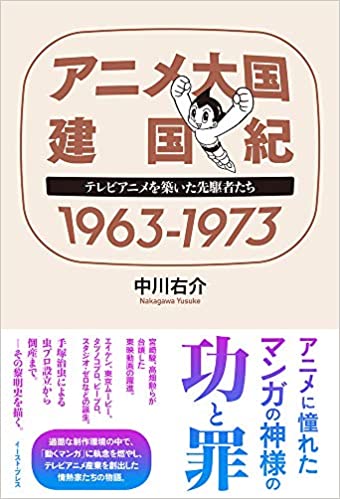
Out now in Japanese, Yusuke Nakagawa’s book Foundation of the Anime Nation 1963–1973: The Pioneers Who Built TV Anime is a welcome narrative not only of the revolution in TV production that led to Astro Boy in 1963, but of the rise and fall of the industry in its first phase. Created under false pretences, with some hand-waving accountancy voodoo that was never going to stand up to harsh scrutiny, anime on television enjoyed a brief boom-time as the number of available channels expanded, but then settled into a lingering downward spiral of reduced advertising returns and shrinking budgets, before the onset of a recession caused some vital corrections in course and planning.
Nakagawa’s book helpfully breaks down the decade into annual segments, beginning each with a chart illustrating who exactly is doing what – which anime are on television at the same time, and which studios are at work on rival products.
Although the book’s title promises a tight focus on television between the years 1963 and 1973, Nakagawa begins with the black-and-white propaganda cartoons of the 1940s, and the gradual accretion of Japan’s animation community in the 1950s. Nor does he ignore the very real influence of feature film animation in the same period, such as the bragging about Toei’s first colour feature, Hakujaden (1958), and the “first Tezuka anime”, which is to say, the Toei feature Alakazam the Great, for which Tezuka was a storyboarder. The film studios are very much a part of the history of TV, in part because, as detailed at length by Nobuyuki Tsugata, they hoped to cash in on advertising contracts, but also because they trained many of the animators who would then defect to TV.
The story of how Tezuka was tempted by his Toei experience to go it alone in the anime world is already well-known, not only in Japanese but also in English. The real value of Nakagawa’s book comes from when he pulls focus away from Tezuka, and looks at the activities in context in the other start-up studios that try to compete with him, such as Studio Zero, a reconfiguration of the community from the manga creators’ dormitory, the Tokiwa-so, or Tokyo Movie, a bunch of puppeteers trying to retrain in animation as it becomes the Next Big Thing. He brings in unexpected influences, such as the coterie of young SF authors whose script workshop formed a major resource for TCJ, makers of Tetsujin 28-go, a.k.a. Gigantor.
Piece by piece, we see elements of modern anime forming – the first female protagonist; the first giant robot, the first anime not to be based on a pre-existing property. The first merchandising spin-offs… all arise in real-time, their potential and impact often unnoticed by the people around them. Nakagawa also zooms in on several moments of crisis, such as the “Midoro Swamp Incident”, when Tezuka gave his staff a week off, contracted an episode of Astro Boy out to the fledgling Studio Zero, and came back to discover they had produced work so bad that he wanted it destroyed. There’s the Toei Lock-in Incident, when managers tried to freeze out union agitators, and a discussion of Just What the Hell Happened between Tezuka and his business manager Yoshinobu Nishizaki in the 1970s – did Nishizaki rip Tezuka off, or was he the fall-guy for an intricate scheme to keep Tezuka’s properties afloat behind a shell company?
Frustratingly, there are no citations, merely a bibliography at the back which gives little indication of which source supplied which nugget of information. So when Nakagawa calls Tezuka’s apprentice piece Tales From a Street Corner “unanimated anime” (ugokanai anime), it’s not clear to me if he is (fairly) assessing it as a piece that looked far better in books and newspapers than on screen, or if he is appropriating Eiichi Yamamoto’s term from several years later, used to describe the low frame-count on Yamamoto’s own Tragedy of Belladonna, made on a shoestring after Tezuka had robbed the kitty to bolster financial shortfalls elsewhere.
If you are a researcher hoping to delve deeper into such industrial matters, Nakagawa’s book offers a handy precis of particular moments in history, and a useful overview of how the landscape looked on a year-by-year basis. Its bibliography functions as a useful checklist of particular topics in the history of anime, but only for those scholars ticking through it to make sure they already have the sources themselves. Nor does Nakagawa’s reading seem to have included anything not in Japanese – Fred Ladd’s own account of the localisation of Astro Boy, for example, might have added a few more details and an additional perspective.
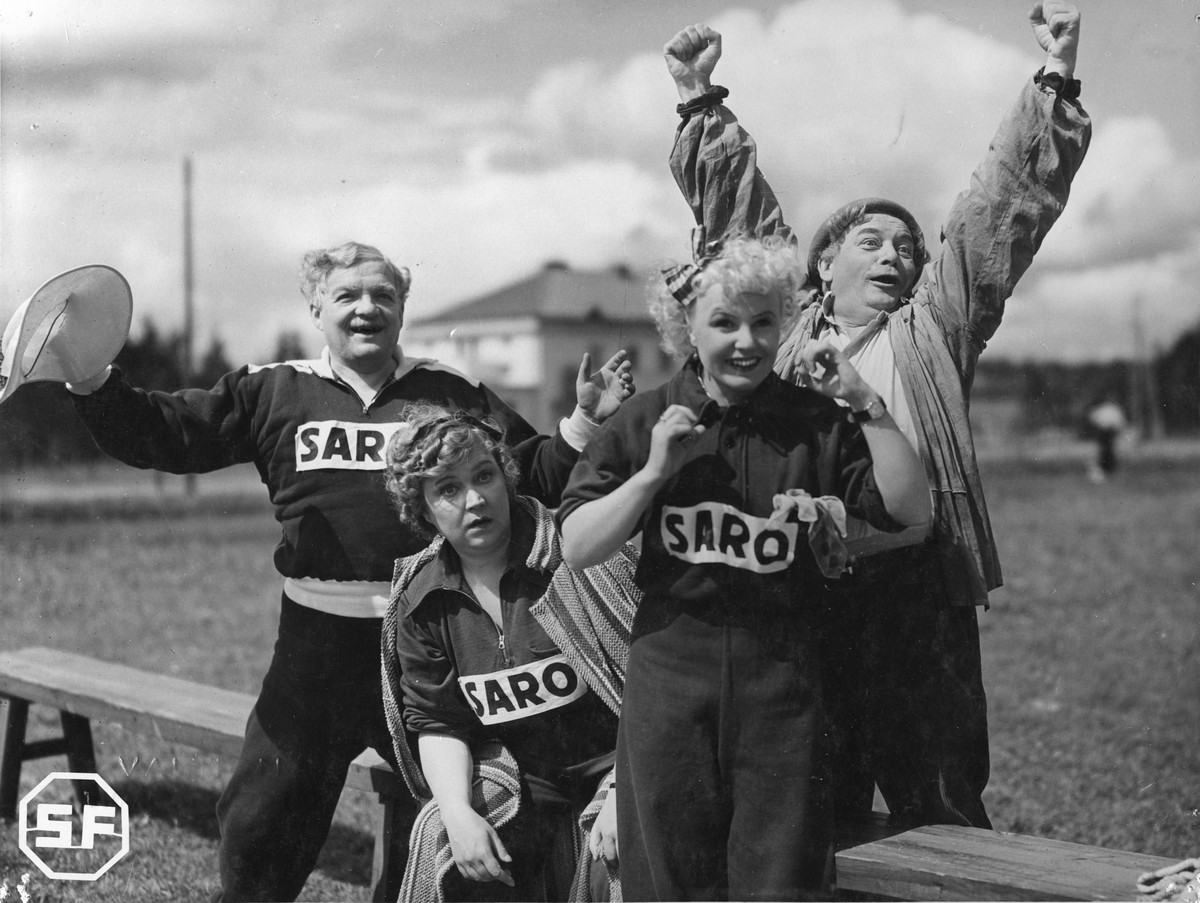
Workshy navvies Lapatossu (Aku Korhonen) and Vinski (Kaarlo Kartio) are fired from their jobs working on the new railroad. They are soon hired by local industrialist Mr Saro (Antero Suonio), who mistakenly believes that they are skilled sportsmen, and needs ringers in the company team to help win a bet with a rival company, run by the dastardly Karhi (Jorma Nortimo, the studio’s go-to dastard). There’s more than cash at stake, as Saro has rashly promised the hand of his daughter Raili (Laila Rihte) to another sportsman on the company team, much to the annoyance of Raili herself, who fancies Aarne (Unto Salminen), a cashier wrongfully accused of embezzling company funds.
Yrjö Norta’s film for Suomen Filmiteollisuus checks out after a mere 55 minutes, which probably helps. The presence of Lapatossu and Vinski, refugees from the earlier Lapatossu (1937), is rather superfluous, since they serve merely as comedy monkey-wrenchers who help to rig the various events at the athletics meet. It’s almost as if they were shoe-horned into an entirely different script, which could have easily gone on without them, although if it had, it would have been one of the usual unfunny Finnish comedies.
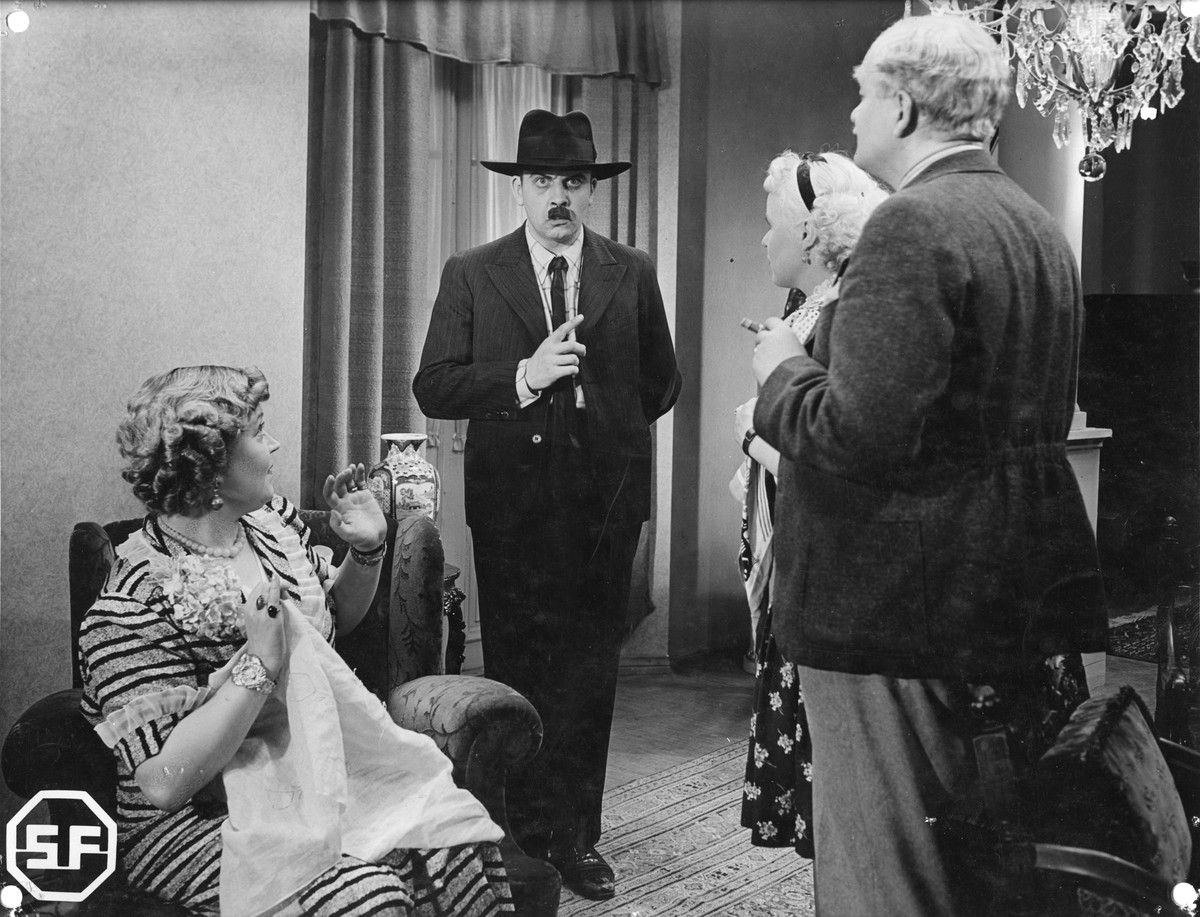
Karhi’s corporation is entertainingly festooned with crumpet. There is a typing pool right outside his office that is packed with perky Finnish girls, but for some reason he has set his sights on the rather dreary Raili Saro. A little comic relief is offered by Kaarlo Angerkoski in a ridiculous stunt moustache, who steals every scene he’s in as the unnamed secret policeman from “Eyes and Ears”, a private investigation company that suspects everybody and everything. In a lovely bit of unscripted comedy business, played entirely in mime, he pulls a long hair off Mr Saro’s jacket while talking to him, and gives him a suspicious side-eye.
The official English title of this film is Lapatossu and Vinski at the Olympics, which I regard as a step too far – the Finnish title makes no attempt to place them at the actual games, which would have been hard anyway, since the onset of the Winter War in September 1939 meant that Helsinki’s shot at the Olympics was postponed. This film, like Towards a New Horizon in the same year, was commissioned to capitalise on the forthcoming sporting event, but completed mere weeks before it was rendered irrelevant by world politics. How fortunate, then, that the original Finnish title referred only to Olympic fever, making it just about possible to get away with releasing it anyway, and turning the pound-shop Laurel & Hardy schtick of Aku Korhonen and Kaarlo Kartio into wartime box-office gold.
Shot in the sunny summer of 1939, and with a closing act almost entirely outdoors in a sports field, Lapatossu & Vinski in Olympic Fever channels a number of cartoonish Warner Bros moments, not the least when Lapatossu pours a handful of ants down Karhi’s shirt to distract him in the 400 metres race. Vinski inadvertently wins the marathon by falling asleep in the back of a cart, and as a reward for their shenanigans, the two layabouts win a car. They drive off into the sunset, bragging about how easy the summer has been, pursued by an angry widow that Vinski has somehow duped.
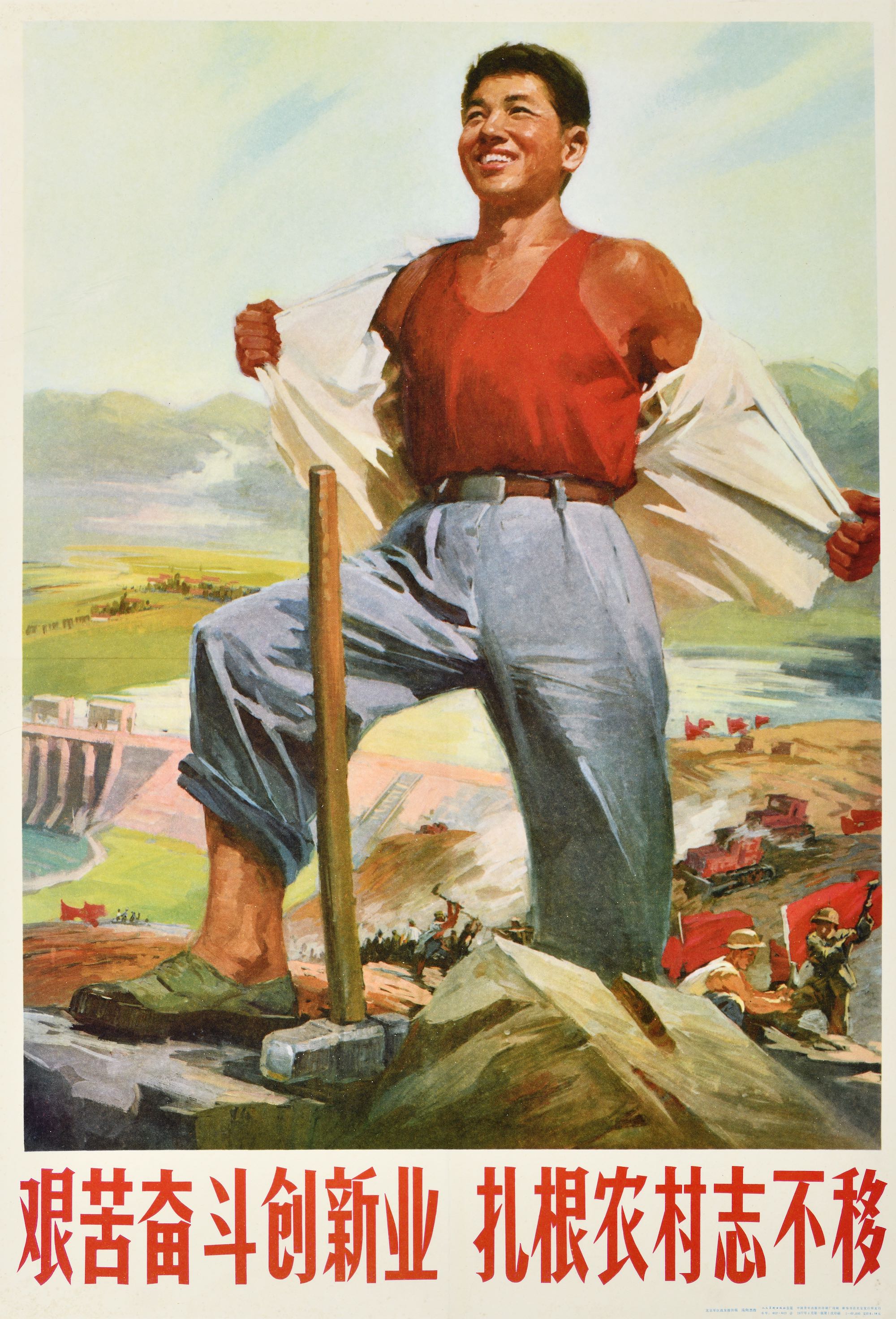
China’s success story at lifting people out of poverty presents absolutely boggling figures. Between 1981 and 2004, the number of people in China below the poverty line fell by five hundred million. Key counties added three million hectares of new farmland, and rural phone connectivity (a vital issue in integrating communities), increased from 52.6 to 91.2%. In fact, China became the first nation on the planet to meet the United Nations Millennium Development Goal of halving its local poverty rate.
But there’s local and then there’s local. As reported in Kun Yan’s book, Poverty Alleviation in China, China’s own statistics bureau reported some odd data that didn’t play along with the general upward curve. Despite all efforts at improvement, there were parts of the country that actually got worse off. In “the western regions” – a term that carries with it a certain set of unintended historical assumptions, poverty increased from 61 to 66% in the first decade of the 21st century. Specifically, poverty was on the rise in the eight Chinese provinces that had the most ethnic minorities, particularly Guizhou, Yunnan and Gansu.
The policy wonks of the People’s Republic aren’t idiots – they know that a huge chunk of this is born from the lack of a level playing field. True enough, there have been some Party think-tanks that have advised wiping the slate clean, deleting the “racial” box from people’s ID cards, and declaring that everybody is just “Chinese” now. But such a move doesn’t dispel huge issues in inequality of opportunity, many of which pre-date the People’s Republic itself. Hill tribes like the Kam and Yi live in inhospitable terrain because they were forced there centuries ago. Some even struggle to speak standard Mandarin, which only the younger generations can even read. You won’t magically make them rich by telling them they’re not “minorities” any more.
There have been attempts to positively discriminate in favour of China’s 55 ethnic minorities. I have heard several Han-majority urban undergraduates expressing their annoyance at the “easy ride” that some minorities get with massaged exam grades. That’s how they see it, of course – but I’ve also encountered minority students whose first ever sight of a train station was the day they travelled 25 hours, to their first sighting of a city, to begin their studies; including one colleague of mine whose parents sold their last geese to pay his fare. For such people, what Pierre Bourdieu calls the habitus required to fit into a college environment must be almost insurmountable. Which is why it should come as no surprise when Yan reports her most shocking statistic – that one of the causes of modern Chinese poverty is the cost of education itself, with some families literally driven back into penury by the expense of pinning all their hopes on whichever one of their kids looks Most Likely to Succeed.
A large part of her book deals with the scrum of early 21st century theorists who have piled into to the lucrative field of talking about all this. In the case of the book under review, for example, a cover price of more than £85 means a poverty-stricken family in Inner Mongolia, saving half their annual household income, would take sixteen years to afford a copy. There’s Zhou (2009) who has a five-point plan, and Zhao (2006) who has a six-point plan, and Li (2007) who thinks land reform is the answer, and many more. All have their own peccadillos and strength, largely based on the precise kind of place where they have been conducting their fieldwork. Because, of course, in a country of 1.4 billion people there cannot possibly be a single solution that fits all.
Yan outlines the basic models of poverty relief that have achieved the greatest success in China. These include financial aid (giving your man the money for a fishing rod); microfinance (lending him the money for a fishing rod); industrial development (making sure there are fish in the lake); education (teaching him a better way to fish); science and technology (giving him a job at a fish farm); and systemisation (involving his whole village in a fishing scheme, and making sure they have electrification for freezers and roads for trucks to sell the surplus on). Two models are the ones that seem the most controversial to outsiders: migration (moving him to a lake, even if it’s hundreds of miles away), and the final one, which tellingly seems to lack a Latinate, posh-sounding English translation: “relief for work”.
“Relief for work” gives “unskilled labourers short-term employment opportunities.” It’s here, one suspects, that we see the origins of the draconian schemes that have led the overseas media to start using “poverty alleviation” not as an earnest international desire to lift people out of dire straits, but as a pejorative term – taking your man out of his home and putting him to work in a fishing-rod factory in the middle of the desert, whether he likes it or not. But now he’s earning £10 a day, and he isn’t “poor” any more.
She also discusses “village-wise” advancement, a rather traditional call-back to the specialist communities of the early modern Chinese economy, in which a whole community will agree on a point that they can all focus on and do really well. I believe I have seen some of these up close, in the unexpected world of tourism, where remote communities rebrand themselves as little cultural time capsules, preserving local traditions and becoming living museums or glorified tribal theme parks – the video store tucked away in an alley, while the main street focuses on traditional arts and crafts, and re-enactments of festivals. Tourist dollars, famously, are spent three times – eat in the local restaurant, and you aren’t just paying the owners; you are also paying the local suppliers who supply them, and whatever they decide to spend their wages on locally. The drawback here, of course, is that not every desert village can be a Silk Road experience, and not every desert villager wants to be a belly dancer or a grape tramper.
Alleviating poverty in rural areas isn’t just about simple charity or helping people earn enough money to become tax-payers and net contributors. It’s about reducing public order and infrastructure issues in China’s cities, which otherwise get crowded out with hordes of illegal migrant labourers, coming to seek their fortunes. Huge initiatives like the “Belt and Road” don’t merely create opportunities in remote cities like Urumqi, they help keep the people of Urumqi from being tempted to migrate to, say, Shanghai.
Chi Fulin, who readers of my books on China will know I regard as a persuasive and interesting thinker on China’s future, is quoted here on the changing nature of “poverty”. Just as the poverty line is adjusted ever upwards to reflect inflation, the issues faced, and hence the remedies required, are themselves constantly changing. Back in the past, he writes, the big issue was lack of basic living conditions. Today, with this issue resolved for millions of Chinese, they now face the next hurdle – overcoming inadequate public services. He doesn’t quite go so far as to say that adequate public services should be a “human right” – but he certainly advises the state to consider that equality of opportunity comes with schooling, medical care, bus services and power grids.
Yan’s book is part of a “Research Series on the Chinese Dream” and hence comes couched in the carefully worded optimism of Party planning. As I have found out to my cost on occasion, the slightest whiff of criticism, even constructive, can lead to ructions – so she is careful to only analyse those targets that we might call historically safe. She discusses a history of “Poverty Alleviation with Chinese Characteristics”, talking through the changes in the nature of both poverty and its relief over the decades since 1978 – it would, presumably, be inadvisable for her to grapple in any meaningful way with the colossal upheavals preceding that date, not the least because it would double the size of the book. By the 1990s, state initiatives are concentrating on the basic requirements of “food and clothing” for impoverished regions. She provides solid statistics and a narrative of the changing face of the phenomenon, and by the 2000s, she is dealing with new issues, such as the precarious knife-edge of reporting a “success” – up to 30% of those people who are reported as being lifted out of poverty might fall back into it the following year. One of the biggest threats, she observes four years ahead of COVID-19, is “natural disasters”, which can play havoc with schemes that assume the infrastructures will remain stable.
Yan shrewdly concentrates some of her criticism into a comparative chapter that investigates the effects of similar schemes in other countries – although it’s rather obvious here when she is happy to deal with, say, United States schemes in the early 20th century, long before the magical 1978 cut-off point for her home study. She critiques inadequate fiscal decentralisation policies in Vietnam, and low returns on investments in Ghana, and hopes the Chinese can learn from such stories before they need to be pointed out to them at home. However, she does point out several areas of potential failure within the Chinese system, as well as some structural considerations that will have to be addressed before the state can achieve all its goals.
Her final chapter outlines her own suggestions for policy reforms, all of which seem smart and well-argued – county-level admin, in order to ensure that local solutions are locally relevant; diversification of remedies, so that we don’t end up with nothing but guys who can fish, in a world where nobody wants any more fish. She is a flag-waver for the Mexican healthcare system, which favours the poor in a way that the Chinese system is not currently designed to do. There’s a wish-list of investments, although it’s easy to say “more money for everything” – her contribution is far more relevant to the ways in which she thinks the money should be spent.
Tucked away in the back of the book are ten case studies of poverty alleviation programmes all over China. This includes throwing money at Yunnan; a training programme in Chongqing designed to give unskilled labourers a skill to sell; a “village-wise” scheme in Gansu that utilised unglamorous but effective measures like simply building a road to the village; training schemes in Guizhou and Shandong designed to make better farmers of all the locals; targeted loans in Shaanxi, and a dairy farm start-up in Hebei.
A chapter on statistical models makes Yan’s personal case, that far too much analysis of the problem is made in trite analogies like “teach a man to fish”, whereas she has some eye-crossing equations that she thinks will make a truly quantitative analysis possible. While I would not dare to disagree with a statistician plotting in her area of expertise, I would point out that at the sharp end of these projections and policies are real human beings, and discussion of their quality of life, both before and after intervention, is surely also a crucial matter, just as much as their contribution to the overall “China Dream.”
“Saaler is resistant to propaganda and the official record – noting that public interest in the funeral of the Meiji Emperor was so low that his mourners were outnumbered by his honour guard. He ends by tying the choices of statues in public places to a related issue – school textbooks that get to rule on who the great people of history are, itself a subject of some controversy in Japan. He points out, for example, that a statue of the legendary Yamato Takeru is one thing, but including him in a children’s book of ‘great Japanese’ is tantamount to suggesting that the imperial family really were sent from space by the Sun Goddess.”
Over at All the Anime, I review Sven Saaler’s fascinating new book about Japanese statues.
“And thereby hangs a tale, not least the Festival Jury Chairman wondering if he is going to be dropped through the trap door into the piranha tank, after the odds-on favourite, Makoto Shinkai’s Weathering With You, was consigned to second place at Scotland Loves Anime 2019, pipped at the post by an outside contender about a surfer girl and her lost love.”
Over at All the Anime, I discuss the perils and pitfalls of festival jury voting.
There has never been a better time to write about film. In the twenty years since the coming of the DVD, there have been some truly marvellous opportunities for the critic, largely caused by the presence of all that memory space on the disc, and the search for added value. The commentary track is not a recent invention. They were available on laser discs beforehand, and sometimes transferred to VHS. Somewhere in my office I still have a “collector’s” VHS of The Usual Suspects that dials down the audio and replaces it with the director and writer talking about their film.
There have been occasions, hand on heart, when I have bought a film on DVD and simply watched it for the commentary. If I have already seen it at the cinema, maybe I don’t actually want to see it again. But I’ll pay £20 to hear a two-hour lecture from its writer or director. Probably not from the voice actors, though.
And I’ve even done some commentaries myself, sometimes known in anime fandom as Clementaries. Unique selling points or wastes of bandwidth… you decide!
Appleseed: An odd beginning, with the film company only discovering on the day that they didn’t have the facilities in-house, and having to move me and my fellow commentator to another studio. By the time we started recording, I’d been kicking my heels for six or seven hours. My fellow performer wasn’t feeling that talkative, either — for a bunch of reasons, including some personal stuff that she was keeping from everyone, but amounted to (as far as I could tell), her having to move house on the day that she was also recording a commentary track. None of these things is a welcome discovery to make when you are recording LIVE and can’t really backtrack, but we managed. I talked for England, only to have some reviewers complain that (a) I was drowning her out, or that (b) my attempts to elicit anything more than monosyllabic answers from her about a day’s work she’d done nine years earlier were some sort of convoluted attempt to chat her up. It taught me a valuable lesson about any commentary. It’s a live performance, but it is recorded, warts and all, for posterity. Anyone can have a few stumbles and fluffs, but you’re basically on your own. Since then, I have insisted on being just that.
A.Li.Ce and Blue Remains. A year on, and I’m back on the commentary trail, recording A.Li.Ce and the next anime on the same day on a remote Welsh industrial estate. I took great pleasure in talking about the development of digital animation, and the fact that one was recorded right after the other makes A.Li.Ce and Blue Remains a sort of two-parter on the development of CG in anime. Unfortunately, after the commentary received higher praise from British reviewers than the films themselves, both were dropped from the US releases by a sulking distributor.
Detonator Orgun. Notable for my invention of the Detonator Orgun drinking game. At least, that’s all I can remember about this one. It was an irritating day because I had agreed to talk about episode one of a three-part video series, with the distributor decided to edit into a single three-hour movie. I was definitely not going to talk for two extra hours for the same money, so my commentary just stops a third of the way in. The distributor also didn’t bother to include the Japanese voice track, so everything I had to say about the Japanese actors was a waste of time.
Vampire Hunter D. Partway through this DVD, while I talk about various culture’s vampire traditions, you can hear me having an idea for a script that would eventually become Snake Head.
Spriggan. My favourite, if not only that for the first time I was hired to talk about a film that I had genuinely followed from its very inception, having been formerly hired to translate the pre-production script by a company that was considering investing in it. So I actually had some genuine behind-the-scenes information about the production that nobody else could have supplied. And I also took the opportunity to ask why the people who build secret underground hideouts are always on time and on budget, unlike the people fixing my bathroom.
Spirited Away. The commentary that never happened. I spent a week writing 25,000 words of notes, ready for the ultimate, super-duper commentary on the production and mythical background of an Oscar winning movie. This was to make a rashly-advertised Special Edition actually Special. Except the distributor didn’t have the right to actually add content to one of Studio Ghibli’s DVDs, and were slow to realise this. Eventually, they cancelled the recording the day before it was scheduled, and sheepishly paid me off.
Robot Hunter Casshan. In an elaborate sting operation, an agent from ADV Films attempted to poison me an hour before I went in to record this for Manga Entertainment. An innocent lunch beforehand with Hugh David had a series of unpleasant after-effects in the studio, and left me drooling and… well, probably too much information. But we recorded it anyway, with a brief pause for 20 minutes about halfway through while I writhed in agony.
Golgo 13. I sat down in the booth and started wittering confidently about missing footage from this movie, only to discover it had all been put back in. While the producer pointed at me through the window and laughed, I had to spin on a dime and re-tool my thoughts. We could have gone back to re-record, but Manga Entertainment quite liked the sound of me discovering, live, that long-lost material had been restored, and rather enjoyed the sudden enthusiasm I apparently developed. Actually, I think they just liked hearing me sputter with surprise.
Vexille. An interesting dilemma, with an intensely political film but a director who insisted (largely, I suspect, out of misconstrued Japanese modesty) that it’s just mindless entertainment. “Jonathan Clements is having none of that!” commented one reviewer, as I proceeded to draw a whole bunch of political parallels, as well as commenting on further developments in digital animation. A nice commentary, and eventually situated on the disc with a bunch of other material in which the director and I inadvertently end up wholly agreeing with each other. We’d both been misrepresented, it turned out.
Weathering with You. A first for Anime Limited and for me — a commentary track not for the Blu-ray or DVD, but for an online film festival, available exclusively through Screen Anime as part of the 2020 Scotland Loves Anime festival. Wonderful fun for me, and the first test of my covid-lockdown-inspired home studio (i.e. recorded in my lounge).
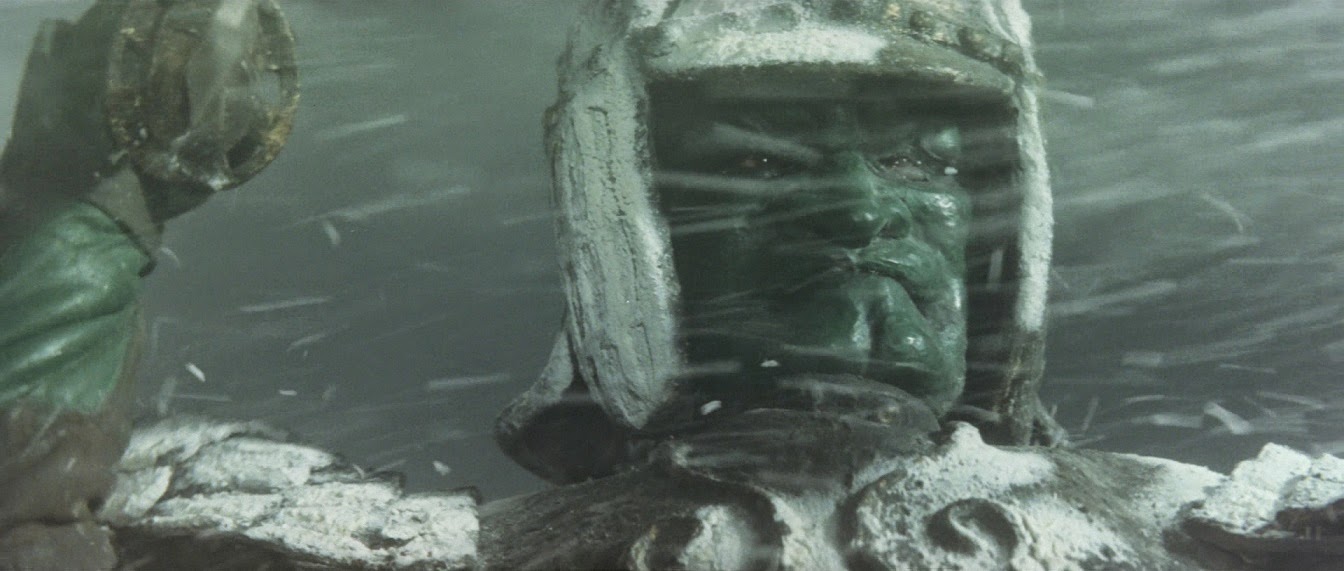
Wrath of Daimajin. My first-ever live-action commentary, on the third film in Daiei’s Daimajin series. As part of my standard research on this overlooked kids’ movie from the 1960s, I acquired a newly published oral history of Daiei, in which the producers discussed an awful cock-up on the production that threatened to shut it down, and forced the crew to put in two weeks’ overtime on reshoots. This completely transformed the commentary into quite a gripping account of how to salvage a production.
Heroes of the East. My first Chinese film commentary, on Lau Kar-leung’s Heroes of the East, in which a rich kid from Shanghai somehow ends up marrying a Japanese woman who is also a ninja. A thinly veiled excuse for a series of fights pitching numerous martial arts against each other, but the marital-strife plot means that nobody actually dies.
8 Diagram Pole Fighter. A commentary track only available outside the UK, on the US Arrow release of Lau Kar-leung’s troubled production about the medieval tribulations of the Yang family. Lots to say about the cycle of Yang stories in Chinese history, and the oddities of China during the early Song dynasty, all to increase your viewing pleasure in a film about people hitting each other with sticks.
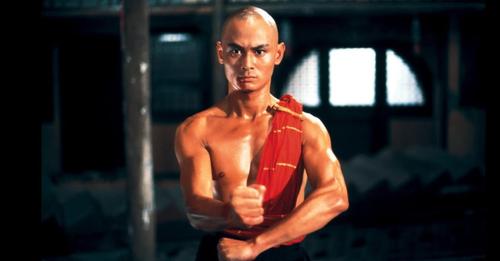
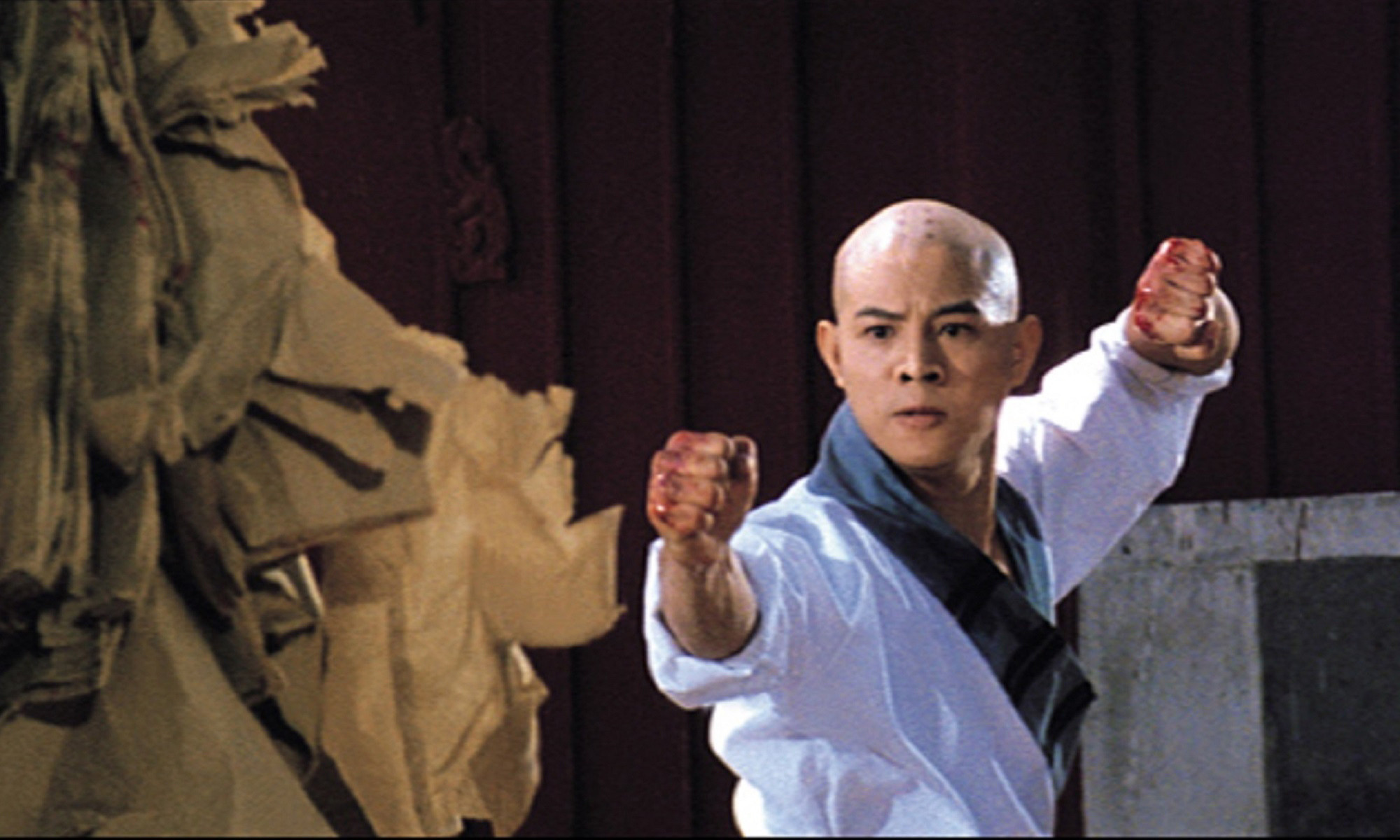
Martial Arts of Shaolin. The third of the 1980s Shaolin series, the only one to have a director from Hong Kong, and a great chance for me to talk about all the location shooting at the real-life Shaolin Temple, as well as the career of Jet Li, and the transformations of Chinese film-making as China opened up to foreign productions.
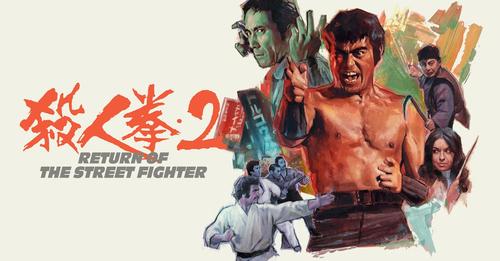
Return of the Street Fighter. Someone read my obituary of Sonny Chiba and decided I would be a good fit for talking about the middle film of his Street Fighter trilogy, with time out for his film career placed in context with his TV work on Key Hunter, the writing careers of bit-part supporting cast members, and the difference between karate and kempo.
Gunbuster. The ultimate Clementary because I get to talk about my favourite anime, tragically orphaned through a licensor that refused to allow almost any extras onto the Blu-ray. Rescued by Justin Sevakis, who uploaded it on his own Youtube account so people could sync it up for themselves at home.
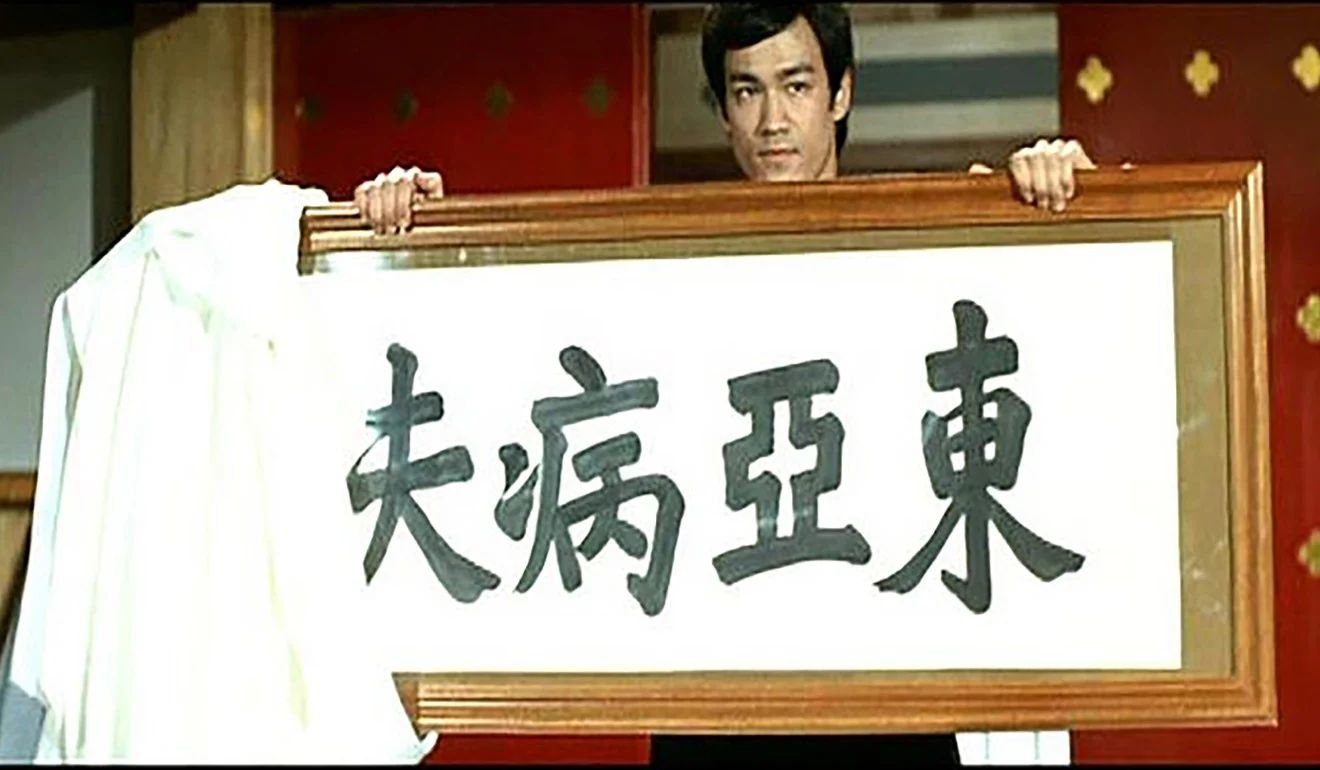
Fist of Fury. Very surprised to find myself talking about this one, but I was asked to talk specifically about its historicity, both within the story of film, and within the history of the martial arts, which is something I have written much about. So there was lots to say about the true story that inspired the film, even though the events in the film itself were fictional.
Back to Japan for Masato Harada’s Inugami(2001), for which I talk about the endurance of olde-worlde Japan, particularly on the island of Shikoku, the legacy of the medieval Genpei War, and the director’s bizarre decision to stop the action every now and then so that his cast can re-enact tableaux from European Baroque paintings.
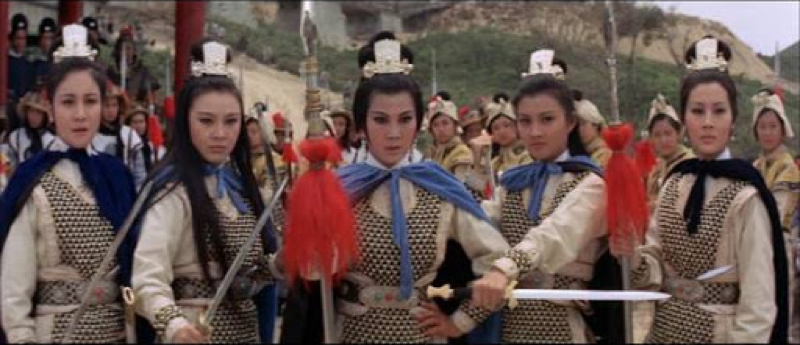
And much more fun that should really be legal discussing the Shaw Brothers epic 14 Amazons (1972), with time to discuss the various stories of the Yang cycle of Chinese drama, previous and later cinematic retellings of the Song dynasty legends, and an ongoing party game of Spot the Dragon Sceptre.
I’m back for the Daiei obscurity The Invisible Swordsman (1970), a weird attempt to make a special-effects laden samurai movie, the odd-pacing and attitude of which conceals an entirely unexpected attempt by a bunch of comedians to be taken seriously as dramatic actors.
Popping up in the Shawscope #4 box set with a commentary for Battle Wizard (1977), a schlocky Hong Kong obscurity that is nevertheless an adaptation of the first voume of Jin Yong‘s Demigods and Semi-Devils, and hence gives me a good chance to natter away about Chinese martial arts fiction.
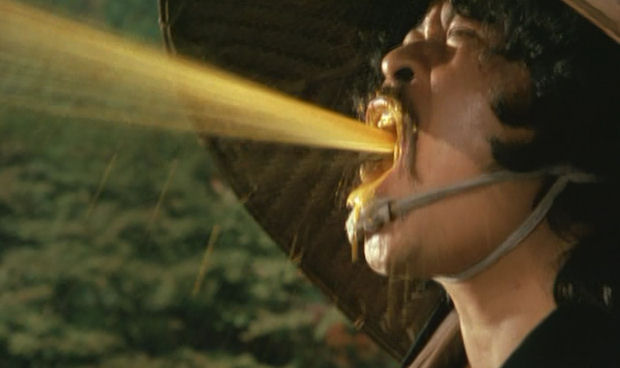
Arrow Films kicked off their new Toy Robot line with a packet of releases including Kosei Sato’s bonkers Ninja Wars (1982), a Kadokawa blockbuster based on a Futaro Yamada novel, which jammed ninja assassins into an account of real-word events in the 1560s. My chance to talk about echoes not only of Macbeth, but of John Boorman’s Excalibur, although neither of those involved a monk who could projectile-vomit viscous gunge.
So the brochure for Scotland Loves Anime 2020 is live online, and includes Works-in-Progress pieces on anime in production, online screenings of Japanese films, two actual screenings in real cinemas (remember them?), as well as me delivering an exclusive feature-length commentary track on Makoto Shinkai’s Weathering With You, not available on the Blu-ray.
The festival is included in the package for anyone who already subscribes to Screen Anime, but there’s still time to sign up for some of the extras available to crowdfund backers, including a full-sized festival poster, a hard copy of the festival brochure, and a package of posh films to watch at home. Note, as well, that two third of the money from the crowd-fund is being donated directly to the cinemas in Glasgow and Edinburgh that would have screened these films for paying audiences if circumstances had allowed.
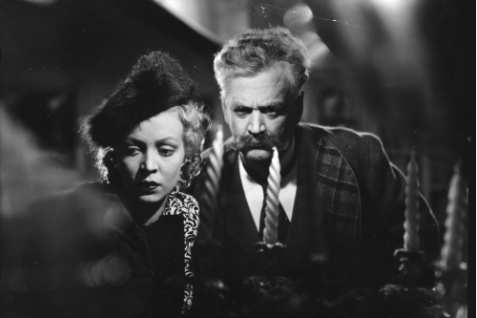
In the Grand Duchy of Finland in 1916, a group of independence activists plot to resist Russian oppression. They volunteer for the secret jaeger battalion being trained in Germany (for which see the previous year’s Jaeger’s Bride), they run off angry pamphlets on a hidden press, and they try to prevent a list of agents from falling into enemy hands.
Yrjö (Tauno Majuri) is an undercover agent planted in the Russian gendarmerie, pretending to be a collaborator while secretly passing information to the resistance. Kari (Turo Kartto) gives up the fight and takes a job with the Russian-friendly senator Niskanen, although he spends most of the film fulminating about what an arsehole Niskanen is, even to the senator’s face, so he is hardly hiding in the shadows. Niskanen’s fiery daughter Marja (Helena Kara) is openly sympathetic to the activist cause, which makes her the ideal candidate to sneak in to the quarters of the dastardly officer Vasiliev (Ville Salminen) and steal the papers.
Meanwhile, General Danilov’s daughter Katjushka (Tuulikki Paananen) is sweet on Yrjö, and mistakes his sneaking around for the actions of a two-timing cad, causing her to inadvertently start a vendetta against Marja, who really is out to stick it to the Russians, but not in the way that Katjushka thinks.
Released by Suomi-Filmi in April 1939, a time loaded with apprehension about a new Russian threat, and mothballed for 38 years after 1944 in order to keep the Soviet Union happy (see also The Jaeger’s Bride), Risto Orko’s Aktivistit is loaded with propagandistic exhortations for the people of Finland to fight to the last against the Russian eagle. There’s a lot of talk about the “sacred duty” to resist, and “no sacrifice is too great for the fatherland”, all priming the Finns for a real-world conflict just around the corner. A bunch of Finns go on the run for the Swedish border, tracked down to a remote farmhouse for a Christmas Eve shoot-out. All seems lost, and then 1917 dawns…
The most striking thing about The Activists is the confusion over what kind of revolution the Finns want – when a coup actually breaks out, it’s Russians overthrowing the Tsar, not necessarily Finns overthrowing the Russians, and the titular activists risk being lost in the melee. The story of the Finnish Revolution hence comes nested inside the Russian Revolution, and the film artfully encapsulates that confusion – there are many scenes where it is not all that clear whose side we are supposed to be on.
The opening overture references both the Communist Internationale and the national anthem of independent Finland, as well as La Marsellaise for good measure, foreshadowing a similar music sting in the opening credits of the later Casablanca. The cast themselves are split between good Finns, bad Finns, indifferent Finns, good Russians, bad Russians and bad Russians who might prove useful to good Finns. Yrjö is in such deep cover that he spends half the film being beastly to Marja, before she realises that he is on her side. Katjushka can’t make up her mind if she is a friend or a foe, while her father General Danilov gains the respect of the Finns, even as he fights them.
“Russia faces a great affliction,” says one of the activists grimly – of all of the Tsar’s domain, only Finland did not end up as a Communist state, and cinema-goers in 1939 had every right to fret that the jury was still out on that, too. There is a subtle emphasis on the lack of glamour faced by true patriots – Ville (Uuno Lakso) is the best agent among the activists, but largely because he is happy to slum it as an undercover drunk or rag-seller. Much is made of his mastery of disguise, and his noble willingness to get his hands dirty out of the spotlight.
When the Revolution breaks out, the Russians and the Finns both run for the local prison, hoping to free their own and fight their corner. An almost comical series of about-faces ensues, as Russian fugitives believe they have reached a friendly redoubt, only to find themselves chucked into the clink.
The film is, however, rather confused on other levels, too. Vasiliev is just about to shoot Yrjö in his cell, and then magically both of them are elsewhere, unharmed, even though we hear a gunshot. There are several moments of camera trickery that don’t quite work, including what appears to be early experiments with subliminal frames, and a drunk’s-eye view of his captors, as well as heavy-handed shadow symbolism, with crucifixes falling across pertinent pages from the Bible, and the patterns on shawls and curtains creating tattoo-like impressions on actors’ faces. For modern listeners, the revolutionaries’ exuberant celebration takes on a surreal tone when they spontaneously burst into the Russian folk-song Korobushka, better known today as “the Tetris tune.” Much of the action is marred by a bunch of actors who seem to think that getting shot equates with suddenly falling asleep, which is a shame, because The Activists has a number of rousing songs (the first ten minutes is practically a musical; later, there is an intricate dance scene with dozens of participants), and presents a fascinating glimpse of life in Finland when it was a duchy under Russian rule.
The DVD comes with English subtitles (which even rhyme for the songs), as well as several bonus features, including stills from the making of the film, and a documentary about horse-riding in Lappeenranta.
“…between the years 1941 and 1945, foreign music was actually illegal in Japan. Entertainingly, the people of Japan kept listening to it anyway, prompting the Intelligence Division in 1943 to start grumpily listing banned songs that were “a disclosure of nationalities characterized by frivolity, materialism, and high regard to sensuality.” Among such filth, threats to the national spirit to be purged like toxic waste, were Home on the Range and Alexander’s Ragtime Band.
Over at All the Anime, I review Toru Mitsui’s new book on Japanese popular music.
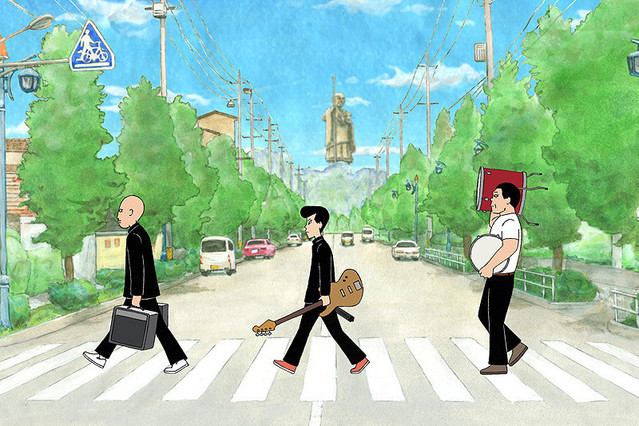
“Not since Makoto Shinkai’s debut has there been quite such an emphasis on self-starting, go-getting amateurs. The original manga on which the film is based was a 2005 self-published work by Hiroyuki Ohashi – in fact, the ‘complete’ edition, on which this film is supposedly based, was not released until the film itself was finished last autumn. The creator started a crowd-funding campaign to adapt the work into an animated film, on which director Iwaisawa toiled, often solo, for seven years. Of the 40,000 drawings that span the film’s 71-minute running time, most are Iwaisawa’s work – he is billed as director, animation director, screenwriter and editor, and presumably also made the tea and took out the bins.”
Over at All the Anime, I write up the doggedly indie On-Gaku.