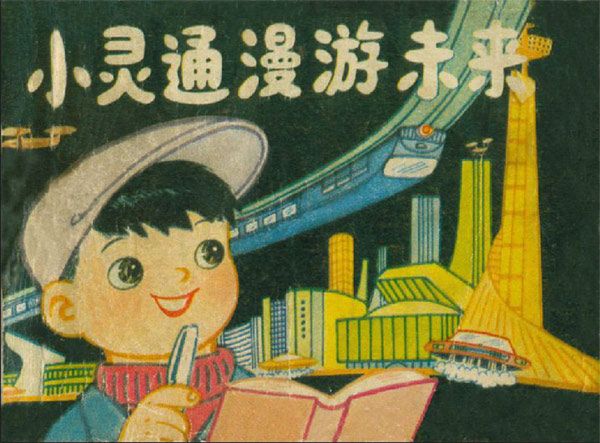
 With the news of the death of Ye Yonglie, the public face of Chinese science fiction in the 1980s, I’m linking here to my extensive article about him in the Encyclopedia of Science Fiction.
Ye Yonglie (1940-2020)
Reply

With the news of the death of Ye Yonglie, the public face of Chinese science fiction in the 1980s, I’m linking here to my extensive article about him in the Encyclopedia of Science Fiction.
 “Ni Yan… writes a ground-breaking chapter on Japanese cinema in occupied Shanghai…. Stephanie de Boer writes thrillingly about Sino-Japanese tie-ups in the Cold War world, and Ryan Cook practically made me fall off my chair in surprise with his chapter on remakes and adaptations, which included discussion of A Warm Misty Night (1967), nothing less than a Japanese remake of Casablanca.”
Over at All the Anime, I review Bloomsbury’s comprehensive Japanese Cinema Book.
 Over at the Encyclopedia of Science Fiction, I’ve contributed a few small entries on some utopian thinkers, including Liang Qichao, who imagined China in 1962 as a constitutional monarchy, Biheguan Zhuren, who imagined the Chinese occupation of the western United States, and Lu Shi’e, who thought a future paradise should be a place where men don’t have to carry umbrellas, as well as the radical feminist Shulamith Firestone (pictured), who called for women to be freed from the barbarism of biology. Also Dutch sci-fi in a cyberpunk Amsterdam from PJ Pancras. It’s all in a day’s work at the Encyclopedia of Science Fiction.
 Over on All the Anime, I review William O. Gardner’s new book on the Japanese architects who dreamed of a brave new world in the 1960s, whose ideas informed so much of the science fiction of the years that followed.
“Gardner, for example, finds it ‘striking’ that so many of the mecha shows of the 1970s, starting with Mazinger Z and culminating in the iconic Gundam, should seem to allude so closely to Metabolist ideas of ‘cyborg architecture’ – a machine-based enhancement of human potential that was one of the central ideas of the movement. He points, most obviously, to Katsuhiro Otomo’s Neo-Tokyo in Akira, based on the architect Kenzo Tange’s Plan for Tokyo (1960), which proposed building into and onto Tokyo Bay – an idea subsequently riffed on by Patlabor and Ghost in the Shell.”
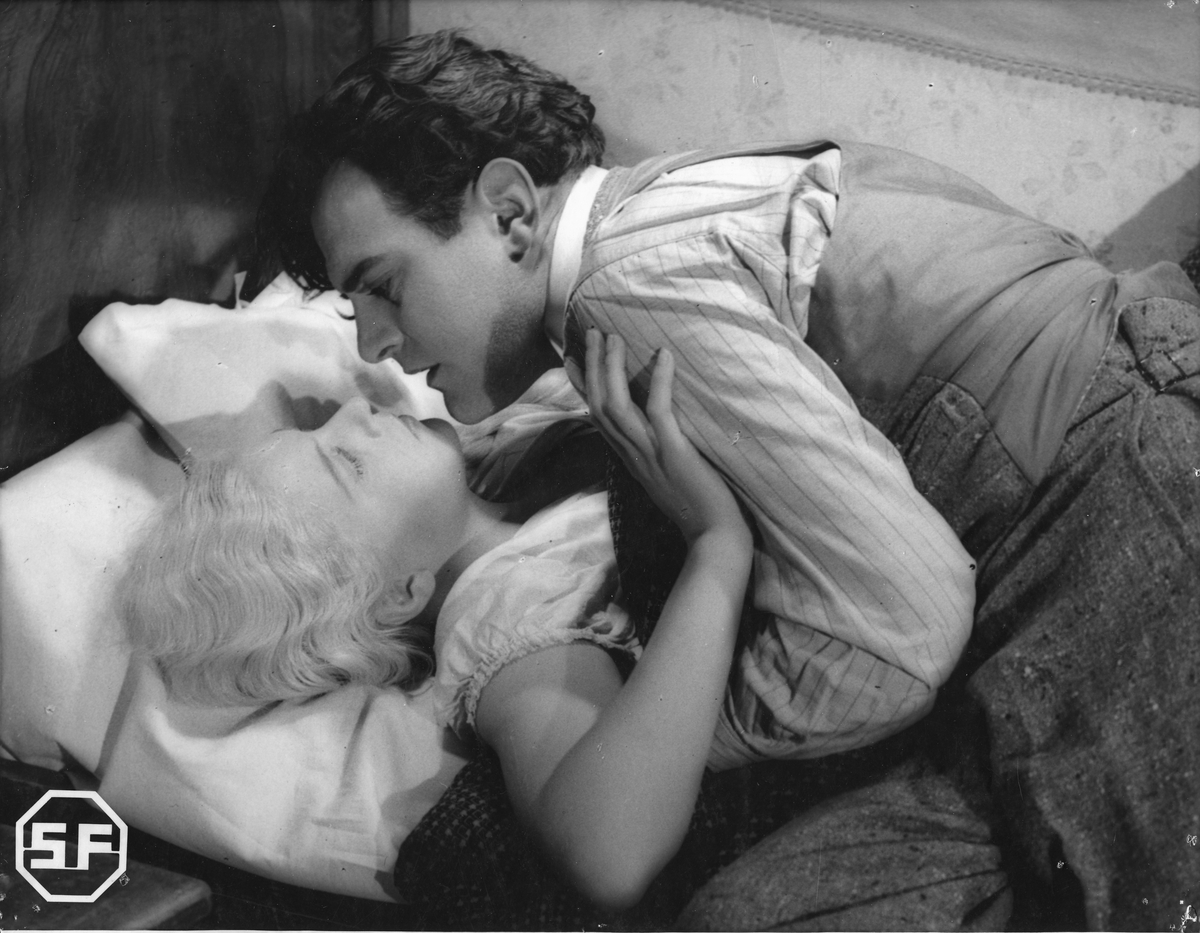 As Finland reels under increasingly oppressive Russian rule in the early 1900s, Robert Harmelius (Tauno Palo) dedicates himself to Finnish independence. Or rather, he talks about it a lot in order to impress his uncle’s housemaid Justiina (Regina Linnanheimo), and the pair of them become a pair of real activists, until uncle Fred catches them in bed together. That’s one form of activity that nobody was expecting, and Robert flees town, leaving Justiina discredited and pregnant.
Years later, Robert has changed his surname to the more Finnish-sounding Harmaalahti, and is a promising politician in the new republic, married to a singer, Hilda (Emmi Jurkka), and with a young daughter of his own. Fallen on hard times, Justiina is a housekeeper, and their son out-of-wedlock son Olavi (Leon Lähteenmäki) works as a gardener at the house to which Robert moves.
Their feelings are soon rekindled, leading Robert’s spurned wife Hilda to avenge herself on him by seducing Olavi. Nobody saw that one coming! Olavi throws himself off a cliff and bangs his head, and Robert prepares to shoot Hilda in revenge, only for Justiina to intercede. “If you want to avenge your son,” she breathes, “help us make a world where such women have no power!”
 Er… singers? Vamps? Loveable curves? I am not sure how the creation of modern Finland is going to stop hearty cougars from chasing toyboys. We don’t even get to enjoy the seduction of Olavi, since prim censors in 1939 insisted on cutting 15 seconds of snogging from Eteenpäin elämään, which has not been restored in subsequent releases. I think that, deep down, there is some sense that Hilda is a representative of the tawdry, Russian-Swedish aristocracy, and Robert and Justiina’s love is somehow purer and more Finnish, worth fighting for… although apparently not at the time that Justiina could have done with any real support. The film from Suomen Filmiteollisuus was based on the 1937 stage play Justiina by Hella Wuolijoki, but lacks much of the bite and wit of her earlier Women of Niskavuori. Meanwhile, the film oddly keeps much of the limiting indoor settings – even the Civil War largely happens off-screen as a series of sound effects, while a bunch of Finns stare worriedly at some maps. People spend a lot of time in their drawing rooms, talking about Finnish independence instead of going out to get it.
It’s hardly the basis for a revolution, and in dragging Finland’s struggle for independence into a family drama about star-crossed young lovers, the film rather shoots itself in the foot. I can only imagine how it might play in a modern remake, which would surely focus on the put-upon Olavi’s teen trauma, while Robert would be presented as a heartless brute of a politician, ducking his responsibilities to the woman who has borne his child because of some sort of hand-wavy “oppression”. The Russians get the blame for everything, including Justiina’s bastard child, although surely Robert had a hand in it all. Well, it wasn’t his hand.
As the leading lady, Regina Linnanheimo is bafflingly stiff and ill-at-ease, as if she is being forced to act at gunpoint, with a face substantially craggier than some of her male co-stars’. Emmi Jurkka is far more vivacious and fun as the ivory-tinkling, chanson-belting Hilda, but we are supposed to hate her because she giggles a lot – she is entertainingly sultry, and comes oddly attended by two camp opera singers Andersson (Arvo Kuusla) and Oramaa (Ossi Korhonen), who seem to be the first markedly gay characters I have seen in Finnish film. Meanwhile, in the roles of Olavi and his half-sister Riikka, Leon Lähteenmäki and Marjo Penttala are the least convincing teenagers I have ever seen, plainly of similar age to the people who play their parents.
In everything from its breathless title to its addled approach to the founding of the Finnish republic, Forward to Life! is a poor show of a film. Released in January 1939, it would have merely a few weeks in the grim winter sunshine before it would be roundly trounced by Suomen Filmiteollisuus’s own February Manifesto and, soon after, Suomi-Filmi’s rival The Activists, two vastly superior works. They didn’t just get 15 seconds trimmed out; they were banned completely for decades, sure to be a sign of truly revolutionary films.
Jonathan Clements is the author of An Armchair Traveller’s History of Finland. He is watching every Finnish film ever made, so you don’t have to.
 “Why is that giant robot skipping…?” I return to the All the Anime podcast for another time-wasting podcast about (among other things) — the reasons for corporate pseudonyms in the anime business, why nobody likes Swedes, the politics of reindeer herding, “southern softies” from Helsinki, anime that are more popular outside Japan than in it, and, as ever, why I love Gunbuster.
APPROX TIME CODES FOR THIS EPISODE –
00:00 – 02:34, Intro.
02:35 – 07:53, An update on life in Finland during lockdown, the politics of reindeer herders
07:54 – 19:31, Jonathan on the re-recording of Gunbuster, then discussion about Diebuster too.
19:32 – 31:25, Who is (or isn’t) Hajime Yatate? A look at how this pseudonym came about and its impact on the industry to this day.
31:26 – 41:48, (continued from the section above) Have there been any more examples of blowback by a creative because they lost a credit to a studio?
41:49 – 56:15, Discussion on titles being more popular outside of Japan but also how a title may be presented to be perceived larger than it is.
56:16 – 1:02:53, (Continued from section above) The crucial missing component in the foreign attention pattern: China.
1:02:54 – 1:11:48, The Chinese animation industry as it is now.
1:11:49 – 1:15:13 [END], Show close.
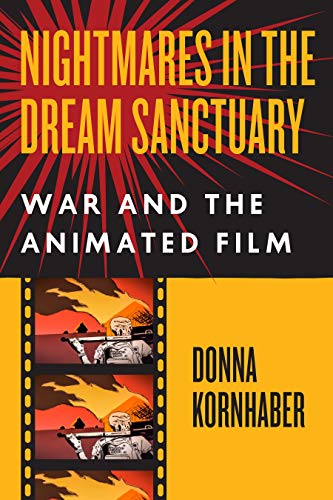 Over at All the Anime, I review Donna Kornhaber’s new book on cartoons and war.
“The Empire, in Leicester Square, was the venue at which the world’s first recorded screening of an animated film took place, with an animated advert in which the Bryant & May company promised to send a personalised box of matches to every British soldier fighting in the Boer War.
“But then [Kornhaber] leaps into the future, to a winter’s day in Moscow in 1983, when a very different film received its premiere. Garri Bardin’s ‘Conflict’ also features animated matchsticks, but was a very different presentation with a severe anti-war message.
“These two moments in cinema history mark the broad parameters of Kornhaber’s just-published Nightmares in the Dream Sanctuary, in which she investigates the relationship of animation and war, not merely as propaganda, but as protest, resistance and memorial. She is intrigued by the ways in which film can be used to tell outrageous lies about the acceptability of war, or to confront viewers with unwelcome truths about its costs, but also in which animation, in its plastic relation to reality, can prove ideally suited for depicting a world turned upside-down.”
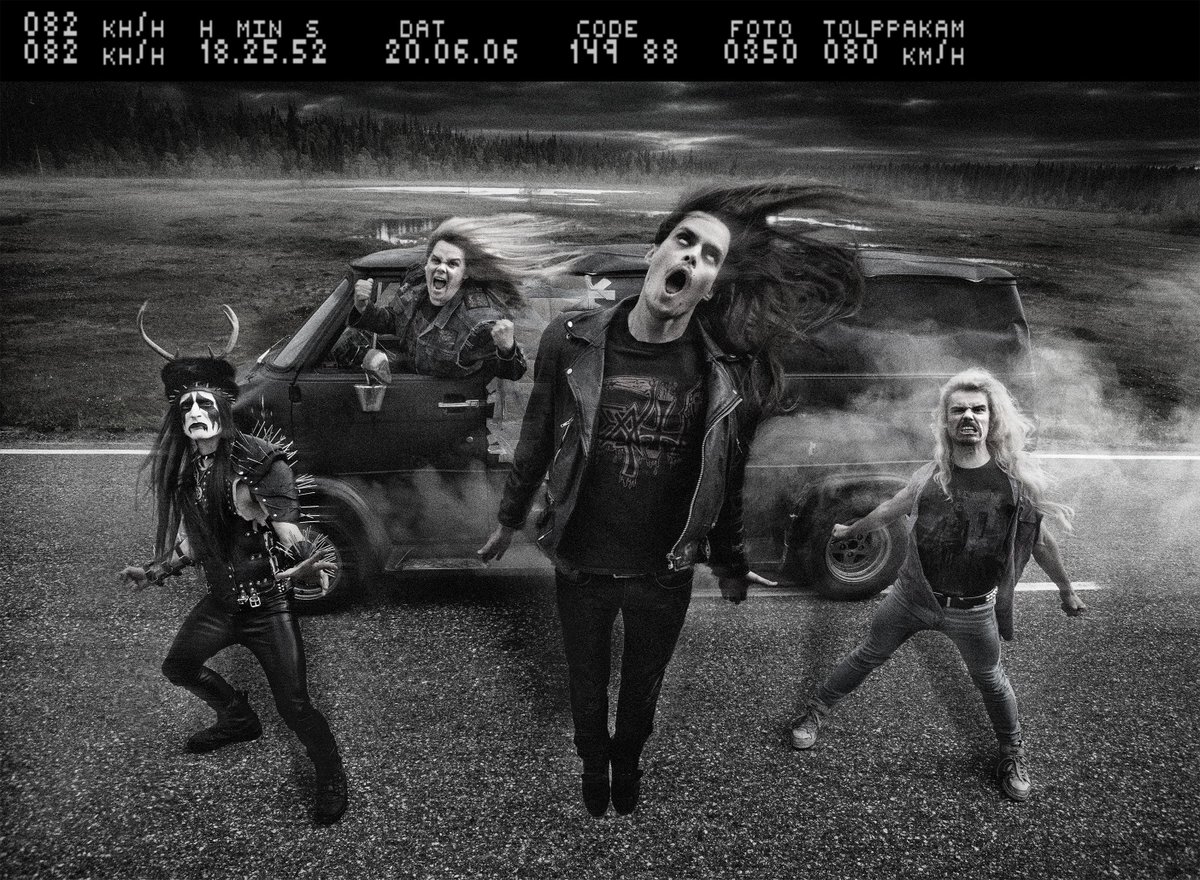 Turo (Johannes Holopainen) is a hospital porter who moonlights as the lead singer in a heavy metal band, in a small town far in the north of Finland. Lead guitarist Lotvonen (Samuli Jaskio) searches for a new riff, and finds it in the sound of a reindeer carcass stuck in a meat grinder. When Norwegian rock festival director Frank Massegrav (Rune Temte) stops by the local abattoir in a search for reindeer blood, enthusiastic drummer Jynkky (Antti Heikkinen) hands him a demo tape, hoping to be invited to the Northern Damnation rock festival in Norway.
Suddenly, they are local heroes, as the townsfolk misunderstand the news, and assume that the band has already been invited. The local boy-racers stop yelling “HOMO!” at Turo every time he cycles past. Florist Miia (Minka Kustonen, bright-eyed and flirty, unlike her dour turn as a humourless hipster in Tellus) finally agrees to go out on a date with Turo, and the mayor presents them with the key to the city, or as near as dammit. Unfortunately, Frank calls to say that there is no space for the band, now named Impaled Rektum, at his festival. When Jynkky is killed in a road accident (swerving to avoid a reindeer), Turo decides to tough it out, digs up Jynkky’s coffin, steals a van belonging to local lounge singer Jouni (Ville Tiihonen), and runs for the border. Oh, and since he’s short a drummer, he busts lunatic Oula (Chike Ohanwe) out of the local asylum, because Finland. They rehearse on the road, perfecting their “” sound, something defined by their bass player Pasi (Max Ovaska), who insists now on being referred to as Xytrax.
Jouni tells Miia’s dad, the chief of police, that his van has been stolen by terrorists, leading the Norwegian border guard to spring into action, assuming that a truck full of suicide bombers is bearing down on them. Owing to a case of mistaken identity, the over-enthusiastic Norwegians accidentally blow up a van containing a Twelve Apostles-themed bachelor party, allowing the members of Impaled Rektum to get across the border. Throwing themselves into a fjord, they are rescued by a bunch of medieval re-enactors with their own Viking long-ship, arriving at Northern Damnation in style.
 Despite previously been told that they are not welcome, they have become media stars. Thanks to the fact they have stolen a corpse, almost started a war on the border, and broken a mental patient out of a Finnish asylum to join their band, Impaled Rektum are allowed to play a single song, while the Vikings hold off the Norwegian riot police. They are arrested at the end of their set, secure in the knowledge that they are very metal.
Like Jalmari Helander’s Rare Exports (2010), another quirky Finnish film with an enthusiastic overseas following, Hevi Reissu apparently began as a short, Impaled Rektum (2007), written by Jukka Vidgren and Juuso Laatio — that, at least, is what was reported in at least one press story, although there is no sign of the earlier incarnation in their public filmographies. The pair previously made a splash with Dr Professor’s Thesis of Evil (2011), which was Vidgren’s final-year project at an Oulu college, and Vidgren’s name shows up as an assistant cameraman on Forbidden Fruit (2009). Laatio is credited on IMDB with an entire portfolio of abilities, not only as co-writer of the script but of some of Impaled Rektum’s conspicuously terrible songs (including “Flooding Secretions” and “Good Old-Time Death Metal”), as well as stints as an art director, compositor and animator.
Plainly, much of the work undertaken by their production company, Mutant Koala, is below the line — commercials, shorts and production assistance for TV shows, which only makes Heavy Trip all the more impressive. Finnish cinema in the 21st century is riddled with overblown student films, which audiences are expected to indulge and forgive for even trying. With 20% of the population, Helsinki remains the centre of the creative arts, while the provinces are expected to count themselves lucky if anyone finds anything to write about them at all. In such a context, Heavy Trip is an accomplished, enjoyable celebration of what it means to be different in a small town in the middle of nowhere.
The music by Lauri Porra, sometime bass player with Stratovarius but also a film composer in his own right, is wonderfully hard-core, including at one point, a death metal pastiche of the James Bond theme, as Jynkky breaks into the local police station to steal a picture of the band taken by a speed camera. There are also some fantastic, so-bad-they’re-good retreads of rock classics, shredded with loving care by Mika Lammassaari and Eemeli Bodde from Mors Subita. This ties into the film’s loving homage to many a rock icon, including a moment at Jynkky’s funeral where Pasi, sorry, Xytrax, delivers a heartfelt, poetic eulogy that turns out to be some Ronnie James Dio lyrics. This is a film that goes up to eleven, like Finland itself.
 The critical reaction in Finland, however, was mixed, with a four-star review in the Tampere newspaper Aamulehti, but an ambiguous three stars in the Helsingin Sanomat, which damned it with the faint praise that it was a “sympathetic and enterprising” film that “doesn’t get boring.” Jussi Huhtala in Episodi, Finland’s answer to Empire magazine, was unimpressed, scoffing that this was a “clumsy and childish film… unfortunately not Finland’s Spinal Tap.” But a comparison with This is Spinal Tap is misleading — the music might be metal, but this is a film that owes far more to the humour and aspirations of The Blues Brothers. In particular, Huhtala objected to the digital sleight-of-hand used to create many of the film’s iconic moments, and objected to a scene in which Turo breaks into a zoo and punches a wolverine. Taneli Topelius in the Ilta-Sanomat was similarly dismissive, acknowledging the film’s luxuriance in heavy-metal cliches, but sternly conceding that he “could not give it more stars than the Devil has horns.”
The foreign press was far more enthusiastic. The Hollywood Reporter called it a “rollicking romp,” AV Club found it to be “a charming ensemble of morbid dorks,” and Roger Ebert.com pointed out that it was “probably the only film you will see this year with a crowd-surfing corpse..”
Jonathan Clements is the author of A Short History of Finland. He is watching every Finnish film ever made, so you don’t have to.
Haus Publishing tell me that the Kindle editions of my books are currently discounted for a limited time only (discount highlighted below).

 Over at the All the Anime blog, I remember the actor Jay Benedict.
He had played Deak, one of the local slackers at Tosche Station on Tattooine, in a scene deleted from Star Wars: A New Hope, describing his performance as one of “playing space pinball” while Biggs (Garrick Hagon) told Luke Skywalker he was joining the rebel alliance, and Koo Stark “sat around looking beautiful.” When we worked together with Hagon on one anime dub, Benedict ribbed him about how Hagon’s character had made it to the final cut, only to get blown up above the Death Star.
 The Official Schoolgirl Milky Crisis Blog