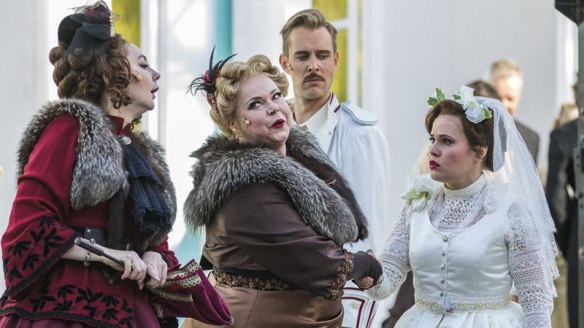
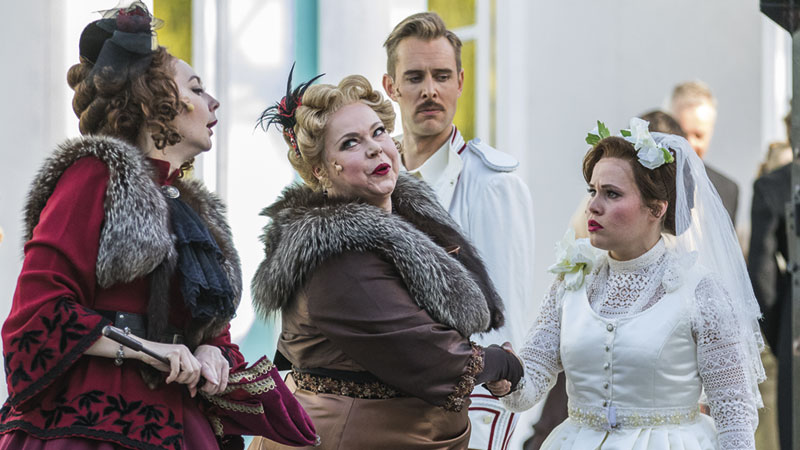
 Partway through the first act of Tuomas Kantelinen’s Mannerheim opera, our hero’s ex-girlfriends gate-crash his St Petersburg wedding like the three little maids from the school of hard knocks. Kitty, Maria and Betsy scandalise the family and taunt the bride with verses about how much he adores them, and how he will never love her more than he loved Annicka, the little sister who died as a child. Mannerheim (Waltteri Torikka) dismisses them with a cheeky shrug – left in penury by his faithless father, he is determined to marry the Russian heiress Anastasia (Johanna Isokoski), whose wealth will solve all his financial worries.
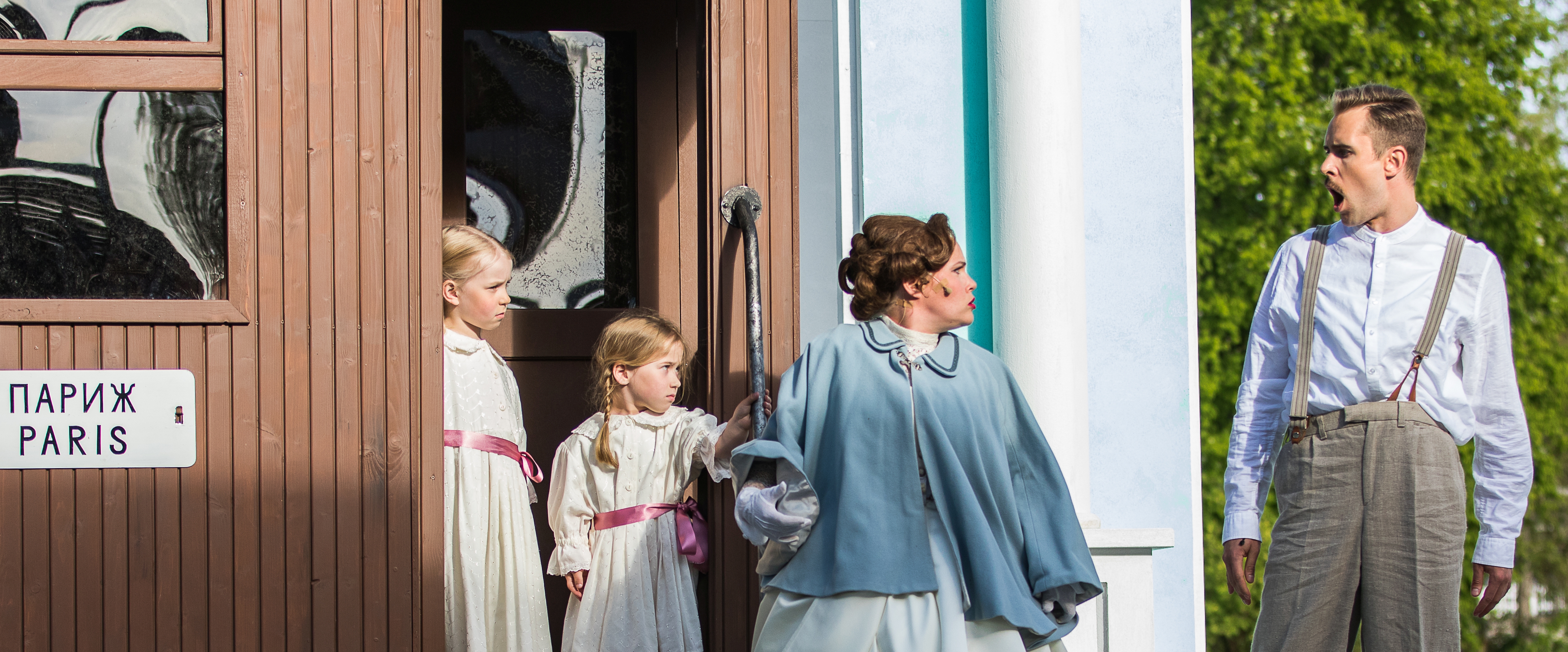
This opera moves fast. Within seconds, Anastasia is pushing a pram through a park, still dodging the taunting exes, before, in the space of a single aria, a decade has whizzed by and she has had enough of Mannerheim’s nonsense. She packs herself and her two daughters onto the train for Paris, and hisses at her estranged husband that everybody is afraid of him, except dogs and horses.
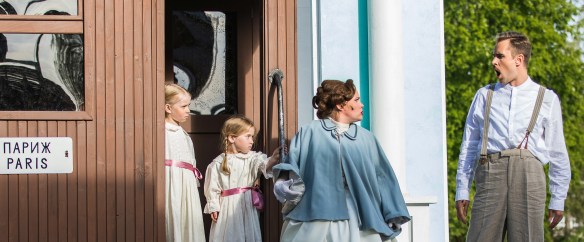 The sequence encapsulates the playfulness, humour and incisive understanding of Mannerheim’s life to be found in Laila Hirvisaari and Eve Hietamies’s libretto, as well as the many outrageous liberties they and director Tuomas Parkkinen take with historical characters. For starters, Kitty Linder (Johanna Rusanen-Kartano), one of Mannerheim’s most well-documented lovers, was only five years old at the time of his wedding to Anastasia Arapova, so I’m afraid it is rather unlikely that she would turn up at the party to sing about all the champagne they used to quaff. Nor was there much of a bunch of in-laws to scandalise – only Mannerheim’s father and brother showed up on the actual day, since everybody else thought that Anastasia was a “pop-eyed” bimbo.
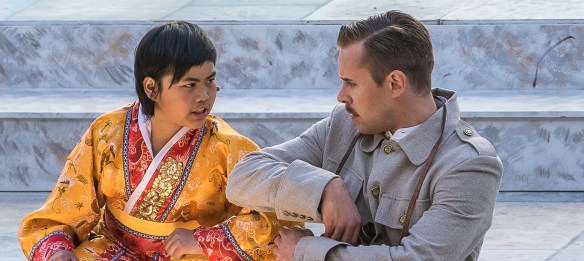
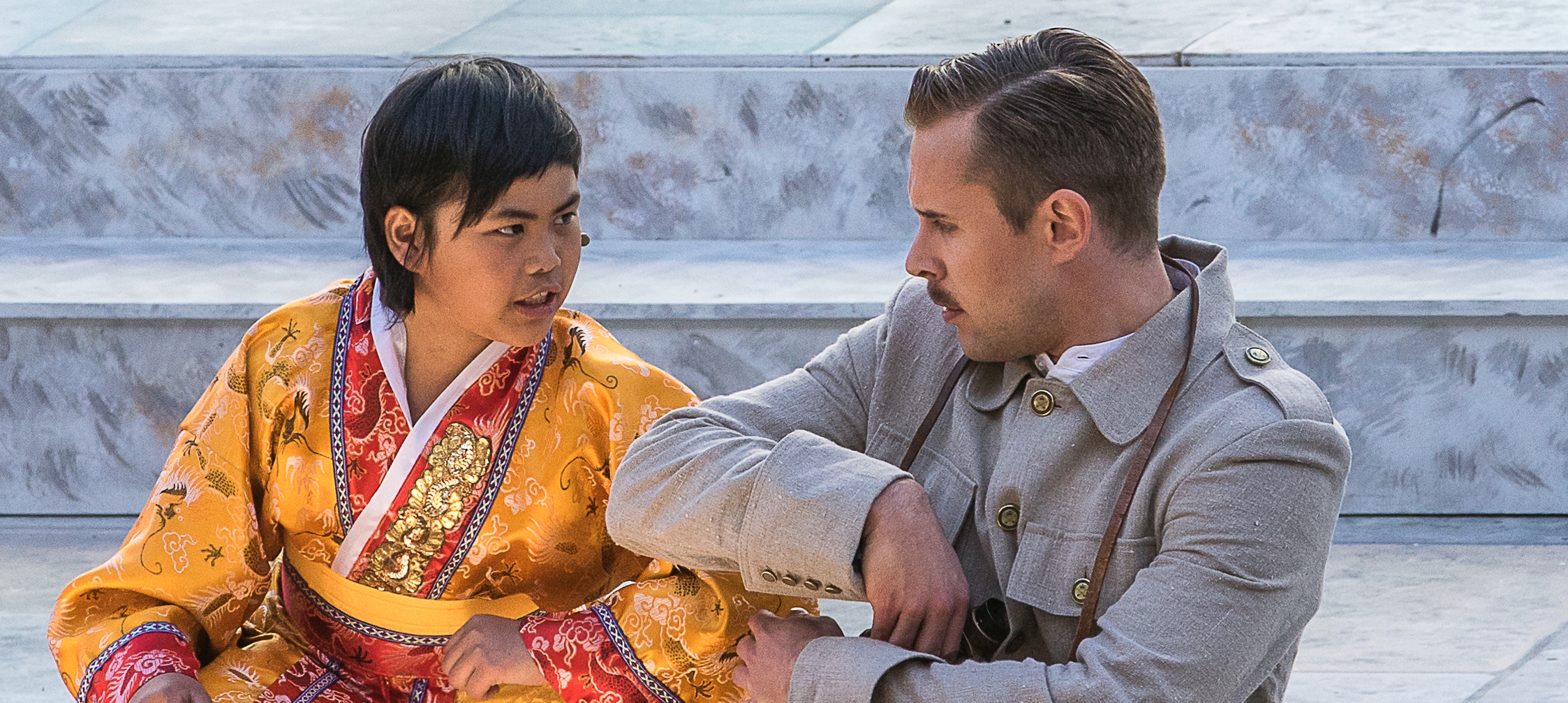
But such howlers are so blatant that they may even be deliberate – the libretto lifts moments of undeniable provenance from Mannerheim’s life (such as a famous incident where a Bolshevik challenges him about the suspiciously high-ranking boots he is wearing), but also mixes in complete fabulations, such as an encounter with Puyi, the Last Emperor of China. This last incident is the prelude to revolution, signalled by the sudden display of a flag of the People’s Republic, forty years before it was actually hoisted. Such toying with history turns the opera into no less spirited a retelling than the controversial animated film Butterfly of the Urals or the schmuck-baity Kenyan “Black Mannerheim” remake Marshal of Finland, and despite a tone that is respectful and commemorative, it still manages to land some hard-hitting punches on its titular hero.
 Mannerheim is a glorious celebration of the life of the most famous of Finns, but also smuggles in a remarkably subversive message about its subject. Far from being lauded as the father of his nation, Mannerheim here is a Faustian figure, wounded by his father’s infidelity, tormented by the death of his sister, and repeatedly bumping into a sinister coachman (Kristjan Möisnik) who makes him offers that come “at a high price.” In a neat below-stairs touch, his fate is interwoven with that of his housekeeper Ida (Johanna Rusanen-Kartano again), the deaths of whose son and grandson he inadvertently causes.
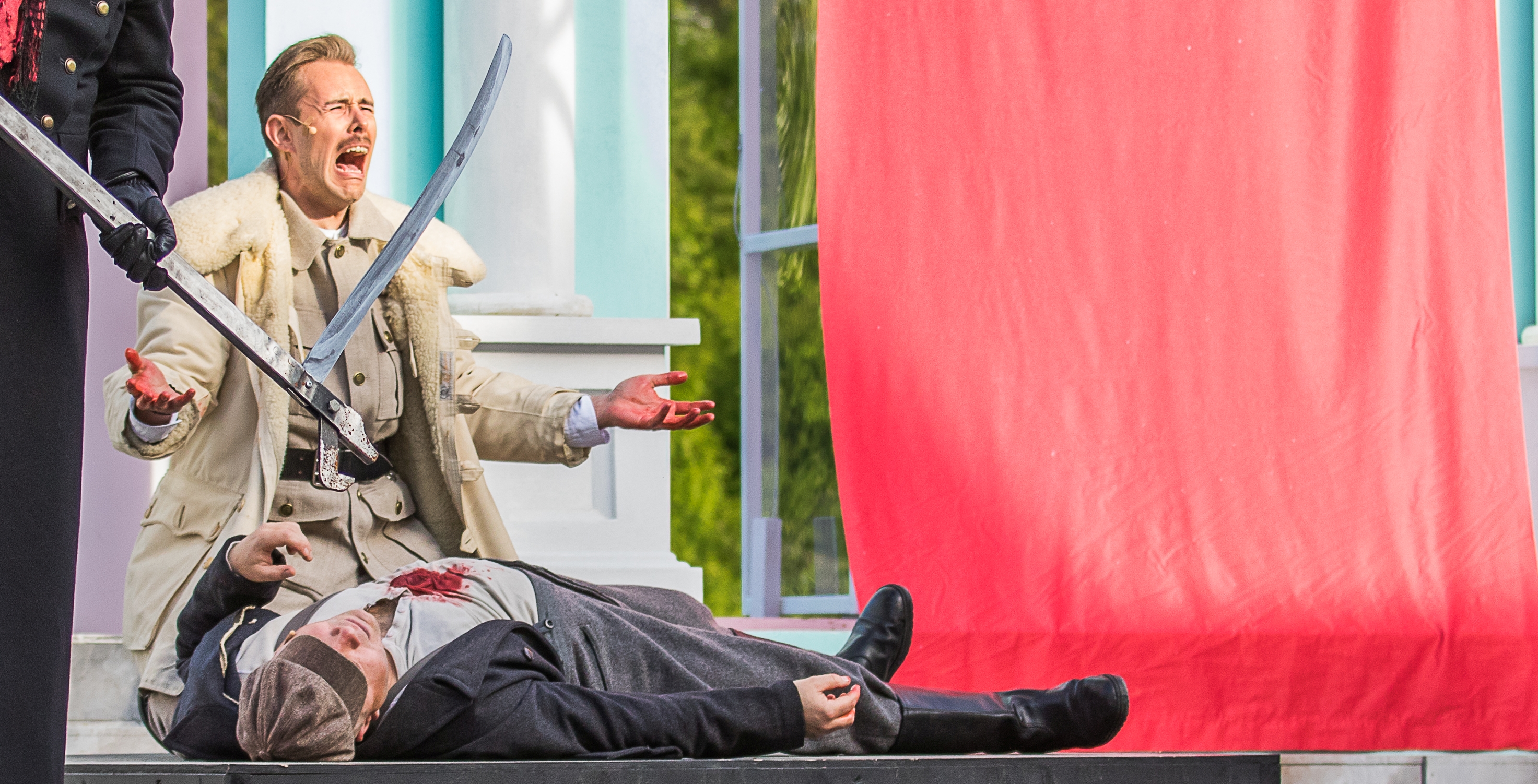
Despite much light-hearted humour – including a feud with a Russian officer played for laughs and a dance sequence in a clinic full of pregnant women – Mannerheim’s life is littered with corpses, at one point literally, as soldiers returning to the train station are outnumbered by a growing stack of coffins. He is haunted by the ghost of his sister Annicka (Annami Hylkilä), whose death we have witnessed in a melancholy aria about the boy she will never marry, and the daughter she will never carry. The polar opposite of the centenarian Aino from Kalevalanmaa, Annicka becomes the ghost of Finnish futures, forever frozen in time, unaware of the coming struggles of the Revolution or the Winter War, a symbol of Mannerheim’s carefree childhood in a simpler world. The first act finale finds Mannerheim literally with blood on his hands, lamenting the death of Ida’s son Toivo in the Civil War.
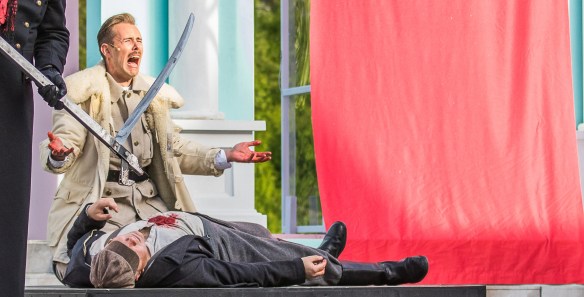 The second act makes a series of bold and unexpected dramatic decisions, starting with the striking recognition that the gallant young man of the first half was already a pensioner by the 1930s. It seems like only a moment ago we were snickering about his roister-doistering youth, but now he is a stuffy old man who needs his reading glasses, grumpily cutting ribbons for the opening of charitable institutions. Torikka’s Mannerheim is already infirm and slightly doddering, encouraging Ida’s grandson Kalle (Aarne Pelkonen) to join up, despite the dangers, presiding with increasing apprehension over a war that allows him to return to his glory days, at the expense of countless young lives.
We can all see what’s coming, as Ida sings her way through a letter from Kalle at the front, laughing at the recurring lyric “SENSUROITU” (censored), while Mannerheim tries to pluck up the courage to sign the telegram that will inform her that her son has died in action. But the opera’s greatest coup comes after the war, in a moment not of achievement but of denial, in which (SPOILERS SENSUROITU, highlight to read): Mannerheim is exhorted to ascend a ladder to take his place atop the bronze horse statue on the street that bears his name – symbolically, he is being invited to become the icon that he is today, but he stops at the base of the ladder. Instead, he runs away, which leads to another iconic moment from the photo gallery of his life – the lonely park bench in Lausanne, where he literally waits for Death, and finds a final duet with Annicka instead.
I was at the opening night of this season’s run at the Ilmajoki Music Festival, where Mannerheim received a well-deserved standing ovation, not merely for the leads, but for star turns from the supporting cast. As Mannerheim’s mother Helena, Essi Luttinen has a few minutes to belt out an incredible swansong, before conveniently dying so she can sneak back onstage to play his paramour Betsy Shuvalova. As Ida, Johanna Rusanen-Kartano ably juggles her dual roles as comic relief and grieving grandmother, but it is difficult to single out anyone in the cast who doesn’t shine in their moment.
The Mannerheim opera is a fascinating set of decisions taken in adapting the life of its subject, intriguing not only for what it includes, but for what it leaves out. There is no press-baiting scene to be had with Adolf Hitler; no walk-on for the Dalai Lama; no treatment of the stillborn boy whose death spelled the beginning of the end for an already shaky marriage. The Far East alone in this opera is a single scene, about a place where Mannerheim fought a war against the Japanese, led a posse of dandy bandits, banged a mysterious lady in Vladivostok, and spent three years undercover pretending to be a Swedish anthropologist. Mannerheim sings of his loneliness in his later life, although this rather ignores the fact that he spent much of his retirement with his lady friend Countess Gertrud Arco-Valley. And there was the hunting trip to India, and the coffee shop by the sea, and… I’ll stop. Mannerheim remains such a complex figure, and his life so packed with incident, that it really is possible to go back and write a whole other opera. I expect the Finns will, sooner rather than later. In the meantime, treat yourself to this one.
Jonathan Clements is the author of Mannerheim: President, Soldier, Spy. The opera Mannerheim is playing at the Ilmajoki Music Festival until Sunday 9th June.

 I am in Toronto Chinatown, investigating restaurants Shanghainese, Yunnanese, Cantonese, a smattering of Sichuanese, one Manchurian, two Xinjiang halal and some half-hearted Peking. So obviously I started with a Mongolian hotpot. Services in the church are two parts Mandarin to one part Cantonese. Signage, as is common in
 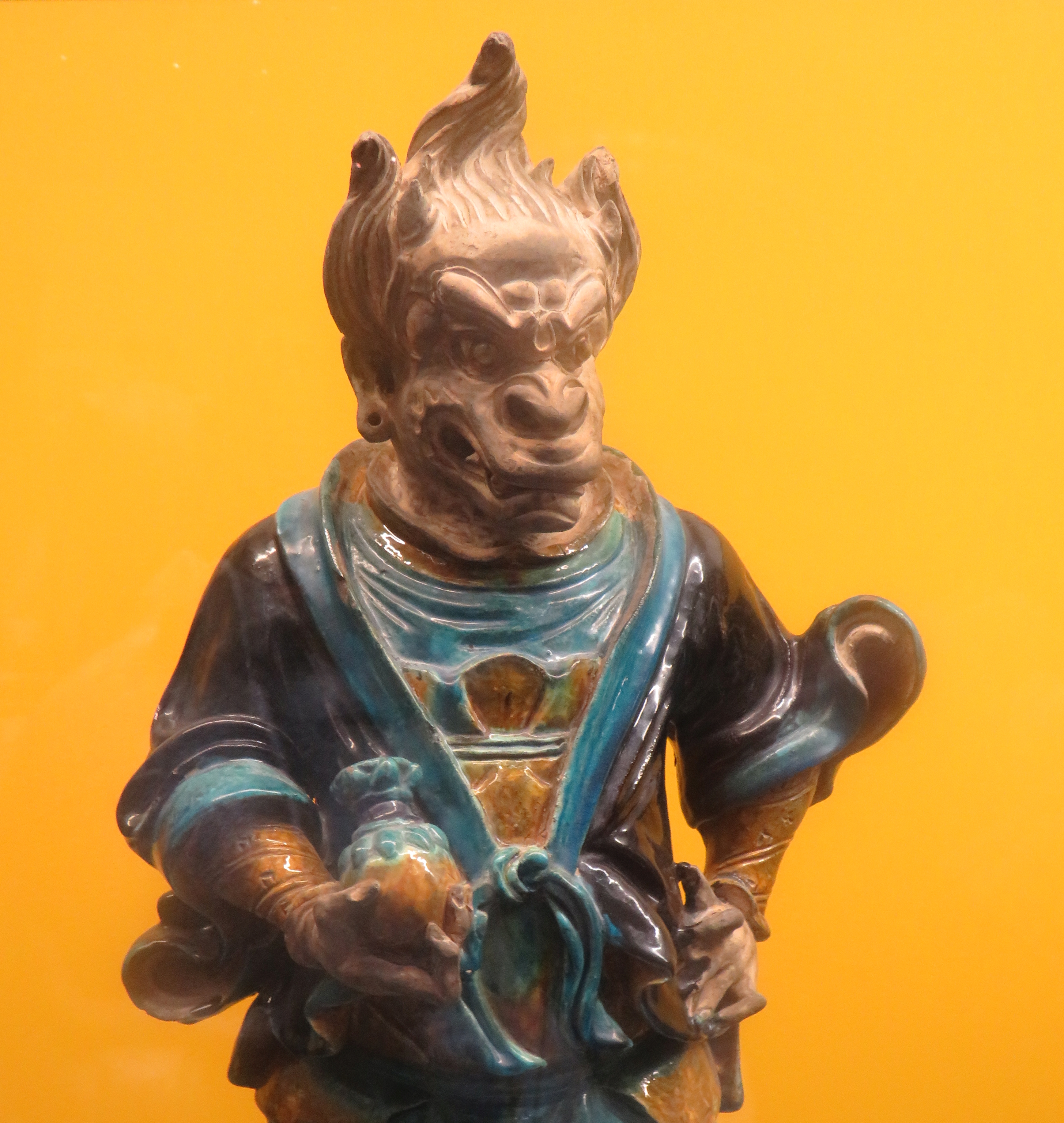 Canada and around the world, tells one story to Chinese readers and another to Anglos. Yesterday was the Chinese collection at the Royal Ontario Museum; today I’m off to see the monument to the Chinese workers on the Pacific railroad. Me the north, as they almost say here.






 The Official Schoolgirl Milky Crisis Blog