Animation in China

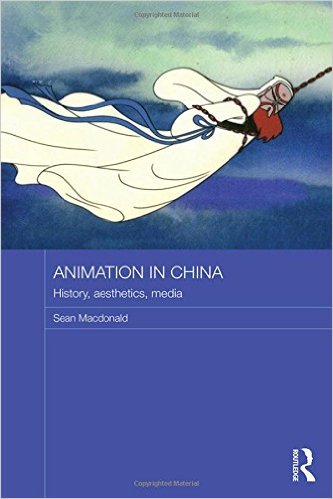
41haOrPwuXL._SX331_BO1204203200_Over on the All the Anime blog, I review Sean Macdonald’s excellent Animation in China: history, aesthetics, media and take the time out for a tangent about the politics of book pricing.

“Macdonald acknowledges the vital importance of Japanese animation for understanding the Chinese market, both in terms of early innovators such as Tadahito Mochinaga, who enjoyed a Chinese career under the name Fang Ming, and later helpers such as Tetsuya Endo, who did the real work on “Tsui Hark’s” animated Chinese Ghost Story. He discusses the famous Uproar in Heaven, the Monkey King from which remains the mascot of SAFS, not only in terms of its Chinese context, but of its parallels with Tezuka’s Alakazam the Great, which was released a year earlier. He even compares the working practices of the Wan brothers (with welcome translated quotes from one of their memoirs) with those of Osamu Tezuka in the age of “limited animation,” playfully comparing the car-crash scene in the first episode of Astro Boy to a famous sequence in Eisenstein’s Battleship Potemkin.”

Runner Up

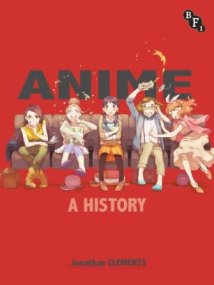
41bkTuP9TdL._SY445_My Anime: A History has just been declared the runner up in the Society of Animation Studies’ voting for the Norman McLaren – Evelyn Lambart Award for Best Scholarly Book on Animation. The winner was Animated Documentary by Annabelle Honess Roe, “a vital addition to both animation scholarship and film studies scholarship more broadly, expertly achieving the tricky challenge of synthesising these two scholarly traditions to provide a compelling and brilliantly coherent account of the animated documentary form.”

“Clements’ work stood out as the 2015 Runner-Up because of his fearless capacity to continually foreground the challenges of historical analysis, while putting this into practice to provide a much needed early history of anime that is rich with balanced detail.”

Animators Below the Line

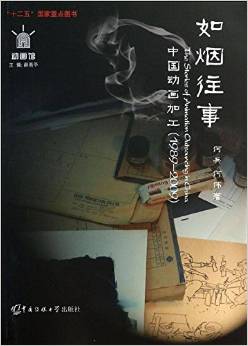
ruyan wangshi coverThe presence of Chinese animators and colourists in the film industry has often been ignored or denied. In Ruyan Wangshi, which bears the English-language title The Stories of Animation Outsourcing in China (1989-2009), He Bing and He Feng document life below the line for the artisans and labourers who do the dogwork on overseas cartoons, at first in Shanghai, and then as the industry expands, in spin-off companies and daughter-branches in Suzhou and Guangzhou, Nanjing and Chengdu.

Toei Animation is first on the scene in the year of Deng Xiaoping’s reforms, ordering seven thousand cels to be coloured in Shanghai in 1979. By 1985, it’s a company in Shenzhen, in the People’s Republic, that has animated the iconic logo used by the Hong Kong television channel TVB. The authors estimate that in the 1990s, out of a worldwide labour force of 50,000 animators, some 3000 dwelt in China – a proportion that has only increased in the 21st century as Chinese colleges pump out thousands of qualified personnel. By 1994, Disney reps are spotted in Suzhou looking for local talent, and before long, Chinese animators are toiling unnoticed on spin-offs from Pocahontas, Mulan and Hercules.

Many of the stories in the book echo similar tales of the Japanese industry. Art is never completed, only abandoned, and the Chinese struggle to find an equilibrium between the minimum amount of effort, which is a matter of economic sense, and the maximum, which is a matter of personal pride and artistic integrity. It is also theoretically infinite; there is always something that can be improved, a no-win situation that has driven many animators to exhaustion. There are mad dashes to get the artwork to the airport, and animation is described, in terms that echo those of Tadahito Mochinaga from the 1950s, as xinku de gongzuo – a bitterly hard job. The authors describe the Golden Age of Chinese outsourcing as the period from 1995-2005, bracketed by the boom in straight-to-video animation at one end, and, one supposes, the collapse of the anime bubble at the other. Less obvious at first glance is the impact of digitisation and the internet, which would allow Chinese art-college graduates, earning Chinese wages of £200 a month, and paying a Chinese cost of living, to essentially occupy a virtual office next door to their Japanese counterparts, who had to live in Tokyo, where £200 a month barely pays for parking.

Anime looms large in these memoirs, with references to work undertaken on Sakura Wars, Banner of the Stars, Lodoss War, Oh My Goddess, Madlax, Cowboy Bebop, Death Note and GTO, among others. Throughout the period, the Chinese animators dabble in making their own work, fumbling to make their own animated series based on famous proverbs, and holding out for a co-production deal.

Nothing makes the disruption between analogue and digital clearer than the book’s illustrations. A generous opening colour section offers a scrap book of images from the animators’ lives, but often contains frightfully dull pictures of people at forgotten banquets and grim group photocalls. Such images date from a time when cameras could only take 24 pictures, not the snap-happy 21st century where everybody documents their lunch. But the very mundanity of these images speaks volumes about conditions and attitudes in the industry, such as a shot of the anonymous, run-down block where a “studio” nestled above a print works, and a photograph of a visiting Japanese animator that simply credits him as “a visiting Japanese animator.” The clients, too, were often anonymous to their hirelings.

The Stories of Animation Outsourcing in China (1989-2009) is published as part of a series of books on animation by the Communication University of China Press. Several of its sister volumes cover well-worn topics like British or Japanese animation, but the titles relevant to China are far more ground-breaking, including a 336-page history of Chinese stop-motion animation that I hope to get around to reviewing sometime here, too. In the meantime, in attempting to delineate a history and a narrative of the uncelebrated low-echelon workers of the cartoon business, He and He have truly opened a new area in animation studies.

Jonathan Clements is the author of Anime: A History.

The Shoulders of Giants

attack-on-titan-movie-trailer-released

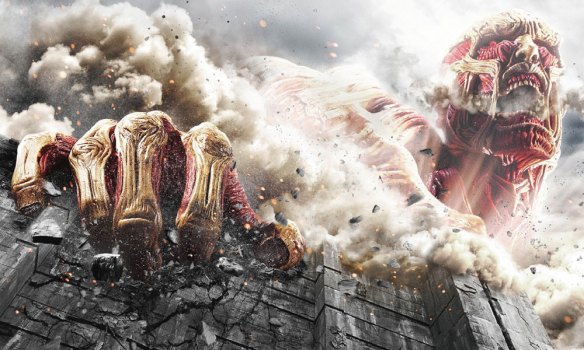
It has been a hundred years since humanity was first devastated by the Titans, hulking, occasionally skinless man-eating giants. What remains of the human race huddles behind a series of concentric walls under martial law, the best and brightest co-opted into one of several military organisations that use repurposed climbing equipment to scale the enemy attackers in search of their hard-to-find weak spot. Teenage brawler Eren Yaeger swears to avenge his mother’s death at the hands of the Titans, and joins up along with a group of his friends, only to discover that the mystery of the Titans’ appearance and motivations runs far deeper, and closer to home, than he previously imagined.

With more than 30 million copies in print worldwide, Attack on Titan is one of those manga that has truly escaped from the ghetto. Its US sales run rings around many supposedly popular superhero comics, and its fans are a rabid, visible costumed presence wherever geeks gather. Hajime Isayama’s original manga has been adapted into an animated series, novels and a computer game, which is pretty good going for something that looks on the surface like the fever-dream of someone off his face at a Bodyworks exhibit.

Attack on Titan has truly caught the zeitgeist both in Japan and abroad. Local audiences warmed to its allegorical Wall of Fear, as a symbol of the social and cultural barriers that often continue to shut Japan off from the troubles of the real world… at least temporarily. Similar symbolism can be found in recent anime like Summer Wars and Howl’s Moving Castle, both of which dealt obliquely with modern Japan’s reliance on the pursuance of faraway conflicts, and the revelation that terror could still hit close to home. Viewers in Hong Kong praised it as an inadvertent metaphor for the influence of the overbearing colossus of mainland China on their lives. Newspapers in South Korea touted the whole enterprise as a propaganda exercise in encouraging young Japanese to support military expansion. The story is so surreal that it lends itself to any number of political messages, not the least a winner with young teens who feel that the perils of the world are all coming to get them. It is a zombie apocalypse and a monster-of-the-week disaster movie all in one, leavened with a healthy scepticism about the lies that the authorities might tell to hang onto power. Plus big fights.

The Attack on Titan live-action movies are an intriguing confection. They seemingly went into production for the same reason as any other comics or media adaptation – out of a managerial confidence that high sales in one medium would translate into another. But the original choice as director, Tetsuya Nakashima, dropped out in 2012 over unspecified conflicts regarding the script. His replacement, Shinji Higuchi, must have looked like an all-round jackpot, not only for his track record in the liminal area of modern sci-fi and cross-media ties, but for his highly regarded work in tokusatsu movies – special effects epics about big monsters stomping on buildings.

Higuchi has always been very good at “quoting” elements of a much-loved original. Over-emoting is common in anime that lack the resources to convey visual expressions, but in the live-action Attack on Titan, the characters routinely strike ludicrous poses and spout gung-ho dialogue that seems, well, cartoony. Meanwhile, whereas the original is set in a European dreamtime, all the actors in the movies are understandably Asian, which makes a mockery of a particular subplot about the “last” Japanese girl in the world.

I was recently taken to task by a viewer at the Scotland Loves Anime film festival for not introducing the live-action movies with sufficient respect. Apparently it was my fault that the audience was laughing at the hokier moments and protesting at some of the switches in plot and character. Then again, another punter commented that the live-action movies were a fantastically enjoyable, funny parody of the anime, although nobody seemed to have told the cast and crew. So the live-action movies aren’t quite the re-up that fans were hoping for. They take themselves seriously in all the wrong ways, seemingly unaware that, ironically, it’s the earlier cartoon incarnation that really hits the right note.

Jonathan Clements is the author of Modern Japan: All That Matters. This article first appeared in Geeky Monkey #4, 2016.

Prime Directive

karab

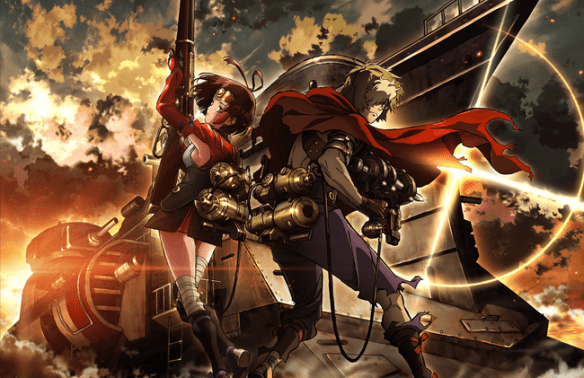
Starting with this season’s Kabaneri of the Iron Fortress, new shows from the highly-regarded Noitamina late-night slot on Japanese television will only be streamed abroad on Amazon Prime. Some fans are angry because that closes the window that previously might have allowed them to see it for free from another supplier.

But it doesn’t seem to bother the UK’s anime companies. “Streaming from another large platform can only be a positive thing,” comments Andrew Partridge of Anime Limited. “I heard naysayers flapping when Netflix came along, too. The truth of the matter is that the Amazons and Netflixes of this world are the terrestrial TV we never really had.”

In the years before NEO, anime TV shows weren’t on TV in the UK. Japanese cartoons were written off as glorified toy commercials or unsuitably violent, and fans sourced them from the video trade instead. In the last decade, anime has undergone a quiet revolution in streaming and simulcasts, but I don’t think fandom likes to feel that it’s being “handled”, even though enclosing intellectual properties is the way that any broadcaster builds its brand. SKY TV initially sold itself as the place where you could watch The Simpsons. Sporting channels snatch exclusive access to Your Team versus Their Team. If you gave me the mission of seizing the high ground in anime, Noitamina would be the first thing I went for, because it’s come to be associated with quality. If you were previously the sole gatekeeper to Noitamina, you would have had Erased, Psycho Pass, and Terror in Resonance, Nodame Cantabile and Eden of the East. But so what? You still wouldn’t have had Attack on Titan or Ghost in the Shell.

Fans love the idea of getting their own, tailor-made anime-streaming “channel”. But they hate it when they discover it Doesn’t Have All The Things. So it’s not just one monthly payment, it’s two, it’s three… When Battery starts running in July, you won’t be able to preview it for free on Crunchyroll. But if you really want to see it, it will still be right there, if you pay the annual fee, on Amazon Prime. That’s what’s making a lot of fans twitch. When Funimation or Viewster subscriptions cost no more than a once-monthly Happy Meal, they feel negligible. But Prime’s £79 a year doesn’t feel like £7 a month, even though it is. Or another £5.99 a month for Prime Video, if you prefer.

Of course, down the line, these shows will continue to come out on disc anyway. Which is where the real cleverness lies, because if you’ve already paid for Amazon Prime, it’s pretty obvious where you’re going to buy your Blu-ray. They’ll get to take your money twice.

Jonathan Clements is the author of Anime: A History. This article first appeared in NEO #150, 2016.
Bring it On!

Sport0018CheerleadingIn a plot worthy of a quirky anime show, two groups of feuding cheerleaders have prompted a US court battle that may spell the end of the world. Varsity Spirit, a company that makes mini-skirts and hair ribbons, is suing Star Athletica, another company that makes mini-skirts and hair ribbons. Varsitywants Star to stop copying some of its products; Star has gone to the Supreme Court, protesting that clothes are “useful articles” rather than works of intellectual property, and hence that you can’t put a trademark on pom-poms.

Prepare the drama torpedoes. Varsity has requested a “writ of certiorari”, or in Earth-language, a ruling on whether or not costumes can copy other costumes. If the judges are able to cut through the hair-pulling and face-scratching on this one, they will have to decide who owns a look. The future of dressing up will amount to a show of hands, because an unlikely ruling in Star’s favour would open up the floodgates to shutting down (or at least regulating) cosplay.

The idea is so preposterous that I previously suggested it as an April Fool’s Day gag last year on the Manga UK blog, but the world cosplay community is up in arms about it. Although there has been dressing up in Japan for decades, cosplay as we know it was born from what lawyers call the separability of rights, when Japanese fans in the 1980s realised that copyright didn’t apply to apparel in games and films. And anime companies merrily looked the other way, because cosplay didn’t really hurt anyone. Varsity and Star are fighting this one out because each one stands to make or lose money.

A certain anime company infamously gave up supporting cosplay competitions some years ago, because bosses realised that the participants were too busy sewing their sequins to actually pay for any of the anime products. But even if this ludicrous case was ruled in favour of Star, it would be sales suicide for an anime company to issue an actual cease-and-desist order to costumers, unless they already believed that costumers didn’t buy their product anyway, and that consequently the company had nothing to lose…

Fannish endeavours are only tolerated because they are amateur. And cosplayers can expect the tacit support of corporations for as long as they perform some sort of function. They give people something to do on convention evenings. Magazines get to run pretty pictures next to columns on tedious legal matters. And, supposedly, they function as a form of free promotion for the anime. But as two entrepreneurs recently discovered when they tried to sell camouflage costumes based on a convention hotel carpet pattern, companies will come down hard when you actually try to profit from something they own.

Jonathan Clements is the author of Anime: A History. This article first appeared in NEO #149, 2016.
 

Isao Tomita 1932-2016

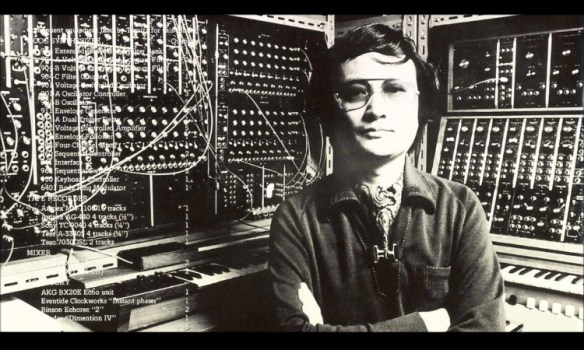
tomita-studioOver at All the Anime, I write an obituary for electronica pioneer Isao Tomita, who also composed the theme song to Tezuka’s Jungle Emperor.

“The 15-track Jungle Emperor album would become the first anime-themed LP, selling 100,000 copies – generating lucrative royalties for Tomita, but also for the unknown lyricist.  The main suspect was animation director Eiichi Yamamoto, leading to further arguments about whether he had written the words during a working day, thereby forfeiting his royalties to the company, or during one of the 250 hours of unpaid overtime he had clocked. Eventually, Mushi’s managers ruled in favour of themselves, fearful of setting a precedent.”

Right-Hand Man

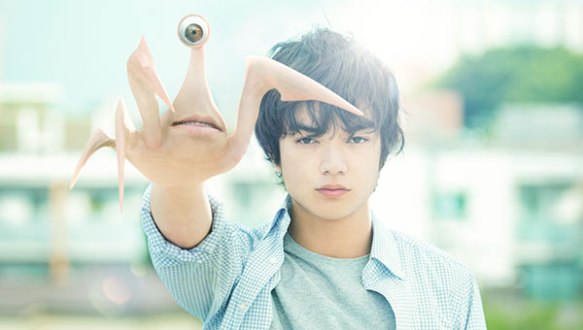
parasyte-the-movieThe Earth is under attack. Alien parasites have wormed their way into the brains of uncountable human beings, everybody from policemen to school teachers to noodle sellers. Teenager loser Shinichi (Shota Sometani) knows this because of a fatal flaw in the alien scheme – they can’t crawl in through your ears if you’re wearing headphones. Instead, his attacker Migi (Sadao Abe) misses Shinichi’s brain at the fateful moment and takes over his right hand, bonding them together for life.

Shinichi now has a wise-cracking alien attached to his arm, curious about world affairs, human relationships, and genitals. But he also has an ally in the war with the aliens, since Migi’s botched takeover turns him into a pro-human fifth columnist. Shinichi must somehow find out the aliens’ plans, without alerting the suspicions of his school teacher Miss Tamiya (Eri Fukatsu), whose blank-faced stare is sure-fire evidence that she has already had her brain eaten.

Japan’s first riff on Invasion of the Body Snatchers came in the form of the as-yet untranslated Beautiful Star by the infamously loopy novelist Yukio Mishima, in which a group of fanatical nerds became convinced that they are Venusian agents tasked with starting a nuclear war. The same period, the 1960s, also saw the granddaddy of all tales of alien symbiosis, when the dying alien Ultraman fused himself inextricably with a passing human, kicking off an ongoing franchise of transforming heroes fighting rubber monsters. By the 1970s, Japanese children’s telly was awash with the likes of School in Peril, in which teenage angst found new outlets in missions to defy scheming adults who turned out to be alien stooges.

In 1988 when the manga artist Hitoshi Iwaaki published the first chapter of Kiseiju (Parasyte – the misspelling is a deliberate imitation of a similar twist in the original Japanese), his story was a knowing homage to such childhood chillers. But running in Afternoon, a comic magazine for adults, Parasyte injected heavy doses of body-horror and paranoia. In gleeful, blood-spattered imitation of John Carpenter’s The Thing, Iwaaki’s aliens let rip with visceral, fanged transformations, like weaponised Salvador Dali paintings duking it out for control of the Earth. But it was also witty. Migi’s oddball friendship with Shinichi was genuinely charming, and their encounters with the humourless alien invaders inevitably creepy or inadvertently funny.

The original Parasyte manga finished in 1995, fading from public view for the oddest of reasons. For several years, the remake rights were purportedly in the hands of James Cameron. The Titanic director’s interest in manga is well-documented, but in the case of Parasyte, the rights acquisition may have been part of a complex legal issue, acquiring it to prevent ambulance-chasing lawsuits about the similarities between its shape-shifting aliens and the abilities of the T2000 in Terminator 2. There were certainly moments in the manga that bore a coincidental resemblance to iconic scenes in Cameron’s 1991 movie, and as a result, Parasyte stayed out of other media for over 20 years. Despite winning awards in comic form and bagging itself a Seiun (Japan’s Hugo award) for best science fiction, it didn’t make the obvious jump to anime or feature film until 2014, when it suddenly exploded into both formats. This delay has done it no harm at all, not the least in its evocations of modern terrorism – Shinichi is a double agent inside a sleeper cell, committed to preventing atrocities on his home turf.

As if two movies were not enough, Parasyte was also adapted as animation – arguably a medium more suited to the sudden outbreaks of alien shape-shifting. But Takashi Yamazaki’s live-action version also benefits from a generation of falling prices in digital effects, allowing him to inject heavy doses of rubber-bodied violence. It doesn’t always work, with the nature of Migi’s host leading Shinichi to literally hold his assailants at arm’s length, but most of the time, talky scenes of threats and scheming convincingly erupt into savage collisions of snapping flesh, often part-hidden in the shadows or obscured on scratchy CCTV.

Jonathan Clements is the author of Anime: A History. This article first appeared in Geeky Monkey #7, 2016.
Watching Paint Dry

landscape-1448043247-screen-shot-2015-11-20-at-18

This issue, we observe disgruntled film-maker Charlie Lyne, trolling the British Board of Film Classification by submitting a ten-hour movie of drying paint. Since the BBFC is obliged to scrutinise every second of every film sent to them, Lyne solicited online donations to send the censors the longest possible sequence of nothing, and to pay the boggling £7/minute fee required for all submissions. Paint Drying was passed on 26th January with the comment “no material likely to offend or harm.”

I’m not going to get into the ins and outs and the rationales for the existence of the BBFC – there’s a letters page for that, get stuck in. Instead, I want to talk to you about Lyne’s reasons for this Situationist protest in the first place: the tax on creativity he had to pay just to release a movie. Although nobody ever thanks me for pointing out how small the anime world is, we live in a world now where some releases underperform to the extent that their audience would literally fill a single cinema. When there is a likelihood, or even a mere risk, that a DVD will only sell a few hundred copies, the producers have to make some tough decisions about how much financial exposure they want.

Sure, I hear you say, but that’s the price of doing business. If someone’s forked out £5,000 for the rights to Schoolgirl Milky Crisis, they might as well have another grand on top to pay for the certificate, otherwise they shouldn’t be in the game in the first place. But for many anime, the BBFC fee is the last straw that kills off any extras.

Although this is rarely discussed among fans, extras also have to be certificated. That 30-minute making-of you wanted to see? That’ll cost over £300 just to get a BBFC nod. That feature commentary track you want to hear? That still has to be certificated at £7 a minute, even though it’s just some guy (usually me) talking about the thing you’ve already seen. I strongly suspect that the reason for the recent proliferation of art-books and sleeve notes in Anime Ltd releases like Sword Art Online and Durarara!! is because the £700 fee for certifying a feature commentary track feels like a protection racket. Someone could probably mount a legal challenge, arguing that a commentary was “educational” and hence exempt, but someone would still have to pay the lawyers to fight that corner.

But spare a thought for the BBFC, having to literally sit and watch paint dry for ten hours. They had to watch Legend of the Overfiend. Haven’t they suffered enough?

Jonathan Clements is the author of Anime: A History. This article first appeared in NEO 148, 2016.