Anime Futures

With Mark Schilling’s permission, I’m putting up the unexpurgated text of the interview he conducted with me six weeks ago for his article on Japanese animation futures in the South China Morning Post, in part to show how much work goes on behind the scenes to get a sound bite and an article.
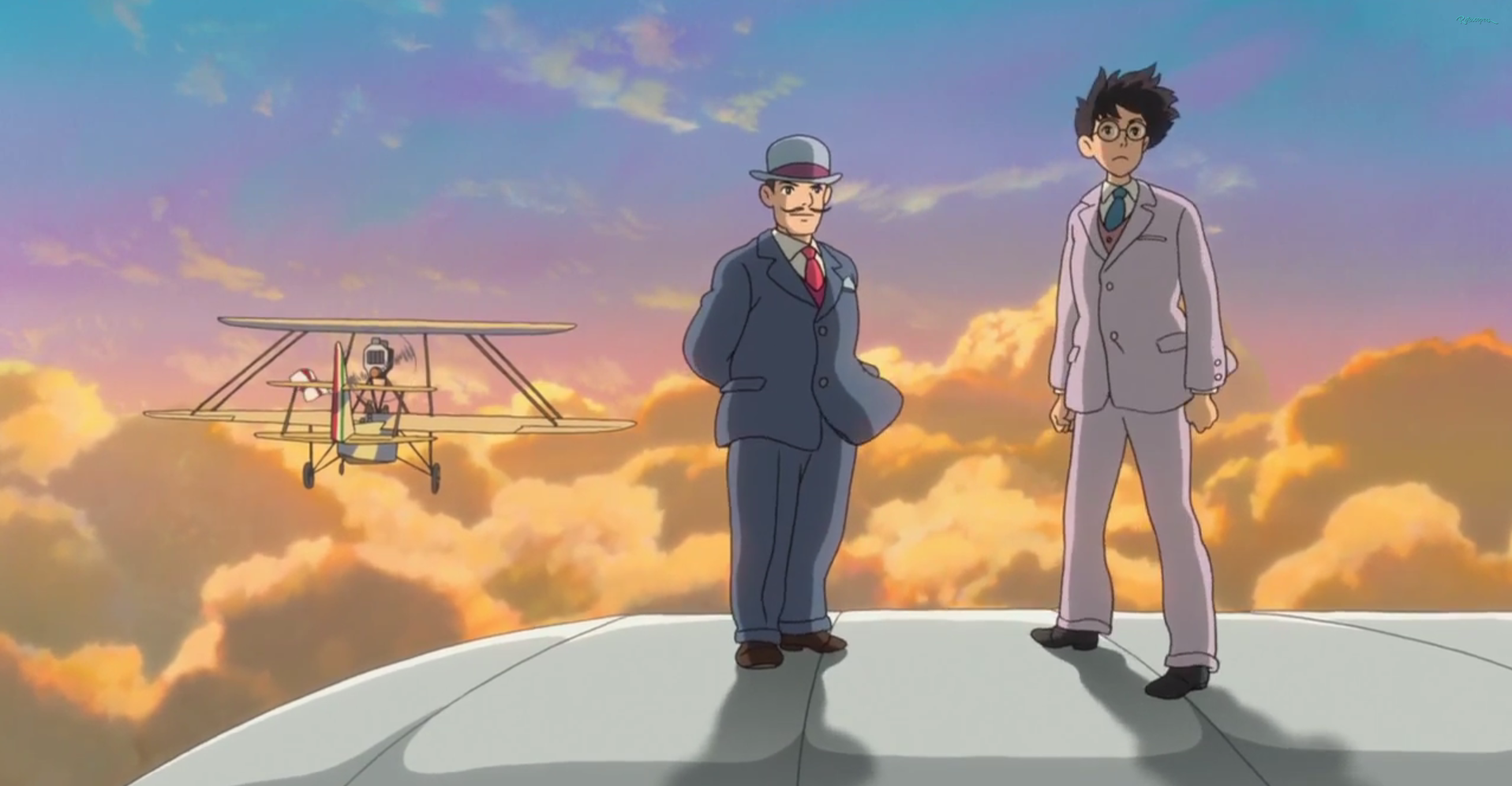
the-wind-rises-creating-planes-clipMark Schilling: You mentioned recently that several well-known anime studios might soon go kaput, but without naming names. Is it mainly a problem of rising costs? Declining revenues? Stiffer competition from Hollywood and elsewhere? All of the above?

Jonathan Clements: Some of it is economics — we’ve lost several minor studios recently, and their rise and fall, or restructuring and rebirth as “New” incarnations of themselves has been a common factor of the industry for decades. Ghibli itself was at least partly formed from the ashes of Topcraft, for example. Japanese studios in the twentieth century were able to function as subcontractors for American animation. That’s sometimes still true, but so many elements of anime production is now off-shored to China or South Korea that anime studios are smaller, and leaner, and more flexible in their behaviours. As Gonzo showed in the late noughties, it’s possible for a company to go almost completely dark, to give up its studio space, to lay off its animators and just coast for a couple of years as little more than a filing cabinet in an accountant’s office, waiting for the foreign residuals to roll in. That’s good for robust business, but bad for an animator’s job security!

There’s a generational issue that many people have spotted in the case of the high-profile retirements at Ghibli, but which is also common to the anime industry. The vision of a single creator, or team of creators, can steer a company and give it a distinctive style or brand, but nobody is immortal. People retire. The anime industry went through something very similar in the 1990s, where a bunch of the first-wave producers cashed in their shares, took their pensions, and handed over their companies to others — it’s what led to some of the big corporate buy-outs like Bandai taking ownership of Sunrise. That was seen at the time almost as a hostile take-over, but for many of the staff it was a welcome hand-over, with one of Sunrise’s biggest and most trustworthy clients taking a direct interest in its output, and thereby preserving the jobs of the employees.

What we have now, and have had for the last few years, is the aging of the Astro Boy generation, not of fans, but of animators. In 1963, Tezuka quadrupled the size of the animation industry, both directly through hirings at Mushi and indirectly through the creation of competition in the market. Those fresh-faced graduates are now in their seventies. Many of them are the leading lights of specific studios and, you know, some of them want to go off and play golf.

frozenIs the enormous success of Frozen in Japan a one-shot — or a game changer? Will more Japanese studios switch to Hollywood-style 3D CG animation, following the lead of the new Doraemon film? Will Hollywood exploit the fading of Studio Ghibli and become the dominant player at the Japanese box office, especially the animated segment of it?

Hollywood has always been the dominant player at the Japanese box office. There have been occasional spikes in local interest for particular directors or franchises, but Japanese cinema is eternally fighting a rear-guard action to push local product ahead of flashy foreign imports. Until Miyazaki’s late twentieth century successes, Japanese animation flourished like a weed, only in the spaces that The Lion King and Aladdin didn’t grow. Even in the 1990s, only a tiny handful of players like Gainax and Ghibli gave Disney anything close to a run for its money on home video. I think it’s worth considering Disney’s acquisition of Ghibli titles in that light — when Disney (or their subsidiaries) put money directly into Spirited Away, they weren’t just investing in a Japanese talent, they were ensuring that they got a piece of the pie from their main competitor in the Japanese market.

Japan has been slow to take up 3D CG, because it involves massive reskilling and investment in software and hardware. It’s a return to the state of the industry in the 1950s, when Disney product, made at a substantially greater cost to Japanese competition, was swamping the market with a relentless onslaught of material.

I don’t see Hollywood filling any new niche in Japan. Hollywood, in the form of Disney/Pixar and DreamWorks, will keep releasing its big family films and rolling on as before. The likely competition to do what anime does, to compete at a more domestic, perhaps even consciously “Asian” level, is going to come from China. Miyazaki’s retirement merited a sixty-page feature on Japanese animation in one of China’s biggest news-stand magazines, Lifeweek, last October. The implication was clear that this was a business feature, identifying a new market opening, and asking if China had what it took to move in on it.

I’m not saying that China is the new Ghibli. Far from it, the Chinese animation business has a lot to learn, and much of its output is highly derivative. But it is generating an animation labour base bigger than Japan’s every year. Kung Fu Panda 3 is going to be a “Chinese” film for contractual purposes, so even DreamWorks is relying increasingly on Chinese labour. The Chinese already represent two-thirds of the labour pool for what we call “Japanese” animation. Granted, that’s all concentrated in the lower, less-”skilled” echelons, but that doesn’t bode well for the future when the upper ranks of Japanese animation companies are increasingly drawn from the ranks of marketers and managers. It means that there is a very palpable risk that Japanese animation won’t have any actual animators steering it.

wind-rises-main_0You’ve no doubt read the anonymously sourced story about Studio Ghibli stopping production and becoming a rights management company. Do this strike you as credible? Some of the claims in that piece, such as The Wind Rises still being in the red, seem rather far-fetched to me…

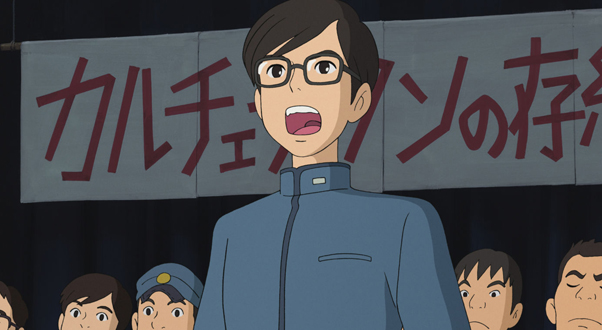
You can see the signs very easily. When Toshio Suzuki was sitting on data that told him that “Studio Ghibli” had a 43% trust rating with the Japanese public, but that the name “Miyazaki” had a 64.2% trust rating, what did he do? He got Miyazaki’s son to direct Tales from Earthsea! I think you can see Suzuki’s very canny, very sharp management insight steering much of the last decade. Even as he retires, he puts a former Disney Japan executive in charge of Ghibli. He builds the Ghibli Museum, which is a classy theme park that generates a movie’s worth of revenue every year. He tries the Goro Miyazaki bait-and-switch manoeuvre, and essentially dares the Japanese public to come and watch the car-crash for themselves. He hypes up this father-son tension in the media, but then gets the Miyazakis working together on Poppy Hill. In the case of The Wind Rises, I see it as another calculated move by the studio, to wring one last box office winner out of Hayao Miyazaki. I like to think of them going to his house and begging him to make one last film to keep the momentum going at the museum and on video, and telling him he can make ANYTHING he likes. Because the subject of that film is so personal, and indulgent, and risky, that I can’t imagine anyone else being allowed to get away with it.
My prediction: in a couple of years’ time Ghibli will go into production on a script “written by” Hayao Miyazaki, just to ring that bell again. He’s effectively given them a 50-title wish-list of children’s literature worth adapting. There is undoubtedly a faction at Ghibli who wants to pivot it towards doing World Masterpiece Theatre, and carrying Miyazaki’s legacy in a different direction, by copying his early TV successes adapting children’s books. That’s why they’re moving into TV with Ronia the Robber’s Daughter, but you can see the Ghibli is only co-producing it. The animation is actually being done by Polygon Pictures.

That The Wind Rises is still in the red sounds ludicrous to me. If it is, it’s only in the movie-accounting sense that Forrest Gump is still technically “in the red.” The Wind Rises did fine.
garden of wordsPeople have been talking about various “new Miyazakis” for years, but that we are truly in the post-Miyazaki era, who do you see as leading the industry, if not necessarily inheriting Miyazaki’s crown? If none of your names are from Studio Ghibli, why not?

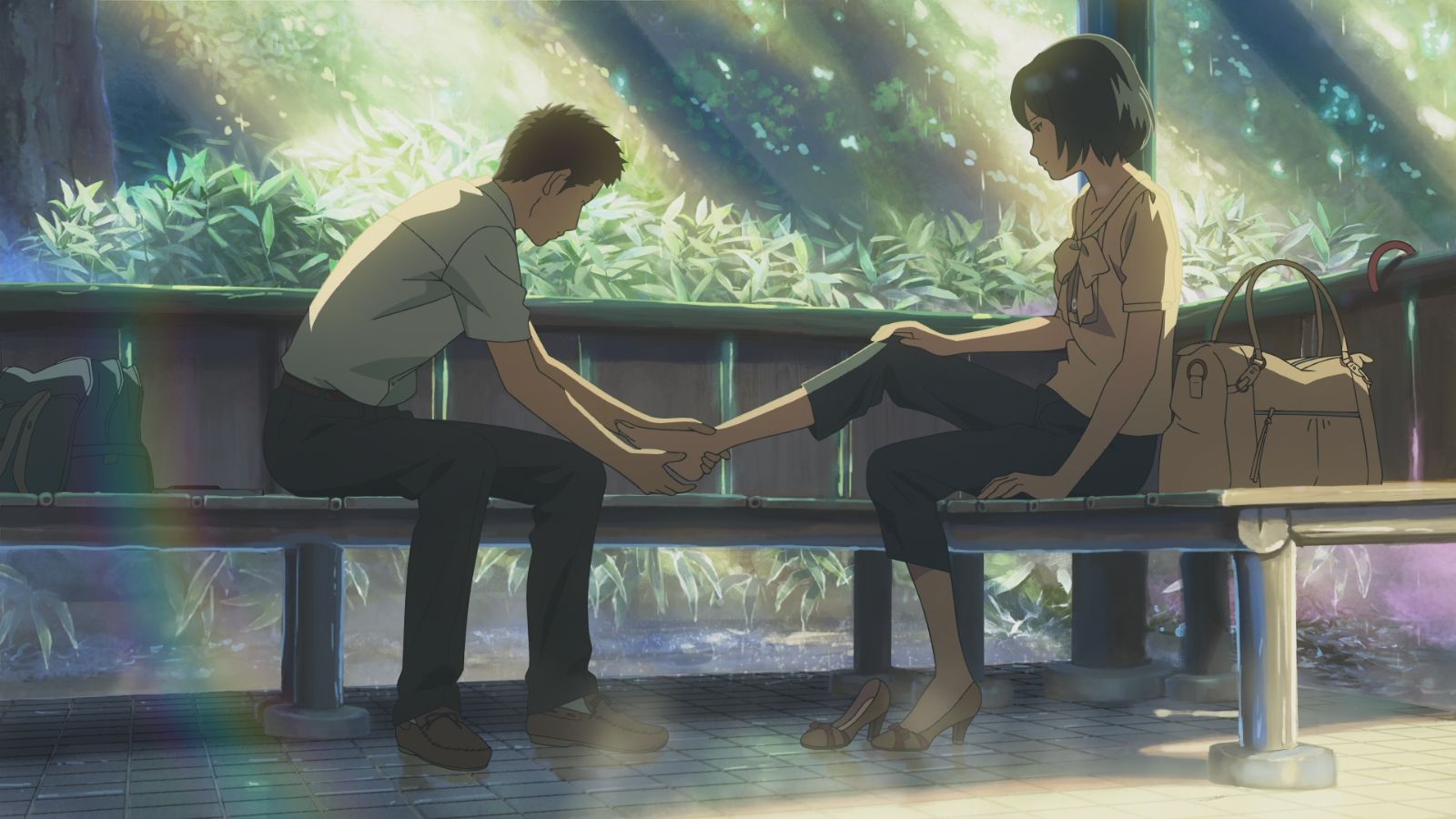
It’s a cliche to talk about the “new Miyazaki.” Japanese animators hate the whole argument, because it usually implies nothing new at all, just a magical cloning of his unique skillset, and his unique, timely rise in the movie market, and with supporters like Takahata and Suzuki. Ghibli was a three-man success story, very much of its time, and you can’t have a new Miyazaki without having a new Takahata and a new Suzuki. It also requires some awareness of what we mean when we ask for a “new Miyazaki”. Because Makoto Shinkai has a lot of Miyazaki’s heart, but none of his “family” appeal. Shinkai has cornered a market in films for people who grew up watching Miyazaki movies, but he doesn’t make movies for tomorrow’s families. I guess that’s the problem, there. It’s not about who the new Miyazaki is, it’s about who the new audience is. It’s now easier in Japan to buy diapers for old people than for kids. The kids’ market is shrinking, and that further reduces your chances of making blockbuster money on a family film.

Studio Ghibli actually tried to grow the new Miyazaki themselves, in several abortive attempts to co-opt big-name talents like Mamoru Hosoda. The fact that Hosoda didn’t fit in at an increasingly management-oriented Ghibli is actually a sign of his true potential, far more than staying there would have been!

They also brought in a dozen promising animation assistants and put them to work directly with Miyazaki and Takahata to foster a new generation of talents. That was called the Higashi-Koganei Sonjoku scheme, and its graduates stand a good chance of making waves over the next ten years. People like Masayuki Miyaji, for example, Masashi Okumura and Kenji Itoso.

But ironically, Miyazaki’s own shadow looms so large that it’s difficult for someone to turn up at Ghibli with a distinctive voice and not have it shouted down by risk-averse managers. Goro Miyazaki’s films often look like a committee trying to recreate his father’s successes, and that should come as a surprise to nobody. Ghibli was lightning in a bottle, and rumours about its move into legacy management are only logical — I think what people forget was just how darn lucky Disney was that Pixar could show up at the right moment and completely revitalise its output with fresh ideas and fresh technology, and real talents. Ghibli doesn’t have that. Ghibli doesn’t have a powerful competitor that it can embrace and merge with.

Jonathan Clements is the author of Anime: A History and Modern Japan: All That Matters.
Venture Capital

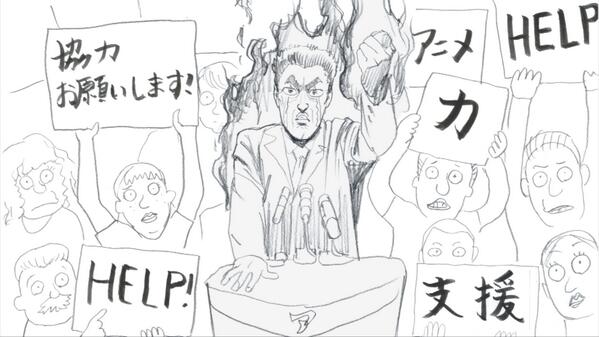
onegaishimasuHow would you feel if this issue of NEO came with a begging letter? Thanks for the £5, but everyone here is underpaid, so could you see your way to paying our editor’s gas bill, and the designer’s rent this month? Wouldn’t that feel like you were being charged twice? Wouldn’t you start to suspect that NEO was owned by a moustache-twirling dastard in a top hat, laughing over piles of money while his staff laboured like Dickensian urchins?

But that’s precisely the feeling I get when confronted with the start-up Animator Dorm project, recently crowd-funded by a group of industry professionals including Tatami Galaxy’s Naoyuki Asano and Gatchaman Crowds’ Shingo Yamashita.

$10,000 has made it possible for two animators to live in a… dorm? I guess it’s paid their rent for a year, thereby allowing them to work for peanuts at some studio, helping to perpetuate the poor conditions for which the industry is notorious. They pay their donors back with merchandise and artwork, and a vague promise about an artist outreach project.

God bless anime fandom, which depending on who you listen to, is either a braying, multi-headed hydra of self-interest, stealing the very stuff it professes to love, or a community of kind-hearted philanthropists, providing soup and blankets for starving artists. So good for you, if you threw in a few quid so that someone could continue to earn minimum wage and still have a roof over their head. If you were a “Bronze” supporter, you got an art book for $50, which is presumably what makes this more appealing than a similar scheme for, say, Primark employees.

As this column noted in NEO 105, there’s crowd-funding and then there’s funding. Put $10,000 into Production IG’s Kick Heart, and you won’t just get a postcard and a lucky gonk; they’ll fly you to Tokyo and make you a producer. At a certain level, the Anime Dorm project is merely a wired-world variant of a pop star selling you a CD and a T-shirt at his concert. These animators have some bonus art to sell, and spending the money on rent, just like everyone else. But is this unprecedented access to the talent, or is it just another example of the owners of anime passing on their poor business decisions to the consumer?

Jonathan Clements is the author of Anime: A History. This article first appeared in NEO 127, 2014.

The Prologue…

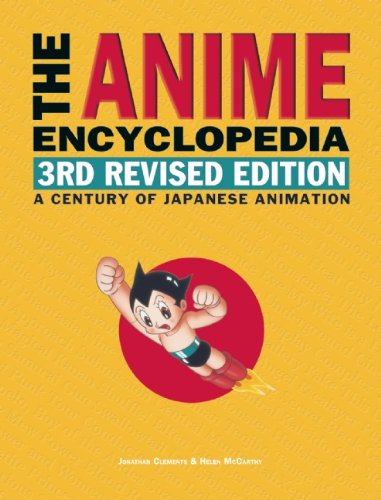
ae3Just a little taste from the introduction to the new edition of the Anime Encyclopedia, due out in December 2014. The passage excerpted outlines some of the changes and new additions to the book that has been keeping me busy, on and off, for the last two years. We’re currently on the fourth or fifth read-through in search of adjustments and typos, and sneaking in the last few cheeky last-minute entries.

1200 pages. Imagine.

Art for Art’s Sake

invernessHello, Ian. Hello, Stuart. I’m addressing you by name because you are the only people who have shown up. So my introduction to today’s screening of Patema Inverted doesn’t really require a microphone. I’ve flown up here from London. Andrew Partridge there has driven me for one hour from Glasgow to Perth, and then we sat on the train for two hours to Inverness. So that’s the two of us, and Kevin the projectionist, and the usher lady and She That Sells the Popcorn, all here for your benefit this sunny Sunday.

Since the British Film Institute is forking out a bucket of Lottery money per venue for this tour of the regions, you’re basically each the recipient of a Garden of Sinners DVD’s worth of subsidies. But that’s what Lottery money is for – taking risks with odd and niche-interest films, in search of unexpected spikes of interest and swells in consumer behaviour in a dozen places that would otherwise not see any anime at all. Yesterday we were in Bo’ness, a picturesque Scottish village decorated with ominous signs about how “Summer is Coming” and “Hail to Our Queen,” as if the locals were already erecting a Wicker Man to greet us. But 30 people showed up to see the film, and many were keen to ask questions about the Kickstarter for the DVD or the movies on show at this year’s Scotland Loves Anime.

The definition of success for mini-tours such as this is an order of magnitude away from packed London Film Festival screenings, and buckets of money. If profit were the sole motive, anime would never reach cinemas like this at all. It’s far more arty and bespoke, like M. Night Shyamalan’s plea in Lady in the Water that a work of art only has to have a single person love it for it to become worthwhile. Maybe we turned you into anime fans today. Maybe we turned you into festival-goers or Kickstarter angels, or NEO subscribers. Maybe we just carried on the conversation, putting Patema back into the public eye, and hence promoting it to people who hadn’t heard of it. Whatever the result, we keep doing this, because this is how you grow a market for anime, one person at a time… until they tell their friends.

(Scotland Loves Anime would like to point out that after Jonathan’s introduction in Inverness, the audience in the auditorium quadrupled in size, quadrupled! To nine people, including three Hungarians.)

Jonathan Clements is the author of Anime: A History. This article first appeared in NEO 126, 2014.

Podcast: A Dingo Stole My Anime

close_ghibliJeremy Graves is joined by Jerome Mazandarani, Andrew Hewson and Jonathan Clements in the 26th Manga UK podcast to discuss last week’s Studio Ghibli news, the San Diego Comic Con, upcoming releases, and your questions from Twitter and Facebook. Includes an inadvisable impersonation of Meryl Streep, commentary track shenanigans, and Jerome’s skateboarding stunts. You can download the podcast here.

01:00. Jerome encounters the Suicide Girls. Notes on the inadvisability of branding the name of your favourite anime show into your flesh.

03:00. The introduction of the swear jar, and its purposes.

04:00. The controversy over this week’s Studio Ghibli news. Is the studio shutting down? The background to Toshio Suzuki’s various plans to keep the flame alive at Studio Ghibli – Plan A, Plan B… Plan F, Plan G.

07:00. Some unconfirmed and entirely speculative things that you might find in Mamoru Hosoda’s One Piece movie. Other people who have worked with Studio Ghibli and never quite replaced Hayao Miyazaki.

10:00. Suspending production; the former Toei staffing policy and how Ghibli copied it. The prospect that what we are seeing now is the return of “Silver Ghibli”. Goro Miyazaki and the power of nepotism.

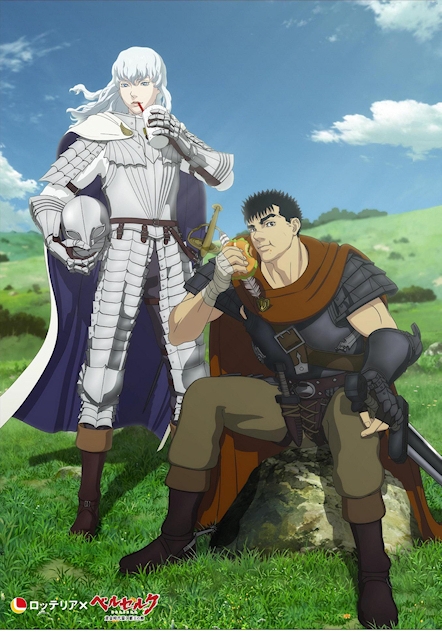
lotteria-114:30. The prospects of a Ghibli-Disney tie-up, which are remote indeed. The unlikely story of a Berserk happy meal. Ghibli and children’s literature, and what made Ghibli such a good studio.

22:00. Manchester MCM Comic Con. Manga Entertainment’s “Road Dogs”, or should we call them Manga Dingos? Forthcoming changes to admissions policy at the October Comic Con in London.

27:30. Announcements from the Manchester MCM Comic Con. Ghost in the Shell Arise, and the typographic misery of Production I.G’s name.

31:30. Bayonetta: Bloody Fate out on the 24th November.

34:00. Dragon Ball Z: Battle of Gods coming to DVD on 10th November. Some theatrical screenings coming up, including the chance to demand your own at Ourscreen.com. How does “crowd-sourcing for cinemas” work?

42:00. Harlock: Space Pirate, coming on DVD and Blu-ray in February 2015, but available now on Netflix. The 3D version will be included on the Blu-ray. More on Jerome’s obsession with steelbooks.

45:00. Jerome’s adventures at San Diego Comic Con. The Mondo poster company and their fantastic Ghost in the Shell poster, and the behind-the-scenes concern that make premiering it at San Diego such a cunning marketing decision.

51:00. Jerome’s Hulk sandwich and his karmic skateboarding injury.

54:00. How did you licence Jormungand when you’ve said before that it’s difficult to get Geneon shows?

55:30. Promising recent releases, not necessarily coming from Manga Entertainment.

63:30. Legal streaming sites such as Crunchyroll, Animax, and Wakanim.

69:30. Expanding into streaming services.

71:00. The cost and economics of releasing on Blu-ray. Do some people really not yet know that Blu-ray players will also play DVDs? Why hasn’t Blu-ray been as fast as the DVD to be taken up by consumers?

76:20. How much easier is it to licence anime in the days of email? Face-to-face meetings still required in the modern age.

81:00. The departure of Jerome to another meeting, leaving the lunatics in charge of the asylum.

82:00. Why aren’t there any more UK-based commentaries these days? All kinds of behind-the-scenes shenanigans making commentary tracks difficult and/or expensive.

91:30. No news on Black Butler or K-On Blu-rays. Well, no good news, anyway.

93:00. Changes in the prices of older products. The politics of bundling, and how that leads to crappy releases when the accountants demand you actually release the thing that you never actually wanted to buy in the first place.

98:00. With the world going eco, do you think that the time is right for a release of Marine Boy?

100:00. Some of the past Manga Entertainment releases that we have almost completely forgotten about, including the marvellously titled Red Hawk: Weapon of Death and the problematic Dark Myth.

105:00. And we’re out! Thank you for listening.

And we’re out. The Podcast is available to download now HERE, or find it and an archive of previous shows at our iTunes page. For a detailed contents listing of previous podcasts, check out our Podcasts page.

No, Really?

fromuponpoppyhillWord trickles along the anime industry grapevine of a rights manager at a film company in a European country that shall not be named, who decided to push for a discount on a Miyazaki film.

Lucinda (let’s call her Lucinda) dashed off an email to Studio Ghibli, noting that while their movies previously did good business on film and video, From Up On Poppy Hill was a bit different. It was more of a hard sell; it was more of a niche market, and well, truth be told, she wasn’t sure whether it was a film they could really get behind.

Ghibli’s one-word email reply made my day.

“Really?”

The minutes ticked by, then the hours, then the days. Eventually, after a tense week, a second email reached the studio from the hapless distributor, saying no more about it, and offering a tidy sum concomitant with previous guarantees for earlier films.

I have no idea if the story is true. I repeat it here because, well, my sources have no reason to make this stuff up. It’s certainly a tale that has caused some snickers among Japanese producers and European distributors alike. We can’t really blame Lucinda for trying it on – it’s her job, after all. Nor can we blame a major Japanese studio for raising a quizzical eyebrow at the chances that one of their films isn’t worthy of a place with all the others in the catalogue.

But I hear other whispers, too – that one-word, passive-aggressive responses are going to be significantly harder to get away with as time passes. Not one, but two Japanese studios you have heard of are seriously considering reorganising as “legacy” outfits peddling their past glories without taking future risks. The Astro Boy generation have now largely retired, and pension age is already approaching for the masterminds of the video-era boom. Yoshiaki Kawajiri, director of Ninja Scroll, will be 65 in 2016. Katsuhiro Otomo will be eligible for his bus pass in 2019. I predict a couple of big-name studios downsizing in the near future, to the extent they become filing cabinets of contracts.

Could Ghibli be one of them? They need to factor the long tail of Miyazaki money against the relative box-office floppiness of Takahata’s latest. Is Ghibli worth more as a legacy brand, in re-releases, merchandise and museum memories, or does it make financial sense to be running it into the ground post-Hayao Miyazaki with diminishing returns? People in meeting rooms are asking this question right now, before they are obliged to be considerably more courteous to the likes of Lucinda. No, really.

Jonathan Clements is the author of Anime: A History. This article first appeared in NEO 125, 2014.

Turning Point

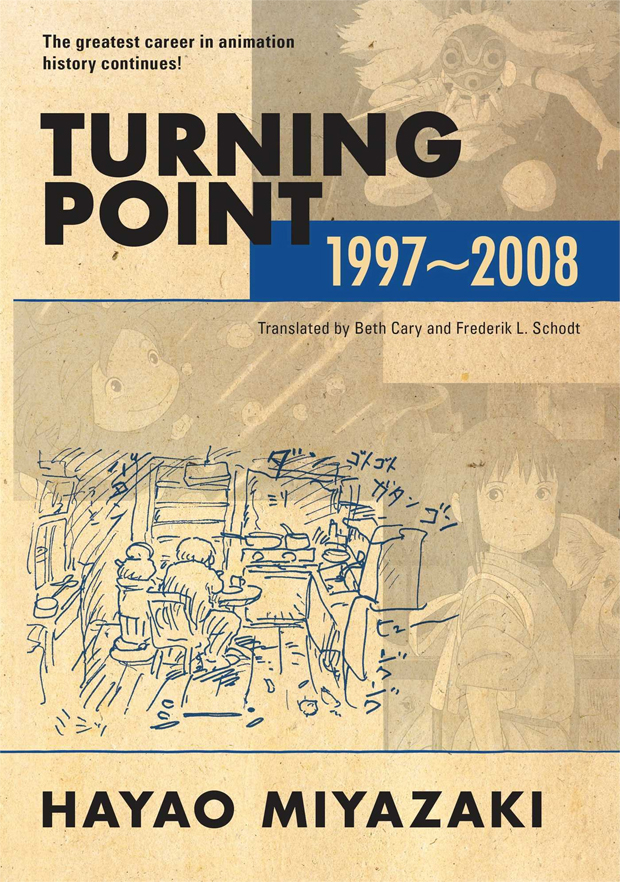
Turning-Point-1997-2008-postMy review of Hayao Miyazaki’s second volume of collected writings is up now on the Manga UK blog. Just a taste:

“It’s crucial, for a long-term understanding of Miyazaki’s legacy, to know just where his priorities were, and the answer is often surprising – more space is given in his afterword to the construction of the Studio Ghibli crèche than to his movies. Nor is this an idle comment – with typical eccentric insight, Miyazaki sees the Three Bears daycare centre not only as a place for his animators to leave their kids, but as a place for Studio Ghibli’s workers to observe their audience in its natural habitat. As ever, he cares passionately about the Child. His producer Toshio Suzuki might always have his eye on the ticket buyer and the bottom line, but Miyazaki remains touchingly involved with the world of the under-tens.”

Worldcon Programme

My programme has been more or less confirmed for the London Worldcon this August. One interview, two panels and a speech, details subject to change if my fellow panellists get a better offer or end up trapped on the Docklands Light Railway.

Since the last UK Worldcon in 2005, I’ve published a novel, fifteen non-fiction books and a translation from classical Chinese, provided the voice of a cartoon professor and sold two TV options. But the thing that is most pertinent to this year’s event is the book’s worth of material I’ve written on Chinese and Japanese science fiction, buried away within the Encyclopedia of Science Fiction, so that’s pretty much all I’m talking about.

mini-logoInterview with John Clute

Friday 15th August 15:00 – 16:30

Jonathan Clements interviews Guest of Honour John Clute. We’re like a double-act with two straight-men. I will prod the Clute and attempt to make it angry. Shouldn’t take long. Members of the audience can play sesquipedalian bingo as I attempt to get him to use words like “guyliner” and “tosswit.”

10013838_620906787987843_989544364_sEvolution of the SF Encyclopedia

Friday 18:00 – 19:00

The SFE is 35 this year, and is now in its third edition. This panel will discuss how the SFE came about, and how it has changed with the times. What are the processes that go into creating an encyclopedia, and what are the pitfalls? How has the transition to an online format shaped the third edition? And in what ways does its increasing internationalisation reflect transformations in the field at large? Graham Sleight (M), Jonathan Clements, John Clute, Neal Tringham, now with added David Langford.

e1shot2_large_verge_medium_landscapeFrom Page to (Small) Screen

Saturday 18:00 – 19:00

We’re used to thinking about adaptation in terms of feature films, but increasingly Western SF and fantasy novels and novel series — from True Blood to Game of Thrones, The Expanse to Jonathan Strange & Mr Norrell — are being adapted for TV. What are the challenges of this process? Do viewers expect a longer running time to mean a more faithful adaptation? Are there lessons to be learned from, or similarities with, series adaptations in other countries, such as the transition from manga to anime? (Or Western comics to screen, as in the case of The Walking Dead?) And what happens when a series develops a life of its own? Tanya Brown (M), Debbie Lynn Smith, Jonathan Clements, Mike Carey, Steve Saffel

milkycrisis-1The State of the Anime Industry

Sunday 12:00 – 13:30

In this talk, Jonathan Clements examines the boondoggles and delusions, booms and busts of Japan’s animation business as it thrashes around in search of a cure for piracy, an audience that will pay for stuff, and a foreign footprint bigger than some guy’s living room. Warning: contains charts, and possibly a little bit of exasperated swearing.


The Wu-Tang Scam?

wu-shaolinJust in case you’re not following the antics of RZA, Ghostface Killah, Methodman and their chums, the latest album from the rap group the Wu-Tang Clan is a real piece of work. Once Upon a Time in Shaolin is being released in a single copy, in a hand-carved silver and nickel box, currently stored in a vault somewhere outside Morocco. The album is going to go on a world tour, appearing at museums and art galleries where visitors will pay the kind of money they pay to see The Vikings at the British Museum, just to gaze upon it and hear it through headphones. And when the tour is done, a single lucky millionaire will win the bid to own the only copy of the album in the world.

As April Fool’s Day swung around this year, I toyed with the idea of suggesting that Hayao “Ol’ Dirty Bastard” Miyazaki was planning on releasing his next movie in a similar fashion. Except that in many ways this is already how the anime business is starting to work. The only way you’ll see the short film Mei & the Kittenbus is if you make a pilgrimage to the Studio Ghibli Museum, where, if you’ll lucky, you’ll catch it in the bespoke cinema.

Once Upon a Time in Shaolin is a brilliant piece of marketing, and a bold statement about the value of art. It is also a wild and crazy iteration of the debate over getting modern audiences to pay for creative works. It’s the “event” mentality of modern anime, favouring personal experiences and “holy land” sites of pilgrimage, crowd-sourcing with a crowd of one, if you will. If consumers can’t be trusted not to rip and steal, the Wu-Tang Clan are taking that chance away from them, turning their album’s release into a publicity-generating event of global momentum. And has anyone noticed, the Clan will now have the income from a tour, without actually having to go themselves?

Could there be scope for an anime release of such exclusivity that it tours the world in a single film print? Does fandom possess an eccentric millionaire who would, say, lure Miyazaki out of retirement to make one more feature…? Or would the whole exercise go horribly wrong, ripped and uploaded within days? If anime followed the WuTang model, would it be a triumph, or a disaster…?

Jonathan Clements is the author of Anime: A History (BFI, 2013). This article first appeared in NEO #124, 2014.