Statue of Limitations

Just a couple more years, and Bandai accountants might have thrown away all the relevant documentation, allowing two former employees to get away with deceptively simple crime. But someone got a surprise when checking over old invoices, leading at least one man to get caught cooking the books at the Japanese company most famous for Gundam.

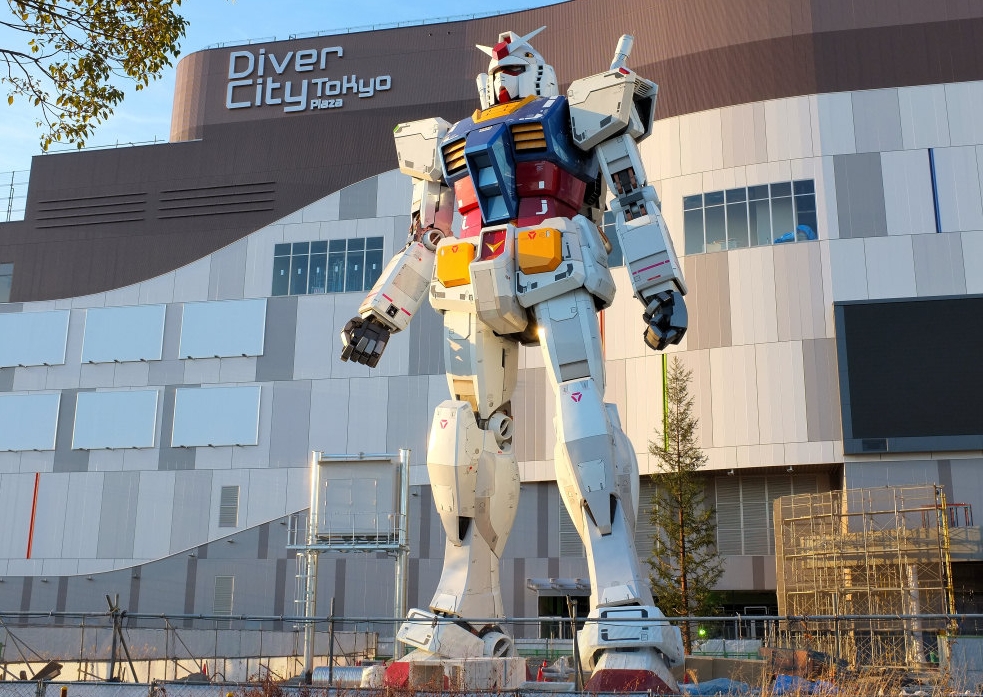
I say “at least one”, because so far among the accused, only Takashi Utazu (44) has pleaded guilty to the charges, which include talking up the costs of installing the giant Gundam statue in Odaiba in 2013, and pocketing the surplus. LED lighting, which should have cost 10 million yen, was billed to the company at 20 million, leaving Utazu and his alleged accomplice with almost £70,000 in pure profit. And that’s only one incident in a four-year scam, thought to have netted the embezzlers a total of 200 million yen (£1.4 million).

Because of the sheer size and volume of certain franchises, toy companies have to deal with sums an order of magnitude above what simple folk like you and I are used to. A few years ago, when the Japanese government was dickering about the expense of the much-mooted National Media Arts Centre, it was a Bandai staffer who put everybody in their place by pointing out that the sums under discussion cost no more than a single new theme-park ride. It’s very easy, said another, to spend a million dollars. He meant that when you’re dealing with numbers this big, the overheads of simply making enough toys for something to stand a chance of becoming a bestseller turn into phone-number sized entries on a spreadsheet. Bandai won’t miss a few thousand, right?

Well, wrong. Their bean-counters are super-powered, transforming maths robots, and the dating on these reports makes me think that someone flagged up something fishy, seemingly in projects connected to another employee – a man who is currently continuing to protest his innocence, even though he was fired in October 2017 over the audit findings. There’s a statute of limitations on financial reporting – in Japan as in the UK, companies aren’t obliged to hold on to records for longer than seven years. So the thieves might have got away with it, if it weren’t for those meddling accountants.

Jonathan Clements is the author of Anime: A History. This article first appeared in NEO #186, 2019.
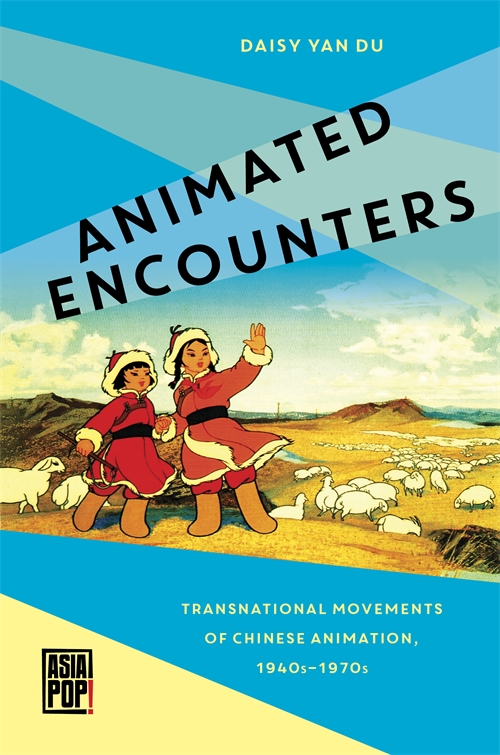
 

Animated Encounters

Over at the All the Anime blog, I review Daisy Yan Du’s new book about the inspiration and influences of Chinese animated films, which includes substantial detail on cross-pollination with Japan.

“Du’s concentration on Chinese animation in an international context is a rewarding account not only of films released, but of unexpected influences and projects that never happened. She regards the Wan brothers’ Princess Iron Fan (1943), for example, as’“far more influential in wartime Japan than in wartime China,’ but also reports that when Japanese animators came to Shanghai in 1988 looking for subcontractors on the Saiyuki TV anime, the Shanghai Animation Studio refused to work on it, because the Japanese version of the legend of the Monkey King deviated too far from acceptable norms.”

Top Men

At the end of Raiders of the Lost Ark, Indiana Jones was assured that his priceless, powerful archaeological find was being looked after by ‘Top Men’. But as the credits began to roll, we saw it nailed into a crate, dumped in a giant warehouse full of similar boxes, forgotten and abandoned. The image was Lucas and Spielberg’s homage to Orson Welles, a little piece of Citizen Kane recycled for a modern audience. But in Japan, Hiroshi Takashige asked himself: what was in all those other crates? And more importantly, who were these Top Men?

In collusion with artist Ryoji Minagawa, he decided that they were a secret, self-sustaining unit within the Pentagon, tasked with nabbing any weird and wonderful artefacts that come to light, many of which had been left behind by an ancient, highly-advanced civilisation. They began work on the comic project that would become Spriggan, only to find themselves influenced by real-world events.

They were writing at the time of the First Gulf War; a very difficult prospect for the Japanese. A nation, supposedly sworn to avoid violence and military aggression, was forced to sit on the sidelines and watch while the rest of the world got involved in a conflict about resources in the Middle East, the cradle of civilisation, resources that Japan itself needed as desperately as everyone else. It resulted in such tales as the desert robot combat anime Gasaraki, and in an interest, partly fuelled by The X Files, in presenting the Pentagon as the bad guy.

There is more than one agency searching for these artefacts. The Pentagon competes with the KGB, and both are in opposition to ARCAM, a global corporation that wants the artefacts for itself. Its crack, super-powered agents are spies-cum-archaeologists named after ancient Celtic temple guardians, the Spriggan.

Minagawa and Takashige initially wanted to feature an adult agent, but ended up selling their concept to an anthology magazine aimed at boys. Consequently, they moved their original lead into the background, and concentrated on his teenage nephew, Yu Ominae.

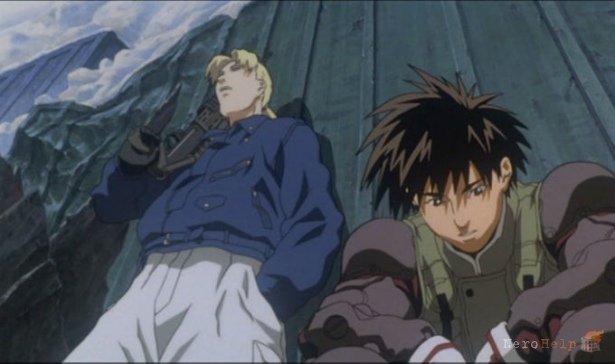
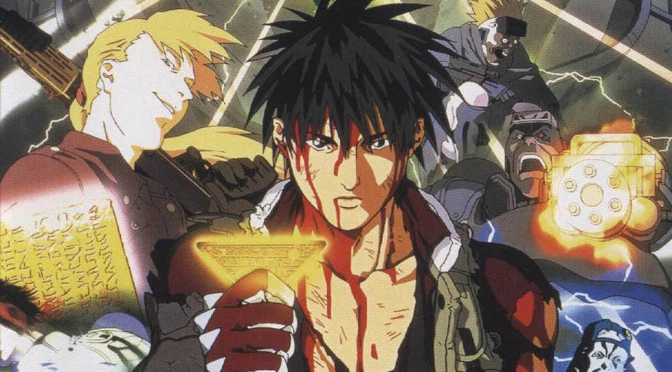
Rights for a movie adaptation were soon sold, and Spriggan went into production as an anime. The film-makers plumped for a script that emphasised the Indiana Jones parallels, chasing after a different Ark (Noah’s, in this case) at Mount Ararat, with cyborg Pentagon agents roughing it up with the ARCAM Spriggans in an action-packed thriller.

As Ominae, producers cast Shotaro Morikubo, better known in Japan as the movie-dub voice of Johnny Depp. Originally intended to go straight to video, the budget received a massive injection of cash, sufficient for a movie, when Katsuhiro Otomo announced he would be ‘involved.’ Akira creator Otomo was supposed to be working on his own project, the long-delayed Steam Boy, but fancied Spriggan as a kind of busman’s holiday. In fact, he is rumoured to have been the director in all but name; his fingerprints are all over Spriggan, in the design of the space-faring Noah’s Ark that the agents unearth, in the blue-skinned Pentagon child-telepath General MacDougall, and in the large amount of night-time shooting – an expensive luxury in animation that relies so heavily on light coming through the cels, but one that Otomo often enjoyed for the artistic hell of it. The credited director, Hirotsugu Kawasaki, has not had another movie to his name since, only emphasising the impression that Otomo’s more nebulous title of ‘General Superviser’ may have been adopted for contractual reasons. But for those in the know, there was no mistaking who the Top Man on the Spriggan production really was.

This article first appeared in the Judge Dredd Megazine #236, 2005, and was subsequently reprinted in Schoolgirl Milky Crisis: Adventures in the Anime and Manga Trade. A new adaptation of Spriggan has just been announced, forthcoming from Netflix.

Disappearing Anime…

December’s issue of Wired magazine included an article that stumbled across something that NEO readers have known for years – that online repositories for your favourite movies cannot be trusted. Brian Raftery’s article “Streaming isn’t Everything and Blu-rays are Here to Prove it” informs Wired’s hipster readership that the really cool kids are hunting down bespoke DVDs of their favourite films, because there really is no guarantee that some whim of international licensing will suddenly cause titles in online libraries to wink out of existence.

If, like me, you are lucky enough to live in a town with a well-curated second-hand video store, you may still be able to snatch up one of the obscurities. Good curation, however, also comes at a price. The nearest store to me is scrambling desperately to offload its DVDs so it can concentrate solely on Blu-rays.

There are all sorts of reasons why a film is no longer available. Often it is a trivial matter like music rights, when it is too expensive to remove a song, but also simply not worth the distributors’ while to pay for the rights to use it. The number of likely sales is outweighed by the cost of ticking all the right legal boxes, and this is a particular danger to anime, when many titles struggle to sell more than a couple of thousand copies.

Films fall in and out of libraries. Their ownership is tangled by changes in committee compositions, or corporate take-overs. It’s important to remember that just because you own a DVD, you don’t actually “own” the film on it, only the right to play it in your recorder. If your DVD stops working after a thousand plays, you are not entitled to a replacement; you’ll have to buy it again.

I find it ironic that even as the likes of Netflix throw buckets of money at new anime shows and fund remakes of Death Note and Cowboy Bebop, their very ubiquity and disruptive influences are making other shows harder to find. But on balance, we still have an easier time of it in the modern world. Streaming sites still offer immediate access to hundreds of anime, and may well introduce you to something you would never find in the video shop. And if you really must look for a solid, online stores can tell you in moments whether that’s actually possible…. And if not, cheekily offer you a Dutch or Polish version that’s almost as good and will probably play in your player. Some anime might fall between the cracks in the pavement, but at least online searching saves you wasting shoe leather tramping around the shops.

Jonathan Clements is the author of Anime: A History. This article first appeared in NEO #184, 2019.

Out of Tune

Music producer Akihiro Tomita has fired a warning shot at anime financers with a comment about the decline of the anime theme song. Speaking at an event in Shinjuku on 9th September, Tomita observed that Netflix’s habit of chopping off the credits was a binge-watcher’s dream, but diminished the relevance of the traditional 90-second opening and ending songs.

Their purpose has been a matter of debate for generations. They used to be handy announcements that your show was starting, reinforcing the ritual of appointment television. But producers fretted that a long theme song might lure trigger-happy channel-hoppers to see what was on the other side. This was particularly an issue in the 1990s American market, where viewers might sit through the theme song to, say, Friends, only to have to then endure another commercial break before the show began. Will & Grace saw its theme tune squashed and occasionally reduced to nothing but a musical sting if the action overran in in an episode. Frasier’s opening was just a few bars on a vibraphone – lasting just seven seconds. Anime themes, however, have remained notably long, turning into a veritable juke box of tie-ins and product placement.

Tomita’s comments quietly assert the bargaining power that Netflix is enjoying behind the scenes. The online behemoth’s ability to call the shots threatens the delicate balance of many an anime production committee, most of which feature a record company among investors. So they’ll chip in 10% of the budget, but they want their new pop idol singing the theme song. And the animators don’t mind, because 90 seconds off the top and tail of every episode means they only have to make those bits once, giving them a week off every season.

Since record companies are still substantial players in the Japanese market, they are liable to want their airtime some other way. Godzilla: Planet of Monsters, for example, on which Tomita was musical director, was made by Polygon Pictures, which is part-owned by King Records. If theme songs phase out, get ready for excuses for musical interludes elsewhere within anime shows, possibly even anime musicals that make watching the songs part of the action, and animators complaining that they have to work even harder to fill up the time. But I, for one, hope the old style of theme tune stays, because I still like that ritual quality. I might even sing along, occasionally with my own made-up lyrics. You should hear me do Evangelion. “Lots of robots / And people in misery / There’s a penguin but please don’t ask me what for…” [That’s enough – Ed.]

Jonathan Clements is the author of An Armchair Traveller’s History of Tokyo. This article first appeared in NEO #181, 2018.

Japan Station 03: Sacred Sailors

Over in Hawaii, I’m interviewed by Tony Vega for the Japan Station podcast about the incredible story of Japan’s first animated feature, Momotaro, Sacred Sailors (1943).

“In this episode we discuss the origins of Japanese animation and its fascinating history. We particularly focus on the making of Japan’s first feature-length animated film: Momotaro: Sacred Sailors (桃太郎 海の神兵, Momotarō: Umi no Shinpei). Clements talks about how this World War II era Navy funded propaganda film got made, the challenges faced by the film’s director Seo Mitsuyo, the influence of Western animation like Popeye and the 1941 Disney film Fantasia,and what people today can gain by watching this sometimes strange and often unsettling work.”

Fred Patten (1940-2018)

My obituary for anime’s First Fan in America, Fred Patten, is up now on the Anime Limited website.

‘Fred was soon scooped up by a Japanese company, Hiro Media, which hoped to off-load straight-to-video anime on the American market, although his earnest efforts to interest American fans were hampered by two issues. “Firstly,” he wrote, “they weren’t very good.”’

Scotland Loves Anime 2018

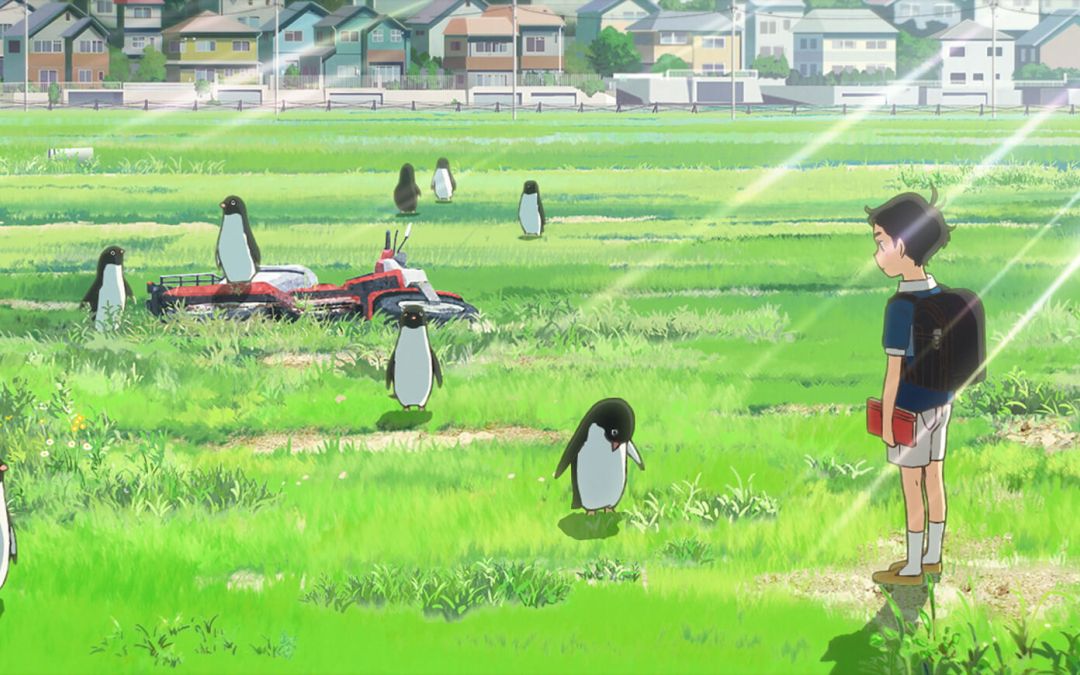
I’m back home from ten days of guest wrangling, crowd control, film-pushing and jury slapping at Scotland Loves Anime, which had a wonderful ninth year. As is becoming traditional, a round-up of the jury deliberations has been released as a podcast, in order to give the public an insight into the kind of arguments and positions involved in selecting a single winner. Jurors Roxy Simons, Kim Morrissy, Callum May and Almar Haflidason had to deal with the trade-off between immediate, gut reaction (which snagged the Audience Award for the weepy I Want to Eat Your Pancreas), versus a more objective, considered assessment (which left Penguin Highway with the Golden Partridge, controversially beating Mamoru Hosoda’s acclaimed Mirai).

Yet Another Corner

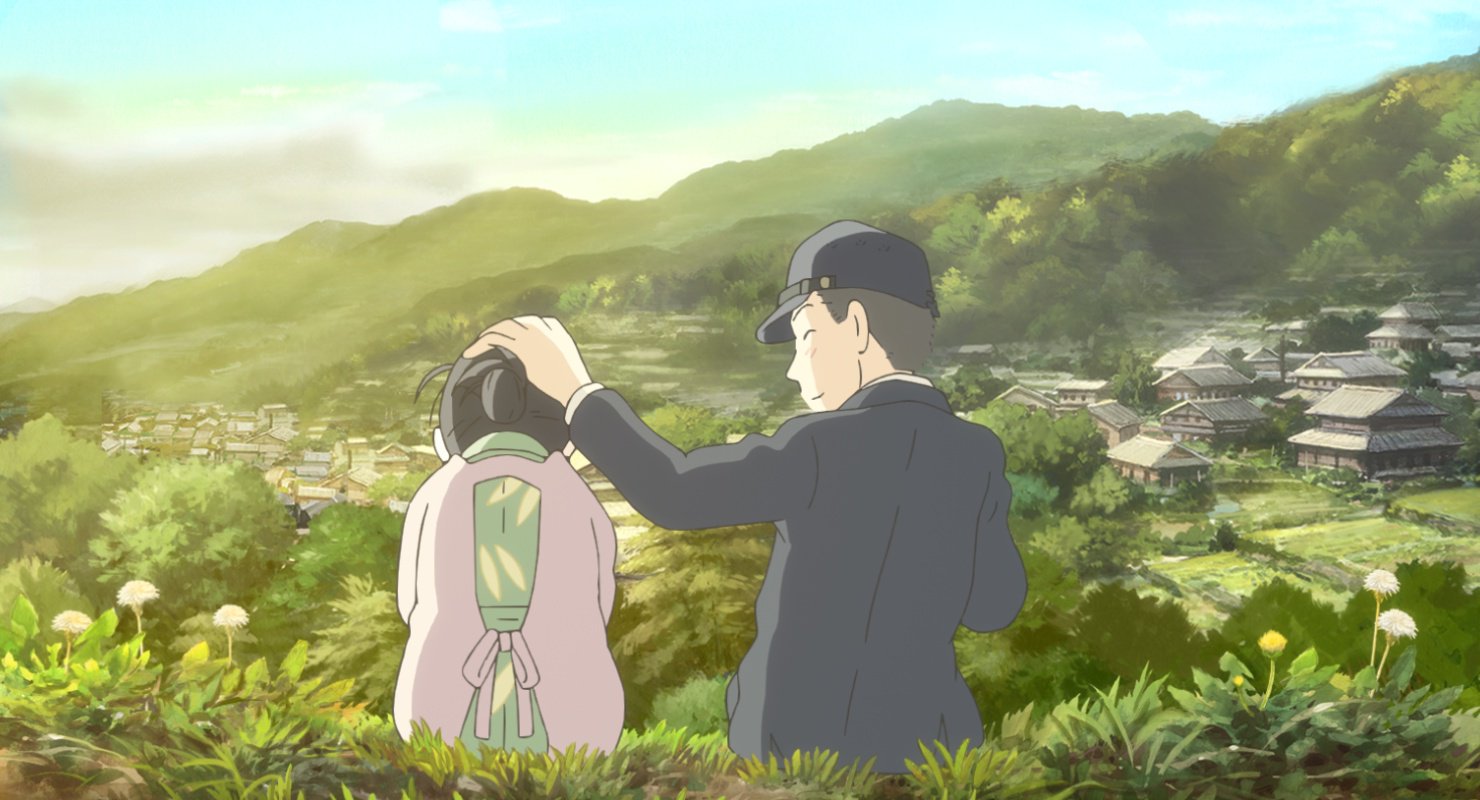
The director Sunao Katabuchi has just announced that he will be re-releasing his Hiroshima film In This Corner of the World with half an hour of bonus footage, interleaving other scenes from the original manga. I am rather surprised that everybody appears to be pleased about this, and not kvetching that they have already paid to see the film once, and now will have to pay to see it again, at a bum-numbing 159 minutes.

In This Corner is arguably a special case, since it was crowd-funded from the start, and its director might, presumably, genuinely have other bits he wants to tinker with. Art is never finished, as they say, only abandoned, and it’s easy to see why creatives given the chance to fiddle with their work will jump at the chance to improve it. One of anime’s worst-kept secrets, after all, is the number of releases that are buffed up after their hasty cinema release or TV broadcast, toshed up a little before anyone gets the chance to spot mistakes and fudges on home media.

But I’d like to register a possibly lone protest about the ongoing fetish for “director’s cuts” that, far from honing work of art a little bit closer to perfection, simply hang adornments on it in a cynical attempt to fleece customers of more money.

Culturally, there seems to be a fetish in Japan for making films as long as possible so that everyone feels that they are getting their money’s worth. I used to think this was a hold-over from the pre-video days when TV serials were re-cut for cinema release, whereby producers felt that if they couldn’t show you anything new, they could at least give you a long film. But such economies simply don’t work in the world of original anime, where every frame you see has to be painstakingly created from scratch. Whisper it, then: sometimes this is really counter-productive.

As a case in point, Cowboy Bebop: The Movie, for which the film-makers actually boasted in their publicity that they had taken a taut, lean 90-minute thriller and bloated it with half an hour or unnecessary filler. Sometimes less, really is more, and I am baffled by creatives’ willingness to test the patience of their audience. Sometimes I wonder if some film-makers are really making films for human beings at all, and instead have an eye on appeasing a robot at a streaming service, that only counts minutes accessed, rather than stories told.

Jonathan Clements is the author of Anime: A History. This article first appeared in NEO #180, 2018.

Jesus is My Flatmate

Morning Two’s greatest success story was a manga that began running in its very first issue, Hikaru Nakamura’s Saint Young Men. At one level, it is a slice-of-life comedy about two with-it hipsters sharing a Tokyo apartment. They squabble over vegetarian recipes; they experiment with a boutique T-shirt business, and they go shopping for noodles at the corner store. But Nakamura’s high concept has incredible bite, because these young men are really Buddha and Jesus, roughing it in an earthbound vacation.

In this month’s chapter, they argue about the washing up, and then go on a trip to Ikea, because even God-made-flesh needs a working hob and an extractor fan. Buddha enthuses about how idyllic life must be for all those Viking gods and Valkyries in their beige Swedish wonder-kitchens. Jesus goes a bit crazy in Home Furnishings, and then realises he has to carry his purchases home.

Nakamura’s storyline injects a much-needed humanity and humour into figures usually viewed only through translations of ancient books. Jesus is a resolutely happy person, who can laugh at the fact that schoolgirls mistake him for Johnny Depp. He runs a blog about TV drama, and frets about how to keep his crown of thorns dry in the shower. Buddha likes reading manga (particularly Osamu Tezuka’s famous Life of Buddha), and has an irritating ability to somehow get infinite lives whenever he plays a video game.

This could have all too easily gone horribly wrong. Nakamura is well aware of this, and has been reluctant to allow her manga to receive an English-language edition, because she is afraid of the likely knee-jerk reaction from the Christian Right in the USA. This doesn’t appear to have stopped it getting translated in Italy (the home of the Pope), or in Spain (the home of the Spanish Inquisition – nobody was expecting that). This is a sad state of affairs, because Saint Young Men is a truly charming story, rich with humour and compassion, and oddly respectful of its protagonists. Its satire is not directed so much at them, but at the modern world in which they find themselves, repeatedly confronting 21st century customs and attitudes with the nature of old-world religious figures.

If you think that gay marriage causes hurricanes, that tattoos will send you to Hell, and that a prawn cocktail is forbidden, then you are never going to like Saint Young Men. If you believe that “reverence” means never laughing at absurdity or imagining “what would Jesus do”, then this manga is certainly irreverent, and that makes it literally blasphemous. Nakamura is an equal opportunities satirist, and throws in a bunch of other gods and goddesses – this is typically Japanese eclecticism, but unlikely to play well with anyone who refuses to accept that others believe differently.

Jonathan Clements is the author of Anime: A History. This article first appeared in NEO #144, 2015, and is reprinted now because of the Saint Young Men live-action TV show, currently creating waves online.