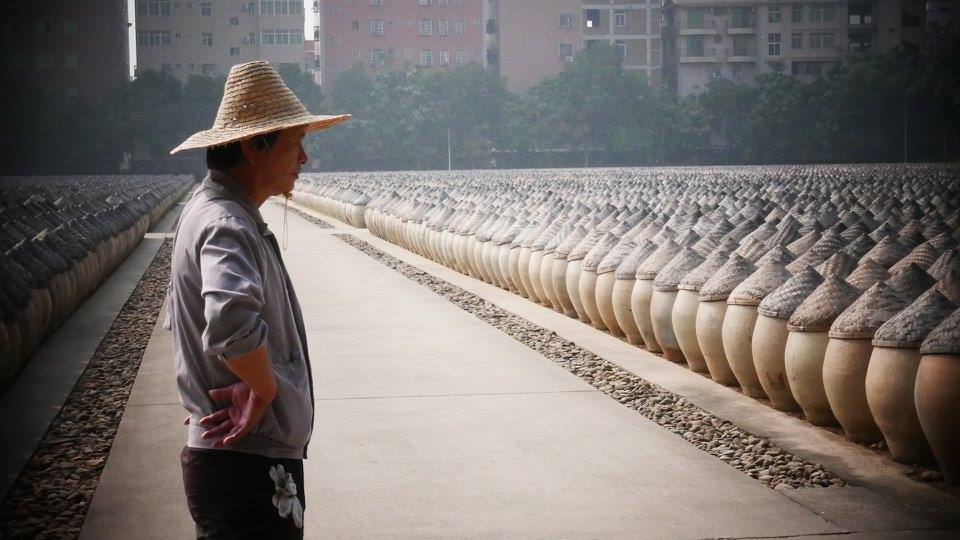
Liu Tianjie at the Gulong Sauce Factory. Photo by Clarissa Zhang for Route Awakening (Nat Geo).
The Gulong Soy Sauce Factory in Xiamen uses methods that would not have been all that out of place two thousand years ago. The only difference is the scale. Soybeans are steamed and mixed in with wheat flour, and the all-purpose qu fermentation starter, then wheeled in to the drying rooms on trolleys the size of hospital gurneys.
Clad in his uniform grey boiler suit, fetching white wellies and a wide-brimmed straw hat, manager Liu Tuanjie walks me through the process, as his gloved assistants hand-mix piles upon piles of still-warm beans on gurney trays.
“This used to be a family thing,” he says. “Every household would have their own particular recipe, and their own home-grown qu. It was only over time that the process grew larger and larger in scale, until it was industrialised like this.”
The warm beans are left to dry-ferment in a hot room for three days, until they start to go a dodgy-looking yellow, at which point they are whisked away and tipped into child-sized jars of salt water out in the baking sun.
This, I realise, is why Mr Liu is wearing his straw hat, as we march along row after row of the large jars, each topped by an oversize straw hat of its own. They are sitting on open ground, stretching far into the distance – there are 60,000 of them, in an area the size of several football pitches. Each day, as the cool night air recedes, Liu and his assistants dart down the rows, lifting off the straw covers in sets of four, so the brine solution and its bean-mix contents get the maximum amount of sunshine.
I struggle to keep up with him on the next row over. My own hastily issued straw hat, which comes complete with a flowery brim to put me in my place, fails to keep the bright sun from my eyes, and my fingers have trouble gripping the rasping fibres of the heavy straw covers. He is already several jars ahead of me, flipping the covers off like they are bottle caps.
“We take the beans, we cook them and roll them in flour and yeast, we let them dry-ferment for a bit, and then we put them out here for a year. The sun rarely changes. It’s always hot, and that slowly bakes them down into soy sauce.”
“It takes a year,” he continues. “In each season, spring, summer, autumn, winter, we adjust the conditions.” So – covers off for longer in the slightly colder months, on for longer when it’s warmer. But with Xiamen being warm all year around conditions for brewing the soy sauce are not as fiddly as they might be elsewhere. “Each day, we have to optimise the daylight – lift the lids, let the light in… see how the fermentation’s coming along.”
“You couldn’t do this in Beijing,” he scoffs, whipping away another cover with practised ease. “The weather changes too much.”
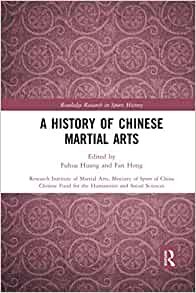
“This is a fascinating book, not merely for the pointers it offers to the historian for new paths of enquiry into martial arts history, but for the glimpse it allows of the politicised obfuscations, fudges, and compromises that are sadly all too common in some corners of Chinese academia.”
Over at the Martial History Team blog, I review the new translation of Huang Fuhua and Hong Fan’s History of Chinese Martial Arts.
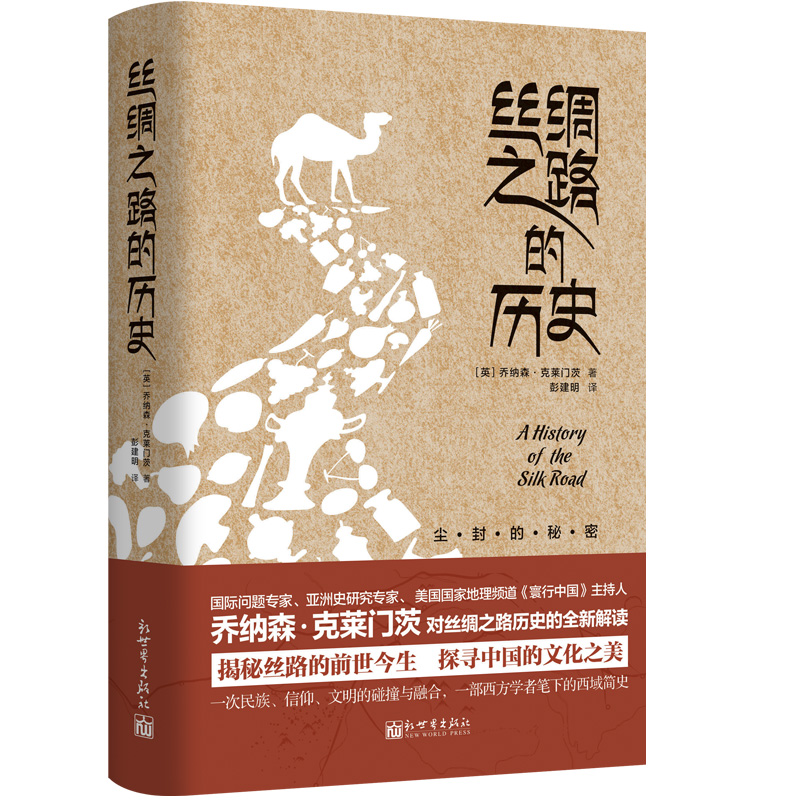
I am absolutely charmed by the sight of the hardcover Chinese edition of my History of the Silk Road, coming out very soon from New World Press in Beijing.
“The Silk Road is a route from the edges of the European world to the central plains of China. For thousands of years, its history has been a traveller’s history, of brief encounters in desert towns, snowbound passes and nameless forts. It was the conduit that first brought Buddhism, Christianity and Islam into China, and the site of much of the ‘Great Game’ between Victorian empires. Jonathan Clements guides the reader through the trackless wastes of the Taklamakan Desert, its black whirlwinds and dead lakes, its shimmering mirages, lost cities and mysterious mummies, but also its iconic statues and memorable modern pop songs. He explains the truth behind odd tales of horses that sweat blood, defaced statues and missing frescoes, and Marco Polo’s stories of black gold that seeps from the earth.”
I think Tommi the mixmaster needs precisely one button on his mega-console to record me reading out a book, but here we are anyway, in the studio to lay down the audio for The Emperor’s Feast: A History of China in Twelve Meals, available in print, Kindle and audiobook next month at Chinese new year. Managed to get to the end of the Tang dynasty in our first day. Aiming to reach the end of the Ming dynasty by close of business on Thursday.
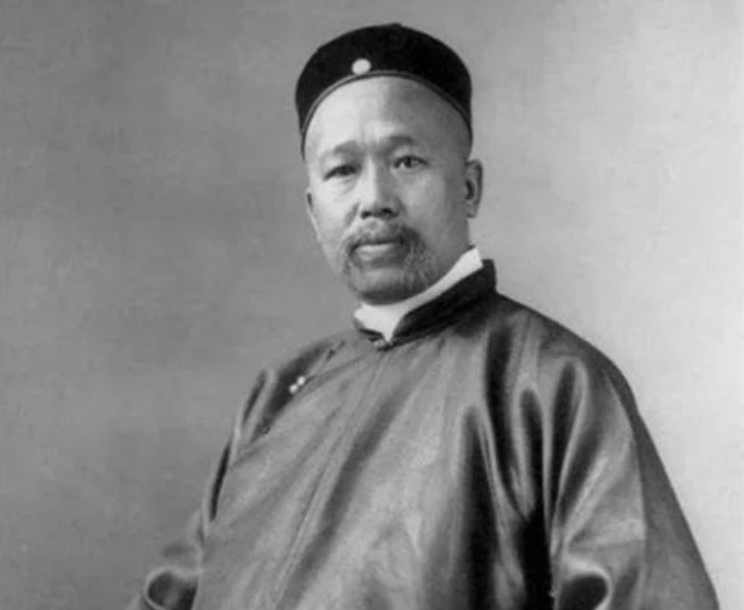
“He remains an immensely influential but highly problematic thinker, with some ideas, such as the abolition of private property, that helped inform some of the strategies of the Communist Party, but others, such as a deep interest in Eugenics, that impart a shadow of sinister Social Darwinism to his starry-eyed pronouncements of global unity: a paradise that requires the destruction of all diversity.”
“Among the glimpses Kang offered of his future world, he foresaw liquidized food, flying houses, high-speed trains, dirigibles and self-driving cars, air conditioning and central heating. Kang’s utopia comes with daily medical check-ups, in a world in which doctors are more highly respected than soldiers. At the culmination of the ‘Great Concord,’ Kang hoped for a further uplift, in which a sufficiently enlightened humanity, lifespans already extended into centuries by medical care and diet, might seek immortality and travel through astral projection.”
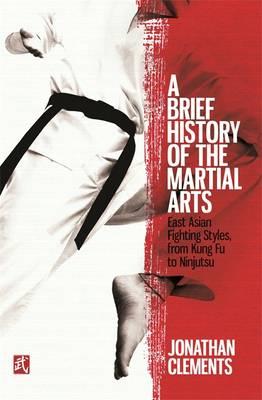
“If I had to pick a single general martial arts history book in English, I would recommend A Brief History of the Martial Arts by Dr. Jonathan Clements.” Over at the Martial History Team blog, my book gets a nod in their “Best General Martial Arts Histories in English” category.
“This is the book I recommend if you want a single volume on martial arts history based on sound evidence and sourced research,” wrote Richard Bejtlich in his review of the book last month. “I highlighted so many sentences in my Kindle edition that I ran over Amazon’s limit! …it’s an absolute steal and would make a great gift for any martial artist.”
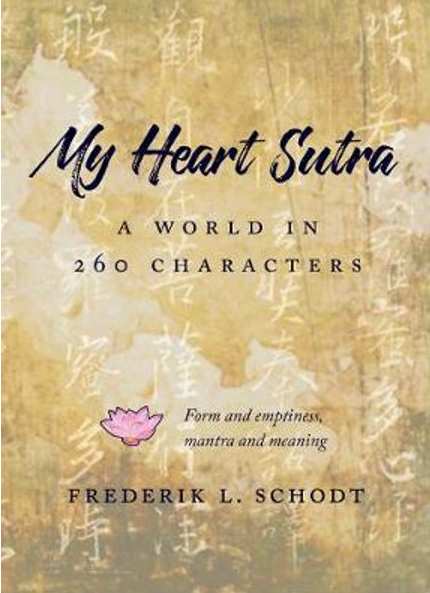
“This is not merely a book about the Heart Sutra. It’s about the stories that grew up around it, its journey through human civilisation like a self-replicating meme, a scrap of wisdom whispering in temples, shopping malls and movies. It includes the tale of Xuanzang, the monk who ducked out of 7th-century China on an impossibly long journey through the desert and over the mountains in search of Buddhist scriptures. It’s the story of the story about Xuanzang, not merely the historical reality of his life in the Chinese capital translating his hoard of sacred texts, but of the novel written about him by Wu Cheng-en.”
Over at All the Anime, I review Frederik L. Schodt’s latest book, which starts with a car crash and ends with Buddhist robots and John Lennon.
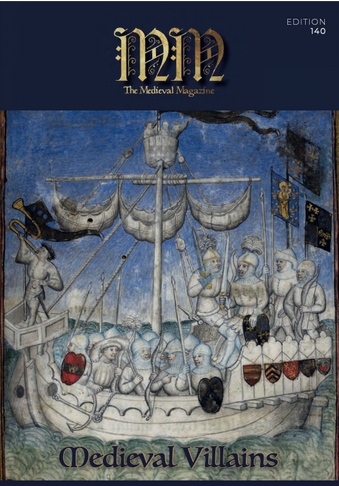
Issue #140 of The Medieval Magazine includes an extensive interview with me about the life and times of Empress Wu, an ideal choice for a “Villains” special… or is she…?
“If we de-sex the story for a moment, what have we got? A leader without a mandate is desperately trying to hang onto power, while millionaires behind the scenes try to exert their influence and stay in charge. But the Tang dynasty was incredibly fragile. It was only founded six years before Wu was born, and Taizong had to stab his way to the throne-room. Gaozong suffered a terrible attack in 660, perhaps a stroke or some form of multiple sclerosis, and Wu (still in her thirties) became his ‘interpreter’ for the next twenty years, telling the court what Gaozong was mumbling to her.”
China’s success story at lifting people out of poverty presents absolutely boggling figures. Between 1981 and 2004, the number of people in China below the poverty line fell by five hundred million. Key counties added three million hectares of new farmland, and rural phone connectivity (a vital issue in integrating communities), increased from 52.6 to 91.2%. In fact, China became the first nation on the planet to meet the United Nations Millennium Development Goal of halving its local poverty rate.
But there’s local and then there’s local. As reported in Kun Yan’s book, Poverty Alleviation in China, China’s own statistics bureau reported some odd data that didn’t play along with the general upward curve. Despite all efforts at improvement, there were parts of the country that actually got worse off. In “the western regions” – a term that carries with it a certain set of unintended historical assumptions, poverty increased from 61 to 66% in the first decade of the 21st century. Specifically, poverty was on the rise in the eight Chinese provinces that had the most ethnic minorities, particularly Guizhou, Yunnan and Gansu.
The policy wonks of the People’s Republic aren’t idiots – they know that a huge chunk of this is born from the lack of a level playing field. True enough, there have been some Party think-tanks that have advised wiping the slate clean, deleting the “racial” box from people’s ID cards, and declaring that everybody is just “Chinese” now. But such a move doesn’t dispel huge issues in inequality of opportunity, many of which pre-date the People’s Republic itself. Hill tribes like the Kam and Yi live in inhospitable terrain because they were forced there centuries ago. Some even struggle to speak standard Mandarin, which only the younger generations can even read. You won’t magically make them rich by telling them they’re not “minorities” any more.
There have been attempts to positively discriminate in favour of China’s 55 ethnic minorities. I have heard several Han-majority urban undergraduates expressing their annoyance at the “easy ride” that some minorities get with massaged exam grades. That’s how they see it, of course – but I’ve also encountered minority students whose first ever sight of a train station was the day they travelled 25 hours, to their first sighting of a city, to begin their studies; including one colleague of mine whose parents sold their last geese to pay his fare. For such people, what Pierre Bourdieu calls the habitus required to fit into a college environment must be almost insurmountable. Which is why it should come as no surprise when Yan reports her most shocking statistic – that one of the causes of modern Chinese poverty is the cost of education itself, with some families literally driven back into penury by the expense of pinning all their hopes on whichever one of their kids looks Most Likely to Succeed.
A large part of her book deals with the scrum of early 21st century theorists who have piled into to the lucrative field of talking about all this. In the case of the book under review, for example, a cover price of more than £85 means a poverty-stricken family in Inner Mongolia, saving half their annual household income, would take sixteen years to afford a copy. There’s Zhou (2009) who has a five-point plan, and Zhao (2006) who has a six-point plan, and Li (2007) who thinks land reform is the answer, and many more. All have their own peccadillos and strength, largely based on the precise kind of place where they have been conducting their fieldwork. Because, of course, in a country of 1.4 billion people there cannot possibly be a single solution that fits all.
Yan outlines the basic models of poverty relief that have achieved the greatest success in China. These include financial aid (giving your man the money for a fishing rod); microfinance (lending him the money for a fishing rod); industrial development (making sure there are fish in the lake); education (teaching him a better way to fish); science and technology (giving him a job at a fish farm); and systemisation (involving his whole village in a fishing scheme, and making sure they have electrification for freezers and roads for trucks to sell the surplus on). Two models are the ones that seem the most controversial to outsiders: migration (moving him to a lake, even if it’s hundreds of miles away), and the final one, which tellingly seems to lack a Latinate, posh-sounding English translation: “relief for work”.
“Relief for work” gives “unskilled labourers short-term employment opportunities.” It’s here, one suspects, that we see the origins of the draconian schemes that have led the overseas media to start using “poverty alleviation” not as an earnest international desire to lift people out of dire straits, but as a pejorative term – taking your man out of his home and putting him to work in a fishing-rod factory in the middle of the desert, whether he likes it or not. But now he’s earning £10 a day, and he isn’t “poor” any more.
She also discusses “village-wise” advancement, a rather traditional call-back to the specialist communities of the early modern Chinese economy, in which a whole community will agree on a point that they can all focus on and do really well. I believe I have seen some of these up close, in the unexpected world of tourism, where remote communities rebrand themselves as little cultural time capsules, preserving local traditions and becoming living museums or glorified tribal theme parks – the video store tucked away in an alley, while the main street focuses on traditional arts and crafts, and re-enactments of festivals. Tourist dollars, famously, are spent three times – eat in the local restaurant, and you aren’t just paying the owners; you are also paying the local suppliers who supply them, and whatever they decide to spend their wages on locally. The drawback here, of course, is that not every desert village can be a Silk Road experience, and not every desert villager wants to be a belly dancer or a grape tramper.
Alleviating poverty in rural areas isn’t just about simple charity or helping people earn enough money to become tax-payers and net contributors. It’s about reducing public order and infrastructure issues in China’s cities, which otherwise get crowded out with hordes of illegal migrant labourers, coming to seek their fortunes. Huge initiatives like the “Belt and Road” don’t merely create opportunities in remote cities like Urumqi, they help keep the people of Urumqi from being tempted to migrate to, say, Shanghai.
Chi Fulin, who readers of my books on China will know I regard as a persuasive and interesting thinker on China’s future, is quoted here on the changing nature of “poverty”. Just as the poverty line is adjusted ever upwards to reflect inflation, the issues faced, and hence the remedies required, are themselves constantly changing. Back in the past, he writes, the big issue was lack of basic living conditions. Today, with this issue resolved for millions of Chinese, they now face the next hurdle – overcoming inadequate public services. He doesn’t quite go so far as to say that adequate public services should be a “human right” – but he certainly advises the state to consider that equality of opportunity comes with schooling, medical care, bus services and power grids.
Yan’s book is part of a “Research Series on the Chinese Dream” and hence comes couched in the carefully worded optimism of Party planning. As I have found out to my cost on occasion, the slightest whiff of criticism, even constructive, can lead to ructions – so she is careful to only analyse those targets that we might call historically safe. She discusses a history of “Poverty Alleviation with Chinese Characteristics”, talking through the changes in the nature of both poverty and its relief over the decades since 1978 – it would, presumably, be inadvisable for her to grapple in any meaningful way with the colossal upheavals preceding that date, not the least because it would double the size of the book. By the 1990s, state initiatives are concentrating on the basic requirements of “food and clothing” for impoverished regions. She provides solid statistics and a narrative of the changing face of the phenomenon, and by the 2000s, she is dealing with new issues, such as the precarious knife-edge of reporting a “success” – up to 30% of those people who are reported as being lifted out of poverty might fall back into it the following year. One of the biggest threats, she observes four years ahead of COVID-19, is “natural disasters”, which can play havoc with schemes that assume the infrastructures will remain stable.
Yan shrewdly concentrates some of her criticism into a comparative chapter that investigates the effects of similar schemes in other countries – although it’s rather obvious here when she is happy to deal with, say, United States schemes in the early 20th century, long before the magical 1978 cut-off point for her home study. She critiques inadequate fiscal decentralisation policies in Vietnam, and low returns on investments in Ghana, and hopes the Chinese can learn from such stories before they need to be pointed out to them at home. However, she does point out several areas of potential failure within the Chinese system, as well as some structural considerations that will have to be addressed before the state can achieve all its goals.
Her final chapter outlines her own suggestions for policy reforms, all of which seem smart and well-argued – county-level admin, in order to ensure that local solutions are locally relevant; diversification of remedies, so that we don’t end up with nothing but guys who can fish, in a world where nobody wants any more fish. She is a flag-waver for the Mexican healthcare system, which favours the poor in a way that the Chinese system is not currently designed to do. There’s a wish-list of investments, although it’s easy to say “more money for everything” – her contribution is far more relevant to the ways in which she thinks the money should be spent.
Tucked away in the back of the book are ten case studies of poverty alleviation programmes all over China. This includes throwing money at Yunnan; a training programme in Chongqing designed to give unskilled labourers a skill to sell; a “village-wise” scheme in Gansu that utilised unglamorous but effective measures like simply building a road to the village; training schemes in Guizhou and Shandong designed to make better farmers of all the locals; targeted loans in Shaanxi, and a dairy farm start-up in Hebei.
A chapter on statistical models makes Yan’s personal case, that far too much analysis of the problem is made in trite analogies like “teach a man to fish”, whereas she has some eye-crossing equations that she thinks will make a truly quantitative analysis possible. While I would not dare to disagree with a statistician plotting in her area of expertise, I would point out that at the sharp end of these projections and policies are real human beings, and discussion of their quality of life, both before and after intervention, is surely also a crucial matter, just as much as their contribution to the overall “China Dream.”
Russian “New Year” in 1928 was one more handy excuse for a piss-up for the fun-loving foreigners of Shanghai’s International Settlement. As the Orthodox church still insisted on using the Julian calendar, a Russian New Year was a fortnight behind everybody else’s – a brilliant reason to dress up, go out and ring it all in again at the Kavkaz restaurant, complete with Georgian nibbles and a “gypsy” violinist.
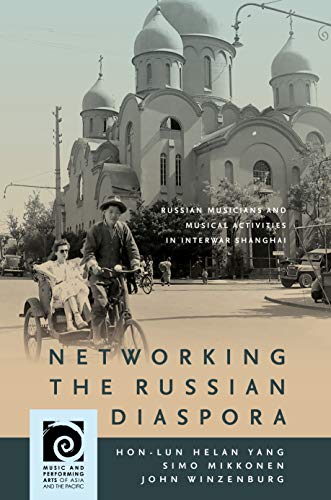
It’s here that authors Hon-lun Helan Yang, Simo Mikkonen and John Winzenburg press pause on a riotous party night, zooming in on the music, and the musicians – what was played and what was heard, and how it affected the lives of those all around. Just published by the University of Hawaii Press, Networking the Russian Diaspora: Russian Musicians and Musical Activities in Interwar Shanghai peels back the curtain on a whole lost world of émigrés in China – not merely the sounds of the city in its clubs and concerts, but of their long-term influence on the Chinese.
The Russians started arriving in earnest after the Far Eastern Republic, the last stand of the Whites in the Revolution, fell to the Bolsheviks in 1922. Initially they flocked to Harbin, the “Moscow of the East”, but as Japanese invasion loomed in Manchuria, anyone with any sense headed south. By the mid-1930s, there were 30,000 Russians in Shanghai, a number soon to be boosted by 18,000 Central European Jews – as the authors note, even republican Russians often had a rather imperial attitude towards the former vassals of the Tsar, thinking of aspects of Polish or Czech culture, or indeed Romani music as also somehow “theirs.”
Every now and then, you’ll find the Russians of the Far East confined to asides and footnotes, but dropped from most accounts that have eyes only for the Asian-ness of Asian history. There were the dashing Mukden Lancers, an all-Russian cavalry squadron, working for a Manchurian warlord; Manchu matrons with blue-eyed slaves, and former duchesses working as “taxi-dancers” in Shanghai clubs. There were the Jewish emigrés who founded cake-shops and patisseries (a stop at the cake shop is always a surprise for people I take on my personal tour of London’s Chinatown, because nobody expects a diversion through the history of Jewish bakers). Russians even sneak into the history of anime in the 1940s, when Tadahito Mochinaga, a Japanese exile working in China, set off to Harbin like a pilgrim on a magic quest, hoping to obtain a hair from a red-haired girl to use in his home-made hygrometer – apparently, Asian hair threw off the calibration.
In Shanghai, they were often split between the International Settlement and the French Concession, the French having decided to have their own special area apart from everyone else’s, and the Russian upper-classes being predisposed to use French language in their daily life. In fact, many of the early Russian arrivals in Shanghai, no matter how poor they were at the time, had usually come from money – which meant that they were often impoverished but well-educated, and many of them could play musical instruments.
“Many of these people,” write the authors, “simply vanished sometime after the late 1940s,” repatriated to the Soviet Union, or fleeing ever onwards, to form new émigré communities on the US west coast or in Australia – a topic addressed in Antonia Finnane’s Far From Where? Some ended up in Hong Kong – there is a heart-breaking cameo, in Martin Booth’s 1950s memoir Gweilo, of the “Queen of Kowloon”, a senile old white woman in rags, who occasionally lets slip through a drug-addled haze that she was once a lady of the Russian court. She mistakes the young Booth for a long-dead crown prince, and pursues him through the streets yelling: “Alexei! Alexei! Why did you leave? Where did you go…?”
But I digress. The authors are interested in the way that music knitted the community of Russian émigrés together in Shanghai, as a means of entertainment, but also cultural education, keeping elements of their native culture alive in their children and their social life. Sometimes this took odd forms, like KhLAM (“rubbish”), the bohemian collective who would jam on Wednesdays, and hence called their club Wednesday.
The authors dig into the archives of local newspapers to dredge up long-gone concerts of Tchaikovsky and Rimsky-Korsakov, multiple revivals of the opera Boris Godunov (which is, you may recall, about an Asian man who conquers a European territory), performances by Russian choirs and happenings set up to promote new business ventures. They note the palpable difference between musical choices – the Russian musicians play different tunes for their own amusement than the ones they play for foreigners at recitals, and different tunes again from the ones they want their children to learn.
Accomplished Russian musicians packed out the Shanghai Municipal Orchestra, a long-established cultural institution that offered employment for refugees who had lost everything except their talent. The authors go beyond newspaper reportage here, using other materials to reconstruct a history of the pay scales and labour disputes behind the scenes, as musicians fought to get their dues from a penny-pinching impresario.
Later chapters move away from the Russians’ squabbles and relationships among themselves and onto the topic of their lasting impact on Shanghai, not the least with the Chinese students they would teach about Western music. Within a generation of knocking on the Shanghai doors of Russian piano teachers and voice coaches, we see the results of their classes, with Russian-trained musicians and composers forming the frontline of early Communist arts – the composer of the opera The White-Haired Girl, for example (pictured above), and the chairman of the Chinese Musicians Association. Relatively obscure composers like Alexander Tcherepnin exerted a considerable degree of influence on the next generation of Chinese pianists (not the least Lee Hsien-ming, who would become Mrs Tcherepnin). The book finishes with a chapter on Aaron Avshalomov, whose fusion of Chinese and European influences would lead, among other things, to operas about the Tang-dynasty beauty Yang Guifei, the Goddess of Mercy, and the legends of the Great Wall.




 The Official Schoolgirl Milky Crisis Blog