The Cold Food Festival

In 672 BC, a duke of the northern state of Jin, scored a crushing victory against one of the Rong tribes, and took two of the chieftain’s daughters as part of his prize. History books gloss over the fact that the duke was himself part-nomad, and that when we tell his story, we are putting a coat of Chinese paint over a power struggle between several partly-assimilated steppe clans. One of the Rong princesses, Li Ji, managed to charm the duke so much that she persuaded him to cast aside his elder sons in favour of their own child – if this story is already sounding familiar, I am afraid it is all too common in Chinese history, in which women repeatedly take the blame for the political ambitions of their male relatives. Any concubine who has the ear of the ruler can put in a good word for her family members, particularly if her own offspring becomes the heir. With multiple concubines in play, the entire order and infrastructure could be upset by the next beauty to catch a noble’s eye, and often was.

In 656 BC, Li Ji framed the crown prince, presenting the duke with gifts of poisoned sacrificial meat, the nature of which was revealed when he fed some to his dog, which promptly died. The prince was badgered into taking his own life, and his siblings went on the run. One of them, Chong’er, spent twenty years in exile, travelling with his entourage among the nomads and the borderlands, until he was put back in power with military assistance from the up-and-coming state of Qin. Somehow, in the middle of all the medals and commendations doled out to Chong’er’s followers, he neglected to promote Jie Zhitui, his most loyal counsellor, a man who had legendarily carved his own flesh from his thigh to make soup for Chong’er at the times of their worst poverty. Jie went into exile, and Chong’er, increasingly embarrassed at his oversight, embarked upon several schemes to lure him back. Eventually, the frustrated Chong’er set fire to an entire forest in the hope of flushing Jie out, only to find his charred corpse three days later, clutching the smouldering stump of a willow tree.

The dishonour of Jie’s death and his lord’s ingratitude would develop into a series of superstitions in the local area. Afraid of incurring the wrath of Jie’s spirit, people would refuse to light any fires in the week that he had died, which was unfortunately in the middle of winter. This was believed to be the origin of the ancient Cold Food Festival (hanshi jie), a custom that spread to neighbouring provinces, and would be the subject of several stern rebukes by future rulers, who could not believe that their subjects were prepared to shut down their sole source of warmth and cooking in the coldest month of the year. Fearful that Jie’s spirit would cause storms, believers would keep to uncooked food, and particularly lilao, a barley porridge made with apricot pits and malt sugar.

Jonathan Clements is the author of The Emperor’s Feast: A History of China in Twelve Meals.

History Hack

Over at the History Hack podcast with the fantastically sweary Alex and Alina, I discuss food safety, what Confucius liked for dinner, the impact of foreign franchises on Chinese diets and other things to do with the history of food in China. [Very flattering cartoon of me, ladies, bless you].

The Straw Hat Crew

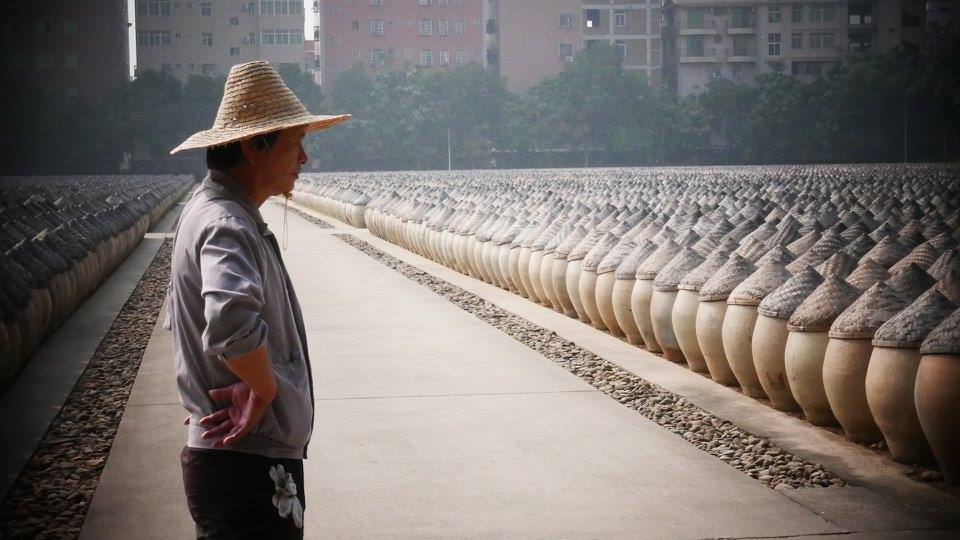
Liu Tianjie at the Gulong Sauce Factory. Photo by Clarissa Zhang for Route Awakening (Nat Geo).

The Gulong Soy Sauce Factory in Xiamen uses methods that would not have been all that out of place two thousand years ago. The only difference is the scale. Soybeans are steamed and mixed in with wheat flour, and the all-purpose qu fermentation starter, then wheeled in to the drying rooms on trolleys the size of hospital gurneys.

Clad in his uniform grey boiler suit, fetching white wellies and a wide-brimmed straw hat, manager Liu Tuanjie walks me through the process, as his gloved assistants hand-mix piles upon piles of still-warm beans on gurney trays.

“This used to be a family thing,” he says. “Every household would have their own particular recipe, and their own home-grown qu. It was only over time that the process grew larger and larger in scale, until it was industrialised like this.”

The warm beans are left to dry-ferment in a hot room for three days, until they start to go a dodgy-looking yellow, at which point they are whisked away and tipped into child-sized jars of salt water out in the baking sun.

This, I realise, is why Mr Liu is wearing his straw hat, as we march along row after row of the large jars, each topped by an oversize straw hat of its own. They are sitting on open ground, stretching far into the distance – there are 60,000 of them, in an area the size of several football pitches. Each day, as the cool night air recedes, Liu and his assistants dart down the rows, lifting off the straw covers in sets of four, so the brine solution and its bean-mix contents get the maximum amount of sunshine.

I struggle to keep up with him on the next row over. My own hastily issued straw hat, which comes complete with a flowery brim to put me in my place, fails to keep the bright sun from my eyes, and my fingers have trouble gripping the rasping fibres of the heavy straw covers. He is already several jars ahead of me, flipping the covers off like they are bottle caps.

“We take the beans, we cook them and roll them in flour and yeast, we let them dry-ferment for a bit, and then we put them out here for a year. The sun rarely changes. It’s always hot, and that slowly bakes them down into soy sauce.”

“It takes a year,” he continues. “In each season, spring, summer, autumn, winter, we adjust the conditions.” So – covers off for longer in the slightly colder months, on for longer when it’s warmer. But with Xiamen being warm all year around conditions for brewing the soy sauce are not as fiddly as they might be elsewhere. “Each day, we have to optimise the daylight – lift the lids, let the light in… see how the fermentation’s coming along.”

“You couldn’t do this in Beijing,” he scoffs, whipping away another cover with practised ease. “The weather changes too much.”

Jonathan Clements is the author of The Emperor’s Feast: A History of China in Twelve Meals. These events featured in Route Awakening S02E03 (2016).
Chinese Martial Arts

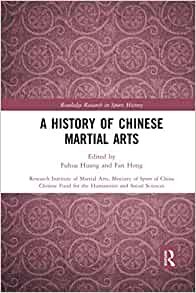
“This is a fascinating book, not merely for the pointers it offers to the historian for new paths of enquiry into martial arts history, but for the glimpse it allows of the politicised obfuscations, fudges, and compromises that are sadly all too common in some corners of Chinese academia.”

Over at the Martial History Team blog, I review the new translation of Huang Fuhua and Hong Fan’s History of Chinese Martial Arts.

A Thing of Beauty

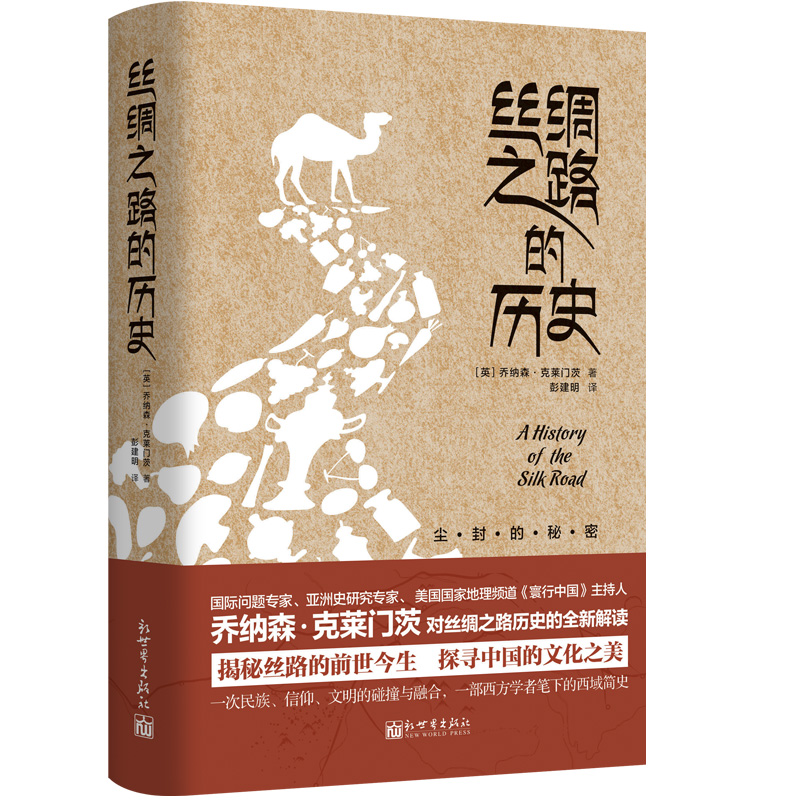
I am absolutely charmed by the sight of the hardcover Chinese edition of my History of the Silk Road, coming out very soon from New World Press in Beijing.

“The Silk Road is a route from the edges of the European world to the central plains of China. For thousands of years, its history has been a traveller’s history, of brief encounters in desert towns, snowbound passes and nameless forts. It was the conduit that first brought Buddhism, Christianity and Islam into China, and the site of much of the ‘Great Game’ between Victorian empires. Jonathan Clements guides the reader through the trackless wastes of the Taklamakan Desert, its black whirlwinds and dead lakes, its shimmering mirages, lost cities and mysterious mummies, but also its iconic statues and memorable modern pop songs. He explains the truth behind odd tales of horses that sweat blood, defaced statues and missing frescoes, and Marco Polo’s stories of black gold that seeps from the earth.”

Audiobook

I think Tommi the mixmaster needs precisely one button on his mega-console to record me reading out a book, but here we are anyway, in the studio to lay down the audio for The Emperor’s Feast: A History of China in Twelve Meals, available in print, Kindle and audiobook next month at Chinese new year. Managed to get to the end of the Tang dynasty in our first day. Aiming to reach the end of the Ming dynasty by close of business on Thursday.

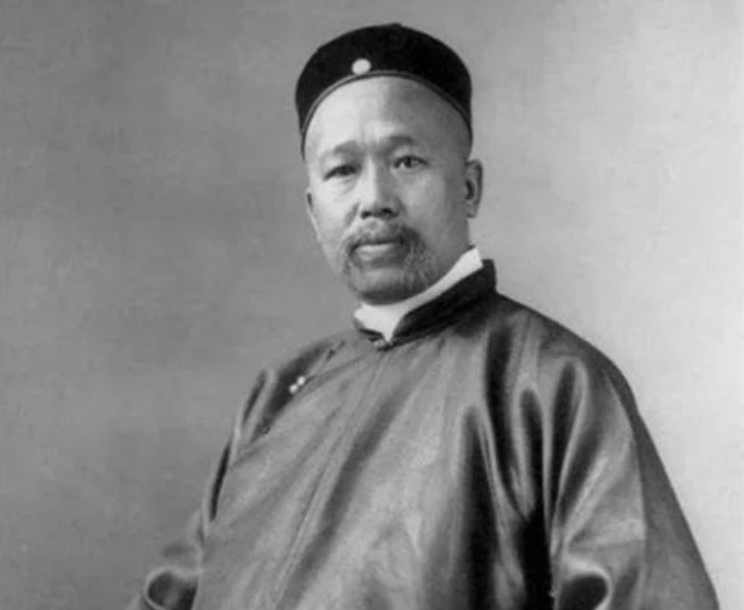
Kang Youwei (1858-1927)

“He remains an immensely influential but highly problematic thinker, with some ideas, such as the abolition of private property, that helped inform some of the strategies of the Communist Party, but others, such as a deep interest in Eugenics, that impart a shadow of sinister Social Darwinism to his starry-eyed pronouncements of global unity: a paradise that requires the destruction of all diversity.”

“Among the glimpses Kang offered of his future world, he foresaw liquidized food, flying houses, high-speed trains, dirigibles and self-driving cars, air conditioning and central heating. Kang’s utopia comes with daily medical check-ups, in a world in which doctors are more highly respected than soldiers. At the culmination of the ‘Great Concord,’ Kang hoped for a further uplift, in which a sufficiently enlightened humanity, lifespans already extended into centuries by medical care and diet, might seek immortality and travel through astral projection.”

Over at the Encyclopedia of Science Fiction, I write up that glorious nutter Kang Youwei.

Best Book 2020

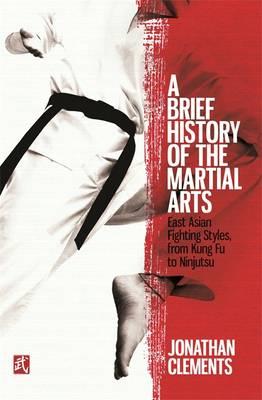
“If I had to pick a single general martial arts history book in English, I would recommend A Brief History of the Martial Arts by Dr. Jonathan Clements.” Over at the Martial History Team blog, my book gets a nod in their “Best General Martial Arts Histories in English” category.

“This is the book I recommend if you want a single volume on martial arts history based on sound evidence and sourced research,” wrote Richard Bejtlich in his review of the book last month. “I highlighted so many sentences in my Kindle edition that I ran over Amazon’s limit! …it’s an absolute steal and would make a great gift for any martial artist.”

My Heart Sutra

“This is not merely a book about the Heart Sutra. It’s about the stories that grew up around it, its journey through human civilisation like a self-replicating meme, a scrap of wisdom whispering in temples, shopping malls and movies. It includes the tale of Xuanzang, the monk who ducked out of 7th-century China on an impossibly long journey through the desert and over the mountains in search of Buddhist scriptures. It’s the story of the story about Xuanzang, not merely the historical reality of his life in the Chinese capital translating his hoard of sacred texts, but of the novel written about him by Wu Cheng-en.”

Over at All the Anime, I review Frederik L. Schodt’s latest book, which starts with a car crash and ends with Buddhist robots and John Lennon.

Empress Wu

Issue #140 of The Medieval Magazine includes an extensive interview with me about the life and times of Empress Wu, an ideal choice for a “Villains” special… or is she…?

“If we de-sex the story for a moment, what have we got? A leader without a mandate is desperately trying to hang onto power, while millionaires
behind the scenes try to exert their influence and stay in charge. But the Tang dynasty was incredibly fragile. It was only founded six years before Wu was born, and Taizong had to stab his way to the throne-room. Gaozong suffered a terrible attack in 660, perhaps a stroke or some form of multiple sclerosis, and Wu (still in her thirties) became his ‘interpreter’ for the next twenty years, telling the court what Gaozong was mumbling to her.”