Hawking’s Hot Potatoes

A disappointing number of accounts deal with the history of Chinese food with a hand-waving, folkloric lack of due diligence. While it is important to the modern-day owners of the Imperial Carriage Stops on a Hill (Nian Zhi Po) restaurant in Xi’an that the Empress Dowager Cixi was once so taken by the smell of mutton stew that she halted her carriage and demanded some in 1900, I find the whole story suspicious. It’s not that Cixi didn’t go there, or didn’t subsequently donate the calligraphic sign it bears to this day. It’s rather that the Tong family’s restaurant was already a famous local fixture, and had been for the previous two centuries – she knew exactly where she was going that day, so the whole story amounts to little more than “Cixi Ate Here”.

Some stories are more fun, although their historical value is questionable. Go to the Seven Days restaurant in Cambridge, England, and you will be told that Stir-Fried Potatoes and Chili (hejin tudou pian) was “Stephen Hawking’s favourite dish”, the first stage in an evolution that may well turn it in future into Hawking Hot Potatoes or something similar. But did Stephen Hawking ever go there?

“Oh yes,” the manager tells me. “I saw him here, once, at that table.” He points to the one right next to mine. “He was in his wheelchair with two or three carers. He couldn’t really chew, but they had this liquidiser thing with them.”

Or you could go to Falls Church, Virginia, where the Peking Gourmet Inn boasts the safest view in America. Table N17 was the favourite seat of George H. Bush and George W. Bush when they would meet for father-son presidential chats, and now boasts bullet-proof windows, courtesy of their security details.

Bush senior, for his part, served from 1974 to 1976 as the USA’s emissary in Beijing, where he developed a love for Sichuan food and heaped praise upon his cook: “The food again perfection in our house as far as we are concerned. The tangy beef cooked in a dark brown sauce with oranges has to be the greatest.” He was presumably describing Orange Spice Beef (chengwei niurou), and I am surprised that some enterprising restaurateur hasn’t already decided to rechristen it as Bush Orange Beef.

Jonathan Clements is the author of The Emperor’s Feast: A History of China in Twelve Meals.

Confucius Says: “Don’t be a dick.”

Over at the History Hack podcast, I talk to Alexandra Churchill about my biography of Confucius, and his relevance to modern China.

Topics covered include the uses of describing his birthplace in Shandong as the “Holy Land” of China, the many topics he refused to talk about, chauvinism in the Bronze Age, and the fact that despite dynamiting his grave and desecrating his descendants’ corpses, the Red Guards of the Cultural Revolution did not turn out to be his worst enemy in the twentieth century!

We finish up by discussing the “new” bits of Confucian scripture that have turned up in recent memory, finds like Several Disciples Asked and the The Essentials, found in the 1970s, and the two “lost” chapters of The Analects, unearthed in a tomb in Nanchang in 2011.

Talk Radio

Click here to listen to me talking to Mark Dolan on his Talk Radio show last night about drunken monkeys, innovations in rice production, the primacy of pork products, chopsticks, the desert of desserts, Mao’s melon unpleasantness during the Cultural Revolution, and the looming issue of international food security.

I show up at the 20:30 mark, so you need to click on the second of the four available sections.

Dim Sum vs Dim Sim

Possibly because of the increased prosperity of the Tang era, it is also the first time we see a mention of a particular kind of snack food, intended to be consumed between meals, and increasingly as time wore on, in accompaniment with tea. Named as mere Touches of the Heart (dian xin), which is to say barely enough to fill you up, they are better known abroad by the Tang-era pronunciation preserved in the tea-taking, brunch-munching culture of the Cantonese: dim sum.

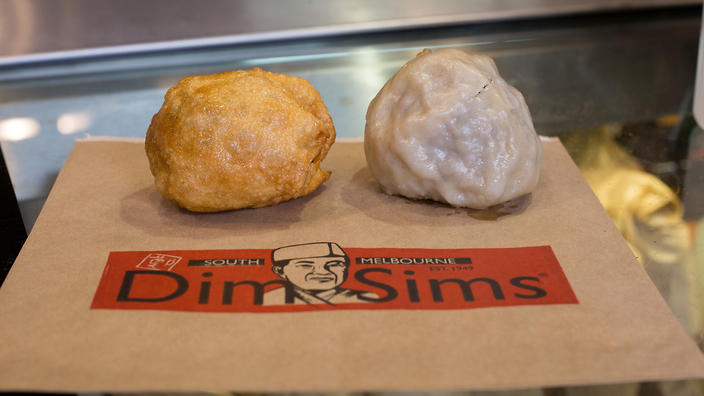
There is a curious Australian habit of calling them dim sim, which seems to confuse a topolect variant first recorded in the Melbourne Argus in October 1928 with a large pork dumpling invented in the same city by William Wing Young in the 1940s. As a result, whenever I am among Australians we find ourselves hectoring each other about pronunciation, with me pedantically trying to get them to speak medieval Chinese while they try to get me speak Australian. Another peculiar Australian coinage is to distinguish between Long Soup, which has noodles in it, and Short Soup, which has dumplings in it.

Jonathan Clements is the author of The Emperor’s Feast: A History of China in Twelve Meals.

Spectatored

The Emperor’s Feast, by shining a light on some of the intricacies of Chinese history over more than two millennia, serves as a timely reminder that the country’s modern cuisine is the delicious fruit of a rich, ancient and perhaps surprisingly multicultural tradition.”

A lovely review of The Emperor’s Feast appears in this week’s Spectator magazine, by Fuchsia Dunlop, author of Shark’s Fin and Sichuan Pepper.

Noodle Dancing

Kaifeng’s bars were riddled with chancers – sing-song girls who would come to the table unbidden, and freelance hawkers who would hand out flowers or treats as if they were complimentary, only to reveal that there was a price to pay. Such hassle was part of the drinking life all over Kaifeng, except at Charcoal Zhang’s and Yoghurt Zhang’s, two higher-end establishments that served only the finest of wines and particular pickles, and chased all the riff-raff from the door.

We see in them, however, the early glimmerings of the Chinese theatre. Although few of their skits have been known to survive, at least in the forms they were originally performed at table-side, we do have a list of some of their names, many of which are immediately evocative of certain set-ups that would not be out of place today.

There are several titles related to ‘wrecking the restaurant’, which were presumably playlets of humorous incompetence. One is called Starting a Fire While Serving the Soup (song geng tang fang huozi), and immediately summons up images in my mind of a Chinese Basil Fawlty losing it with a waiter. Similarly evocative of a timeless routine is one that’s simply called There’s Only a Little Pepper (hujiao sui xiao). Some titles suggest wordplay or a stand-up routine, even a challenge to name a hundred fruits or cooking implements, while others have an interactive element requiring the participation of certain diners as they interact with actors playing the ingénue, the poor student, or the wily official.

Such lost Song-era performances have numerous echoes in modern-day Chinese dining. Skit is almost the wrong word for them – but there are scripted moments of performativity in many a modern-day Chinese restaurant that lays claim to anything more than basic food.

It’s only here, as I type up the forgotten table antics of the medieval Chinese eatery, that I am reminded of the time when I was with a film crew in Luoyang, where my ‘special’ fish dish came with the ringing of a gong, fireworks, and a hooting bunch of waiters dressed as imperial ministers. I remember this only because when I discovered it, I tried to get my attention-shy director to order it the next day without telling her that the whole restaurant would come to a halt when she did.

Similarly, I once endured a seemingly endless five minutes with the ‘Noodle Dancer’ (laomian-shi) at a prestigious hotpot restaurant in Xi’an – a capering madman who would juggle and thrash the dough to create handmade noodles in front of me.

“BEHOLD!” he bellowed. “I AM THE NOODLE DANCER WHO CREATES NOODLES OUT OF NOTHING. SEE AS I WHIRL AND TWIRL. SEE AS I SWIRL AND FURL! LIKE A LASSOO! LIKE A WHIP! I CREATE NOODLES OUT OF RAW DOUGH JUST FOR YOU!”

Unfortunately for me, I had ordered two helpings, so he had to go through the whole ostentatious routine all over again.

Jonathan Clements is the author of The Emperor’s Feast: A History of China in Twelve Meals.

The Cafe Conflict

It all started at the Tasty Congee & Noodle Wantun Shop, a Hong Kong airport café requiring customers to order at the counter and wait for their number to show up. Online reviews for the chain are extremely complimentary – Yelp is full of comments about some of the best fried noodles and congee to be found, high praise indeed for a food-obsessed place like Hong Kong. There are, however, occasional references to a certain brusqueness of service at the airport branch, a very large menu that is difficult to process in a hurry, and an anxious overcrowding that can cost dawdling customers their table if they don’t keep a watchful eye for their order number.

Some or all of these elements combined for two Mainland ladies in 2018, who had plainly already had a miserable time on their Hong Kong vacation.

“I felt like I was subjected to shame and humiliation,” one had tweeted earlier, as reported in the South China Morning Post by Naomi Ng. “In Hong Kong, if you speak English, people will be polite to you. If you speak Mandarin, they will roll their eyes at you.”

At the café, waiting for their homebound flight, they got into a scuffle with a member of staff. They complained about poor customer service. He told them to stuff it and swore at them. Both sides, according to one witness, started throwing food around, until the man pushed a tray of congee and noodles at them, splashing some on one of the women’s clothes.

Reading between the lines: it was post-Christmas/New Year rush, people had probably been working overtime and covering for winter flu. The café was crowded, and the staff under pressure to keep tables moving. Someone misses their number; someone takes their table; someone gets told to hurry up; someone says they wanted theirs without chili not with it. After some shouting, the women were refunded their bill and left, but a media footprint was already growing – including shots of the incriminating tray, left on the floor for mere minutes afterwards.

Social media magnifies and preserves such incidents in a way not possible in previous generations. The pictures and the online footprint of something that would have otherwise been forgotten in moments provided enough material for newspaper follow-ups. It is a story I can access years later, and part of a narrative that continues Hong Kong’s cross-cultural stand-off of “dogs and locusts.” I remain in two minds about whether this is a good thing, and here’s why.

In 1991, I was witness to a hysterical altercation at a family-run fish restaurant in Kending, Taiwan. As best as I could tell, someone had married someone they shouldn’t, and granny’s inheritance risked being frittered away and someone should have cleaned out the pumps, and in what seemed like mere seconds, a scrum had developed at the front of the restaurant, open to the warm summer-night air and the beach beyond. The old granny grabbed a meat cleaver and smashed its blunt corner into the glass fish tanks, inundating the plaza outside with water and gasping trout. The crabs made a break for it into the street, scuttling through swerving traffic, as the old lady sat sobbing at one of the empty tables. Her children scattered back to the kitchen and rushed to clean up the tables, and everybody pretended there weren’t a dozen huge fish dying on the patio.

I had no idea what was going on. At the time, I lacked the Chinese or the authorial pushiness to really ask. But the only evidence of this is me telling you. I didn’t have a film studio in my pocket that could document it all. Access to the World Wide Web was still a year in my future. I’m sure that the Great Kending Fish Restaurant Fight was an order of magnitude of drama and controversy above a scuffle in an airport café in 2018, but the technology we use in our everyday lives has changed the way that we prioritise and remember. In the 21st century, such technology can be used for the evils of fake news and filler, but it can also be used to swiftly escalate issues in food safety and law. Access, accountability and archives are a feature of modern social media, and the way we talk and think about food and the food industry.

Jonathan Clements is the author of The Emperor’s Feast: A History of China in Twelve Meals.

Tea and Booze

Testing the mash for rice wine in Shaoxing. Photo: Clarissa Zhang for Route Awakening (Nat Geo)

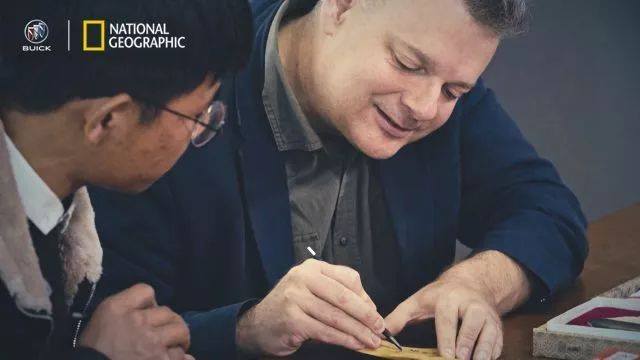
The streaming site BiliBili is currently running several episodes of the TV series Route Awakening (National Geographic), including the shows on the history of Tea and Alcohol in China, in which I taste-test three teas blindfolded, assiduously sample the various varieties of Shaoxing rice wine, and get told off under the hot Fujian sun for picking tea leaves in the wrong manner. These, and many other experiences, all fed into the materials that went into writing The Emperor’s Feast: A History of China in Twelve Meals.

Ireland and Chinese Food

And for listeners in Ireland (or anywhere else in the world, courtesy of the interwebs), I am appearing on Newstalk FM to talk to Sean Moncrieff about my history of Chinese food, the nature of Irish pubs in China, and the hidden diversity in “Chinese” cuisine. For those that don’t know, a Spice Bag is a recent Dublin invention, mixing chips, fried chicken, Sichuan pepper and Chinese five-spice powder.

The logo below is from one of Xi’an’s Irish pubs, the Green Molly, which as linguists may note, uses a handy pun to call itself lu mouli (“Green Jasmine”) in Chinese. Rather that than a certain establishment in Beijing, which is Paddy’s on the main sign, but Ai’erlan jiugui (the Irish Drunk) in Chinese.

The Red Menace

In 1958, Nikolai Trofimovich Fedorenko (1912–2000) would have been a celebrity at any other Chinese meal but this one. He had championed the author Guo Moruo as a Communist genius; he had translated the socially incisive works of Lu Xun. He had written countless essays for the Soviet media on the greats of Chinese literature, which meant that he knew the subject better than most Chinese. He had even translated the poetry of Chairman Mao into Russian, which you would think might have warranted him a place of honour at a dinner hosted by the Chairman himself.

But Fedorenko, a deputy foreign minister, soon to be appointed the Soviet Union’s ambassador to Japan, was ignored at the table, since he was there as Nikita Khrushchev’s interpreter. He sat at Khrushchev’s elbow, his food slowly going cold, never quite able to lift his chopsticks to his mouth, as Khrushchev put a brave face on a visit that was going inexorably off the rails. Fedorenko had given up trying to remind Khrushchev who the other Chinese diners were, but as he had consistently done for the rest of the trip, he kept shoving their names into his translations to make it seem that the Russian leader had not forgotten them. So it wasn’t “that guy over there”, it was General Peng, and it wasn’t “secretary guy”, it was Yang Shangkun. The only person Khrushchev never had any problem remembering was the Vice Chairman of the Standing Committee of the National People’s Congress, and that was because she was a woman, Soong Ching-ling, usually known by her late husband’s name, as Madame Sun Yat-sen.

But Madame Sun wasn’t around today, and it showed. Mao had brought out the baijiu, claiming it was the best in the world, although Fedorenko had to finesse Khrushchev’s off-the-cuff rejoinder that he guessed Mao was saving the vodka until after the Russians who had gifted it to him had gone home.

“Well,” sighed Khrushchev, “if you can’t snag a bird of paradise, you might as well have a wet hen.” He banged the table in lieu of a comedy rim-shot, and the room grew silent for a moment as Fedorenko struggled to remember the word for “bird of paradise” (jile niao) and to explain why a wet hen was better than nothing.

“You should come swimming with me. I’m a wonderful swimmer,” said Mao, jerking his thumb behind him at the pool shimmering outside the window.

“You may be, Mr Chairman,” said Khrushchev. “But please remember: I am a miner, not a swimmer!”

Khrushchev laughed it off, although there was a time delay while Fedorenko conveyed his words into Chinese. Then Mao, laughed, too, taking a swig of his tea and sluicing it loudly around his mouth.

“Tuck in! Tuck in!” bellowed Mao, gesturing expansively at the table. “We’ve got so much food in China, so much to go around. I mean, I’ve been meaning to ask our Russian friends, when Communist productivity proves to be so successful, what on Earth do you do with all the extra food?”

Khrushchev stared blankly back at Fedorenko as he relayed this question, his eyebrows twitching in disbelief.

“Try the Red-Braised Pork,” continued Mao. “It’s wholly different from the way it used to be. Cleaner, better, more modern, like our factories! Lamb with Leeks, from our model farms out in the West. We are taming the desert, we are turning it into pasture, and that lamb is the result. Oh, don’t miss the vegetables, from the market gardens outside Beijing. Bigger than ever.”

The Lazy Susan was in constant motion, as Khrushchev struggled to lift morsels onto his plate with his chopsticks. Fedorenko hissed at him to lift his bowl, to plonk each portion onto the rice, but Khrushchev never listened.

“And this one, here,” said Mao, “this is my favourite. Whole red peppers from my glorious home province, where we like things to be hot! Red, of course, is the colour of Revolution! Gentleman, I propose that we form a Red Pepper Party to show our loyalty to Communism. Anyone who can consume a red pepper will be our comrade. Anyone!”

The Chinese diners shovelled rice into their mouths from their bowls, glancing slyly at the Russians. Khrushchev smiled and nodded, but literally had his plate full with the Red-Braised Pork. The Lazy Susan had stopped turning, and the fateful plate of whole chilies had come to rest in front of the white-haired Nikolai Bulganin (1895–1975).

“Oh, if it’s for Communism…!” quipped Bulganin, snatching up one of the smaller peppers and shoving it into his mouth.

“And that’s the joy of these peppers,” Mao was saying, as Bulganin’s eyes widened in surprise. “The smallest ones are the hottest.”

Fedorenko’s memoirs retell the whole ghastly incident, as Bulganin’s mouth was suffused with a terrible, fiery sting. He snatched at some tea, but that only washed the acidic, burning sensation further afield, to every corner of his mouth, into his gums and down his throat. Bulganin, wrote Fedorenko “almost passed out, coughing and choking, [engulfed in] tears and with a running nose, he couldn’t speak a word.”

As the diners gathered around the choking Bulganin, offering vague advice on water and tea, the embarrassed Chinese only smiled all the more. The Russians, not a race given to smiles at the best of times, were all stony-faced and fuming.

“What a barbaric thing to do,” muttered Khrushchev, glaring at the giggling Mao. “What a fucking Tartar!”

Fedorenko met the gaze of his opposite number, the Chinese interpreter at Mao’s side. He shook his head slowly, and the other interpreter nodded. In silent détente, neither of them explained what the Russian leader had just said.

Jonathan Clements is the author of The Emperor’s Feast: A History of China in Twelve Meals.