Empress Wu: Too Hot for TV?

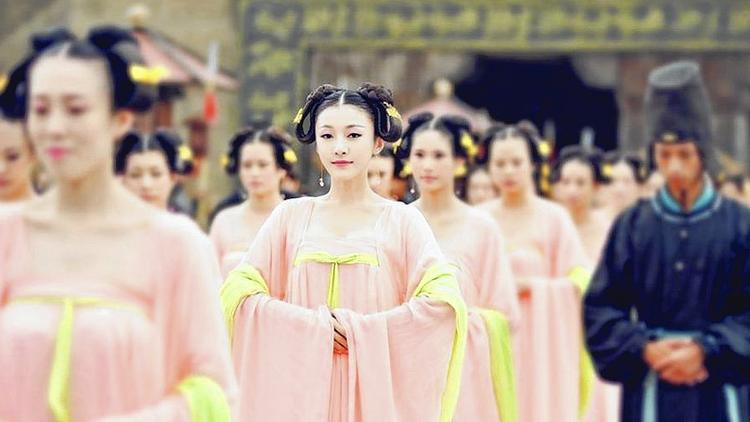
empress wuThis week’s Telegraph reports that the new TV show Empress of China, all about the scandalous Empress Wu, has been taken off air amid scurrilous gossip over its revealing costumes and grotesque violence. Robert Foyle Hunwick in Beijing notes that: “The State Administration of Press, Publication, Radio, Film and Television (SAPPRFT), China’s chief censors, has issued regulations banning depictions of one-night stands, adultery, sexual abuse, rape, polyamory, necrophilia, prostitution, nudity and masturbation, as well as murder, suicide, drug use, gambling and even racy subtitles and puns.” Well, that pretty much covers a to-do list of any historically accurate account of Empress Wu. Oh, except gambling; I don’t remember any gambling.

For more about the historical Empress Wu, see my interview here, my article on film adaptations here, or listen to my Woman’s Hour interview here.

Romans on the Silk Road..?

dragon-blade-posterFrom An Armchair Traveller’s History of the Silk Road:

The Book of Later Han records an expedition by an emissary of Ban Chao who set out in AD 97 to assess the legendary empire in the furthest west, which the Chinese called Da Qin, ‘Great Qin.’ The name is odd, and has confused even Chinese commentators. It may be a garbled reference to a particular place in the Roman Empire, although it is not clear where. Fan Ye made the unlikely suggestion that the people of the exotic west were tall and honest, a bit like the people of the Chinese state of Qin. But the term may have carried a more ominous implication. In the days of the Warring States, before China was unified, Qin was the name of its westernmost territory – a martially-minded, hard-headed soldier state that eventually conquered all the others. In calling the Roman Empire ‘Great Qin’, Chinese chroniclers may have been alluding to a distant threat, further west even than Qin, but potentially even more powerful.

The mission was thwarted partway, probably by wily Parthians who feared that an alliance between Rome and China would crush their own state, which lay between the empires. Instead, the explorer was told that Rome lay across a great sea that would take him three months to cross if he were lucky, or two years if the winds were against him. Perhaps some Parthian merchant hoped to sell him three years of provisions for such a great undertaking, although it seems more likely that he made it to somewhere on the Indian coast, perhaps the Parthian princedoms of Sind, where he received a garbled explanation of the need to wait for the monsoon winds. Whatever the reason, he turned back, reporting that in the west there were many ‘precious and marvellous things’, but he had not seen them. To help out a little, Fan Ye offered his own list of Roman marvels, which included shaven heads, crystal tableware (glass) and ‘kings who are not permanent’ but chosen from a list of the most worthy.

If such reportage seems doubtful or outright apocryphal, we might forgive them for having no other information about particular parts of the world. Historians and novelists, for obvious reasons, are liable to get particularly animated about possible contacts between Romans and Chinese, although certain travellers claiming to have come from ‘Rome’ might have actually been chancers picking an unverifiable home address in their dealings with local potentates.

Fan Ye, for example, also recorded that an embassy had supposedly arrived from Rome itself in AD 166. But reading between the lines of his account of these visitors from the ‘King of Great Qin’, everything starts to sound very suspicious. They claimed to have come from the land ruled by a man called Andun – if they meant Antoninus Pius, he had already been dead for several years, and had been succeeded by his adopted son Marcus Aurelius. Let us give them the benefit of the doubt, and assume that Andun is a garbled reference to the Antonine family. But these supposed ambassadors turned up far away from the Silk Road, on the coast of what is now Vietnam, and if they are the source of the Book of Later Han’s information on Rome, they seem to have known little more than the vaguest general facts about Syria and Egypt, and very little about Rome itself, which was apparently at the far end of a bridge that stretched for dozens of kilometres from Egypt.

They presented ‘tribute’ of ‘elephant tusks, rhinoceros horn and turtle shell.’ None of these commodities sound particularly Roman, nor did they much impress the Chinese, who regarded them as singularly undistinguished. Fan Ye gives the official line, which is that the embassy from Great Qin seemed rather shabby, and perhaps rumours of the empire’s splendour had been gross exaggerations. He even notes, with the faint signs of a disdainfully raised eyebrow, that this distant civilisation apparently makes cloth from the cocoons of ‘wild’ silkworms. He does not appear to have considered that the ‘ambassadors’ were not official diplomats at all, but a bunch of Indian sailors trying it on. Instead, he ends his section on Rome with a literary wave of the hand in exasperation, saying that he has heard of ‘many other peculiar and bizarre things that I will not record.’

An Armchair Traveller’s History of the Silk Road by Jonathan Clements is available now in hardback and on the Kindle (US/UK).

“The Half of What I Saw…”

Marco-Polo-NetflixNot even Marco Polo was able to edit his own life into an all-encompassing narrative. On his deathbed, surrounded by his weeping daughters and his long-serving manservant Suleiman, he was entreated by Venetian priests to admit he had made up many of the tall-sounding tales of his travel. The holy fathers were worried that “Marco of the million lies” would go to hell if he did not finally confess that he had made up his stories of a black rock that would burn, of oil that came out of the ground, of giant sea creatures and Chinese gods. His last words were a fitting epitaph: “I have not told the half of what I saw.”

Dozens of writers have grappled with the way to best tell his story. Luckily for me, I only had to write a biography, which begins with his birth and ends with his death. For the writer of fiction, there are myriad temptations. I’ve toyed with a one-act play, in which Marco and his collaborator Rustichello pace the floor of their opulent but confining house arrest, arguing over the best way to set his knowledge down on paper. Marco is all about facts and descriptions, a tedious village-by-village account of the way east; Rustichello, a former troubadour and Crusader, wants stories of derring-do and fortean curiosities, and in one sense, it’s Rustichello’s Marco that survived through the ages.

You could plump for Italo Calvino’s method, concentrating on the relationship between Marco and his patron, Khubilai Khan, as the aging monarch demands stories of Marco’s adventures. But what of the roads less travelled? What of Marco on his homeward route, escorting the mysterious Princess Kokachin to her doomed wedding, and plunged into local conflict in Persia and befriending his Muslim counterpart, Rashid al-Din? What of Marco the official in China under the Mongols, dealing with intrigues, crimes and murders in a nation under military occupation? And what temptations there are to the historical screenwriter to edge gently out of evidence and into reasonable speculation – what if we ignored the evidence that Marco never saw Japan for himself, and inserted him into the Mongol fleet that suffered the consequences of the first Kamikaze.

cc030914j021f15.jpg_1328648940The new Netflix series tries and largely succeeds to have it all, opening with a prolonged throne-room scene in which Marco shows off his knowledge of Uyghur and Mongol, and in which the Polo family’s failure to keep their promises to the Khan lead to the effective handing over of Marco as collateral to save their trading contracts. But there are nods and foreshadowings, even in those opening few minutes, of the direction that John Fusco intends to take. Khubilai’s beloved wife Chabi, a Christian, stands at his side in her distinctive head-dress. An official called Ahmad is pointedly referenced, ahead of the downfall known to all readers of Marco Polo’s Travels. A lissom figure on the sidelines appears to be Princess Kokachin, thought by some to have been the woman who stole Marco’s heart, even as he was forced to convey her to her new husband. And then the credits begin, awash with impressionistic Chinese inks that create simulacra of his tallest tales – figures and creatures that may, or may not, only exist on paper or in his mind, even as the music soars and hints at Game-of-Thrones-y intrigues and Marco’s endless, infectious sense of wonder at the sights of the Far East.

Jonathan Clements is the author of Marco Polo (US/UK) and A Brief History of Khubilai Khan (US/UK). Marco Polo, the TV series, begins on Netflix on 12th December.

History vs Mystery

There will never be a 100% historically accurate Confucius movie. It would be in a dialect of ancient Chinese that literally nobody could understand. The manners and customs would be more alien than the wildest science fiction, and the character motivations truly inscrutable. And no matter how careful the scholarship, it would be open to attack from all sides, because the original source material is already riddled with holes, assumptions and later interpolations.

Our prime source for Confucius, The Analects, is a grab bag of anecdotes and quotations, assembled long after the famous philosopher’s death. A diligent scholar can rearrange the stories in a rough chronological order, revealing a narrative basis for Confucius’s life: his early career as a civil servant, his early successes, his fall from grace in his native state of Lu and his years of wandering. Take things to extremes, applying true academic rigour to the materials, and the historical Confucius evaporates altogether.

Hence, literally any biography of Confucius must involve dramatic licence. As with the First Emperor of China, we are forced to work from the thinnest of material, little more than snatches of overheard dialogue: a cluster of old sayings, and a few incidental details about the history of the period. Hu Mei’s film Confucius, starring Chow Yun-fat, is a brave effort that meticulously walks a difficult tightrope between historical accuracy and entertainment. Continue reading

Two Downloads

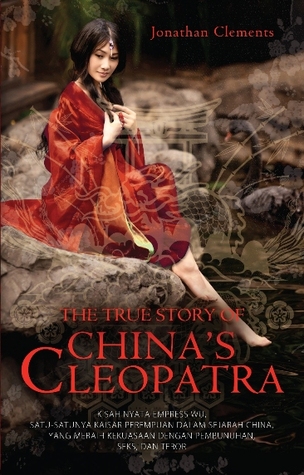
02After many years of waiting and wrangles, my book on the controversial medieval Chinese Empress Wu is finally re-released on Kindle and paperback from Albert Bridge Books (US/UK). As the blurb recounts:

Empress Wu Zetian (624-705 AD) was the only woman to be the sovereign ruler of imperial China. A teenage concubine of the Tang Emperor Taizong, she seduced his son while the emperor lay dying. Recalled from a nunnery as part of an intricate court power-game, she caused the deaths of two lady rivals, before securing her enthronement as the Emperor Gaozong’s consort. She ruled in the name of her husband and two eldest sons, presiding over the pinnacle of the Silk Road, before proclaiming herself the founder of a new dynasty. Worshipped as the Sage Mother of Mankind and reviled as the Treacherous Fox, she was deposed aged 79, after angry courtiers murdered her two young lovers.

The subject of countless books, plays and films, Empress Wu remains a feminist icon and a bugbear of Chinese conservatism. Jonathan Clements weighs the evidence of her life and legacy: so charismatic that she could rise from nothing to the height of medieval power, so hated that her own children left her tombstone blank.

Meanwhile, it’s a condition of my doctorate that my thesis be freely available to other researchers, but to spare you the bother of going to the Library of Wales and photocopying it, here’s a PDF. The title is A History of the Japanese Animation Industry: Developing Technologies, Changing Formats and Evolving Audiences. I’m afraid what blurb there is is couched in significantly more sesquipedalian prose:

This thesis offers a discursive genealogy of the Japanese animation, or ‘anime’ industry, outlining changes to its prevailing form caused by successive disruptions – fluctuations in economic conditions, applications of new technology, and changes in available formats. Instead of focussing on the content of the anime texts themselves, it addresses the form of the content – treating the anime texts as manufactured ‘objects’ or as performative ‘events’ that are created, refined, marketed and sold.

The approach is historiographical, favouring published testimonials and memoirs from the participants in the Japanese animation industry, and assessing them in terms of possible errors of historical practice. The participants’ activities are categorised as points on a chain from Ownership of the intellectual property to Access to the text, prompting not only consideration of changes in the processes of production, but also in the oft-neglected areas of distribution and exhibition.

Spanning the 67 years from 1945 to 2012, in overlapping periods defined by developments in formats and technology, a picture is presented not only of the anime industry, but of its participants’ changing sense of what that industry is, its traditions and potential. This will present a foundation for future research into anime’s history, not only through this narrative of events, but also through consideration of the theoretical issues deriving from the nature of the sources.

And of course, if you like what you see there, a significantly expanded version, losing a lot of the theory and introduction, but adding four extra chapters, has been published by the British Film Institute (US/UK).

Claudius Bombarnac

002 bombarnacTo the Reform Club on Pall Mall last night, legendary location of Phileas Fogg’s famous bet that he would travel around the world in 80 days, to speak about the Silk Road. I found myself talking about a much less well-known creation of Verne’s, the titular hero of Claudius Bombarnac (1892), a French journalist who travels across the south of the Taklamakan desert on the fictional Transasiatic Express, attended by intrigue, scandal and desert bandits.

Just as Fogg was a celebration of the British Empire in the 1870s, Claudius Bombarnac was a love letter to the orientalist romance of the 1890s, with the Russians and the British duelling over Central Asia and the newfangled concept, introduced only in 1877 by the geographer Ferdinand von Richtofen, that there was such a thing as a “Silk Road” trade route connecting east and west through the deserts of Xinjiang.

Anime Futures

With Mark Schilling’s permission, I’m putting up the unexpurgated text of the interview he conducted with me six weeks ago for his article on Japanese animation futures in the South China Morning Post, in part to show how much work goes on behind the scenes to get a sound bite and an article.

the-wind-rises-creating-planes-clipMark Schilling: You mentioned recently that several well-known anime studios might soon go kaput, but without naming names. Is it mainly a problem of rising costs? Declining revenues? Stiffer competition from Hollywood and elsewhere? All of the above?

Jonathan Clements: Some of it is economics — we’ve lost several minor studios recently, and their rise and fall, or restructuring and rebirth as “New” incarnations of themselves has been a common factor of the industry for decades. Ghibli itself was at least partly formed from the ashes of Topcraft, for example. Japanese studios in the twentieth century were able to function as subcontractors for American animation. That’s sometimes still true, but so many elements of anime production is now off-shored to China or South Korea that anime studios are smaller, and leaner, and more flexible in their behaviours. As Gonzo showed in the late noughties, it’s possible for a company to go almost completely dark, to give up its studio space, to lay off its animators and just coast for a couple of years as little more than a filing cabinet in an accountant’s office, waiting for the foreign residuals to roll in. That’s good for robust business, but bad for an animator’s job security!

There’s a generational issue that many people have spotted in the case of the high-profile retirements at Ghibli, but which is also common to the anime industry. The vision of a single creator, or team of creators, can steer a company and give it a distinctive style or brand, but nobody is immortal. People retire. The anime industry went through something very similar in the 1990s, where a bunch of the first-wave producers cashed in their shares, took their pensions, and handed over their companies to others — it’s what led to some of the big corporate buy-outs like Bandai taking ownership of Sunrise. That was seen at the time almost as a hostile take-over, but for many of the staff it was a welcome hand-over, with one of Sunrise’s biggest and most trustworthy clients taking a direct interest in its output, and thereby preserving the jobs of the employees.

What we have now, and have had for the last few years, is the aging of the Astro Boy generation, not of fans, but of animators. In 1963, Tezuka quadrupled the size of the animation industry, both directly through hirings at Mushi and indirectly through the creation of competition in the market. Those fresh-faced graduates are now in their seventies. Many of them are the leading lights of specific studios and, you know, some of them want to go off and play golf.

frozenIs the enormous success of Frozen in Japan a one-shot — or a game changer? Will more Japanese studios switch to Hollywood-style 3D CG animation, following the lead of the new Doraemon film? Will Hollywood exploit the fading of Studio Ghibli and become the dominant player at the Japanese box office, especially the animated segment of it?

Hollywood has always been the dominant player at the Japanese box office. There have been occasional spikes in local interest for particular directors or franchises, but Japanese cinema is eternally fighting a rear-guard action to push local product ahead of flashy foreign imports. Until Miyazaki’s late twentieth century successes, Japanese animation flourished like a weed, only in the spaces that The Lion King and Aladdin didn’t grow. Even in the 1990s, only a tiny handful of players like Gainax and Ghibli gave Disney anything close to a run for its money on home video. I think it’s worth considering Disney’s acquisition of Ghibli titles in that light — when Disney (or their subsidiaries) put money directly into Spirited Away, they weren’t just investing in a Japanese talent, they were ensuring that they got a piece of the pie from their main competitor in the Japanese market.

Japan has been slow to take up 3D CG, because it involves massive reskilling and investment in software and hardware. It’s a return to the state of the industry in the 1950s, when Disney product, made at a substantially greater cost to Japanese competition, was swamping the market with a relentless onslaught of material.

I don’t see Hollywood filling any new niche in Japan. Hollywood, in the form of Disney/Pixar and DreamWorks, will keep releasing its big family films and rolling on as before. The likely competition to do what anime does, to compete at a more domestic, perhaps even consciously “Asian” level, is going to come from China. Miyazaki’s retirement merited a sixty-page feature on Japanese animation in one of China’s biggest news-stand magazines, Lifeweek, last October. The implication was clear that this was a business feature, identifying a new market opening, and asking if China had what it took to move in on it.

I’m not saying that China is the new Ghibli. Far from it, the Chinese animation business has a lot to learn, and much of its output is highly derivative. But it is generating an animation labour base bigger than Japan’s every year. Kung Fu Panda 3 is going to be a “Chinese” film for contractual purposes, so even DreamWorks is relying increasingly on Chinese labour. The Chinese already represent two-thirds of the labour pool for what we call “Japanese” animation. Granted, that’s all concentrated in the lower, less-”skilled” echelons, but that doesn’t bode well for the future when the upper ranks of Japanese animation companies are increasingly drawn from the ranks of marketers and managers. It means that there is a very palpable risk that Japanese animation won’t have any actual animators steering it.

wind-rises-main_0You’ve no doubt read the anonymously sourced story about Studio Ghibli stopping production and becoming a rights management company. Do this strike you as credible? Some of the claims in that piece, such as The Wind Rises still being in the red, seem rather far-fetched to me…

You can see the signs very easily. When Toshio Suzuki was sitting on data that told him that “Studio Ghibli” had a 43% trust rating with the Japanese public, but that the name “Miyazaki” had a 64.2% trust rating, what did he do? He got Miyazaki’s son to direct Tales from Earthsea! I think you can see Suzuki’s very canny, very sharp management insight steering much of the last decade. Even as he retires, he puts a former Disney Japan executive in charge of Ghibli. He builds the Ghibli Museum, which is a classy theme park that generates a movie’s worth of revenue every year. He tries the Goro Miyazaki bait-and-switch manoeuvre, and essentially dares the Japanese public to come and watch the car-crash for themselves. He hypes up this father-son tension in the media, but then gets the Miyazakis working together on Poppy Hill. In the case of The Wind Rises, I see it as another calculated move by the studio, to wring one last box office winner out of Hayao Miyazaki. I like to think of them going to his house and begging him to make one last film to keep the momentum going at the museum and on video, and telling him he can make ANYTHING he likes. Because the subject of that film is so personal, and indulgent, and risky, that I can’t imagine anyone else being allowed to get away with it.
My prediction: in a couple of years’ time Ghibli will go into production on a script “written by” Hayao Miyazaki, just to ring that bell again. He’s effectively given them a 50-title wish-list of children’s literature worth adapting. There is undoubtedly a faction at Ghibli who wants to pivot it towards doing World Masterpiece Theatre, and carrying Miyazaki’s legacy in a different direction, by copying his early TV successes adapting children’s books. That’s why they’re moving into TV with Ronia the Robber’s Daughter, but you can see the Ghibli is only co-producing it. The animation is actually being done by Polygon Pictures.

That The Wind Rises is still in the red sounds ludicrous to me. If it is, it’s only in the movie-accounting sense that Forrest Gump is still technically “in the red.” The Wind Rises did fine.

garden of wordsPeople have been talking about various “new Miyazakis” for years, but that we are truly in the post-Miyazaki era, who do you see as leading the industry, if not necessarily inheriting Miyazaki’s crown? If none of your names are from Studio Ghibli, why not?

It’s a cliche to talk about the “new Miyazaki.” Japanese animators hate the whole argument, because it usually implies nothing new at all, just a magical cloning of his unique skillset, and his unique, timely rise in the movie market, and with supporters like Takahata and Suzuki. Ghibli was a three-man success story, very much of its time, and you can’t have a new Miyazaki without having a new Takahata and a new Suzuki. It also requires some awareness of what we mean when we ask for a “new Miyazaki”. Because Makoto Shinkai has a lot of Miyazaki’s heart, but none of his “family” appeal. Shinkai has cornered a market in films for people who grew up watching Miyazaki movies, but he doesn’t make movies for tomorrow’s families. I guess that’s the problem, there. It’s not about who the new Miyazaki is, it’s about who the new audience is. It’s now easier in Japan to buy diapers for old people than for kids. The kids’ market is shrinking, and that further reduces your chances of making blockbuster money on a family film.

Studio Ghibli actually tried to grow the new Miyazaki themselves, in several abortive attempts to co-opt big-name talents like Mamoru Hosoda. The fact that Hosoda didn’t fit in at an increasingly management-oriented Ghibli is actually a sign of his true potential, far more than staying there would have been!

They also brought in a dozen promising animation assistants and put them to work directly with Miyazaki and Takahata to foster a new generation of talents. That was called the Higashi-Koganei Sonjoku scheme, and its graduates stand a good chance of making waves over the next ten years. People like Masayuki Miyaji, for example, Masashi Okumura and Kenji Itoso.

But ironically, Miyazaki’s own shadow looms so large that it’s difficult for someone to turn up at Ghibli with a distinctive voice and not have it shouted down by risk-averse managers. Goro Miyazaki’s films often look like a committee trying to recreate his father’s successes, and that should come as a surprise to nobody. Ghibli was lightning in a bottle, and rumours about its move into legacy management are only logical — I think what people forget was just how darn lucky Disney was that Pixar could show up at the right moment and completely revitalise its output with fresh ideas and fresh technology, and real talents. Ghibli doesn’t have that. Ghibli doesn’t have a powerful competitor that it can embrace and merge with.

Jonathan Clements is the author of Anime: A History and Modern Japan: All That Matters.

Milky Crisis!

The background to today’s news that the New Zealand company Fonterra is buying stakes in another Chinese dairy. From Modern China: All That Matters, by Jonathan Clements.

milky crisis

—–

The dairies of Inner Mongolia now form a powerful lobby in Chinese supermarkets. Adverts selling milk products are all over the place, and pushily insist on a number of bespoke varieties – this one for stronger bones, that one for more energy. They are so pro-active because Chinese parents have largely given up feeding Chinese milk to their children, after major scandals in the early 21st century. Chinese milk is probably the safest it has ever been, but public trust is at an all-time low.

In 2004, sixteen Chinese children died of malnutrition after they were fed a ‘milk formula’ that turned out to be nutritionally worthless. This was no manufacturing error, but a deliberate scam that cruelly led several families to literally starve their own children to death, while believing that they were feeding them.

In 2007, a new problem arose, not over what was missing, but what was being added, when pet deaths in America were traced to melamine in the food chain. This had entered into Chinese pet food through contaminated animal feed, although the size of the problem was difficult to judge without a national veterinary database – fourteen confirmed pet deaths, but several thousand reported. It was claimed that mixing melamine into animal feed had been a common practice for years, in the mistaken belief that there were no ill effects. Many animals were butchered before they died of renal failure from melamine poisoning, but this only delayed the discovery until it built up further along the food chain. Extensive testing found melamine in hundreds of food products for both pets and people, leading the FDA and Department of Agriculture to estimate that up to three million Americans might have, for example, eaten chickens that had been reared on contaminated feed. Chinese food exports, also of chicken, powdered egg and wheat gluten, were found to be similarly tainted.

sanluBack in China, the food chain was discovered to be directly contaminated, when the budget dairy Sanlu was accused in November 2008 of selling a milk powder product that had been adulterated with melamine in an attempt to show higher protein levels. This may well have made the milk seem healthier, but it directly affected the health of some 300,000 people, many of them children in low-income families. Six children died of renal failure, while the original whistleblower, an employee at Sanlu who had been querying production standards since 2006, was later found stabbed to death in mysterious circumstances. A Chinese investigation later found similar contamination in 22 Chinese companies, causing a massive crisis of confidence, particularly among Chinese mothers. It is now far more likely for Chinese mothers to feed their children exclusively on a diet of foreign milk formula, often sourced from Germany or New Zealand. Ironically, a New Zealand company, Fonterra, had owned a 43% stake in Sanlu, and had called for a recall on suspect products eight months before the scandal broke. The deadly delay was blamed on mismanagement at a local level, as Chinese employees tried to save face by avoiding a public announcement of any danger.

Modern China: All That Matters by Jonathan Clements, is available now in the UK and US.

Lest We Forget

28 juneJust arrived in the mail this very moment, my contributor’s copy of 28 June: Sarajevo 1914-Versailles 1919 — The War and Peace that Made the Modern World, edited by Alan Sharp. It’s a country by country analysis of the outbreak and end of World War One, largely by many of the authors who wrote books in the Makers of the Modern World series. As the biographer of both Wellington Koo and Prince Saionji, the youngest and eldest diplomats to make a splash at the Paris Peace Conference, I have two chapters in this collection, “The Chance of a Millennium” about Japan’s imperial ambitions, and “Labourers in Place of Soldiers” about the 140,000 Chinese coolies who did the laundry, fixed the roads and, yes, dug those famous trenches.