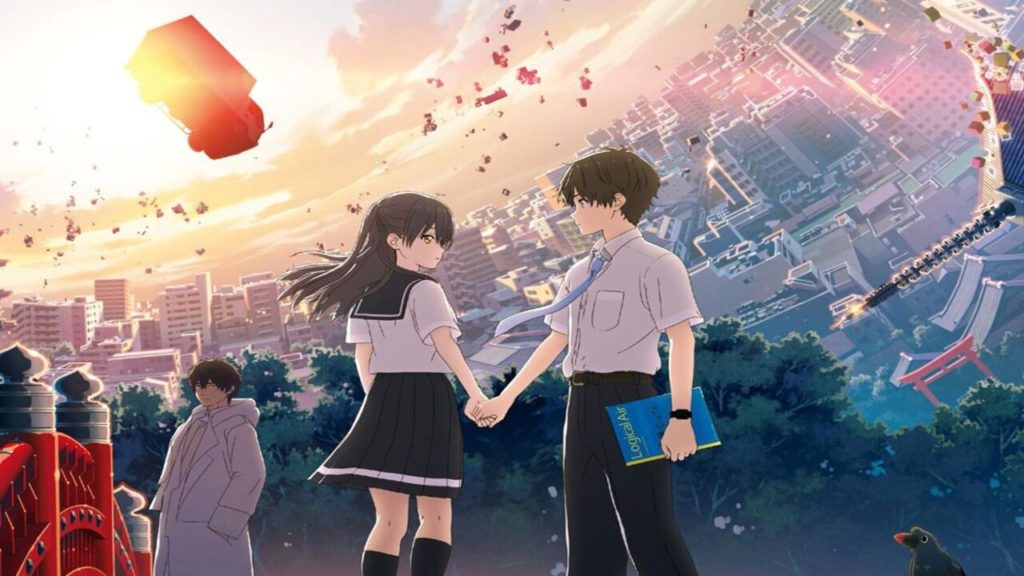
“Kyoto has been successfully digitised; 2027 has been ingested to such a degree that it can be run in Naomi’s own future as a simulation indistinguishable from the real world itself. In effect, his whole world has been carefully saved and archived, which is good news for his future self, because Ruri Ichigyo, the girl he fancies, is fated to be put in a life-threatening coma in just a few weeks.”
Over at All the Anime, I write up Tomohiko Ito’s Hello World.
“In a medium notorious for shots and beauty-passes that go on for way too long in order to amortise the costs of set construction, Hori’s camerawork is brisk and choppy, never outstaying his welcome in any particular scene, deftly creating the illusion that he is snatching his footage on the fly, not painstakingly building it one frame at a time, paltry seconds of motion taking hours to create.”
Over at All the Anime, I watch Takahide Hori’s stop-motion future feature Junk Head.
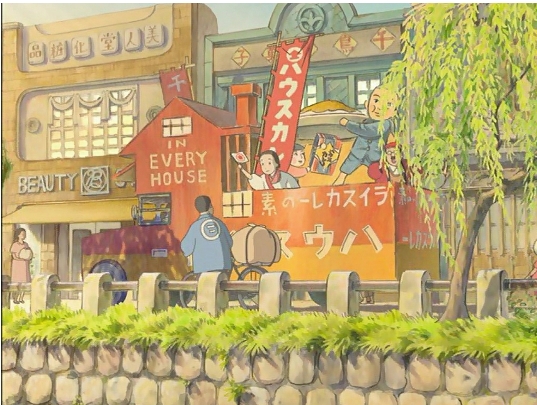
“Denison devotes entire sections to Ghibli’s short films and advertising contracts, many of which will be completely new to some self-proclaimed fans, despite a cumulative running-time equivalent to that of a whole other movie. These include, for example, Hayao Miyazaki’s nostalgic advert for House Foods, made in 2003 and unseen abroad.”
Over at All the Anime, I review Rayna Denison’s new book, Studio Ghibli: An Industrial History.
I’ve got a couple of things in the archive for any would-be obituarists covering Leiji Matsumoto :: this wide-ranging interview with him from Salon Futura, and my own entry on him from the Encyclopedia of Science Fiction.
“It’s not quite some teenager’s fan fiction thrown up online and then stuck between covers as IP bait to lure in an anime company, but that’s largely because I can see that an editor has been near this: the first chapter is the work of a much better author than the second, as if the experience of writing the book has already taught Nahuse some tricks of the trade, and he snuck back to write a better opening. Either that, or he had his whole life to write chapter one, but chapter two came swiftly afterwards, against a deadline.”
Over at All the Anime, I review the first volume of Nahuse’s Rebuild World.
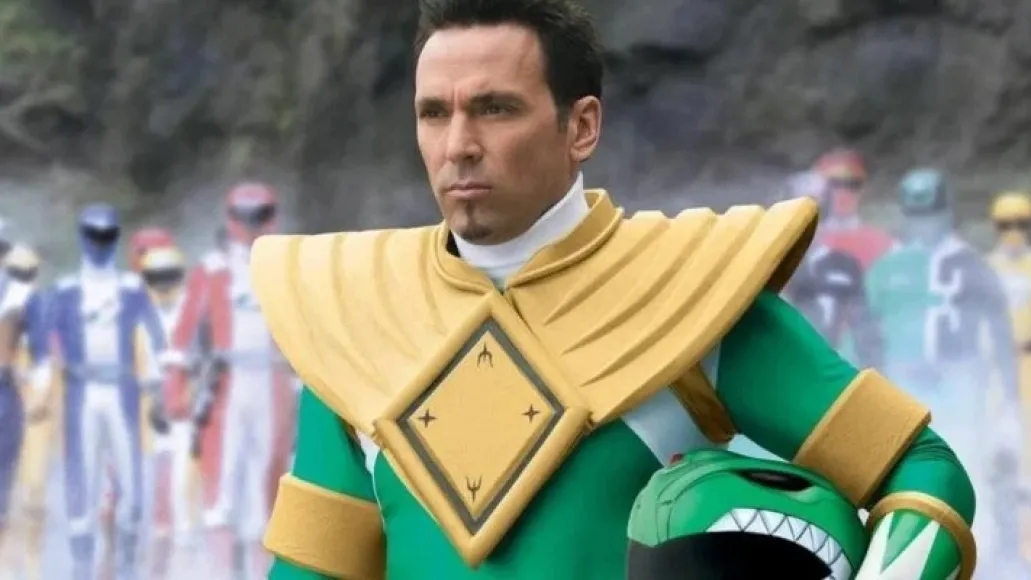
When I met Jason David Frank for the first and only time, I was a 24-year-old newshound for a children’s magazine, and he’d drawn the short straw, dispatched on a press tour of Europe to promote Mighty Morphin’ Power Rangers: The Movie.
It was driving him slowly crazy. He was holed up in a west London hotel suite, with only an old school buddy of his to keep him company. The publicity people, usually hands-on and clock-watching, were nowhere to be seen.
I introduced myself and showed him our magazine, and he laughed heartily at our electric rotating lollipop cover-mount, which everybody agreed looked like a sex toy.
“The thing is,” I said to him as we sat down to talk, “when I watched the film–”
“You watched it!?” he said. “Dude, nobody who’s come through here today has seen anything more than the trailer.”
“Well, I thought it would be smart to watch it.”
“D’ya think?” he laughed around the rotating electric lollipop in his mouth. “Go on, man.”
“I saw that some of the actors were under-cranked so they looked like they moved faster. But you– ”
“Yeah! Right!” Suddenly he sat bolt upright, flinging the electric lollipop onto a coffee table, looking at me with intense focus. “They don’t have to speed me up. Sometimes I think they want to slow me down. It’s because we’ve all got our skill sets, you know, like one’s a dancer and one’s a gymnast and so on, but I’m a martial artist. This is what I do.”
We talked about the martial arts, about how he’d taken the job as the Green Ranger and been so overwhelmed by the love of his fans – an entire generation of children who thrilled to have him back in successive iterations of the franchise, as the White Ranger. In later years, he would be a Red Ranger, a Black Ranger and a Green Ranger again. He boasted that he was throwing all the money he could spare from his starring role into real estate, because this might be the only chance he got to make proper money. I don’t think it ever registered with me that he was still only 22 – he had a presence about him that made him seem much older.
The next journalist in line had been kept waiting for almost half an hour as we ran over. But Frank didn’t want me to go. “A lot of these guys,” he confided. “They don’t care. It’s just great that someone appreciates the work, you know.”
As if the acting world needed any more drama, Hellena Taylor, the voice of Bayonetta in the games and anime spin-off, was made to re-audition for her own part in Bayonetta 3, and then given such a low-ball offer that she walked.
Taylor is by no means the first actor to find out she is replaceable. When he was shunted aside for Kiefer Sutherland in the Metal Gear Solid franchise, David Hayter was similarly annoyed. He, too, was asked to read for the part that had previously thought of as his, on the grounds that maybe he had “aged out” of the role. Such a concept would be particularly insulting to Taylor, since, without getting into specifics about a lady’s age, she is still seven years younger than Atsuko Tanaka, the Japanese voice of Bayonetta (and Ghost in the Shell’s Motoko Kusanagi), who is still in the role.
In an online video post, Taylor noted that the Bayonetta franchise had made $450 million, “not including merchandise.” She enumerated her various places of training and education, a total of seven and a half years at drama schools, and observed that the final offer for her to provide all the lines, shouts, and barks for the next game in the series, was a buy-out of $4,000 – no royalties, just guild minimum for a single eight-hour day.
What’s in play here is the timeless argument over whether voice actors are above- or below-the-line talent. Some of you, and some producers, might be thinking that all you’re buying is some guy to come in off the street and yell a bit. On my first dubbing job, after some idiot (me) sent home one of the actresses early, we had to rope in a runner, literally drag her away from making coffee, to shout “THE TOTEMS HAVE COMBINED!” It wasn’t Shakespeare.
But for the last generation, voice acting has become part of a media mix. Certainly in anime, and also in games, it provides a chunk of the content that magazines write about. It provides bodies to be onstage at conventions; human beings, as stand-ins for cartoon characters, who can sign your video boxes and hold forth with anecdotes. The industry has spent 20 years trilling about this actor or that actor bringing their talent to a role – their voice and wisdom and (sometimes) physicality in motion capture. And if $4,000 still sounds like a lot of money to you, remember that might be the only work someone sees in six months.
Jonathan Clements is the author of Anime: A History. This article first appeared in NEO #225, 2022.
“Shiranui is trying, really, really hard to be a good person… so hard, in fact, that he risks dragging other people into his own self-generated drama.”
Over at All the Anime, I review the manga Natsume & Natsume by Shunsuke Sorato.
“We need a witness to our lives. There’s a billion people on the planet… I mean, what does any one life really mean? But in a marriage, you’re promising to care about everything. The good things, the bad things, the terrible things, the mundane things… all of it, all of the time, every day. You’re saying ‘Your life will not go unnoticed because I will notice it. Your life will not go un-witnessed because I will be your witness’.”
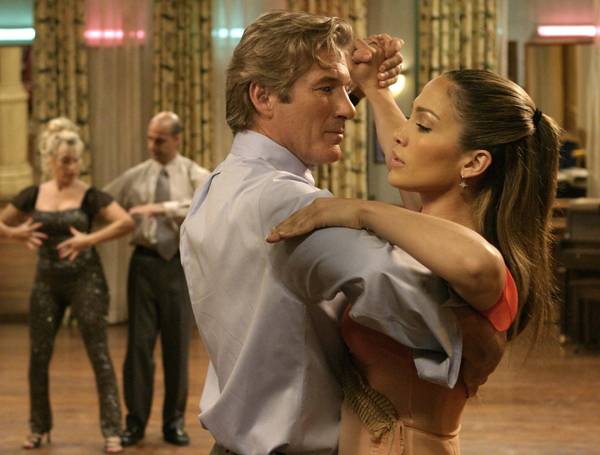
Quite by accident, I caught the 2004 remake of Masayuki Suo’s Shall We Dance, with Richard Gere standing in for Koji Yakusho, and Winnipeg standing in for Chicago standing in for Tokyo. It’s often a shot-for-shot remake of the original, complete with its celebration of platonic friendships and quirky obsessions, but Audrey Wells made several alterations to Suo’s script that I list here because that’s the sort of nonsense this blog covers.
1: It features a man torn between Susan Sarandon and Jennifer Lopez, which is an unanswerable conundrum.
2: One of the characters is eventually revealed as gay.
3: Stanley Tucci, as the secret office dancer, gets a moment in which he twirls one of his tormenters, in a sort of kung fu dance vindication.
4: A scene is inserted in which Richard Gere conspicuously chooses his wife and his marriage over his hobby, only for her to insist that he goes off and indulges his hobby. It’s a little bit of a replay of the ending of An Officer & a Gentleman, and I suspect deliberately so.
5: Miss MItzi, the dance teacher, has her own redemption arc in which she is revealed as a struggling alcoholic who is weaned off the booze by her students’ successes.
Otherwise, it retains much of the humour and the narrative beats of the original, as well as two pointless voice-overs that could have been oh-so-easily shot as real scenes to show-not-tell. Notably, however, Gere and Sarandon have two children in this remake, not the only child of the Japanese original.
“What really comes across is Dockery’s enthusiasm for telling a story about something that, for him as a child and for many of his likely readers, was initially just a hobby. In his investigation of all sorts of areas that ten-dollar wordsmiths might describe as historicity, technological determinism, and industrial economics, he provides his readers with a tantalising, alluring glimpse of the kind of fun you can have when you get to study what you enjoy.”
Over at All the Anime, I review Daniel Dockery’s lively account of the irresistible rise of Pokemon, and can’t resist the opportunity to also plug something that isn’t in the book, which is the terrifying Russian Pikachu song pictured above.