Anime in the UK: the History, Cultural Context, and Evolution of UK Anime Fandom by Leah Holmes is the culmination of over a decade’s work, an M.Phil thesis that covers 30+ years, most crucially of the 1990s, before the internet singularity so vastly increased the amount of data (and noise) available. A super-fun read for anyone who was there, and something of an eye-opener, I expect, for anyone who wasn’t.
“What makes this such a stand-out book on Japan is its humor. Clements injects his book with humorous observations and anecdotes that add so much humanity to an otherwise dry and exhaustingly lengthy topic. This is a history book painted with color and vibrancy.”
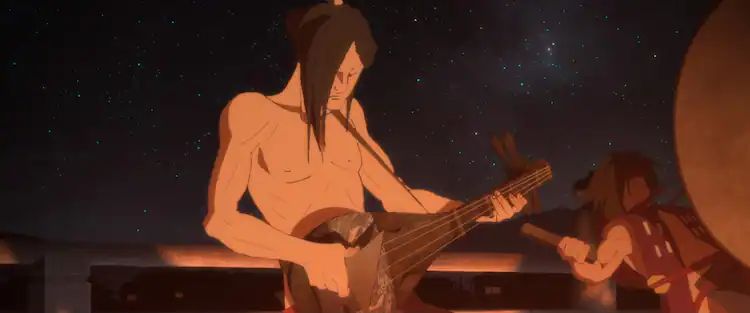
“But as director Yuasa notes, the war was not merely a time of catastrophic conflict, but a spur to artistic creation, as travelling bards began recording martial deeds in song, in saga-like chronicles like the aforementioned Tale of the Heike. It was, Inu-Oh suggests, a crisis that helped form the Matter of Japan, a terrible national event that only healed over the centuries as later generations processed the trauma at first as a form of exorcism, and later through the creative arts.”
Over at All the Anime, and with a little help from Carl Sagan, I explain the complex historical origins of Masaaki Yuasa’s Inu-Oh — cursed swords, samurai spirits, forgotten rock stars and no business like Noh business.
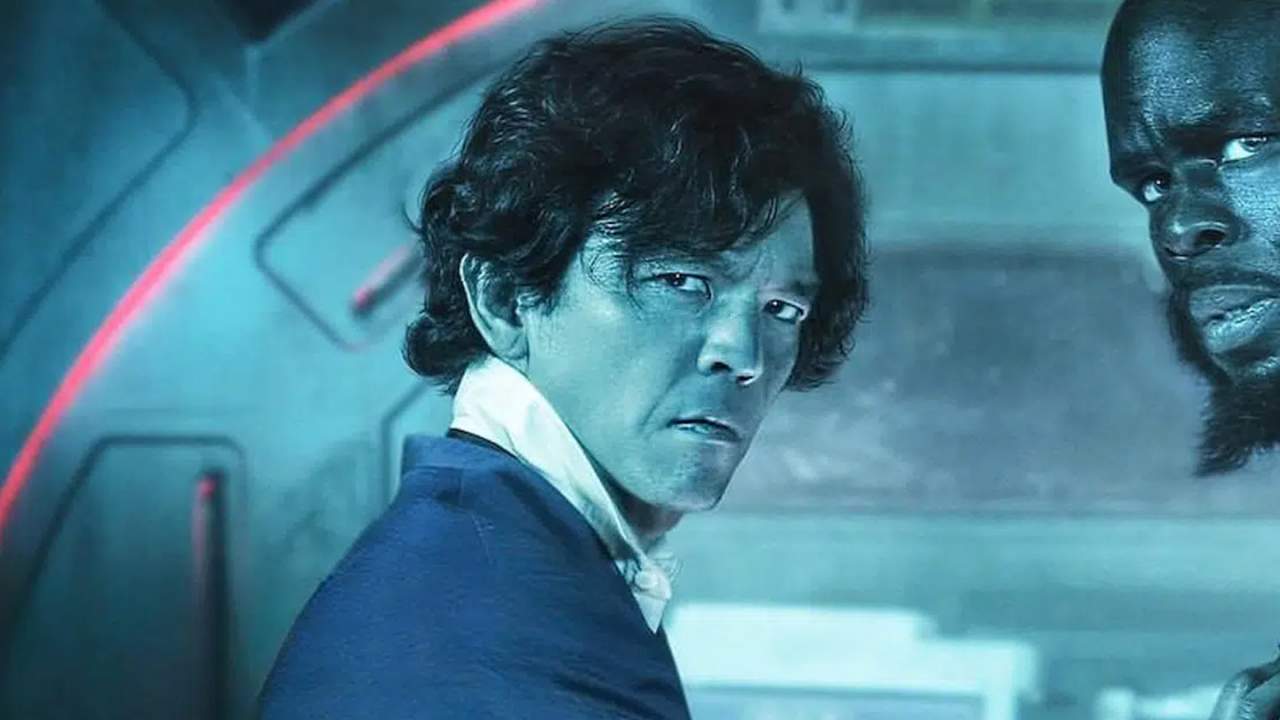
And so it’s farewell to the live-action Cowboy Bebop, coldly cancelled by Netflix a mere twenty days after its much hyped premiere. That’s the thing about Netflix, they’re very much about going big or going home, and dropping an entire season online not only fuels the binge-watchers, it also supplies overwhelming statistical evidence that allows for a fast executive decision.
The live-action Cowboy Bebop notched up 74 million hours worldwide in the three weeks since its November activation date, but it seems that many of those hours were people watching the first episode and not coming back for more. Unlike in the bad old days of terrestrial telly, when people might nickel-and-dime and campaign and, say, give a show another week, binge-level content provision requires a binge-level response out of the gate, otherwise it shows up on the Netflix stats as a dead dog.
The same algorithms that pointed to Cowboy Bebop as a much beloved anime show with a twenty-year fandom and a massive footprint in the American market, that same box-tickery that put John Cho in the lead and brought back Yoko Kanno’s iconic score, all that robot number-crunching that tells Netflix what to do and how to do it, reported back in record time that Cowboy Bebop did not justify a greenlight for season two.
But do not despair, a whole bunch of people are still sitting pretty. At a very basic level, the cast and crew of Bebop got paid to make their show. But the real winners from the whole debacle are the owners of the anime. Because while fandom is carping about the remake, the hype over it has functioned as a massive advertising campaign for the original. My inbox lit up for weeks with journalists in search of anime punditry, and even NEO got in on the act with that lovely cover story. That’s not bad attention for a show that is 23 years old, and which is still just as good, just as fresh and just as fun this month as it was last month.
Like every disappointing remake, it stands a good chance of bringing in thousands of new viewers to appreciate the original, which has to be a good thing. And if people are wondering what all the fuss is about, they can even see the original right now… er… on Netflix.
Jonathan Clements is the author of Anime: A History. This article first appeared in NEO #216, 2022.
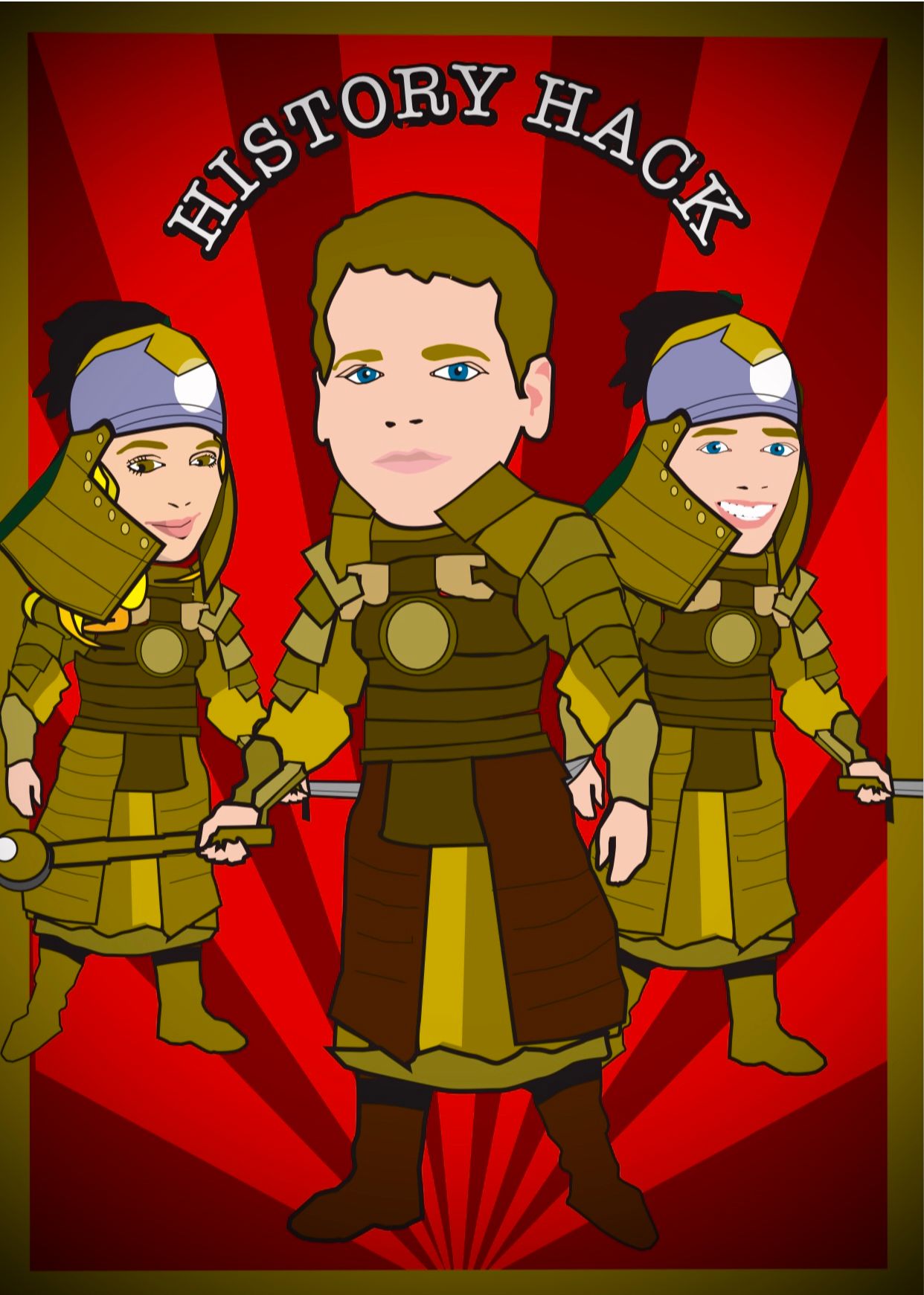
Over at History Hack, I regale the squad with tales of the Shimabara Rebellion.
In 1638, the ruler of Japan ordered a crusade against his own subjects, a holocaust upon the men, women and children of a doomsday cult.
The sect was said to harbour dark designs to overthrow the government. Its teachers used a dead language that was impenetrable to all but the innermost circle. Its priests preached love and kindness, but helped local warlords acquire firearms. They encouraged believers to cast aside their earthly allegiances and swear loyalty to a foreign god-emperor, before seeking paradise in terrible martyrdoms.
The cult was in open revolt, led, it was said, by a boy sorcerer. Farmers claiming to have the blessing of an alien god had bested trained samurai in combat and proclaimed that fires in the sky would soon bring about the end of the world. The Shogun called old soldiers out of retirement for one last battle before peace could be declared in Japan. For there to be an end to war, he said, the Christians would have to die.
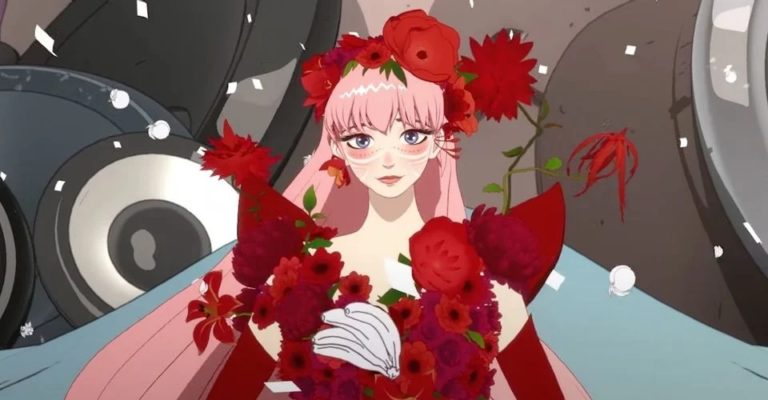
“So, what does it actually mean when Mamoru Hosoda’s Belle received a 14-minute ovation at Cannes [last] summer? It means, presumably, that French audiences rated it much higher than Moonrise Kingdom (2012, 5 minutes), and more than Twin Peaks (2017, 5 minutes). It means that, by some odd metric of hands smacking together, it was worth more than Once Upon a Time in Hollywood (2019, 7 minutes), better in some way than BlackkKlansman (2018, 10 minutes), and a smidgen more entertaining than Bowling for Columbine (2002, 13 minutes).”
With Mamoru Hosoda’s Belle receiving its UK-wide cinema release this Friday, I thought it was a good time to re-link to my article about it from October over on All the Anime.
“One opening shot lingers on the image of nature’s resilience, as demonstrated by the simple, everyday sight of weeds forcing themselves through cracks in the pavement. But this is a film in which supposedly intangible, unseen objects exert a physical presence in the real world, even including the ‘camera’ of the animators, which audibly rustles through the rooftop flowers as it executes a 3D crane shot of the titular house on the cape.”
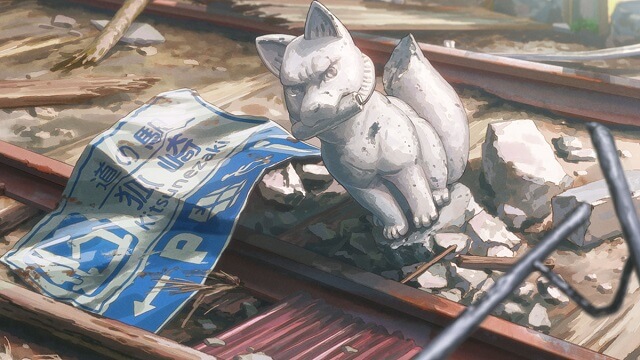
With the news that original author Sachiko Kashiwaba has just won the Batchelder prize, over at All the Anime, I write up Shinya Kawatsura’s movie The House of the Lost on the Cape, which has its UK premiere in February.
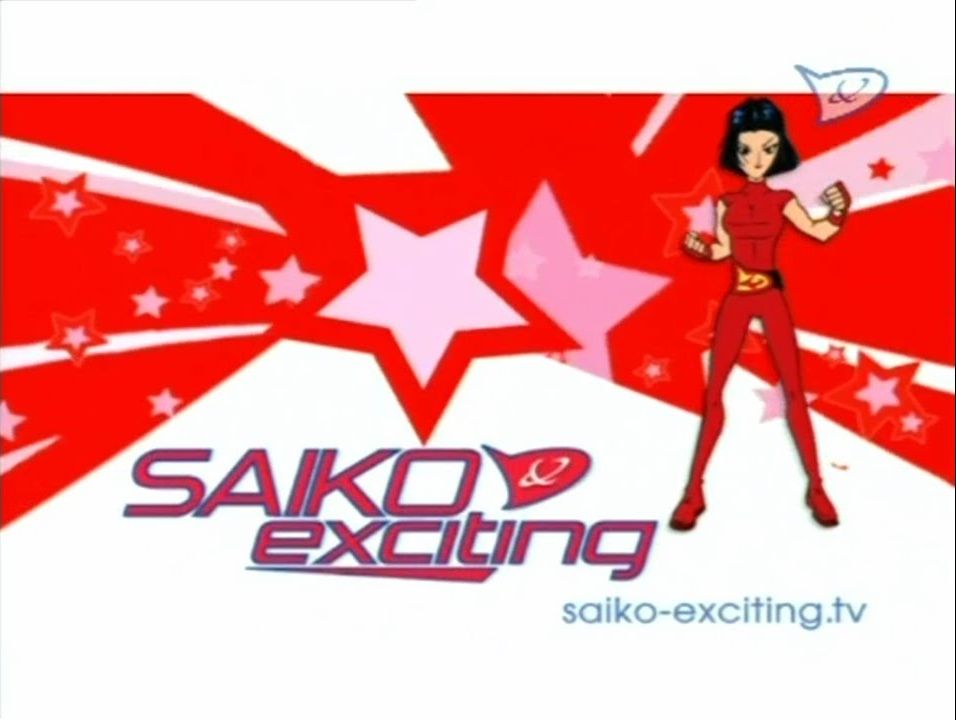
Tim Lunn of Anime in the UK wants to ask me about Saiko Exciting (2002) in the comments section, but I am replying here because my comments section inexplicably won’t include paragraphs any more. And he asked me two weeks ago, and so I apologise for only just seeing his questions now.
TL: I know you did co-host back in the day I’m writing to ask how this show came to be and what it was like working on it?
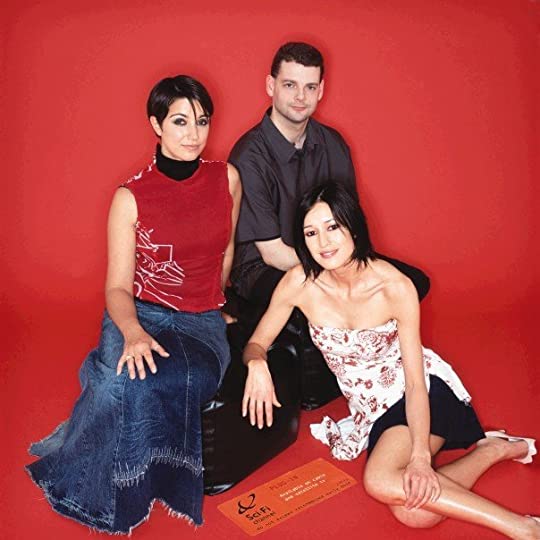
Tim, in case you haven’t already, I do recommend typing “Saiko Exciting” into this blog’s Search box, just to hoover up every mention I have made of it, including Hissy Diva Fit, my account of the day of the photoshoot, and Economies of Knowledge, in which I do indeed tell the true story of the expert consultant who got paid a huge amount of money to tell us all that the thing that was wrong with the anime programme was all the anime in it.
My own involvement with Saiko Exciting started when I presented a history of anime sci-fi at the ICA in London as part of, I think, the first Sci-Fi London film festival. There were a bunch of people from what was then called the Sci-Fi channel there, sitting in the audience, and I think someone thought I would be a useful house weeb to have when they did their Japan-themed show.
TL: Sadly, only later shows from the run exist on YouTube. I would like to know what the show was like when it was following its original vision.
I was actually only on the show proper as a presenter for the first eight episodes, I think. After that, I was moved to introduce the Thursday late-night anime slots solo. I would come in every Monday and shoot them with a revolving merry-go-round of directors. I think the director of my last intro had been the tea boy at the first. When I showed up, Debbie the assistant producer would give me fifteen minutes to translate a song into Chinese, sometimes a song I had literally never heard before that morning. It was a silly little slot that filled up a minute on the show proper for the rest of the episodes, but I rarely had anything to do with the people making it, as I was off doing my intros.
So in terms of the “original vision”, I think that the main thing jettisoned from the first couple of months was, er… me. I have vague memories of having a couple of Statto the Statman type banter sequences with Emily and Seera in the early episodes, but by episode nine, I was doing that solo on Thursday nights, introducing the various anime, reading out hate mail, and giving a run-down of the anime news. Looking back at my emails, I see that the later episodes of Saiko Exciting had a new, bittier format that broke up the anime a bit so left no time at all for anyone to get bored with any one thing. That, at least, was the idea. I can’t say for sure because I don’t know if I ever watched it myself!
I really loved working for the Sci Fi channel, and it was my first real taste of the media whirl that my life still occasionally is. But it didn’t last very long.
I came in to the offices on the day after the last episode went out, and I found everybody standing around one of the computers staring in bafflement at the screen. Our ratings showed an absolutely huge spike on the last episode.
“What does that mean?” I asked.
“It means,” someone said, “that only an idiot would cancel us.”
While the show was cancelled, I think, after episode 20, my late-night intros made it to the end of 2002, so there were four more, and the scripts for my weekly news round-up went up to #64, and continued to appear on the website, along with my Far West column, until December 2003. Most of the people I knew at Sci Fi had gone by September… I remember there was some sort of shake-up and the turnover of the staff was so huge that it was basically a different company and nobody knew me.
We’ve all gone on to bigger things. Seera hobnobs with media royalty and has her own production company under her real name. Emily Newton-Dunn is some sort of corporate ninja at Electronic Arts. And I became “Dr Jonathan Clements”, and a few years later, the fact that I had any television experience at all, however mad, helped me clinch my job on Route Awakening.
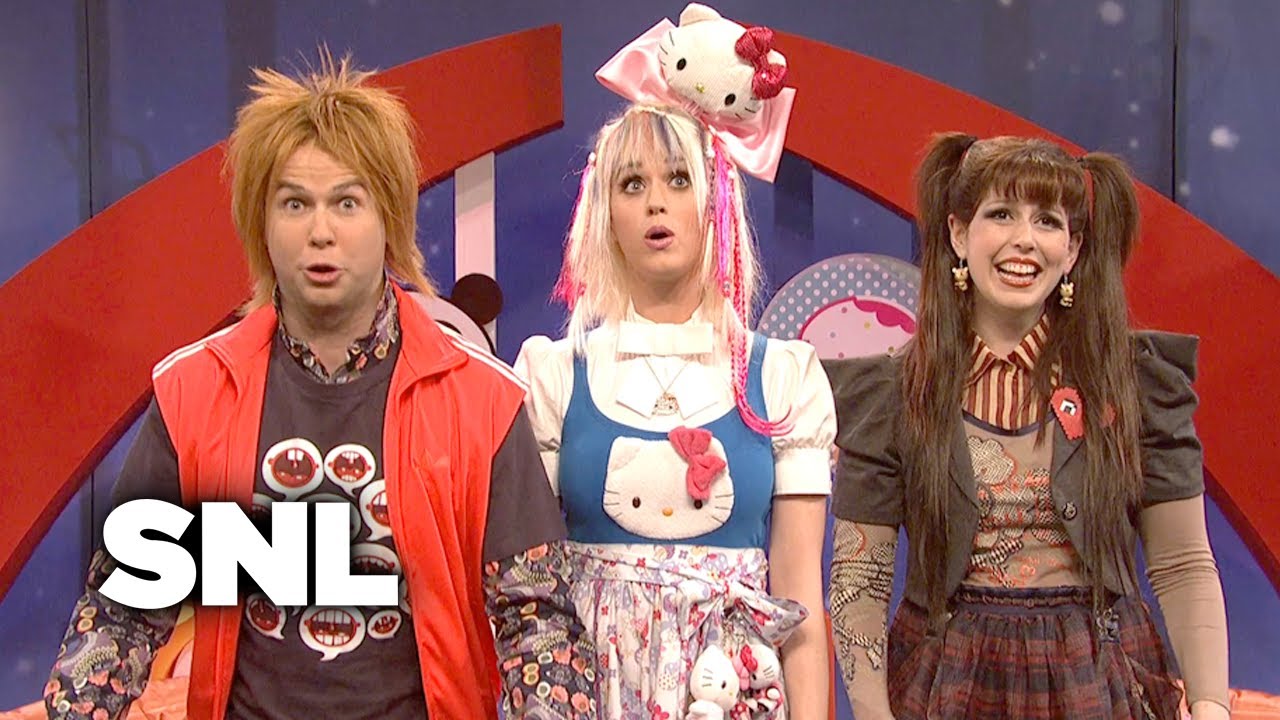
A few years later, Saturday Night Live did a terrifying skit about a TV show for weebs, and I thought… “Oh my God… that’s us!”
Netflix is “…altering the Japanese and production industries through the sheer scale of its investments, creating more demand and pushing anime beyond the aesthetic limits of Japanese broadcast law.”
Over at All the Anime, I review a handy introduction to the digital corporate skulduggeries of the recent anime world.
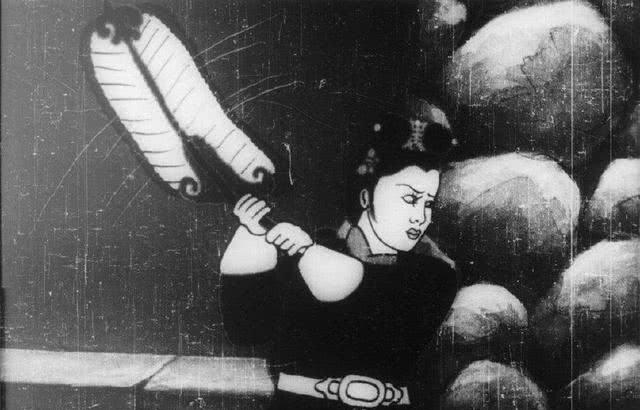
“Kosei Ono writes a chapter specifically about the impact of Chinese cartoons in Japan, beginning with the watershed success of Princess Iron Fan, conceived in China as an anti-Japanese parable, but screened in wartime Japan as an innocent children’s cartoon retelling an episode from Journey to the West. Of course, it also spooked the hell out of the Japanese Navy, which threw money into making a rival feature so that Japan could regain the cultural high ground – the result was Momotaro: Sacred Sailors.”
Over at All the Anime, I review Daisy Yan Du’s new collection Chinese Animation and Socialism, which manages to link wartime propaganda, Chairman Mao and contraband dubs of Jenny Agutter in The Railway Children.


 The Official Schoolgirl Milky Crisis Blog