Nightmares in the Dream Sanctuary

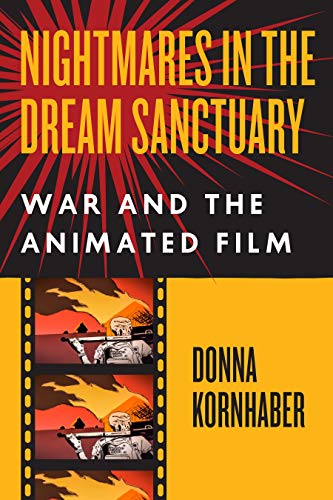
Over at All the Anime, I review Donna Kornhaber’s new book on cartoons and war.

“The Empire, in Leicester Square, was the venue at which the world’s first recorded screening of an animated film took place, with an animated advert in which the Bryant & May company promised to send a personalised box of matches to every British soldier fighting in the Boer War.

“But then [Kornhaber] leaps into the future, to a winter’s day in Moscow in 1983, when a very different film received its premiere. Garri Bardin’s ‘Conflict’ also features animated matchsticks, but was a very different presentation with a severe anti-war message.

“These two moments in cinema history mark the broad parameters of Kornhaber’s just-published Nightmares in the Dream Sanctuary, in which she investigates the relationship of animation and war, not merely as propaganda, but as protest, resistance and memorial. She is intrigued by the ways in which film can be used to tell outrageous lies about the acceptability of war, or to confront viewers with unwelcome truths about its costs, but also in which animation, in its plastic relation to reality, can prove ideally suited for depicting a world turned upside-down.”

Book Sale: up to 45% off

Haus Publishing tell me that the Kindle editions of my books are currently discounted for a limited time only (discount highlighted below).

Amazon discounts:
Although the majority of e-book readers choose to use Amazon Kindle, some may prefer to read in protected PDF and EPUB format. These can be purchased via Chicago’s website at a 40% discount, using the promotional code HAUSEBOOK40.
Also, over the coming weeks, any Haus books are available at a 30% discount in the UK if you order directly from them, and they will donate 10% of whatever you pay to NHS charities. A collection of the 143 charities that support the NHS. More information here: https://www.nhscharitiestogether.co.uk/what-we-do/#charities-together and here:https://uk.virginmoneygiving.com/charity-web/charity/displayCharityCampaignPage.action?charityCampaignUrl=NHSCharitiesCOVID19
 
Postage and packaging is free of charge to UK residents. To order directly from Haus, one has to call their office 020 3637 9729 between 1pm and 4pm between Monday and Friday.

Jay Benedict (1951-2020)

Over at the All the Anime blog, I remember the actor Jay Benedict.

He had played Deak, one of the local slackers at Tosche Station on Tattooine, in a scene deleted from Star Wars: A New Hope, describing his performance as one of “playing space pinball” while Biggs (Garrick Hagon) told Luke Skywalker he was joining the rebel alliance, and Koo Stark “sat around looking beautiful.” When we worked together with Hagon on one anime dub, Benedict ribbed him about how Hagon’s character had made it to the final cut, only to get blown up above the Death Star.

Anime Versus Virus

I hope nobody was coughing at Minamicon…? Yui Ishikawa’s announcement last month that she was cancelling her appearance at the Violet Evergarden premiere at the Glasgow Film Festival over infection fears seemed briefly like a slap in the face (or head butt), but was soon revealed as a reaction entirely in keeping with the Japanese government’s own directives on restricting travel. Anime News Network has been spattered with announcements of cancelled press launches and concerts, as pressing the flesh becomes a no-no. You knew it was bad when the Ghibli Museum shut down.

Kyoto, which has been rammed with Chinese tourists for the last five years, is suddenly quiet. The Shuxiangge hot pot restaurant in London’s Chinatown, where I fought to get an upstairs seat in January, put me by the ground-floor window in February, when I was outnumbered by the staff, And on Valentine’s Day, I briefly and accidentally booked a hotel room in Helsinki that very evening, when usually the place is chock full of tourists.

Japan’s extreme reaction is an attempt to deal with a virus that may have little to no effect on 83% of victims, making it easier for them to spread it during the two-week incubation period. But it’s also based on the economic brinkmanship that has characterised the last couple of years, with a huge degree of Japanese economic planning resting on the hosting and completion of a successful Olympic Games. They need to get ahead of this now, or it will bring down the government. [Time travel footnote: the Olympic Games will now take place in 2021].
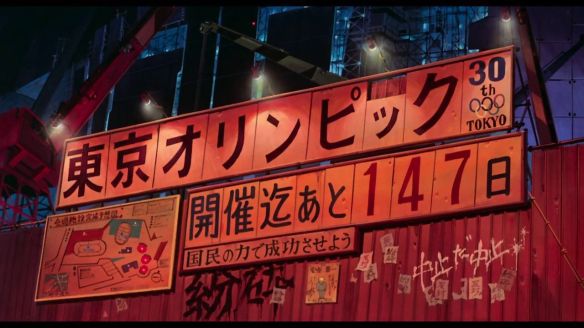
In the spirit of the school shutdown, the Doraemon and Shimajiro films scheduled for spring break have now been postponed. I can’t say anyone is likely to be that bothered, since in the case of Doraemon, this has to be the third or fourth time they have recycled the same dinosaur plot in living memory. Meanwhile, in Malaysia, the government has advised wives to “speak like Doraemon” when dealing with their husbands in lockdown, because nothing gets you through a global pandemic like impersonating an incompetent time-travelling robot cat.

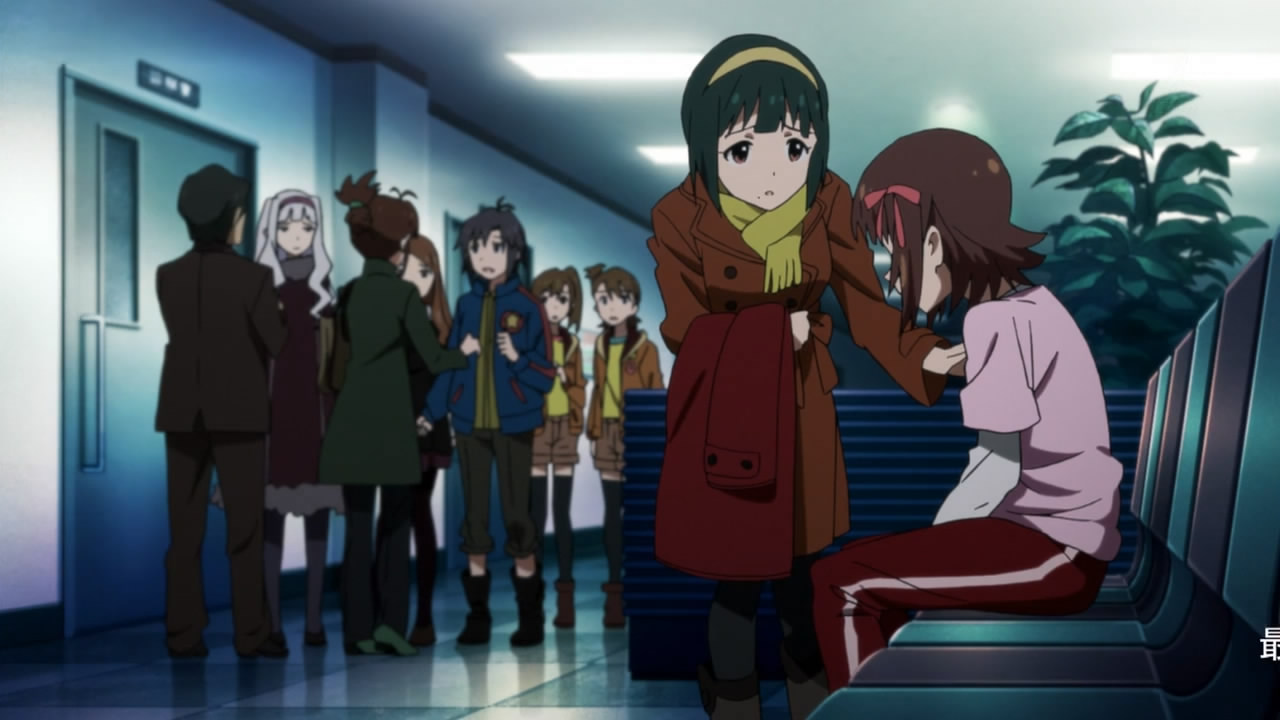
But in the most surreal anime virus story so far, Tiger Ye, a resident of Wuhan diagnosed with COVID-19 in January, has told the world’s media that watching Idolm@ster had helped him get through it all.

“I realised I needed some spiritual support or maybe I couldn’t make it,” he told Michael Standaert in the Guardian. “So I watched my favourite anime show and seeing their normal, happy lives, I thought I may have to say goodbye to this life forever. But watching the show, the heroine had troubles in the first half, but she finally made it and succeeded in her career.”

“So watching the show, I thought: I must make it if I want to see her next concert alive. This really encouraged me and gave me some relief,” he said, “along with the medicine.”

Jonathan Clements is the author of A Brief History of Japan. This article was commissioned for NEO #199, but events overtook it when the magazine was put on temporary hiatus owing to the lack of sales venues during the COVID-19 outbreak.


Boxers in Lockdown

Over at the All the Anime podcast, I talk the ears off Jeremy Graves and Andy Hanley about video-watching in lockdown, managing convention colds, the genesis of Tomorrow’s Joe and sundry other topics of little consequence.

00:00 – 16:14, Intro, what lockdown life in Finland is like; what Ghibli Jonathan introduced his son to during this time!

16:15 – 49:54, Intro continued, NEWS: NEO Magazine going on hiatus; NEWS: Masaaki Yuasa retires as President of Science Saru

59:55 – 1:30:11, Questions/topics from the community

1:30:12 – 1:43:33, Megalo Box discussion primer: Jonathan Clements on the history of Ashita no Joe

1:43:34 – 1:54:14 [END], Close Show; discussion on Jonathan’s adaptation of Death Note.

Sankichiro Kusube (1938-2020)

Over at the All the Anime blog, I write the obituary for Sankichiro Kusube, a leading producer at A-Pro, and then its successor studio Shin Ei.

“Kusube not only dragged Doraemon back onto the air, but pushed for its leap into cinemas as well, personally guaranteeing the creator and the TV channel that he would take personal responsibility if Doraemon: Nobita’s Dinosaur (1980) proved to be a failure. It’s for this reason, his willingness to be the fall guy, that Kusube’s name made a rare appearance on the production credits for the film, which would go on to be the highest grossing domestic animation film of the year at the Japanese box office.”

Death Note en français

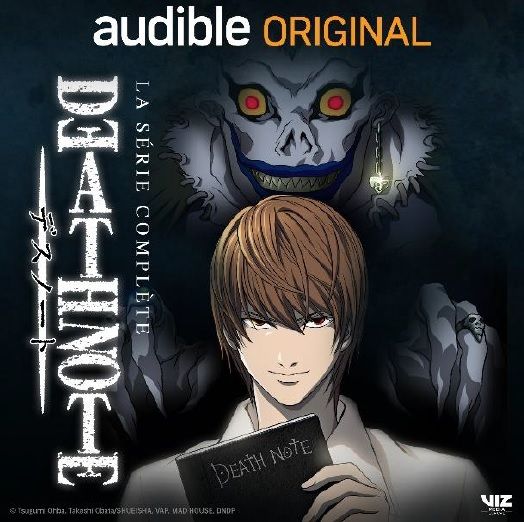
I am, perhaps, as surprised as you to discover that my 12-part audio adaptation of Death Note, released in German in 2018, has suddenly been released in French. The French version, available from Audible, seemingly uses the voice actors from the French anime dub, a nice little extra touch. Still no news on an English version; your guess is as good as mine.

“Pour éviter les foudres, des fans — qui n’ont pas épargné l’adaptation de Netflix — le choix de ces conteurs a été soigné,” says the Manga News website. “En effet, le site d’informations Manga News souligne que les comédiens que l’on retrouvera dans ce livre audio sont les mêmes qui avaient participé à la version française de l’anime.”

Mariko Miyagi (1927-2020)

Over at the All the Anime blog, I write an obituary for Mariko Miyagi, the actress who supplised the voice of “anime’s first pin-up.”

“It was like being in love,” wrote one fan, Hayao Miyazaki, decades later, “and Bai-Niang became a surrogate girlfriend for me at a time when I had none… I was hooked when I saw Hakujaden, and I wound up choosing to become an animator because of it.”

Sol Levante

Out now in Italian, my Brief History of Japan. Not to be confused with my Brief History of the Samurai, which was published in Italian five years ago.

“In questo libro Jonathan Clements ci guida alla scoperta della sua storia e delle sue contraddizioni, per conoscerne da vicino le vicissitudini, le tradizioni e gli sviluppi dalle nebbie della preistoria fino a oggi. Un percorso lungo tutto l’arcipelago giapponese il cui racconto si sofferma sui luoghi e i personaggi più significativi, per svelare i segreti di un paese che, dai tempi della mitica Cipango di Marco Polo, non smette di affascinarci.”

Games to Grunts

To San Francisco, where eigoMANGA, the typographically confusing content provider, has announced to the world that they will be doing their bit to support the troops by giving away 5,000 copies of Vanguard Princess. It’s not entirely clear to me whether these games, or rather, the freebie download codes for them, will be actually sent to soldiers on active service, since they are being dispatched via Games to Grunts, an organisation that describes itself as a Veteran Support Ecosystem. But whatever: either battle-hardened men (and women) fighting for their lives in a desert, or possibly old soldiers who like watching big-eyed girls punch each other, will now have something to distract them.

This is, by no means the first time that a company in the Japanese contents field has decided to do something for the military, although in the past people have been rather less brazen about it. Back in the days of the Gulf War, Kiseki Films used to send copies of their new releases out to the soldiers in the field, mainly because many of the staff at Kiseki used to be military men. Their marketing director, for example, once told me he used to drive a tank, although they took away the keys after he parked it on top of a captain’s car.

Manga Entertainment were similarly keen to “do something for the troops”, and would send crates of VHS tapes out to the Gulf, where they presumably entertained, disgusted or otherwise mystified bases full of squaddies desperate to know what happened in episode three of Magic Knight Rayearth.

In neither case, to the best of my knowledge, did either company ever try to make marketing capital out of it. It was a simple act of unsung charity, the sole evidence of which today is me telling you this. Although there was an odd coda several years later, when a handwritten letter arrived from a man in Baghdad, who revealed that some of the Manga Entertainment releases had been copied and re-copied so many times, that the anime fans of Iraq were very keen to buy legal copies, as the requisitioned pirate editions they’d been watching were almost unintelligible.

Perhaps I am wrong, but it’s difficult to imagine that people who’ve been in a dug-out for six weeks dodging ISIS will have much of an interest in “ten girls with unique fighting skills” or using the story mode to “navigate the adventures of a Vanguard Princess.” But maybe eigoMANGA would like to send a copy to the US Army’s Commander-in-Chief…? I bet he’d tweet all sorts of fun things about it.

Jonathan Clements is the author of Anime: A History. This article first appeared in NEO #179, 2020.