Bodacious Data

b-pirate-1-2Work continues over at the Encyclopedia of Science Fiction, with yours truly writing entries about Yuichi Sasamoto, creator of Bodacious Space Pirates, and Kazumasa Hirai, creator of Harmagedon. The wordcount of my combined Japan and China entries in the SFE is now actually bigger than Anime: A History, and it’s all available for free.

All That Matters

1794542_10152891885498054_7621884663292162755_n“Japan is still living five years into the future, but whereas that was once a breathless boast of oncoming technologies and trends, today it’s a warning of the crises that could also face the developed world as a whole.” Over at The Japan Times, I am interviewed by JJ O’Donoghue about my new book, Modern Japan: All That Matters (US/UK).

Choice Award

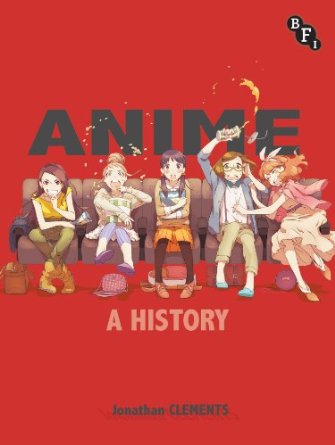
41bkTuP9TdL._SY445_Apparently my book Anime: A History (US/UK) has just been selected as one of 23 Palgrave titles receiving this year’s Choice Award, a recommendation dished out by Choice: Current Reviews for Academic Libraries, a publication of the American Library Association. “This list of publications reflects the best in scholarly titles and is designed to attract the attention of the academic library community,” quoth Palgrave.

Undercover Manga

shimajiro appI’ve been wondering for a while when the Doraemon bomb was going to go off. Every time I’ve been to China in the last three years, amid ever-escalating sabre-rattling over the Senkaku Islands, I have found the locals avidly denying any interest in Japanese culture. I have found media students unprepared to work on papers about anime, for fear that the word “Japan” will be on their resumé ever more. And I have watched, every day, as two Japanese invaders march in right under Chinese noses.

One is Shimajiro, an infant tiger cub who appears in a hybrid kids’ show that is part anime, part live-action play school. I’ve watched Shimajiro sing songs about London Bridge and demonstrate how to go to the toilet, and nobody has noticed that he’s really Japanese, because the broadcasters have stripped out the original live-action framing footage and replaced it with Chinese people. Also, they don’t make the mistake of calling him Shimajiro, either. In China, he is known as Qiao Hu Dao, the “brave and clever tiger.”

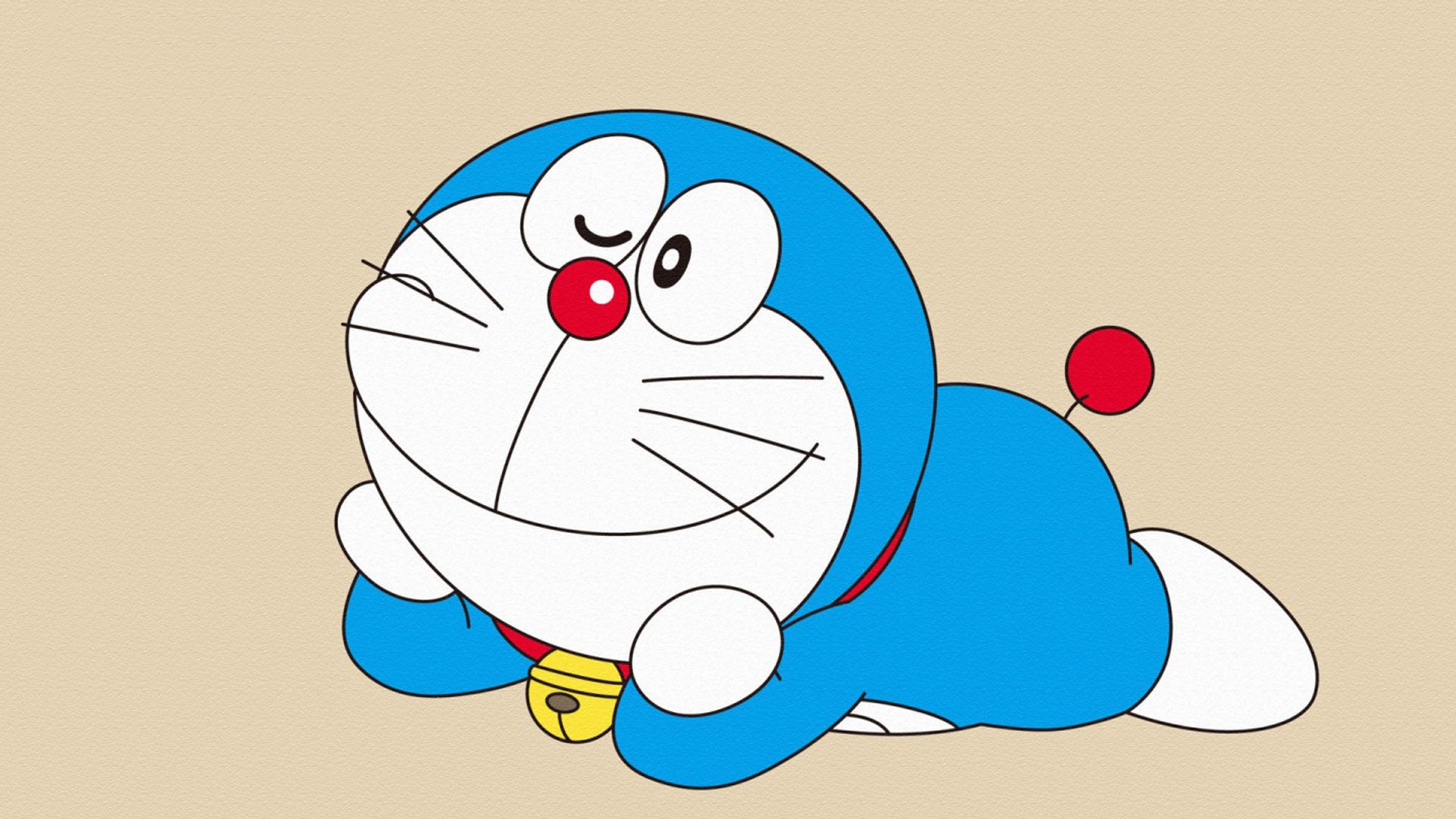
doraemonThe other is Doraemon, that time-travelling blue robot cat who recently enjoyed the surprising honour of a 12,000-page manga translation funded by Japanese government boondoggle money. Doraemon remains a popular movie and TV figure with anime audiences, but was also the subject of so much manga piracy in decades past that he is known by several different names in the Chinese world. My favourite is Ding Dang the Robot Cat (ding-dang, you see, being Mandarin for ding-dong, if you ever need it). He’s even the subject of an exhibition in Hong Kong, which trilled, unwisely, about his true origins.

The Japanese authorities, excited at the amount of love for Ding Dang all over the mainland, have made Doraemon a cultural ambassador, thereby pushing their soft power agenda by showing the Chinese that a perennial favourite was actually from the other side of the water. This has entertainingly backfired, with a schmuck-bait editorial in the Chengdu Daily pointing out the blindingly obvious – that Doraemon was an effort to make Japan look cute and less threatening – and several lesser newspapers getting increasingly irate about the idea, with the Global Times frothing “we must never let a little robotic cat take control of our minds.” Top tip.

This article first appeared in NEO 131, 2014. Jonathan Clements is the author of Anime: A History, in shops now (UK/US).

“The Half of What I Saw…”

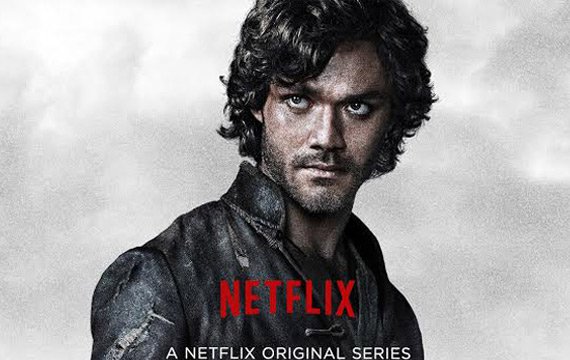
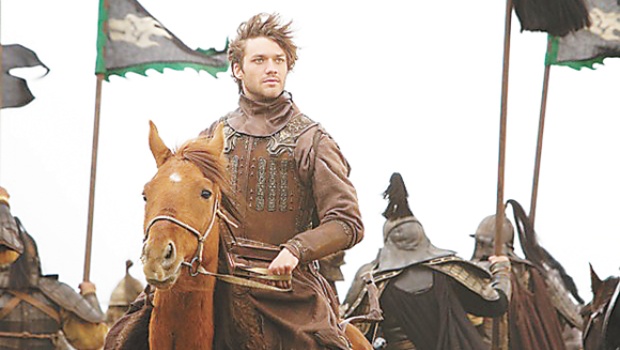
Marco-Polo-NetflixNot even Marco Polo was able to edit his own life into an all-encompassing narrative. On his deathbed, surrounded by his weeping daughters and his long-serving manservant Suleiman, he was entreated by Venetian priests to admit he had made up many of the tall-sounding tales of his travel. The holy fathers were worried that “Marco of the million lies” would go to hell if he did not finally confess that he had made up his stories of a black rock that would burn, of oil that came out of the ground, of giant sea creatures and Chinese gods. His last words were a fitting epitaph: “I have not told the half of what I saw.”

Dozens of writers have grappled with the way to best tell his story. Luckily for me, I only had to write a biography, which begins with his birth and ends with his death. For the writer of fiction, there are myriad temptations. I’ve toyed with a one-act play, in which Marco and his collaborator Rustichello pace the floor of their opulent but confining house arrest, arguing over the best way to set his knowledge down on paper. Marco is all about facts and descriptions, a tedious village-by-village account of the way east; Rustichello, a former troubadour and Crusader, wants stories of derring-do and fortean curiosities, and in one sense, it’s Rustichello’s Marco that survived through the ages.

You could plump for Italo Calvino’s method, concentrating on the relationship between Marco and his patron, Khubilai Khan, as the aging monarch demands stories of Marco’s adventures. But what of the roads less travelled? What of Marco on his homeward route, escorting the mysterious Princess Kokachin to her doomed wedding, and plunged into local conflict in Persia and befriending his Muslim counterpart, Rashid al-Din? What of Marco the official in China under the Mongols, dealing with intrigues, crimes and murders in a nation under military occupation? And what temptations there are to the historical screenwriter to edge gently out of evidence and into reasonable speculation – what if we ignored the evidence that Marco never saw Japan for himself, and inserted him into the Mongol fleet that suffered the consequences of the first Kamikaze.

cc030914j021f15.jpg_1328648940The new Netflix series tries and largely succeeds to have it all, opening with a prolonged throne-room scene in which Marco shows off his knowledge of Uyghur and Mongol, and in which the Polo family’s failure to keep their promises to the Khan lead to the effective handing over of Marco as collateral to save their trading contracts. But there are nods and foreshadowings, even in those opening few minutes, of the direction that John Fusco intends to take. Khubilai’s beloved wife Chabi, a Christian, stands at his side in her distinctive head-dress. An official called Ahmad is pointedly referenced, ahead of the downfall known to all readers of Marco Polo’s Travels. A lissom figure on the sidelines appears to be Princess Kokachin, thought by some to have been the woman who stole Marco’s heart, even as he was forced to convey her to her new husband. And then the credits begin, awash with impressionistic Chinese inks that create simulacra of his tallest tales – figures and creatures that may, or may not, only exist on paper or in his mind, even as the music soars and hints at Game-of-Thrones-y intrigues and Marco’s endless, infectious sense of wonder at the sights of the Far East.

Jonathan Clements is the author of Marco Polo (US/UK) and A Brief History of Khubilai Khan (US/UK). Marco Polo, the TV series, begins on Netflix on 12th December.

The Anime Erotic

crisis-header11.jpgAt the request of the Czech convention Animefest earlier this year, I reprised my infamous speech on the Anime Erotic — a transcript of which can be found in my book Schoolgirl Milky Crisis (US/UK). The speech has now been uploaded onto Youtube with English subtitles and, soon, I am told, subtitles in Czech. You can watch it here.

And of course, my Wrong About Anime speech from the Animefest two years earlier, is still available here.

Glocal Heroes

hb3linruc6cl024irwsmWith a press release cunningly put out in silly season, when all the real journalists are still only struggling back from vacation, August’s announcement that Tom Cruise was going to get a J3C Award managed to make it onto a lot of news sites desperate for something that didn’t involve shootings or revolutions.

The 2nd Japan Cool Content Contribution Awards, to give them their full name, seem to be a Hollywood-based feather-stroking exercise by JETRO and METI, two Japanese government bodies with a vested interest in fostering overseas industry ties. They’re doled out at the Tinseltown consulate, and seem designed to point the eyes of the press at those media splashes that have some sort of connection to Japan. Tom Cruise, of course, has recently starred and produced in Edge of Tomorrow, the inanely retitled but rather fun adaptation of Hiroshi Sakurazaka’s novel All You Need is Kill. Another award is going to Doug Liman, producer of the Godzilla remake.

Wait, there was a 1st J3C awards? In 2013 the gongs were handed out to Tim Heroes Kring, presumably for creating the character of teleporting time-traveller Hiro Nakamura, Don Murphy, the producer of Transformers, and Vicki Shigekuni Wong, who produced Hachi, the Richard Gere vehicle about an abandoned dog.

J3C is an interesting restatement of a topic that this column has monitored for the last five years – Japan’s ever-increasing belief in and, indeed, reliance on the power of its intellectual property to earn money overseas. It’s been eight years since Peak Anime in 2006, but initiatives like J-LOP (NEO #123) continue to push Japanese comics, novels, games and movies as blue-chip rough diamonds, waiting to be honed into globally-locally acceptable jewels.

This won’t come as news to any NEO reader. Media splashes with a connection to Japan comprise most of the content of this magazine in any month, but J3C seems to have a more ardent purpose, to remind Hollywood that Japanese intellectual property is a powerful, world-beating commodity that really deserves their attention. A cynic might suggest that they have been inaugurated just as Hollywood’s attention has turned away from Japan to the potential of a market with one billion pairs of eyes – stop looking at China! Look back at us!

Jonathan Clements is the author of Anime: A History. This article first appeared in NEO 129, 2014.

Podcast: Scotch Tape

Necromancy, ten years of NEO, and the carrot of continuations on our 27th podcast sla-2014.jpgJeremy Graves is joined by the fragrant Gemma Cox of NEO magazine, the pungent Andrew Partridge from Anime Ltd, and the newly doctored Jonathan Clements to discuss Scotland Loves Anime, the Boom Boom Satellite Distraction Device, and rogue robot tanks. You can download the podcast here.

0:00 intros and hellos

04:30 Dealing with a film festival in the shadow of Ghibli.

09:30 Bad hair days and uncanny valleys on Appleseed: Alpha.

11:30 The miseries of live television.

14:00 Appleseed: Alpha, the jury’s view.

16:30 The true nature of the Golden Partridge Award, soon to be renamed the SLA Glass… Thing.

20:00 Déjà vu and original dialogue in English.

22:00 Bayonetta and evocations of the beer-and-curry era.

25:00 Trigger warnings in The Wings of Honneamise. Berserk 3 and the “carrot of continuations.”

32:00 A young lady’s primer to fan service and fighting the patriarchy. Questions on the nature of the Noitamina target audience, and plugs for Psycho-Pass and Rolling Girls. Why do less women get promoted to anime director?

neo_double.jpg41:00 Gender demographics at NEO and Scotland Loves Anime. The flexibility of the female audience, and the desirability of girls in bikinis saving the world from aliens.

45:00 Just how involved is a “supervising” director?

46:30 The audience turn-out for Ghost in the Shell. The suggestion that fandom is a non-renewable resource. The longevity of Cowboy Bebop, outliving the television technology that originally screened it.

52:00 Celebrating ten years of NEO magazine with the 130th issue. The haptic luxury of print magazines, versus beaming digital data into your brain. The international reach and originality of the long-running Manga Snapshot feature. Deciding what goes on the cover, and the perennial problems of timing content to available releases and images.

68:00 Why commissioning your own artwork isn’t always the answer.

73:00 Paper quality, fonts and leading – a bunch of things that nobody ever thinks about.

76:00 Let’s go on a journey, a journey into NEO time… where did the name come from?

79:00 One more round on the whirligig of the “Manga” Entertainment name controversy.

space-dandy-honey-boobies-breastaraunt-fried-dragon-ramen.jpg81:00 The scandalous secret behind NEO’s recipe column. The tax-deductible nature of a “research” trip to Hooters.

85:30 The difficulties of knowing more than one’s readers when the readers have got all weekend to torrent, stream and binge the latest shows.

87:30 The desirability of “balanced” reviewing. What can we learn from Australian Vogue…? Would you buy a DVD compared to “colonic irrigation with cheap caustic soda” or with a review that promised “another shouty advert for stuff you don’t want”?

94:00 How do you define a star rating? We are 87.5% certain we know the answer to this question. The spoilerific nature of Sight & Sound and “the conversation.”

102:00 The need for necromancy in reminding fans of forgotten simulcasts. “Not all people live in the same Now.”

105:00 The perils of online search bubbles. Sting’s informational message for the future and the nature of the “closed circle of consumption.”

110:00 Dragon Ball Z: Battle of Gods.

117:00 Giovanni’s Island – the festival winner.

127:00 Jeremy returns from his dead battery to plug MCM Expo and events pertaining thereto.

And we’re out. The Podcast is available to download now HERE, or find it and an archive of previous shows at our iTunes page. For a detailed contents listing of previous podcasts, check out our Podcasts page.


Two Downloads

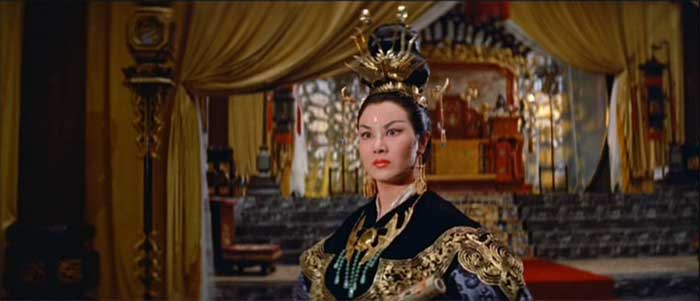
02After many years of waiting and wrangles, my book on the controversial medieval Chinese Empress Wu is finally re-released on Kindle and paperback from Albert Bridge Books (US/UK). As the blurb recounts:

Empress Wu Zetian (624-705 AD) was the only woman to be the sovereign ruler of imperial China. A teenage concubine of the Tang Emperor Taizong, she seduced his son while the emperor lay dying. Recalled from a nunnery as part of an intricate court power-game, she caused the deaths of two lady rivals, before securing her enthronement as the Emperor Gaozong’s consort. She ruled in the name of her husband and two eldest sons, presiding over the pinnacle of the Silk Road, before proclaiming herself the founder of a new dynasty. Worshipped as the Sage Mother of Mankind and reviled as the Treacherous Fox, she was deposed aged 79, after angry courtiers murdered her two young lovers.

The subject of countless books, plays and films, Empress Wu remains a feminist icon and a bugbear of Chinese conservatism. Jonathan Clements weighs the evidence of her life and legacy: so charismatic that she could rise from nothing to the height of medieval power, so hated that her own children left her tombstone blank.

Meanwhile, it’s a condition of my doctorate that my thesis be freely available to other researchers, but to spare you the bother of going to the Library of Wales and photocopying it, here’s a PDF. The title is A History of the Japanese Animation Industry: Developing Technologies, Changing Formats and Evolving Audiences. I’m afraid what blurb there is is couched in significantly more sesquipedalian prose:

This thesis offers a discursive genealogy of the Japanese animation, or ‘anime’ industry, outlining changes to its prevailing form caused by successive disruptions – fluctuations in economic conditions, applications of new technology, and changes in available formats. Instead of focussing on the content of the anime texts themselves, it addresses the form of the content – treating the anime texts as manufactured ‘objects’ or as performative ‘events’ that are created, refined, marketed and sold.

The approach is historiographical, favouring published testimonials and memoirs from the participants in the Japanese animation industry, and assessing them in terms of possible errors of historical practice. The participants’ activities are categorised as points on a chain from Ownership of the intellectual property to Access to the text, prompting not only consideration of changes in the processes of production, but also in the oft-neglected areas of distribution and exhibition.

Spanning the 67 years from 1945 to 2012, in overlapping periods defined by developments in formats and technology, a picture is presented not only of the anime industry, but of its participants’ changing sense of what that industry is, its traditions and potential. This will present a foundation for future research into anime’s history, not only through this narrative of events, but also through consideration of the theoretical issues deriving from the nature of the sources.

And of course, if you like what you see there, a significantly expanded version, losing a lot of the theory and introduction, but adding four extra chapters, has been published by the British Film Institute (US/UK).