Manga Snapshots

For several years, I have been writing a column in Neo magazine called Manga Snapshot. Every month I take a different Japanese comics anthology magazine and literally take it apart, examining everything from the paper quality to the adverts. There are so many comics magazines in Japan that despite running now for four years, Manga Snapshot has yet to repeat a title. I’ve covered all the usual magazines for boys and girls and housewives, and the usual niches like romance and war comics, but also weirder areas. Detective stories for lonely Goths, educational golfing magazine containing nothing but manga about golf, a magazine entirely devoted to mahjong… several of these were reprinted in the Schoolgirl Milky Crisis book, and in the event that there is a Schoolgirl Milky Crisis 2, there will be many more of them.
Continue reading

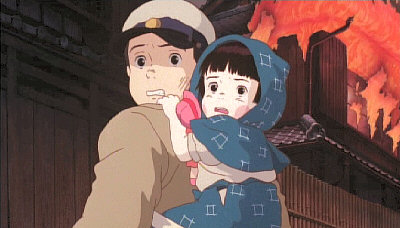
From the People Who Brought You Pearl Harbor

WW2 has become a stripped-down fable of Star Wars proportions – a few brave heroes, taking on a force of terrifying evil against impossible odds. On the Good Side, the rag-tag hard-pressed Alliance. On the Bad Side, the dark empire, with its storm troopers and its nice uniforms. The good guys win, and the good guys are us.

This doesn’t work in Japan.
Continue reading

Political Noodlings

Oh, you’ll miss him when he’s gone! It was the beleaguered Taro Aso, back when he was Foreign Minister, who stood up to the French presidential candidate Segolene Royal when she suggested that manga was responsible for Japan’s social ills. During the same period, it was Aso who pushed for “contents” (films, games, anime, manga) to be acknowledged as one of Japan’s most virulent exports. When he became Prime Minister, he wooed the otaku vote by proclaiming his love for manga. It was Aso who supported the controversial National Media Arts Center, lauded by some industry figures as a saviour of anime, although many others (myself included) regard it as a likely disaster: a “national manga café.” And, behind the scenes, I am sure that his influence must be at least partly responsible for the new animated political adverts on Japanese telly ahead of the national election.
Continue reading

Instant Gratification

There’s a new way of watching television. It’s the one that doesn’t involve television at all. TiVos and smart boxes have changed some viewing habits, while online downloading has completely turned them on their head. People have stopped trusting broadcasters and started making their own choices about what’s going to be on the box on a weekday.
Continue reading

Shock Treatment

“Oh, you just wait!” she said. “Our exhibition has got all kinds of manga stuff in it. But the coolest part, the really amazing part, is an Adults Only bit. I mean, don’t get me wrong, we understand that manga and anime cross over all kinds of genres and areas, and that there’s manga for kiddies and manga about pets, and manga for old people as well. So we get that. But we also know that the adult stuff is part of the whole picture, and we don’t want to leave that out.”
Continue reading

Big Ideas

Sadly, it wasn’t the first time I had been called in to translate from English to English. The Japanese producer had once spent three years at University College London and was fully fluent, but he wasn’t quite getting through to the American producer. By the time I arrived they were talking at insanely cross-purposes.

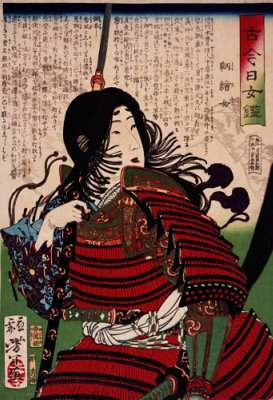
The American thought he had the greatest idea ever: a samurai drama about a girl in Japan’s medieval wars – a woman warrior in the midst of all the conflict, kicking arse and taking names, all done in that wonderful anime style we hear so much about. All he needed was a co-producer. So he’d gone to a big Japanese studio and offered them the Chance of a Lifetime to invest in his brilliant idea. The Japanese had told him to get stuffed, but had done it so politely that he hadn’t realised.

The big issue, as far as the Japanese were concerned, was that the American was offering them nothing. Worse than that, he was pitching them something that they already had, and then adding a pointless extra to justify his name on the credits. It was like me offering to tell the true story of Prince Charles and Lady Di, but from the perspective of their previously unmentioned cousin, Hagbard the Barbarian. Why were the Americans inventing a samurai heroine when there already was one in the historical record? Her name was Tomoe Gozen, and if the Japanese decided to make an anime about her life, they wouldn’t really need any help from abroad.

In fact, the Japanese were rather affronted that the Americans had suggested it at all. Their own company had made a very similar show, which we shall call Schoolgirl Milky Crisis, only two years earlier, and the breathless excitement of the foreign offer seemed to come from a producer who had no knowledge of what the Japanese had already made and recently sold. It would be like me calling up Zack Snyder and saying: “I know, why don’t you do a film of Watchmen!”

“It’ll make a great manga!” suggested the American, hopefully.

The Japanese honestly didn’t know where to begin, and left it to me. I tried to point out that there were already a lot of manga in Japan. The Japanese are up to their eyeballs in Japanese comics. They don’t really need anyone else’s help coming up with new ones. They’ve got that pretty much covered.

Instead, they offered the American an olive branch. If you think this is such a good idea, they said, go away and publish that comic. If it’s so good, it’ll be a bestseller, and then you’ll have people beating down your door to film it.

The American was baffled.

“But it’s a good idea!” he protested. The Japanese sucked air in through their teeth and began to bow their way out of the room.

“What did I do wrong?” the American asked me accusingly. “All I wanted was a coproduction deal. I bring the world-beating idea, and the Japanese bring the… well, the money. And do all the work. And then I tell them if they’re getting anything wrong.”

Yes, I said. I can’t imagine what put them off.

Jonathan Clements is the author of Anime: A History. This article first appeared in NEO #58, 2009.

Oh, Canada!

To Canada, where being an anime or manga fan has become an increasingly difficult enterprise over the last four years.

The origins of the problem, such as it is, lie back in 2005, when a man from Edmonton, Alberta was convicted of importing material depicting children committing sexual acts. Specifically, they were comics from Japan – so here we go again. He was put on the sex offenders’ registry for five years, given a suspended sentence, 100 hours community service and fined $150. He had broken Canadian law and he paid the penalty.
Continue reading

Fresh Air

In science fiction and related fields, it was once possible to smell demographic changes. The old Forbidden Planet basement used to stink of wet dog, Wotsits and monosodium glutamate sweat. Suddenly, in the mid-1990s, it began to smell of peaches, lemons and vanilla. Had they finally fixed the air conditioning? Nope, but The X Files had brought in a sudden influx of female fans, and they… you know… washed.
Continue reading