
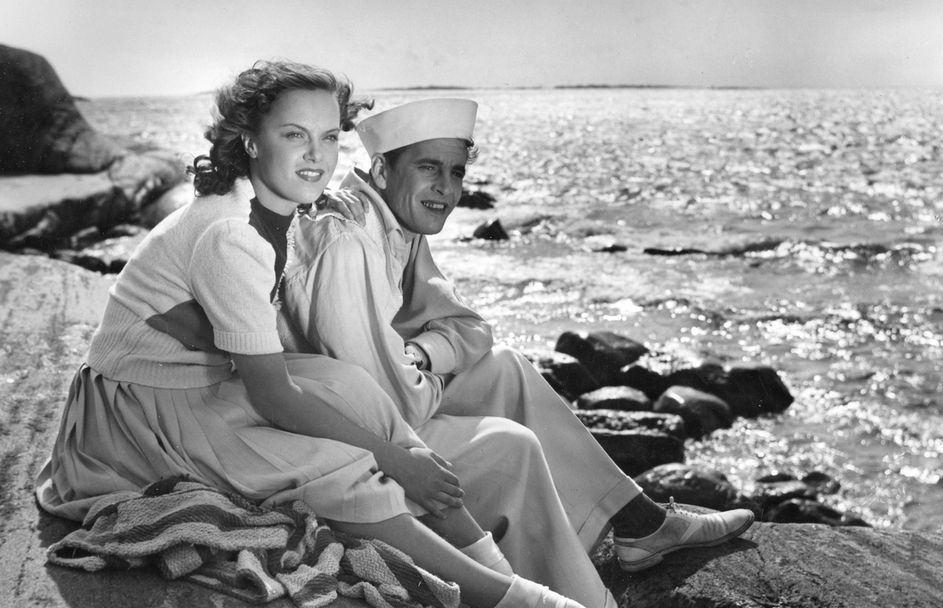
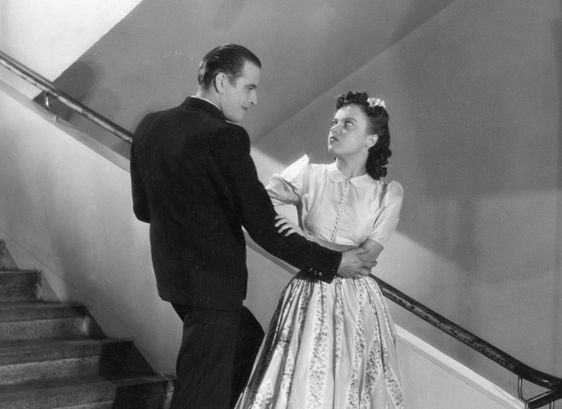
Teenage firebrand Lotta Koskimaa (Liisa Tuomi) has had enough of Deputy Judge Arvo (Pentti Saares), and deserts him on the dancefloor at her school’s spring ball after he tries to get handsy. She tries to get the local pastor to dance, and the flustered man of God orders her from the school gym. She obeys but cheekily blows him a kiss on the way out.
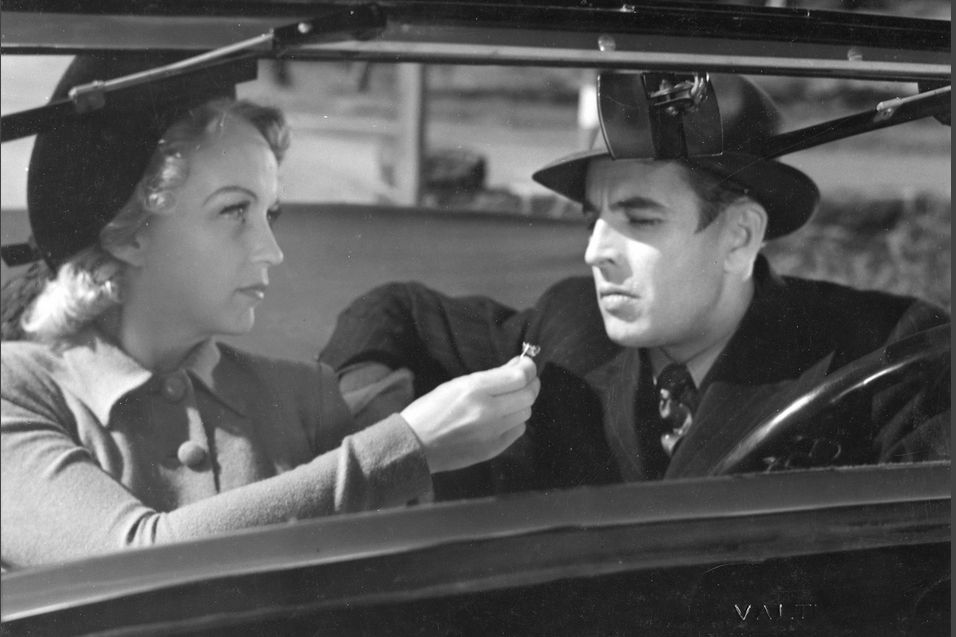
Arvo slinks off for a second date with trainee dentist Raili Tervola (Lea Joutseno), who happens to have met Lotta’s brother Viljo (Tapio Nurkka) while waiting for him at the restaurant. Raili, too, hectors Arvo over his womanising and leaves him to it.
The Koskimaa family slink off to the countryside for a tense semi-holiday, with Lotta fuming about her school reprimand, and her father Einar (Paavo Jännes) discovering that her behaviour has put his own appointment, as a professor of dentistry, into doubt. Meanwhile, Einar and his wife are experiencing marital difficulties, and even as the love polygon of the younger cast members resolves into a standard Finnish happy ending, they face the prospect that the elder generation is about to split up, even as the eve of their twenty-fifth anniversary approaches.
Hopeakihlajaiset is based on a script by Klaus U. Suomela, which placed second in Suomi-Filmi’s notorious New Writers competition in 1940. As regular readers will know, the winner was The Dead Man Falls in Love (1942), described on this very blog as “ a garbage fire,” so how much worse was the runner-up? I note with interest that Finnish Wikipedia doesn’t even attempt a plot synopsis, possibly because the story is all over the place.
The production manager didn’t want to make it at all, and since the author had submitted it as a play rather than a screenplay, it had to be polished up by Martti Larni before it was even camera-ready. Suomela kited his competition win into a theatrical run for the play as well as a novelisation before the film even appeared – the film’s director Wilho Ilmari had also helmed the run at Helsinki’s National Theatre a year earlier, in which Aku Korhonen played Einar. For some reason, he did not come back for the screen adaptation.
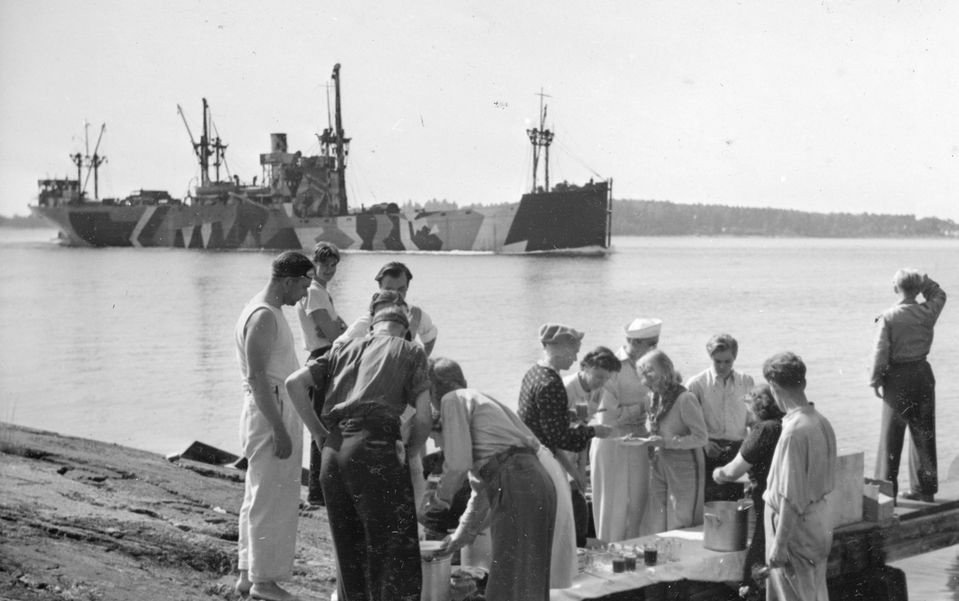
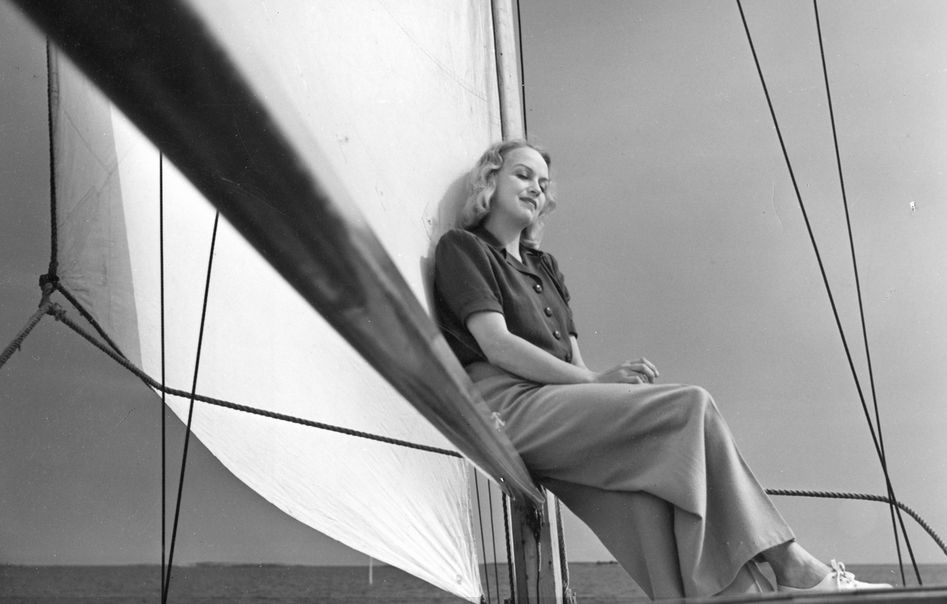
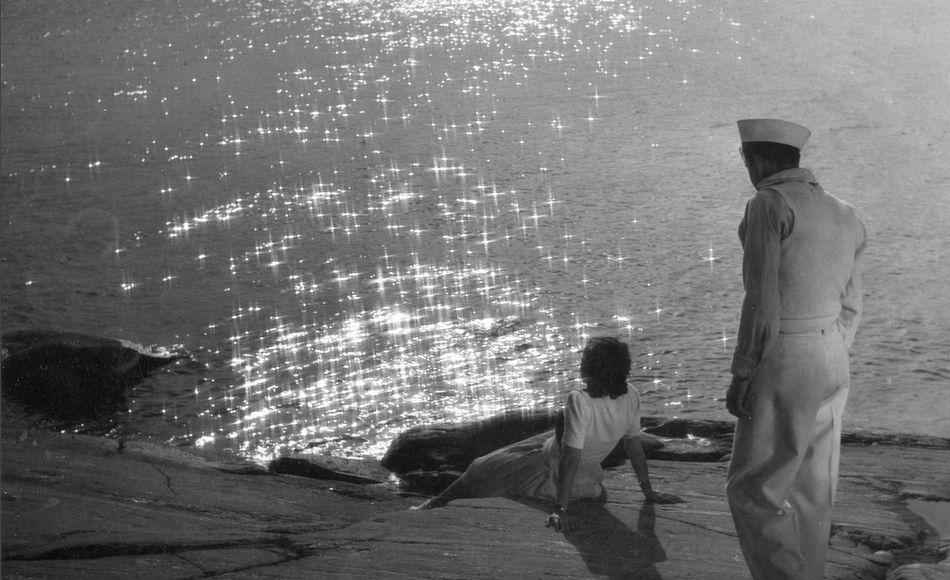
Films of the era had to make a judgement call on whether to reference the war or not – would it be gauche not to mention it, or unwise to assume it would still be ongoing by the time production was complete? Like Ilmari’s previous August Fixes Everything (1942), The Silver Betrothal Anniversary simply pretends that the war isn’t happening at all, and so there are no references to rationing or the draft. Larni’s rewrite at least gets the cast out of the studio, for several location scenes, including Lea Joutseno bursting into song on a sailboat, wringing the most out of the scenery of the Finnish summer. The marine footage, in fact, is the thing that really marks this film out eighty years later, with fantastic shots of Sörnainen harbour and sailing sequences shot off Espoo’s Vapaaniemi. One of the production stills even features the film crew setting about their lunch by the sea, while a warship in fantastic dazzle camouflage lurks sinisterly offshore.
The critics, however, still found something to moan about. After only complaining a couple of weeks earlier that August Fixes Everything was too theatrical, Olavi Vesterdahl in Iltalehti complained that The Silver Betrothal Anniversary was too, well, filmy, citing numerous cut-up techniques and sudden cutaways as disruptions to the telling of what ought to have been a simple story. Meanwhile, Salama Simonen in Uusi Suomi said the exact opposite, that the film played way too much like a stage play that happened to be on camera. The film, certainly, is nothing to write home about, particularly considering the terrible sound quality of some of the school scenes, which were shot on location rather than on a set. But while the critics might have carped about the story, some of the framing of the shots still looks arty and compelling even today.
Screenwriter Martti Larni, previously seen here adapting Over the Border for Suomi-Filmi, is a fascinating figure in Finnish literary history. Although he adapted several screenplays during the 1940s, his real reputation was founded on his biting satires, not only of Finland, but of the United States of America, most notably in The Fourth Vertebrae, about a Finnish conman who finds a ready supply of victims in the Land of the Free. Unbeknownst to Larni, the book was extensively pirated in the Soviet Union, where the authorities were so enamoured by its take-downs that it was given away free at airports. After his brief wartime career in the movies, he would spend several years in the USA, where he eventually became the editor of a Finnish-language journal in Wisconsin, Työväen Osuustoimintalehti (the Worker’s Cooperative Magazine). He also wrote several books about the Finns of North America, including The Fire of Minnesota and A Camera Tour Among the Finns of America. Almost none of his work is available in English, although his books were translated into over 20 other languages.
Wilho Ilmari hoped to make another film, The Vanishing Border, but it was stuck in production hell after the military authorities refused to allow for the filming of scenes near the front line. He sloped off back to the theatre and would not direct another film until Love is Even Quicker Than Piiroinen’s Ram (1950).
Jonathan Clements is the author of A Short History of Finland. He is watching all the Finnish films so that you don’t have to.








 The Official Schoolgirl Milky Crisis Blog