When the British first occupied Hong Kong in the 1840s, their main enemy was malaria, which killed a quarter of the garrison within months. But there was also the prospect of an enemy showing up from the sea.
It took them forty years, and the prospect of Russian agitation in the region to persuade London to front the cash for a gun battery facing the Lyemun channel that led to Victoria Harbour, although rather embarrassingly, it never got used. It was installed in 1888, but someone soon realised that the emplacements were too high, and it couldn’t actually hit any ship in the channel at all.
In fact, if the Lyemun Battery opened fire, the only thing it stood a chance of hitting were the suburbs of East Kowloon, which had been British territory for the previous two decades.
Today the Lyemun Battery is home to the cumbersomely titled Hong Kong Museum of the War of Resistance and Coastal Defence. What would have otherwise been a relatively obscure museum about a gun on a hill that never got to shoot at anybody has been rebranded and expanded to take into account the story of the defence of Hong Kong since the time of the Mongols. This, in turn, has been aimed at reminding everybody that (a) Hong Kong is part of China, and (b) it also was an enemy of the Japanese in the Second World War, just like China… which Hong Kong has always been part of.
Unfortunately, such protestations unpack in the galleries to recount centuries of complete indifference shown by the Chinese authorities towards Hong Kong. There wasn’t even a concept of sea defence until the Ming dynasty, claims one exhibit. The gallery about the People’s Liberation Army’s 17 years in the territory doesn’t have a whole lot to say, and limits itself to pictures of them marching up and down a bit.
There are some interesting stories about the anti-Japanese underground in WW2 and the Hong Kong Volunteers, who became a sort of guerrilla organisation, celebrated here in a quirky statue that appears to be emerging from a manhole. There is also a memorial to the sad story of Joseph Hughes, the twenty-year-old soldier from Glasgow who was killed desperately trying to put out an ammunition fire on the truck he’d been driving, and was awarded a posthumous George Cross in 1946.
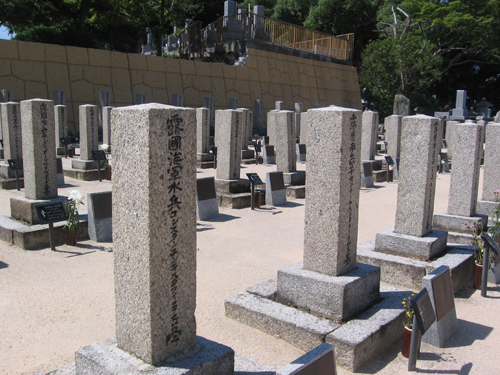
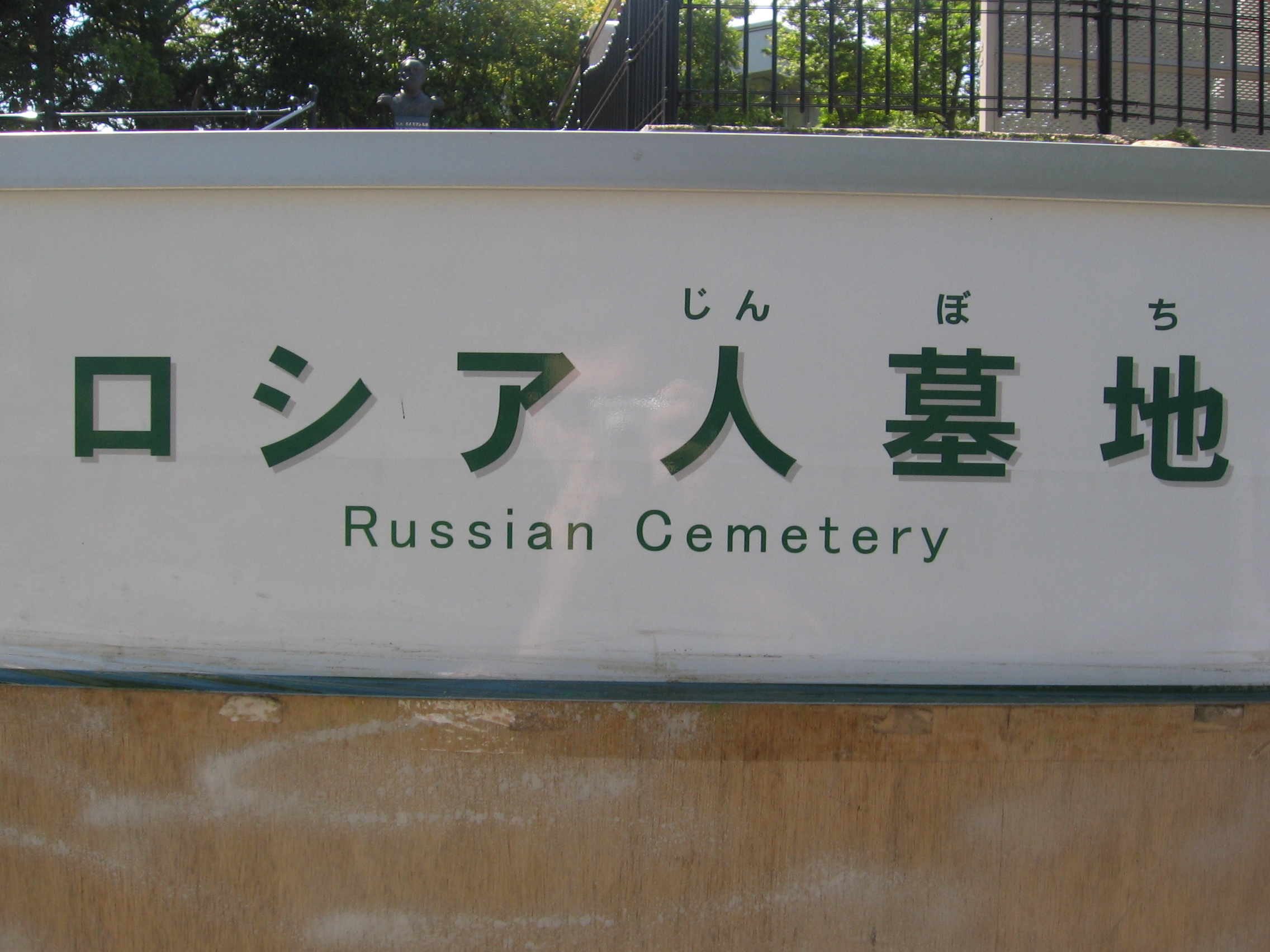
A tram-ride away from the main train station in Matsuyama, set on the side of a hill, there is an array of 98 stone pillars, each bearing the name of a long-dead foreigner. All were Russian prisoners of war, held by the Japanese from 1904-5.
Some 4000 “Russians” were interned in Japan as the war went on. Louis Seaman, a reporter from the Daily Mail, was scandalised at how many of them weren’t really Russians at all.
“The prisoners at Matsuyama were all from White Russia, mostly Finns and Poles, with a decided sprinkling of Jews. Pondering on… the woes of these people in their own unhappy land, the thought was forced upon us that his Imperial Majesty the [Tsar] of all the Russias was emulating with emphasis the illustrious example of David of old with Uriah, in sending these people as cannon fodder to the Orient, where the more killed the better for the safety of his throne at home.”
Although many names on the headstones are Konstantins, Sergeis and Dimitris, the graves evoke the multi-racial mix of the Tsarist war machine that was defeated by the Japanese. Uladai Kodasayev (d. 17th April 1905), a Muslim, is plainly from West Turkestan, as is the soldier Khazeem Shayekov (d.30th May 1905). Jakob Kleinman (d. 15th May 1905) is a Jew, perhaps from Poland; Henrik Tadorius (8th May 1905) might have been a Swedish-Finn. Moyshe Volkov (d. 28th March 1905) has a Jewish name but a Christian grave-marker – did he convert or did someone mix things up? All these men died thousands of miles from home as part of the Tsar’s ill-fated attempt to take on the Japanese in Manchuria.
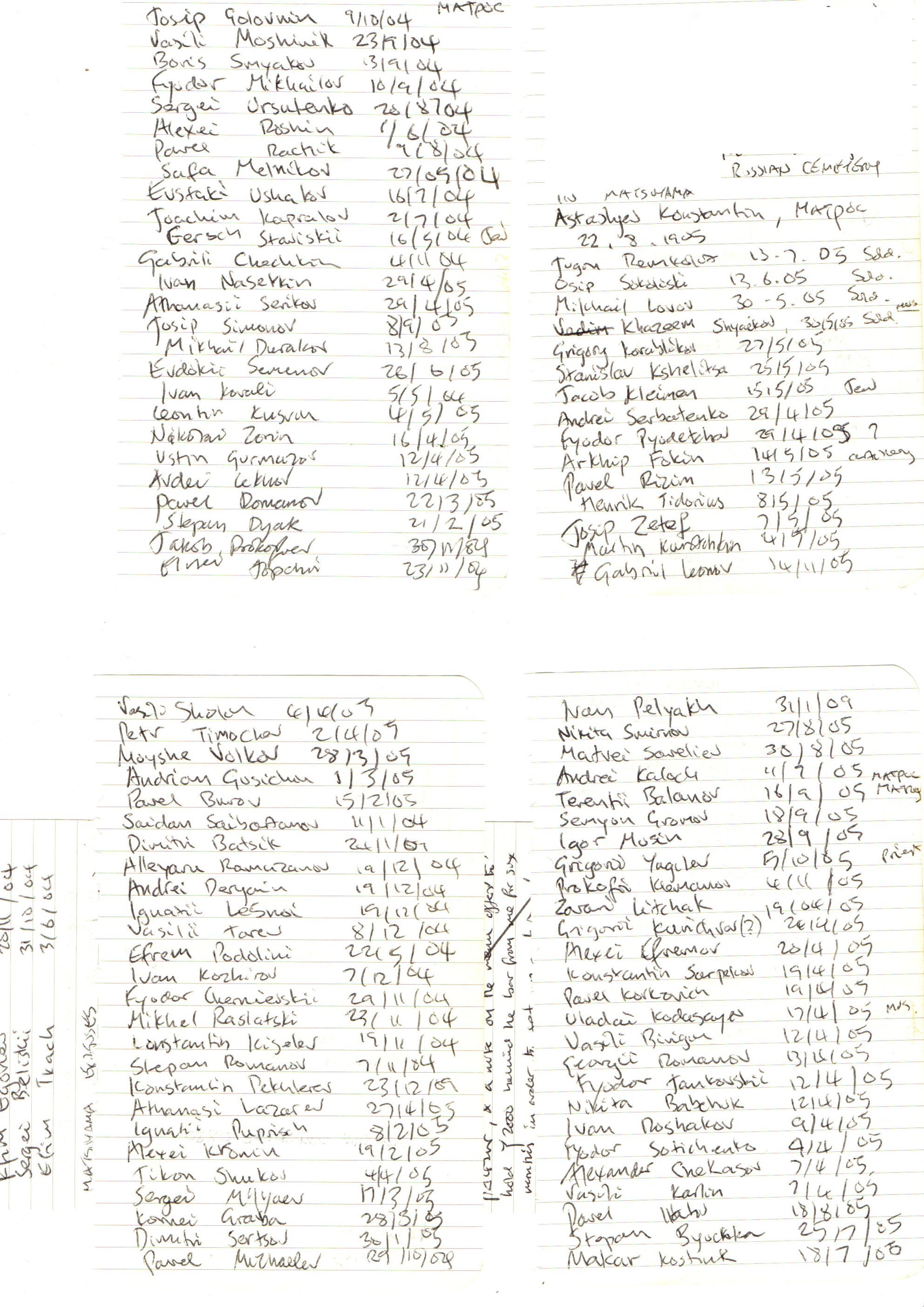
The Russian graveyard is a relatively obscure pilgrimage site in Japan. Even I can read enough Russian to see that the Cyrillic nameplates have been written by someone from Japan, muddling through with a dictionary and crossed fingers. Sixteen years later, as I am clearing out my desk drawer, I find the notebook in which I wrote down the name on every “Russian” headstone in the Matsuyama cemetery. It’s not a whole lot of use to me at the moment, but someone out there in the internet may find it useful, so I have made it available here.
The main approach towards Guangzhou on the Pearl River is dominated by a midriver island, called the Big Tiger because it is shaped a bit like one. The waters around came to be known in Chinese as Humen, the “Tiger Gate”, although Europeans tended to refer to it in allusion to a slight Portuguese mistranslation that called it the Tiger’s Mouth. In the days of Guangzhou as a trading port, the sole point of access for most Europeans in China, both the midriver island and the banks that flank it were festooned with forts and cannons, in the vain hope of keeping foreigners and pirates in check.
It was here, at Humen, that the Chinese anti-drugs tsar Lin Zexu famously showed the British that he meant business by destroyed 200,000 crates of confiscated opium, hurling them into two large ponds, mixing in copious quantities of salt and lime, and then repeatedly flushing the stinky mess out into the river. As I sign my way into the Opium War Museum, the security guard mentions that the ponds are still there, visible right through the window next to me. Today, they are two unassuming bodies of water strewn with lily pads, each about twice the size of an Olympic swimming pool.
“Are you German?” he asks me, oddly. “What country are you from?”
“England,” I say.
“Ah, then that’ll be your opium that was out there!” he says, patting my shoulder with a sad smile.
The Lin Zexu Memorial Pavilion in Humen is an official “Patriotic Education Base.” To hear some of the shrill internet punditry about it, you would be forgiven for thinking that it was a monument to shouty propaganda, but I found it to be carefully even-handed. When British parliamentarians themselves were calling the Opium War the lowest deed in British history, it’s hardly surprising that the museum calls the drugs trade evil. But it also celebrates Lin Zexu, the brave official who wished he could be a freight and logistics policy-maker, but ended up chiding the British for flogging an addictive drug to the Chinese.
A whole wall is devoted to portraits and potted histories of the British and American authors, missionaries and diplomats who publicly argued that the opium trade was shameful, including, to my great surprise, the future governor of Hong Kong, John Bowring. Meanwhile, although the Chinese story reflects the position of Lin Zexu in the modern Chinese school curriculum as the first herald of a China that could stand up for itself, the museum does not shy away from the fact that he was cancelled after dragging the English into war, packed off to a remote posting in the western desert, as far from the sea as it was possible to go. Included in the exhibition is Qing Xiaohong and Huang Qiannan’s painting Lin Zexu departs for exile in Xinjiang, in which the proud hero to be found in multiple statues and portraits elsewhere in the museum is reimagined as a haunted failure.
The story of the Opium Wars and their aftermath, notes the exit sign in the museum, leaves “a lot of question churning in our brains.” It ponders why the opium crisis, which could have easily been a global phenomenon, was so conspicuously limited to China. It wonders why a drug that had been safely used as a medicine for centuries would suddenly become a dangerous recreational narcotic. It pointedly asks if the blame really lay entirely with the feckless outsiders who made their fortunes as drug-dealers, when the vainglorious, collapsing Qing dynasty seemed unable to police its own subjects.
I’ve been reading Julia Lovell’s history of the opium war. She is very good on both the politics back home in Britain and the reports from the Chinese. She also has an eye for bonkers details, my favourite being the decision of one mandarin in Ningbo to acquire a barrel of monkeys, strap fireworks to them, and find some way of flinging them at the Royal Navy so they could scramble around the ships spreading fire. His genius scheme for the Ningbo Attack Monkeys was thwarted because none of the Chinese could think of a way to get close enough to the English, even if furnished with a monkey-flinging catapult.
Lovell is clear-eyed about the evils of the drug trade, the craven nature of most of the British, and the extinction-level incompetence and corruption of the Chinese. What does surprise me, however, is the message of her closing chapters on the historiography of the war, in which she argues that the Chinese did not give much of a toss about it until 1990, when it was suddenly squirted onto the school curriculum as part of a concerted effort to create a narrative of the “Century of Humiliation.” Somewhere in Beijing, a meeting of policy wonks had concluded that the protestors in Tiananmen Square were lacking in sufficient national spirit, and that the next generation needed to be spoon-fed a narrative of foreign oppression and Chinese resistance, with the Opium Wars as the obvious starting point. That’s all very well, but wouldn’t it have been obvious before 1990 as well…?
It is Christmas 1984, and struggling single mother Niina (Oona Airola) accidentally smashes her new Christmas tree through the window of the local newspaper in Inari, Lapland. Pleading for mercy from the gruff editor Esko (Hannu-Pekka Björkman, unrecognisable beneath an extinction-level mullet wig), she tries to pay off her debt by working for free as a cub reporter. This harder than it sounds because much of Niina’s previously published work was poems about ponies in the school magazine, and Esko’s proudest scoop in the previous year was about a sock that someone lost through a hole in the ice in a fishing competition.
But try Niina does, in the midst of preparations for her sister’s entertainingly ghastly wedding, and an onslaught of guests at the remote Lapland hotel where her mother works. They are in town to investigate a mysterious “UFO” over the Christmas season, which foreign media is speculating was an off-course Russian missile.
Yes, it’s ridiculous. It’s also largely true, as this film from writer-director Miia Tervo draws its inspiration from the true story of the 1984 Lake Inari Incident. Like Atomic Blonde with shell-suits, it exults in the recreation of popular culture from 40 years ago, evoking far too many Finnish family photo albums for comfort – all dun-coloured Datsuns, transistor radios and grim buffets.
Niina’s dogged quest for the truth brings her into encounters with the military men at the hotel, including Kai (Pyry Kähkonen), the handsome, grieving pilot whose inability to see the intruder at high altitude might be one of the clues that it was a low-flying cruise missile. In a flurry of comic touches like something out of an Antti Tuomainen novel, the locals go crazy with Missile Trout (served with sparklers) and phallic Missile Doughnuts on sale. Esko would rather that Niina write about these delights, but she is determined to understand the geopolitical implications of a foreign city-busting weapon crashing near her sleepy hometown, and the implications if it happens to have scattered nuclear waste all over the landscape.
It’s here that the gentle humour of The Missile takes a turn for the dark, as Tommi Korpela growls at doubters that “nuclear power is perfectly safe” (eighteen months before Chernobyl), and the soundtrack ramps up with a bunch of melancholy disco floor fillers redolent of the era’s atomic paranoia.
As with Family Time, another recent Finnish film that Finnair has also seen fit to offer on its intercontinental flights this season, there is also a fine opportunity for learning some new Finnish terms and phrases, including “rubber arse cushion”. “Is the Russian arse so sweet that we have to lick it?” comments one old man, leaving Niina to haphazardly translate it for a baffled visiting Welshman.
Reviews in Finland were almost universally positive and glowing, apart from a lone dissenter, Jussi Virratvuori in the Karjalainen, who flayed it for “not knowing if it was comedy or tragedy.” But Tervo never promised us either – the film begins without credits or explanation, and if later events begin to hove close to the reason why Niina is a “single mother”, with the release from prison of her estranged husband, it’s not like it isn’t telegraphed in the opening scenes.
The presence of a few Estonian names among the cast and crew reveal this film’s origins as an elaborate Baltic Europudding of finances, deftly steered by its producers to land as a gentle evocation of life forty years ago, dripping like The Activists with pointed comments about the degree to which some things never change, with regard to certain neighbours across the border.
Jonathan Clements is the author of A Short History of Finland. He is watching all the Finnish films so that you don’t have to.The Missile is currently streaming on Netflix.
“Jonathan Clements, author of Anime: A History, cautioned that over-production of films could unpleasantly shock studios and investors. ‘Animation consumers are themselves a resource that needs to be carefully managed,’ he said.”
Over at CNBC, I’m one of Evelyn Cheng’s interviewees as she ponders the success of Ne Zha 2, officially the biggest selling animated film in history, although most of those sales are in a single territory, its Chinese homeland. She came to me because of the chapter on the relationship between anime and China in my book, which predicted the shedding of Japanese links as China pursued cultural and industrial autarky in the animation sector.
Ne Zha 2 marks the culmination of the 2020 “Five Year Plan for the Film Industry”, which proclaimed a demand for a “strong film nation” (dianying qiangguo), all the better to aid “digitial ingestion, cloudification and intelligent upgrading of the entire film industry chain.” This doesn’t just mean the movies themselves, but the vertically integrated media mix (as the Japanese call it), of merchandise, spinoffery and cultural tourism. For a long time, in this regard, as I said in 2017, China was “rediscovering the wheel while ignoring the cart.” When your film is entirely made in-country, is about a Chinese subject, features Chinese locations and Chinese products, that entire chain is folded in domestically. It helps if your market is so heavily protected that foreign films don’t get much of a look-in.
Although there’s a lot of vainglorious talk of Ne Zha taking the world by storm, so far this is the very antithesis of the former bold plans for globalisation of Chinese film. Someone has worked out that you don’t need a hallowed world-beating franchise; in a market as big as China, you just need to find your local audience. Cheng’s article contains some interesting comments in the ongoing argument about film culture, including a production house in Beijing that ignores the vast size of China’s domestic potential market, and instead targets specific audiences of a mere 30 million people…. so…. trying to appeal to a footprint roughly the size of Saudi Arabia or Peru or Australia, not the whole massiveness of Chinese society.
After the surprise news that I had inadvertently contributed to a three-part podcast about Chairman Mao last year, I also show up in Noiser’s Real Dictators series talking about General Tojo.
I vaguely remember that when I was recording the Mao interview on camera ten years ago, in a whirlwind day in which I was only above ground in London for 90 minutes or so before I was on the Tube back to the airport, the director asked me for a soundbite about Tojo. I said something vaguely related to Japan at War in the Pacific and thought no more of it. Presumably, I then showed up in a docuemntary I have never seen, and a decade later, the audio was repurposed for a podcast I didn’t know about.
When signing contracts for TV interviews, one does tend to agree that the company can do whatever they want with the material, and I think it’s quite nice that the work can be repurposed so long after the fact. It wouldn’t have killed them to let me know, though.
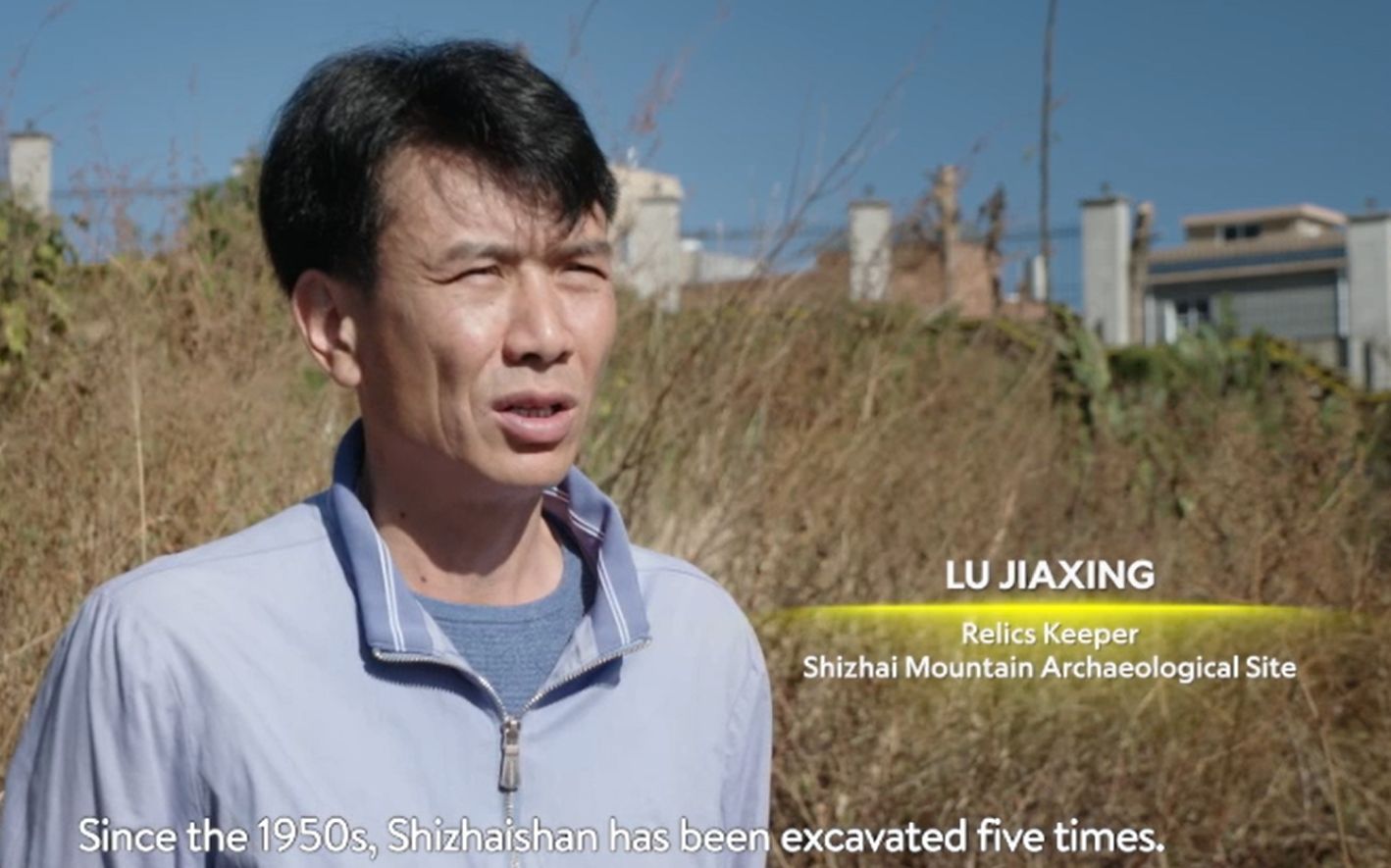
“Do not open your mouth,” hisses Clarissa the fixer at the director, whose Teochew-accented Chinese sometimes risks getting us into trouble. “The man we are going to meet is Mr Lŭ, third tone.”
“Mr Lú,” says the director.
“That’s second tone,” says Clarissa. “You just said ‘Mr Donkey’. Just call him Professor, for Christ’s sake.”
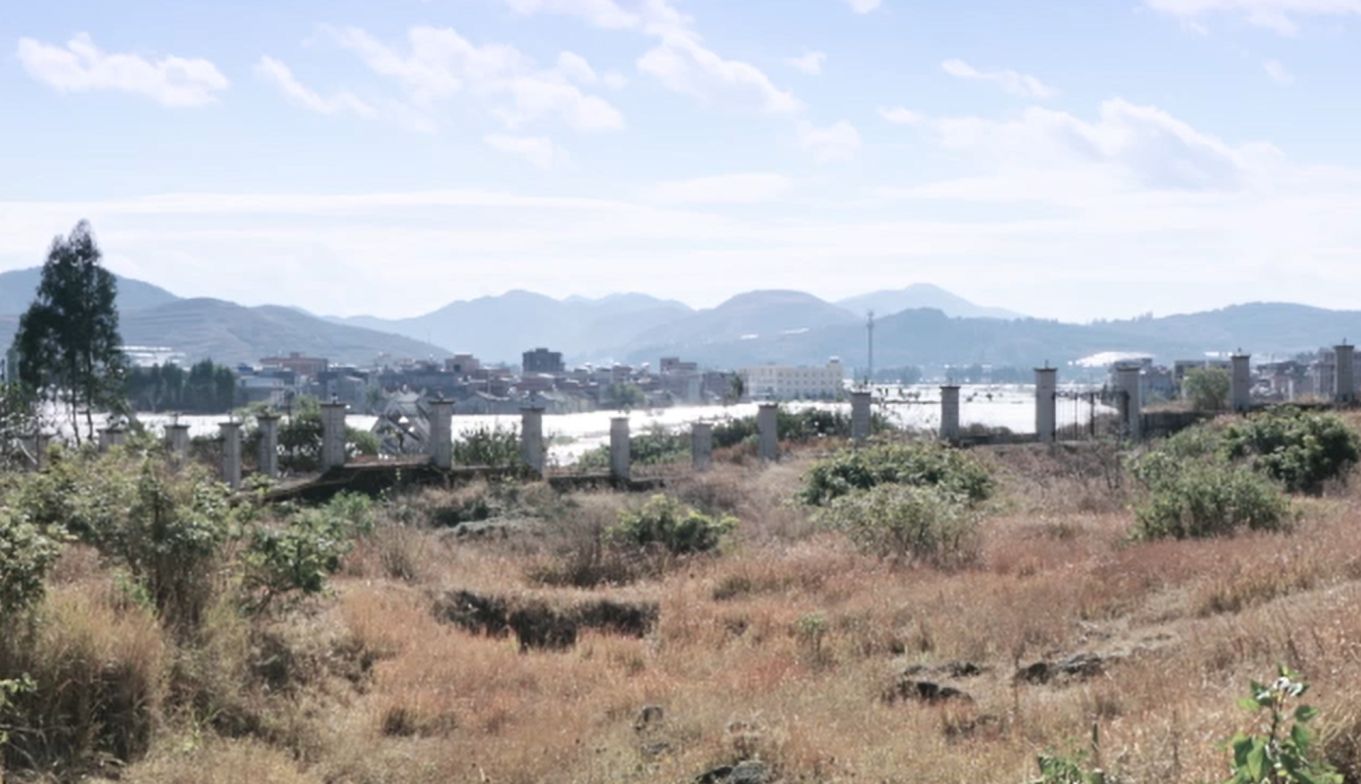
We are interviewing Mr Lu at Shizhaishan, a desolate hillside in Yunnan that once would have had a commanding view of Lake Dian below. These days, it’s blocked by high-rise buildings, and the hillside is walled off by an imposing fence, because it is one of the most important sites in Dian history.
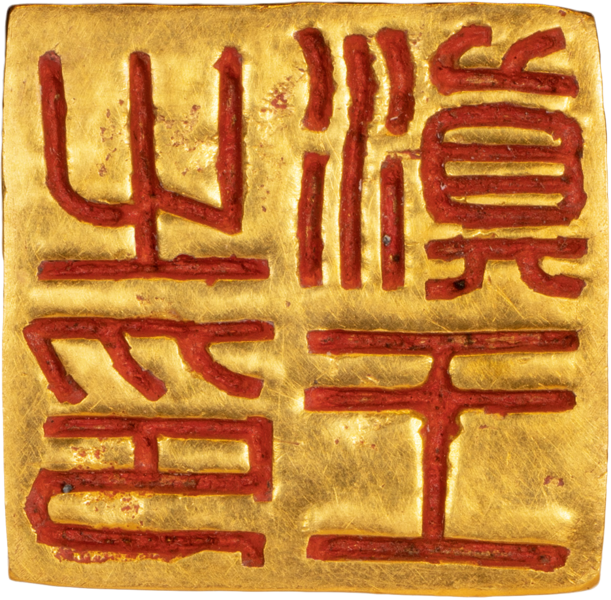
In 1954, archaeologists at Shizhaishan uncovered dozens of graves of the Dian nobility, including one containing a golden seal that bore the Chinese words: KING OF DIAN. A similar seal, denoting the KING OF NA, turned up long ago in Japan, where locals claimed that it had been conferred upon a barbarian kingdom by the Han Emperor Wudi. Nobody took this seriously until the Shizhaishan find, when it became apparent that Wudi had indeed had uncharacteristic gold seals made for the kings of borderland regions that had recognised his authority.
The King of Dian’s seal is in the national museum in Beijing – it officially marks the moment when Yunnan became part of China. The locals in Yunnan have to make do with a replica; just one of several political issues that clearly still needle Mr Donkey.
It is a difficult interview. Our arrival is bodged, because it takes us half an hour longer than planned to negotiate the tight, winding rural roads, and Mr Lu has been waiting by a dunghill with a nameless woman from the Propaganda bureau whom we soon dub the Jawa. Her facial features are entirely covered by a hoodie, mirrored sunglasses and a full-face breathing mask, which is oddly sinister, and turns out to be because she has a streaming cold, and keeps coughing during the interview and ruining the takes.
When we arrive, the director isn’t sure who this odd couple are, and entirely ignores them, and we only identify Mr Lu when I walk up and introduce myself. But that’s only the beginning of our problems, because he is everybody’s second choice. The archaeologist who actually led the 1954 dig, and a subsequent find in 1999, has refused to talk to the media, because of a bad experience with an earlier crew, and Mr Lu is reluctant to discuss several important issues.
Interviewees have to be managed, anyway. It’s part of my job to come in at the start, speak Chinese like a performing dog, and make it clear that I am not some clueless puppet, but someone who has read the Grand Scribe’s Records, knows my Han dynasty from my Tang dynasty, and is here to make the interviewee heard and understood. As regular readers of this parish will already know, it can be discombobulating to have an English-speaking film crew unload a literal tonne of gear in a remote village, and start pushing them around, hectoring them to stand on various unsteady hillocks, and badgering them to repeat themselves, answer leading questions, and film things out of order. I am quite used to having the director yelling at me to take three paces forward and stare into the sun, but the people I have to put at their ease are often facing a camera for the first time.
The Jawa doesn’t help by lurking at the sidelines with a camera of her own, documenting our visit for official reports and local media. When the director jokingly suggests that somebody cooks a nearby yappy dog to shut it up, Clarissa rails at the crew to stop laughing, “because someone from Propaganda is pointing a camera at us, and I don’t want them to think we are not taking this seriously!”
“So,” I say, “are there still artefacts buried here?”
“I don’t want to answer that question,” he says, reddening, because the last thing he wants is literal gold-diggers breaking in with shovels. He knows we don’t have time to explain that an “artefact” is just as likely to be a midden or a cow bone as “treasure”, and that’s all some viewers will hear. Nor does he really want to talk about the progress of the site, because funding is not forthcoming. The site has fallen into disrepair, the duckboards around the edge are rotting, and the “guard house” is staffed by a gurning old lady and the aforementioned yappy dog.
Media people refer to “sit-up-and-beg questions” – simple, rather vague queries designed to give the interviewee the chance to say whatever they feel like. But Mr Lu is deeply cagey about his site, and reluctant to describe “his” discoveries in the first person because he is a stand-in for the real boss. I try to get him to talk about simple issues, like backfilling the soil (in Chinese hui tian, literally “returning the field”), but this is a touchy subject for him, because they only backfilled the site because their funding has ended, on what appear to be five stops and starts, including the 1950s dig curtailed by the Great Leap Forward, and the 1990s dig funded by a relics bureau that lost interest once they’d airlifted the gold seal to the capital. I have mentioned before the intricate politics of the Terracotta Army site, where the archaeologists are deliberately taking years to poke around the edges, because if they dig out the central mound and don’t find buried treasure, their gravy-train funding will be over. Shizhaishan seems to prove my point for me.
Eventually, he relaxes. I assure him that “I don’t want to answer that question” is a valid response, and that we will just ask him something else, but we do run into a large number of dead ends with him, and it’s difficult to get anything out of him. We eventually get enough to fill a segment, and by the end he is starting to enjoy himself.
As so often happens, we film our “first meeting” last of all, by which time he is all smiles, and he doesn’t blink at the fact that we do it in reverse order. On the final cut, he will greet me at the Buick, lead me up the hill and through the gate, and down into the pits of the dig site, while the drone soars up above over our heads. But on location, where we are moving the gear back down the hill to the van in stages, we first film us walking into the pit, then walking through the gate into the site, then up the hill to the gate, then meeting each other at the car, and then the drone shot.
The crew’s behaviour can look weird to an outsider. Just because we correctly walk up a hill, it doesn’t mean that a farmer hasn’t wandered into shot behind us, or the sun has gone behind a cloud and ruined the continuity for the lighting, or the cameraman has forgotten to run the film. We take our positions for a third take, and the director nods to begin.
“You can start walking,” I hiss to him out of the corner of my mouth.
“But the director hasn’t said ‘Action’,” he points out.
While we get our drone footage, Mr Lu smokes fag after fag by the cars, and jokes with the crew. Our driver starts chatting up the Jawa, whose mask turns out to hide an attractive and friendly young girl ready to discuss the pitfalls of local television, and not the terrifying figure we had assumed her to be.
Our backwards shooting schedule continues as the sun climbs. I am dragged off to film an even earlier shot, of me driving through the village to meet him in the first place, and by the time I come back, he and the Jawa have gone. I got the impression with him, as I do with many interviewees, that by the time he came round to appreciating that he was going to be on telly showing off about his life’s work, it was all over.
Spooling through the footage six years later for this article, I realise that Mr Lu didn’t even get his fifteen minutes of fame. There was so little material we could work with that he’s there and gone in thirty seconds, just long enough to point across some waste ground at the place where they found the gold seal.
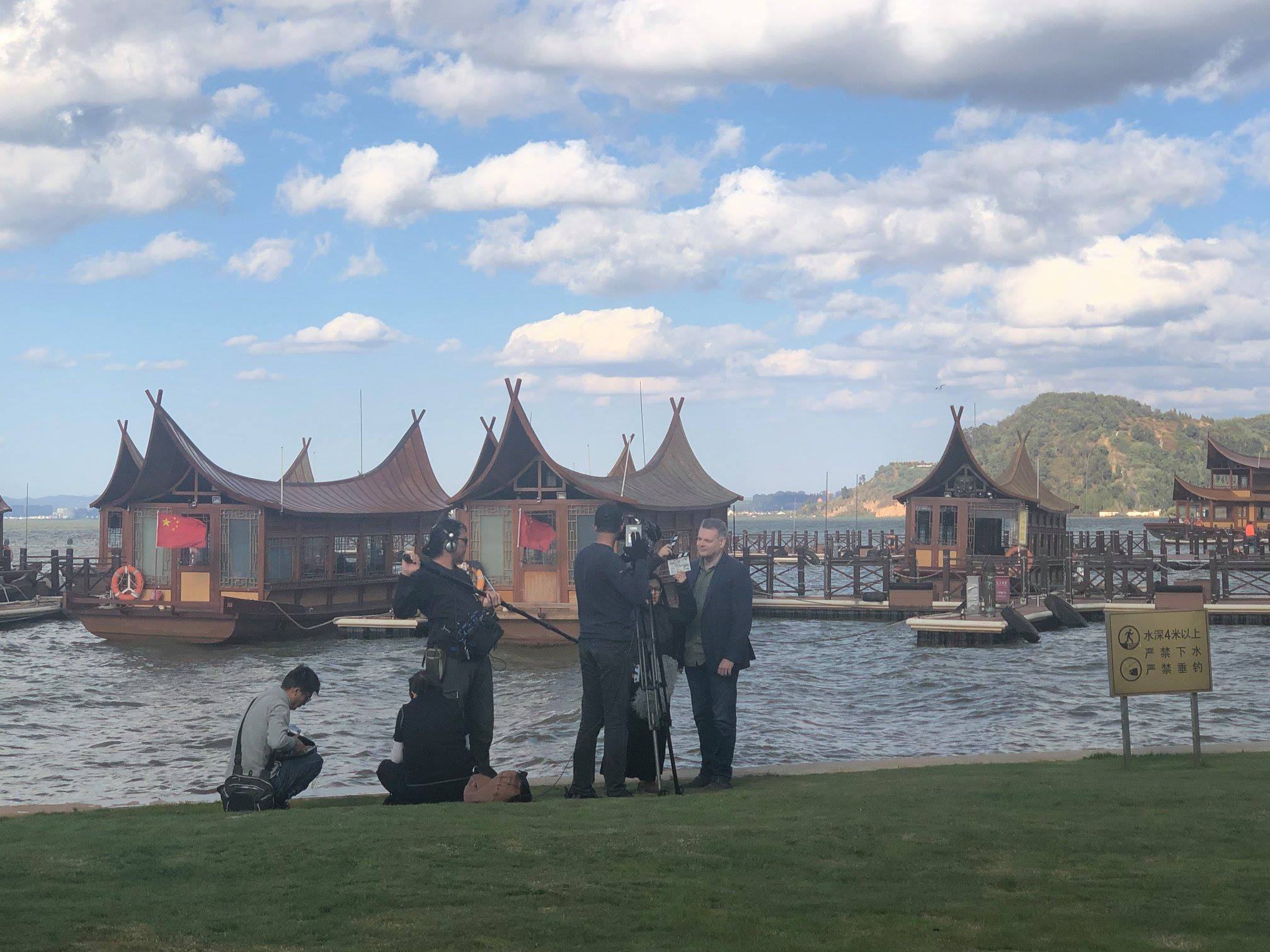
The afternoon is spent filming the modern legacy of the Dian kingdom. Remember that we knew almost nothing about it until the 20th century. But the archaeological evidence uncovered in the last 60 years has allowed us to discover their clothing, their architecture and their bronzes, enough to supply suitable material for an entire Dian Kingdom theme park by the side of the lake, complete with houseboats, statuary, and a Ferris wheel. I yell a piece to camera in the wind by the lakeside, surrounded by screaming seagulls, and observe that the Dian warriors of old would be aghast at such a use of their culture, particularly since the theme park seemingly lacks a Human Sacrifice Experience.
Somewhat to my surprise, I show up on the Noiser Real Dictators series talking about Chairman Mao, across three podcasts, here, here and here. My appearance is actually repurposed audio from a TV interview I did ten years ago — contractually, World Media Rights can do whatever they want with the material, and some bright spark there has realised that the world is better served by being unable to see my face.
It was a bit of shock when someone on Facebook told me they enjoyed my “Mao thing”, because it took several minutes to work out how I could have recorded three podcasts without realising it. As long as it keeps shifting copies of A Brief History of China for me, I suppose I don’t mind!
I have developed a new-found respect for Michael Wood, who I have always liked, but whose Story of China I have been looking at again recently. His episodes on the early dynasties found him visiting not only the same places as us, but interviewing some of the same people in Luoyang and Anyang, but what’s striking is how hard he tries to get the grass-roots opinions of the common folk. Always one for social history, Wood happily hangs out with a bunch of farmers’ wives, and asks them what they think of the discoveries at Erlitou or the Wastes of Yin. History has long been divided between the approaches of the high-brow Thucydides, who wants everything cross-checked and assessed, and the low-brow Herodotus, who doesn’t mind repeating gossip as it is a fair reflection of what people believed to be true. Herodotus is often more fun.
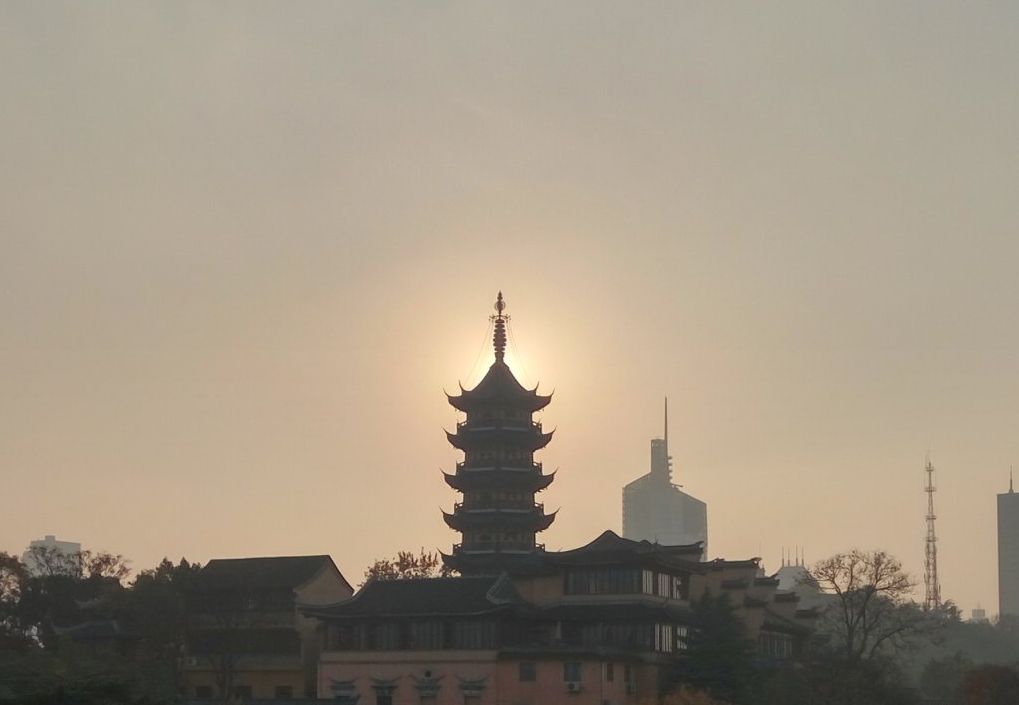
It is cold and damp today. Raining. Almost impossible to film anything, and we can’t get indoors at the museum until tomorrow. And so the director half-heartedly rules that we will try to get some footage at the Jiming-si (Temple of the Crowing Rooster), one of the oldest temples in Nanjing, founded in the Middle Ages, destroyed before the Ming dynasty, destroyed in the Taiping Rebellion, and rebuilt once more. It is the location of the Rouge Well, so named because concubines of the Southern Tang emperor hid from rebels during the fall of that short-lived dynasty, and left traces of their make-up smeared on the sides.
Unlike many other temples, a trio of incense sticks is part of the admission fee, leading to baffled crowds of Communist-era Chinese, bumping into each other and squinting at the instructions posted on the wall that tell them how to pray. I light my sticks at the votive candles, blow them out so they start to smoke, and then bow to the four directions before placing them in the censer. That’s more than we can say for The Human Torch, a woman in a mustard yellow puffa jacket who lights her large incense sticks, doesn’t blow them out, and then wanders aimlessly around the courtyard like a roving fire hazard, flames rising a foot into the air.
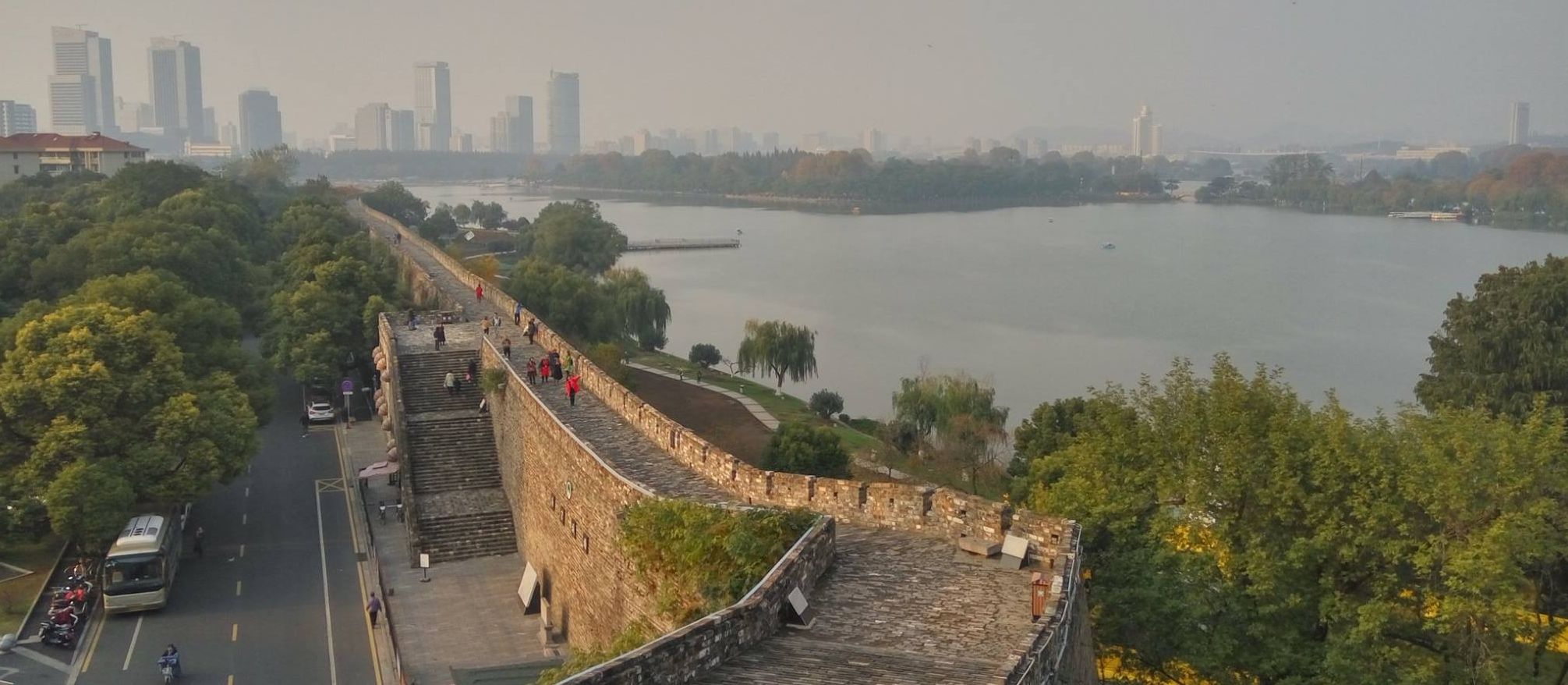
The director tries to film at the city wall and at the nearby “old” town, which, as ever, is chock full of snack stalls and little else, but the rain is pretty miserable. I spend less than five minutes on camera today, and even that is just walking from point to point through crowds. So an easy day to me, although we will have to make up for it later in the week.
The people in room 1806 are having very athletic sex. Clarissa the fixer and I, whose rooms are on either side, are scoring them on WeChat for volume and achievement.
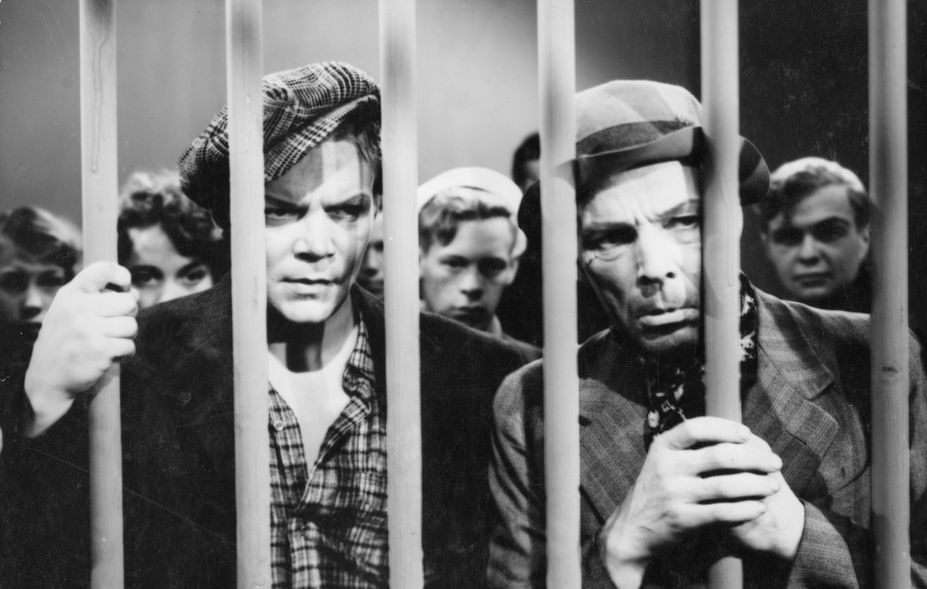
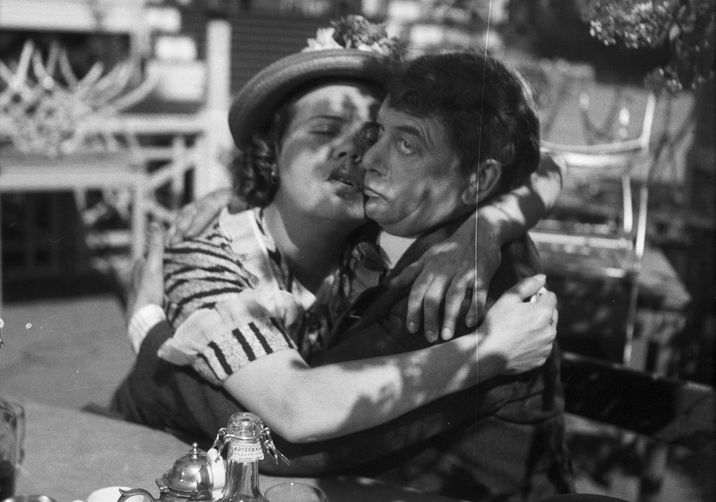
Fugitive Niilo Nurmi (Unto Salminen) is languishing in a San Francisco jail when he is mistaken by the local consul for Yrjö Sahlberg, a Helsinki rich kid who has been missing for years. That is enough to secure him passage home, but whereas Niilo expects to ditch his new benefactors on arrival in Helsinki, he is instead blackmailed into continuing the pretence that he really is the long-lost heir to the Sahlberg fortune. His old criminal buddies, watch-thief “Kello-Kalle” Karlsson (Aku Korhonen – the nickname translated roughly as Charlie Clock, compare to his earlier role as Charlie China in Off with the Shirt and Vest) and kingpin Einari Oksa (Ossi Elstelä) threaten to out him unless he keeps up the act, hoping thereby to secure access to the rich pickings at the Sahlberg mansion.
Welcomed as a prodigal son on his return to the Sahlberg household, Niilo soon discovers that someone is already robbing the family. A thief set to catch a thief, he soon works out that they are being embezzled by their shop manager Kapperi (Yrjö Tuominen), and wrests a confession from the flustered employee. The Sahlbergs are even more pleased with their “long-lost son”, although Niilo must fight off the continued predations of Oksa, who is fobbed off with the wrong keys to the safe, and Karlsson, who wins the heart of the mansion’s cook Tekla (Siiri Angerkoski) and has to be given a job at the company to keep him quiet.
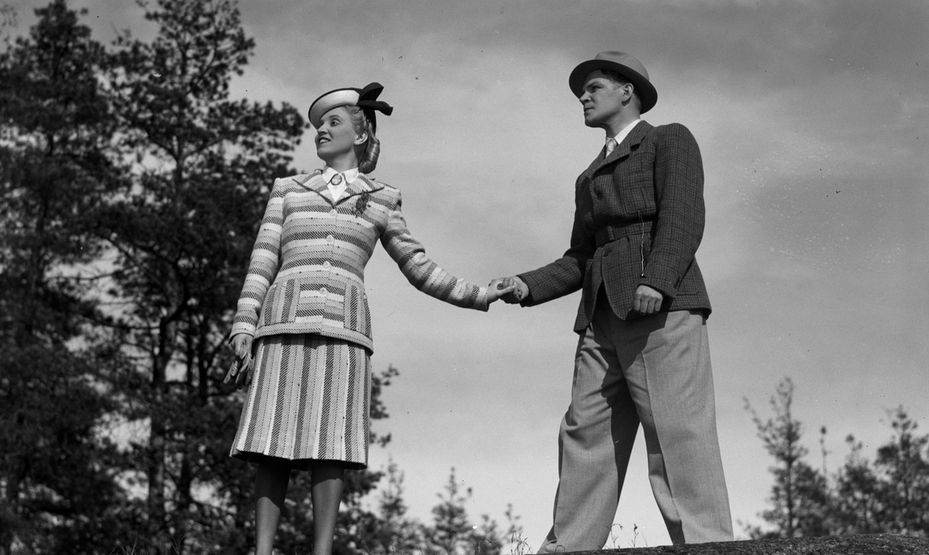
Falling for his “cousin”, Annikki (Ansa Ikonen), Niilo resolves to tell her the truth. She confesses that she, too, has feelings for him, and persuades him to turn himself in, although when he tries to do so, the police inform him that the statute of limitations has run out on all his old crimes, and he has failed to commit any new ones. That’s more than can be said for Karlsson, who is caught stealing the police inspector’s watch, and has to be bailed from prison so he can live happily ever after with his own betrothed, the entertainingly snuggly Tekla.
All’s well that ends well, although when the aged Grandma Sahlberg (Anni Hämäläinen) announces that she will never let Niilo go “again”, the viewer is left pondering if she really is aware, as she has formerly claimed to be, that he is not her beloved Yrjö at all, and that Finland really isn’t just about to see yet another set of cousins get married.
Freely adapted from the Swedish film Like a Thief in the Night (1940, Som en tjuv om natten) Uuten elämään features an oddly post-modern moment in which the writer-director Toivo Särkkä could not decide himself whether Niilo would hand Oksa the right keys, giving into his threats, or the wrong keys. Consequently, he shot both versions, and only decided at the editing stage that Niilo would swindle the swindler.
The film begins with a whole two seconds of stock footage of San Francisco harbour, before switching to a dive bar packed with an unconvincingly “American” crowd listening to a woman singing a torch song in English with an entertainingly German accent – several obviously Finnish women, a Chinese guy, and what appears to be Swamp Thing in an undertaker’s suit. This was clearly shot back home in Helsinki, although in order to distract us, the director executes a 360-twirl around the pub, which only serves to make it look as if the cameraman is drunk.
As so often happens in romantic comedies, the supposed leads are a pair of insufferable drips, and what little entertainment that can be wrung from it comes in the form of the supporting cast. Aku Korhonen puts on a spirited turn as Karlsson the inveterate pickpocket, and is as charming as ever in his interactions with Siiri Angerkoski – I have actually lost count of the number of times these two have ended up as a second-string romance in the background of the A-plot. None of this, however, would save it from the knives of Finland’s critics.
“There has never been a film on the big screen as clumsy,” wrote the reviewer for Uusi Suomi, “The plot of the film is psychologically impossible, and when, in addition, the audience was forced to endure outright indecencies along the way, the viewer left the show disgusted.” I actually read this review before I saw the film, and was all prepared to enjoy some outright indecency, but found it sadly lacking in this department. Other newspapers were similarly damning, with the Ilta Sanomat declaring it to be: “An out-of-date, thoroughly melodramatic and preachy film story presented with a tasteless sentimentality that is suspiciously reminiscent of ‘true stories’ from weekly newspapers.” When the Ilta Sanomat thinks you’re downmarket, you know you’re in trouble.
The two heavyweights of 1940s Finnish film criticism, Paula Talaskivi in the Helsingin Sanomat and Toini Aaltonen in the Suomen Sosialidemokraatti, both tried to make positive noises about it, but had to concede it was hackneyed. Only the writer for Savo magazine, out in the sticks where people were more easily pleased, came to its defence as a welcome relief from war and strife, noting: “Despite its naivety and lack of realism, My New Life will gain the support of our film audiences, because it has so much of the warmth and beauty that is needed as a counterbalance to today’s harsh and serious reality. And perhaps that was the main purpose of this film.”
Jonathan Clements is the author of A Short History of Finland. He is watching all the Finnish films, so you don’t have to.












 The Official Schoolgirl Milky Crisis Blog