Seagull Diner (2006)

Sachie (Satomi Kobayashi) is a Japanese woman inexplicably opening a café in Helsinki, where she thinks the Finns will like Japanese food because they like salmon. After a long month without any business, her first customer, Tommi (Jarkko Niemi) is an anime weeb with a terrible taste in T-shirts, who wants her to write out the lyrics to the Gatchaman theme. Unable to remember the lyrics (because this is an alternate universe where the internet doesn’t exist), she buttonholes a stranger in a Helsinki bookstore. Midori (Hairi Katagiri), knows the song, but is an oddball who has randomly picked Finland on a map, and now has nowhere to stay. Sachie offers her a place to live, and the two women muddle through at the café.

They are soon joined by Masako (Masako Motai), a third Japanese woman who has come to Helsinki to celebrate her “freedom” after twenty years as unpaid carer for her ailing parents. She is the only character whose back-story is really announced in any detail – whatever has brought the others to Finland is kept discreetly off-screen. They are three characters in search merely of acceptance and belonging, finding it in the oddest of places, and clinging, curiously, to a desire to be anywhere but Japan.

“A strange man just gave me a cat,” Masako announces. “So now I have to stay.”

It’s only when I write out the synopsis that I realise just how little happens in Naoko Ogigami’s feel-good film, Kamome Shokudo. The Japanese ladies experiment with new menu choices, and slowly win over the reserved Finnish passers-by in a Helsinki street. These include Liisa (Tarja Markus), an abandoned housewife who has to be carried home after collapsing in a drunken haze. Masako, meanwhile, has lost her luggage, and turns up in an increasingly garish selection of Marimekko dresses while she is waiting for her clothes to show up. Midori doodles some awful pictures on the menu, and Masako goes looking for mushrooms in the forest.

Whereas Master Cheng (2019) was a Finnish exercise in luring Chinese visitors, Seagull Diner is a very Japanese take on the Nordic countries – I am tagging it with my #finnfilms watchathon of every Finnish film ever made, but it is technically a Japanese film that happens to have been shot on location in Helsinki. Ogigami’s characters fall in love with Helsinki’s quaint streets and seaside cycle paths, its city markets and melancholy locals, and, presumably with a surfeit of product placement, since the café is packed with Finnish design classics. There’s no real jeopardy or crisis, just a slow infusion of joy as the ladies experiment with local ingredients, refine their menu, and eventually proclaim that the diner is a success, because it is full of happy Finns.

Ogigami’s script boldly dispenses with much of the whys of her leading ladies’ backstory, taking it as given that they are all fleeing from something, and simply seeking a harmonious, happy life in the land where the Moomins come from. Much in the spirit of My Neighbour Totoro, it’s a resolution that doesn’t see the need for conflict. They remain in a remarkably compact series of locations – huge tracts of the film pass in single locked-off shots in the café or Sachie’s flat, plus what looks like a single day’s shooting down in Helsinki harbour, a bike ride around Töölö, and a pick-up at the airport.

Matti (Aki Kaurismäki regular Markku Peltola) shows up to mansplain how to make good coffee. Apparently, you should stick your finger in it and make a wish, which explains an awful lot about Finnish coffee. He leaves a package of coffee that has been passed through the digestive tract of a civet cat. The Japanese women end up making coffee that is literally made of animal shit, and telling each other it’s lovely. For Kaurismäki fans, this was sacrilege, but for an entire generation of middle-aged Japanese women, marginalised and ignored, it was a wake-up call that they, like Sachie, could do whatever the hell they liked. Or in Sachie’s words: “not do the things I didn’t want to.”

Despite premiering in a single Japanese cinema with very little fanfare, it would become the fifth highest-grossing Japanese film in the year of its release. More than a decade later, it remains a potent soft-power ambassador luring Japanese tourists to Finland.

Jonathan Clements is the author of An Armchair Traveller’s History of Finland.

Christian Sorcerers on Trial

Over at All the Anime, I review a new book about the 1827 Osaka Incident.

“…a bunch of deluded commoners who thought they had joined an underground religious sect, but had actually signed up for a series of parlour tricks, fortune-telling sessions with a local medium, and blood-letting rituals centred around a magic painting called The Lord of Heaven….They might have been Christians, but they might have been nutters, or they might have been Buddhists, or some sort of hybrid like the Taiping rebels who would rise up a generation later in China.”

“They discuss Christianity as if it were an ancient pandemic – a religious virus that has been carefully stamped out nearly 200 years earlier, with periodic outbreaks that have to be strictly monitored. We get a sense, in at least some of the comments, that some are gently questioning the statutes, wondering if it is really fair to impose regulations drawn up two centuries earlier upon contemporary people.”

Hiroshima

“Hideo Sekigawa’s Hiroshima (1953) uses the tense normalcy of everyday life as a framing device to retell the story of the city’s bombing, not merely the explosion and immediate aftermath, but the stunned reaction of the Japanese authorities to the utmost devastation of a ‘new type of bomb.’ It is plainly intended as a didactic experience, focussing in particular on the young victims of the attack – even its title is written in easy-to-read hiragana, evoking a childish incomprehension of the forces at work elsewhere. To truly appreciate it, however, one needs to understand the politicking and arguments around its release – refused exhibition by many 1950s cinemas, it was buried at the box office, ostensibly for its unwelcome engagement with issues that Cold War Japan was still trying to suppress.”

Over at All the Anime, I review the new blu-ray of Hideo Sekigawa’s Hiroshima.


Scorned (1939)

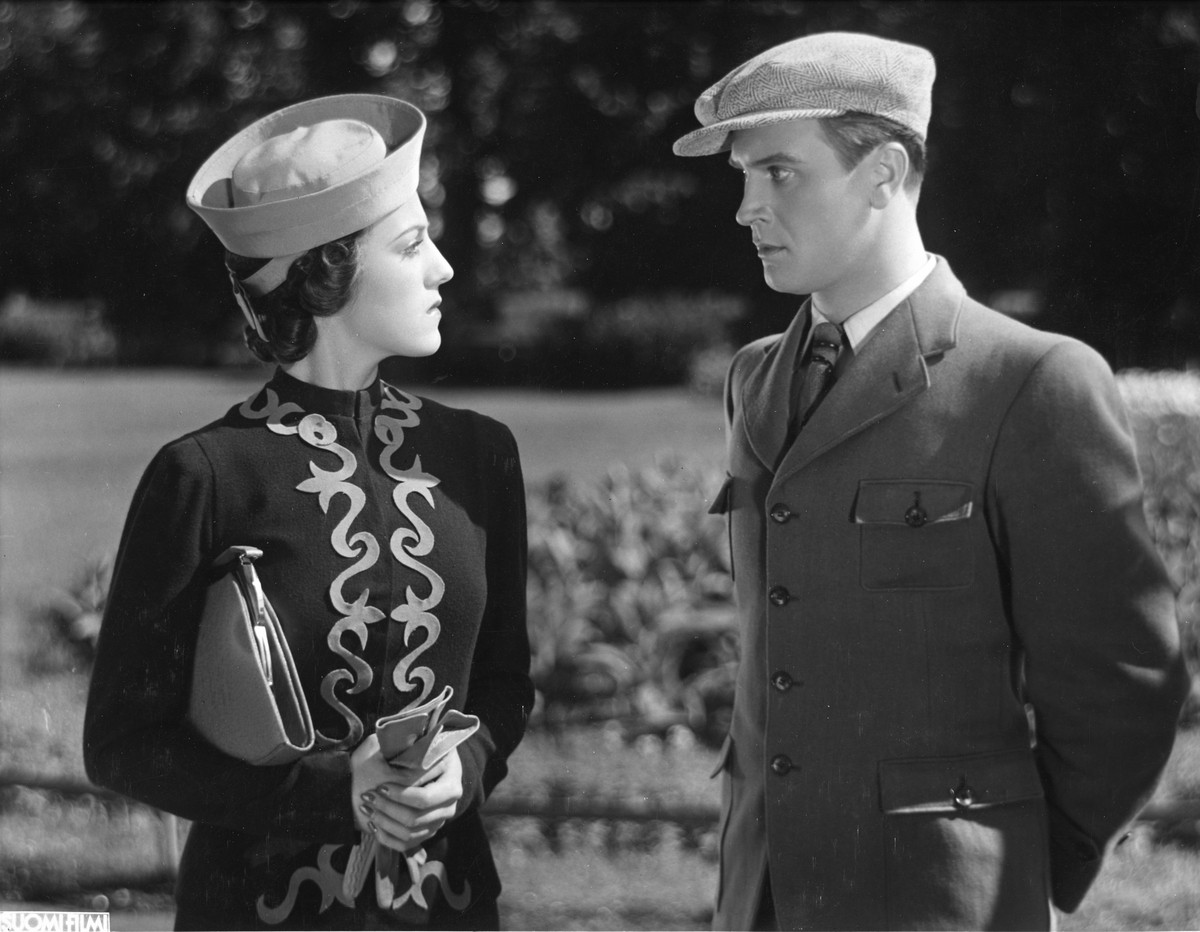
Itinerant pedlar Takala (Eino Kaipainen) arrives at a thriving industrial town, where he befriends the locals, settles down as a shopkeeper, and soon goes into business as a subcontractor to the local factory. His business partner Toikka (Kaarlo Kartio) doesn’t know when to keep his mouth shut, and Takala is ruined by a business rival, forced to sell off his shares in his own company.

Local girl Verna (Ester Toivonen), with whom Takala has had a turbulent flirtation since she was a teenager, flounces off to sob in her room, and Takala leaves for the big city. Both Takala and Verna end up marrying other people, while the outbreak of the Great War leads to changing fortunes. Toikka makes a pile as a war profiteer, while Takala is literally stabbed in the back by striking workers at his paper mill. He is thus conveniently hospitalised for the upheavals of the Finnish revolution and civil war, ready to return triumphant in a tense negotiation over the mill’s future, in which he and Verna, both now conveniently single again, join forces to vote the evil boss off the board.

Released in March 1939 in the short gap between The February Manifesto and The Activists, and hence somewhat eclipsed by two of the biggest films of 1939, Halveksittu is just as much about the transformations of the 20th century as they are. In a subtle, grass-roots way, it charts Takala’s progress from penniless pedlar to wealthy industrialist, in a liminal period that sees Finland itself go from Russian Grand Duchy to independent republic.

Based on Lauri Haarla’s 1930 novel A Man Scorned (Halveksittu mies) the film was criticised in the media for retaining much of the original’s “hollow pathos” – presumably the newspaper Suomen Sosialidemokraatti would have preferred a few more car chases. A review in Uusi Suomi more cannily noted that the film attacked two distinct sub-sections of Finnish society – the Swedish aristocracy, who are defeated by honest Finns, and the Finnish Reds, who are depicted here as thugs duped by demagogues. Writing and directing the adaptation, Jorma Nortimo jettisons much of the novel’s consideration of Takala’s early life, preferring instead to concentrate on the turbulent 1910s. The resultant story valorises the Goldlilocks-level Finnish middle class that remains the national ideal to this day – not too rich and Swedish, not too poor and Red, a just-right White.

The need to cover two or more decades leads to some desperate costuming decisions, not the least Ester Toivonen’s first appearance dressed as a schoolgirl and shopping for a live squirrel, and early scenes in which she inadvisably tries to act as if she has a mental age of about six. In one scene, she leaps enthusiastically onto her father’s lap, and the actor Yrjö Tuominen visibly winces in pain. Later on, her cosmopolitan but loveless marriage is neatly encapsulated in a single scene, in which she flips dolefully through a photo album of all the places she has been, only for a cigar-chomping Gavelius to come in and call her a silly cow.

One is left feeling rather sorry for the spouses who are jettisoned so that the central couple can rekindle their true love. Siviä (Laila Rihte) is Takala’s loyal shop assistant, who worships him from afar – only we see her simpering in wonder as he faffs around in his shop and leaps over his own counter. Gavelius (Joel Rinne) is the monocled dastard to whom the broken-hearted Verna turns for solace, but his sole purpose seems to be to whisk her away for a three-year hiatus, and then leave her a fortune which will allow her to buy her way back into Takala’s heart. Clad in black, and grey at the temples, Takala and Verna stride arm in arm from the conference room as if marching up the aisle to their own, long-delayed wedding. Reader, find someone who looks at you the way that Ester Toivonen looks at Eino Kaipainen when they’ve just joined forces to enact a hostile take-over of their local saw-mill.

Jonathan Clements is the author of An Armchair Traveller’s History of Finland.

Palm Beach Finland

On one of those heady summer days when the thermometer climbs into the low teens, there’s been a killing at “Palm Beach, Finland.” It wasn’t always Palm Beach, of course. But local entrepreneur Jorma Leivo thinks he can turn it into a Mediterranean-style resort, as long as he keeps the lifeguards in skimpy shorts, builds a giant pink flamingo and somehow acquires the Koski family home, which inconveniently sits on the land he needs for the deep-water marina.

Antti Tuomainen’s novel dispels much of its mystery in the opening chapter. We know exactly who has killed a thief in the kitchen of the Koski residence – two thugs sent by Jorma to scare Olivia Koski out of the house she has just inherited. And we also know that Jan, the holidaying maths teacher, new in town, is an undercover police officer investigating the crime. So there are no sudden revelations here – the reader is there to watch as the cast fumble and stumble their way towards a resolution, each of them chasing a nebulous dream that could conceivably be realised with just one smallish cash injection.

Everybody is living on the edge, tantalisingly within reach of a big break. Jorma’s visions of a Mediterranean resort on a Finnish beach merely require the acquisition of one final parcel of land. Chico, the local loser, just needs to do one dirty job in order to get the money for the guitar that will make him a rock star. In the most Finnish of dreams, Olivia has pipes that need re-doing, and builders’ expenses that keep escalating. And now the sinister gangster Holma has rolled into town, offering a five-figure sum for anyone who can help him find out who killed his hapless brother.

Considering that Jorma’s resort has 1980s-themed colours, and chalets named after the cast of a well-known Florida cop show, I am surprised that nobody thought to call this book Niemi Vice. It is, after all, the little cottage on the cape (niemi) that is the epicentre of all the violence, which includes an exploding shed and that most Finnish of torments, an attack on someone’s sauna. In any self-respecting Scandi-Noir, Jan Nyman the investigator would be the hero, but Tuomainen’s novel is an ensemble piece, with none of the characters quite perceiving where they are in a chain of obligations and vendettas, each of them making promises they can’t keep, about money they hope to get, for a service they hope to render.

Much like the work of Reijo Mäki, Tuomainen’s fiction revels in the disconnection between the melodrama of a hard-boiled, American thriller and the jejune realities of Finnish small-town life. These echo the ironies to be found in his The Man Who Died, which revolves around skulduggery in the rare-mushroom world, and Little Siberia, in which ne’er-do-wells in a one-horse town race to acquire a precious meteorite – it has spent aeons traversing the universe, only to end up crashing through the roof of a drunken rally-driver’s Audi. Palm Beach Finland comes similarly loaded with a sense of the absurd, not least in the character of Chico, whose life-changing encounter with the spirit of Bruce Springsteen is brought about by inhaling the toxic fumes from a fire started with painted wooden slats.

Jonathan Clements is the author of An Armchair Traveller’s History of Finland.

Merry Christmas, Mr Lawrence

“Have you ever bought a disc just for the extras? A couple of times, I’ve caught myself doing just that – ignoring the film and going straight for Brian Blessed’s commentary on Flash Gordon, or the writers’ chat by Palahniuk and Uhls on Fight Club. There are some films I know so well that I don’t feel the need to actually watch them again any time soon, but I am always up for knowing more about them. And in that regard, the new Blu-ray edition of Nagisa Oshima’s Merry Christmas, Mr Lawrence is a dream come true.”

Over at All the Anime, I dive deep into the Arrow Academy release of Nagisa Oshima’s Merry Christmas, Mr Lawrence, the extras on which are literally three times as long as the film itself.

A Short History of Tokyo

“This is a fascinating historical tour of one of the world’s great cities, exploring Tokyo’s long past with an eye to its present form and its bustling contemporary population. Clements digs deep into place names, and into the wider context of Japan’s long history, to offer an account that visitors to Tokyo – whether first-timers or old regulars – will no doubt find invaluable in helping them to make sense of a city that can sometimes feel overwhelming in its size and vibrant complexity.” – Chris Harding, author of Japan Story: In Search of a Nation, 1850 to the Present

“Concise, engaging history charmingly told by an expert on Japanese culture, who loves the city and knows its neighbourhoods well. Helpful guide to important leaders and notable places in Tokyo history that will delight both armchair travellers and visitors to the city.” – Alisa Freedman, author of Introducing Japanese Popular Culture

“…a volume on the city that offers more than a guidebook while remaining compact.” – Times Literary Supplement

“…light in tone and fast in pace. For anyone who wants a quick introduction to the spirit of
the city as it has developed over the centuries, then Clements provides a fine place to look.” – Paul Waley, Japanese Studies

Apparently, A Short History of Tokyo, the updated paperback edition of my 2018 Armchair Traveller’s History of Tokyo, is out now.

Ninja Running

“Most ninja lore, despite what hucksters tell you, dates from no earlier than the mid-20th century,” Clements explains. “The first real boom in ninja stories comes after the second World War, when the samurai aristocracy were discredited and left-wing authors and manga creators started celebrating the peasantry, invisible through much of history. It got a huge boost in the early days of television, when Cold War spy thrillers got a localized samurai-era twist. The word ‘ninja’ didn’t even turn up in a Japanese-English dictionary before 1974.”

Over at MEL magazine, I end up as the bad guy once more, ruining everybody’s ninja hopes, interviewed for an article about the phenomenon of “Naruto running.”

Shinji Kajio

“Much of Kajio’s most memorable work focuses on some aspect of time abyss, the collateral victims of time travel in its various forms, the people they leave behind or the investigators who must piece together their origins.”

Over at the Encyclopedia of SF, I write up the remarkable career of Shinji Kajio, who began by writing about War of the Worlds, and focusses recurringly on the mess people left when they went away.