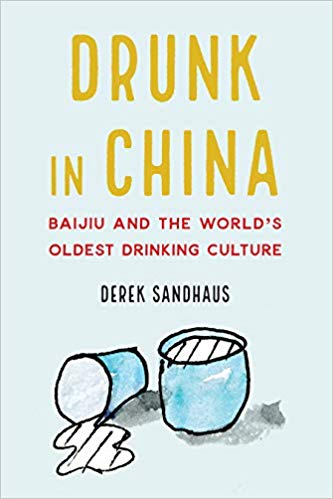
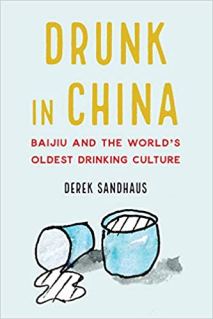
 Derek Sandhaus has a vested interest in making Chinese liquor sound good. Unlike Chris Ruffle, whose A Decent Bottle of Wine in China was more about educating the Chinese in Western ways, Sandhaus’s newly published Drunk in China: Baijiu and the World’s Oldest Drinking Culture aims teach the West about Chinese drinking, not just today, but through its long history.
It’s an uphill struggle, not the least for Sandhaus himself, who freely admits that his first sip of the liquor in 2006 was so repulsive that “if I never tasted baijiu again it would be too soon.” Baijiu isn’t terrible, he reasons hopefully, it’s just different. Not everyone loves their first taste of beer, or whisky or wine, but surely if your palate gets used to it, it doesn’t taste awful anymore? Two chapters in, however, he is still describing the aroma of baijiu as “Jolly Ranchers mixed with paint thinner” and “a banana soaked in turpentine.”
 But there is hope! It turns out that there is such a thing as a Taste Threshold – a point beyond which the body accepts whatever new torment has clearly become a regular item of consumption, like a sort of epicurean Stockholm Syndrome. All you have to do, Sandhaus discovers, is drink baijiu three hundred times, and after that you won’t mind so much.
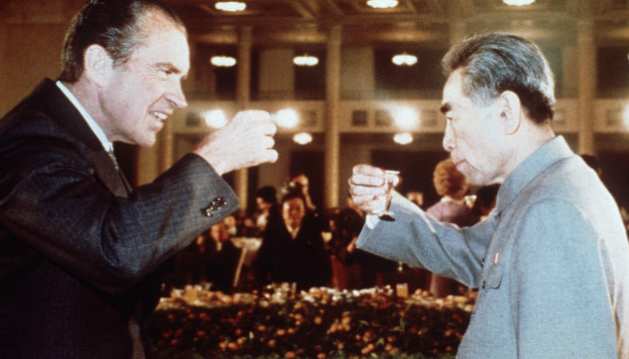
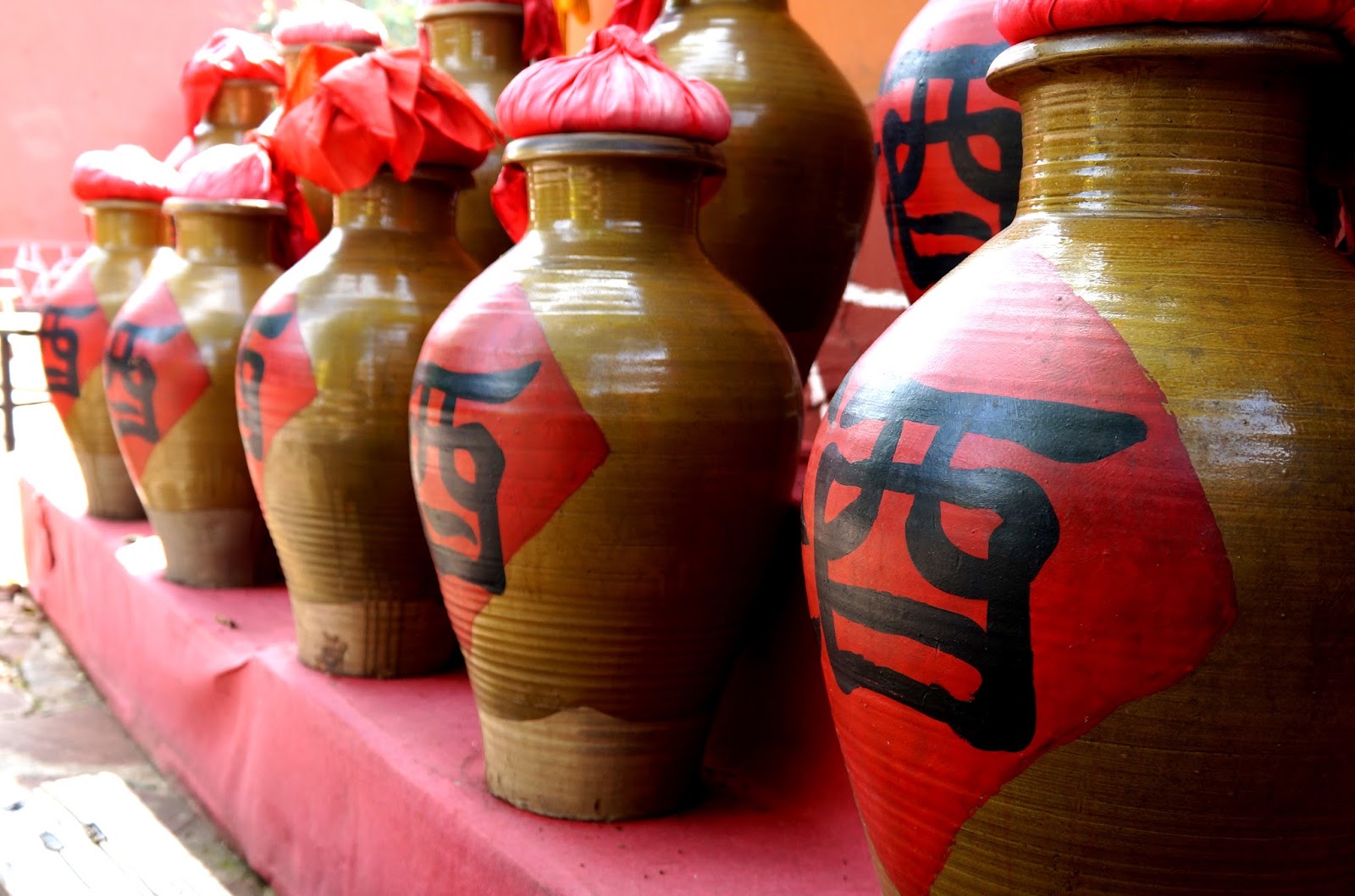
Quietly, he wrestles with another issue – the prospect that the Chinese don’t really like baijiu, either, instead regarding it as some sort of ritual component of social dining. It is consumed, after all, in single, thimble-sized shots, downed in one as a gesture of sincerity. It’s not designed to be sipped and savoured or mixed in cocktails. Perhaps, he wonders, Chinese drinking culture has developed its peculiarities as a means of coping with the fact that baijiu tastes awful, turning it into a short, sharp, and overwhelmingly powerful medicinal shot, best over and done with as quickly as possible. In an epiphany, Sandhaus realises the awfulness of baijiu and the tedium of Chinese social events cancel each other out. Each makes the other bearable.
Sandhaus’s greatest provocation is not the gotcha game of cultural relativism. It is his assertion that it was the pursuit of booze that caused the first people to form a fixed prehistoric settlement on the banks of the Yellow River – alcohol, he argues, created China. His reasoning for this is the Jiahu site, which, as a small point of order, is actually on a tributary of the Huai River, and where Patrick McGovern and his team did indeed uncover the traces of a fermented alcohol made with rice, honey, wild grapes and hawthorn. But as McGovern himself pleads with Sandhaus in an interview, it’s not really fair to say that Jiahu was the first just because it happens to currently provide the earliest evidence.
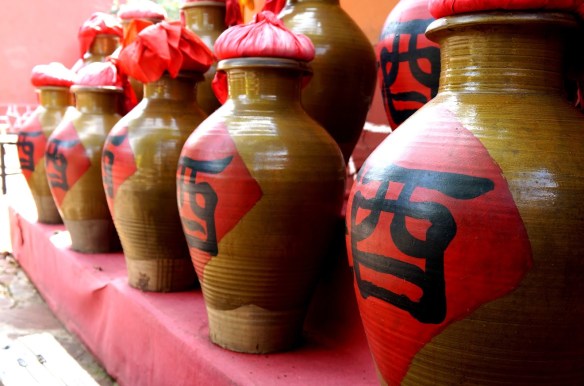 Regardless, Sandhaus is not crazy. His theory cites authorities at the cutting edge of academic publishing on alcohol history, and is rooted in the work of the early 20th-century scholar Wu Qichang, who also argued that agriculture was not some magical and plentiful easy fix that created human civilisation. It was, in fact, a difficult and troublesome faff, much more hard work in the short term than the nomadic lifestyle. “Our ancestors,” writes Wu, “first planted rice and millet with the goal of brewing alcohol, not making food.”
It’s a long road from meads and ciders to full-on baijiu. First, the Chinese have to invent qu, the yeast that allows for a swifter fermentation process. Sandhaus isn’t that clear on when qu developed – he cites its “rise” to around the time that the First Emperor’s conquest created greater communications between far-flung regions, but then places its discovery up to two thousand years earlier, only to admit that the earliest text to mention it is the Essential Techniques for the Welfare of the People (Qimin Yaoshu) seven hundred years later. It’s not Sandhaus’s fault that the literary record has been purged and flensed by revolutions and accidents, but the ballpark he ends up delineating for the development of yeast is as wide as that separating the present day from Alexander the Great!
Sandhaus also wanders into epigenetics, suggesting that ancient cultures in the Middle East disinfected their water by turning it into beer, creating an evolutionary environment that favoured a physique that manufactured dehydrogenase – the molecule that breaks down alcohol. The Chinese, embracing the boiling of water early on (and infusing it with certain leaves), left themselves more susceptible to drunkenness. By the Han dynasty, which soon begins to derive much of its tax revenue from a state monopoly on alcohol, Sandhaus is ready to declare: “The fate of the nation depended on drink.”
 This is all good fun. Any reader of rudimentary intelligence doesn’t need to be reminded that history is a more complex process than that, and an author of Sandhaus’s rhetorical skill could probably argue just as readily that some other commodity – silk, or horses, or jade, or salt – might be conceived as the cornerstone of Chinese culture. In fact, publishing cycles being what they are, it wouldn’t surprise me if he pops up again in a couple of years to say just that. His true aim is to tell the story of China from a quirky new perspective. Daoism, for example, is seen here as the last vestige of Bronze Age ritual intoxication, reimagined as a passive-aggressive challenge to dour Confucianism – Confucius was not a teetotaller, but the books attributed to him do rather leech all the fun out of drinking. Sandhaus sees in China’s many tedious drinking games the distant echoes of Bronze Age ceremonies, in which it was deemed uncouth to drink unless ritual required it.
The poet Li Bai inevitably puts in an appearance as Sandhaus delves into the rich and boozy literature of the affluent Tang dynasty, described here with particular reference to his Drinking Alone by Moonlight. As Sandhaus smartly observes, the poem is a prolonged and somewhat slurred defence of breaking a taboo – it’s not the moonlight that so preoccupies Li, but the fact that he is drinking alone.
The Chinese had distillation as early as the Han dynasty, but there are only scattered, cryptic references to “burnt wine” before the Middle Ages to suggest that they used the technology for anything except perfumes and medicines. It seems it took the Mongol conquest, and the pathways it opened to Arab chemistry, to bring distillation to China and the explosive creation of baijiu. Sandhaus reasonably describes spirits as “attacking China like a virus”, and notes that the first victims were the Mongols themselves – a ruling class used to quaffing large quantities of low-alcohol koumiss, decimated by their encounter with distilled spirits.
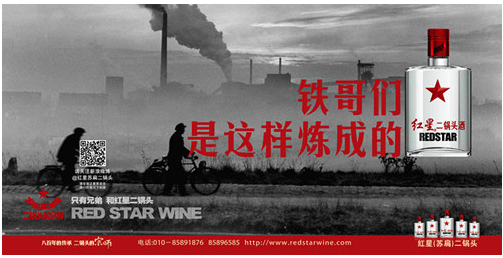 Many authors talk of alcohol production as a side-effect of surplus. Sandhaus turns this on its head, taking a desire for alcohol as a given, and then positing that baijiu, for all its acrid unpleasantness, is the most economic means of getting drunk not in times of plenty, but in times of hardship. That, alone should be enough to explain its stolid endurance through China’s troubled 20th century, particularly when Sandhaus maps near-famine conditions to a pointed and deliberate Communist Party focus on native, proletarian commodities. Having myself discovered Red Star erguotou to be literally undrinkable, I feel better now knowing that it was more likely to have been used as a medical disinfectant in the war against the Japanese, and I am curious about the precise identity of the unnamed “Japanese Communist” who apparently designed the logo.
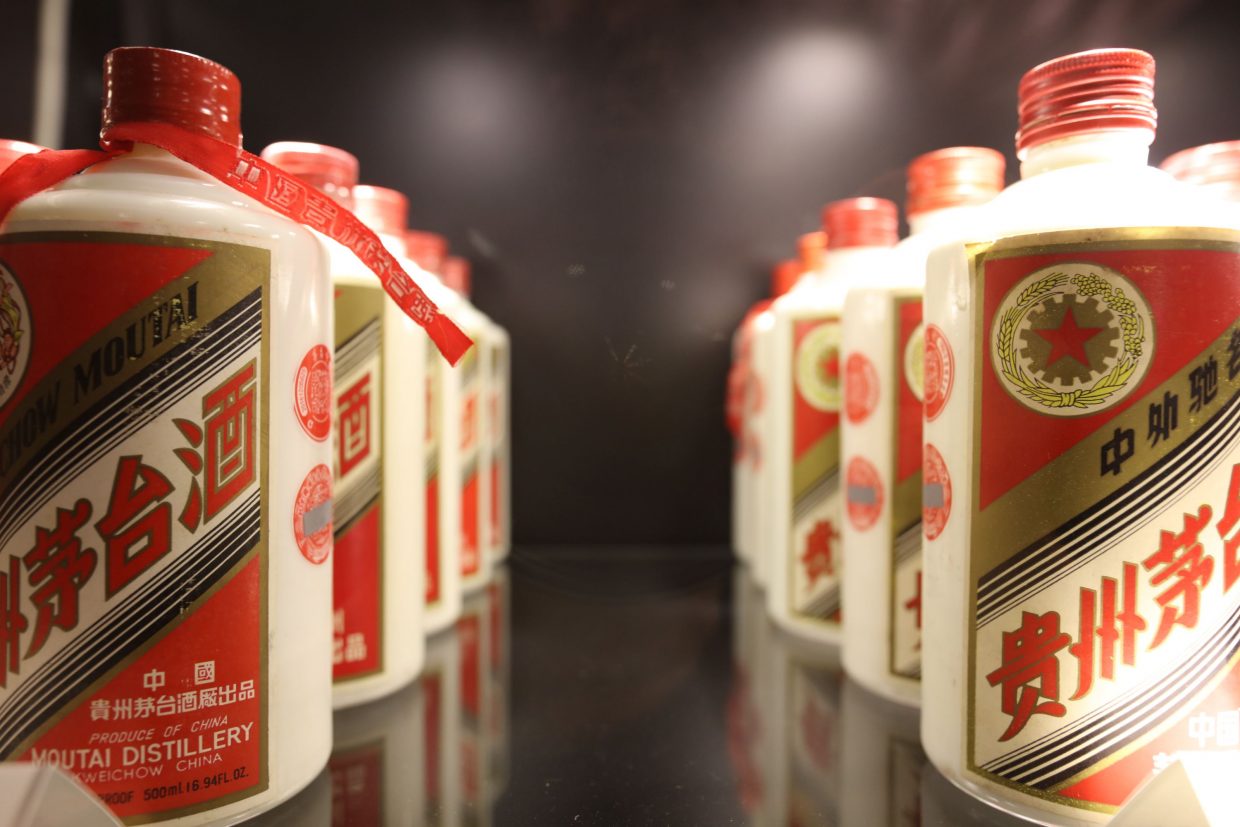
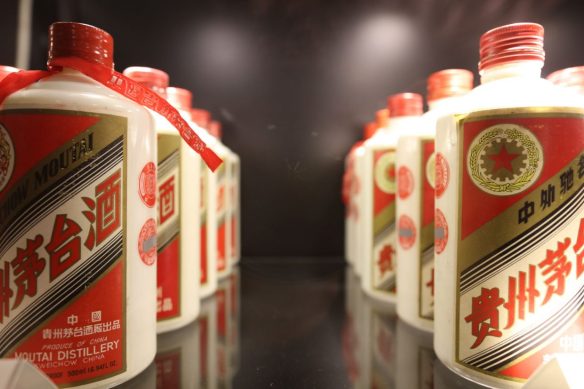
Halfway through the book, when Sandhaus’s history catches up with memoir, he is enthusiastically knocking back Guizhou Maotai, and has largely overcome his earlier distaste. I, personally, think that Guizhou Maotai tastes like pencil erasers dissolved in brake fluid, but Sandhaus has seen the light: “…fermented beans, wild mushrooms, bitter herbs, roasted nuts – the flavours just kept coming. I had been sucker punched by the umami gremlin.” Now, there’s an image.
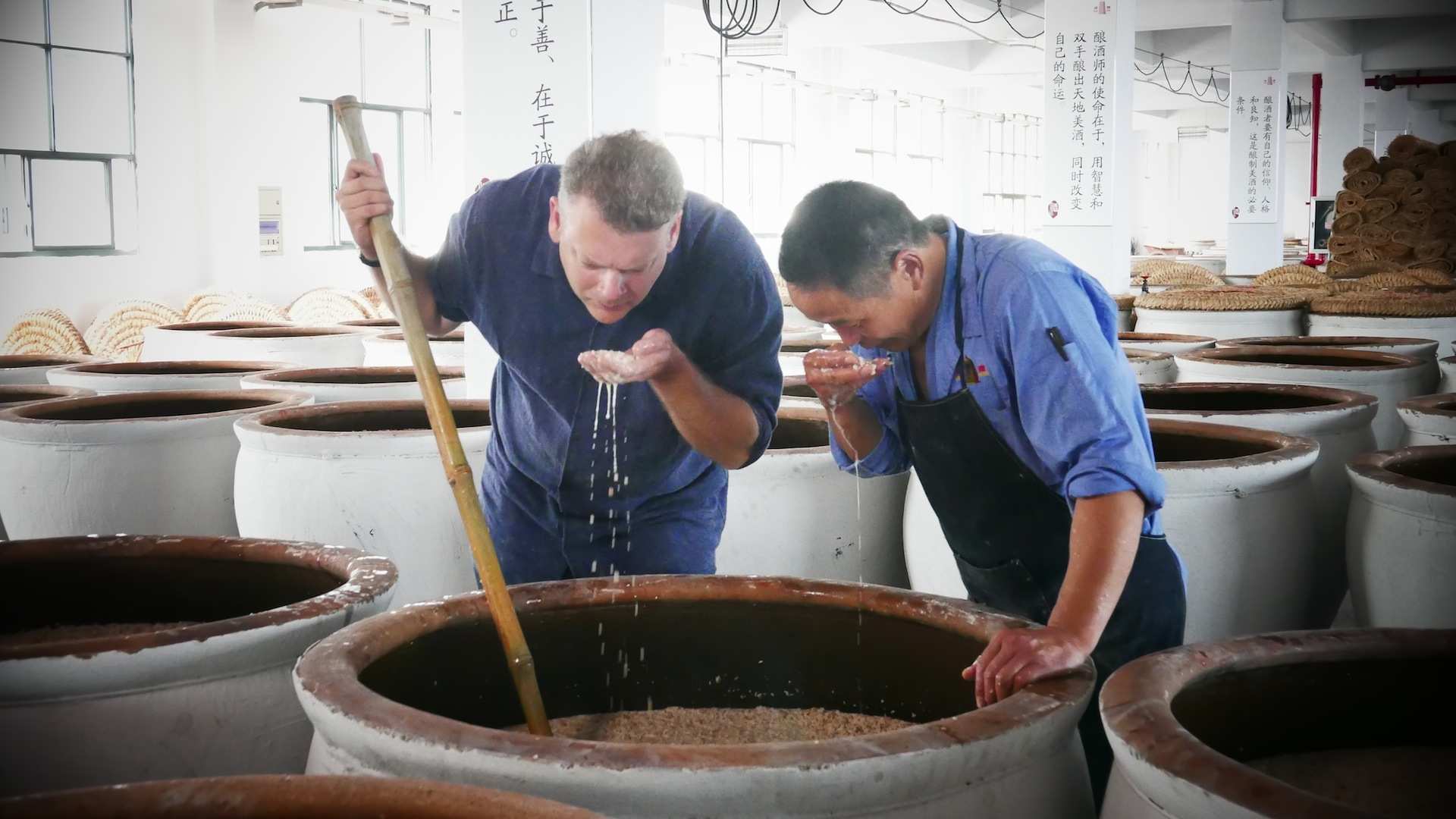
The history was fascinating enough, but Sandhaus goes up a whole gear when he can talk about his personal experience of manufacturers, banquets and drinking encounters. He runs into “Demolition Girls” (professional party-lubricators who drink baijiu by the bowl), a man selling “three-penis wine”, which is apparently thrice as good as wine made with just one penis, and the various other southern Chinese potions that involve dissolved animal parts, leading to a digression on the Chinese railway workers in the Wild West, and the attempts of various local conmen to copy their medicines made from “snake oil”. His account comes with trenchant observations about the minutiae of everyday life – the “ruthless altruism” of Chinese hospitality, and the common issue of being unable to stay hydrated because there is no potable water in one’s hotel.
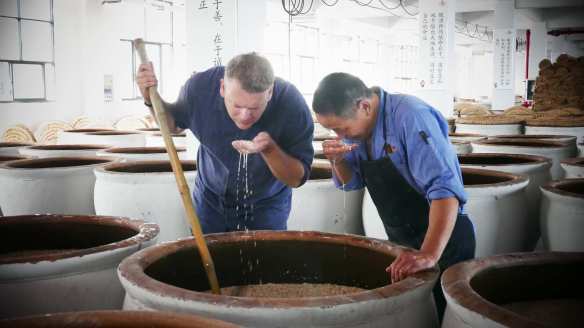 Thirteen chapters after Sandhaus first alluded to, shall we say, cultural biases in appraisals of Chinese liquor, he returns to it with subtle vengeance in a section on alcohol safety. Dodgy booze, he writes, is dodgy booze – the question really should be is Chinese booze any dodgier? This, of course, opens up a whole new can of worms regarding food safety and quality control, and Sandhaus has some wonderfully colourful tales to tell, not the least that Laoshan spring water, the source for one of China’s most famous beers, was found by US assessors to contain “an unhealthy level of fecal matter.” This, too, has a sting in the tail, when after chronicling several of the early 2010s food scandals, he reveals that the passing of stricter Chinese safety laws in response ended up catching a bunch of European food companies peddling, for example, cognacs containing unacceptable levels of plasticizer.
Sandhaus does not flinch from the health crisis engendered by China’s “bottoms-up” booze culture. He drops in on an Alcoholics Anonymous meeting in Chengdu where, curiously, “God” is still granting serenity in the closing prayer, even in Communist China, and he observes the statistical anomaly that China is “…the only nation in the world where an adult’s likelihood to binge increases with age.” His investigations here carry his out-of-the-box thinking in new and rewarding directions, including a survey of baijiu as a drink that is not drunk, but instead bestowed and re-gifted without leaving its presentation box in a long series of bribes and back-handers. In a razor-sharp observation, he notes that when an official proclaims that a matter needs “more research”, it could be construed as a solicitation for something else – yanjiu means research, but is also a homonym for “smokes and booze.”
Sandhaus’s closing chapters outline the writing process of his earlier book, Baijiu: The Essential Guide to Chinese Spirits, in which the man who is still likening his subject matter occasionally to “cough syrup” and “vinegar-glazed cabbage” (and that’s when he’s being nice!) attempts to generate a foreigner-friendly taxonomy of baijiu varieties. In doing so, he investigates the way that the Chinese classify different brands, itself a deeply interesting glimpse of the Party industrial complex at work. An exhaustive account of previous attempts to export baijiu, 99% of the global supply of which, you will be unsurprised to hear, is still drunk in China, is followed by Sandhaus’s speculation that the grading curve – in terms of consumption, quality and respect – for Chinese alcohol is likely to follow that of Chinese food, which itself has had a chequered but upwardly-mobile history.
Jonathan Clements is the author of The Emperor’s Feast: A History of China in Twelve Meals. Drunk in China: Baijiu and the World’s Oldest Drinking Culture, by Derek Sandhaus, is published by Potomac Books.

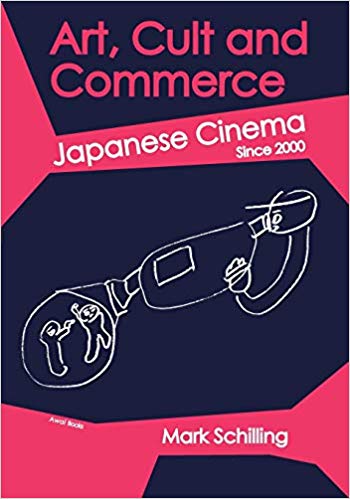 “Hideaki Anno scoffs at the notion that otaku culture has been truly accepted by the Japanese mainstream…His words certainly seem to echo a certain sense one often gets in the Japanese media, that besuited presenters on NHK are gingerly making enthusiastic noises about weeb phenomena they despise.” Over at All the Anime, I review Mark Schilling’s new book.