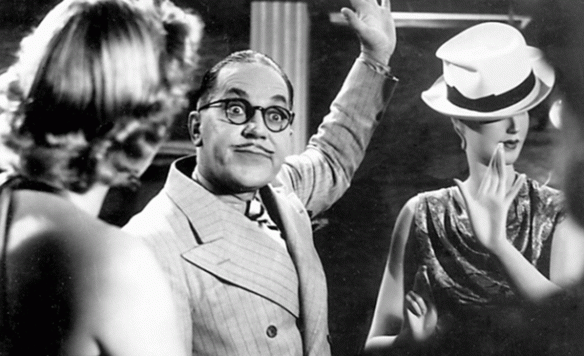
Hiroshi Yamamoto

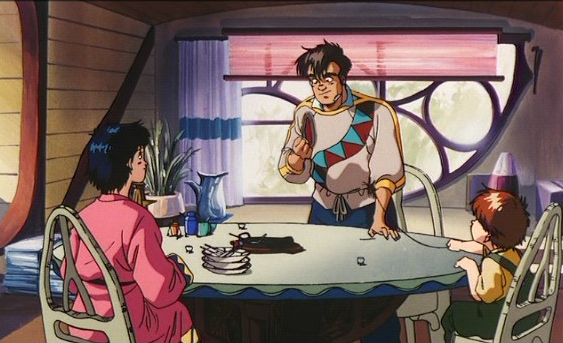
Over at the Encyclopedia of Science Fiction, I write up the remarkable authorial career of Hiroshi Yamamoto, who started out as an elf-girl called Deedlit.

“In any other country’s sf community, an author like Yamamoto might have been the darling of the convention circuit for decades, and a regular sight at awards ceremonies. But in Japan, where his prolixity and varied output is notable but unremarkable, Yamamoto had to wait until Kyōnen wa Ii-nen ni Naru Darō [“Last Year Should be a Good Year”] (2010) to receive a Seiun Award for long-form fiction. Intimately involved in the post-911 zeitgeist, it imagines a world, but more pointedly an America, invaded by androids from the 24th century, determined to stop contemporary conflicts and terrorism as part of an operation in a much wider-ranging Changewar, the precise aims and consequences of which are hidden from inhabitants of the present day.”

The Night is Short…

I once lived in Kyoto. It was a magical time of my life, wandering temples and wooden-shuttered backstreets, side-eyeing geisha at the bus stop – the town that had been Japan’s capital for a thousand years, simmering in the summer heat. My history tutor told me to ring the doorbell of a fearsome, fortress-like building, and to announce to the occupant that I was his deshi. This simple watchword unlocked the bolts, and an antique dealer, feared by the locals, welcomed me with open arms and showed me prints of the war with Russia from a hundred years before. “I remember your teacher when he was your age,” he said. “Like it was yesterday.” But it wasn’t yesterday; it had been twenty years. I went to a barber and sipped gingerly at tea that tasted of fish, while a man who seemed to think it was still 1951 asked me if I wanted a “G.I.” haircut.

Sometimes I forgot what year it was myself. I felt that was how the whole town got along. There was a children’s playground next to a mount called Mimizuka, the “Hill of Ears”. But the name was a lie; it was full of noses, hacked off Korean soldiers during the samurai invasion that closed the 16th century. Every day I would walk across the bridge at Gojo, where my hero Yoshitsune had legendarily fought the monk Benkei. I bought manga and rock CDs next to a little temple, where Oda Nobunaga had made his last stand. I ate noodles near the spot where Yasuke, the black samurai, had overwhelmed his traitorous enemies. Of course, I was going to be a historian, so that others could see what I could see.

In a tea-house, a girl all in grey with shining eyes told me that we had been married once before, in “a smoky room”. The next day, she shaved her head and became a Buddhist nun.

Nobody ever stole my pants from me in a dark alley, though.

The Regiment’s Tribulation (1938)

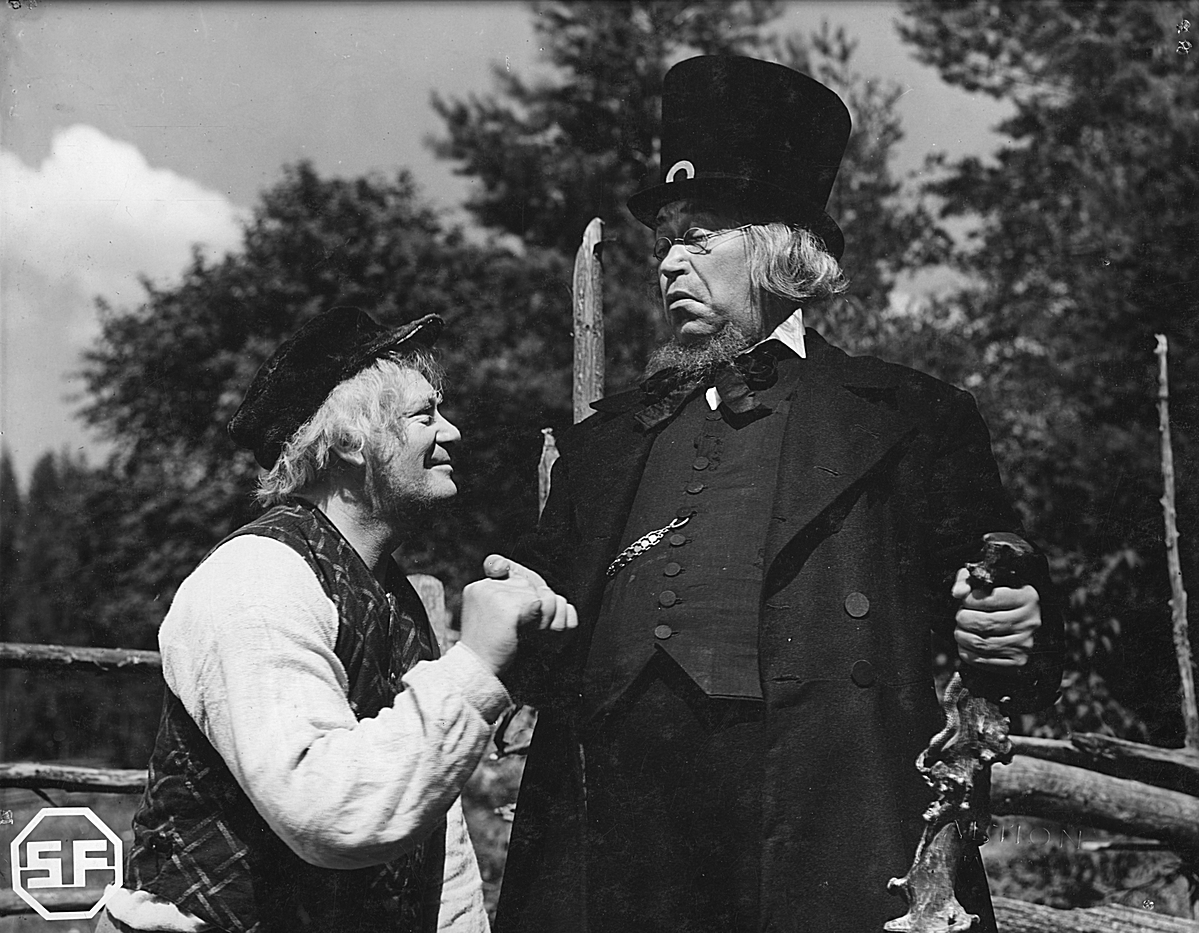
New recruit Hemminki Aaltonen (Kaarlo Angerkoski) over-sleeps at reveille, he is late for drills, and he brings up the rear on speed-marches, complaining about his rheumatism. During training at a forest camp, he takes the delicate academic Lauri Auermaa (Leo Lähteenmäki) under his wing, inadvertently blundering into a burgeoning romance between the soft-spoken professor and the Captain’s daughter Elli (Ansa Ikonen).

Rykmentin Murhenkryyni (1938) began as a 1933 stage play by “Topias” (Toivo Kauppinen) but benefits greatly in cinema form from its real-world location work, affording valuable glimpses of the men and materiel of the Finnish army just before the outbreak of the Winter War. Most striking for me is the degree to which horses still form the engine of the army, with nary a tank or armoured car in sight. This is certainly a military tale as told by a generation that hasn’t seen any real conflict. The sergeant major who turfs the young recruits out of their bunks is ridiculously nice and soft-spoken, while the drill sergeant who berates Aaltonen for being late is a cartoonish caricature; this is more Stripes than Full Metal Jacket.

A cynic might suggest that this is all part of the plan in increasingly tense times, softening the image of military service until it looks less like a dangerous job, and more like a summer camp with some outdoor sports, a bit of marching and some hearty grub. These are not the men that, barely a year later, would be slitting the throats of Russians in their sleep, and dynamiting icy lakes to drown tank divisions. Instead they are friendly guardsmen standing behind rickety barriers and indulging in gentle banter with passing carters, while the daffy cadet Auermaa prances around the parade ground with a butterfly net, and asked if he can have a spin on a cavalry horse. With that in mind, remarkably little happens in the film, with the plot often playing second fiddle to prolonged scenes of marching, swimming, training and goofing off – not since Our Boys in the Air (1934) has the Suomen Filmiteollisuus company spent quite so much time poking around the everyday life of military personnel.

Despite being a comedy, this is the first time that Suomen Filmiteollisuus has had to face issues common to dramatic war films, too – once they’re in uniform, all the men look the bloody same. Unless some is shouting or malingering, it’s often difficult to work out which of the bumbling soldiers is which. Aku Korhonen, his head shaven like a billiard ball, is all but unrecognisable as Captain Routanen, and I wasted a whole minute trying to remember which soldier was the one in glasses in the mess hall, until I realised that it was Auermaa with his jacket off.

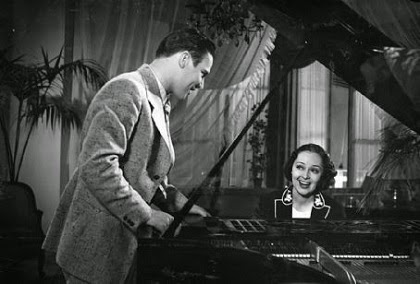
It takes twenty minutes before Ansa Ikonen suddenly appears as the love interest, trilling a jaunty song at the piano. Ikonen has been a regular feature in the last year or so of films from the company, but here seems ill at ease as the comedy ingénue, barking her lines at her fellow actors as if comedy is determined solely by volume, and seemingly blocking herself so that her face is perpetually ill-framed by the camera. She also wanders around in silly jodhpurs and a distractingly shiny satin blouse, but at least it’s obvious who she is! This, perhaps, is part of the plan, as half an hour later she dresses up as a captain herself, and manages to fool her suitor that she is a shouty male officer. Well, I did say that the uniforms made everyone look the same, and in Auermaa’s defence, without his spectacles on the, newly arrived “captain” is just a blur to him, and it is presumably not all that unusual in Finland for a deep-voiced woman in uniform to demand that snivelling underlings clean her jackboots.

Eventually, the comedy is shut down by the arrival of the Major-General (Jalmari Rinne), a dour and authoritative figure who cuts through the various knots into which the cast have got themselves, and gets to yell the big punchline: “What kind of garrison is this? The Captain is a girl and the sergeant-major is mad!” This presumably had a whole extra level of fun for Finnish audiences at the time, since actors Rinne and Ikonen were conducting a scandalously public affair. Barely a year later, Rinne would get a hasty divorce, and with presidential permission, eschew the usual legally-mandated delay to marry Ikonen before her pregnancy bump really began to show.

But I digress. It takes another twenty minutes of running around in the forest before Auermaa proposes to Elli. He is so shy that he only achieves this with Aaltonen standing behind him in the guise of a drill sergeant, commanding: “KISS NOW! KISS NOW! KISS NOW!” You might think Finland is still like this, to a certain extent, but I couldn’t possibly comment.

A final coda shows Aaltonen in happy domestic bliss with his own love interest, Mimmi (his real-life wife Siiri Angerkoski), heartily singing a military tune as he toils in the field, all malingering gone. The message is two-fold, that military life is good for you, and one day all this will be over – stirring stuff considering what was lurking just around the corner for Finland. The Winter War would break out thirteen months to the day after this film’s premiere.

Jonathan Clements is the author of An Armchair Traveller’s History of Finland

Blood Will Tell

The nosebleed, long a sign of suppressed lust in manga, has taken on a whole new meaning, in a controversy that has now been running for five years, and left a stain on what should have been the triumphant ending of a successful series.

Tetsu Kariya’s Oishinbo (“The Gourmet”) has been running for three decades in the pages of Big Comic Spirits, drawn by Akira Hanasaki. “Thirty years,” wrote its author ruefully, “is long enough for anything,” and there were rumours afoot that with failing health and entirely reasonable weariness, he was planning on bringing the story to a close. However, Oishinbo bowed out suddenly and unexpectedly, after a May 2014 storyline about reporters covering the nuclear accident at Fukushima.

Oishinbo was one of the most successful manga in Japan, running to 111 compilation volumes, every one of them a million-plus best-seller. It is one of the last hold-outs of the “gourmet” trendiness of Japan’s 1980s bubble era, and an encyclopaedic introduction to the world of Japanese food and society. But Kariya’s final storyline before a sudden (and apparently planned “hiatus”) featured a character who suddenly develops a nosebleed after coming home from a Fukushima fact-finding mission, despite claims by the authorities that there should be no side-effects. “I myself began to have nosebleeds suddenly at dinner next day when I came back from coverage in Fukushima,” wrote Kariya on his blog, also citing sudden and inexplicable fatigue: “It felt like someone was trying to drag my spine to the ground.”

Kariya, who has lived in Australia since 1988, is a Japanese opinion-former with a large audience, but he seemed to make a lot of enemies. All twenty phone lines at his publisher, Shogakukan, were jammed for a solid fifteen hours – he blamed “pro-claimers”, a term for thugs hired to disrupt corporate activities. He subsequently got into a mud-slinging match with Shinzo Abe, the Japanese prime minister, who called his comments irresponsible and defamatory after Japan had received the much-needed economic boost of the 2020 Olympics. Last month he published an update on his blog, detailing further incidents of harassment and stone-walling directed against him and his publishers over the last five years.

“This was not a thing I heard from someone,” he wrote. “nor me repeating some rumour. This is something I experienced for myself.”

Jonathan Clements is the author of Anime: A History. This article first appeared in NEO #190, 2019.

Last and First Idol

Over at All the Anime, I chronicle the controversial debut of Gengen Kusano, who recently snagged his second Seiun Award for science fiction.

“Mere months before Last and First Idol was nominated for the Seiun, it had previously appeared in an amateur press publication called School Idol Fictionally, where its true colours were revealed as a work of Love Live! fan fiction. Kusano’s original took a degree of icky glee at describing the sudden death of the idol Nico Yazawa, a gruesome operation to salvage her organs, and her subsequent transformation into a super-being with godlike powers.”

British Museum Manga

“As the exhibition winds down, its catalogue is going to form much of its historical footprint. On shelves and coffee tables in years to come, this hefty 350-page book is going to transform into a resource and an aide-memoire, a place for people to remember and revisit what they saw. Undoubtedly, it will form the germ of some new fans’ first appreciation of what manga is.”

Over at the All the Anime blog, I examine the heritage and likely legacy of the British Museum Manga exhibition.

Gaijin Nude

Over at the All the Anime blog, I review Ian Buruma’s snapshot of the literary scene in 1970s Japan: A Tokyo Romance.

“Buruma’s Tokyo tales are a wonderful collage of ghastly poseurs and jocular racists, avant-garde theatrical performances, peep shows and strip clubs, forgotten circus celebrities and lost districts, which he wanders with the same melancholy interest as his literary hero Kafu Nagai. It is a lurid, lost Tokyo before the transforming influences of social media or wi-fi, where one must find books by reaching out and picking them up, and make appointments by speaking to human beings. It is also a world almost as insular as the Shogun’s Japan. Few Japanese, Buruma notes, had the means to leave the country, turning its capital into a side-show of theme-park mockeries of the Other and Far Away. ‘There was something theatrical, even hallucinatory about the cityscape itself, where nothing was understated; representations of products, places, entertainments, restaurants, fashion and so on were everywhere screaming for attention.'”

Miyazakiworld

The new issue of Science Fiction Studies is out, including my long review of Susan Napier’s Miyazakiworld: A Life in Art.

“Perfectly judged for the undergraduate reader, Napier’s book offers a commendable balance of analysis and insight, production gossip and historical contexts. Its references diligently cram in signposts for delving deeper into untranslated sources, but not in such a way as to alienate scholars who can only work in English. There is sufficient material here to turn a fan into a critical viewer, but also to inform artistic appreciation of films that are already well-loved. It is sure to become part of the introductory toolkit for many a course on anime, not the least for its nuanced coverage of the life and works of Japanese animation’s most famous creator.”

Japanese Media Cultures

Over at the All the Anime blog, I review the new collection Japanese Media Cultures in Japan and Abroad — it’s often highly technical, but all the more valuable because it doesn’t demand that you take out a bank loan before accessing it.

Pricing in academic publishing is often a contentious issue in my book reviews. I don’t mind paying £80 for a book, but if I do, it had better be worth it, and if it’s not, I will say so. There are those who take me to task for “forgetting” that academic books are usually bought by libraries rather than members of the public. But libraries have limited funds, too, and librarians could do with fuller and franker appraisals of the books they spend their money on. So you can wait a year or more and wriggle behind an academic paywall to read a journal review of the books I cover. Or you can read what I say about them right now. Or, you know, both, because I’m not a gatekeeper, I’m just a guy who can look over the fence.

The Culprits? (1938)

In an unnamed coastal town, college lecturer Aare (Joel Rinne) is sweet on haberdashery assistant Emmi (Kaisu Leppänen), walking the street hand-in-hand, and taking bracing hikes in the woods. You might be forgiven for thinking that you had already walked in on a happy ending, but the townsfolk do not agree. Already in the opening scene, a passer-by scowls at the backs of the loving couple. Aare’s boss at the college hems and haws about “suitable companions”, and the women at a swish dinner party are aggressively flirtatious with a man who is supposedly spoken for, as if they regard him as their rightful property and his paramour as a risible diversion.

Aare has broken the rules, falling in love with a woman on the other side of the class divide, although as with the earlier The House at Roinila (1935), the nuances in behaviour and language are difficult for a foreigner to spot. Much of the storytelling is conveyed by the sets, contrasting the well-appointed society lounges of Aare’s circle with the grim, rooming-house clutter of the bedsit Emmi shares with her time-worn family, including brother Erkki (Eino Kaipianen).

The script for Syllisiäkö? is based on a 1933 play by Toivo Pekkanen, written and directed for the screen by former actor Jorma Nortimo, who makes a notable effort to push into the action, not only with the commonplace and distracting close-ups of his fellow Finnish directors, but with more intimate, over-the-shoulder angles, rather than a locked-off camera recording a play like so many Finnish films of the preceding decade. Although often defeated by the distractingly inexact jiggles of his focus-puller, Nortimo tries for literal kitchen-sink drama, contrasting Erkki scrubbing his face at a basin with Aare relaxing in an honest-to-goodness bath – more of a rarity in Finnish homes, which even today are more likely to use the same household space for a sauna.

The storyline’s 1933 origins are betrayed in part by some odd staging in a bar that suggests that Pekkanen’s original made more of flaunting the rules during Prohibition, although much of the scandal is diminished in a film version made six years after booze was legalised in Finland. In fact, since a fight at a drunken dance is what precipitates Aare’s fall from grace, we might argue that the entire drama somewhat misfires when restaged in an era when being drunk is no longer a crime. The preoccupations of the previous decade are also suggested when, 25 minutes into the film, Emmi suddenly starts singing to her mirror about her predicament, as if this were supposed to be a musical but someone had lost the memo until that moment. Kaarlo Kartio, as usual, criminally underused, turns up in a brief cameo as a shifty sailor selling stolen goods, another allusion that seems more suited to post-war 1920s austerity than the time in which the film is purportedly set.

“He’s a young man, and she’s a nice girl,” shrugs a gentleman at the ball-room, as if to ask if his dining companions if it’s really any of their business. In this case, it’s the womenfolk who tut and scowl about Emmi, although soon after, Emmi is harassed by men who presume she’s a part-time hooker. Putting a brave face on the trouble, she drags Aare away from the waltz to a working-class knees-up, only for the locals to similarly hiss behind their hands about her inappropriate choices.

The Culprits? is a departure from the Suomen Filmiteollisuus company’s contemporary run of a light-hearted comedies, pushing instead for an element of social realism and chin-stroking speculation. Its question mark is an integral part of the title and the poster design, challenging the audience to consider who is truly to blame for the drama that unfolds. Is it the snooty Finnish middle class, themselves unlikely to be more than a generation off the farms, or the sneering shop-girl frenemies who imply that Emmi has ideas above her station? Or is it the lovers themselves, pursuing a doomed romance despite “obvious” warning signs? Pekkanen’s original theatre script was called Siblings, suggesting a focus more on Emmi’s pugnacious brother Erkki (Eino Karpanen), whose confrontation with Aare at a dance makes it into the local newspaper, and takes the scandal public.

Meanwhile, there are a couple of noteworthy names among the faceless students in Aare’s class – a first appearance on camera for future film star Hannes Häyrinen, and a walk-on for Unto Kumpulainen, then a teenage camera assistant, but destined to become a cinematographer himself in years to come.

The Culprits? is a refreshing change from the norm in the chronology of Finnish cinema. Nortimo’s pursuit of realism is also a welcome innovation, not merely in his camerawork but in the presentation of a conflict that is relatively mundane and hence easy to identify with. That is, at least, until the final 20 minutes, when everybody starts to act as if another forgotten memo has been retrieved, telling them that everything is the end of the world, and nothing will ever be the same again, and the likelihood swiftly escalates that someone is going to get stabbed.

Jonathan Clements is the author of An Armchair Traveller’s History of Finland