The Haunting of Mannerheim

Partway through the first act of Tuomas Kantelinen’s Mannerheim opera, our hero’s ex-girlfriends gate-crash his St Petersburg wedding like the three little maids from the school of hard knocks. Kitty, Maria and Betsy scandalise the family and taunt the bride with verses about how much he adores them, and how he will never love her more than he loved Annicka, the little sister who died as a child. Mannerheim (Waltteri Torikka) dismisses them with a cheeky shrug – left in penury by his faithless father, he is determined to marry the Russian heiress Anastasia (Johanna Isokoski), whose wealth will solve all his financial worries.

This opera moves fast. Within seconds, Anastasia is pushing a pram through a park, still dodging the taunting exes, before, in the space of a single aria, a decade has whizzed by and she has had enough of Mannerheim’s nonsense. She packs herself and her two daughters onto the train for Paris, and hisses at her estranged husband that everybody is afraid of him, except dogs and horses.

The sequence encapsulates the playfulness, humour and incisive understanding of Mannerheim’s life to be found in Laila Hirvisaari and Eve Hietamies’s libretto, as well as the many outrageous liberties they and director Tuomas Parkkinen take with historical characters. For starters, Kitty Linder (Johanna Rusanen-Kartano), one of Mannerheim’s most well-documented lovers, was only five years old at the time of his wedding to Anastasia Arapova, so I’m afraid it is rather unlikely that she would turn up at the party to sing about all the champagne they used to quaff. Nor was there much of a bunch of in-laws to scandalise – only Mannerheim’s father and brother showed up on the actual day, since everybody else thought that Anastasia was a “pop-eyed” bimbo.

But such howlers are so blatant that they may even be deliberate – the libretto lifts moments of undeniable provenance from Mannerheim’s life (such as a famous incident where a Bolshevik challenges him about the suspiciously high-ranking boots he is wearing), but also mixes in complete fabulations, such as an encounter with Puyi, the Last Emperor of China. This last incident is the prelude to revolution, signalled by the sudden display of a flag of the People’s Republic, forty years before it was actually hoisted. Such toying with history turns the opera into no less spirited a retelling than the controversial animated film Butterfly of the Urals or the schmuck-baity Kenyan “Black Mannerheim” remake Marshal of Finland, and despite a tone that is respectful and commemorative, it still manages to land some hard-hitting punches on its titular hero.

Mannerheim is a glorious celebration of the life of the most famous of Finns, but also smuggles in a remarkably subversive message about its subject. Far from being lauded as the father of his nation, Mannerheim here is a Faustian figure, wounded by his father’s infidelity, tormented by the death of his sister, and repeatedly bumping into a sinister coachman (Kristjan Möisnik) who makes him offers that come “at a high price.” In a neat below-stairs touch, his fate is interwoven with that of his housekeeper Ida (Johanna Rusanen-Kartano again), the deaths of whose son and grandson he inadvertently causes.

Despite much light-hearted humour – including a feud with a Russian officer played for laughs and a dance sequence in a clinic full of pregnant women – Mannerheim’s life is littered with corpses, at one point literally, as soldiers returning to the train station are outnumbered by a growing stack of coffins. He is haunted by the ghost of his sister Annicka (Annami Hylkilä), whose death we have witnessed in a melancholy aria about the boy she will never marry, and the daughter she will never carry. The polar opposite of the centenarian Aino from Kalevalanmaa, Annicka becomes the ghost of Finnish futures, forever frozen in time, unaware of the coming struggles of the Revolution or the Winter War, a symbol of Mannerheim’s carefree childhood in a simpler world. The first act finale finds Mannerheim literally with blood on his hands, lamenting the death of Ida’s son Toivo in the Civil War.

The second act makes a series of bold and unexpected dramatic decisions, starting with the striking recognition that the gallant young man of the first half was already a pensioner by the 1930s. It seems like only a moment ago we were snickering about his roister-doistering youth, but now he is a stuffy old man who needs his reading glasses, grumpily cutting ribbons for the opening of charitable institutions. Torikka’s Mannerheim is already infirm and slightly doddering, encouraging Ida’s grandson Kalle (Aarne Pelkonen) to join up, despite the dangers, presiding with increasing apprehension over a war that allows him to return to his glory days, at the expense of countless young lives.

We can all see what’s coming, as Ida sings her way through a letter from Kalle at the front, laughing at the recurring lyric “SENSUROITU” (censored), while Mannerheim tries to pluck up the courage to sign the telegram that will inform her that her son has died in action. But the opera’s greatest coup comes after the war, in a moment not of achievement but of denial, in which (SPOILERS SENSUROITU, highlight to read): Mannerheim is exhorted  to ascend a ladder to take his place atop the bronze horse statue on the street that bears his name – symbolically, he is being invited to become the icon that he is today, but he stops at the base of the ladder. Instead, he runs away, which leads to another iconic moment from the photo gallery of his life – the lonely park bench in Lausanne, where he literally waits for Death, and finds a final duet with Annicka instead.

I was at the opening night of this season’s run at the Ilmajoki Music Festival, where Mannerheim received a well-deserved standing ovation, not merely for the leads, but for star turns from the supporting cast. As Mannerheim’s mother Helena, Essi Luttinen has a few minutes to belt out an incredible swansong, before conveniently dying so she can sneak back onstage to play his paramour Betsy Shuvalova. As Ida, Johanna Rusanen-Kartano ably juggles her dual roles as comic relief and grieving grandmother, but it is difficult to single out anyone in the cast who doesn’t shine in their moment.

The Mannerheim opera is a fascinating set of decisions taken in adapting the life of its subject, intriguing not only for what it includes, but for what it leaves out. There is no press-baiting scene to be had with Adolf Hitler; no walk-on for the Dalai Lama; no treatment of the stillborn boy whose death spelled the beginning of the end for an already shaky marriage. The Far East alone in this opera is a single scene, about a place where Mannerheim fought a war against the Japanese, led a posse of dandy bandits, banged a mysterious lady in Vladivostok, and spent three years undercover pretending to be a Swedish anthropologist. Mannerheim sings of his loneliness in his later life, although this rather ignores the fact that he spent much of his retirement with his lady friend Countess Gertrud Arco-Valley. And there was the hunting trip to India, and the coffee shop by the sea, and… I’ll stop. Mannerheim remains such a complex figure, and his life so packed with incident, that it really is possible to go back and write a whole other opera. I expect the Finns will, sooner rather than later. In the meantime, treat yourself to this one.

Jonathan Clements is the author of Mannerheim: President, Soldier, Spy. The opera Mannerheim is playing at the Ilmajoki Music Festival until Sunday 9th June.

Big Hitters

Over at the Encyclopedia of Science Fiction, I write major new entries on some of the big hitters of anime and manga, including Rumiko Takahashi, the creator of Lum (pictured), Masamune Shirow, creator of Ghost in the Shell, and Tetsu Kariya, creator of Oishinbo. My Chinese and Japanese entries in the encyclopedia now amount to more than 160,000 words — that’s two book-length collections of articles.

The Jaeger’s Bride (1938)

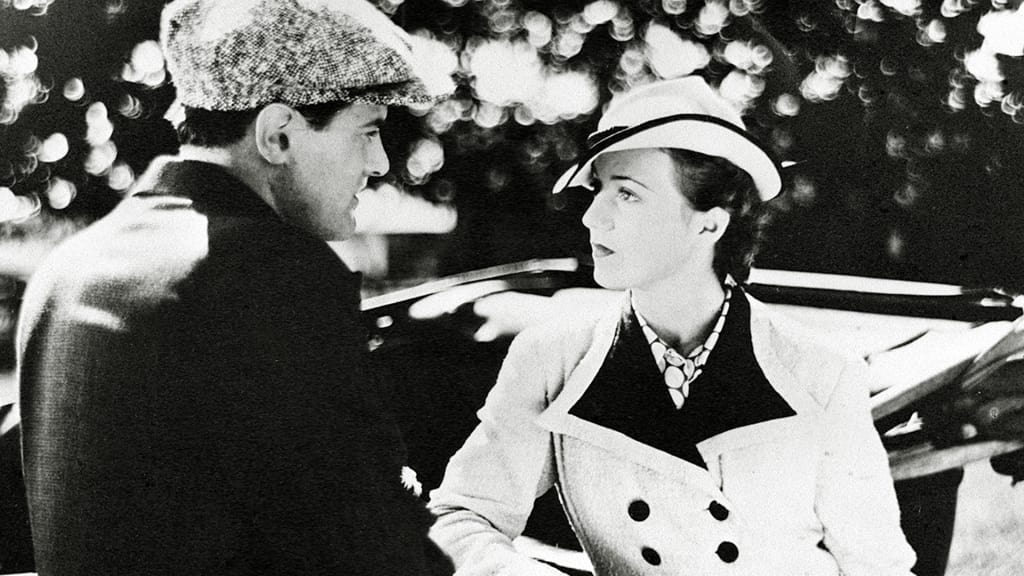
1916: and a battalion of German soldiers are off to fight on the Eastern Front. Wait. German? No, these are Finns, trained in Germany as elite “jaeger” fighters, although if the opening scenes are anything to go by, they certainly haven’t learned any manners. Somewhere in Latvia, the dancer Sabina (Tuulikki Paananen) is struggling to board the jaeger train. Her new-found guardian, the monocled Baron Lichtenstein (Erkki Uotila) gets into a fight with the young jaeger officer Martti (Kullervo Kalske), which leads to Martti being carted away to the brig.

In nearby Libau, Martti languishes in jail, singing interminably all the while and drawing a picture of Sabina on his cell wall. He has, inexplicably, fallen in love. Sabina, meanwhile, dances at the Golden Anchor restaurant, a rowdy ale house frequented by the jaegers, as well as Isak (Sasu Haapanen), a Suspicious Jew. The talk of the town is “Merovich”, a Russian super-spy who is ruining the Germans’ chances on the front. Except we have already seen the Baron passing a coded message to Isak at the train station – the Baron is Merovich, and we have to sit through a bunch of songs and half-hearted dance routines while waiting for the Finns to work this out. Martti is an odd protagonist in that he spends most of the film in prison, singing about a girl he has only just met.

Risto Orko’s Jääkärin morsian is a notorious film in Finnish cinema history. It lionises the German-trained jaeger battalion that was fated to swoop into Finland after the Russian revolution and play a vital part in the liberation of the country from the Communists. As a result, by 1948 it was regarded as dangerously anti-Soviet propaganda, and after protests from Moscow it was effectively banned for the next four decades. Yes, it was a problematic film because it was anti-Russian, and not because of the shameful portrayal of Jews as craven, hunched, swarthy traitors. Your mileage may vary.

Baron Lichtenstein is clearly marked as the master-spy Merovich from the opening scenes, turning the film into a waiting game as we twiddle our thumbs through all the pointless singing, as his local paramour Sonja (Ritva Aro) fumes that he has found a younger woman, and the merry Russian serving wenches flirt and banter with the raucous Finnish soldiers. Eventually, the Finns work out who has betrayed them, and there is a horseback chase, a bomb rigged to blow up a manor house, and a bunch of people shot off-screen. In the role of the fiery Sabina, Tuulikki Paananen gets to show off the skill that first brought her to the attention of directors from Suomi-Filmi, which was apparently her party-piece of dressing up as a Mexican bandit and dancing to a tune that only she could hear, while the soundtrack plays something entirely different.

The fascinating thing about this film is the Eastern European world it depicts, thrice-destroyed in the twentieth century by the First World War, the Second World War and then a generation under the Warsaw Pact. Prussia just isn’t a thing any more, but here we see its restaurants, manors, peoples and fashions. There are foreshadowings here of some alternate-universe Casablanca, perhaps titled “Everybody Comes to Sonja’s”, in which the German dastards are here switched into heroes, and songs are clumsily integrated into the narrative while a pretty girl wanders through the action in a sombrero.

Although her dance sequences are ruined by a poorly synched soundtrack, Tuulikki Paananen smoulders impressively as the innocent dancer Sabina. The child of a Finnish father and an American mother, Paananen was raised in the United States and would return there soon after the outbreak of the Winter War in 1939. Local rumour in Finland held that she has been arrested as a spy, but in fact she was trying to carve out a career in Hollywood. In the 1950s, she moved to Honolulu, where she ran a hula school. You really couldn’t make this up.

Jonathan Clements is the author of An Armchair Traveller’s History of Finland

International Shojo

Over at the All the Anime blog, I review a book of essays and interviews about Japanese comics, Masami Toku’s valuable collection International Perspectives on Shojo and Shojo Manga: The Impact of Girl Culture. Topics covered include whether criticism of boys’-love manga is “gay enough”, the relevance of a job at Shake Shack to a pricey academic publication, and whether a manga in a magazine for housewives is really for “girls” at all.

The Elephant in the Room

I get a walk-on role in the art magazine Elephant‘s coverage of the British Museum’s new exhibit.

“Jonathan Clements… has published more incisive, entertaining insights about manga than any other writer in the UK. Clements’s Manga Snapshot column in NEO magazine has been going strong for fourteen years; his Schoolgirl Milky Crisis essays explore the behind-the-scenes drama of the manga/anime industry, and his latest book, Attack of the Red Panda, will be out this year.”

African Samurai

Over at All the Anime, I review Lockley and Girard’s Yasuke: The True Story of the Legendary African Samurai, and pronounce it to be great fun, albeit not all that historical.

“Poke around Asian history for long enough, and you will find flashes of striking diversity – the Italian girl buried in a medieval grave in Yangzhou, or the Persian camel drivers celebrated in Tang dynasty porcelain. Reading the 14th-century Travels of ibn Battuta, we find him dropping in on a fellow Muslim in a Chinese harbour town, admiring his ‘fifty white slaves and as many slave-girls.’ You can bet there’s a story, there.”

The Tale of Genji

Lady Murasaki’s Tale of Genji appears to have been patched together over the course of a couple of decades, serialized in episodic chapters for a small circle of intimates. Its titular hero is a minor princeling, the son of one of the emperor’s lesser concubines, doomed to a life of genteel idleness and forced into several soap-opera situations involving unwelcome betrothals, doomed love affairs, and court scandals. It is likely, but impossible to prove, that some of the situations in which he finds himself were thinly disguised allusions to real goings-on in the capital.

“I have a theory,” Murasaki wrote, “about what this art of the novel is…It does not simply consist in the author’s telling a story.” Instead, she argued for writing as a true vocation—an insurmountable urge to communicate with others.

“On the contrary, it happens because the storyteller’s own experience…even [of] events he has only witnessed or been told of—has moved him to an emotion so passionate that he can no longer keep it shut up in his heart. Again and again, something in his own life…will seem to the writer so important that he cannot bear to let it pass into oblivion.”

Murasaki’s depiction of court life is an idealized world of courtiers dueling with witty poems, and of lovelorn princesses waiting for their Prince Charming to sneak into their bedchamber for a midnight tryst. She presents a view of an idle, timid coven of women diverting themselves with guessing games and literary competitions, largely at the mercy of a society of rapacious or dismissive men. Sometimes it’s difficult to tell what’s worse for one of Murasaki’s women: attracting the attention of a nobleman who will force himself on her in a midnight visit, or realizing that such attentions are waning, that he has found another diversion in another palace courtyard, and that she is left literally holding the baby.

The attitudes of Murasaki’s characters make it abundantly clear that women in in her world are second-class citizens, “creatures of sin” in Genji’s words, regarded by the menfolk as idle, ditzy decorations. Such attitudes are a world away from the ancient legends of Japan, which are thickly populated with queens and warrior-women, and seem to imply that the indigenous people accepted a power structure that regarded women and men as complementary equals. In The Tale of Genji, we catch a glimpse of the damage that may have been done by several centuries of immigrants from the mainland, infusing the Japanese with another Chinese import—chauvinism.

Entire shelves of books have been written about The Tale of Genji, and the adroit, oblique way that it purports to be about its title character, the “shining prince,” while actually being about the women in his life. An early chapter features Genji and his friends idly and somewhat cluelessly discussing the types of women that exist, setting up dozens of later chapters in which he blunders into relationships with their real-world manifestations.

From A Brief History of Japan by Jonathan Clements, available now in the UK and the US.

Eurovision Shouty I-Spy 2019

Dare to Dream! We’re back for the game of the year, the Eurovision Song Contest hosted this year by Israel, a country which won last year with a chicken dance in a kimono. The Netherlands is inexplicably the bookies’ favourite, but audience appreciation for Malta, Switzerland and Norway are all off the charts, and North Macedonia’s entry will be popular with anyone who can’t remember Rise Like a Phoenix. We’ve already had to say goodbye to Austria’s blue-rinse with a boob tube, Romania’s zombie bondage butlers and Portugal’s… well, I don’t know what Portugal was, except it was a song about mobile phones that sounded like someone throwing a piano down some stairs.

Step One: you will probably need to be quite drunk. Step Two: The following sights will be seen during this Saturday’s Eurovision Song Contest. Can you see them first? Remember to shout it out. Party hosts will need to keep score of who gets what first, or otherwise dish out the forfeits to those that aren’t quick enough. As ever, there is more than one key change, and plenty of orbital cleavage. Keep your eyes (or ears) open for any of the following. And when you notice it, SHOUT IT OUT!

In no particular order, in Saturday’s final you should look out for:

Midget drum-kit
Chinese man with a stepladder
Heart made of lasers
Pogo-dancing idiot
KEY CHANGE! (every time you hear one)
MULLET! (a man with two haircuts, both of them bad)
MAN TABLE! (table made of men)
Crotch grabbing
Some audience nutter waving a Brazilian flag for no reason.
Girls on sticks
Mirror man
Giant chair
Hammer time! (hammer as musical instrument)
Lyrics: “I’m dancing with the fairies now.”
Black thigh boots but no knickers
Sign: IT HURTS TO BE ALIVE
Sudden gospel choir
Hand-drawn armchair
Giant reindeer effigy
Man in inadvisable shorts
HOLA OLA! First sighting of supervisor Jon-Ola Sand
Pointing
Onstage Fencers
SHOW A LEG! (single leg poking out of costume)
Robot
Misheard lyrics: “I’m shitting my body tonight.”
He’s a Cockney Czech!
El Dancing Wicker Man
Lyrics: “Na Na Na”
Big ballerina
White thigh boots
Backflip! (seriously, stop with the... stop... stop!)
Hands make a heart (on or off-stage)
Gaucho backing dancers
Lyrics: “The ruins of what has been”
FLAME ON! (every time there's pyrotechnics)
Slide and Sneer!
Lyrics: “I can be your jungle.”
WINKING
COSTUME CHANGE
Giant ball!
Giant ball thrown into the audience.
Ribbons!
Bimbling*
ORBITAL CLEAVAGE**
Buddha Jazz Hands***

HORSE HEAD! As a special bonus for all you astronomers, at some point tonight you will see Barnard 33, also known as the Horsehead Nebula.

Other optional bonus categories are:

YES, WE KNOW! (every time someone points out Israel isn’t in Europe)

The Palestinian Protest Sweepstake – pick a song in advance to see if you can predict when the stage invasion, banner or other stunt inevitably happens. My guess is when Estonia or the UK are onstage, because that’s when everybody will be in the loo.

Threatening comment from Eastern European panellist about “our neighbours”

Panellist attempts to say “L’CHAIM!”

AYOUB SERIOUS? Green-room host Lucy Ayoub switches into Arabic.

(*swaying one’s head from side to side in a snakey fashion.).
(**ostentatious cleavage sufficient to see from a satellite in orbit, which, according to Eurovision bra consultant Tom Clancy, requires a minimum of C-cup).

(***the dancers all pile behind the singer in a line and then fling their arms out, creating a multi-limbed oriental deity-look)


“We are technicolour. Watch us go.”

Medieval Frenemies

One of our most valuable records of life in the Heian court comes from a chatty, contrary, vulnerable lady-in-waiting whose habit of writing topical lists and musings often makes her come across like a modern blogger. Common to the etiquette of the day, her true name remained unspoken in public and is hence lost, although she is usually referred to by her nickname, Sei Shōnagon (Lesser Councillor of State Kiyo’s [Woman]). Some of her diary entries even appear to be what we might now call memes—snickering about a cat treated as a royal personage, or a long-forgotten in-joke about a spindle tree, enduring today as nothing but an unintelligible punchline.

Sei Shōnagon loves getting letters; she derives a nerdy joy at finding books she hasn’t read before. Rude people piss her off. She can never find a truly good pair of tweezers. She hates that moment when you splash ink on a book you are copying out; that moment when you wait up all night for a man who doesn’t show; or when he does and then snores loud enough for your neighbors to know what’s going on.

She doesn’t like going to bed alone, and burning fine incense that makes her feel like she is a class act if there is no man to notice. When she looks in her Chinese mirror and the burnished bronze is a little cloudy, it makes her fret that she, too, is losing her looks. When an evening letter arrives from her lover, she can’t wait to find a lamp, and uses tongs to snatch a lump of red charcoal from the nearby brazier, squinting in the half-light, heedless of the fire hazard.

Sei Shōnagon gets annoyed when she hires an exorcist to deal with someone’s spirit possession, only for the guy to turn out to be a drowsy charlatan. She swells with childish pride when the empress addresses her and she accidentally says the right thing in response.

When her carriage travels down a narrow woodland lane, she reaches out to touch the trees.

Haters still hated. Murasaki Shikibu (the “Wisteria Girl of the Ministry of Ceremonies ), a fellow court lady who also kept a diary, couldn’t stand Sei Shōnagon, but had to put up with her scribblings. A thousand years later, we are immensely fortunate to have access to the writings of both these remarkable women, who not only wrote beautifully and evocatively about their lives, but did so at the same time and place. Somewhere, sitting in a bar not far from you right now, there is a pair of frenemies just like them—one bubbly, chatty, and sensual; the other shy, plainer, but smarter. Sei Shōnagon is the hot, flirty one with a ready comeback; Murasaki Shikibu is the wallflower who thinks of something cleverer, but only on the way home. Widowed at a young age, Murasaki was introverted, introspective, icily witty but faintly repulsed by human contact, particularly with Sei Shōnagon, whom she regarded as insufferably smug, airheaded, and with an inflated sense of her own literary merits.

“If we stop to examine those Chinese writings of hers that she so pretentiously scatters about the place,” Murasaki wrote, “we find that they are full of imperfections.” By far the smarter one, Murasaki tried and largely failed to keep her intellect secret from her fellow court ladies, whom she rightly suspected would be at first curious, and then jealous. Murasaki, who dismissed Sei Shōnagon for her flighty interests and empty opinions, had the last laugh, being remembered as the world’s first novelist for writing The Tale of Genji around the turn of the eleventh century.

From A Brief History of Japan by Jonathan Clements, available now in the UK and the US.

The Tokyo SkyTree

Behind the scenes, another invisible technological transformation would spell disaster for a Tokyo landmark. With tourist attendance already dropping, Tokyo Tower was found to be no longer fit for its main purpose as a TV broadcast antenna. The new requirements of all-digital broadcasting, and the obstructions caused by multiple skyscrapers all over the city, now demanded an even larger broadcast tower.

The Tobu Railway company jumped at the chance to meet that need. Its managers had found themselves lumbered with a tempting piece of real estate – a derelict cargo yard, left over from the pre-highway days when Tokyo’s construction boom required the movement of building materials by rail. Now, with lorries fulfilling such functions, and passenger traffic lured away by more convenient stations nearby, Tobu needed something to fill the 60,000-square-metre space. A combined subway station, shopping mall and landmark TV tower would do the trick, with the project getting underway in 2005.

In Japan’s stagnating economy, there were few excuses for such boondoggles – but the new digital broadcast tower would prove to be an exception. Opened to the public in 2012, the new 634-metre building was named by a public vote. Rejected names included the Edo Tower, evocative of the samurai past, and the Rising East Tower, alluding to the ‘Pacific Century’ – a term denoting the idea that the twenty-first century will be economically dominated by states of the Asia-Pacific region. One suspects that the architect was rather hoping for the chosen name to be Musashi, which is simultaneously an old word for the Tokyo area, the name of a famous samurai and a pun based on the tower’s height: 634 metres = mu-sa-shi. Inexplicably, the winning name was the meaningless Tokyo SkyTree; we should count ourselves lucky that nobody suggested Buildy McBuilding.

As with Tokyo Tower in earlier generations, the structure itself was merely a beacon on top of a more traditional property, in this case the Solamachi (‘Sky Town’) shopping centre, which also hosts the Sumida Aquarium, a planetarium and the Postal Museum, along with offices and restaurants. In the usual shuffling of place names and associations associated with Tokyo, the nearby Narihirabashi metro station was renamed Tokyo SkyTree – its fourth name in only a century of operation.

From An Armchair Traveller’s History of Tokyo, by Jonathan Clements, available now in the UK and the US.