When I was a kid, novelisations were the way you could experience an AA- or X-rated film without breaking the law. They were a way of re-entering and re-watching movie texts that meant a lot to you, and they were often a means of finding out all the bits of the film that had been left on the cutting room floor. I even knew a boy at school who once bragged that he only read movie novelisations, as if this were some sort of badge of sophistication. As an occasional tie-in writer myself, I now know his boast for what it was – the literary equivalent of crowing that you only ever ate fast food. It’s not unusual for a movie novelisation to get cranked out in two weeks flat, by an author fuelled on various medications and, erm… enhancers.
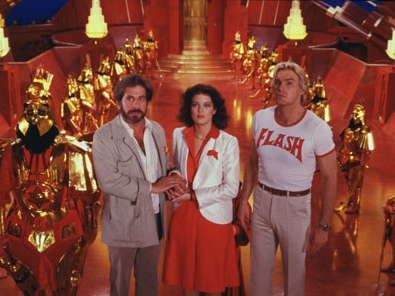
I once finished writing a film novelisation bang on time, only to re-read my contract and realise that I was three thousand words short. So I went back in and wrote a whole new chapter, implied but never seen in the script itself, a massive funeral sequence that tied up a bunch of loose ends from the script, and fleshed out some character motivations that were otherwise vague. I’ve seen other authors do this. Arthur Byron Cover, in his novelisation of Flash Gordon, threw dozens of curve-balls into his book, with bonus asides and little scenes that had all sorts of implications. My favourite was when Flash silences Dale Arden with a kiss and says: “Let’s save it for our kids.” That’s in the script.
But in Cover’s novel, Dale thinks to herself: “Kids? Should I tell him about my operation…?” Very confusing for the eight-year-old me.
 Licensors can be arseholes. According to Tied In: The Business History and Craft of Media Tie-In Writing, edited by Lee Goldberg, Max Allan Collins was obliged to cut 60,000 words from his novelisation of Road to Perdition (itself based on comic by one Max Allan Collins), because the stuff he added “wasn’t in the script”. He confesses that this situation is “fairly rare” (certainly, nobody has ever stopped me adding extras, and indeed my editors have normally welcomed them). But Collins clearly wasn’t dealing with one of the nice licensors who see a novelisation as a bonus exercise in metatextuality; he was dealing with a literal-minded bean counter who saw a novelisation as an advert for the film, that cannot cross any bland boundaries of expectation.
Licensors can also offer wildly varying degrees of support and interference. The most unwatchably bad franchise I have ever written for happened to have the best-written, most helpful style guide I have ever seen, in any medium. The franchise I’ve most enjoyed writing for was also the least supportive, offering a single line of advice before packing me off to write 80,000 words – presumably, hopefully confident that I knew what I was doing. They then spent a month cordially attacking my work with scissors. Seriously, they could have saved everybody a lot more time by just telling us beforehand a couple of ground rules that they’d kept to themselves.
Tie-in writers can also be arseholes. Some of my best friends are tie-in writers, but our world is orbited by an Oort cloud of dicks, without an original thought in their heads, fighting tooth and claw over the scraps that drop from producers’ tables, bragging desperately of their fannish connection to this TV show or that franchise, and often pissing away their creative lives in serial, flat-fee write-a-thons, with limited artistic heritage and no long tail. I couldn’t care less what those people have to say about their profession, but I am deeply interested in the thoughts and experiences of their smarter colleagues – people who thrive on the discipline and energy of diving briefly into someone else’s world, and turning around a story using the characters and the mood they have been dealt. This is, after all, how Hollywood itself seems to work most of the time, and it’s a skill that any jobbing writer would do well to cultivate.
 I bought Tied In because I was curious if they could pull it off – and, largely, they do. The multiple authors deal to some extent with the peculiar condition of the tie-in world, such as the possibility that a book with your name on it will get kited into the bestseller lists, but only because it has someone else’s name on it as well.
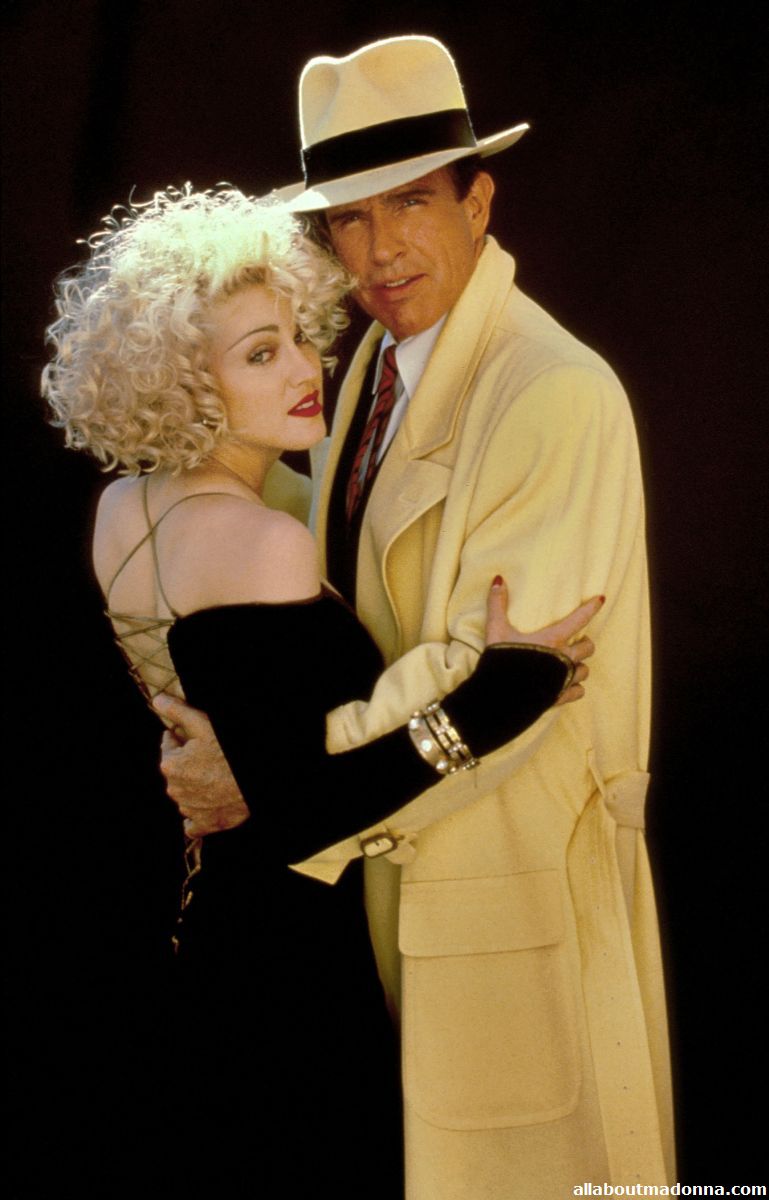
It helps that Max Allan Collins is on board – an author with enough clout in his own right to get away with naming names when it comes to some of the disasters of his tie-in career. There are some real shockers, beginning with his first job on Dick Tracy, when he was made to rewrite his novelisation from the ground-up, and drop the ending from the film itself, by editors who were petrified that the OMG OMG shock twist ending would be revealed by readers before people had seen the film.
There’s a great discussion section, involving over 20 authors, that doesn’t shy away from the nitty-gritty of advances and royalties, demonstrating just what kind of numbers are involved in putting that copy of the Pacific Rim novelisation on the shelf in Asda. Much of the craft of writing a tie-in is no different to the craft of writing any book, except possibly with a first-draft written by someone else in a script format. The forum members discuss the issues of “head-hopping” when a film changes point-of-view, or the particular problems of rendering a cross-cut movie scene into more traditional prose form. Collins in particular shines with some great ideas for original approaches, although his horror stories are so horrific you wonder how he still has the balls to try them. His solution for novelising the Sylvester Stallone vehicle Daylight, framing the whole thing as a documentary, is just great, but one unlucky dice roll with the licensors, and they would have made him throw it in the bin.
Several authors note the unique opportunity to fix plot holes and crappy bits in the script with the greater space afforded to prose. They note the opportunity afforded in a prose (or audio) tie-in for super-duper special effects or locations that are beyond the means of a TV show stuck in Vancouver (or Wales) all the time, or the chance for “Easter Eggs” that will only be noticed by hard-core fandom.
Kevin J. Anderson reveals that he gets a minion to type the whole script into a word processor with the tenses changed, so that when he sits down, he has, in his words, a “badly written” story that already hits 30% of his wordcount. It all sounds dreadfully hacky, but then again, as he points out, his main duty is to deliver a workmanlike 60,000 words to the licensor’s specifications, and what better way to reach that target than by recycling the pre-approved script.
It’s all too easy to sound defensive about a profession that I myself have previously described as the prison shower bitch of the literary world, but there are some interesting arguments to be had about the extra creativity needed to function within another creator’s limits. They’re all here, along with some top tips and some truly terrifying tales of licensing hell. True, some of the contributors seem to think they are promoting their work in a particular franchise rather than the craft that went into it, but Tied In still offers an intriguing glimpse of a part of the literary world that is ever on the bestseller lists, but rarely discussed by critics.
Jonathan Clements, under this name and others, is the author of tie-ins for over a dozen franchises, including Spartacus, Doctor Who, and Strontium Dog.

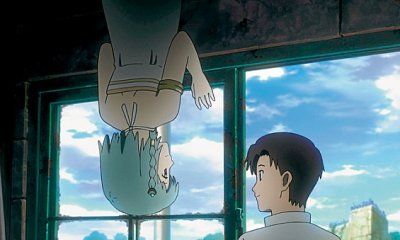 In Heathrow just about to be shot out of a cannon at Scotland, ready for Andrew Partridge’s mini-tour of regional cinemas. Over the next four days, I am going to be introducing anime like Patema Inverted and Evangelion 3.0 in a number of places I have never been, including Dumfries, Bo’ness, Falkirk and Inverness. Andrew is driving. He has only just passed his test. No pressure.