One of the pleasures of long-haul flights is getting to mainline a bunch of movies that you wouldn’t otherwise stand a whelk’s chance of watching. Which is how, somewhere two miles above Novosibirsk, I found myself watching The Treasure of Lake Kaban, a completely bonkers movie set in Tatarstan.
The poster says it all, from the Lara Croft rip-off and the aspirant Bond, all the way to the irritating little dog. Ivan the Terrible scowls at the left – it is he, in flashback, who attacks Tatarstan’s capital, Kazan, causing the beautiful princess Soyembika to bury her greatest treasure in a secret location. Meanwhile, over on the right is an “American” carpet-bagger called, wait for it, Diana Jones.
The tagline shrugs: “Nyet vremeni obyasnyat” (There’s no time to explain). And apparently there isn’t, as a frustrated army doctor-turned-archaeologist, a nutjob who thinks he’s an alien, and a Russian navy conscript trying to find enough cash to buy out his commission, all converge on the small republic, where local colour amounts to a whole bunch of relics of Russian’s Mongol marchland – dances, cossacks, daggers, and most memorably in the gene pool, if the smouldering Elvira Ibragimova (that’s her in the shorts) is anything to go by.
The script, by Georgiy Kirvalidze and Dimitriy Terekhov, is based on ideas by three others – although there is such antic chaos in the movie that one might be forgiven that three completely different films were being made at once. There are allusions to many tourist sites in Kazan, and local legends such as the Zilat, the region’s own variant of the Loch Ness monster.
Played straight, there would have been plenty of majesty and scenery here to out-Dan Brown Dan Brown. But The Treasure of Lake Kaban plumps for madcap “comedy”, all pratfalls and kicks in the goolies, as wannabe rock star Kiril (Alex Sparrow, who is apparently something big in Russian X Factor) gurns and mugs his way around a series of monuments and sewers, trying and largely failing not to stare down the cavernous cleavages of his co-stars and nemesis. The result plays as if the Chuckle Brothers have been put in charge of the Da Vinci Code, with all that that implies.
For readers in the UK, I shall be on Channel Four on Sunday 8th December at 8pm, as a talking head on New Secrets of the Terracotta Warriors. Lots of metallurgy fun, and possibly even the entertaining sight of me interviewing the man who discovered them — I don’t know, I haven’t seen it yet myself.
We had been hoping to get a reprint of my First Emperor of China book out in time for it, but that won’t be until 2014. But you can apparently pick up the original edition for a penny behind the link, so knock yourselves out. Photo courtesy of Two Chiefs.
You should definitely buy books as Christmas presents. In an age of Kindle binges, actual paper books are becoming unique luxuries.Which books, you say? Well, these, for starters:
Anime: A History — Out on the 6th so just in time for Christmas (in the UK… I doubt it will reach American readers in time), the British Film Institute’s landmark history of a century of animation in Japan, from the first appearances of foreign cartoons in Tokyo cinemas, through early innovators, wartime propaganda and the rise of TV “anime”, the video boom, the wave of foreign interest and Miyazaki’s Oscar, all the way to the shut-down of the analogue broadcast signal in 2012.
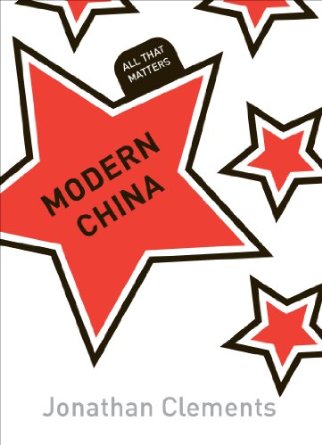
Modern China: All That Matters — China as the Chinese see it, a history of the People’s Republic since 1949 with special emphasis on the most crucial points and issues of the Mao years, the Deng years, the Hong Kong Handover, territorial and cultural issues, right up to the inauguration of Xi Jinping.
The Art of War — for the truly dangerous sister-in-law, the mad granny or the eccentric uncle who spends the whole dinner using peanuts in an attempt to explain how the Battle of Talas went, Sun Tzu’s original classic of military advice, newly translated in a no-nonsense, waffle-free edition.
Mannerheim —Now available in paperback, the unbelievable tale of the “last knight”, the Tsarist cavalry officer who fought against the Japanese in Manchuria, spent two years pretending to be a Swedish anthropologist while spying on the Chinese, and ended his career accidentally becoming the president of Finland. Battles, derring-do and malicious puppet shows.
Schoolgirl Milky Crisis — for the anime fan who thinks he or she knows it all, a broad sweep of the anime, manga and Asian media worlds, including libellous accusations, misguided confessions, and things a whole bunch of people never wish they’d said within earshot. Why do anime studios hang onto a glove full of rancid custard? Is it possible to write a subtitle script without using the letter “Y”? These questions and more, in the book that this blog is the blog of. Oh yes.
I’ve never met Mark Kermode, but often used to seen him at press screenings, his fifties-throwback quiff circling the pre-film drinks like a shark’s fin. And I’ve often read or watched him, of course, hectoring his co-host about the awfulness or lack thereof of some film or other, or babbling on immediately leaving a cinema, as a sort of experiment to see how his later, considered opinion measures up to his improvised first impressions. And my mum refers to him as That Lovely Mark Kermode, primarily because of something he once said comparing Casablanca and Silent Running.
Hatchet Job, Kermode’s latest book, is not a book of film reviews, but about film reviewing, charting the many odd situations and pressures on the professional critic. Anime only gets a passing mention, but readers of this blog will nevertheless be fascinated by the many practices of the modern movie world, all of which affect Japanese cartoons just as much as Hollywood blockbusters. What actually happens at a movie screening? Who gets to go, and why? Why do some films not get press-screened at all? What kind of difference do critics make? And in a world where so much is given away free, how much is a film review worth?
The book’s greatest achievement is the way it smuggles in an immense amount of posh, post-modern critical theory, without a single buzz-word, name-drop or citation. Like the best of Empire, Kermode puts a populist, accessible front on concepts that lesser authors turn into psychobabble. He mounts an argument for movie reviewing as a conversation, an ever-changing discourse about the film we’ve seen, wondering if it’s ever possible to even have a concrete opinion on a film when we keep changing as viewers. And so, indeed, does the film – Kermode lifts the lid on the infamous two versions of Fatal Attraction, where Japanese audiences got the original Madama Butterfly-inspired ending, whereas the rest of us had to contend with the KILL THE BITCH version cooked up to appease slack-jawed American test audiences. He recounts horror stories of critics who have had to change their minds, and debates the dubious value of being “first” with a review that one later regrets. In a world that so often focuses on production (making-ofs, staff interviews) or reception (what some people think of a film they have seen), he deftly and wittily discusses the often neglected areas of distribution and exhibition – such as how marketing can affect a movie’s performance, or what differences can accrue in a particular cinema on a particular day.
Hatchet Job is an account of two cultures. One is the movie-nerd discourse of “what we talk about when we talk about films”, in which Kermode covers not only the power of reviewers to bring people into cinemas, but also the silent sector of people who wait until after they have seen a film to read the reviews, in order to enter into a virtual “conversation” with a critic – for this very reason, I have been a subscriber not-reading the most recent Sight & Sound for the last 26 years. The other culture is that of movie-reviewers themselves, offering a rare insight into the traditions and protocols, the rituals and behaviours of breeds such as the lesser-spotted Kim Newman and the now-extinct Roger Ebert. This includes, although Kermode is too cunning to scare people off by using the word, a historiography of film writing, in which he charts the way that critics have redefined and reconceived their own role in the process of bringing a film to a viewer. His willingness to focus on the mechanics behind the scenes of distribution also leads to an intricate critique of the algorithms that decide which Amazon review you will see, and the underhand “vote-washing” undertaken by semi-pro critics who stand to be paid in freebies and sub-cultural capital if their reviews get lots of Likes. This is particularly interesting to Kermode (and to anyone who thinks about film) because of its implications as a “fake” conversation, as robots pretend to like the comments of other robots, while movie adverts quote enthusiastic reviews by sock-puppets.
Ever since Joe Queenan’s unforgettable stunt of Being Mickey Rourke For a Day, in which he only said or did things that he had seen Rourke do in films, modern film critics have often pepped things up with little comedy business, and Kermode is no exception. He includes the full text of his Twitter review of Prometheus, which, in a vain attempt to protect fanboys from spoilers, he wrote entirely in mathematical notation. He speculates about the prospects of hiring Rutger Hauer, in his role as the replicant Roy Batty from Blade Runner, to voice the late-train announcements for the 2:35 from Weymouth. And he offers an account of his short-lived brainwave, inspired by Wowbagger the Infinitely Prolonged in The Hitch-Hiker’s Guide to the Galaxy, to insult everyone whose film he hates, to their faces. He is winningly frank about the things he has learned from his own mistakes – the throwaway dismissal of a film that got him briefly blacklisted and; the absurd spy-movie acrobatics required to see Nixon early, which involves a trip on Eurostar and an argument in Franglais with a Gauloise-chuffing ticket gendarme, all so he can “watch a Welshman pretending to be an American, in English, with French subtitles.”
In addition to smuggling in elucidating jargon-free accounts of memory and commemoration, temporality, discursive genealogy and auteurism, Kermode alludes to the simple pleasure of movie-going, both as an excited participant in packed movie event, and as a lone explorer at a daytime matinee. I, too, have sat in the Odeon Leicester Square with a variety of audiences that have transformed my viewing experience, and not always for the better – the pair of eccentric millionaires (I can only assume they were eccentric millionaires) who paid £20 for a ticket and then talked all the way through Vantage Point. The two Polish prostitutes who decided the best way to get out of the rain was to sit through Apocalypto offering me sinful companionship. And Danny Boyle, director of Trainspotting who was in the same cinema as me watching Inglourious Basterds. I was immensely impressed to see that the would-be-Sir-if-he-hadn’t-said-no national treasure was not above avoiding the freebie screenings that come with BAFTA membership, and instead paying with his own money to see the new Tarantino with the rest of us.
No, I didn’t pester him with an actual conversation, either, but I did eavesdrop on his concise review, imparted to his companion as we left.
“Tee-hee-hee,” he chuckled. “Nazis!”
This review originally appeared on the Manga UK blog in October 2013, and is reshared here after the website was shut down in 2021 by its new owners at Funimation.
Anime Sols, established with the cooperation of a whole gaggle of anime studios, exploits all the best benefits of living in a digital age. A limited number of episodes of each anime show get streamed, for free, online with English subtitles. If you like what you see, you get to bid for a series of crowd-funding packages. Fully aware that these anime shows are of limited interest to a worldwide audience, Anime Sols sets its bar for success healthily low, with each serial’s block of episodes going to DVD as soon as they have a mere 1000 orders – this, in turn, exploits mastering houses’ new willingness to turn around small print-runs cheaply.
What could possibly go wrong? Well, as regular readers of this column will already know, it’s not necessarily that easy to get 1000 anime fans to put their money where their mouth is. As head honcho Sam Pinansky reported last month, Yatterman not only failed to get 1000 backers before its deadline on Anime Sols, but proved to be so unappealing that barely 40 people even watched it past the fourth episode!
Fandom was awash with recriminations – if only they’d picked a different show; if only fans could have bid from certain foreign territories (the UK, for example was excluded). But maybe people just weren’t that into Yatterman. Case closed. The project was cancelled, and the rights holders of Yatterman got a tiny reward – the chance to re-use those subtitles on a future Japan-only DVD release.
But Anime Sols is run by smart people, who were plainly disappointed but not undaunted. And I’d like to encourage everyone to regard Yatterman not as a failure, but as valuable data about anime’s appeal, or lack of it. It’s good, for the industry in general, for the Japanese to be confronted with how few people actually give a toss about some of their more obscure shows. And it’s good for fandom to be confronted with a put-up-or-shut-up ultimatum about making stuff happen. A few weeks later, Anime Sols offered Creamy Mami in the same way, and achieved its funding target with four days to spare.
Amazon is now listing my new book, Anime: A History, for sale in a few weeks in the US and in the UK. The contents and blurb are as follows:
Introduction: What Do We Talk About When We Talk About Anime?
1. Kid Deko’s New Picture Book: Early Cartoons in Japan 1912-21
2. The Film Factories: Animation Technique and Technology 1921-37
3. The Shadow Staff: Japanese Animation at War 1931-48
4. The Seeds of Anime: Japanese Animation Industries 1946-62
5. Dreams of Export: Toei Doga and MOM Production 1953-67
6. Warrior Business: Tezuka’s Anime Revolution in Context 1961-67
7. The Brown Screen: Trended Change in Japanese Animation 1966-83
8. The Third Medium: The Transformation of Ownership and Access 1977-96
9. The Pokemon Shock: Anime Goes Global 1984-97, 1997-2006
10. The Digital Engine: New Technologies and Animation 1983-2012
Epilogue: The End of Anime’s First Century
“Japanese animation is at the nexus of an international multimedia industry worth over $6.5 billion a year, linked to everything from manga to computer games, Pokémon and plushies. In this comprehensive guide, Jonathan Clements chronicles the production and reception history of the entire medium, from a handful of hobbyists in the 1910s to the Oscar-winning Spirited Away and beyond.
“Exploring the cultural and technological developments of the past century, Clements addresses issues of historiography within Japanese academic discourse and covers previously neglected topics such as wartime instructional animation and work-for-hire for American clients. Founded on the testimonies of industry professionals, and drawing on a myriad of Japanese-language documents, memoirs and books, Anime: A History illuminates the anime business from the inside – investigating its innovators, its unsung heroes and its controversies.”
I should also probably warn you that the BFI are only printing 1200 copies, so if you want to be sure to get hold of it, I advise you to pre-order. If it sells out on the day of release, it might be months before a second printing.
Yes, that appears to be a manga-style Mel Gibson, riding a giant mutant haggis. This Know Your Manga image is from last year, but it’s too good to waste.
Out today and purchased this very morning by your correspondent from a petrified newsagent on Chang’an Avenue in Xi’an, the 7th October coverdated issue of China’s Lifeweek magazine, which features an incredible sixty-page article on Hayao Miyazaki, Studio Ghibli and the greats of anime and manga. Yes, that’s Miyazaki on the cover, gritting his teeth through the pain of wearing a ridiculous hat that bears the Studio Ghibli fashion logo, referred throughout the massive article as shenjiang (“divine/inspired craftsman”).
It doesn’t surprise me that the Chinese would run features on the man whose name they pronounce as Gongqi Jun. After all, his films have entered the country legitimately through their Disney associations, and are as beloved among Chinese viewers as they are anywhere else in the world. Nor, I suppose, does it much surprise me that Miyazaki’s much-publicised retirement should be an excuse for a retrospective that encompasses his collaborators Toshio Suzuki and Isao Takahata. What boggles me is quite so much space not only on them, but on their controversial latest film, the philosophy of their company, the rapid globalisation of their brand (with special reference to the influence of Pixar) and the other titles that form part of Japanese animation and manga exports – particularly Akira, Ghost in the Shell and Dragon Ball
Lifeweek is a large-circulation periodical in the People’s Republic, available on every street corner, and in times when the media seem obsessed with sabre-rattling over the Senkaku Islands, devotes a quarter of this latest issue to the celebration of Japanese soft power. It outs Doraemon, known to many Chinese as “Ding Dang the time-travelling cat”, as a Japanese product, and runs potted pieces on other anime creators of note – Osamu Tezuka, Leiji Matsumoto, Katsuhiro Otomo, Mamoru Oshii and Makoto Shinkai. And then there’s the traditional stuff about anime taking the world by storm, illustrated as usual by pictures of teenage girls dressed as elves, standing in a car park.
It’s a fantastic splash for anime in the Chinese media, and presumably meets with the full approval of the government censor. Now is a perfectly reasonable time to celebrate anime, but one can’t help but wonder if the enthusiasm masks something else – a sense that Miyazaki’s retirement leaves a vacuum that a canny Chinese entrepreneur might hope to fill. Lifeweek offers a 60-page blueprint for taking one nation’s cartoons to the world, but you can’t plan for genius and you can never guarantee success.
Jonathan Clements is the author of Anime: A History, available to pre-order now from the British Film Institute.
My review of Mitsuyo Wada-Marciano’s account of Japanese cinema and new media is online now at the Manga UK blog. Recommended for anyone who writes about this stuff for a living.
Tezuka Productions is threatening to flog off Astro Boy to a number of emerging markets, not as a cartoon for dubbing, but as an idea to be entirely remade.
According to Variety, Tezuka’s general manager Yoshihiro Shimizu is already in talks with Nigeria’s Channel TV, as the first of several possible markets that might buy Astro Boy the idea, rather than the cartoon itself. So Swahili telly gets a superhero called Nyota Mvulana or something similar, and nobody knows it was Japanese to begin with.
Why are they doing this? This is a concerted effort by Tezuka Pro to get its nose into a Cool Japan trough of arts funding for a minimum amount of effort. Making an all-new cartoon will still cost money. But emailing old scripts to a new business partner will cost nothing, and still counts on some level as a form of cultural production. So let the Nigerians do all the work, and you can collect your 5% licensing fee, and your government grant without having to lift a finger.
But this also offers fantastic chances for true localisation. Just as Suraj the Rising Star threw away the baseball and the Japanese setting to turn Star of the Giants into an Indian rags-to-riches story about cricket, a whole bunch of anime storylines can be rendered entirely local. This helps remove a Japanese identity that, in some countries, would be unwelcome, ungracious or ill-advised.
The Japanese-ness of Japanese animation has been obscured from much of its viewing public for much of its existence. Maybe we’ll look on the period from 1989-2019 as an anomaly, where people actually noticed it. Torajiro, the pre-school tiger who forms the epicentre of a media mix including daycare franchises and language schools, already has a large following in China, but under a Chinese name.
I wonder where this will end up? An Islamic Naruto set in medieval Spain? Ghost in the Shell relocated to a future Argentina? Rose of Versailles repurposed for 19th century Arabia? How about pretending everyone in Science Ninja-team Gatchaman is actually American? Oh, wait…

 One of the pleasures of long-haul flights is getting to mainline a bunch of movies that you wouldn’t otherwise stand a whelk’s chance of watching. Which is how, somewhere two miles above Novosibirsk, I found myself watching The Treasure of Lake Kaban, a completely bonkers movie set in Tatarstan.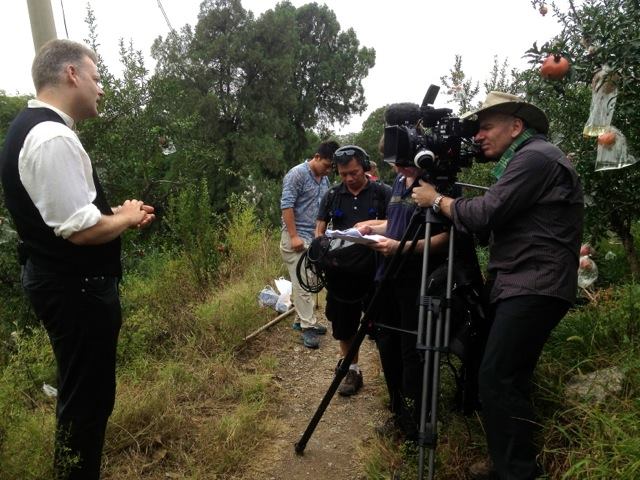


 Mannerheim —
  s it all,



 My
My 

