 Now for sale from Amazon, the audio book version of my Brief History of the Samurai, read by Jonathan Keeble. Twelve hours of stabbings and tea ceremonies, not unlike a family Christmas at the Clements household.
Audible Samurai
Reply

Now for sale from Amazon, the audio book version of my Brief History of the Samurai, read by Jonathan Keeble. Twelve hours of stabbings and tea ceremonies, not unlike a family Christmas at the Clements household.
 The Silk Road is not a place, but a journey – a route from the edges of the European world to the central plains of China, through high mountains and inhospitable deserts. For thousands of years, its history has been a traveller’s history, of brief encounters in desert towns, snowbound passes and nameless forts. It was the conduit that first brought Buddhism, Christianity and Islam into China, and the site of much of the ‘Great Game’ between Victorian empires. Today, its central section encompasses the Xinjiang Uyghur Autonomous Region of China. The ancient trade routes cross the sites of several forgotten kingdoms, buried in sand and only now revealing their secrets.
Jonathan Clements takes the reader on a journey through the trackless wastes of the Taklamakan desert, its black whirlwinds and dead lakes, its shimmering mirages, lost cities and mysterious mummies, but also its iconic statues and memorable modern pop songs. He explains the truth behind odd tales of horses that sweat blood, defaced statues and missing frescoes, and Marco Polo’s stories of black gold that seeps from the earth. For travellers looking beyond their armchair, the book includes a gazetteer of important sites and travel tips, from the author himself and earlier travellers’ diaries.
An Armchair Traveller’s History of the Silk Road is available now from Haus Publishing.
 Up now on the ANN website, Andrew Osmond interviews me about my Anime: A History. Lots of gossip and controversy, apparently. I thought we were just talking.
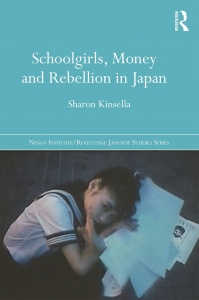 In case you missed it, my review of Sharon Kinsella’s Schoolgirls, Money and Rebellion in Japan went up on the Manga UK blog earlier this month.
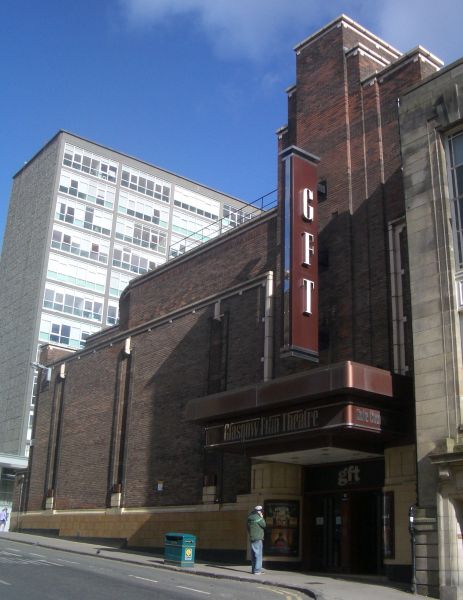 There are pictures on the wall of the Glasgow Film Theatre that show it in its heyday. Bit by bit, it’s got a little more cramped. Where there was once a sweeping Deco foyer with plenty of space overhead, a false ceiling has been shoved in to make way for a bar. And now the little café on the ground floor has been gutted to make way for Screen Three.
Digital filmmaking has created an environment where less theatre-goers have to choose between more films. Where shipping a film print to a destination once involved a stack of reels the size of the average drum kit, you can now Fedex a humble hard-drive containing the main attraction. Projection rooms are getting smaller, but so is the average audience size for the ever-increasing archive of content.
Modern cinema design hence favours increasingly smaller theatres like Glasgow’s upcoming Screen Three, allowing smaller groups of fifty or sixty punters to huddle into a space that increasingly resembles someone’s living room.
I spend a lot of my time in such bespoke mini-theatres. In Soho’s movieland they call them screening rooms, because that’s what they are. And for distributors, exhibitors and reviewers, it’s perfectly fine to relax in a plush chair with a posh sound system to assess next month’s movies for review or consideration. What they miss out on, however, is that vulnerable, ineffable sense of community that one gets from being an audience member, in a crowd, in a truly big cinema. I still cherish memories of The Empire Strikes Back, Schindler’s List and Jurassic Park at the vast Empire in Leicester Square. Last October’s Scotland Loves Anime jammed hundreds of fans cheek-to-cheek to laugh and cry and gasp at a roster of films from the apocalyptic Evangelion 3.0 to the intricate Garden of Words. Do audiences miss out on something if they see such epics on a mere laptop? What about if the screen is only marginally larger than your rich mate’s telly? After all, if a giant robot is supposed to be forty feet tall, doesn’t it help the whole movie-going experience if it actually is?
Jonathan Clements is the author of Anime: A History, out now from the British Film Insititute. This article first appeared in NEO # 118, 2013.
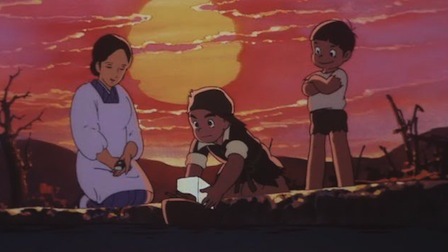 And we’re off to Matsue, an unassuming little city in Japan, where the local school board has responded to a suspicious “complaint”, and removed Keiji Nakazawa’s award-winning manga Barefoot Gen from its school libraries. This apparently, is for fear that “children would get the wrong perception about history” from reading a wartime story in which soldiers of the Imperial Japanese Army are shown to be committing atrocities in China.
Wait… what? Isn’t that precisely what the Imperial Japanese Army was doing? Isn’t that precisely the context which led, ultimately, to the tragic, murderous mission of the Enola Gay in 1945? Now children in Matsue will be able to get the “right” idea about history, which apparently involves no mention of Nanjing, Manchuria or Shanghai, and a mendacious, facetious sense of victimhood based on the notion that the Japanese minded their own business until 1945, when American bombers suddenly appeared unbidden in a surprise attack and bombed them back to the Stone Age.
But not every Japanese high school is beholden to the whims of revisionist, right-wing nutters. Caught out by the media stink, the Matsue school board hastily backpedalled in late August, revoking the order due to “procedural” issues. Close by in Hiroshima, the home town of manga creator Keiji Nakazawa and the site of much of Barefoot Gen’s heart-rending drama, the harrowing manga is actually a set book for third-years at elementary schools. This is actually a far braver decision than Matsue’s craven censorship, because one would expect Hiroshima of all places to have a free pass on hating nuclear weapons. I’m sure nobody would have been much surprised if Hiroshima schools had plumped for a more victim-oriented version of their local history, but instead, they have admirably chosen a book that spends much of its first volume depicting the Japanese at war with themselves, daring to suggest that intellectual, sensible Japanese were railroaded and oppressed by war-mongering bullies who led their nation to ruin. Unfortunately, in Matsue at least, they still seem to be.
Matsue is twinned with Dublin. Any Irish readers might want to bring this up with their Lord Mayor, in the hope that the next civic goodwill trip leads to some stern questioning about what the school board thinks “history” is.
Jonathan Clements is the author of Anime: A History, available now from the British Film Institute. This article first appeared in NEO #116, 2013.
 My obituary of Sir Run Run Shaw, producer of Blade Runner, former vice-president of the Hong Kong Girl Guides, and lover of fine Chinese shirts, is up now on the Manga UK blog. Owing to family connections, I have spent an awful lot of time watching people from Shaolin punch each other, and he is at least partly responsible.
 My review of Keiichi Hara’s Colorful is now up on the Manga UK blog. It’s one of the most thoughtful and mature anime movies of recent years, and well worth a look if you are in any of the towns being visited by this year’s Japan Foundation tour.
 Jeremy Graves is joined by Jerome Mazandarani, Andrew Hewson and Jonathan Clements for a run-down of what’s coming up and what’s going on, available to download now. Contains the phrases: “engine of Japanese oppression,” “invaded by bots,” “secret file from the chamber of balrogs” and “where do you think all the cocaine’s been hidden?”
00:00 The song that ruined Christmas.
01:30 Introductions all round, which turn out to be largely wrong.
03:50 Jerome paints a Yuletide picture, using only words.
04:20 Bad marketing ideas from Gatwick Express.
05:00 Round-up of the December releases. Jude Law, not appearing in anime near you any time, ever.
07:00 Confessions of slippage. Rounding off the year with Wolf Children. Check out the unboxing video.
09:00 The traditional Andrew Partridge baiting session, and tales of his odd fetish for ice cream. Other odd things you can buy in a Japanese convenience stores. The world’s greatest segue, ruined by everyone else.
11.00 Evangelion 3.0, coming in March. Controversy arising over The Wind Rises, Miyazaki’s best- and worst-reviewed film ever. Chinese reactions to Studio Ghibli, as demonstrated in Lifeweek magazine.
17:30 Looking back on 2013 – highlights including moustaches, conventions and stuff. The prospects for Attack on Titan, convention disasters, and the high road to Scotland.
29:00 “A Buddhist purple cat that never does anything and then dies.” Comments on judging films, with time out to discuss coalition politics and the Evening Standard awards.
34:45 The Kuroko basketball threats, and other scams and scandals arising in the Japanese media.
36:00 The perils of licensing sports anime. Hidden synergies in Summer Wars.
39:00 The nature of female fandom, and its long-overlooked presence in the history of anime (as noted by Paul Dini).
42:00 The Hell of Heidi: “We’ve created perfection, you morons!”
44:00 Jerome takes on Ofcom, and explains where all the pornography is hidden.
46:50 Godzilla, and re-enacting it in your living room.
49:20 Ask Manga UK. What pre-2000 anime do you think deserves an HD redo?
50:50 Giving credit where credit is due. Steve Kyte unmentioned on Firestorm, and Spike Lee’s response to an offended artist on Oldboy.
57:00 Which releases have surprised you in terms of 2013 sales?
59:00 Possible title issues with Tiger and Bunny.
59:30 Watching Manga UK releases on iTunes.
61:45 What effect will disintermediation have on your business model? Predictions for anime becoming a closed circle of consumption, less visible to the public.
67:50 The possibility of Jormungand appealing to al Qaeda.
70:00 Jerome explains content-driven marketing.
72:00 The legal tangle of the Macross licence.
75:00 Has there been an increase in Blu-ray sales this year? It is now cheaper to release stuff on Blu-ray than DVD! Who would have thought it?

78:30 The chances of a Manga UK modelling agency.
80:30 What’s coming up on Blu-ray in 2014.
81:30 Why can’t we have Celtic Frost back?
84:00 It’s the final QUEST-ion! Doodle-doo-doo… A few other surprises coming in 2014.
88:20 Anime: A History, and the trouble you might have getting one signed. Andrew thinks you should all see Nebraska. And Jerome confesses his love for Perfect Blue. And Saint Seiya: Brave Soldiers.
91:00 And with that, we’re out. Bye for this year.
The Podcast is available to download now HERE, or find it and an archive of previous shows at our iTunes page. For a detailed contents listing of previous podcasts, check out our Podcasts page.
Just in time for the season to be jolly, my novel Spartacus: Swords and Ashes is now available in Turkish.


