The Blang harvest the tea; the Dai press it. As the suspicious linguists among you might have already guessed, the Dai are basically Thai – all fiddly-roofed pagodas and bows with hands clasped together. The Dai are another of China’s ethnic minorities, and 33% of them are huddled in this single prefecture.
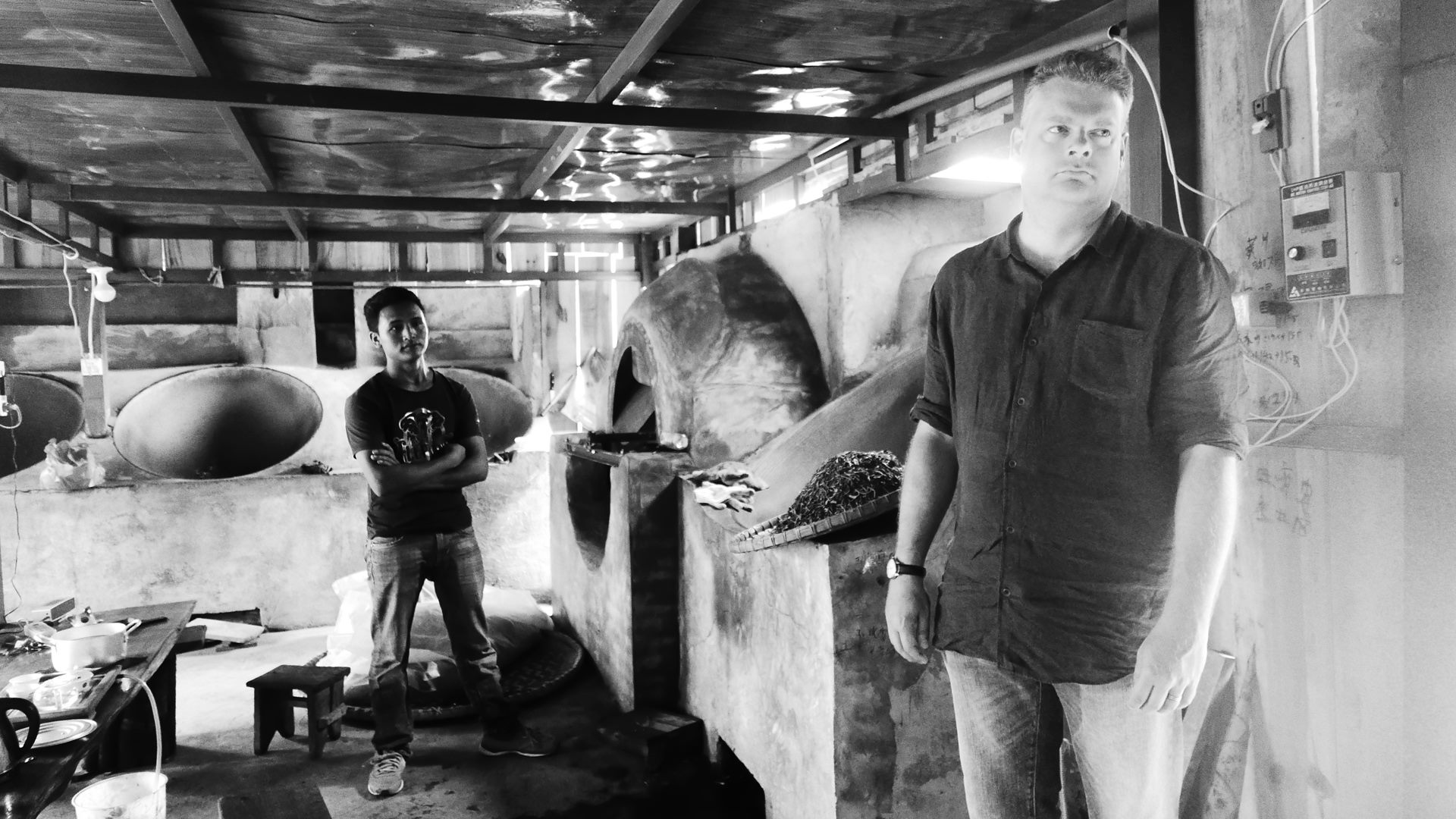
In the factory, the tea is shoved into sieve-bottomed buckets, shrunk on a steamer, shoved into muslin patties and then crushed into plate-sized discs under stone weights. The pressure is applied by standing on the mill-stone sized weight and doing a little jig on top of it.
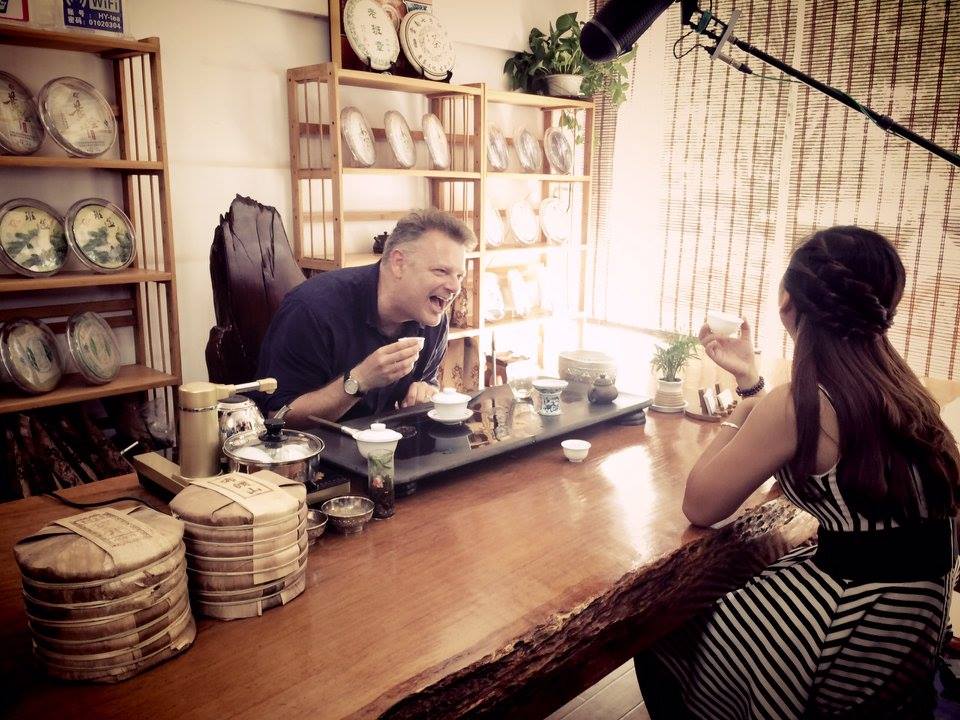
The afternoon shoot sounds like a cake-walk, because we are literally across the road from our hotel, filming a tea ceremony in a tea shop. But it is open to the street, and we are passed constantly by mopeds, speeding taxis, and water-cannon trucks playing an endless rondo of It’s a Small World After All. The owner, who has volunteered her tea shop because she thinks it will make our life easier, is instead left aghast at the trillion filming issues that she never had to consider before a film crew descended. The tea shop is too cramped for good angles, it’s noisy and open to the street and passers-by. Fortunately, our camera will have something to look at, in the form of the owner’s daughter Yangxi, a perky Dai girl in a two-tone mini-dress.
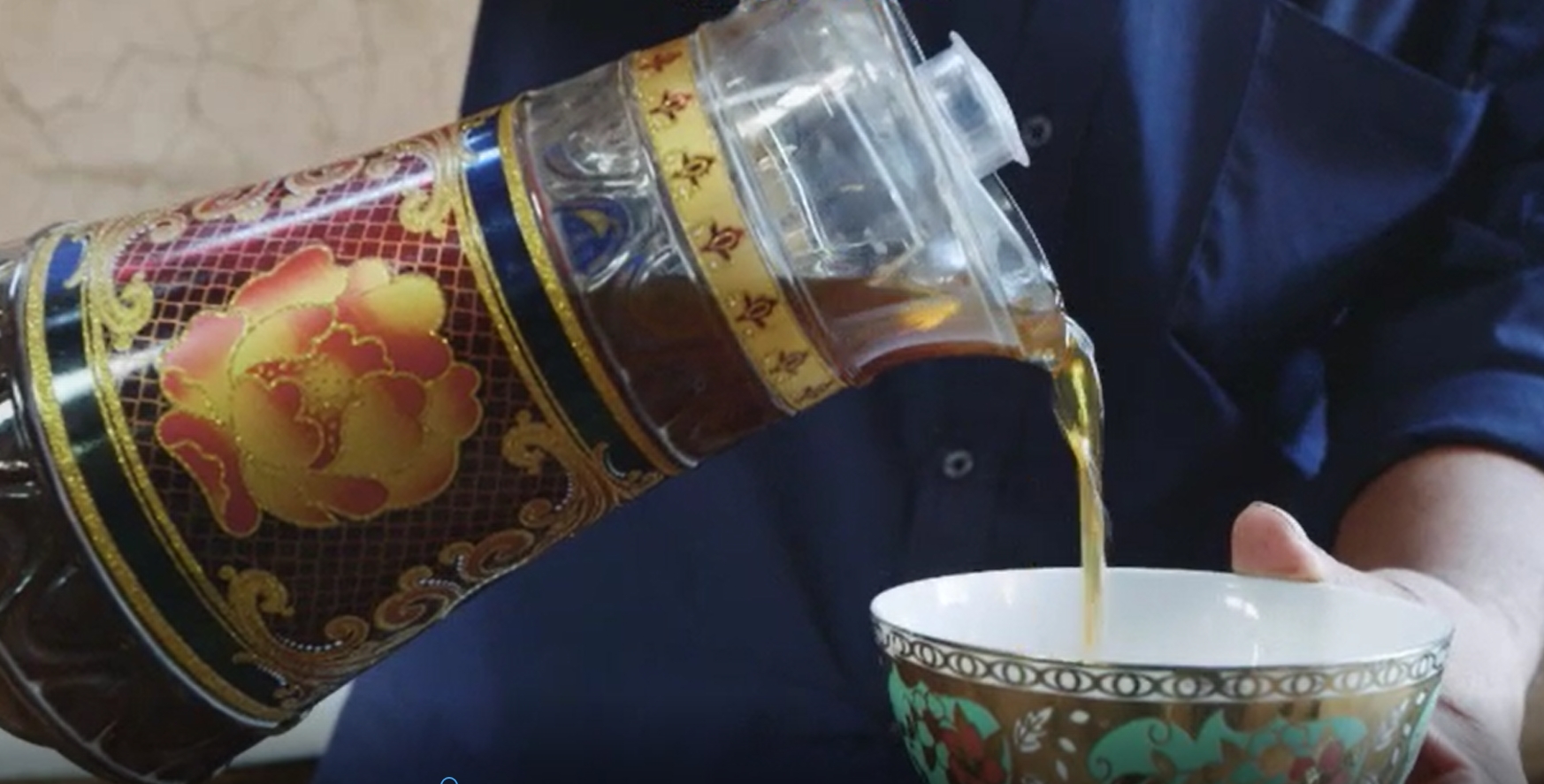
Yangxi is an adept at the Chinese tea ceremony, which is to say, the same ritual not all that different from the one specified in Lu Yu’s original Tang-dynasty Classic of Tea. It is a faffy affair in the tea is washed, the bowls are heated, and a series of medieval implements ill-fitted for their purpose have to be held just-so or you will insult your guest’s mother and/or scald your hands.
It takes Yangxi about half an hour to put two and two together, and to realise that she is going to be on TELEVISION, in a programme slated to be broadcast in over thirty countries. Some interviewees react to this realisation with paralysing stage-fright, but she dives right in. She becomes increasingly animated and performative, to the extent that by the time it is my turn to attempt the tea ceremony, she is ready with a series of sarcastic comments, grimaces and howls of dissent, as I hold the cup wrong, point the jug spout at her, mis-use the tongs, and otherwise cock it up.
“YOU’RE STICKING YOUR SPOUT OUT AT ME AGAIN!” she wails, after I have put the jug in the wrong place for the nth time.
Finally, I have successfully done all the necessary twists and turns, and deposit a single thimble-full of Pu’er tea in front of her.
“Remember,” she cautions. “You must smell the tea, appreciate its aroma, and then gently sip, before sitting back and assessing its flavours.” She sniffs the cup, and then knocks it back.
In 1784, the British Prime Minister William Pitt cunningly destroyed the tea-smuggling industry by slashing import duties from 119% to 12.5%. This sent the revenues from the legal, taxable tea trade soaring, making fortunes for the East India Company. Even as the British fought home-grown crime, they committed it overseas, funding their tea-buying operations in China by dumping literally tons of opium on the Chinese market, creating a narcotics crisis and an entire criminal underclass.
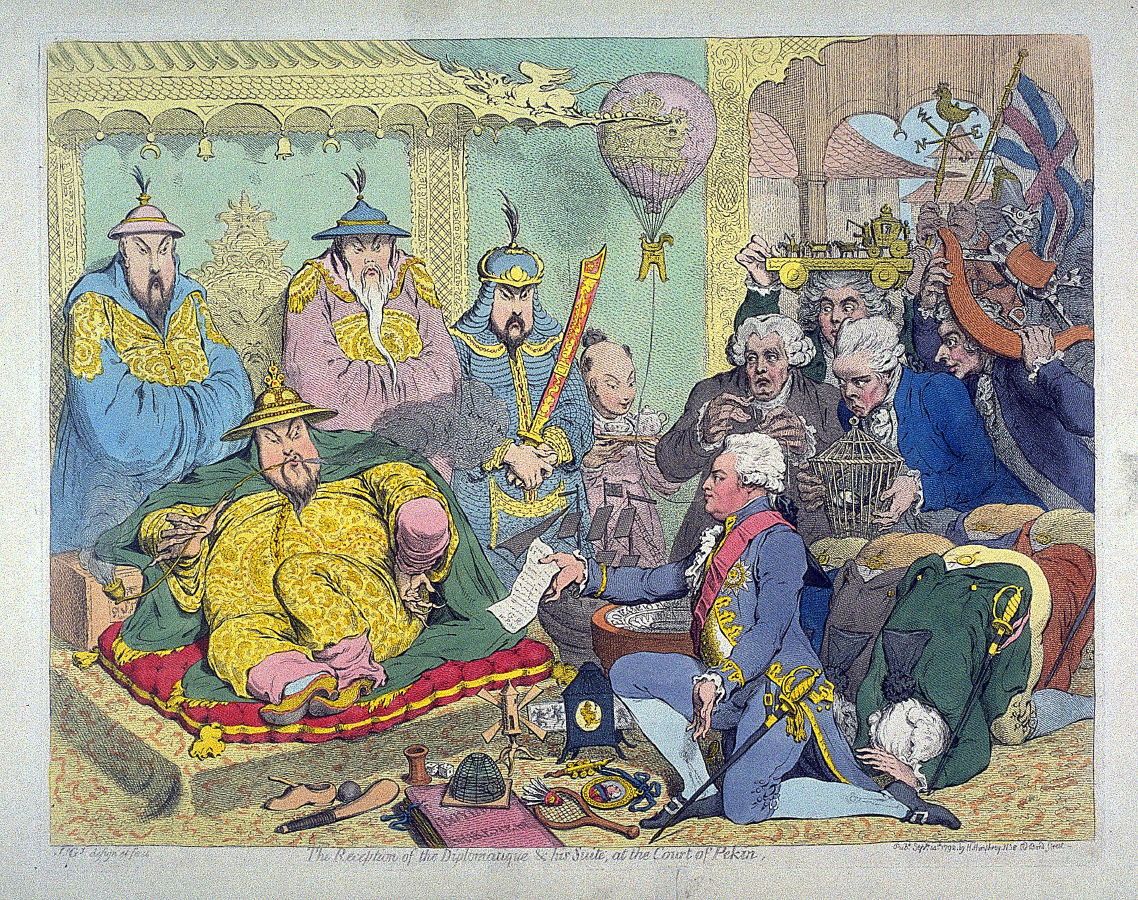
This is the background to George Macartney’s ill-fated embassy of 1793, an attempt to get the Qianlong Emperor to accept diplomatic agreements and trade deals with the evil empire that was turning his southern Chinese subjects into junkies.
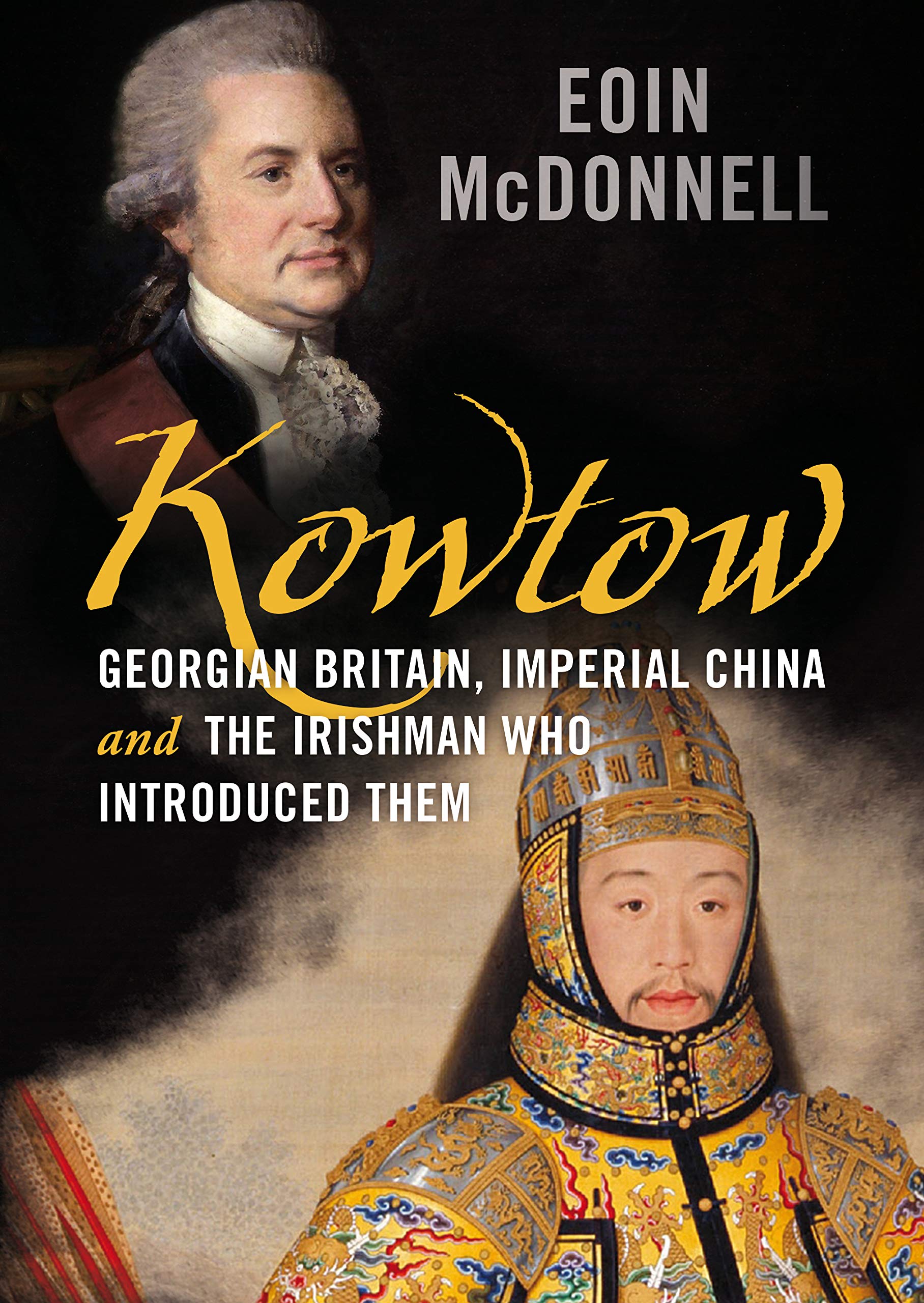
Author Eoin McDonnell is a former diplomat, now a secretary in Ireland’s foreign ministry, with a deep and vested interest the way that diplomacy gets done, as revealed in his new book, Kowtow: Georgian Britain, Imperial China and the Irishman who Introduced Them. His uniquely Irish perspective on Macartney’s mission foregrounds the imperialist attitudes of its leader. Much like Qianlong himself, Macartney was a member of an occupying regime, undoubtedly competent, but propelled to high office by nepotism and cronyism, relentlessly sure of his right to his own privileges. He arrived in China, utterly sure that he was doing the Qianlong Emperor a favour by showing up at all, determined to drill into the ignorant Chinese the advantages that awaited them if they started buying British woollens and, I don’t know, clocks.
Determined to deal directly with the Emperor, Macartney claimed that the gifts he was bringing were so intricate and delicate, so jaw-droppingly awesome, that he could not risk dragging them all the way across China from Guangzhou, the usual point of contact for foreigners. Instead, he insisted on arriving at Tianjin, the sea-port close to Beijing, all the better to deal directly with the Emperor himself.
Except the Emperor wasn’t there. While his technicians toiled to assemble their posh machineries in the Summer Palace near Beijing, Macartney and a small entourage journeyed north to the Emperor’s retreat in Rehe (modern Chengde). There, he planned to hand the Emperor a letter from King George III, which lied that he was the King’s cousin. Instead, he found himself facing an audience in which the Emperor assumed he was a faraway lesson, bringing tribute to the glorious Qianlong.
This is the nub of McDonnell’s story – the elaborate bickering over whether or not Macartney, a British nobleman, should prostrate himself on the floor in the ritual kowtow demanded of the Emperor’s subjects, a humiliation that Macartney himself regarded as distastefully evocative of Catholic ceremonial, and of suggesting that Britain was subservient to China. McDonnell examines the diplomatic and political implications, in unsurprisingly modern terms, regarding the extent to which foreign powers need to “kowtow” to China even today. He draws modern parallels all the way up to 2014, and the behind-the-scenes shouting matches over whether the Chinese Prime Minister was worthy of meeting the Queen, a diplomatic catfight that even extended to questions about whether his red carpet at Heathrow Airport was “long enough.” But these things are important to diplomats – elaborate rituals of glad-handing and small-talk continue to affect the way that trade deals get done and treaties get signed.
In the case of the Qianlong Emperor, his Manchu regime needed conspicuous displays of foreign fawning in order to impress upon his Chinese subjects that he deserved to stay in power. He had no interest in acknowledging George III as his equal, or in agreeing that China needed absolutely anything at all from a distant country that was so unsure of itself that its King even bigged himself up in the communiqué by also pretending to be the ruler of France. Qianlong, in fact, was fighting two wars in his own hinterland – the very tariff restrictions that Macartney was complaining about had themselves been partly levied in order to help bolster Qianlong’s borders against British machinations in Tibet.
The Macartney mission failed spectacularly in securing its aims with the Emperor, but managed to fail up on the way home. Having literally missed the boat home, Macartney was obliged to traverse China on its Grand Canal, and was permitted a front-seat view of Qing-dynasty China in all its glory. Qianlong helped a bit by ordering a series of fearsome military displays along the route, just in case the British wanted to try anything on. But Macartney’s diary of his China visit is most valuable today for the view it presents of an empire rotting from within, compared by Macartney himself to a man-o-war that has somehow stayed afloat through sheer luck, sure to sink in good time as soon as it gains a sub-standard captain.
Macartney saw his mission as Qing-era China’s last, best hope to avoid being carved up by foreign predators, a chance to ally itself with the biggest predator of all to hold the others at bay. He did not live to see his predictions play out in the Opium Wars, as the Qing state was ram-raided by a dozen European armies demanding that the Chinese play a political game of their own invention. McDonnell chooses to end on a moving, telling moment as British and French troops ransack the Emperor’s Summer Palace in 1860. Looters stumble into one of its many halls, to find it stacked like that warehouse in Raiders of the Lost Ark, rammed to the rafters with crates. The hall contained the supposedly world-beating gifts of the Macartney Embassy, boxed up and forgotten by a regime that saw such wonders on a daily basis, and had been singularly unimpressed.
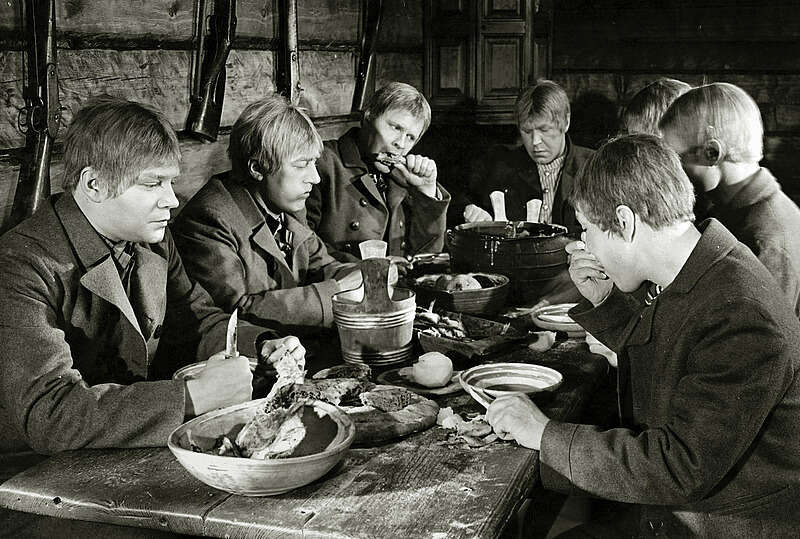
In what has to be the worst Finnish film so far on this watchathon, seven idiots in the Häme hinterland are chastised for keeping a bad house. They struggle to learn to read, and bellow at each other about how hard life is. They get into a bunch of fights, and build a house, and they kill some cows.
The film begins with a pious shot of the statue in central Helsinki of Aleksis Kivi, concentrating on his face, and not on the whole image, which genuinely looks as if he is shifting uncomfortably in his seat as if he has just sat in a wet patch. And it’s the fact that this was Kivi’s first and only novel, an early work of Finnish literature, which supposedly saves this shouty nonsense in the eyes of Finnish critics. A big deal for being based on the first Finnish novel, but really, it’s so boring that you’re left surprised that anyone ever wrote another one.
Credited to the usually reliable Mika Waltari, but actually a work that Waltari had doctored from a set of other drafts by other writers, the story is defeated by the impossibly over-large cast, with seven leads, all of whom have to take turns speaking like they are some kind of boy-band.
Musicians play a merry jig, while a woman at the edge of shot stares at them angrily as if they have just stamped on her cat. The brothers dance with the local girls, and apparently they are accepted into the local community. Whatever, it’s awful, rivalled only by The Heath Cobblers (1938), another Aleksis Kivi adaptation, in its crushing dullness.
Another weird and unexpected achievement unlocked, after this Monday saw one of my books becoming a $1000 question on Jeopardy.
In fact, the Brief History of the Vikings has been a long-term blue-chip seller for me, particularly in America after the launch of the History Channel Vikings series.
“In an impressive series of developmental leaps, it was a mere 17 years from the first Chinese animated short, an advert for a typewriter company in 1922, to the feature-length Princess Iron Fan in 1939. Or at least so the writers claim – in fact, Princess Iron Fan was not released until 1941, and in counting to the start of production rather than completion, the authors appear to be disingenuously announcing a spurious victory in some sort of race against foreign competition – a contest that only exists in their minds.”
Over at All the Anime, I pick away at the many pointless boasts and brags that undermine an otherwise valuable history of Chinese animation. Does a publisher have a duty of care to improve their authors’ failings? Or should they let them hang themselves by their own petard, as a fairer indicator of their beliefs and positions?
“The following year, he would win an award for his music for ‘From a Northern Inn’, a weepy tune about a girl knitting a sweater for a boy who will never wear it. The song twice entered the charts and also a later anime – in Isao Takahata’s film Chie the Brat (1981), the leading lady belts it out at her father, in a passive-aggressive way of accusing him of paternal neglect.”
Over at All the Anime, I write an obituary for Asei Kobayashi, an unlikely TV star, quiz-show champion and composer, most notably for Science Ninja Team Gatchaman and Turn-A Gundam.
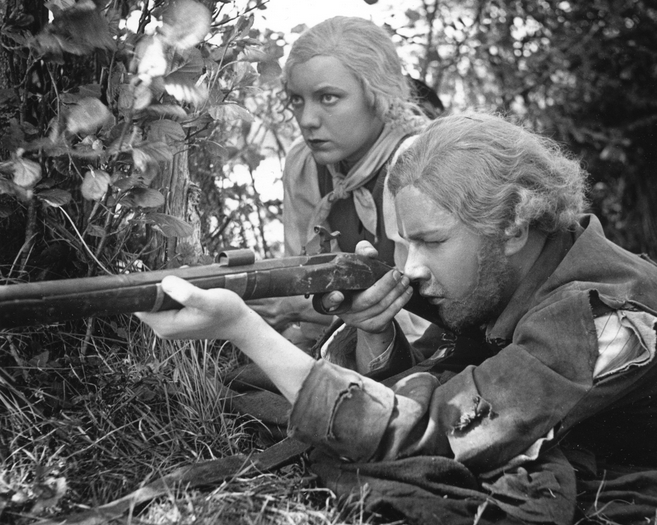
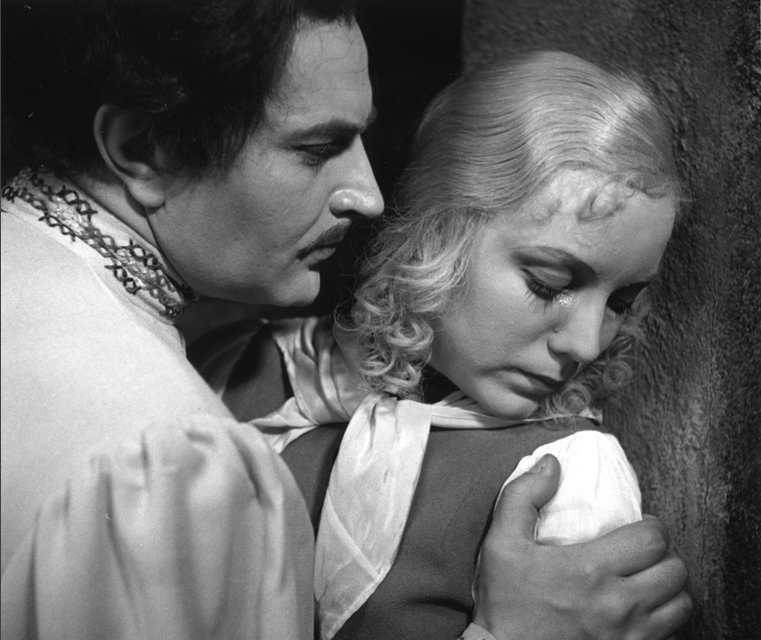
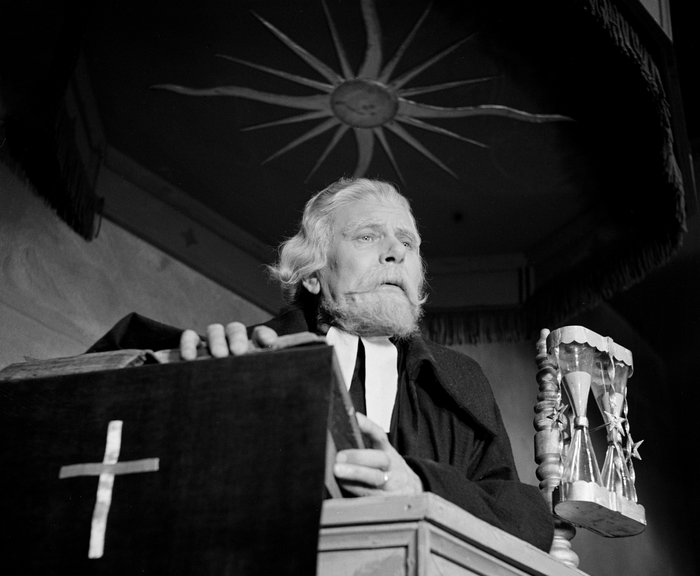
1700: in the sleepy Savonian village of Kurmitsa, Pastor Petrelius (Kaarlo Saarnio) announces that King Charles XII is recruiting strong men to help fight in the war with Russia, an expedition to Estonia in order to push back “the Muscovites, the enemy” (moskoviitteja, perivihollista). Local boy Paavo (Kalevi Myykänen) asks for the hand in marriage of the pastor’s daughter Karoliina (Hilkka Helinä) but is told that he is too young and has no prospects. Karoliina is packed off to That Fancy Turku to keep her out of temptation, and a heartbroken Paavo joins the army.
Paavo fights in the high-point of the Swedish advance, the Battle of Narva, but is missing, presumed dead, after the crushing Swedish defeat at the Battle of Poltava nine years later. From the pulpit, the pastor proclaims him to be dead, but Karoliina proclaims that she will never stop waiting for him.
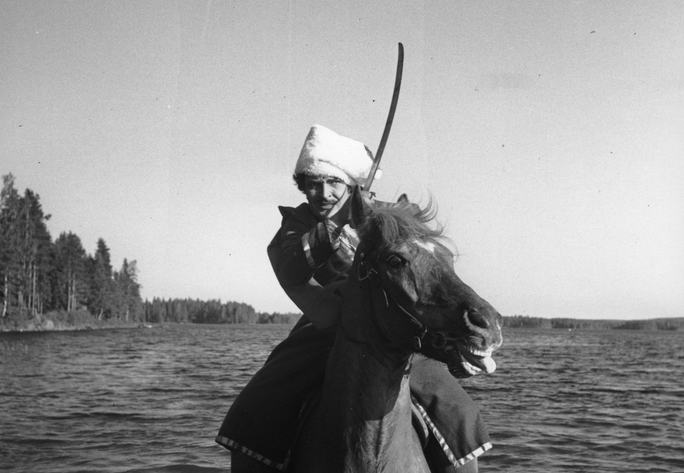
By 1713, the Russian counter-attack has reached Kurmitsa, a fact made obvious at first when the Cossack leader Voronoff (Santeri Karilo in a silly hat) surprises Karoliina in the forest. She fights off his advances – he concedes that she is a “noble maid”, which presumably means he would have been pushier if she’s just been a random Finn – and then she steals his horse and pistol, like a proper Finnish girl would.
Not unlike other Russian adversaries in The Activists (1939), Voronoff is a conflicted figure, a just and arguably noble man obliged to carry out unjust policies on behalf of his masters. Nowhere is this more apparent than in the occupation of Kurmitsa, during which Petrelius is wounded, several villagers are killed, and Voronoff resorts to shooting one of his own men to keep him away from Karoliina. In a study of coercion, Voronoff the “saviour” of Karoliina now expects her affection in return (rather ignoring the fact that she wouldn’t have needed saving if he hadn’t invaded her country in the first place). Paavo, however, (for it is he), escapes from his Russian captors, re-arms himself with stolen weapons, and dashes to Karoliina’s rescue.
The fleeing lovers are cornered, but Voronoff orders his men to cease fire, as he wants Karoliina in one piece for himself. Paavo and Voronoff duel on horseback, with Paavo the ultimate victor. The vengeful Cossacks advance, only to flee when they see a signal, purporting to be from reinforcements in the Rantasalmi Regiment, but actually a ruse concocted by Paavo’s comrade-in-arms, Kalmukki-Kalle (Anton Soini, whose character’s name, Kalle the Kalmyk, implies that he is Finnish cinema’s first Mongolian war hero).
The Russian menace is scared away, for now, and Paavo and Karoliina are reunited at the pastor’s bedside, opposition to their marriage now presumably withdrawn after a long decade. Paavo tells the villagers to go back to their daily lives, but warns them the Russians could return at any moment, and the Finns should be ready to take up arms once more…
While other studios in Finland embraced the looming onset of war with Russia by focussing on military life in films such as Kalle Kollola, Cavalryman (1939) and The Red Trousers (1939), the obscure minor outfit of Jäger-Filmi instead delved back into the past, seeing instead a ready allegory in Russia’s invasion of what was then Sweden in the Great Northern War of 1700-21, Sweden having effectively abandoned its Finnish provinces to their own fate after the disastrous battle of Poltava. Based on a 1933 novel, Vaeltavan sinitakin tarina (Tales of a Wandering Bluejacket) by Jyrki Mikkonen, who adapted his own work for the screen, Kalle Kaarna’s film took a year to shoot, and sneakily lifted battle sequences from a decade-old Swedish film, John W. Brunius’ Charles XII (1925) for much of its epic action.
It was not officially completed until after the Second World War had already broken out, and spent a few days in censorship limbo, as military critics debated whether it should be shorn of four minutes of footage liable to annoy the Russians – one is surprised they didn’t realise that all of it would annoy the Russians. It was due to have its premiere in October 1939, but was held back on the grounds that it was one of the films that “were likely to worsen the country’s relations with foreign powers or to jeopardize the country’s neutrality.” It’s here, in fact, that we can see just how smart the other studios were in concentrating not on the reality of war, but the comedy to be found in everyday military life – there is no enemy in The Red Trousers or Kalle Kollola, thereby sneaking around any likely complaints from the censor.
After the outbreak of the Winter War, in which Russia behaved in a way that made The Great Wrath look oddly prescient, the Finnish censors overcame their timidity, and the film had a belated premiere in Turku on 14th December. It was greeted with ovations and cheers in cinemas around Finland, and a press reaction that was conspicuously enthusiastic. It was, however, banned a second time in September 1940, in the wake of the uneasy truce with the Soviet Union, and complaints from the Russians that it made them look like a bunch of arseholes. In a typically Finnish moment of bloody-mindedness, producer Kurt Jäger facetiously demanded that the Ministry of the Interior explain why it had suddenly decided to decree a police clampdown on his film, forcing the censorship authorities to come up with a backdated and intricately worded account of how a film could be banned, un-banned and re-banned in the space of two years.
But the drama doesn’t even end there. The film was double-re-banned after 1945, when Finland’s tense Cold War situation led to several of its more patriotic movies, The Activists and The Jaeger’s Bride among them, being discreetly tucked out of harm’s way in film archives, and not shown to the public. The Great Wrath, in fact, was believed lost, all prints thought to have been destroyed in a fire in 1959, until the Swedish Film Archive uncovered a copy in 1978 and sent it back to Finland, since let’s face it, it kind of makes the Swedes look like arseholes, too, abandoning their eastern provinces to the enemy, in the middle of a plague. Much as the lost Japanese propaganda film Momotaro: Sacred Sailors was joyously returned to the public in the 1980s, The Great Wrath was resubmitted to the Finnish censors, and finally set free in 1985…
Screened on TV-1 in 1985 (with six cuts even then!), it met with little praise from modern-day critics, with the Turun Sanomat dismissing it as a “curiosity from the past”, and Aamulehti calling it a “purposeless and often unintentionally comic film.” The Helsingin Sanomat called it “a condensed dose of 1930s Finnish foreign policy,” which hardly sounds like a rip-roaring night at the movies.
The Great Wrath is, indeed, a fascinating historical curio, not the least for the lack of metadata around its media footprint. The Elonet site, which is a treasure trove of Finnish films, lacks an online copy for viewing, and only has ten stills instead of the usual several dozen, many of which concentrate on Voronoff as if he is the dashing hero. There is also no poster extant in the Finnish national archives, almost as if someone in the last few decades has gently redacted anything that might be perceived as negative towards the Russians. This is why I love propaganda so much, for all the drama it generates, even when people are trying to push it out of the way.
In modern times, the term “Great Wrath” (isoviha) has also since been cheekily appropriated by the Savuhovi corporation as the brand name for their extra-hot chili sausages, because Finland.
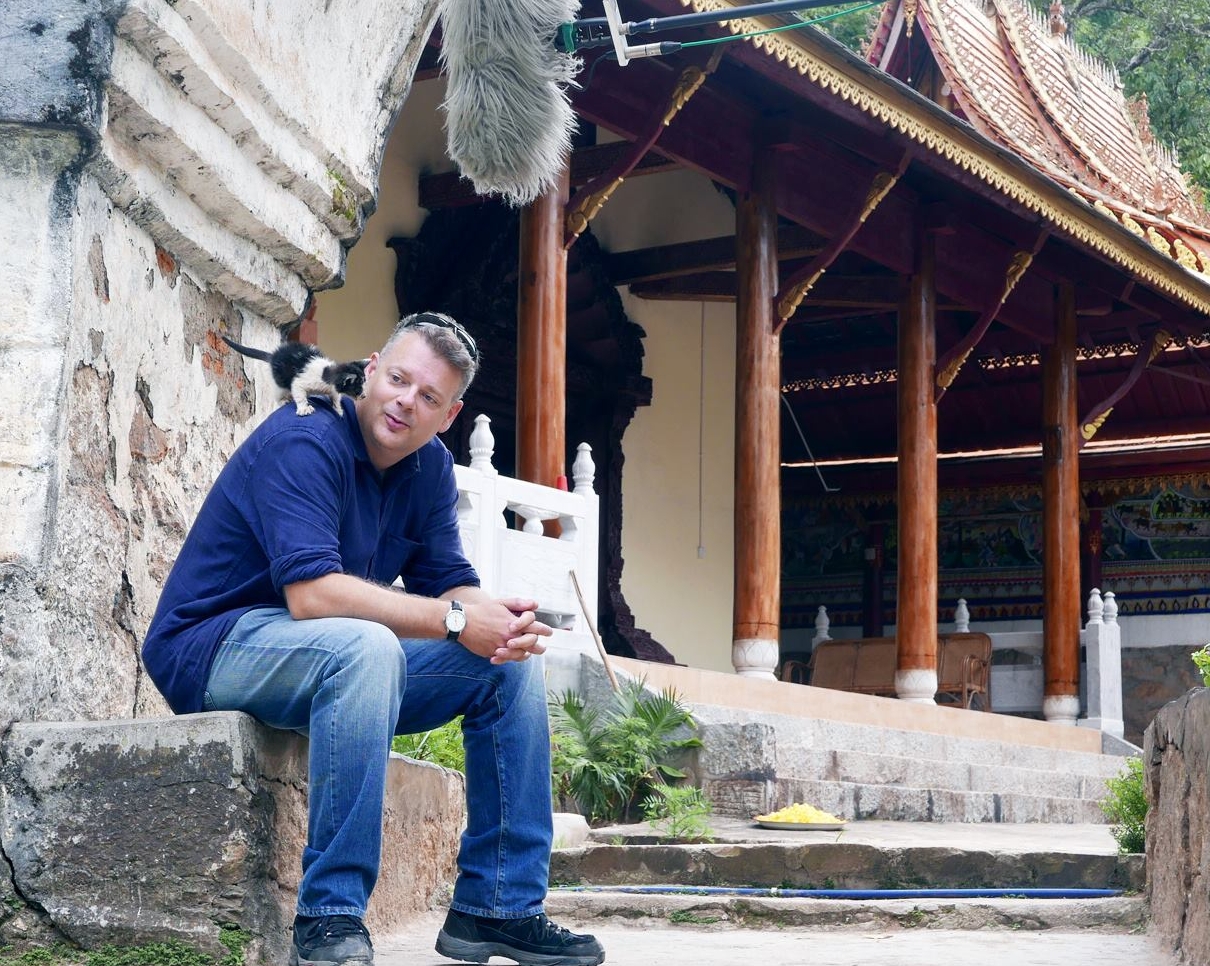
I climb the steps through the rainforest to the ramshackle stone temple gate, dwarfed by the nearby banyan trees. Beyond, there is a new Buddhist pagoda, its upturned eaves sheathed in gold spires, its flanks decorated with murals depicting the Buddhist saints. I sit in the shadow of the gate, a mangy kitten poking around in the dirt beneath me, and turn to the camera.
“It might look like I am in Thailand,” I begin, “but I am actually still in China, close to the southern border. I’ve come here to visit the Blang tribe, who–”
I stop. The kitten has stuck its head up my shirt, and is licking the sweat off my back.
“It might look like I am in Thailand,” I repeat, “but I am actually still in China, close to the southern–”
I stop again. The kitten has clambered up my shoulders and onto my head.
You are leaving the house, but today you are on camera. Are you wearing the same clothes as yesterday, or their exact duplicates? Are your shoes tied in the same way? Is your hair the same? Do you have your passport for military spot-checks? Were your sunglasses on your head or in your pocket? Are your feet presentable, because you might have to unexpectedly be barefoot on camera? Was the mosquito repellent sticker visible on your shirt? What hand did you hold that packet of tea in yesterday? Have you been burned by the sun? Is there a kitten on your head?
“It might look like I am in Thailand,” I venture, “but I am actually still in China, close to the southern border. I’ve come here to visit the Blang tribe, who some say were the first to cultivate tea.”
I have finished the line after only three takes. The kitten pads along my thigh and mews up at me approvingly.
People keep inviting themselves along, and a refusal often offends. They don’t understand that any extra body on the production is another person who can trip over a chair in the middle of a take, whose mobile phone will go off when I am speaking, who will be taking the single free chair for the few seconds we can sit down on before being dragged off for another piece to camera.
If we are invited out to dinner after a twelve-hour shoot, sometimes it doesn’t constitute “relaxing”. Sometimes it means we can’t choose our food. It means folding our aching muscles onto tiny stools in some Thai restaurant, and being forced to try unknown dishes that might give us the squirts all night. It means that everybody has to spend another two hours speaking Mandarin, which only two of the crew have as a native language. Our would-be host still refers to me in the third person, along the lines of: “Can he use chopsticks?” It means we are not in staggering distance of our hotel. It means we owe someone a favour, which in China just accretes tasklets and obligations like limescale. So: no.
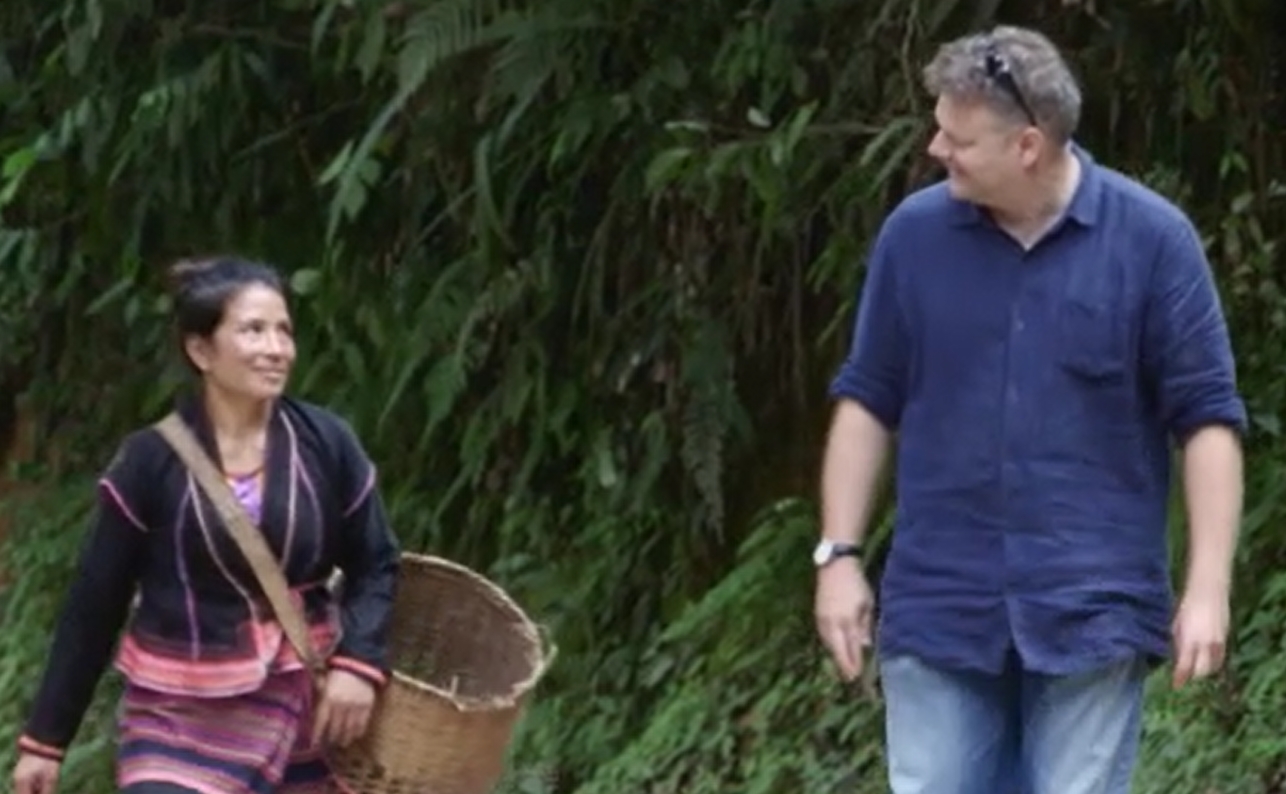
We are very far away from the cities of China. I ask my driver the name of the mountain on the other side of the valley, and he replies: “Myanmar.” The Blang tribe live out on the flanks of the mountain Badashan, supposedly the home of tea.
Yuyang, a Blang lady, leads me up into the hills. But we are not going to the neat rows of terraces of the tea plantation. Instead, we are clambering up to a tall stand of trees, said to be over a thousand years old. Little tea trees look like shrubs, each attached to a yellow square of insect-encrusted flypaper. But even these little bushes are over eighty years old, kept low by the constant bonsai of stripping off their youngest leaves. The trees are really trees, growing wild in the forest. I’m not actually afraid of climbing the tree to get to the young leaves at its top, but I do fret that my weight will permanently ruin what might actually be the first ever tea tree to be cultivated. So, I leave it to Yuyang to clamber up like a monkey.
The tea leaves are laid out to dry overnight, and then roasted in a large bowl-shaped depression cemented into the side of the house like a giant’s wok. A fire crackles underneath, as Yuyang’s brother Aizhang lifts and flings the tea leaves against the wok, wearing little string gloves. It is hot work and he seems oddly unused to it. After a few minutes, I realise that there is a tumble-drier-like device next to us which probably does all the roasting automatically when there is not a film crew in town.
After forty minutes of Two Men One Wok, the tea has nicely browned. This is called “killing the green,” since the tea leaves now look like tea leaves, and can be dried further and pressed into cakes for transportation. But that’s another story.
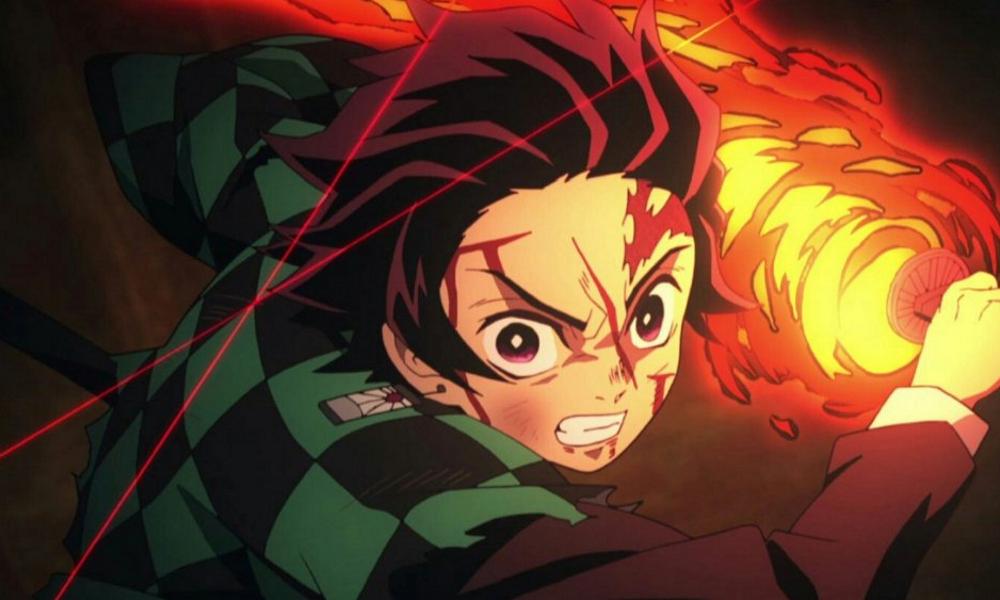
On several occasions in recent months, I have been approached by journalists demanding to have the meteoric success of Demon Slayer explained to them. The film has, after all, become the highest-grossing movie ever in Japan, taking just under 40 billion yen (£266 million) beating not only Spirited Away and Your Name, but Titanic and Frozen.
However, I refused to comment, on the grounds that I didn’t really know. I had some guesses, certainly, particularly regarding unique pandemic conditions. One imagines a weary Dad, on the one day that a family can actually go somewhere together saying: “All right, we can all go out today, but we are not sitting through the last Evangelion movie, and your sister doesn’t want to see Josee and the Tiger and the Fish, and your mother has already seen Fate/Grand Order: Divine Realm of The Round Table: Camelot- Wandering; Agateram twice, and besides, it takes so long to say the title that by the time we get our tickets, the film will be half over…”
And then there are the otaku. When reporting Japanese box office, particularly for anime, it is disingenuous to talk about ticket sales as if each has gone to an individual, because some of those tickets are being bought by the same guy – once for the lucky gonk, once for the giveaway poster, once for the action figure he will keep in its box. And with limited choice in Japanese cinemas, such merch speculators are out in force with more money to spend on a single film.
There has been some talk among pundits of some sort of unique synergy among voice-acting talent (nope), or music (not really). There has been some mildly persuasive commentary on the fact that the manga itself is popular with Japanese readers (yes… but that popular?), hitting some sort of spirit of the age.
But as to why Demon Slayer is the top of the Japanese box office, my honest answer is “I don’t know”. As the months go by, I realise now that I should have said so, in public, much earlier on. Someone should have stuck their hand up in December and said: “No idea, sorry. If we knew how this worked, we’d all be millionaires.”
Jonathan Clements is the author of Anime: A History. This article first appeared in NEO #208 (2021).
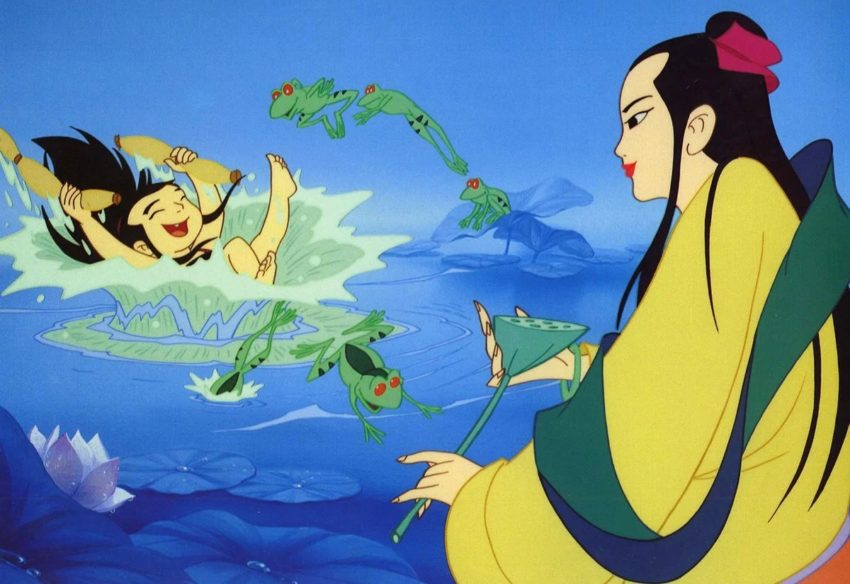
The sun is bright white overhead, and in the distance there are the red striated rocks of the Flaming Mountains, where the Monkey King once fought Princess Iron Fan, or as the Uyghurs tell it, where a hero once felled a dragon, causing its still-simmering body to break up into seven pieces.
Our van stops at the side of the road to look down a ravine at ancient Buddhist grottoes, cut into the rock. They were once by the bank of a river in a green valley, but are now marooned a hundred feet up, above a wadi that only has water in it maybe once a year. This isn’t part of our scheduled filming, but I do a piece to camera about the retreat of the waters from Xinjiang, and we get to give the Yuneec Q500 Typhoon a quick run along the valley to shoot it from the air. We only attract eight passers-by, which is a miracle in China.
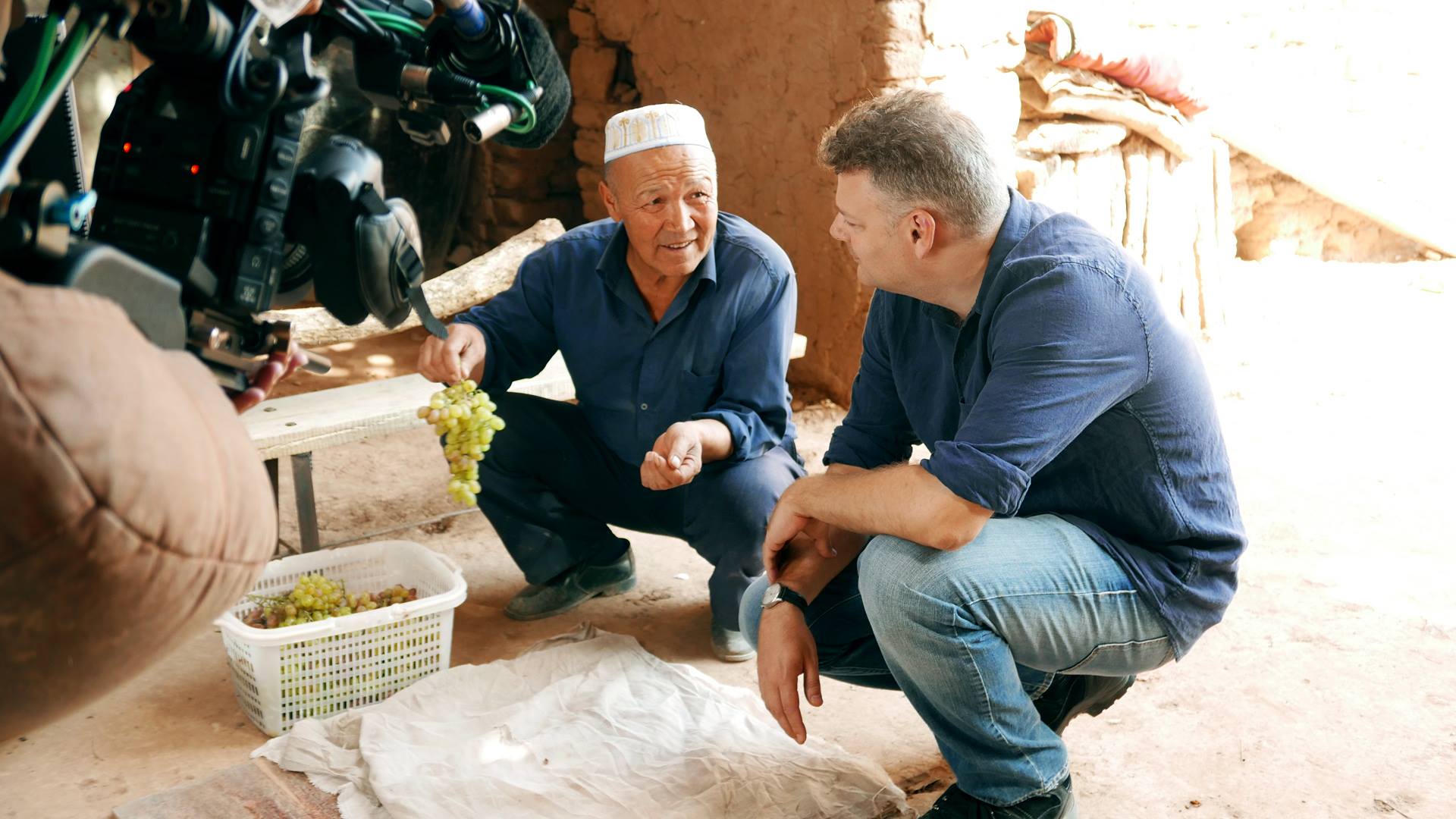
We have come to Tuyuk village, a Muslim community out among the vineyards, where the locals dry grapes in the sun until they become raisins. There are five thousand people living here, spread out in single-storey huts across a swathe of land in the shadow of the Flaming Mountains.
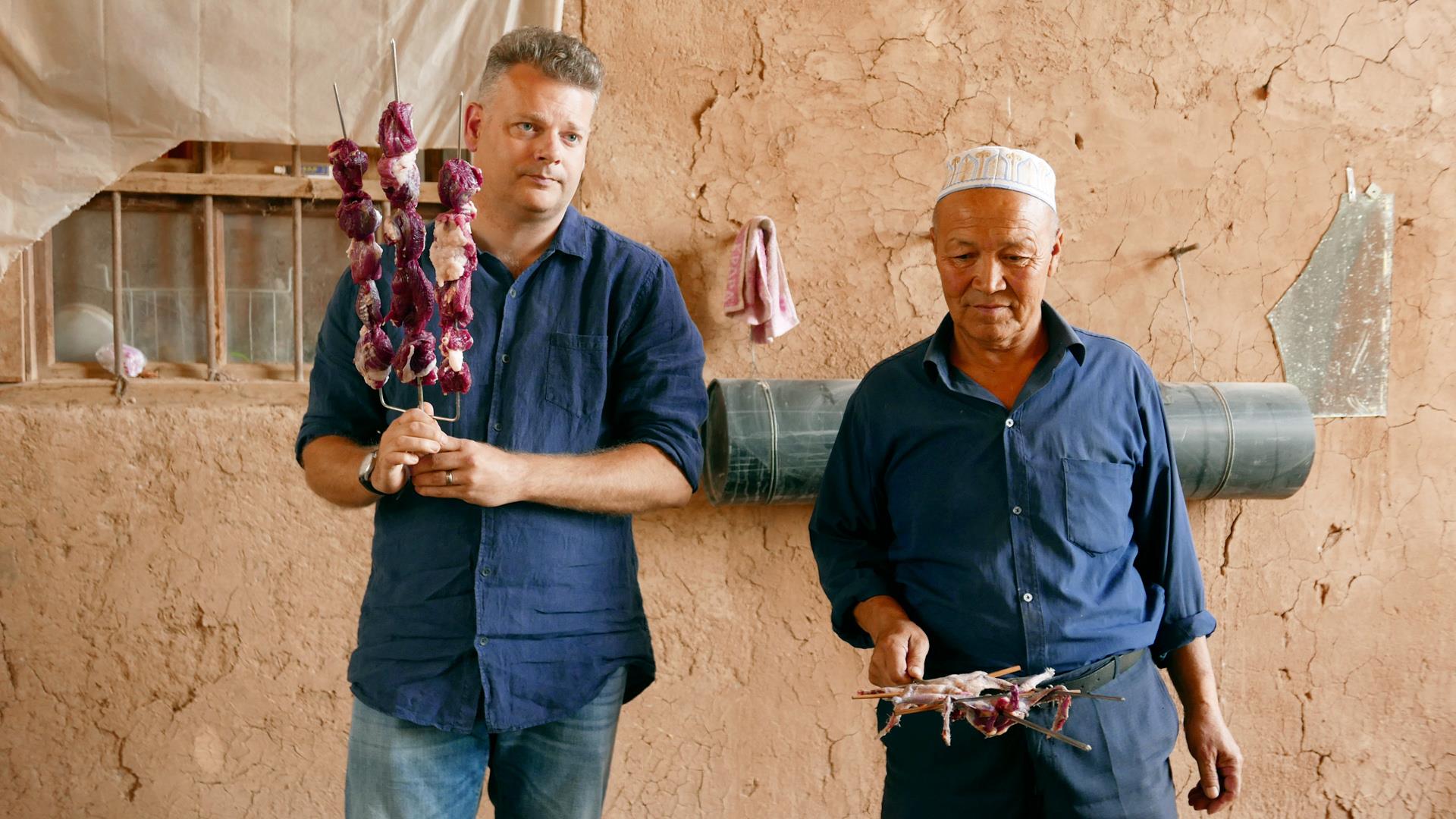
Ismayil is an old man who makes merceles, a fermented grape juice that uses the wine production methods of Ancient Greece, but with no alcohol content. The Quran only forbids “intoxicants”, you see, whereas merceles is officially medicine. We have to shoot all the stages of its manufacture, from the grape picking, to the crushing, to the sieving, to the boiling and the adding of kebabs.
No, wait, what? Kebabs. The grape juice is boiled with hunks of meat, and then left to set for 40 days until it is drinkable. Then it apparently puts hairs on your chest. While I am trying to interview Ismayil about his herbal ingredients, a butcher is dragging a sheep behind me and slitting its throat, letting its blood drain into a hole in the ground. And while I am talking with him about the history of grapes, the same butcher is shoving a hollow tube up the dead sheep’s leg, and then inflating it like a lilo to push the skin away from the flesh. In fact, the whole day is taken with the slow dismemberment and cooking of a sheep, with some bits going onto kebab skewers, and the rest of them being boiled in a pot to make our lunch.
We sit gingerly on the divan and poke at the big hunks of meat. A neighbour (all Ismayil’s neighbours have come to gawp) hands me a cut-throat razor to saw flesh off the shank. It tastes remarkable – mutton this fresh turns out to taste the way lamb tastes for everybody else. I realise that Ismayil has had his flies undone all day, but that if I point this out, it will ruin the continuity. His granddaughter smiles at me experimentally, and two grandsons ask me if I am an American.
None of the interlopers speak particularly good Mandarin, which means we are all mercilessly taking the piss out of each other in our own little linguistic alleys. Viewers of the finished product should look out for the moment when Ismayil and I first greet each other, shot, for reasons not worth going into, late the day after I have already knocked back several bowls of his supposedly alcohol-free medicine. I come in through the carved wooden door in his courtyard, and he runs laughing to shake my hand. I greet him with an enthusiastic: “Ismayil! Big up your bad self!”
He replies with something unintelligible in Uyghur, which probably means: “Why didn’t you tell me my flies were undone, you arsehole?”
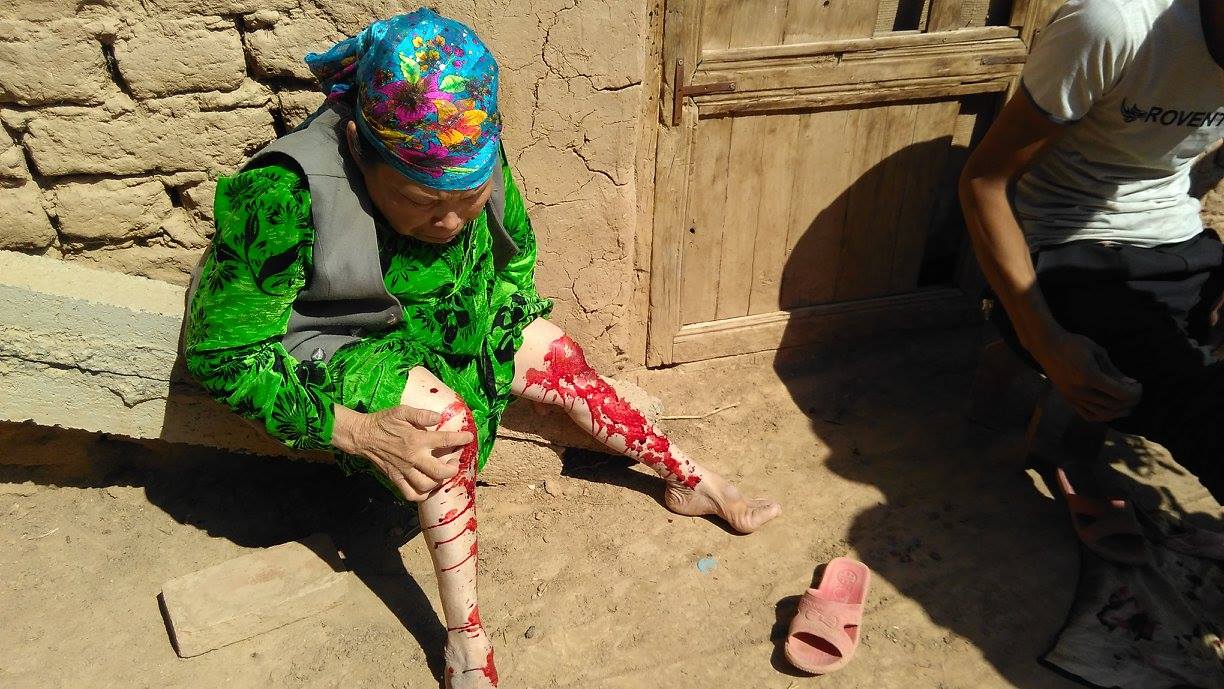
There is a knock at the door, and a very short woman in a green headscarf comes in.
“My legs are giving me jip,” she says, “and I heard there was a slaughter today. Can you do me a couple of pigeons.”
Oh yes, says Ismayil, and gets her to sit down and lift her skirt. Then he slits the throat of a spare pigeon and spatters her legs with blood, while the film crew look at their watches.
Right, says the director, if we can now get to the bit where we sieve the grape juice…?
There is another knock at the door.
“Hello,” says a man in a knock-off Armani T-shirt. “I heard there was a slaughter today, and I’ve got these pains in my legs. Can you spare me a pigeon or two?”
But of course, says Ismayil decapitating two more pigeons and spraying him with blood, before ripping out feathers and dropping them onto the result. His patient starts to look like a zombie version of Foghorn Leghorn, and we get back to the business at hand.
By the time I get to taste some merceles, I am ready for the worst, but it tastes like Ricola, and I am quite happy to drink it all day. You would never know that there was half a sheep and four dead pigeons in it.