Statue of Limitations

Just a couple more years, and Bandai accountants might have thrown away all the relevant documentation, allowing two former employees to get away with deceptively simple crime. But someone got a surprise when checking over old invoices, leading at least one man to get caught cooking the books at the Japanese company most famous for Gundam.

I say “at least one”, because so far among the accused, only Takashi Utazu (44) has pleaded guilty to the charges, which include talking up the costs of installing the giant Gundam statue in Odaiba in 2013, and pocketing the surplus. LED lighting, which should have cost 10 million yen, was billed to the company at 20 million, leaving Utazu and his alleged accomplice with almost £70,000 in pure profit. And that’s only one incident in a four-year scam, thought to have netted the embezzlers a total of 200 million yen (£1.4 million).

Because of the sheer size and volume of certain franchises, toy companies have to deal with sums an order of magnitude above what simple folk like you and I are used to. A few years ago, when the Japanese government was dickering about the expense of the much-mooted National Media Arts Centre, it was a Bandai staffer who put everybody in their place by pointing out that the sums under discussion cost no more than a single new theme-park ride. It’s very easy, said another, to spend a million dollars. He meant that when you’re dealing with numbers this big, the overheads of simply making enough toys for something to stand a chance of becoming a bestseller turn into phone-number sized entries on a spreadsheet. Bandai won’t miss a few thousand, right?

Well, wrong. Their bean-counters are super-powered, transforming maths robots, and the dating on these reports makes me think that someone flagged up something fishy, seemingly in projects connected to another employee – a man who is currently continuing to protest his innocence, even though he was fired in October 2017 over the audit findings. There’s a statute of limitations on financial reporting – in Japan as in the UK, companies aren’t obliged to hold on to records for longer than seven years. So the thieves might have got away with it, if it weren’t for those meddling accountants.

Jonathan Clements is the author of Anime: A History. This article first appeared in NEO #186, 2019.


Tabito’s Party

It was the party to end all parties. Otomo no Tabito, the governor-general of Dazaifu had invited thirty-one bigwigs from all over Kyushu to a fete in his garden, scheduled to be held a fortnight before reigetsu, the “auspicious moon” that marked the second month of the lunar calendar. The year was 730 AD. People came from as far away as Satsuma and Tsushima. The plum blossoms were just starting to open, there was mist on the mountains and the first signs of life were stirring – new butterflies had hatched from their cocoons, and old geese returning from their winter retreats.

Pleasantly sozzled, the vice-governor Lord Ki came up with a poem of welcome, suggesting that it was a nice night to welcome the plums – likely a reference not only to the flowers in the garden, but to the booze everyone was knocking back. His junior assistant, Mr Ono, answered with a poem of his own, pleading with the blossoms not to fall and scatter. Don’t forget the willows, said Mr Awata, another junior, again in verse form, creating a chain in which every guest threw in his own variation on a theme. It was a decidedly Chinese affair, redolent of the contemporary drunken poet Li Bai, conceived in apparent imitation of similar festivities in Chang-an, the distant capital of China’s Tang dynasty. There was a lot of talk of flowers, but also of the transience of life and the joys of booze. Later verses, fuelled by more wine, drifted a little towards the maudlin. The penultimate poem, from the secretary Mr Kadobe, spoke wistfully of the blossoms staying forever to delight the girl he loved… a rather tardy acknowledgement that only men’s voices were being heard, and that maybe they could all find something better to do than sitting around talking to other blokes. The women, presumably, were off somewhere having a party of their own, with limbo dancing and pillow-fights.

Tabito himself spoke in the middle, wondering if he could see scattering petals or flurries of late snow. But once the verse cycle was complete, he seems to have spoken up again, appending several other verses as closing remarks. The guests had tried to keep things light, but Tabito’s final words alluded to his advancing years, and his annoyance at a career that had seen him promoted away from life in Nara to a provincial posting. You could keep your wine, he said. You can keep your thoughts of Daoist immortality treatments. No booze or magic potion will make me feel young again. Only seeing the capital will do that for me. “To see [the capital] / That will cure this villainous old age / And give me my youth again.”

Otomo no Tabito died the following year, in his mid-sixties. The cycle of verse from his big party was preserved for long enough to end up a generation later in one of the poetry selections in the Manyoshu (Collection of Ten Thousand Leaves). It came accompanied by a preface written in literary Chinese, which set the scene with the fateful line (taken here from Edwin Cranston’s translation in A Waka Anthology: “It is now the choice month of early spring; the weather is fine, the wind is soft.” One thousand, two hundred and eighty-nine years later, the two characters rei and wa would be lifted from that phrase, and used to name the reign of the new Japanese emperor, Naruhito, in 2019.

Jonathan Clements is the author of A Brief History of Japan.

Juurakon Hulda (1937)

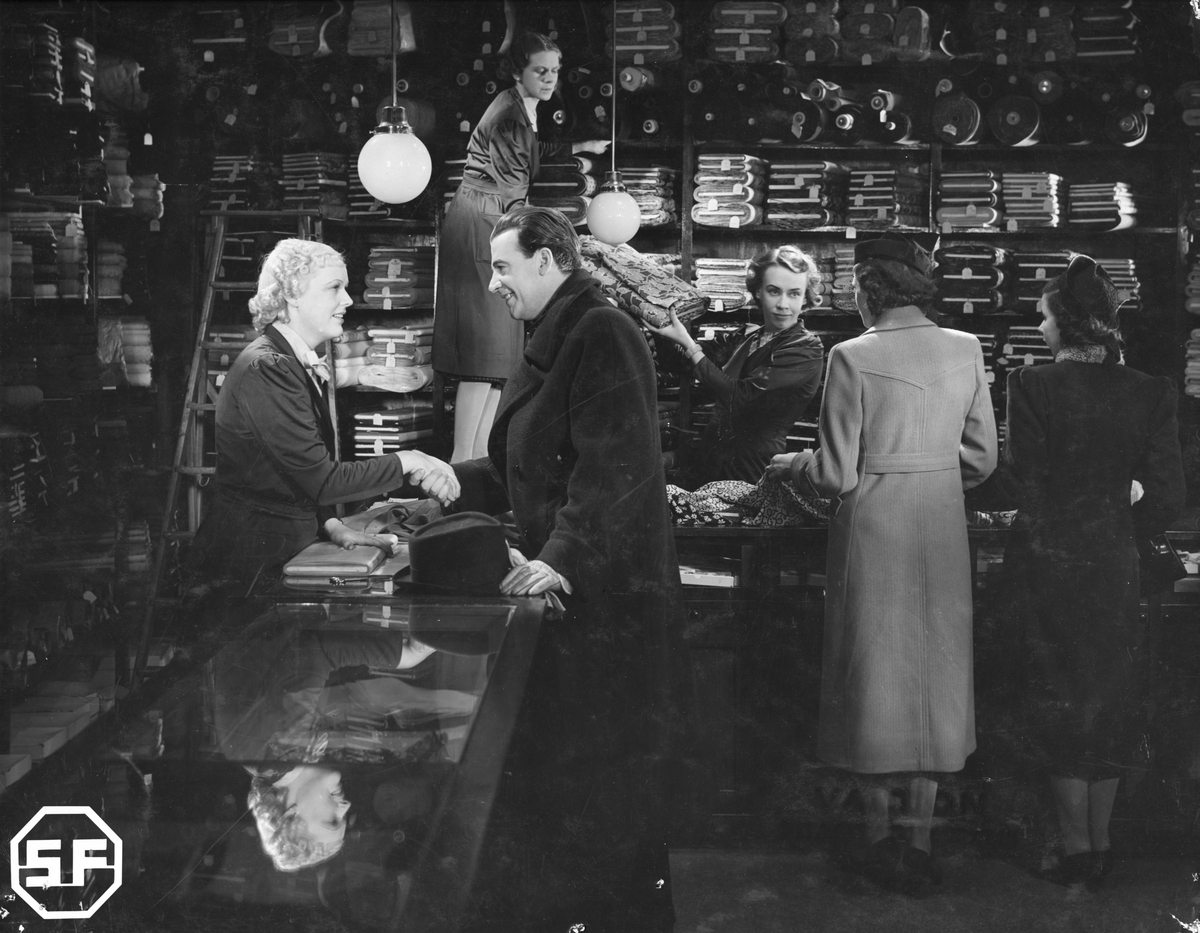
Lured by tales of bright lights and the big city, country girl Hulda Juurako (Irma Seikkula) comes to Helsinki to make her fortune, but finds herself the object of study in the salon of judge Soratie (Tauno Palo), where girls like her, migrating to urban areas, are regarded as “the pinnacle of social problems.” The outspoken and sharp-witted Hulda bristles at the class divisions of 1930s Helsinki, where servants are not permitted to use the same entrance as their masters, and buries herself in studies in the hope of bettering herself.

She does so, with Pygmalion-like success, despite the patronising attitude of the men around her, and the outright hostility of the women of Helsinki parlour society, who regard her as an upstart hick, devoid of manners or class.

The release of a complete Suomi-Filmi box set late last year, to complement the previous Suomen Filmiteollisuus box already in use, means that this blog can now start interpolating the works of two Finnish film companies from the 1930s, beginning with this, the first of several in which director Valentin Vaala adapted originals by the author Hella Wuolijoki.

This film has had a wild ride in terms of critical reception. It sold a million tickets at the box office in 1937, a tall order in a country with only three million inhabitants, while many of the locations became tourist spots in their own right. Some praised it as a piquant puncturing of bourgeois tastes, while some home-owners forbade their servants from watching it, lest they get dangerous ideas. The film was denigrated during the 1970s, but rediscovered in the 1990s, quite possibly because its approach to upstairs-downstairs interactions, while mansplainy and naïve by today’s standards, was nevertheless fiercely progressive when compared to similar films of its era. Certainly, Seikkula is an actress ahead of her time, boldly claiming her space on the screen, parading around the kitchen with her hands in her pockets and speaking with her mouth full, but most notably giving as good as she gets in fast-paced arguments with the menfolk. The film was remade in Hollywood as The Farmer’s Daughter (1947), for which Loretta Young won an Oscar, and in the 1990s, Kari Uusitalo selected it as one of the Top 100 Finnish films of the twentieth century.

But there’s more, because the class tensions of this film have, deep, deep roots in Finnish identity, back to the Red-versus-White conflict of the Civil War, and even further to the Fennicisation of its upper class in the late 19th century – Mr Soratie, it is revealed, was once the more Swedish-sounding Mr Sanmark, but changed his name along with many other Finns. Author Hella Wuolijoki (1886-1954) was a vehement left-winger and Communist sympathiser, and long suspected by the Finnish police of being a Russian sleeper agent. She would, eventually, be arrested for harbouring a Soviet spy in 1943, and sentenced to life imprisonment, although she only served a few months before her release, and soon after becoming a politician in the Finnish People’s Democratic League, a king-making left-wing alliance in post-war politics.

All of which seems a world away from a spunky country girl, singing to herself as she washes the windows while perched precariously on a sixth-floor balcony, but let’s not forget that in the same year, the rival company Suomen Filmiteollisuus released The Assessor’s Woman Troubles, supposedly a light-hearted comedy, promoted with a shot of Aku Korhonen literally raising his fists to a cowering Laila Rihte. Hulda is a creature from a different dimension, who believes that a simple education will turn her into a better person, ready to stand up to the braying ninnies in the parlour who think that they are smarter than her because their husband bought them a nice necklace. She is shown climbing the steps of the polytechnic in a seasonal montage, inadvertently foreshadowing a similar march of progress in the Ruth Bader Ginsburg biopic On the Basis of Sex (2018). She is in fact, the first of several powerful women to appear in screen adaptations of Wuolijoki’s books plays, although the following year’s The Women of Niskavuori (1938) would not have quite such a happy ending.

[The DVD of this film also came with a seven-minute documentary Vaala’s Film Rolls, about the work of the director Valentin Vaala.]

Jonathan Clements is the author of An Armchair Traveller’s History of Finland

Animated Encounters

Over at the All the Anime blog, I review Daisy Yan Du’s new book about the inspiration and influences of Chinese animated films, which includes substantial detail on cross-pollination with Japan.

“Du’s concentration on Chinese animation in an international context is a rewarding account not only of films released, but of unexpected influences and projects that never happened. She regards the Wan brothers’ Princess Iron Fan (1943), for example, as’“far more influential in wartime Japan than in wartime China,’ but also reports that when Japanese animators came to Shanghai in 1988 looking for subcontractors on the Saiyuki TV anime, the Shanghai Animation Studio refused to work on it, because the Japanese version of the legend of the Monkey King deviated too far from acceptable norms.”

Money for Nothing

Hayao Miyazaki’s fluffy forest spirit Totoro has been around in China for thirty years, sneaking in through Taiwanese or Hong Kong DVDs, or stowing away in kids’ luggage on return trips from Japan. But his first official cinema outing in the People’s Republic did not come about until December 2018, when he suddenly burst out on 3,000 screens.

Interpreting the numbers, Totoro had a fantastic opening weekend, making $12.9 million and beaten only by Aquaman. But by the end of its second week in Chinese cinemas, its takings had slumped 75%. I’m writing this article on New Year’s Eve 2018, as Totoro’s total Chinese box office takings edge over the $20 million mark.

You might not think that $20 million is a lot of money, especially considering that half of that money stays with the Chinese distributors and exhibitors, and fair old chunk probably went on marketing. But Studio Ghibli certainly hasn’t lost any money by belatedly releasing its much-loved classic in China. In fact, it’s easy to forget that Totoro only made $5 million on its original Japanese release, and that was on a double bill with Grave of the Fireflies. Thirty years on, this is money for nothing. The Chinese box office last month counts for 80% of Totoro’s global lifetime theatrical takings!

But as long-time readers will know, movie accounting is often not about those numbers at all. It’s about a bunch of other issues, including the fact that the Japanese 2012 Blu-ray of Totoro created an all-new, cleaned-up pin-sharp copy of the film, ready for duplicating on 3,000 hard-drives to open on 3,000 Chinese screens. It’s about the fact that, unlike creaky old TV shows or low-budget video fare, movies have a much longer shelf-life, and a period piece like Totoro, with a rural setting and a feel-good tone, seems tailor-made for the Chinese provinces.

Meanwhile, with the suspension of the One-Child Policy, there are suddenly twice as many Chinese children to form a market. Children’s entertainment, along with clothing and toys, is a surging new growth area in modern China. Even considering the vast piracy of Ghibli products over the last few years – and I have never seen a Chinese video pirate who isn’t selling Totoro, usually a knock-off of the Taiwanese dub – there’s a whole new generation of Chinese kids who have never seen it, who now get to see it in cinemas, ahead of a roll-out of other Ghibli products. And is someone eyeing up the blueprints for Japan’s new Ghibli theme park, and wondering if they could transplant something similar to Shanghai Disneyland…?

[Since this article was published, the Chinese box office takings for Totoro climbed to $25.75 million]

Jonathan Clements is the author of Anime: A History. This article first appeared in NEO #185, 2019.

Top Men

At the end of Raiders of the Lost Ark, Indiana Jones was assured that his priceless, powerful archaeological find was being looked after by ‘Top Men’. But as the credits began to roll, we saw it nailed into a crate, dumped in a giant warehouse full of similar boxes, forgotten and abandoned. The image was Lucas and Spielberg’s homage to Orson Welles, a little piece of Citizen Kane recycled for a modern audience. But in Japan, Hiroshi Takashige asked himself: what was in all those other crates? And more importantly, who were these Top Men?

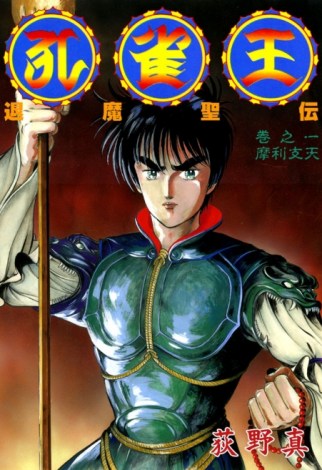
In collusion with artist Ryoji Minagawa, he decided that they were a secret, self-sustaining unit within the Pentagon, tasked with nabbing any weird and wonderful artefacts that come to light, many of which had been left behind by an ancient, highly-advanced civilisation. They began work on the comic project that would become Spriggan, only to find themselves influenced by real-world events.

They were writing at the time of the First Gulf War; a very difficult prospect for the Japanese. A nation, supposedly sworn to avoid violence and military aggression, was forced to sit on the sidelines and watch while the rest of the world got involved in a conflict about resources in the Middle East, the cradle of civilisation, resources that Japan itself needed as desperately as everyone else. It resulted in such tales as the desert robot combat anime Gasaraki, and in an interest, partly fuelled by The X Files, in presenting the Pentagon as the bad guy.

There is more than one agency searching for these artefacts. The Pentagon competes with the KGB, and both are in opposition to ARCAM, a global corporation that wants the artefacts for itself. Its crack, super-powered agents are spies-cum-archaeologists named after ancient Celtic temple guardians, the Spriggan.

Minagawa and Takashige initially wanted to feature an adult agent, but ended up selling their concept to an anthology magazine aimed at boys. Consequently, they moved their original lead into the background, and concentrated on his teenage nephew, Yu Ominae.

Rights for a movie adaptation were soon sold, and Spriggan went into production as an anime. The film-makers plumped for a script that emphasised the Indiana Jones parallels, chasing after a different Ark (Noah’s, in this case) at Mount Ararat, with cyborg Pentagon agents roughing it up with the ARCAM Spriggans in an action-packed thriller.

As Ominae, producers cast Shotaro Morikubo, better known in Japan as the movie-dub voice of Johnny Depp. Originally intended to go straight to video, the budget received a massive injection of cash, sufficient for a movie, when Katsuhiro Otomo announced he would be ‘involved.’ Akira creator Otomo was supposed to be working on his own project, the long-delayed Steam Boy, but fancied Spriggan as a kind of busman’s holiday. In fact, he is rumoured to have been the director in all but name; his fingerprints are all over Spriggan, in the design of the space-faring Noah’s Ark that the agents unearth, in the blue-skinned Pentagon child-telepath General MacDougall, and in the large amount of night-time shooting – an expensive luxury in animation that relies so heavily on light coming through the cels, but one that Otomo often enjoyed for the artistic hell of it. The credited director, Hirotsugu Kawasaki, has not had another movie to his name since, only emphasising the impression that Otomo’s more nebulous title of ‘General Superviser’ may have been adopted for contractual reasons. But for those in the know, there was no mistaking who the Top Man on the Spriggan production really was.

This article first appeared in the Judge Dredd Megazine #236, 2005, and was subsequently reprinted in Schoolgirl Milky Crisis: Adventures in the Anime and Manga Trade. A new adaptation of Spriggan has just been announced, forthcoming from Netflix.

Law & Justice

In case you missed it up on the All the Anime blog, my review of the academic collection Law and Justice in Japanese Popular Culture: From Crime-Fighting Robots to Duelling Pocket Monsters.

Law and Justice in Japanese Popular Culture is packed with interesting concepts and articles. It will prove particularly useful as a wildcard for the savvy college tutor – something to throw into the reading list in order to engage with young students about the implications of Pokémon fights or the way that the best sci-fi anime can suggest new and prickly areas of legal dispute. It also offers valuable details on some of the peculiarities of the real-world Japanese legal system, as seen through the way they influence the plots of thrillers, and even the assumptions that fictional characters make about the nature of right and wrong.”

Gods of Egypt

There were times, at Akhnaten, when I wondered what everybody else in the audience made of a man in fake boobs and jodhpurs, repeatedly shouting “Haaaaa!” while a dozen jugglers threw balls around him, but hopefully they already knew enough of the story to follow what was going on. That strangest of incidents in the mists of history, an Egyptian pharoah suddenly proclaiming there was only one God, smashing the old order and writing a hymn to the Sun.

There were wonderful moments — the priests clad like doctors, huddled in the shadows around the mummified Amenhotep III as they prepare him for his funeral, lights shining from their heads; Queen Tye in permanent shock, her hands red with blood from holding Amenhotep’s heart, staring in mute horror at the sky as if hoping to catch a glimpse at his departing soul; the constant presence of the Scribe, creator and curator of what little we know, his body often held in a rictus of despair. And a libretto drawn, like Steve Reich’s Different Trains, from fragments of found material — the Hymn to the Aten and a letter from a troubled general, asking for military assistance, from which an entire reign has somehow been extrapolated.

My mind wandered, as I suspect it was supposed to, to other things. As I watched Akhnaten’s six daughters, their matted hair entangled like rat-tails, dragged away in slow motion, I wondered if Philip Glass would ever consider a sequel about Ankhesanamun, Akhnaten’s daughter, wife and daughter-in-law, married to the boy pharoah Tutankhamun, and author of the melancholy letter sent to the Hittites: “My husband is dead and I have no son…. I am afraid.” As Akhnaten and Nefertiti advance slowly across the stage towards each other to share a kiss, their long crimson silk trains entwine, recalling Chie Shinohara’s Red River, a story which does indeed include the story of Ankhesanamun’s letter arriving in Anatolia, and the failed mission to send her a prince as a husband.

The animal-headed gods on the rooftop transform into a class of idle students, misbehaving while a tweeded academic bumbles his way through a tourist guide to a desert ruin where there is almost nothing to see, and offers handy tips for the ferry. One student tries, and fails to juggle with balls of paper, a faint mockery of the constant juggling throughout that has been symbolic of the rise and fall of the sun disc. Akhnaten himself is redressed, as if for his coronation, but now he is a figure in a museum… and then he comes to life once more, wordlessly comiserating with the ghosts of Nefertiti and Tye at the ruin of their world, as a river of time washes past them.

Akhnaten is playing at the Coliseum in London until 7th March.

Disappearing Anime…

December’s issue of Wired magazine included an article that stumbled across something that NEO readers have known for years – that online repositories for your favourite movies cannot be trusted. Brian Raftery’s article “Streaming isn’t Everything and Blu-rays are Here to Prove it” informs Wired’s hipster readership that the really cool kids are hunting down bespoke DVDs of their favourite films, because there really is no guarantee that some whim of international licensing will suddenly cause titles in online libraries to wink out of existence.

If, like me, you are lucky enough to live in a town with a well-curated second-hand video store, you may still be able to snatch up one of the obscurities. Good curation, however, also comes at a price. The nearest store to me is scrambling desperately to offload its DVDs so it can concentrate solely on Blu-rays.

There are all sorts of reasons why a film is no longer available. Often it is a trivial matter like music rights, when it is too expensive to remove a song, but also simply not worth the distributors’ while to pay for the rights to use it. The number of likely sales is outweighed by the cost of ticking all the right legal boxes, and this is a particular danger to anime, when many titles struggle to sell more than a couple of thousand copies.

Films fall in and out of libraries. Their ownership is tangled by changes in committee compositions, or corporate take-overs. It’s important to remember that just because you own a DVD, you don’t actually “own” the film on it, only the right to play it in your recorder. If your DVD stops working after a thousand plays, you are not entitled to a replacement; you’ll have to buy it again.

I find it ironic that even as the likes of Netflix throw buckets of money at new anime shows and fund remakes of Death Note and Cowboy Bebop, their very ubiquity and disruptive influences are making other shows harder to find. But on balance, we still have an easier time of it in the modern world. Streaming sites still offer immediate access to hundreds of anime, and may well introduce you to something you would never find in the video shop. And if you really must look for a solid, online stores can tell you in moments whether that’s actually possible…. And if not, cheekily offer you a Dutch or Polish version that’s almost as good and will probably play in your player. Some anime might fall between the cracks in the pavement, but at least online searching saves you wasting shoe leather tramping around the shops.

Jonathan Clements is the author of Anime: A History. This article first appeared in NEO #184, 2019.

The Unruly Generation (1937)

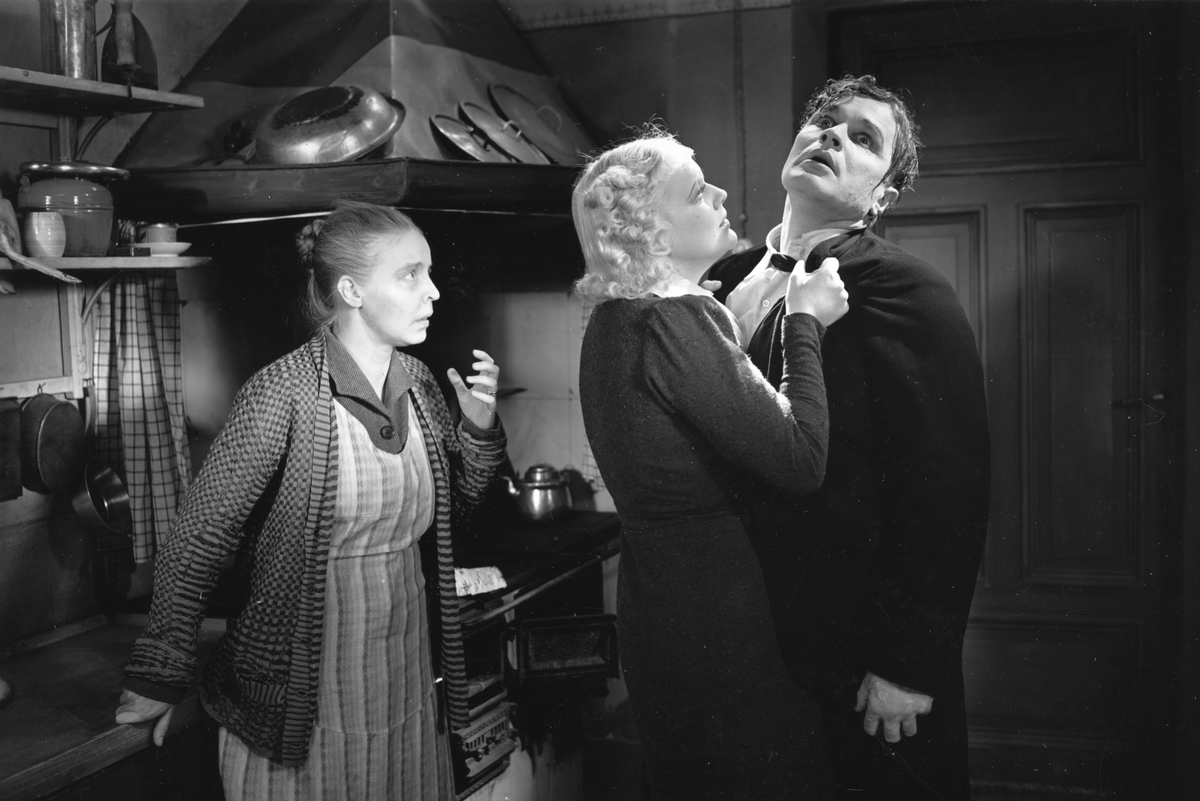
After years buried among his books and papers, the leading mathematician Reinhold Varavaara (Uuno Laakso) pronounces his academic work complete, only to discover that the world has moved on. His wife is a stranger to him, his three children are carefree teenage tearaways, and his family has got so used to his absence, that all they care about is the prospect of the money he might earn by getting an award. The only person who seems to “get” him is Marja (Ansa Ikonen), his son’s girlfriend, in whom Varavaara increasingly seeks counsel and solace.

Ironically for a story that supposedly huffs and puffs about “kids today”, The Unruly Generation (Kuriton sukupolvi) is a rather timeless situation, Mika Waltari’s 1936 play made it swiftly to the screen, but it would be reprised twenty years later with a different leading man, fulminating about different youth habits and popular music, beatniks and atom bombs. Finnish critics are divided about the extent to which the story is autobiographical, with some pointing out that the professor’s name seems to be a hybrid of several tutors that the young Waltari had at the University of Helsinki. Others go further, suggesting that Waltari, then only 28 but already a husband and father, saw himself in the character of the daffy Professor Varavaara, emerging from his study after a marathon writing session, to discover that the world has changed around him. Life was certainly imitating art – the story goes that the workaholic Waltari wrote the play after his wife taunted him that he was incapable of writing a comedy. On the basis of this talky, drawn-out dirge, Mrs Waltari might have had a point, at least this time.

Waltari is one of the most fascinating creatives in Finnish culture, a ridiculously prolific author who seems to be a little overlooked today because many of his most famous works were international in outlook, rather than focussed on the Matter of Finland. He wrote The Unruly Generation fresh after finishing his play Akhnaton, Born of the Sun, which would transform some years later into the work that made his name internationally, Sinuhe, The Egyptian – later adapted into a Hollywood movie starring Yul Brynner. But Waltari did write many works focussed on Finland, several of which would be adapted by Suomen Filmiteollisuus, not merely A Stranger Came to the Manor (Vieras mies tuli taloon, 1938), but also the better known Inspector Palmu series

The Unruly Generation presents a chaste and romanticised notion of a happily married man, tempted by but ultimately resisting a giddy infatuation. Adapting his own script, Waltari delights in the opportunity to shoot on location – the film begins with a prank in which the professor’s son is caught herding cattle at the Helsinki parliament building. He throws away numerous scenes to make space for such larks (jettisoning the play’s reconciliation between husband and wife that leaves the film version a little more ambiguous), but crams so much in that his screenplay originally topped out at 259 pages. Even with cuts, it drags on seemingly forever, with little to offer the contemporary viewer except a glimpse of 1930s Finnish youth culture: singalongs in a cloud of cigarette smoke, energetic ballroom dancing, and a hard-drinking generation fervently embracing the lifting of Prohibition since 1932.

By this point, Suomen Filmiteollisuus was ramping up its production schedules, because there are a bunch of new faces both in front of the camera and behind it. Wilho Ilmari directs for the first time for the company, and although there are some familiar faces in the cast (blink and you’ll miss sometime leading man Jorma Nortimo as a waiter, and cinematographer Eino Kari as a gambler), the cast is largely drawn from the players of the original stage version. One notable exception is the actress Rauni Luoma (last seen here in The House at Roinila), the smouldering beauty upon whom Waltari supposedly developed a crush not unlike that of his fictional Professor Varavaara on the vivacious Marja.

Jonathan Clements is the author of An Armchair Traveller’s History of Finland