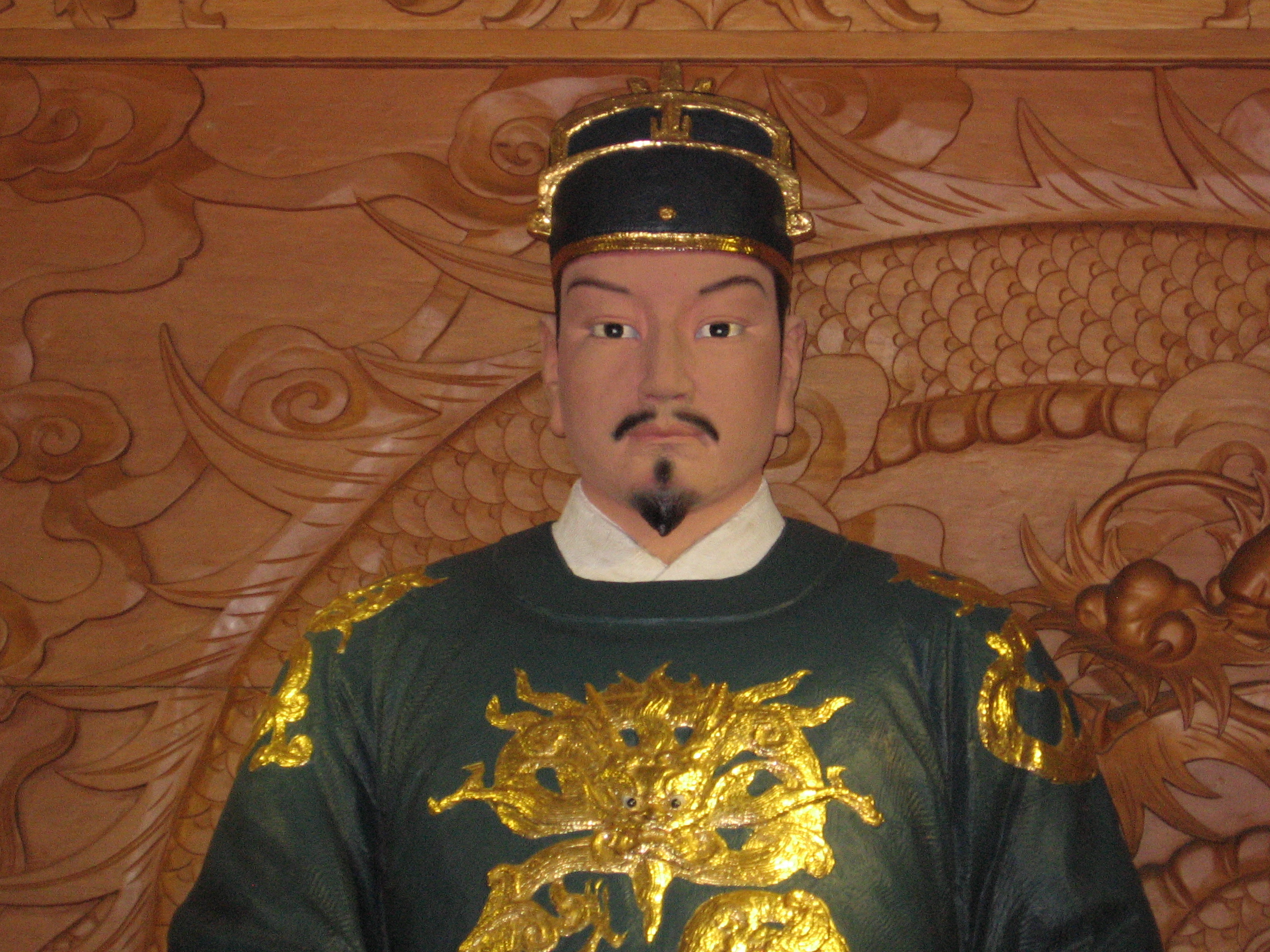
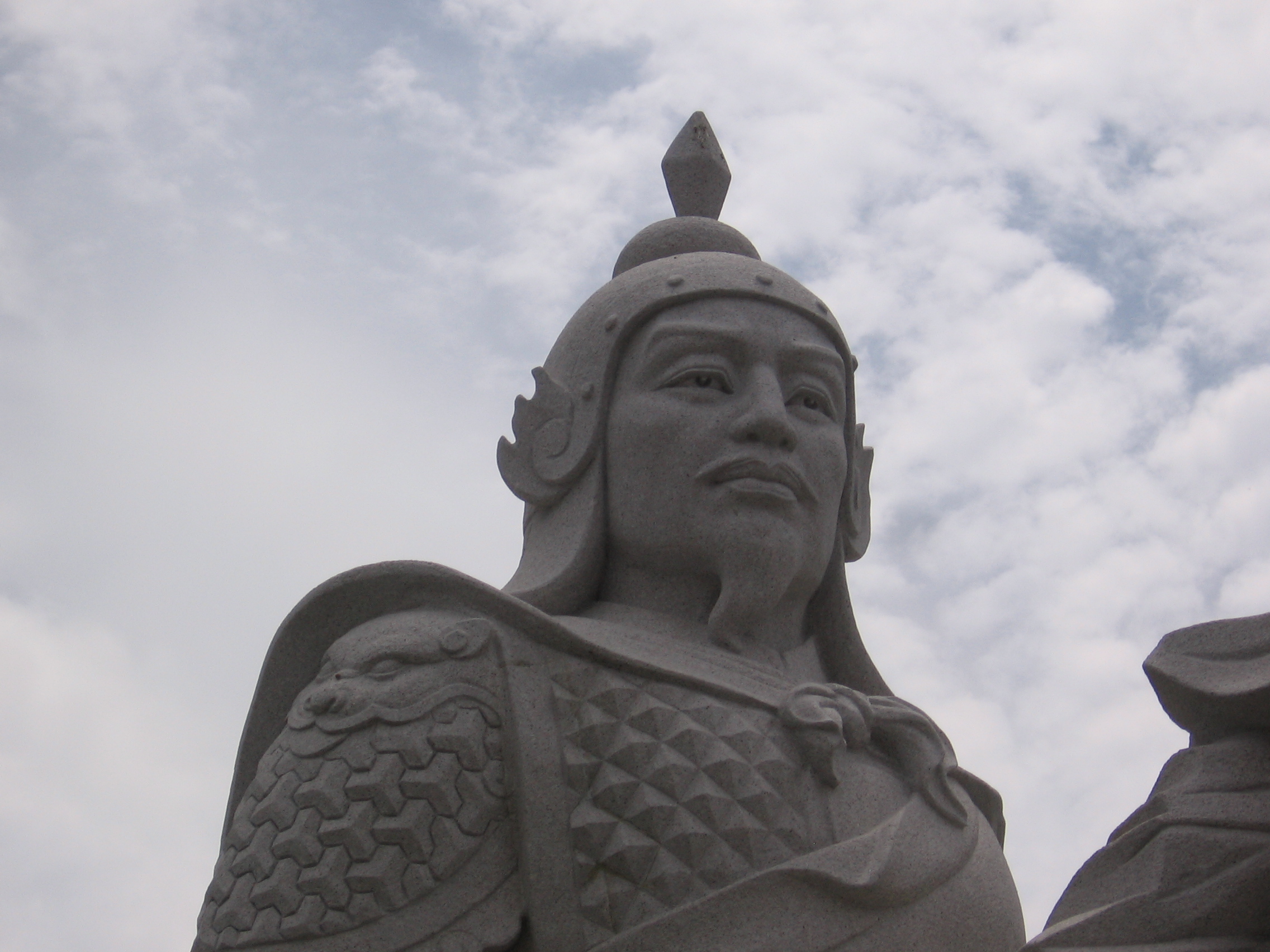
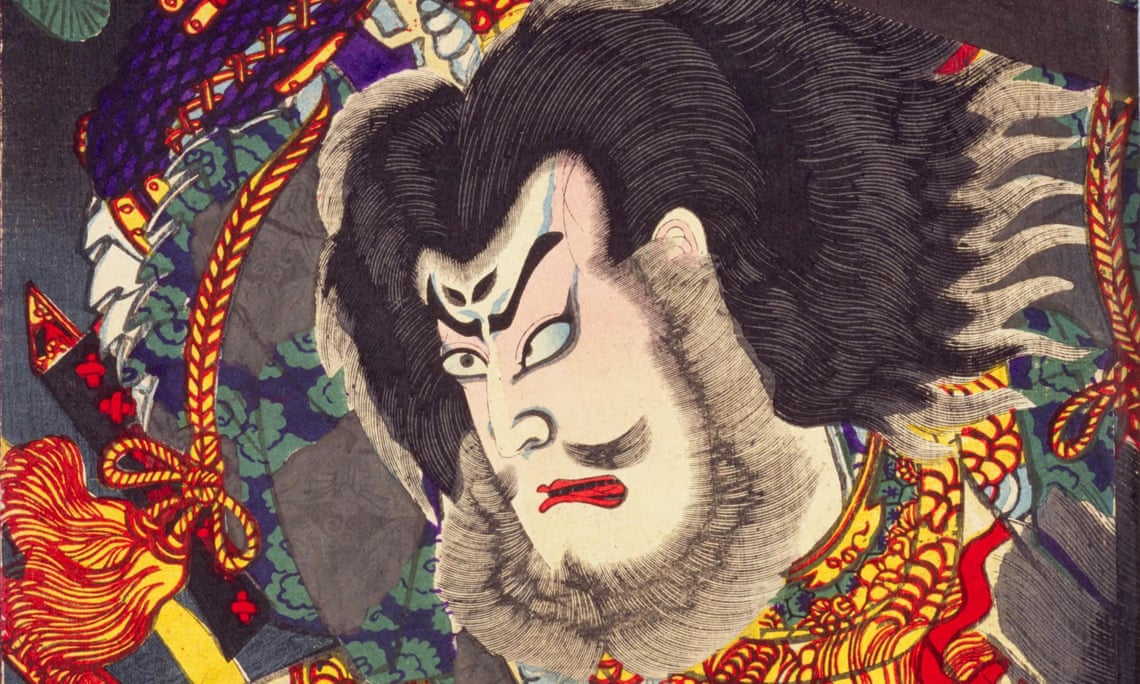
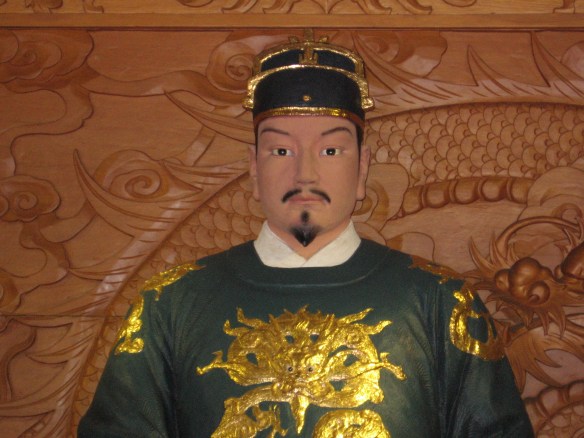
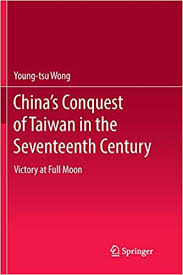
 Young-tsu Wong’s China’s Conquest of Taiwan in the Seventeenth Century: Victory at Full Moon chronicles the hundred years of maritime trades and raids that preceded the Manchu naval campaign against the rebel island of Taiwan in 1683. The one-eyed admiral Shi Lang had once been a captain in the largely illegal smuggling operation of Nicholas Iquan (Zheng Zhilong), the “master of the seas” believed to have been the richest man in the world in the 1630s. After the invasion of China by the Manchus in 1644, Iquan had briefly served as the kingmaker of the Ming resistance, before defecting to the invaders. Shi Lang would also switch sides, a decision that would cause Iquan’s son Coxinga (pictured) to execute Shi’s father, brother and son in revenge. The aging Shi Lang returned a generation later, recalled out of semi-retirement to take down the island regime ruled by Coxinga’s grandson.
Wong sets the scene with stories of the Ming dynasty’s own struggles with porous borders, pirate attacks and swashbuckling punch-ups between rival Japanese traders in Chinese ports. He reminds us that Nicholas Iquan himself spent parts of his life on both sides of the law, in an era when almost all foreign trade was sure to be criminalised. He refers to the escalating coastal troubles of the 15th and 16th centuries as the “Great Pirate War”, as the authority of the Ming dynasty eroded on the coasts. The nation that had once sent vast fleets to show off its power overseas now increasingly huddled on the shore, fearful of pirate raiders which, for a number of reasons, were usually branded as “Japanese”.
Wong introduces the pirate/smuggler Wang Zhi (d.1560), who once proclaimed himself the King of Zhejiang, and who plied a route between Hirado in south-west Japan and the south Chinese coast. In linking Wang Zhi to his successor “Captain China”, and Captain China to Nicholas Iquan and Coxinga, Wong establishes a genealogy of marine warlords, the “masters of the seas”, stretching for more than a hundred years down to the fall of the Zheng regime on Taiwan – what we might call a transformative and disruptive “Pirate Century” running alongside Japan’s Christian Century.
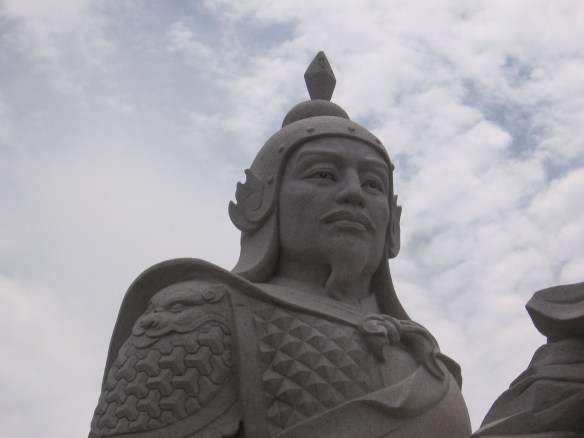 As recounted in Coxinga and the Fall of the Ming Dynasty, the pirate-smugglers of the Chinese coasts were dragged into the conflict between the invading Manchus and the retreating Ming dynasty. By 1645, the Ming court was a dwindling group of refugees, throwing itself on the mercy of Nicholas Iquan, the billionaire “admiral” who bankrolled early counter-attacks. Noble titles were handed out to Iquan’s family, including the conferral of the imperial surname on his eldest son by a childless Ming pretender. It amounted, at least in some eyes, to a symbolic adoption and the boy, thereafter as “the Knight of the National Name” (Guo-xing-ye, or Coxinga in the local pronunciation) would become the most famous loyalist to the Ming cause.
His father, not so much. Nicholas Iquan deserted in 1646, leaving the Ming pretenders to their fate. Coxinga fought on for another generation, taking over the Zheng maritime empire. The height of his resistance came in 1659, when he led an army up the Yangtze as far as the former capital Nanjing – a fact that caused the young Manchu emperor to hack up his own throne with a sword in a blind rage. Pushed back from Nanjing, Coxinga retreated to Taiwan, which he established as his new base. His family, the Zheng clan, would rule it for the next 21 years, until Shi Lang’s fleet brought them down.
Wong suggests that a “pirate psychology” – always counting on being able to rush back to the ships in times of trouble – was a fatal flaw in the discipline of Coxinga’s troops during the attack on Nanjing. There were other problems, too, particularly the fact that besieging Nanjing was itself “more symbolic than real.” He argues that Coxinga’s men stood little chance of storming the heavily fortified, well-situated former capital. Far from it – they were heavily exposed to counter-attack, and could not even prevent reinforcements and supplies reaching their besieged enemies. However, Wong doesn’t think that Coxinga himself shared the fair-weather loyalties of his father and crews.
Who was fooling whom? When Coxinga declined the title of Prince of Yanping, offered by the Ming pretender, was he really being gracious, or was he avoiding annoying the Manchus during peace talks? Conversely, did he ever had any intent of playing along with Manchu negotiators, of was it just a useful ruse to preserve the status quo? For as long as there was a prospect of a treaty, Manchu enforcers would leave Taiwan unmolested, fearful that they might get the blame if any actions caused Coxing to break off communications. In the words of one Manchu official, Coxinga’s demands were “an idiot’s daydream” – the question remains whether Coxinga knew that himself.
For Wong, the tragedy of the Zheng family was that they could have had it all. The Manchus had no interest in Taiwan, and did not particularly regard it as part of China – even after its conquest, it was dismissed by the emperor as nothing but a “ball of mud”. If the Zhengs had maintained the wily flexibility of Iquan, they could have clung on to Taiwan as an independent kingdom, offering tribute to Beijing but largely left alone. Instead, their insistence that they were the last loyalists of the defeated regime would prove to be their eventual doom.
 If Coxinga’s son Zheng Jing had stopped harping on about the lost Ming dynasty, Wong argues that he would have either been ignored or afforded an honorary princedom in the Manchu order. Instead of sticking to profitable overseas trade from his island redoubt, Zheng Jing allowed himself to get dragged into the doomed Revolt of the Three Feudatories, in which a group of southern warlords belatedly fought back against the Manchus. His men briefly won victories on the southern coast, before the revolt collapsed – its only long-term effect being that of making Zheng Jing’s continued presence on Taiwan intolerable to the Manchus.
Wong devotes an entire chapter to the decades of intermittent peace talks between the Manchus and the Zheng regime, as Beijing tried to find a way of buying its enemies off with bribes and noble titles. For two decades, Zheng Jing insisted that his base was a second Ming capital, he kept to the Ming calendar and proclaimed himself a loyal Ming subject. Even when his stance looked hopeless, he tried to get the Manchus to agree to an independent status, as if Taiwan were a single surviving province of an otherwise lost regime. As if! Oh, wait…
In Wong’s eighth chapter, he leaps back in time to tell the life of Shi Lang, the man who served as a captain under the Zheng regime, before defecting to the Manchus and ultimately, in his dotage, leading the fleet that would bring them down. There is tantalising potential here for a dramatic popular-historical narrative – born in 1621, Shi Lang was only three years older than Coxinga. “There is no room for two tigers on one hill,” writes Wong, pointing to the prospect of a book unwritten, in which Shi Lang, rather than the Zheng family, is the hero of his own story. But Wong is not interested in seeing the bright flash of a new, dramatic pathway through historical materials. As his blurb states, he is rather determined to “describe the historical process leading to Taiwan’s integration with Mainland China.” He does this with an incredibly wide array of Chinese-language sources, many of which do not appear to have cropped up in English before, on all sorts of interesting areas, from the ugly succession dispute that followed Coxinga’s death to the simmering feud between the Zheng clan and the defector Huang Wu.
Wong’s work sits within a welcome modern trend that flips the perspective of Ming piracy, asking how the world might have looked for a community that saw the islands and coasts, rather than the land, as its home. Peter Shapinsky’s Lords of the Sea, for example, reconsidered Japanese pirates not as nuisances and criminals, but as rulers in their own right, misnamed and misunderstood in histories of land-based politics. Maritime Ryukyu, by Gregory Smits has been similarly provocative, redrawing the map of the East China Sea to create a water-based territory incorporating not only the Ryukyu Islands, but coastal regions of Korea, Japan, China and Taiwan. Pushing a culturalist notion of China – that “Chinese” land is land where Chinese culture is paramount – Wong argues that Taiwan was not “Chinese” in any meaningful sense until the arrival of the Zheng clan and the subsequent seizure of the island by the Manchus.
You might be forgiven for thinking that Wong takes an entire book to get to just a single chapter about the actual conquest of Taiwan. But as his account makes plain, Taiwan was “conquered” multiple times in the 17th century, and Shi Lang’s campaign in 1683 was merely the finale. Although there are asides that point to the tense conditions on Taiwan – families burning down their own houses to avoid the newest emergency property tax, and Shi Lang himself welcomed by many supposed Ming-loyalist locals as a hero rather than an enemy – he does not deal specifically with the politics of the Zheng era.
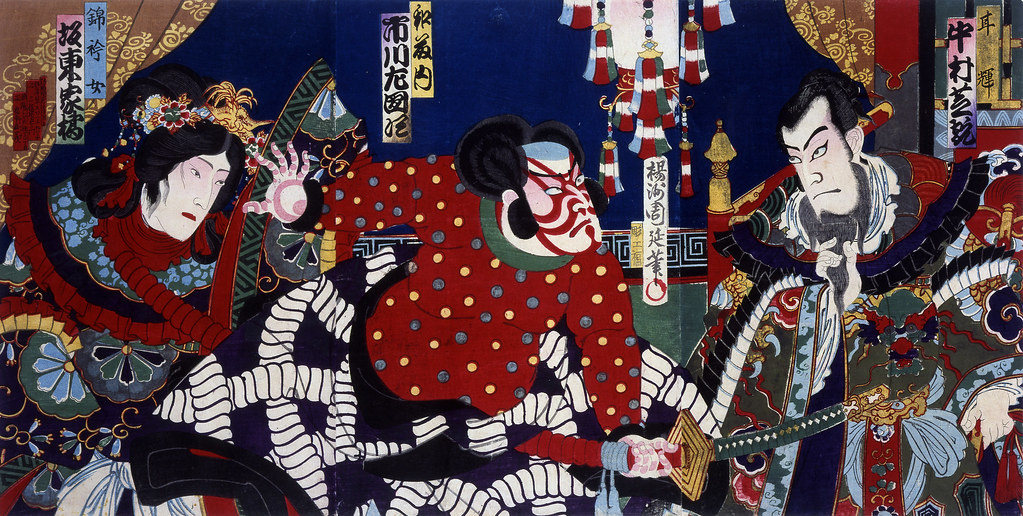
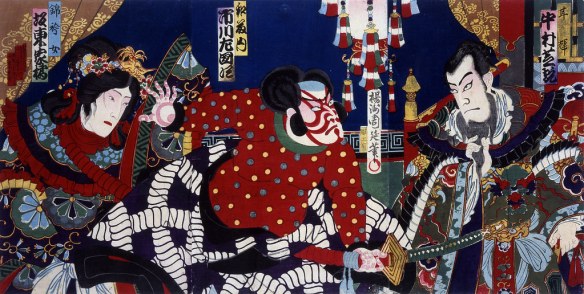 I would have liked to have seen a little more incorporation of non-Chinese materials – a lot has been written about the period in the last 20 years, but remarkably few of Wong’s references postdate the turn of this century. He concedes in his introduction that much of this book was written some time ago, and it is a testament to his scholarship that so many of its sources remain fresh and original. But Wong has little to say, for example, about the impact of Japan (where Coxinga became a kabuki hero) on maritime politics in the region, when samurai wars were largely responsible for the large and lucrative trade in Taiwanese deer hides for use in armour. The cessation of Japan’s long civil war not only shut down the demand for hides, but created a flotsam of out-of-work soldiers that swelled China’s “pirate problem”, and supplied plentiful mercenaries to fight on the mainland. Arguably, the politics of Zheng-era Taiwan are outside of Wong’s area of interest, but I expect he could have derived some useful information from, for example, Yoshio Hayashida’s 2003 Japanese-language History of Taiwan Under the Zheng Clan: A True Chronicle of the Rise and Fall of Coxinga and his Descendants. His focus, instead, remains resolutely on the process that led to Taiwan becoming part of China, rather than the incredible personal stories, vendettas and battles that accompanied it.
The copy-editing is also remarkably shoddy for a book that retails at £80. It is riddled with little prepositional errors and mild malapropisms that suggest an editor for whom English is a second language. There are also some occasional (and possibly inadvertent) misattributions of action and agency – Coxinga’s grandson Keshuang, for example, is described as “murdering” his older brother in a power struggle “with the encouragement and support of his father-in-law.” It is surely more sensible to assume that the killing was arranged by a faction of adults acting in the name of Keshuang, who was only twelve years old at the time. Fortunately, such minor slips do not subtract from Wong’s personal accomplishment, of marshalling such a wide range of Chinese-language sources on such a fascinating period of world history.
Jonathan Clements is the author of A Brief History of China. China’s Conquest of Taiwan in the Seventeenth Century: Victory at Full Moon is published by Springer.

 Admitting that their Helsinki apartment is in a terrible mess, three bachelors agree to hire some domestic help. Arvi the engineer (Joel Rinne) is struck dumb by the glamorous appearance of Helvi (Ansa Ikonen), the first girl to ring the doorbell, and agrees on the spot to whatever salary she demands. His flatmate Martti (Unto Salminen) is less easily impressed, turning away one flighty applicant before succumbing to the icy charms of the severe, English-competent Aili (Laila Rihte). Their journalist companion Salomon (Aku Korhonen) is counter-intuitively charmed by the bellowing, matronly Manta (Siiri Angerkoski), leading all three women to be hired as maids.
 Before long, the hapless bachelors have been drafted in to help Helvi embark on a pointless deception aimed at her family, leading to the cringe-worthy moment when Salomon introduces himself to a scowling woman (Eine Laine) as Helvi’s father, only for her to archly introduce herself as Helvi’s mother. All’s well, inevitably, that ends well, with two of the bachelors getting brides, although one can hardly call it workplace harassment, since neither Helvi nor Aili appears to have actually done any work, instead leaving it all to the dour Manta.