Ignoring Anime

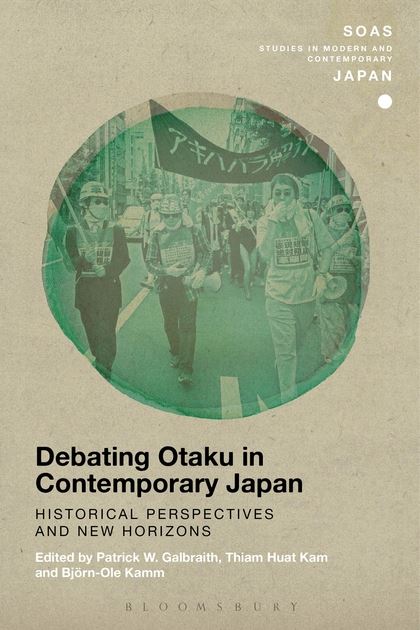
Eiga Geijutsu (Film Arts) magazine is not afraid to call a spade a spade, infamously publishing both a Ten Best and Ten Worst list each year about Japanese movie releases. But in this year’s round-up of the highs and lows of 2017, editor Haruhiko Arai has refused to consider animated works.

The films that have particularly irritated him will be familiar to many readers of NEO magazine. One is Makoto Shinkai’s Your Name, which prompted Arai to ponder at a screening whether the enthusiastic movie-goers enjoying themselves around him had seen any other films recently.

Well, no they hadn’t. The huge box office figures for Your Name imply that many people who went to see it were either coming back for seconds or had not been to a cinema for a while. But how on Earth is that a reason to exclude it from consideration? It is surely an indication that Arai’s movie ratings are ignoring the opinions of the public. I, myself, make a living out of ignoring the opinions of the public, but Arai has not even afforded Your Name the backhanded compliment of calling it crap. He just stuck his head in the sand and pretended it wasn’t there.

Ignoring things, says Arai, is part of the problem with modern anime. He is disgusted by Your Name’s uplifting spin on tragedy, and regards it as a betrayal of history. He feels much the same way about In This Corner of the World, for presenting a childish innocent as a victim of war.

His reasoning is unexpectedly sound – frankly, it’s thought-provoking criticism. Your Name does indeed flaunt bad-taste brinkmanship by offering a reset button on an allegorical Tohoku earthquake – part of Shinkai’s incredible achievement lies in getting away with it. And ITCOW does rehash that old anime staple that regards WW2 as some sort of inevitable natural disaster visited upon the unsuspecting Japanese. But neither comment justifies pretending that the entire animated medium isn’t there anymore! In discounting two of the best anime of 2017 on spurious ideological grounds, Arai risks consigning his own magazine to the doldrums of film criticism. Instead, he argues that anime viewers are somehow cine-illiterate, unaware of trends and tropes in film itself, dumbly consuming pointless pap without any understanding of film as a medium. So I guess that tells us all where Miyazaki can shove his Oscar.

Jonathan Clements is the author of Anime: A History. This article first appeared in NEO #175, 2018.

Gambling Chip

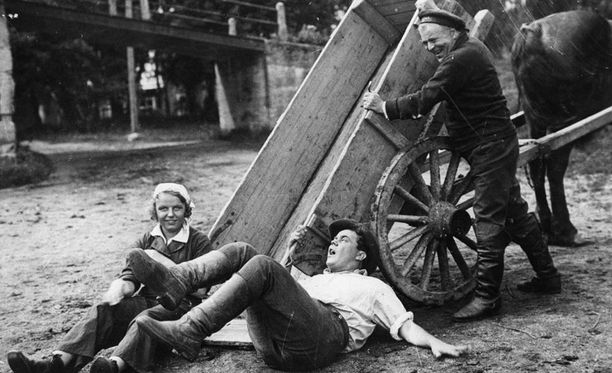
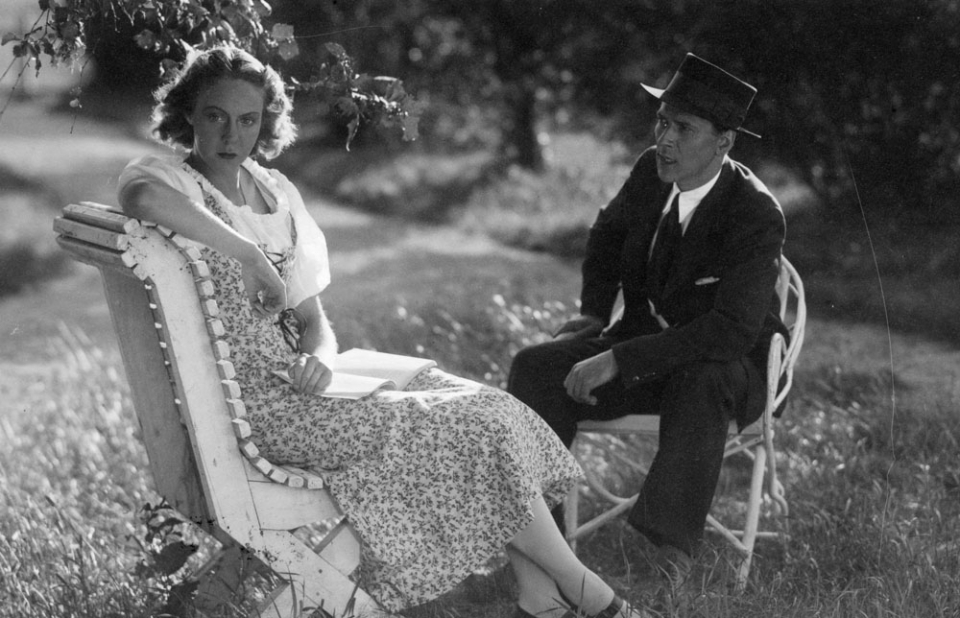
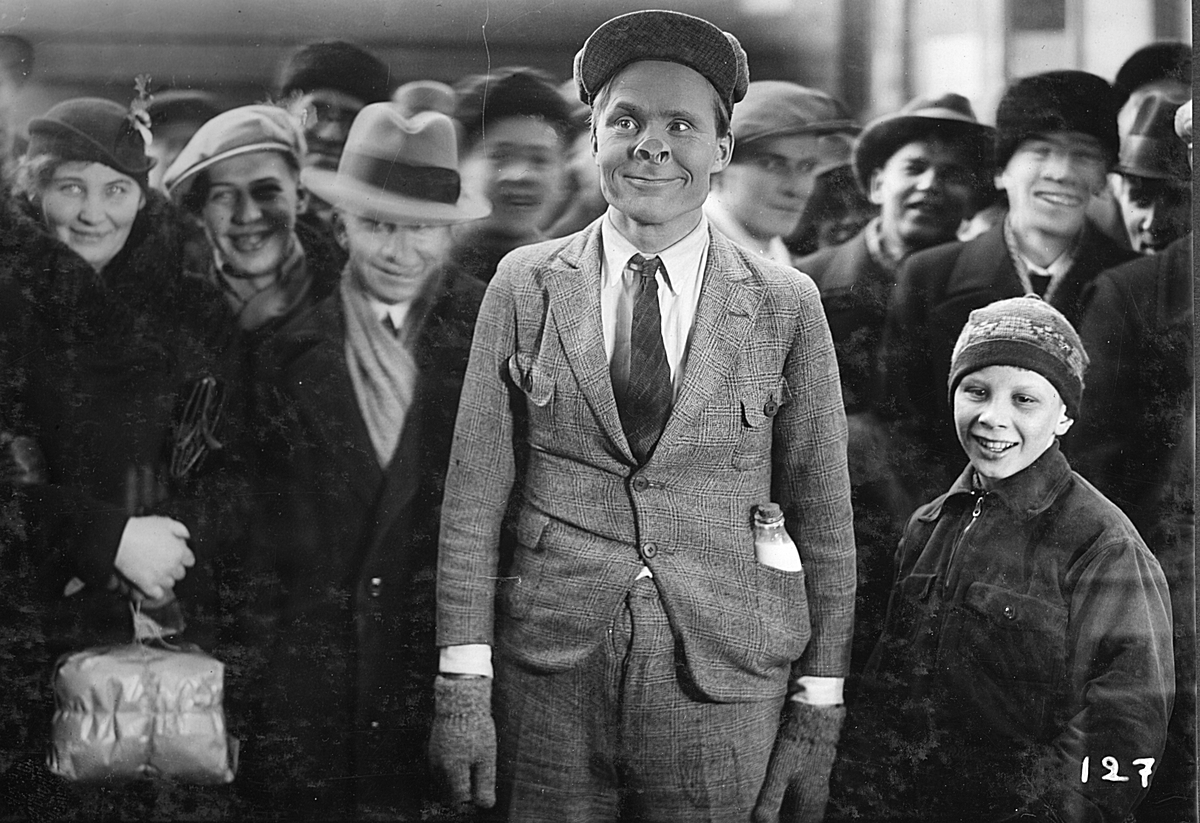
There were moments in Lauri Törhönen’s film Gambling Chip (2012) where I honestly didn’t know what the hell was going on. Luckily, neither did our leading man, private eye Jussi Vares (Antti Reini), much of whose relationship with this instalment’s guest star is glossed over in a massive alcoholic blackout. Down on his luck and running low on cash, Vares is rude to a pretty woman who takes too long at a cash machine. Feeling guilty, and quite possibly motivated by her sports car and evident wealth, he uses his private eye skills to track her down and… nope. Blackout. He wakes up the next morning on her sofa, all records of their conversation erased from his mind and from the film.

That’s okay, Sole (Maria Haapkylä) is a bit weird, and wants to bang him now, and before you can shake yourself awake, they’ve become a couple. Vares starts showing up to the pub in a clean shirt, and his drunken buddies scoff that he’s become little more than a gigolo. But this is a Vares film, so something is bound to go wrong. Sole disappears for three days and turns up dead in the forest, leaving Vares as one of the prime suspects in her murder, and honour-bound to find her killer.

Uhkapelimerkki (2007) was one of the more recent Vares novels, in which our hero is less of a bar-room bruiser, and more of a lothario with a laptop. But our hero remains dwarfed by the big picture, as he so often is, stumbling seemingly by accident on the big financial scandal that lurks behind the case he thinks he is chasing. As ever in Vares stories, the main death either goes unsolved or is closed with a huge fatberg of reasonable doubt; a bunch of secondary murders are sort-of explained, but only in passing, a much tougher deus ex machina super-criminal visits rough justice on the small fry, while the white-collar kingpin behind it all seems to get away scot-free. In this case it’s Natunen (Kaarina Hazard) a sinister woman with her own cat-food canning plant, who’s been running an insider-trading scam using the names of people at an old people’s home.

As for the titular gambling chip, it’s a distracting affectation for a supposedly professional hitman, who spends so much time fiddling with it, you wonder if he has time to set the scopes on his sniper rifle. Finnish reviews for this entry in the franchise were particularly damning, possibly because Maria Haapkylä, star of the Maria Kallio police series and hence something of an antithesis to Vares in Finnish media, is pretty much wasted as Sole, a mentally-troubled heiress who may have initiated a whole chain of strikes and counter-strikes in the Finnish underworld out of a fit of man-hating spite. But the critical reaction may also stem from the lost possibilities that Mika Karttunen’s script seems to side-step, including Vares as a police suspect, the possible involvement of one of his old colleagues in some of the subsidiary crimes, and a bizarre sub-plot about the victim’s brother falling in love with a cougar barmaid. Vares is something of a bystander for much of the film – his sole contribution to the action for almost half of it is simply being the victim’s boyfriend. He does, eventually, put some crucial clues together, but as in several other Vares films, ends up as little more than a witness to two criminal factions as they follow their own protocols of vengeance.

Perhaps the novel was similarly confused. Its original publication followed the entirely unexpected Vares story, the near-future sci-fi elegy Hard Luck Café (2006) which leapt a generation into the future to a Finland wracked by global warming and overrun with refugees. But such excitements were discounted once more, written off like a bad dream as we returned to Vares’ low-level sleuthing in this story — perhaps our hero has suffered more than one catastrophic blackout, and I will have more to say about this as we continue our Vares movie watchathon. There is, it seems, no career path for our hero. He remains trapped in the wainscots between middle-class Turku and his drinking buddies on the wrong side of the tracks. He never quite makes enough money to get an office, or an actual assistant. Success always eludes him; he’s always back where he started, getting hammered in the same pub, where the real-life owner, Tapio Korpela, has gradually insinuated himself into the action in ever larger walk-on roles, playing himself, here lurking uneasily at the edge of several scenes in a T-shirt that advertises Kukko lager, carrying a tray unconvincingly or making a meal out of operating a television.

Jonathan Clements is the author of An Armchair Traveller’s History of Finland.

Eurovision Shouty I-Spy 2018

All aboard, bonsoir et boa noite, beautiful creatures, for the 2018 Eurovision Shouty I-Spy, coming to you this Saturday from Lisbon, where the organisers have had A YEAR to write jokes that are funny, and make travelogue inserts that don’t make their country look like a school trip to the cork factory. Sadly, this year at the semi-finals we’ve already lost Switzerland’s slutty White Stripes take-off, and the attempt by Belarus to introduce the new sport of rose archery, but there is still plenty of mentalism for the Eurovision-lover or Eurovision-hater to get into. Finland’s gone a little bit Third Reich, Italy’s sent Scott Pilgrim and a man with a sore throat, and Portugal are trying too hard not to win again. But it’s been officially declared too gay for the Chinese, so well done, everybody.

Step One: you will probably need to be quite drunk. Step Two: The following sights will be seen during this Saturday’s Eurovision Song Contest. Can you see them first? Remember to shout it out. Party hosts will need to keep score of who gets what first, or otherwise dish out the forfeits to those that aren’t quick enough. As ever, there is more than one key change, and plenty of orbital cleavage, but this year you have to be quick to catch the subtlest of bimbles. Keep your eyes (or ears) open for any of the following. And when you notice it, SHOUT IT OUT!

In no particular order, in Saturday’s final you should look out for:

Plays imaginary musical instrument
The Croydon Facelift Backing Dancers
Dracula's piano coffin
Fake snow
Man wearing a leopard
Half Woman, Half Mountain!
Einstein a go-go! Mad scientist plays the flute.
Mismatched eyes
SHOW A LEG! (single leg poking out of costume)
Jacket thrown into audience
Crowd-surfing guitarist
Lyrics: "I'm taking my Pikachu home."
Staircase on fire
It's the chest slapping dance
Man with a backpack
Country and western body popping
Croydon Facelifters again + Pound-Shop Beyonce
Barefoot singer
Lyrics: "Pam pam pa hoo, Turram pam pa hoo"
Spinning wheel of death
Creepy rentboy threatens to "dance you off"
The wigglebum dance trio
MAN-BUN!
Hands make a heart (on or off-stage)
Lyrics: "bop-whop-a-lu bop on his wood bamboo"
Girl impersonates chicken
Shell Suit!
Samurai shoulderpads
Lyrics: "Scoo-bee-doo-bee bap bap"
Tuck your shirt in!
WINKING
Did she just say "MadaBaka", or...?
Waving the white flag
COSTUME CHANGE
Trust fall (I hope they catch her)
Lyrics: "Na na na na na na ne"
KEY CHANGE! (every time you hear one)
Throwing imaginary objects into the audience
The music stops! Was that planned?
Tormund Giantsbane singing about peace and love
Bimbling*
ORBITAL CLEAVAGE**
Buddha Jazz Hands***
FLAME ON! (every time there's pyrotechnics)

(*swaying one’s head from side to side in a snakey fashion)(**ostentatious cleavage sufficient to see from a satellite in orbit, which, according to Eurovision bra consultant Tom Clancy, requires a minimum of C-cup)

(***the dancers all pile behind the singer in a line and then fling their arms out, creating a multi-limbed oriental deity-look)

BONUS SCORING

Cyprus gives Greece 12 points Greece gives Cyprus 12 points
Finland gives Sweden 12 points
Chicken impersonation from foreign judge.
Eastern European delegate makes ominous comment about friendship
CLANG! Portuguese host is as funny as a road accident.

Apologies to American readers, who will have to just imagine what the world’s biggest, gayest song contest is like. Just imagine, for one day every year, Europe gets to behave the way that Japan does all the time.

Gold Remi

Season three of National Geographic’s Route Awakening, in which I wander some of the ethnic minority communities of modern China, has just snagged the Gold Remi award at the Houston International Film Festival for “TV: Information, Cultural or Historical.” You can see the trailer here. Seasons one and two won the same award in 2016 and 2017.

The Anime Boom

Up on the All the Anime blog, my book review of Daliot-Bul and Otmazgin’s The Anime Boom in the United States: Lessons for Global Creative Industries, which includes the following incendiary quote from Marco Pellitteri:

“Fans are a noisy minority that led many observers in the industry (and in academia!) to think that they are more numerous, representative and important than they actually are…. today, the targeting of narrow audiences is a self-fulfilling prophecy in terms of total economic failure: you make a series for a very tiny specific audience, then you want to sell it [overseas] for a higher price, because you want to make abroad the money that you failed to make in your own country.”

The Path of the Righteous Men

Jussi Vares (Antti Reini) is approached by Olle (Markku Maalismaa), a pastor from small village in the hinterland, who wants him to solve a crime that the police seem to have given up on. Just for a change, it’s about the murder of a sexy young girl, and there is a long list of potential suspects. Could it be Taisto Raapana (Peter Franzén), a fire-and-brimstone preacher whose Christian sect has dragged many of the already devout locals away from Olle’s church? Or Sulander (Järmo Mäkinen), the seedy printer who publishes Raapana’s religious tracts? Or even the local police, who are demonstratively suspicious of Vares as he pokes into their business?

Not for the first time, the Vares series tests the limits of the Finnish acting profession. The constant need for fresh murder bait, it seems, has exhausted the entire crop of this year’s young Finnish starlets, leaving this episode’s love-interest in the more mature hands of Elisabeth (Merja Larivaara), Raapana’s sexually frustrated wife. Meanwhile, the bent doctor Hento, who secretly prescribes her birth control pills, is played by Kari-Pekka Toivonen, who previously played another role in the second Vares film, Frozen Angel. Famous Finnish crooner Kari Tapio, no stranger to provincial barn dances full of murderous banjo-twanging cultists, I am sure, appears as himself in a concert scene.

Legend has it that the four 2011-12 Vares films were shot back-to-back on a 120-day schedule. And someone has certainly made the most of the economies of scale, presumably shooting a bunch of top-and-tail pub scenes with our hero’s drinking buddies that will suffice for all four movies, while another crew gets on with the aerials. Lauri Törhönen could have been off shooting the prison break sequence for Garter Snake, which involves none of the regulars, while Anders Engström was off with the leading man in the countryside, banking this low-key, low-budget diversion almost entirely featuring a guest cast, released straight to video in 2012.

So even though we begin with the usual overhead shot of summertime Turku, the shadow of the helicopter visible in frame as if to advertise the money spent – no drone footage here! – the bulk of Path of the Righteous Men is set in Ostrobothnia, on the Finnish Baltic coast. Considering the Vares serial’s ongoing feud with things Swedish, I am rather surprised they didn’t make more of the region’s Swedishness. Even its name, “East of the [Gulf of] Bothnia” rather than the more logical “West Finland”, parses it in terms of its geographical relationship to Sweden. I drove through the area once researching the John Grafton incident, and the road signs were in Swedish first and Finnish second. Instead, the script by Mika Karttunen and Katariina Souri, and presumably the 1992 Reijo Mäki novel Vares ja kaidan tien kulkijat on which it is based, focuses on another element of the Finnish hinterland, religious fundamentalism.

It’s certainly refreshing to take Vares out of his Turku home to see a little of the countryside, packed off to a dry county where only low-alcohol beer is available, and his landlord gets a telling-off from the police if he lets him have a snifter of brandy. Raapana’s happy-clappy sect all seems mostly harmless, until Vares realises that the preacher is offering places in heaven in exchange for donations of real estate. There’s certainly something fishy going on, and Vares soon finds himself wading hip-deep into the tawdry secrets of a one-horse town. It’s not clear to me, however, to what extent he actually solves all the mysteries – as with the novels by Reijo Mäki, which mix first- and third-person narratives, there are some scenes of vital exposition that take place when Vares is absent. He certainly stumbles across the truth of who committed the murder, but the degree to which he leaves town having solved all the crimes witnessed by the audience is debatable.

Jonathan Clements is the author of The Armchair Traveller’s History of Finland.

Ninja: Unmasking the Myth

Ninja: Unmasking the Myth is a brave book. With a scientific sense of objectivity, Turnbull tears down an edifice that he himself helped to build, shining the harsh glare of academic rigour on his earlier work. In doing so, he uncovers some striking facts about the evolution of the ninja, not the least that the word doesn’t even occur in Japanese-English dictionaries until 1974.”

My review of Stephen Turnbull’s demolition (and reconstruction) of ninja in history, up now on the All the Anime blog.

From Our Sponsors

Everybody’s trying really hard not to call it the end of an era. But after 48 years the Toshiba Corporation is no longer the chief sponsor of the Sazae-san cartoon. Based on Machiko Hasegawa’s mild-mannered comic series, which itself ran from 1946 to 1974, Sazae-san has always been a time-capsule of post-war Japan. Its leading characters, a family with three children and several relatives, led by the titular harassed housewife, were always intended to be timeless. Scriptwriter Masaki Tsuji once explained that the stories were supposed to be as taboo-free as possible, sure to catch the largest possible viewership on primetime. But they were also decreed to be free of bad language, modern slang and electronic devices.

Sazae-san lives in a Japan untroubled by right-wing nationalism or looney religious cults, where nobody has heard of Tinder or Facebook. She has become a living fossil – even her three-child family is an outmoded phenomenon in a Japan where few can afford more than one kid. If you haven’t heard of her, then you can blame her late creator, whose contracts, signed before most of you were born, stipulated no spin-offs, which has been interpreted as meaning a ban on videos and DVDs.

That hasn’t stopped Sazae-san being the top-rated cartoon on Japanese television, and the longest-running cartoon series in the world. And all through her broadcasting history, Toshiba has paid the big bucks to top and tail every episode with whatever is up to the minute in electronics – air conditioners, washing machines, faxes and laptops. For the first thirty years, Toshiba was the sole sponsor, and even sneaked some of its devices into the show itself in early product placements.

But now that all has to change. Stumbling in the American atomic energy market and reeling from a series of accounting scandals, Toshiba can’t afford to keep fronting the cash. Instead, it gave the producers a season’s head start to find new sponsors, and officially bows out this March.

Is this the end for Sazae-san? Fortunately not – although nobody has the clout to be the sole sponsor of a primetime anime, someone did rustle up a committee of new sponsors to carry the costs. Clearly seeing the viewership as a bunch of young home-makers, the baby-wares company Nishimatsu has stepped up, alongside Daiwa House, a residential builder. Another new funder is Amazon Japan, suggesting that perhaps Sazae-san might soon be under pressure to allow a particular kind of new spin-off after all. Could streaming episodes be in its future…?

Jonathan Clements is the author of Anime: A History. This article first appeared in NEO #174, 2018.

Admiral Togo: Nelson of the East

At long last, available on the Kindle, my biography of Admiral Togo, from Amazon in the UK and Amazon in the US.

“ … a fine attempt to revive the memory and reputation of a most professional and successful naval officer who lived through a period of astonishingly rapid and radical change for his country and service.   Recommended for the general reader, but especially for those who may find themselves working with the Japanese.” – Naval Review

“Clements… recounts the life of a Japanese admiral famous for his victory at the Battle of Tsushima during the Russo-Japanese War. Through his extensive reading of multiple-language sources, Clements points out deficiencies in some of the… sources he quotes, and presents so far little-known episodes like the important roles French advisers played in the Battle of Miyako Bay in 1869 during Japan’s civil war in the early Meiji period.” – CHOICE

“This book is a refreshing account of a defining figure of modern Japan. It is well written and deals with themes such as leadership, individual commitment, social transformation and cross-cultural understanding of great contemporary relevance.” – Mariner’s Mirror

Garter Snake

Sukkanauhakäärme (1989) was one of the earliest Vares novels, set at a time when our hero was still fixated on the life he almost had as a big-shot lawyer. Some faint echoes of this remain in Lauri Törhönen’s 2011 film adaptation, in which Jussi Vares takes on a job tracking attorney Pauli Kontio’s unfaithful wife Annika (Rebecca Viitala), at least partly out of envy for the client seemingly having it all.

Someone who is most definitely having it all is Jesus Lobo (Ilkka Villi), a smarmy piano player who seems to have tupped half the women in Turku. Vares starts tailing him with the expectation that he has found Mrs Kontio’s lover, only to discover that Lobo has a girl in every piano bar. He also tinkles the ivories on the ferry to Stockholm, which makes him an ideal mule for drugs and “special” Swedish porn, the nature of which is never revealed, but presumably involves lukewarm saunas and insufferable smugness. As ever in Vares, Sweden is the source of all criminality and torment, a sinful utopia at the other end of the ferry lines.

Meanwhile, Torsten Rapp (Petri Manninen) busts out of jail. If that sounds like a non sequitur, it is for most of the movie, which begins with the prolonged preparations for a jailbreak. But as soon as Rapp has fought his way out of prison with a guard’s uniform dyed blue with toilet bleach, and an improvised shotgun made out of a crutch, he disappears for half the running time, only popping up again at the end for the now-traditional sequence in which one set of criminals is trumped by an even more violent thug, allowing Vares to save himself and the day by dropping between the cracks and cleaning up the mess they leave behind.

Even by the standards of the Vares films, this is a low-rent offering much more on the straight-to-video end. You can even see this in the box-art, which features a sexy, suspendered thigh flashing a snake tattoo on the DVD cover, but hides this behind a more demure basque version on the cardboard sleeve. This is pretty much all there is to say about the titular “Garter Snake” – an epithet directed at a femme fatale in a throwaway line, but otherwise nothing to do with the film at all. Our hero, meanwhile, finally gets behind the wheel of a car, tooling around town in an old Volvo before someone blows it up.

Vares, as usual, spends most of his time blundering between Turku’s watering holes – a Vares drinking game could only avoid alcohol poisoning if viewers took a sip whenever a glass wasn’t in his hand. We can only imagine the product-placement bingo that precedes each shoot, as the cast roll up in some guy’s pub and offer to make sure the sign gets into shot, as long as everyone can have free booze. In one scene, Vares and his friends each have two drinks in front of them, as if they are desperately trying to cram one more in before closing time. The fact that this was the earliest chronological Vares book to be adapted for the screen also creates a continuity confusion, as Vares “finally” sleeps with his perky part-time stripper neighbour Anna (Maria Järvenhelmi), even though she has been acting like his occasional squeeze in the four previous films.

Jonathan Clements is the author of The Armchair Traveller’s History of Finland.