Age of Empires

When I met Yang Zhifa in 2013, he was living well off the proceeds of being ‘the man who found the Terracotta Army.’ Tall for a Chinese, he was sprightly for a grandfather nearing 80, although up close, his dark irises were limned with blue, a sign of arcus senilis cholesterol deposits. What was left of his white hair was shorn off in a neat burr, he affected a blue Mao suit and an ostentatiously long cheroot holder. A week did not go by without a journalist or film crew wanting to talk to him about his place in history, and Yang was ever ready to oblige for a fee – my time with him cost about £100.

There was very little clue from Yang’s demeanour that he could pull down a week’s wages just by getting out of bed in the morning. With up to two film crews a day hanging on his every word, and tourists eager to get his signature or calligraphy, Yang was a jealous guardian of his status. He had been in something of a feud with several other Yangs, who wanted to claim equivalent status as co-discoverers – I still suspect that he and his cousins once took turns to sit in the museum shop and sign autographs as ‘Mr Yang, who found the Terracotta Army.’ He cherished a photograph of himself with a grinning Bill Clinton, and still scowled at the memory of articles that had claimed the American President had met with an ‘illiterate peasant’. He clutched his adze proudly, showing me the seal of government authenticity that pronounced it to be the very tool that had struck at that fateful terracotta fragment in 1974.

Yang’s version of events featured a degree of self-figuration – first-person I’s and me’s about what the record usually describes as a group effort, but nonetheless came from the horse’s mouth, in a Shaanxi dialect so thick that I often had to ask him to repeat himself.

‘It was hot and it was dry. It was March and there had been no rain all winter, and we needed to sink a new well. There was some low-lying ground with persimmon trees on the plain, and I figured that the water there would be sweeter, so we started digging. When we got down a couple of metres, we hit something. It looked like the top of a pot, the lip around the edge, so we stopped digging.

‘I said: “Look, if this is a pot, we might have found an old kiln from the Han dynasty or something. Those pots are still good to use. Let’s keep digging.” So, we edged around it and saw that it wasn’t a pot. It wasn’t a pot because it was decorated really weird, like a suit of armour, and then we found an arm.

‘So this is a problem, because the elders hated it when we uncovered old temples or graves. That’s really bad for the feng shui. They made us go back that evening with joss-sticks. We lit incense and chanted prayers in case we had disturbed earth gods or something. But I said to the elders: “You shouldn’t worry that this is something to do with the First Emperor. I mean, it’s two kilometres away from his grave, this can’t possibly be anything to do with that. There’s no way it could be that big.”

‘So we went to the cultural office at the museum, and they said oh yes, that looks very Qin dynasty. Bring us the terracotta bits and we’ll give you some cash. They offered me 10 kuai [£1] for every wheelbarrow-load of pottery I could bring them. So we edged around the well and hauled up three cart-loads of the stuff. I took it to the museum and got 30 kuai, but then I had to share it with the other members of the crew and the village. At the end of it all, I got 1.3 mao (13p).’

The Yangs’ well-sinking exercise had transformed into an archaeological dig and gained him another rival. At another museum on the edge of town, the local Party official also happily signs himself as the ‘man who discovered the Terracotta Army’, on the understanding that Yang didn’t know what he was looking at, and that in an intricate semantic sense, the Terracotta Army was only ‘discovered’ by the person who identified the pottery as a Qin artefact. At the time, however, nobody seriously considered that the pottery uncovered by the Yangs was directly related to the First Emperor’s distant mausoleum. For centuries it had been assumed that the First Emperor’s mausoleum centred on Mount Li itself, and yet the finds of the well diggers were far from it. The well now forgotten, the soil from the initial dig was sifted, unearthing more terracotta pieces, and the fragments of what might once have been crossbow trigger mechanisms.

By that June, the news was out. Something had been found near the site of the First Emperor’s mausoleum, and if a find of the magnitude of the Yangs’ was present so far from it, the size of the necropolis itself may have been grossly underestimated.

‘Then they said we’d found something significant, something of national importance, so it all kind of got taken away from us,’ Yang tells me. His role in the site was forgotten for twenty years, while archaeologists sifted the earth. He confessed that he had done nothing but swing a pickaxe for his life up to that point, and his ability to monetise being the ‘discoverer’ of the Terracotta Army turned problematic. He was once flown to Japan for an academic conference, but was able to little more than trot out his well-rehearsed account of that fateful day. Since then, he has observed the slow growth of the museum as a tourist site, and done his best to capitalise on the influx of visitors.

‘It’s brought a lot of wealth to all of us in the village,’ he says carefully, ‘and that cheers me up. Yes, I like being famous. It’s better than not being famous. People come from all over and they want to shake my hand and buy my photograph. It’s better than holding a pickaxe.’

From The First Emperor of China, by Jonathan Clements available now in the US and the UK.

Floating Worlds

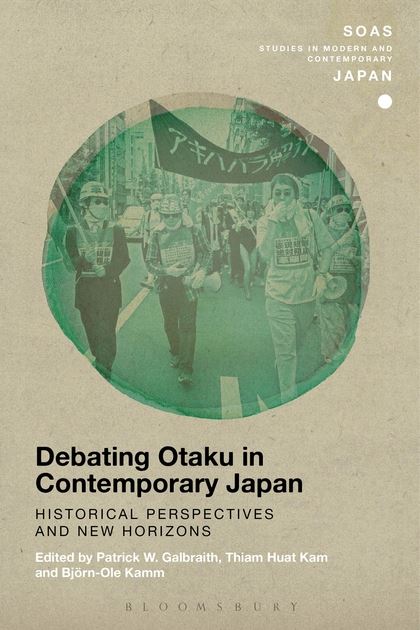
Up now on the All the Anime blog, my review of Maria Roberta Novielli’s Floating Worlds: A Short History of Japanese Animation, which sadly misses the opportunity it sets itself to be a “History of Short Japanese Animation”. There’s a moment when you think she’s really going for it, and she’s really going to try to tell the story of Japanese animation through the arthouse and what wins awards at festivals, but such a solid methodology doesn’t quite materialise. Instead, it turns into a largely unreferenced narrative of Japanese animation history with some odd inclusions and some even odder omissions.

Monster Hunt

Up on the All the Anime blog I chronicle the weird background of Raman Hui’s Monster Hunt, which briefly became the biggest-ever film at the Chinese box office. “Critics are at a loss to explain why this particular film should have been the one to recapture the flag of Chinese distribution. A cynic might point out that by the time it was released, it was literally too big to fail, having notched up an additional US$70 million in extra costs after its original leading man, Kai Ko, was arrested in Beijing for smoking marijuana. Determined not to risk a China-wide release with a court case hanging over their hero, producers authorised the parachuting of Jing Boran into the lead role, requiring all his scenes to be reshot, along with a quarter of all the effects sequences. Effectively, the film went to market having cost double its original budget – you bet the owners were keen to keep it running longer than its rivals.”

The Music of Yoko Kanno

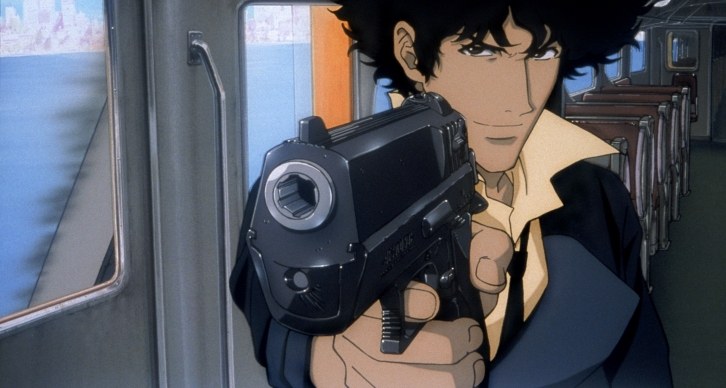
Up on the All the Anime blog, my review of Rose Bridges’ new book about the Cowboy Bebop soundtrack of Yoko Kanno. “Kanno’s work has shown a constant ability to create a unifying theme to the music she supplies to particular shows, even if they include polyphonic chants in Zentraedi, bagpipes, bongos and a song whose lyrics entirely comprise the recitation of pi to two dozen decimal places.”

The Godfather of Tokyo

“So the Madhouse studio was in debt,” says Masao Murayama, “and there was this big buy-out. I was happy to sell it on to someone else, and then I thought: now what am I going to do? I put people together. We make things that we love. Am I going to stop?”

Which is why, at the age when most Japanese workers are long-retired, Maruyama found himself setting up Mappa, the Maruyama Animation Produce Project Association, which soon established its credentials with the critical smash of Kids on the Slope. But even then, Maruyama bowed out in 2016, as the studio unleashed In This Corner of the World and Yuri on Ice.

Did he retire? Hell, no. “People like me and Hayao Miyazaki,” he said, “we’re all born in 1941. We were there for the beginnings of anime as we know it. We don’t know when to quit. We don’t know what we would do if we did quit!” And so he founded his newest start-up, the studio M2, at the age of 75.

“This is probably my last,” he says, with a twinkle in his eye. “Or is it?”

He is wearing an Astro Boy sweatshirt that recalls his first-ever job, but is remembering a figure from much later in his career.

“I said to Satoshi Kon: I like you. I like your work. There’s greatness in you, but the mainstream just can’t see it. We just don’t get the box office on your films. We did horror with Perfect Blue, we did film history with Millennium Actress. So maybe let’s do something entertaining. And he says: ‘I want to do a thing about three tramps who find an abandoned baby.’”

The result was Tokyo Godfathers, anime’s good-natured, sardonic Christmas movie, in which a foundling child inadvertently propels the cast into a series of increasingly unlikely coincidences that fix their issues, solve their lives, and reunite them with their estranged families. The message, arguably, was universal, but the medium was incredibly, well, Christmassy, unleashed on a Japanese population with barely 1% believers.

“Yeah,” sighs Maruyama. “Nobody came to see that one, either.” He looks out over the packed cinema at the Edinburgh Filmhouse, and raises a quizzical eyebrow. “What did you think?” The crowd bursts into raucous applause for his 14-year-old movie. This frail old man, so shaky that my heart’s in my mouth every time I have to watch him climb some steps, beams with pure joy.

Jonathan Clements is the author of A Brief History of Japan. This article first appeared in NEO 171, 2017.

Promiscuous Media

Up on the All the Anime blog, I review Hikari Hori’s new book Promiscuous Media: Film and Visual Culture in Imperial Japan 1926-1945, which has an entire chapter on the development of animated propaganda.

“Animation forms a crucial component of Hori’s book – a fair reflection not of mere scholarly bias, but of a contemporary sense of its transnational value. No less a figure than the film theorist Taihei Imamura argues that animation and newsreels should form the prime media unleashed on Japan’s South Sea colonies, to soften them up for acculturation. Animation hence gets an entire chapter to itself regarding the attempts to form a uniquely Japanese style. In this, Hori cites both the wonders of Disney and the glove thrown by the Wan Brothers with their Princess Iron Fan in China, which already established a bunch of specifically ‘Chinese’ tropes. She notes that when Princess Iron Fan was screened in Japanese cinemas, it was shown on a double bill with the paratrooper documentary Divine Sky Warriors, perhaps explaining why animation and paratroops might occur to the Navy as a reasonable subject for Japan’s first feature-length cartoons.”

Chinese Animation… Again

Over at the All the Anime blog, I review Wu Weihua’s new book on Chinese animation.

“Wu dedicates an entire chapter to the cultural impact of imported animation, beginning with the relatively obscure anime feature Taro the Dragon Boy in 1979, and followed swiftly by Astro Boy on television in 1982 (I presume that this was the 1980 colour remake, not Tezuka’s 1963 original), and a flood of both Japanese and American cartoons. Astro Boy, in particular, rode the spirit of the times, encapsulating the pro-science message of the Deng Xiaoping era, when Chinese science fiction experienced a brief boom in futurist speculation. Again, to split hairs from an industrial perspective, I would point out that from 1979 onwards, many of the “foreign” cartoons coming into China were also partly made there, although as before, this does not necessarily detract from the critical arguments that Wu is repeating.

“Foreign rivals were in it to win it. Wu recounts the arrival of Hasbro in the early 1980s, which baffled the Chinese by handing the complete run of its Transformers cartoon series to broadcasters in Beijing and Shanghai. At first, it seemed insane, simply dumping a cartoon for free… until the toy stores started to fill up with robots. The pay-off from that era is highly visible today, not only in the blockbuster Chinese success of the Transformers movie franchise, but in Decepticon decals on half the boy-racer cars I see in Chinese cities.”

Tellus

So a Finnish boy and a Finnish girl meet in a noisy night club and leave together. As they get outside, he says: “Your place or mine?” And she says: “Why are you talking so much?”

I had this typical Finnish joke in mind a lot while watching Tellus (2014), a TV series from Jukka-Pekka Siili about a bunch of Helsinki eco-terrorists and the security squad dedicated to taking them down. Starting out as pamphleteers, bloggers and monkey-wrenchers, the Tellus protestors become increasingly more pro-active, until a fateful day when arson on an industrial estate leads to the death of a security guard. This takes them out of the realm of misdemeanours into serious felony, and puts seasoned detective Taneli Lokka (Pirkka-Pekka Petelius) on their trail.

The Tellus group is a stereotypical coven of urban guerrillas, with some more militant than others, but each self-righteously assured of their nobility of purpose. Notably, they are always shown drinking a variety of beers, to ensure that no single brand can be associated with terrorism. Someone had a meeting about that, I bet. True tension mounts when their nominal leader, Eeva (Minkka Kuustonen) is targeted by an undercover police informant, Alex (Lauri Tilkanen). He’s under orders to get closer to the organisation’s heart, but this inevitably brings him into moral conflict, not only over his own feelings for Eeva, but his attitude towards the group’s crimes.

The romance between the leads is oddly paced and posed, as if two emotionless puppets are going through the motions of dating… or perhaps as if two players believe each is duping the other. She resists his advances coldly and dispassionately, only to suddenly agree to a date with equal indifference, so the pair of them can bike around Helsinki like a couple of smug hipsters. Even then, Eeva presents every hallmark of being a self-involved, self-regarding dullard, less of a love interest than a love disinterest. Alex, meanwhile, is hardly a catch himself, so cocky that he practically brow-beats her into a snowbound picnic, despite very obvious signs that she barely notices him. And then suddenly they are all smiles and touchy-feely. Apparently, a relationship has broken out, like hives. One wonders to what extent this is a deliberate evocation of her single-minded vocation and his clandestine mission, and to what extent it’s just because they’re a couple of joyless Finns. Maybe there is some witty, subtle nuance of Finnish social interaction that I am missing. Or maybe the way to pick up Finnish girls really is to bombard them with phone calls until they relent.

But there is a lot of double-bluffing going on in the script. A scene which first appears to be a hackneyed pixie-dreamgirl moment, of Eeva lying on her back staring at the sky, is revealed to be a scouting mission for another attack – she is not laying low on a hilltop as a poseur, but because she doesn’t want to be seen. The story comes alive, explosively and unexpectedly, in a throwaway kitchen scene wherein the stressed investigator Taneli suddenly turns on his listless teenage son for wasting food. It’s a dinner-table sequence that many writers would use as expository filler, but actor Petelius lets loose in an incandescent rant, tying up family tensions, workplace stress, and a startling revelation – that deep-down he is sympathetic with the eco-terrorists’ beliefs.

This pivotal moment cleverly repositions all arguments about Them and Us. We really are all in this together. Taneli and Alex and Eeva and her hardcore friends are all in total agreement that Something Must Be Done. They simply disagree on the methods, in a drama that focuses itself very much through an ecological lens, both in terms of the troubles that the Earth is facing, and a thought experiment as to the attitude and appearance of Green extremism.

Jonathan Clements is the author of An Armchair Traveller’s History of Finland.

Trainspotting

Ahead of the European premiere of Eureka 7: Hi-Evolution 1, director Tomoki Kyoda pokes at his posh-nosh gnocchi with a fork. The Michelin-recommended hotel is a far cry from the Scotland he saw in certain movies, one of which supplied the name of his lead character.

“Originally Renton was a place-holder name I just lifted it from a film I liked. I figured I would go back and change it sometime. But then the production got so integrated into rave music, and people kept calling him Renton. In fact, the working title for a long time was Renton 7. Eureka just kind of stuck.

He confesses to me that he is worried he should admit such things to a Scottish audience. “Won’t they be insulted that I have stolen something from them?” he frets. No, I say, they will love it. This is, after all the same Scotland Loves Anime festival that was once celebrated in a notorious cartoon that pastiched the “Choose Life” speech from Trainspotting, delivered by a figure in a kilt backed up by a Braveheart-era Mel Gibson riding a giant mutant haggis.

Ten years on from Eureka 7’s original airing in Japan, Kyoda is overseeing a film trilogy that re-cuts and augments the original, taking it off in a very different direction, much like the Evangelion movies. Some things, however, remain the same. “In the original, I wanted to give 2D animators the chance to do fighting robots. Everyone only ever wanted 3D work, and I felt that the industry was losing a particular skillset.” A decade later, he is more concerned about the disappearance of a different echelon of talent.

“The thing that amazed me about the Tohoku Earthquake was how little it affected the business. The studios managed to keep running. We outsource so much work these days that Japan can suffer all sorts of issues and just keep rolling. But we rely so heavily on the overseas in-betweeners that we couldn’t function without them. If you want to know what shuts down the Japanese animation industry these days, it’s a national holiday in China.

“So, anyway, the first thing I did when I got to Scotland is I dragged everybody down to Edinburgh. I got them to take my pictures as I ran along Princes Street, and down those steps (they’re not where you think they are, you know), and banged into a car. I went and found that bridge from the film. I was like a Trainspotting tourist.”

“Did you try and score any heroin?” I ask.

“No,” he says.

This article first appeared in NEO 170, 2017. Eureka 7: Hi-Evolution 1 is released in the UK by Anime Limited on 27th August 2018.