Back in the Japan Times

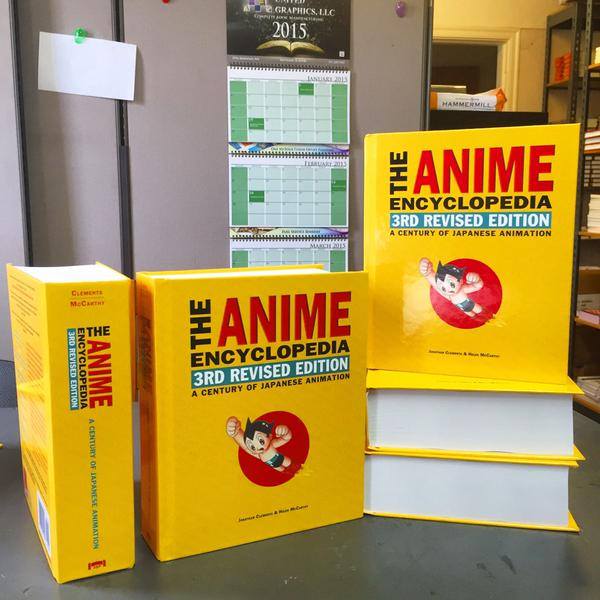
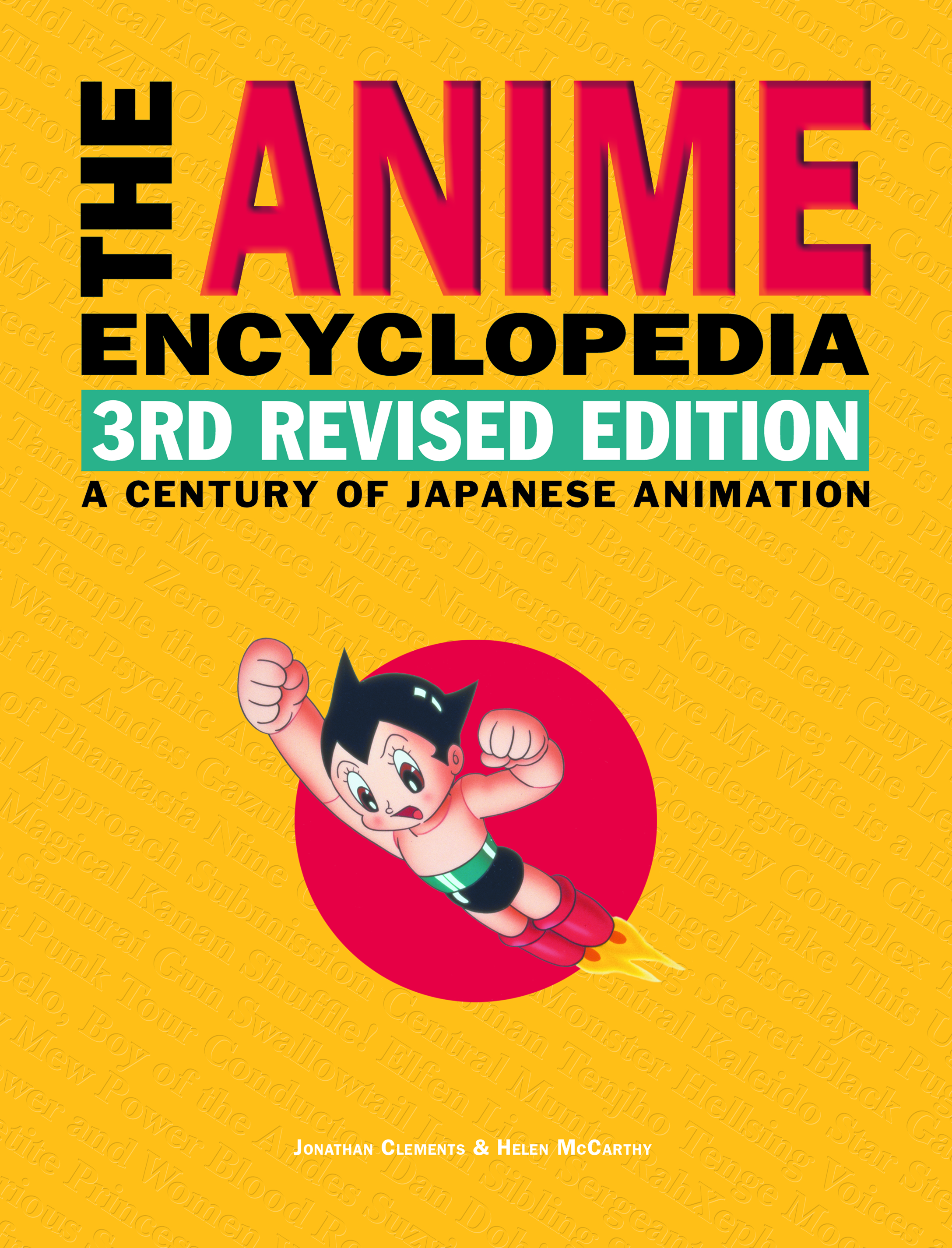
AnimeEncyclopedia3 copyAnd I’m back in the Japan Times again, this time in a review-interview by Roland Kelts, in which he compares the Anime Encyclopedia to the ravings of an Irish drunk.

“The book is almost Joycean — you can dip in and out of its pages and entries at any point and derive delight. My favorite entries make me want to watch titles I haven’t yet seen and revisit those I have, and the authors’ disquisitions on related topics such as fandom and the future of anime consumption make further exploration irresistible.”

And if you’re wondering how I can publish a 1200-page book only a month after Modern Japan: All That Matters, it’s because the editorial process of the Anime Encyclopedia is so long and complex that it took more than year from the initial delivery to lay-out, check and augment.

Speculate to Accumulate

battle_004It’s been less than a year since this column (NEO #123) called attention to the intricacies of J-LOP, a funding scheme designed to generate foreign revenue for Japan by helping the translation and marketing industries. Ever since the Aso administration, Japan has been particularly wise to the potential of intellectual property, and the excellent opportunities it offers a recession-hit economy to sell something without actually losing anything, all the better to sell it all again. Renting access to viewers and readers is the ultimate post-modern money-maker, and the Japanese government is determined to encourage the very sort of thing that you, dear reader, love.

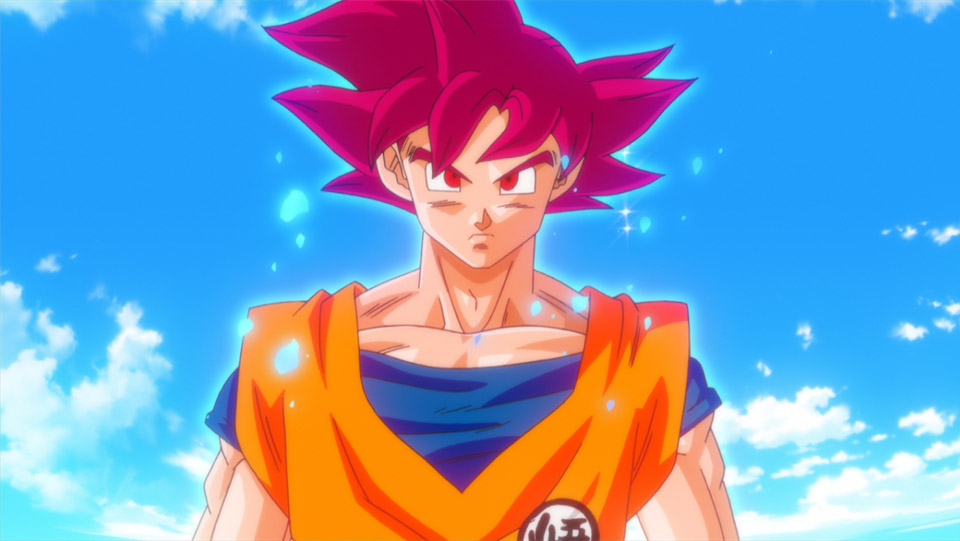
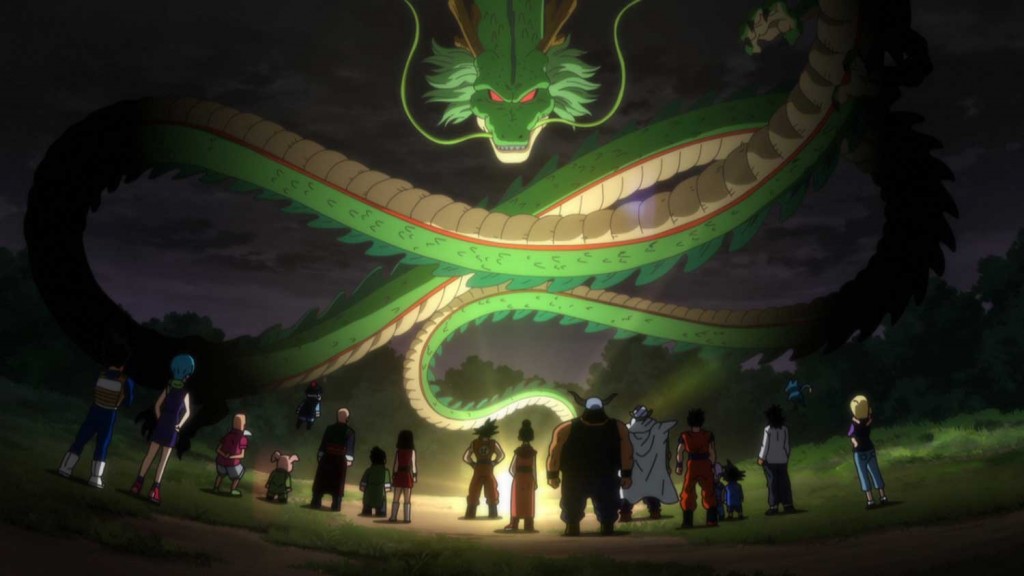
Or is it? Already with J-LOP there was the faint whiff of jobs for the boys, with the money being handed in a “trickle-down” format, given to the bigwigs and copyright holders, and then passed on down to their minions. Now comes the news that Dragon Ball Z: Battle of Gods went into production with a new “Unijapan” development grant of fifty million yen. That’s almost £287,000.

Now let’s be honest, Akira Toriyama is hardly standing outside in the street with an eye-patch and a tin cup. Nor is Toei Animation on the skids. Battle of Gods got its money because 20th Century Fox was able to match it pound for pound, but it also came with a guarantee of success – first DBZ film for 17 years, sure to pack Japanese cinemas. Doubtless the movie earned back its money at the box office, and generated plenty of cash and tax and talk. But in backing such a self-fulfilling prophecy, wasn’t the funding body going for the easiest and least risky option? Maybe, if you were a Japanese tax payer, you would welcome the idea that arts funds were going on something that was sure to make a profit, but is that really what arts funding is for?

However, Unijapan isn’t about arts funding, it’s a hard-nosed scheme to generate capital investment. It’ll only give you a maximum of 20% of a film’s budget, which means four times as much money has to come from real investors. Perhaps more interestingly for us, its qualifications for animated productions do not require production in Japan – you can make the whole thing in China if you like, as long as the top staff are Japanese. Hmm… wonder how that’s going to work out…?

This article first appeared in NEO 132, 2014. Jonathan Clements is the author of Anime: A History, in shops now (UK/US).

Choice Award

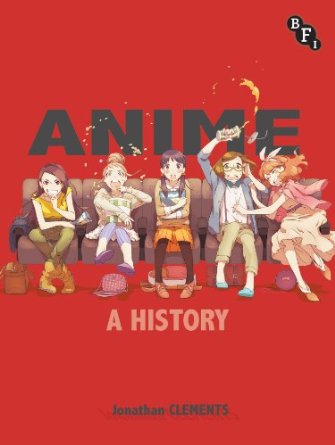
41bkTuP9TdL._SY445_Apparently my book Anime: A History (US/UK) has just been selected as one of 23 Palgrave titles receiving this year’s Choice Award, a recommendation dished out by Choice: Current Reviews for Academic Libraries, a publication of the American Library Association. “This list of publications reflects the best in scholarly titles and is designed to attract the attention of the academic library community,” quoth Palgrave.

Undercover Manga

shimajiro appI’ve been wondering for a while when the Doraemon bomb was going to go off. Every time I’ve been to China in the last three years, amid ever-escalating sabre-rattling over the Senkaku Islands, I have found the locals avidly denying any interest in Japanese culture. I have found media students unprepared to work on papers about anime, for fear that the word “Japan” will be on their resumé ever more. And I have watched, every day, as two Japanese invaders march in right under Chinese noses.

One is Shimajiro, an infant tiger cub who appears in a hybrid kids’ show that is part anime, part live-action play school. I’ve watched Shimajiro sing songs about London Bridge and demonstrate how to go to the toilet, and nobody has noticed that he’s really Japanese, because the broadcasters have stripped out the original live-action framing footage and replaced it with Chinese people. Also, they don’t make the mistake of calling him Shimajiro, either. In China, he is known as Qiao Hu Dao, the “brave and clever tiger.”

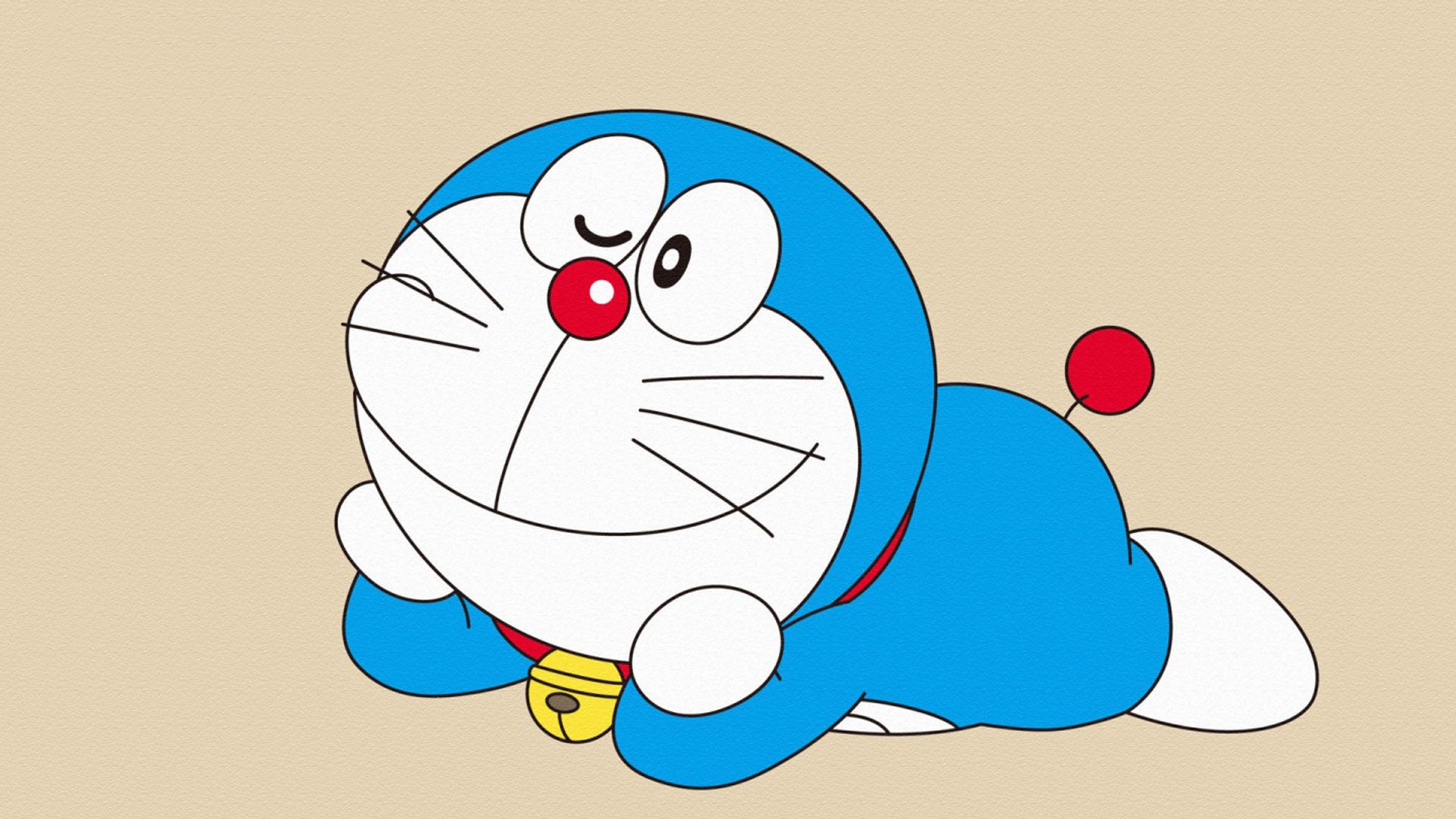
doraemonThe other is Doraemon, that time-travelling blue robot cat who recently enjoyed the surprising honour of a 12,000-page manga translation funded by Japanese government boondoggle money. Doraemon remains a popular movie and TV figure with anime audiences, but was also the subject of so much manga piracy in decades past that he is known by several different names in the Chinese world. My favourite is Ding Dang the Robot Cat (ding-dang, you see, being Mandarin for ding-dong, if you ever need it). He’s even the subject of an exhibition in Hong Kong, which trilled, unwisely, about his true origins.

The Japanese authorities, excited at the amount of love for Ding Dang all over the mainland, have made Doraemon a cultural ambassador, thereby pushing their soft power agenda by showing the Chinese that a perennial favourite was actually from the other side of the water. This has entertainingly backfired, with a schmuck-bait editorial in the Chengdu Daily pointing out the blindingly obvious – that Doraemon was an effort to make Japan look cute and less threatening – and several lesser newspapers getting increasingly irate about the idea, with the Global Times frothing “we must never let a little robotic cat take control of our minds.” Top tip.

This article first appeared in NEO 131, 2014. Jonathan Clements is the author of Anime: A History, in shops now (UK/US).

The Anime Erotic

crisis-header11.jpgAt the request of the Czech convention Animefest earlier this year, I reprised my infamous speech on the Anime Erotic — a transcript of which can be found in my book Schoolgirl Milky Crisis (US/UK). The speech has now been uploaded onto Youtube with English subtitles and, soon, I am told, subtitles in Czech. You can watch it here.

And of course, my Wrong About Anime speech from the Animefest two years earlier, is still available here.

Podcast: Scotch Tape

Necromancy, ten years of NEO, and the carrot of continuations on our 27th podcast sla-2014.jpgJeremy Graves is joined by the fragrant Gemma Cox of NEO magazine, the pungent Andrew Partridge from Anime Ltd, and the newly doctored Jonathan Clements to discuss Scotland Loves Anime, the Boom Boom Satellite Distraction Device, and rogue robot tanks. You can download the podcast here.

0:00 intros and hellos

04:30 Dealing with a film festival in the shadow of Ghibli.

09:30 Bad hair days and uncanny valleys on Appleseed: Alpha.

11:30 The miseries of live television.

14:00 Appleseed: Alpha, the jury’s view.

16:30 The true nature of the Golden Partridge Award, soon to be renamed the SLA Glass… Thing.

20:00 Déjà vu and original dialogue in English.

22:00 Bayonetta and evocations of the beer-and-curry era.

25:00 Trigger warnings in The Wings of Honneamise. Berserk 3 and the “carrot of continuations.”

32:00 A young lady’s primer to fan service and fighting the patriarchy. Questions on the nature of the Noitamina target audience, and plugs for Psycho-Pass and Rolling Girls. Why do less women get promoted to anime director?

neo_double.jpg41:00 Gender demographics at NEO and Scotland Loves Anime. The flexibility of the female audience, and the desirability of girls in bikinis saving the world from aliens.

45:00 Just how involved is a “supervising” director?

46:30 The audience turn-out for Ghost in the Shell. The suggestion that fandom is a non-renewable resource. The longevity of Cowboy Bebop, outliving the television technology that originally screened it.

52:00 Celebrating ten years of NEO magazine with the 130th issue. The haptic luxury of print magazines, versus beaming digital data into your brain. The international reach and originality of the long-running Manga Snapshot feature. Deciding what goes on the cover, and the perennial problems of timing content to available releases and images.

68:00 Why commissioning your own artwork isn’t always the answer.

73:00 Paper quality, fonts and leading – a bunch of things that nobody ever thinks about.

76:00 Let’s go on a journey, a journey into NEO time… where did the name come from?

79:00 One more round on the whirligig of the “Manga” Entertainment name controversy.

space-dandy-honey-boobies-breastaraunt-fried-dragon-ramen.jpg81:00 The scandalous secret behind NEO’s recipe column. The tax-deductible nature of a “research” trip to Hooters.

85:30 The difficulties of knowing more than one’s readers when the readers have got all weekend to torrent, stream and binge the latest shows.

87:30 The desirability of “balanced” reviewing. What can we learn from Australian Vogue…? Would you buy a DVD compared to “colonic irrigation with cheap caustic soda” or with a review that promised “another shouty advert for stuff you don’t want”?

94:00 How do you define a star rating? We are 87.5% certain we know the answer to this question. The spoilerific nature of Sight & Sound and “the conversation.”

102:00 The need for necromancy in reminding fans of forgotten simulcasts. “Not all people live in the same Now.”

105:00 The perils of online search bubbles. Sting’s informational message for the future and the nature of the “closed circle of consumption.”

110:00 Dragon Ball Z: Battle of Gods.

117:00 Giovanni’s Island – the festival winner.

127:00 Jeremy returns from his dead battery to plug MCM Expo and events pertaining thereto.

And we’re out. The Podcast is available to download now HERE, or find it and an archive of previous shows at our iTunes page. For a detailed contents listing of previous podcasts, check out our Podcasts page.

Two Downloads

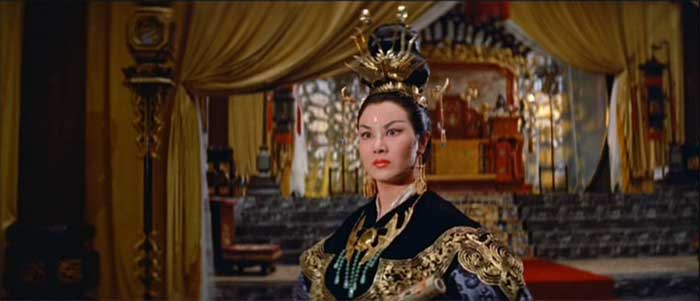
02After many years of waiting and wrangles, my book on the controversial medieval Chinese Empress Wu is finally re-released on Kindle and paperback from Albert Bridge Books (US/UK). As the blurb recounts:

Empress Wu Zetian (624-705 AD) was the only woman to be the sovereign ruler of imperial China. A teenage concubine of the Tang Emperor Taizong, she seduced his son while the emperor lay dying. Recalled from a nunnery as part of an intricate court power-game, she caused the deaths of two lady rivals, before securing her enthronement as the Emperor Gaozong’s consort. She ruled in the name of her husband and two eldest sons, presiding over the pinnacle of the Silk Road, before proclaiming herself the founder of a new dynasty. Worshipped as the Sage Mother of Mankind and reviled as the Treacherous Fox, she was deposed aged 79, after angry courtiers murdered her two young lovers.

The subject of countless books, plays and films, Empress Wu remains a feminist icon and a bugbear of Chinese conservatism. Jonathan Clements weighs the evidence of her life and legacy: so charismatic that she could rise from nothing to the height of medieval power, so hated that her own children left her tombstone blank.

Meanwhile, it’s a condition of my doctorate that my thesis be freely available to other researchers, but to spare you the bother of going to the Library of Wales and photocopying it, here’s a PDF. The title is A History of the Japanese Animation Industry: Developing Technologies, Changing Formats and Evolving Audiences. I’m afraid what blurb there is is couched in significantly more sesquipedalian prose:

This thesis offers a discursive genealogy of the Japanese animation, or ‘anime’ industry, outlining changes to its prevailing form caused by successive disruptions – fluctuations in economic conditions, applications of new technology, and changes in available formats. Instead of focussing on the content of the anime texts themselves, it addresses the form of the content – treating the anime texts as manufactured ‘objects’ or as performative ‘events’ that are created, refined, marketed and sold.

The approach is historiographical, favouring published testimonials and memoirs from the participants in the Japanese animation industry, and assessing them in terms of possible errors of historical practice. The participants’ activities are categorised as points on a chain from Ownership of the intellectual property to Access to the text, prompting not only consideration of changes in the processes of production, but also in the oft-neglected areas of distribution and exhibition.

Spanning the 67 years from 1945 to 2012, in overlapping periods defined by developments in formats and technology, a picture is presented not only of the anime industry, but of its participants’ changing sense of what that industry is, its traditions and potential. This will present a foundation for future research into anime’s history, not only through this narrative of events, but also through consideration of the theoretical issues deriving from the nature of the sources.

And of course, if you like what you see there, a significantly expanded version, losing a lot of the theory and introduction, but adding four extra chapters, has been published by the British Film Institute (US/UK).

Fifteen Minutes of Infamy

kurokoOne almost doesn’t want to comment, lest it amount to either feeding the troll or mocking the afflicted. But in the interests of chronicling Japanese popular culture, warts and all, this column reluctantly reports that a Tokyo judge has sentenced Hirofumi Watanabe (36) to the full four-and-a-half year jail sentence called for by the prosecution. The crime: being a colossal douche.

Since 2012, Watanabe had been harassing manga creator Tadatoshi Fujimaki, and anything connected to the artist’s popular manga Kuroko’s Basketball. I say “popular”, although it is bitterly ironic that Kuroko’s Basketball, the tale of a high-school sports team trying to make it to nationals, has barely attracted any foreign attention apart from the hate campaign directed at by Watanabe.

Seemingly jealous that Fujimaki was successful, and determined to drag him into a suicidal vortex of his own making, Watanabe sent poisoned packages, including one containing hydrogen sulphide to Fujimaki’s alma mater, and threatened terror attacks on any convention or event that included coverage of Kuroko’s Basketball. Japanese stores, fearful of some sort of big-eyed al-Qaeda, removed Kuroko’s Basketball from their shelves, and cinemas started demanding ID and proof of invitation from anyone older than 16 trying to get into an anime roadshow.

Why? Because Watanabe was jealous of Fujimaki’s success. Jealous and, frankly, mentally disturbed enough, and idle enough to send 250 threatening letters in a single calendar month, signing himself The Fiend with 801 Faces (a punning reference to 8-0-1 = yaoi). Watanabe was carted off in handcuffs to begin the sentence, still bragging that the whole exercise was a “good revenge” against his parents, and that as soon as he was out of prison, he intended to kill himself.

Stories like this break my heart. In a fandom that crowd-funds artists and has whip-rounds for local charities, in a subculture that welcomes and embraces all lifestyles and all kinds of weirdo, it saddens me that press column inches get expended instead on nutjobs like Watanabe. The Japanese system now has four-and-a-half years to get to the bottom of his problem before he’s out to cause more trouble. Like life isn’t difficult enough. His life, your life, mine…

Jonathan Clements is the author of Anime: A History. This article first appeared in NEO 128, 2014.

Judging Anime

DBZ_02-1024x576On my way to Glasgow today for my annual film festival obligations. I’m up on the Scotland Loves Anime blog with a piece about being the jury chairman, and a rundown of the films in competition for this year’s Golden Partridge award. Meanwhile, festival director Andrew Partridge and I are interviewed on the Daily Record website about the festival, and I talk solo to TV Bomb.