Faking It

mcm imageCosplay was not the centre of attention for once at the recent MCM Expo in London, when the copyright licensors of Tokyo Ghoul and Attack on Titan toured the dealers’ room in a carnival of garbage collection, rooting out and confiscating an estimated £20,000 worth of unlicensed merchandise. The unexpected entourage included reps from a Japanese company, the UK’s Anime Limited, a lawyer with a Powers of Attorney notice, and a trio of minions to cart away the swag. By the time the sweep was over, several dealers were shown the door with the full approval of MCM’s management, and the enforcers actually ran out of bin bags, leading to the delicious irony of a bootleg Tokyo Ghoul carry-all being commandeered to lug illegal Tokyo Ghoul merchandise

Gone are the days when some guy from Hong Kong could set up stall in a Birmingham hotel and flog a few lopsided Totoro knock-offs to fans on their way to the masquerade. In the last decade, industry and fandom have increasingly met each other halfway; MCM has become a prime retail location for copyright holders to sell direct to their punters, and to demand the right to do so without facing illegal competition. Meanwhile, such massive consumer events rely upon the continued cooperation of the anime business for guests, exclusives and the purchase of retail space. If you’re looking for pirate goods, MCM is definitely and officially the wrong place

“The first time we found someone [selling such items],” said Anime Limited’s Andrew Partridge, “I wondered if they knew what they were doing. By the time we took action I was sure of why and realised how much they made off selling products that hadn’t even been on the same island as the original creators, ever!” Notably, however, the legal powers invoked in this case only applies to two licences. There is plenty of scope for future clampdowns, although hopefully the dealers have already got the message

An assistant from one of the knock-off dealers, who asked not to be named, said that he appreciated the issues involved, although he considered the public shame of bin-bagging in full view to have been “a bit heavy-handed.” He noted that an equally pressing issue at some events has often been the unlicensed use of fan art on some dealers’ merchandise, and he hoped that the authorities would soon be policing that, too. But where will the small-time fan artists get their legal muscle….?

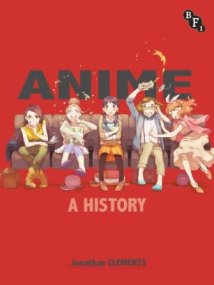
Jonathan Clements is the author of Anime: A History. This article first appeared in NEO #145, 2015.

Manga in America

50375324Up now on the All the Anime blog, my review of Casey Brienza’s Manga in America, a detailed and beautifully researched account of the last decade of Japanese comics in translation.

“Brienza acknowledges the awful poison at the heart of the American manga industry, which is that it was colonised some 15 years ago by snake-oil salesmen and carpet-baggers determined to slap the word manga on anything that they did, out of a cynical desire to clamber aboard a bandwagon that promised, at the time, ‘double-digit growth.’ As I have pointed out on many previous occasions, this didn’t just confuse everybody as to what manga actually was, but also corrupted much of the available data. A manga is a Japanese comic, anybody who tells you otherwise is trying to sell you something.”

Dzen Hajku

dzenhajku_9786191950720For what are undoubtedly thousands of my readers in Bulgarian, there is now a Bulgarian edition of my Moon in the Pines (a.k.a. Zen Haiku), translated by Nadiya Nicheva-Karastoicheva and published by Knigomania in Sophia.

“Jonathan Clements has selected the best of three centuries of haiku, including the work of classic poets such as Basho, Buson and Chiyo-Ni and rendered into English the elusive spiritual quality of the poems.” And… er… now someone else has rendered my renderings into Bulgarian.

Losing My Voice

217685It’s been 20 years since my first voice-acting job. I was playing V-Daan in KO Century Beast Warriors, and I was going for the growly, shouty, gravelly bad-guy routine. It sounded pretty awesome, if I say so myself, although by the second day my throat was getting a bit tickly. More experienced actors plied me with honey and cough sweets, and warned me off the coffee, but the damage was already done. By the third and final day of recording, I was struggling to maintain the pace. The next day, I realised that I had lost my voice. Totally.

Pretty much nobody cared. Possibly my family and friends even enjoyed such a brief respite. Luckily for me, I didn’t rely on my voice for my entire livelihood. I wasn’t doing an audio book recording the following day, or an advertising voice-over. If I had been, I would have lost the work.

Jessica Calvello wasn’t so lucky. She was the original voice of Excel in ADV’s Excel Saga dub, who screeched and screamed so much that she had to rest her voice for up to six weeks between recordings. She ended up losing the gig entirely in 2002, and was replaced by another actress mid-run. Like a dancer who sprains her ankle, or a stuntman who brains himself on a pylon, she had somehow forced herself out of the workplace, simply by trying to do a good job in it.

I bring this up now because of the dire forebodings issuing from America’s actors’ union SAG-AFTRA, which is threatening industrial action over working conditions for voice actors. Their particular bugbear is computer gaming, where actors rarely benefit in residuals even from a million-selling property, and where conditions are tough enough to recall my V-Daan incident. Meanwhile, the gaming companies recently put their foot in it by trying to introduce a bunch of draconian terms, including fines for actors who somehow aren’t up to scratch, and a clause that permits them to not hire union labour at all. SAG-AFTRA is seeking an agreement on working conditions that will force directors to limit the daily hours of voice-actors to preserve their vocal chords, and remunerate them suitably. They have also been pushing for some interesting extras, such as stunt coordinators for motion-capture work, in order to stop some low-ranking thespian on McDonald’s money from breaking his arm while running away from an invisible monster.

I suspect that, as is traditional when American lawyers get involved, both sides are throwing in everything but the kitchen sink, in order to have bargaining chips they can afford to discard later on. Ironically, much anime voice-work is non-union, so SAG-AFTRA’s latest campaign would have done very little to benefit me or Calvello in our salad days. But you never know – demands forced on the gaming industry and mainstream movies might trickle down. It’s nice that someone is speaking up for those who don’t have a voice.

Jonathan Clements is the author of Anime: A History. This article first appeared in NEO #144, 2015.
Manga & Anime Go To Hollywood

51qMWVRg1SL._SX348_BO1,204,203,200_Up now on the All the Anime blog, my review of Northrop Davis’ new book Manga & Anime Go To Hollywood, which was something of a disappointment from an academic press. Where were the peer-reviewers?

“There are a lot of quotes from contemporary internet reportage but far too much of the book simply rehashes earlier publications, pouring in excerpts from works that any serious researcher will already own.”

Christmas Movies: Tokyo Godfathers

Tokyo-GodfathersThree tramps, alcoholic Gin, transvestite Hana and teen runaway Miyuki, find an abandoned baby while searching through the trash on Christmas Eve. They decide to return it to its mother, only to plunge into a whirl of scandal, kidnapping and attempted murder, all on the one day when Tokyo is supposed to be quiet.

Tokyo Godfathers may have three wise men (one and half of whom are actually female), but its nativity story is not limited to Christian lore, and displays a typically Japanese attitude towards death. A cemetery becomes a treasure trove as the tramps search for votive offerings of sake, and the film’s stand-in for Santa Claus, white beard and all, can only perform his task properly if he dies doing it. The movie alludes to Akira Kurosawa’s Rashomon, which similarly features old men bickering over a foundling child in a storm, via John Ford’s 1948 Western 3 Godfathers, but at its heart is a search for kindness and warmth in materialist Japan.

Like Perfect Blue before it, Tokyo Godfathers initially seems like a strange choice for animation. With so many real-world locations, why not film it with real people? But nobody in the metropolitan government was going to approve a live-action film depicting a shanty town in the shadow of Tokyo’s distinctive twin-tower tax office, nor were too many of today’s TV idols likely to sign up for a tale of grunge and poverty; however happy the ending, they might have mussed their hair. The clincher would have been the snow. It is popularly believed that it only falls in Tokyo once every ten years – the presence of snow in Tokyo Godfathers being the first of its many Christmas miracles.

The baby’s arrival sends the tramps scurrying to buy water instead of booze at their local convenience store, much to the shop assistant’s surprise. Hana jokes in the soup queue that she is “eating for two”, only to shock the charity worker the following day when she does indeed turn up with a babe in arms. In its comedy and sentimentality, Tokyo Godfathers is the closest thing we’ll see to an anime pantomime, an end-of-year revel that turns everything on its head. It even features stars having a laugh at being cast against type, such as Koichi Yamadera (Cowboy Bebop’s Spike Spiegel), who has a brief cameo as a harassed taxi driver. The movie finds divine inspiration in everyday events, such as a wounded tramp seeing an angel, who turns out to be a bar-girl in fancy dress.

Satoshi Kon’s choice of subject matter is an act of faith in itself – framing the relentless hope and happiness of a Christmas comedy in the stark, realist tones of his other work. Gin walked out on his family over unpaid gambling debts. Hana lost her surrogate family of fellow drag artists after punching out an unappreciative listener to one of her songs. And Miyuki ran away from home over a misunderstanding with her father. Throw in a gangland wedding, a suicidal wife in the middle of a collapsing marriage, and a cross-dressing Filipino assassin, and the result is a seemingly impossible knot of problems to sort out before dawn.

Tokyo Godfathers performed poorly on British DVD, despite higher production values and even more fiendish twists than Kon’s better-known Perfect Blue. In a world where every December sees a rash of cynical, focus-grouped, predictable Christmas specials, Tokyo Godfathers urges its audience to see miracles on every street corner, and it’s good to know that there is a movie with a genuine heart. Since it’s the season to be jolly, why not give Tokyo Godfathers a try? But just remember, anime isn’t just for Christmas, it’s for life.

Jonathan Clements is the author of Anime: A History. This article first appeared in NEO #14, 2005.

Death By Committee

sword-art-online-oculus-rift-virtual-realityJust for a day I would like to live my life like an anime production committee member. I shall tell the postman that I don’t approve of the way he opened the gate. I shall refuse to pay for a CD in a shop until the owner guarantees that he will end piracy on the internet. And I shall change my mind about the food I want to order in a restaurant, but only after I have already eaten it.

Such ideas are brought on by the revelation in a Manga UK podcast that the Sword Art Online DVD cover design has to change mid-series, because the Japanese licensors at Aniplex didn’t like the version that had gone out with the first disc – a version that they themselves had already approved. So Manga Entertainment is now left in the bizarre situation of having to change subsequent printings, leaving fans of the show with mismatched covers.

Collectors, if such creatures still exist, will be ecstatic to know that the art on the first pressing of SAO is never to be repeated. Fans who just want matching spines now face the prospect of having to contact Manga Entertainment at some future date to get replacements sent to them, which someone will have to pay for. Unless, that is, the SAO committee has another brainfart and changes its mind again.

Committees are supposed to make life easier. They are supposed to manage the franchises for everybody’s benefit. Since the 1970s, they have functioned as the executive bodies of intellectual property managing its hopefully long afterlife once it’s finished on Japanese telly.

One wonders about the make-up of the average committee. I like to think of a few disinterested lawyers, someone’s well-meaning widow, and the producer’s ex-girlfriend. One almost wishes for the devil-may-care days of the 1980s, when the Japanese didn’t really give a toss what happened to their material abroad. Now, can it be that they care too much? How many cooks are fussing over this particular broth for them to actually reverse their previous decision? At one point, one wonders, can someone stand up on the committee and recommend that their fellow members get a clue? If they can’t get their own product right, what are they for?

Jonathan Clements is the author of Anime: A History. This article first appeared in NEO #122, 2014.

Your Country Needs Geeks Like You

ob2Just when life looks grim for slacker Shinichi Kano, he discovers that his love of anime, manga and games is a fast-track to a new career. Earth has opened a magic portal to a parallel universe, and now it needs cultural ambassadors to jump into a fantasy world and sell the locals… stuff! Walkmans and iPads, Nintendo consoles and cartoon serials about demon warriors, anything they will buy.

Shinichi is packed off to the magical Eldant Empire. Imagine some hipster salesman wandering around the set of Game of Thrones, trying to interest Queen Cersei in Viagra, and offering Tywin Lannister a better lock for his toilet door. But it’s a dream come true for the average sci-fi nerd, dropping in on a world of slave-girls and stirring swordplay, but still being able to pop home.

The anime series Outbreak Company beautifully captures a very modern sensibility. Look around any classroom of bleary-eyed teenagers, and you will see a bunch of kids who, only the night before, were leading armies of orcs, rescuing kidnapped princesses, and slaughtering legions of zombies… in their bedrooms. Fantasy worlds have made increasing demands on our time, sneaking out of books and films and into our daily lives, our games consoles, conversations and even our phones. And there is, indeed, money to be made. As the spoof advert that begins Outbreak Company makes clear, there is a chance, however slim, that geekish interests can actually turn into a geekish career.

This is only partly true. Take anime itself, for example, where the creation of such shows is a notorious grind, underpaid and unappreciated, and where hard-core fans are given short shrift by producers whose eyes are always on the bottom line.

But Outbreak Company is also a playful retelling of Japan’s own desperate desire to sell its culture to other countries. In the middle of a recession in 2005, the prime minister Taro Aso began a long-term effort to push “Cool Japan” abroad, and to recognise Japanese films, books and games as major exports. You’ve got it; you sell it; you’ve still got it! Some of these initiatives have spearheaded Japanese culture into foreign territories, and, presumably, inspired Ichiro Sakaki to write the seven-volume book series on which this anime is based.

So although your average Japanese salaryman hasn’t quite met a half-elf maid like the anime’s Myucel, or introduced someone like child-queen Petralka III to Japanese comics, they’ve probably done something very similar when trying to push sushi in Sao Paulo, and noodles in Neasden. There is a sense that when Shinichi arrives in this fantasy realm of dragons and accordions, he is like a Japanese tourist staring goggle-eyed at the weirdness of the mysterious West. Nor does Outbreak Company shy away from the fact that much of Shinichi’s sales pitch is offloading a load of junk – the anime equivalent of selling mirrors and beads to clueless natives.

The people of Earth are also busily interfering in the politics of Eldant, from do-gooders trying to bring an end to slavery to military personnel with secret agendas. What starts out as a celebration of fan culture and good-natured bridge-building soon takes a darker turn, as Shinichi is confronted with the economic side-effects of colonialism, and the prospect that cultures can exchange the bad along with the good. His trips to Eldant broaden his mind as he encounters a different way of life, but also leads him to appreciate the world he has left behind.

Commendably, Outbreak Company is not one long allegory for gap-year tourism. Instead, it starts off funny and satirical, and becomes increasingly wary of motivations for such initiatives. As well it might – only last year, the Chinese press in the real world accused the Japanese of trying to win them over by getting them to love the fluffy blue robot cat Doraemon. With ever louder sabre rattling in the South China Seas, some Chinese pundits began complaining that Japanese “soft power” – manga, anime, and games – was functioning as a form of insidious propaganda, and concealing their plans for world domination. Now, there’s an idea for an anime series.

Jonathan Clements is the author of Modern Japan: All That Matters. This article first appeared in Geeky Monkey #2, 2015.

How Tokyo Changed The World

82

I am interviewed in the Emirates in-flight magazine, talking about Japanese inventions that are actually useful:

“For demographic and geographic reasons – a high population and very little flat land for building – the Japanese were generations ahead of the rest of the world in terms of having to cope with living piled on top of one another,” says Dr Jonathan Clements, author of Modern Japan: All That Matters.

“This has led to a greater interest, in terms of design and technology, in being able to isolate oneself from the people around you. The Walkman was originally designed so that the boss of Sony, Akio Morita, could listen to music on a plane. Can you imagine air travel today without it? The Walkman then kicked off a revolution in fitness, but miniaturisation and falling costs have also been instrumental in the migration of TV sets from lounges to bedrooms, and the diversification of media into narrowcasting, whereby different people can watch the TV programmes or videos that they want, even in the same house.”