Yoshiki Tanaka

gineiNow up in the online Encyclopedia of Science Fiction, my justifiably massive entry on the Japanese author Yoshiki Tanaka. Despite being a familiar name to anime fans and manga readers, this is the first time anyone has published an overview of his work, and even this 2500-word behemoth misses out a lot of his detective fiction and Sinology publications.

However, there’s plenty there on The Legend of the Galactic Heroes and the Heroic Legend of Arslan, as well as his lesser-known works like the Victorian Horror Adventures and Red Hot Dragoon.

Miss Hokusai

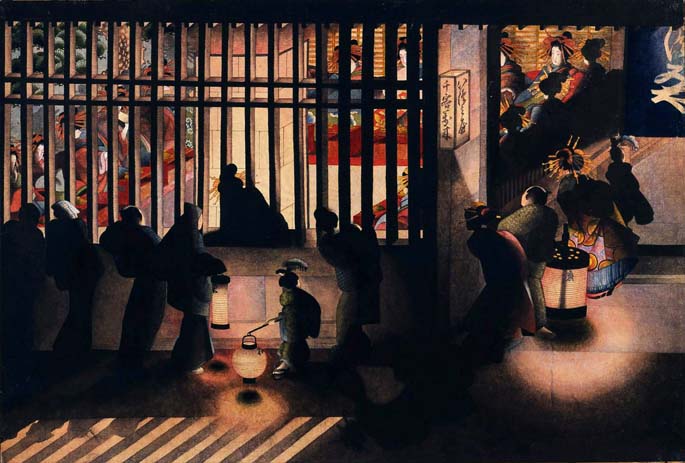
katsushika-oi-1My article on the strange case of Hokusai’s daughter, an artist in her own right who has been largely airburshed from the historical record, partly with her own collusion, is now up on the Anime Ltd website. It’s a fascinating story of art and attribution, with strong resonances in the modern anime business.

A New Wave?

h2_JP1847The idea of rekishi-gyaru (history girls) has come up before in a few Manga Snapshot columns – a supposed market sector of young, educated women who are as nerdy about historical drama as Naruto fans are about ninja. The latest anime from Production I.G seems squarely aimed at them, as well as a whole world of overseas anime lovers and Japanophiles.

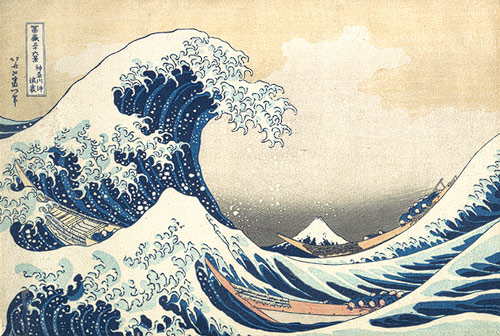
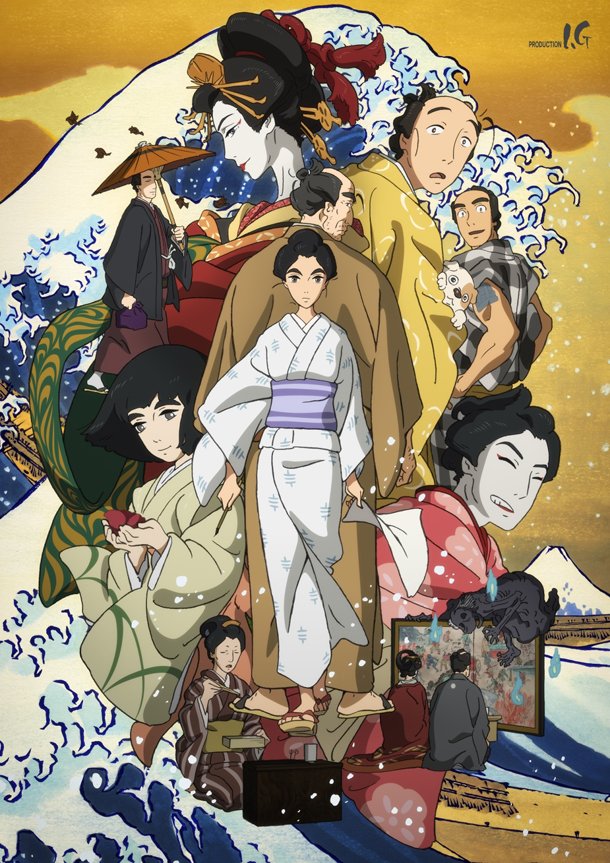
9th May sees the Japanese premiere of Miss Hokusai, which charts the life and times of Oei, the artist who laboured tirelessly as an assistant and sometime replacement for her famous father. Hokusai père was the printmaker who created the iconic Great Wave Off Kanagawa as well as the tentacular picture usually known as The Dream of the Fisherman’s Wife (now gracing Peggy’s office in the final episodes of Mad Men), and the sketchbooks or doodlings that eventually lent their name to the entire medium we now call manga.

Based on an obscure 1980s comic by Hinako Sugiura, Miss Hokusai looms in on “her-story”, that ever-growing genre that highlights forgotten ladies. The question always remains just how much of Hokusai’s work was actually done by his daughter – letters remain extant in which he states his pricing policy, and notes that clients can have him for one fee, or Oei at a discount… not unlike the way that late-period Studio Ghibli started choosing its directors!

misshokusaiBut Miss Hokusai is also a clear entry in the new scramble for superiority left by the shuttering of that very same Ghibli. With Hayao Miyazaki retired (again) and Isao Takahata unlikely to ever make another film, the race is on for the anime high ground. Take my word for it, all around the world there are distributors who have made a tidy profit on Ghibli movies for the last decade, who have suddenly seen their cash cow put out to pasture. Where are they going to find their once-a-year classy film to draw in the twittering classes and pad out film festivals with something quirky and Japanese? Where’s their annual dip into the fan market and mainstream cross-over?

For those who thought the whole thing was a two-horse race between the consistently excellent Mamoru Hosoda and the randomly brilliant Makoto Shinkai, Miss Hokusai’s director Keiichi Hara has turned out to be a surprise contender – leaping out of journeyman work on Crayon Shin-chan with the acclaimed Colourful, and now this considered, self-consciously classy evocation of Tokugawa period glamour. Worthy and classy, Miss Hokusai is a dream come true for distributors and exhibitors, and hopefully for audiences, too. But this is going to be a long contest before the winner is declared.

Jonathan Clements is the author of Anime: A History. This article first appeared in NEO #136, 2015.

A Glass Half Empty?

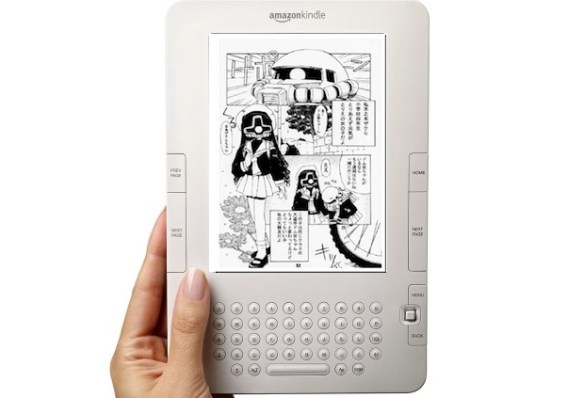
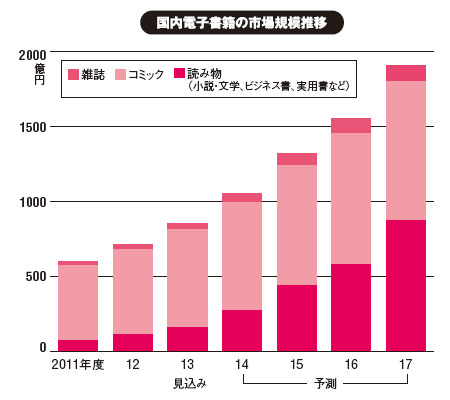
kindle mangaLast month’s column discussed the ongoing drift of manga into digital publishing. In the weeks since, new statistics have come to light about just how pervasive digital publishing has become. A recent report by Yano Research revealed that digital manga publishing in the fiscal year ending in spring 2014 raked in an incredible 65 billion yen (£363 million), accounting for a whopping 80% of the entire digital book market in Japan.

zu01Digital publishing continues to rise all over the world. Many of you will actually be reading this article on a digital edition of NEO, so well done all you early adopters, you. But there are other knock-on effects. Manga are going to become less visible in the real world, as e-publishing initiatives slowly strip them from shelves in corner shops and bookstores. I predict the almost total disappearance of erotica from public view, as furtive consumers squirt it all directly onto their tablets without having to slide it under their raincoats. Teen stuff will be next, and their older cousins in mature manga will lag behind. Before long, there will just be a few legacy titles in the Luddite pensioner market, and smaller print-runs for coffee-shop and noodle-bar browsers.

There is also talk of “enhanced” publishing. Once a creative work is “digitally ingested”, you can fiddle with it and add whistles and bells. Manga publishers are talking of sound effects and read-along audio, maybe even flash-animated panels. This is being billed as some form of higher-level augmentation of manga, which leads me to sound a note of doubt.

Will it really mean better manga? Or will it end up meaning really low-rent, stripped-back, bare-bones anime? Just as marketers put a polite spin on cheapo, minimal-choice adventure games by calling them “virtual novels,” will we find anime companies in the future tempted to rebrand themselves as “enhanced manga publishers” in order to get away with the cheapest animation possible?

Of course, it might be a fad. Paper might come back in, like flares. This was all reported in a magazine called Nikkei Computer, which obviously had an interest in bigging up the digital future. Maybe it’s only the magazines that are going digital, while consumers will still want those bespoke reprint volumes in print. But how will all the enhancements work then…? Pop-ups?

[Time travel footnote – Since this article was published, the University of Hertfordshire has revealed that it is transitioning its 2D Animation course into a Digital Comics and Concept Art course… the first sign of the changes to come?]

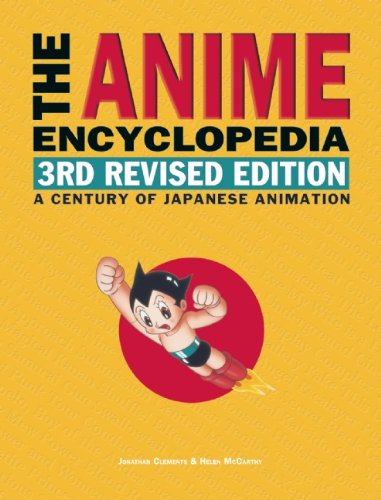
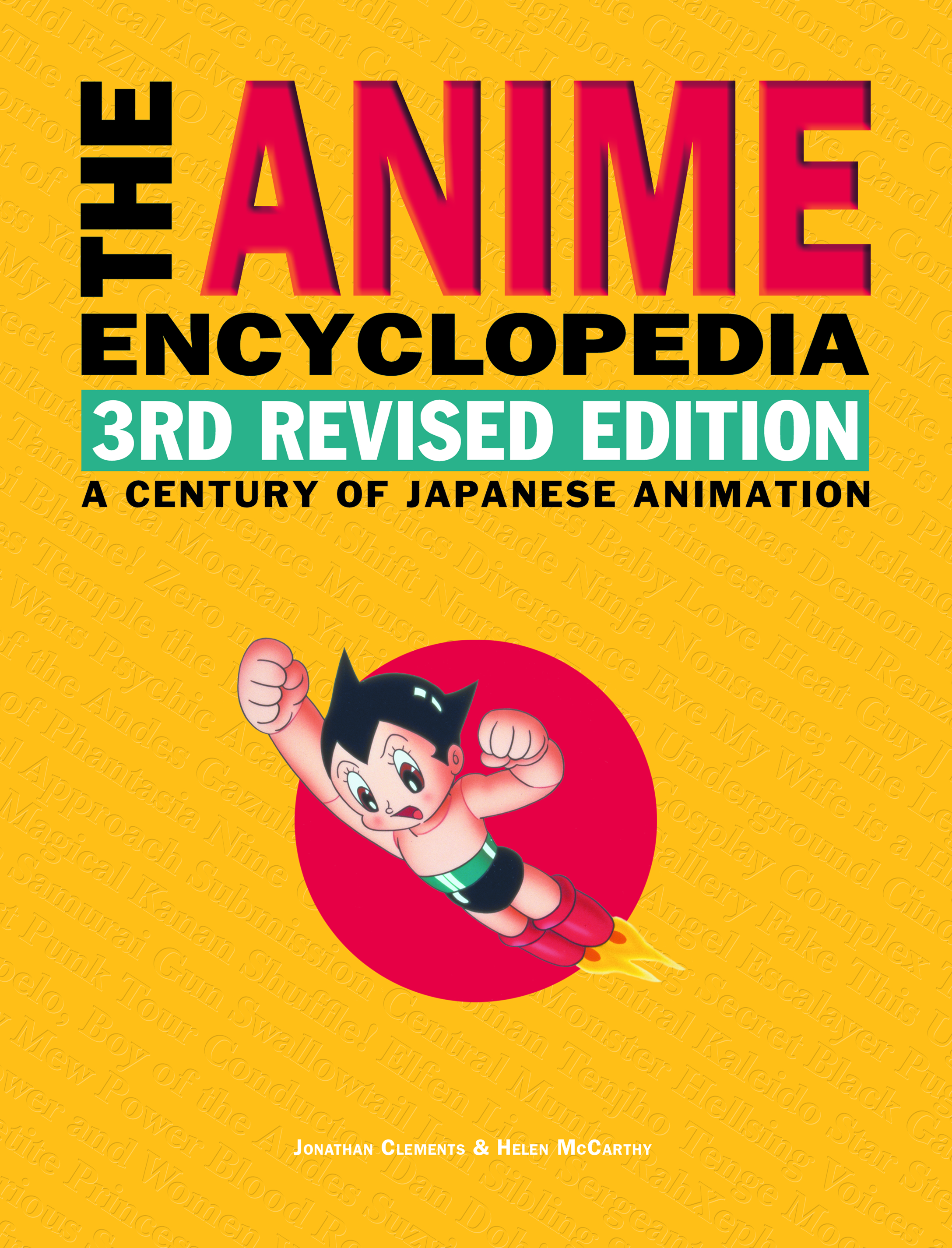
Jonathan Clements is the author of Anime: A History, and the co-author of The Anime Encyclopedia: A Century of Japanese Animation. This article first appeared in NEO 135, 2015.

Game Changing

pacmanMere hours before April Fools’ Day, and hence confusing a bunch of foreign pundits, the Japanese contents conglomerate Bandai-Namco announced that it was “opening up” the rights to a number of its classic games titles. From here on, anyone wanting to make a cellphone variant of Pacman, or a sequel to Dig Dug, is welcome to get stuck in, without any of the miseries of, you know, paying for a licence, or dealing with licensors.

Although Bandai-Namco is promising not to subject anyone to the extensive colonic investigation that is “licensing”, it still expects everyone to register for a perfunctory rubber stamp of approval. It promises to wave everything through unless it’s dodgy, so no chance of Pacman Porno. It also expects a rake-off of a few percent from any revenue generated, and a percentage of any ad-buys. This offer currently only applies to creators in Japan – foreigners can’t be trusted yet. What on Earth is Bandai-Namco playing at?

This new announcement is an intriguing, and seemingly rather business-savvy extension of the pre-existing rights market, where intellectual property owners expect to cream off around 5% from any licensed merchandise. That Nigerian Astro Boy remake? 5% to Tezuka Pro. That Indian version of Star of the Giants? 5% to TMS. That Overfiend plushie? Go away, that’s my idea.

With a bunch of forgotten titles, like Tower of Druaga and Sky Kid, Bandai-Namco is opening the have-a-go floodgates. Let a hundred flowers bloom! Want to make an animated series based on Galaxian? Be their guest! A Battle City-inspired line of clothing? Go right ahead. After all, what’s the risk? These are corporate-owned titles that the company plainly couldn’t give away for the last 20 years… so now they are literally giving them away. As long as you fill in the correct paperwork and give them their cut, they won’t sue you.

And if a project fails, Bandai-Namco has lost nothing. Just as Amazon will carry almost any self-published Kindle book, on the understanding that even if it only sells 100 copies (which is, believe it or not, the average), the company hasn’t had to work for that money and still gets a cut. Or look at another way. Bandai-Namco has just solicited every company in the creative sector to work for it, for free, while it creams off a stipend. Everybody else will be watching this one very closely. The moment there’s a success story, expect to be pig-piled by imitators.

Jonathan Clements is the author of Anime: A History, and the co-author of The Anime Encyclopedia: A Century of Japanese Animation.

Paper View

Weekly_Young_Magazine_10th_issue_(2011)2015 begins with an announcement from the Japanese publisher Kodansha that it plans by June to have all 22 of its manga magazines available as digital releases on the day of their print publication. The first three are already in e-stores – Kodansha has chosen to lead with the big hitters Young magazine and the weekly and monthly Shonen.

Of course, this has been a long time coming. The industry was subjected to an unexpected test in 2011, when paper shortages and transportation snarl-ups after the Tohoku Earthquake led several publishers to go straight to digital on a few titles. The “first three” are not even really first, since Morning magazine has been day-date digital since 2013. But Morning is a magazine for grown-ups, whereas this blanket policy will now incorporate all titles, including Afternoon, Evening, and Good Afternoon for the boys, and Be Love, Nakayoshi and Kiss for the girls.

As a spokesman for Kodansha recently confirmed, the big issue in recent years has not only been the logistics, but a basic change in commuter habits. In effect, it is a statement of faith that teens can, and will access their manga on iPads and laptops in increasing numbers. And, just maybe, that within a few years it will be time to phase out paper altogether. Kiss-Plus

When I first went to Japan in 1992, every carriage on the train was packed with people reading books and magazines. Just as in Europe, any railway station concourse was populated with news-stands offering something to keep you busy on your journey. So, too, were the recycling bins, as commuters discarded tonnes of paper daily. But the rise of the cellphone has completely changed that paradigm. Now there is often barely a single book in evidence per carriage, while everybody thumbs at their mobiles, playing Angry Birds or texting their mates.

Kodansha’s move seems to be a wise bet in ensuring that if the reader won’t buy a physical manga to read any more, they will still have the opportunity to squirt it onto their mobile device.

Will we soon see the death of the double-page splash, as editors fret over the size of phone screens? Are panels going to become squarer and less varied? Or will showmen editors start to offer audio effects and narration, leading not to more vibrant comics, but an excuse for cut-rate “anime” with significantly less animation? Digital manga are nothing new, but the drift towards all manga being digital may have some long-term stylistic effects.

Jonathan Clements is the author of Anime: A History, and the co-author of The Anime Encyclopedia: A Century of Japanese Animation. This article first appeared in NEO 134, 2015.

Kaoru Kurimoto

guin sagaOver at the Encyclopedia of Science Fiction, I finally get around to writing the necessarily massive entry required on Kaoru Kurimoto, possibly the most influential female author in Japanese science fiction for much of the 1980s and 1990s. I’m pretty proud that it takes five paragraphs to get to Guin Saga, which is liable to be the only thing of hers that most non-Japanese people have heard of, if at all.

“Concis et tentaculaire”

ae3Over in the Swiss newspaper Le Temps, Jonas Pulver inadvertently coins the superhero identities Helen McCarthy and I would use if we were fighting crime. I’m Concis, she’s Tentaculaire.

“…l’encyclopédie est aussi une excellente porte d’entrée sur l’environnement médiatique du Japon, à l’image du fonctionnement complexe du sponsoring et de la publicité, de l’intertextualité des œuvres, ou de l’influence des groupes de fans. Concis et tentaculaire, The Anime Encyclopedia se lit par sauts de puce, en se laissant porter d’un article à l’autre au gré des affinités thématiques. Le plaisir de la redécouverte y flirte avec l’inédit.”

The Pocky Poisoner

pockyIt can’t have been the best of days for the 73-year-old Katsuhisa Ezaki, president of Ezaki Glico Foods, when he opened his mail to discover an apparent blast from the past. A correspondent signing himself Monster #28 was demanding 50 million yen, lest he make good on a threat to poison the company’s food products on supermarket shelves.

This was not the first time this had happened. Back when Ezaki was in his 40s, he was kidnapped by masked men and held hostage in a warehouse while the criminals tried to extort money for his release. The following month, a man calling himself “The Fiend with 21 Faces” threatened to poison Glico’s food products, which include Japanese staples like Pocky and Pretz. Nobody was ever brought to justice, although there was a flurry of media activity around a suspicious “Fox-Eyed Man”.

For something that is supposed to be a light-hearted news source on Japanese media, this column seems to spend an inordinate amount of time reporting on murders, scandals, thefts and other criminal activities. But they often seem to dovetail with the anime world, not least in this case – the original 1980s scandal was the inspiration for the Laughing Man storyline in Ghost in the Shell: Stand Alone Complex

…and it seems, the Laughing Man storyline itself was the inspiration for this 2014 reboot. This time, the police were smarter, staked out the money-drop, and arrested a man on 1st December 2014 who turned out to be a film producer fallen on hard times. His name was initially made public, but has since been scrubbed from the Internet, seemingly in tardy recognition of a presumption of innocence until proven guilty – although, you know, being caught red-handed with the money is going to be a tough break.

So let me phrase this as a lawyer will no doubt have to: if you’d been associated closely with the Japanese cartoon world, if your company was on the skids and your forays into other media had failed, would you consider rifling through your anime collection in search of ideas for money-making schemes? And if so, what anime would you rip off? Budding criminals, write in to NEO and let us (and the police) know your plans…

Jonathan Clements is the author of Anime: A History, and the co-author of The Anime Encyclopedia: A Century of Japanese Animation. This article first appeared in NEO 133, 2014.

Back in the Japan Times

AnimeEncyclopedia3 copyAnd I’m back in the Japan Times again, this time in a review-interview by Roland Kelts, in which he compares the Anime Encyclopedia to the ravings of an Irish drunk.

“The book is almost Joycean — you can dip in and out of its pages and entries at any point and derive delight. My favorite entries make me want to watch titles I haven’t yet seen and revisit those I have, and the authors’ disquisitions on related topics such as fandom and the future of anime consumption make further exploration irresistible.”

And if you’re wondering how I can publish a 1200-page book only a month after Modern Japan: All That Matters, it’s because the editorial process of the Anime Encyclopedia is so long and complex that it took more than year from the initial delivery to lay-out, check and augment.