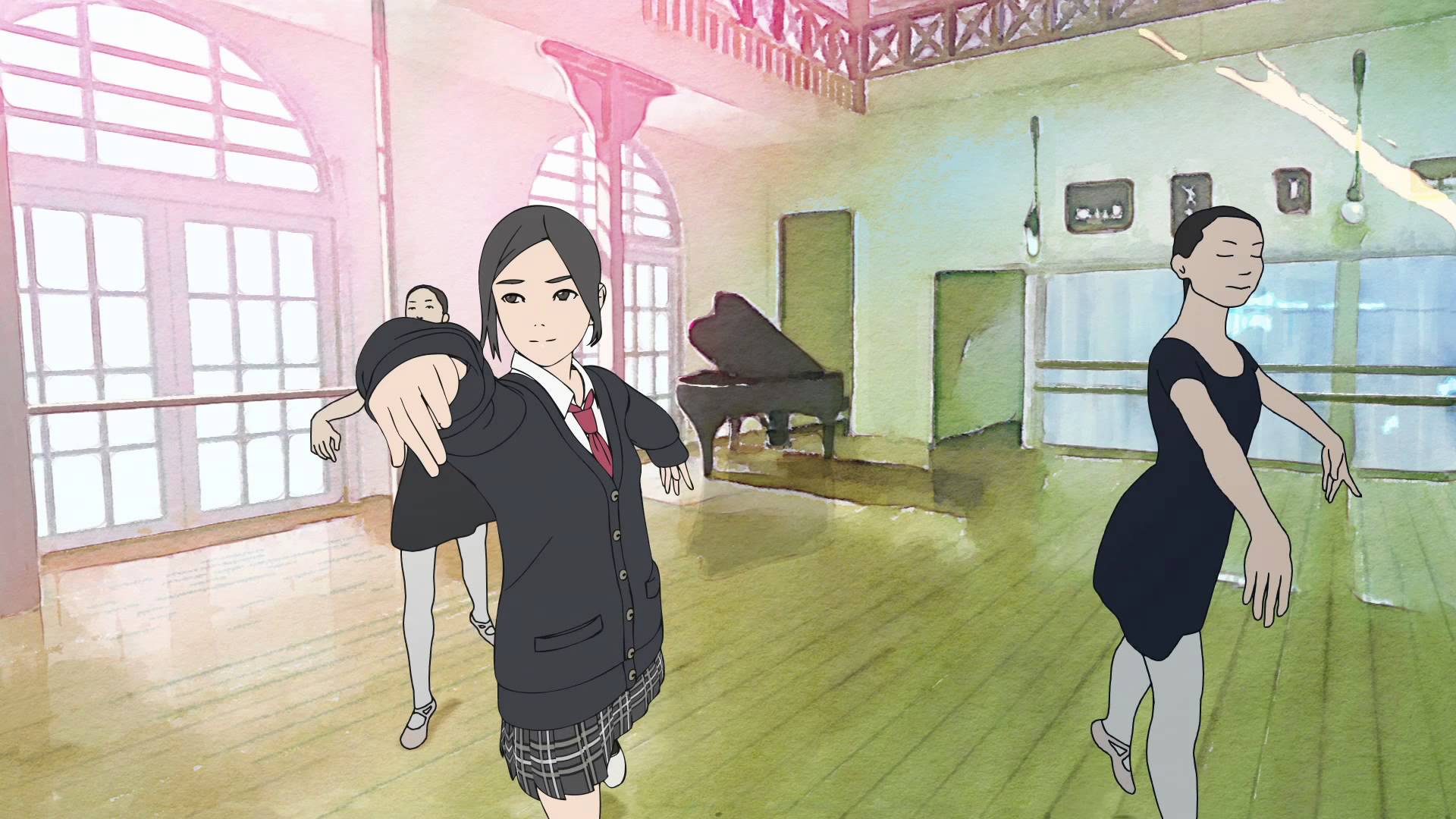
 Up now on the All the Anime blog, my article on Shunji Iwai’s rotoscoped movie The Case of Hana & Alice, winner of the Audience Award at Scotland Loves Anime.
The Kindness of Strangers
Reply

Up now on the All the Anime blog, my article on Shunji Iwai’s rotoscoped movie The Case of Hana & Alice, winner of the Audience Award at Scotland Loves Anime.
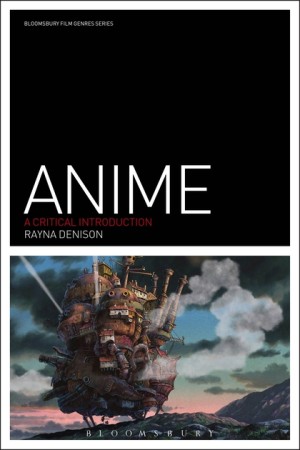 Up now on the All the Anime blog, my review of Rayna Denison’s book Anime: A Critical Introduction, which delves into such matters as how nasty was the reaction to the video nasty Legend of the Overfiend; how classy is the whole output of Studio Ghibli; and how is anime sold at Japanese trade fairs?
 This autumn sees two iconic anime serials finally reaching the British public – Doraemon, screened on the kids’ channel Boomerang, and the original Gundam, coming from Anime Ltd.
Doraemon is such a popular figure in East Asia that he has sneaked under the radar to entertain kids in Korea and China, many of whom still don’t know he’s Japanese. Despite being a hapless, accident-prone robot cat, he is much beloved, and the centre of a merchandise industry that keeps his owners very well-off. Gundam, meanwhile, is a show about children dragged into a conflict in space using majestic bipedal war machines. It is a vital influence on much anime in the last 40 years, not merely in terms of straightforward imitations, but of entire studios and franchises conceived in reaction to it. Although that’s less important to its owners than the vast numbers of robot toys they hope to sell you.
Doraemon’s appearance on UK TV is not that of a 42-year-old show – it’s starting with episodes that were first broadcast in 2005. But the classic Gundam on offer really is the first series from 1979. It’s older than most NEO readers.
As an anime historian, I am very pleased to see these shows turning up – both are vital to understanding the business of the last 40 years. As a consumer, I can’t help but wonder if both are less about Japanese culture going global, and more about a recession-hit Japan, desperately scrabbling in its bins for any off-cuts it hasn’t sold yet. As this column has noted in the past, there’s a lot of Japanese government boondoggle money available, but only to people who already have something to sell.
There has been much talk recently about exporting media. A cynic might suggest that this is less about a breathless passion for Cool Japan, and more about a bunch of companies sitting on intellectual property that has been paid for and isn’t doing anything. Somewhere in Tokyo, someone in a suit has been pointing at a chart and enthusing about “new” markets. To an accountant, the money that Gundam or Doraemon have racked up in Japan looks like a cash-cow waiting to be milked. If x million people pay for these shows in their home territory, then surely there are y billion people waiting overseas to pay for them?
Are there? It’s a gamble for the foreign distributors, although the Japanese rights-holders are largely playing with other people’s money, or perhaps misguidedly equating their own nostalgia with a niche in overseas markets. Who really stands to lose if these “new” releases turn out not to wow modern British audiences the way they wowed the Japanese all those years ago?
Jonathan Clements is the author of Anime: A History. This article first appeared in NEO 142, 2015.
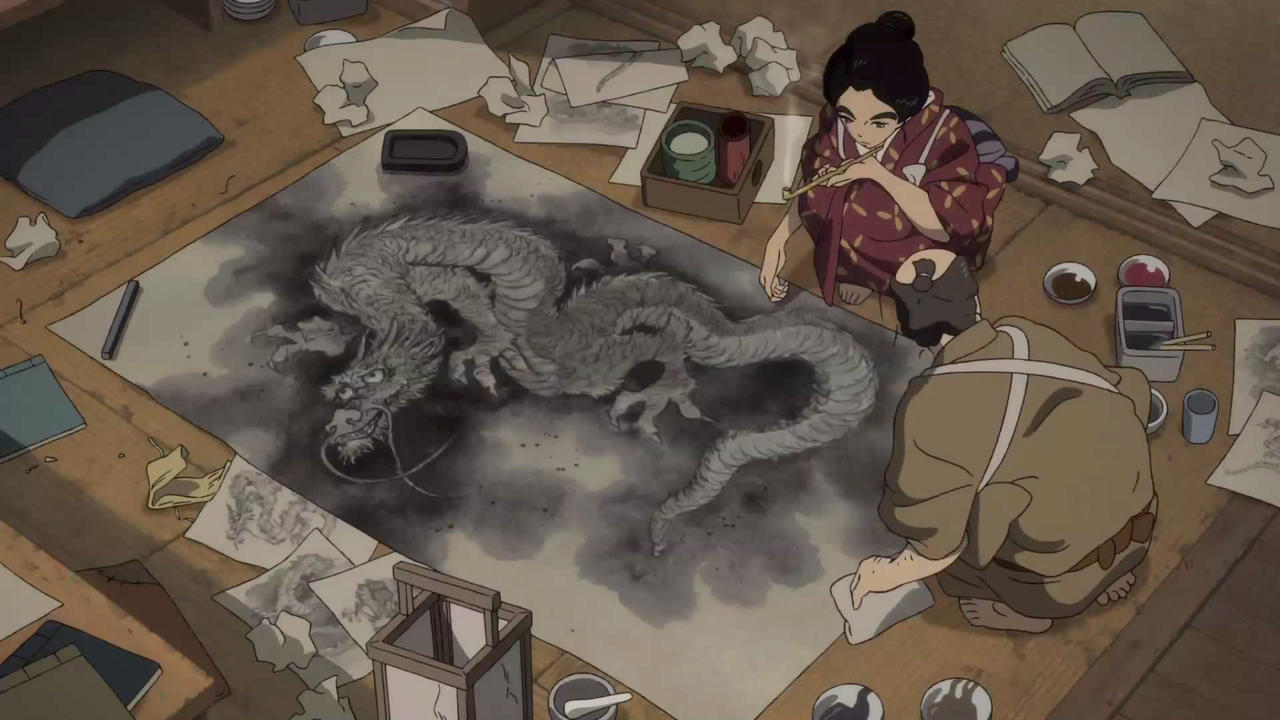 Packing my suitcase for this year’s Scotland Loves Anime, which begins on Friday in Glasgow. Keiichi Hara is in town to introduce the UK premiere of his Miss Hokusai, while I shall be fronting the UK premiere of Ryotaro Makihara’s Empire of Corpses, the steampunk epic based on the novel by Project Itoh and Toh Enjoe. I’m also looking forward to Production I.G’s latest Ghost in the Shell (another UK premiere) and the studio’s own self-inflicted competition over the same genre ground in Psycho-Pass: The Movie (which is, in case you hadn’t guessed, a UK premiere).
Behind the scenes, I shall be speaking about the state of the anime industry, both at the Edinburgh Education Day and in a pop-up lecture in Nottingham next Monday. I shall also be chairing the jury in Edinburgh as four opinion-formers argue over the conferral of this year’s Golden Partridge Judges’ Award. Shunji Iwai has a film in competition, and almost everybody is liable to be distracted by the Attack on Titan quadruple-bill (two anime movies and two live-action), but I’ll make sure the jury is in the right place at the right time.
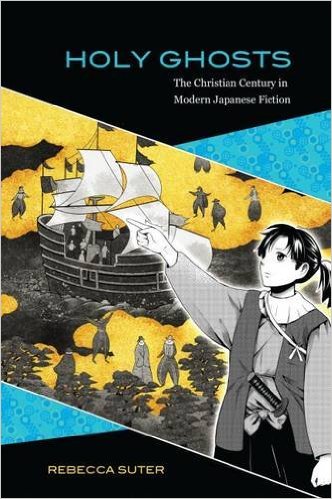 My review of Rebecca Suter’s Holy Ghosts: The Christian Century in Modern Japanese Fiction, is up now on the All the Anime blog.
“[The book] does not shy away from Endo and his ilk, but as her beautiful and striking choice of cover image makes plain, she is not afraid of digging around in the maze of manga and anime in search of new and exciting comparisons.”
 You might not recognise Satomi Satou in the street, but you have heard her voice. She’s probably got the most attention in the UK as Wendy Marvell, the 12-year-old dragon slayer in Fairy Tail, but Satou has played literally scores of anime roles since her 2009 debut in Kamichama Karin. A lot of them have been kids – she has the kind of voice that still sounds childlike, which is prized like gold-dust in anime voice acting, because producers can get a junior performance from someone without having to worry about making the kids stay up late for that 2am recording session.
She was also Ritsu Tainaka, the short-haired, forgetful drummer in K-On, an anime series about an afterschool rock band. She’s taken the usual anime starlet route of idol-singing and public appearances, so the K-On songs have stayed with her repertoire, alongside her own songs – her solo singing career has taken off in the last year… Now she’s graduated to full-on pop star status, with her very own stalker, 39-year-old Jun Yasumoto from Osaka, arrested on 25th July by the police because he threatened to hurt her at her next concert. On Twitter.
I’m guessing this is why the Japanese media seem to have thrown innocent-until-proven-guilty out the window, and are happy to report his identity before he’s even made it in front of a judge. While Twitter might feel like you’re thumbing around with your phone and mouthing off to your mates, it can be inconveniently public and traceable if you are planning on, you know, making any death threats in a cheap real-life knock-off of Perfect Blue.
Another day, another nutter giving anime fans a bad name, although this one is going to have extra traction over here. Back when the movie was debuting in the UK, I went ten rounds with one of K-On’s producers over the amount of access to the director. We practically had a three-day fight about it, with me demanding Q&A’s with actual questions and actual answers, and him trying to micro-manage every single moment. He wanted every event to be little more than a curtain call with a homily, and had conniptions at the thought of members of the audience actually being able to interact with the guests. I said he was over-reacting and paranoid. Now I’m looking at my inbox every couple of minutes, wondering when I’m going to get the “I told you so” email.
I shall continue trying to make anime events actual events rather than glorified identity parades, but really, fandom, you don’t make it easy for me. Or for Satomi Satou.
Jonathan Clements is the author of Anime: A History. This article first appeared in NEO 141, 2015.
 News arrives from Okinawa that a retired artist has donated 300 million yen (that’s £1.5 million) to the Zenda Forest Park in Kumejima, Okinawa, to make a Children’s Interaction Centre. He even designed it for them! What a kind old man, like that guy in Akira Kurosawa’s Ikiru, who devotes his twilight years to getting some swings in the local playground. It helps that the philanthropist in question is Hayao Miyazaki, and it should come as no surprise that the Zenda park is getting something of a reputation as a home away from home for displaced refugees from the Fukushima disaster.
So Miyazaki gets to do some more for the kids, and to return to his trademark ecological themes in a new way. One wonders, perhaps, if the park’s layout might be expected to have a bit of input from his son, Goro, a former landscape gardener whose career in anime has hardly set the world on fire.
Miyazaki’s interest in parks and playgrounds has been a recurring feature of recent years. His recently-translated Turning Point devotes more space to discussing the Studio Ghibli crèche than to his latest movie, as Miyazaki exhorts his fellow animators to observe the film’s target audience in their natural habitat. But his studio has also got a park of its own, the famous Studio Ghibli Museum in Mitaka, which generates a movie’s worth of income every year.
How does it manage it? Firstly, it carefully kettles its customers, insisting on pre-booked entries to ensure that the staff are neither left short-handed nor idle. Then it promises exclusive experiences, including Ghibli short films that can only be seen at the museum. Then there’s the restaurant and the gift shop… but it’s a much classier affair than your average theme park. Miyazaki and his fellow designers put incredible effort into visualising the experience from a child’s eye view, with pathways that make it possible to wander but never to get lost, and little easter-eggs visible only if you are meter high.
The Ghibli Museum and the plans for Zenda demonstrate only too well that Miyazaki truly is one of a kind. You won’t get that sort of treatment from the people who brought you Transformers.
Jonathan Clements is the author of Anime: A History (UK/US). This article first appeared in NEO #140, 2015.
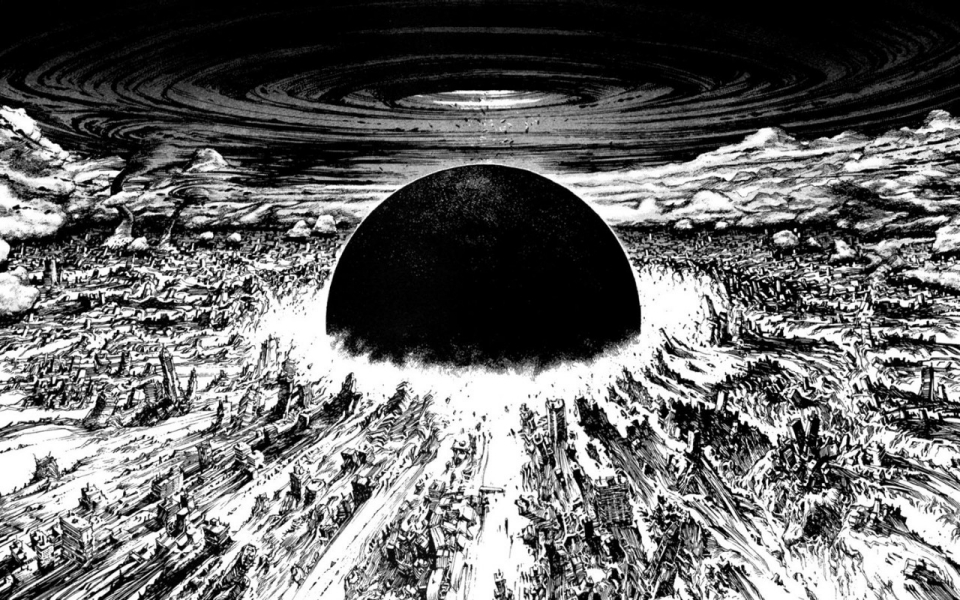 Al Jazeera America asked me to write about the atom bomb in Japanese culture for their website.
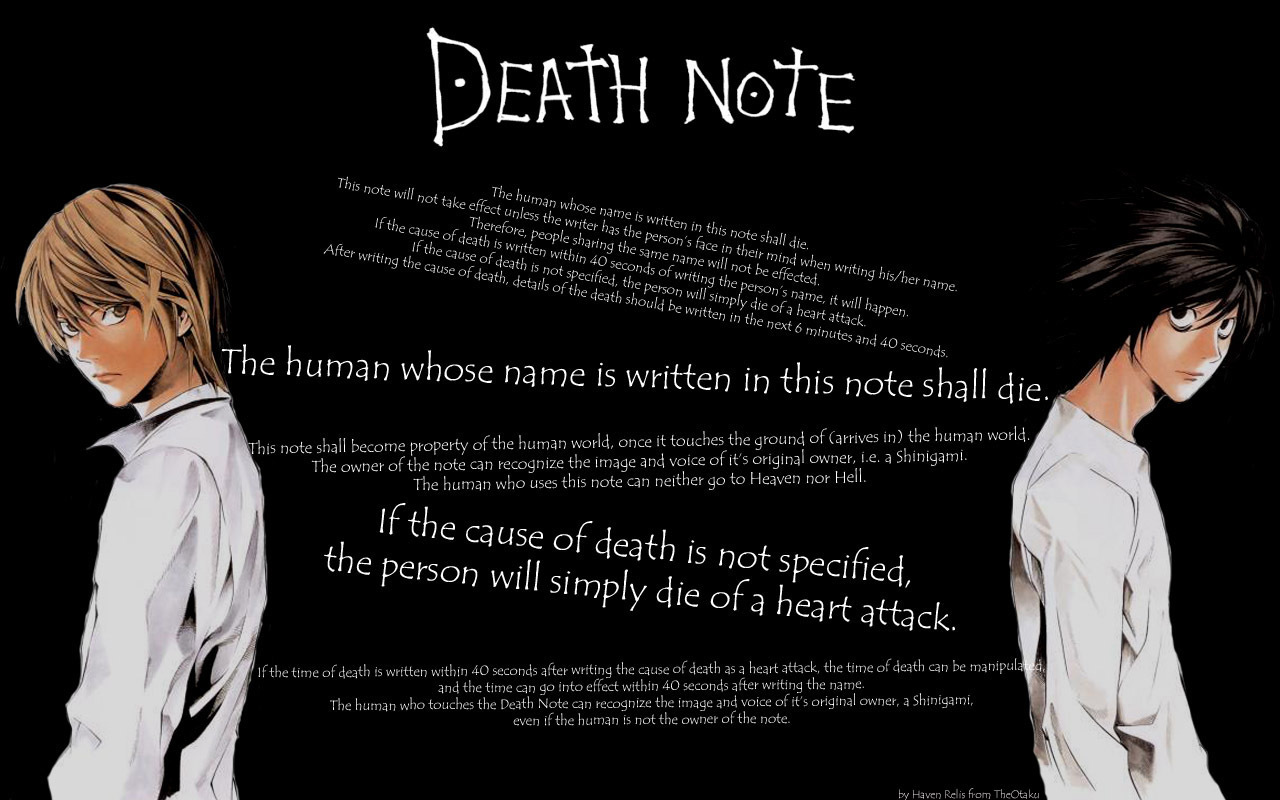 I’m on the BBC World Service discussing the latest backlash against Death Note, and the love-hate relationship between Chinese fans and Japanese products. More on the story here.
 May’s entertainment was provided by David Clarke, an author who used the Freedom of Information Act to wrest a report from the Metropolitan Police with the title of UFO New Religious Movements and the Millennium. In it, anti-terrorism officers were cautioned about the rise of conspiracy theories and wacky cults, centred around dangerous foreign imports like Star Trek and The X-Files: “it is not being suggested that the production companies are intentionally attempting to ferment trouble,” said the report, in annoyingly reasonable language. “However [they] know what psychological buttons to press to excite interest in their products. Obviously this is not sinister in itself. What is of concern is the devotion certain groups and individuals ascribe to the contents of these programmes….”
Clarke knows what buttons to press, too (he has a book on the way), since fandom’s dudgeon was most certainly raised. I, for one, am flattered that a bunch of nerds in Spock-ears presented an equivalent danger to, say, the fanatical suicide-bombers who blew themselves up on the London Tube. Imagine the unspeakable carnage if they got all Prime Directive on people… but there is method in the apparent madness.
It’s not clear exactly when the dossier was prepared, but Clarke suggests it was around 1997, after the suicide of 39 members of the Heaven’s Gate religious cult in San Diego. Heaven’s Gate’s use of terminology from Star Trek is widely reported; less well-known is the presence of stacks of anime VHS tapes at the site of their “Away Team” deaths.
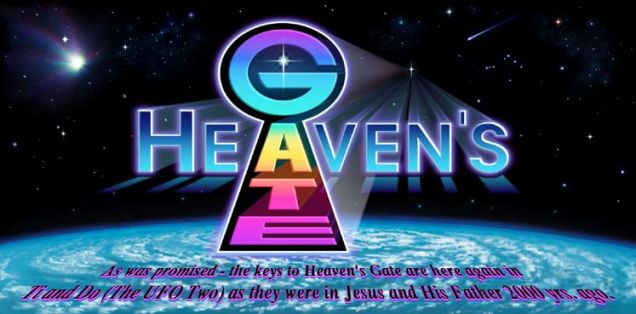 Heaven’s Gate were convinced that the world was shortly about to be “cleansed”, and humanity was going to be wiped away by the impact of some dreadful angelic apocalypse. Shortly before they drank a fatal mix of phenobarbitol and vodka, 39 people had been watching Neon Genesis Evangelion. I know this because the FBI wasted no time in tracking down the pedlars of such apocalyptic propaganda, and demanding they explain the plot to them. And, Evangelion being a tough one to describe at the best of times, ADV Films volunteered the services of the only person they thought could do the job. That would be me, at five in the morning in London, woken up by what at first I took to be a prank call.
Evangelion is “apocalyptic” because it draws upon Christian eschatology. It did not inspire Heaven’s Gate so much as offer them comforting reflections of their own delusions. The FBI worked that out soon enough, and went away happy that anime fans weren’t about to go on the rampage, but it wouldn’t surprise me, when the full text of the dossier is made available, to discover those pesky Japanese cartoons are also listed as potential threats to civil society. Again. Thank God they didn’t know about Queen’s Blade…
Jonathan Clements is the author of Anime: A History (UK/US). This article first appeared in NEO 139, 2015.

