 When I was working on my book about Empress Wu, I found myself clambering around the dark, musty interior of a grave close to her tomb. On the wall, a mural depicted ambassadors from afar, come to praise the glory of the Tang dynasty. One of them, famously, is a hirsute, hook-nosed man from Syria. But standing behind him in the queue is an even odder dignitary – an alien, glowering figure with a satanic beard and an odd, horned head-dress. He was a diplomat from the land that the Chinese called Bohai, which still lends its name to the gulf between modern Korea and the Chinese coast, which between 698 and 926 AD, dominated north-east Asia before falling to barbarians… or as the Chinese would have it, other barbarians.
Parhae (or Balhae, or Bohai) was described by Chinese chroniclers as the “Rising Land of the East”, now a forgotten, ruined state in one of the least studied corners of Asia, which once had several “capitals”, fought a war against Tang China, and extant fragments of whose architecture and grave goods indicate was a powerful, civilised culture. And yet, by the middle of the tenth century, it all fell apart. The last king of Parhae walked weeping from his city gates, leading a flock of sheep in a symbolic gesture of surrender. I have long been fascinated by the story, and forced to rely on Japanese sources, so I am immensely pleased that Global Oriental have broken such new ground with this wonderful book.
A “New” History of Parhae is something of a misnomer – the subject has rarely been even mentioned in English before. Parhae is a political minefield. It covers much of that liminal area better known to regular readers of this blog as Manchuria, which means that at various points in the last hundred years, the Koreans, Japanese and Russians have all tried to lay claim to it. For the Russians, Parhae was the first mainland East Asian state to establish itself independent of China, and hence, by an oddly Soviet process of logic, the defining line of the border between China and Siberia. For the Chinese, Parhae was a vassal state, and hence “proof” of Chinese authority extending far to the north. For the Japanese it was neither Chinese nor Russian, and hence an ideal historical idea to push in order to establish that the area was up for grabs during Japan’s colonial push into Manchuria.
 For the Koreans, Parhae could be a “Greater” Korea – a notional, largely theoretical expansion of ethnic identity to the north-west of current borders. It establishes “Korean-ness” as an element to be found far beyond the current peninsula, and hence pushes Korean ethnicity as a far larger contributor to East Asia. As “the lost land” of modern mythology, it even became the subject of a K-pop song, “Dreaming of Parhae”. Discovering this is not unlike discovering that Zou Bisou Bisou contains coded messages to the Vietcong. It certainly adds a degree of historical context to The Legend of the Shadowless Sword, a film about the last prince of Parhae, universally reviewed as if it were a “Korean” subject, whereas as seen above, there is far more to it than that.
Yes, it’s all very political, and the weapons are largely academic. A New History of Parhae began life as a publication by the Northeast Asian History Foundation, an academic body deliberately set up by the Koreans to counter the influence of a similar institution cobbled together by the Chinese. Translator John Duncan acknowledges all of the above in introducing a superb collection of fifteen essays that piece together the foundation, flourishing and decline of historical Parhae, using archaeological evidence and extant documents. Parhae never got a dynastic history like other Asian states, so we have to construct details of its existence from asides in the records of the Tang dynasty or Japanese annals. Chapters include tantalising glimpse of later attempts to resurrect the lost kingdom, as well as a study of Parhae’s forgotten maritime power. Closing essays offer literature reviews of work in other languages.
John Duncan’s translation is seamless and invisible, devoid of the pomposities or solecisms so often found when Asian academia is rendered into English. He also negotiates the choppy waters of conflicting romanisations, and produces a fantastic book. So it’s a shame that he has been let down by the illustrations, which are amateurish and often pointless, and presumably repeated from the original. There are seemingly random photographs of non-descript hills, repeated images of vaguely-related forts, and unexplained overhead shots of somewhere presumed relevant. Worst of all, two of the maps are printed in Korean (if I could read Korean, I wouldn’t have had to wait seven years to buy this in translation) and two others in which all the text was duplicated as random ASCII characters (let’s all go to the town of “%&^”%$&$). I don’t know about you, but if I spend £69 on a book, I rather hope that it’s got decent maps. Reading between the lines of the captions, the publishers knew all this before they went to print, but did so anyway with a shrug and crossed fingers.
I do feel for them. On several occasions, books of my own have escaped similar unpleasantness only by dint of sheer luck or editorial brinkmanship. I would have very happily paid for A New History of Parhae if it didn’t have any pictures in it at all, but the ones included seem strangely contemptuous, as if the publishers want to be able to trill on their press releases that it is “illustrated”, but don’t much care what the aforesaid illustrations actually show. There is similar derisory graphical treatment elsewhere in the book, such as where the “Lineage Chart of Parhae Kings” turns out to be just a list of names and dates. So, not a chart at all, then. As the price suggests, this is a book for a community of high-level academics and experienced historians. Do the publishers really expect none of them to notice?
Then again, beggars can’t be choosers. I have been dreaming of Parhae for many years, and this book only makes the dreams more real.
A New History of Parhae is out now from Global Oriental.

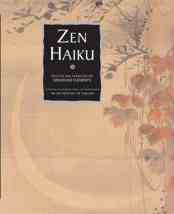 The Dublin City Gallery, the Hugh Lane, plays host on Sundays to free concerts and recitals, and 9th June sees the Triocca ensemble’s triple whammy of Bax’s “Elegiac Trio”, Ravel’s “Tombeur de Couperin” and the world premiere of John Buckley‘s “To Lands Beyond Time”, six short movements inspired by Japanese poetry, specifically that to be found in my collection of translations Moon in the Pines (a.k.a. Zen Haiku). Good luck Ríona (flute), Nancy (viola) and Geraldine (harp).
 When the future Admiral Togo was a young cadet in Britain, he spent several months in the company of a homestay family. His arrival caused great disappointment to the youngest boy in the Capel family, who had assumed that if Togo came from Japan, he must surely be an acrobat? Certainly, he must have been a friend of the most famous Japanese man among British youth, a circus performer known as Little All Right? The stoic Togo, already a veteran of the Japanese civil war, gruffly denied any association with jugglers or plate-spinners, and that was that.
 Despite the attention paid by Japanese animation historians to cartoon propaganda films made during the Second World War, twice as much animation may have been produced in the period for military instructional films. These films, now lost, were made by a group of animators seconded to the Tōhō Aviation Education Materials Production Office (Tōhō Kōkū Kyōiku Shiryō Seisaku-sho). Occasionally running for five or six reels (c. 48 minutes), and in one case consisting of a feature-length eight reels, they form the missing link between the one- and two-reel shorts of the 1930s and Japanese animation’s first feature, Momotarō Umi no Shinpei (1945, Momotarō’s Divine Sea Warriors). The films included tactical tips for the pilots who would bomb Pearl Harbor, short courses in identifying enemy ships, and an introduction to combat protocols for aircraft carrier personnel. This article reconstructs the content and achievement of the Shadow Staff from available materials, and considers its exclusion from (and restoration to) narratives of the Japanese animation industry.
 The Official Schoolgirl Milky Crisis Blog