The Japanese John Carter

I’ve got an article up on the Manga UK blog today about the Japanese prequels, sequels and pastiches to John Carter of Mars. This draws, of course, on the work I’ve been doing for the Science Fiction Encyclopedia to chronicle Japanese authors like Hitoshi Yoshioka. There’s also a little bit about Japanese steampunk that doesn’t get any attention abroad.

Operation Yashima

And so, as the nights grow longer and the need for air conditioning reduces, the Japanese government has finally relaxed its emergency power-saving measures. Put in place after the March quake/tsunami and Fukushima shut-down severely compromised the power grid for Tokyo and all points north, these directives urged factories to reduce their electricity usage by 15%.

Some people are still wondering how the loss of a single power station can cause such upheaval. It’s not just about the accident at Fukushima, it’s about the fact that the super-modern nation of Japan has two different power grids, running on different frequencies. Back in the days of Japan’s rapid modernisation, a French company installed the grid in one part of the country, and an American company installed the rest, one on 50Hz, and the other on 60Hz. As a result, diverting power from the south to the north is not so simple.

Although the directives only applied to big corporations, the rest of the Japanese soon rolled up their sleeves and muscled in. Aircon thermostats were cranked up so that they only cut in when the heat was truly unbearable. Office dress codes were relaxed to allow men to take off those jackets and ties. Meanwhile, all over Japan, a grass-roots economy drive began to tweet ideas for saving energy.

Meetings were held outdoors, if a park was nearby. Someone reminded people that it was hot enough to dry clothes on lines instead of in tumble dryers. And so on. And if you’re wondering what this has to do with Japanese cartoons, it is another example of the far-reaching power of the anime image. The hash-tag for all these suggestions, presumably kicked off by an anime fan with a sense of humour, was #yashimasakusen, a reference to episode six of Neon Genesis Evangelion. The titular Operation Yashima, for those that haven’t remembered their Gainax lore, is a military action in which the entire electricity grid of Japan is diverted to power up a massive sniper rifle. This wasn’t played up all too much in the recent Rebuild movie, so whoever came up with it was an old-school fan of the original TV series. And their little joke was the best bit of PR Gainax have had in a decade.


Jonathan Clements is the author of Schoolgirl Milky Crisis: Adventures in the Anime and Manga Trade. This article first appeared in NEO #91, 2011.

Another Manchuria

I have to spend a lot of money on Amazon Japan – sometimes I remember to write down my better discoveries, so that other researchers don’t have to take pot luck with cripplingly expensive postage.

For the last five years or so, I have been eschewing English-language guidebooks and relying on Japanese ones, not only in Japan, but also in parts of China. My favourite are the beautifully comprehensive Rurubu magazine-format tourist guides, that have helped me navigate the wilds of Amakusa and Hokkaido, Shanghai and Taiwan. But sometimes, you need something a little more specialised…

Manchuria Off the Tourist Track, by Keiji Kobayashi is a marvellous idea – a travel guide to Manchuria that highlights the region’s past as a Japanese puppet state. Kobayashi mooches about the modern-day Chinese provinces of Heilongjiang and Jilin, poking around odd monuments, and old buildings that are leftovers from the days when Manchuria was Japan’s own little exercise in imperialist expansion. This is where Mannerheim led a cavalry charge through the city centre of Mukden, against Japanese gunners, although Kobayashi also has time for the obscurer historical individuals, such as the grave of Verda Majo (1912-1947), the Japanese revolutionary who wrote books in Esperanto arguing for the freedom of China.

Some relics are long gone. The Japanese who remained behind have largely faded into the local population, and three generations of Chinese history have added their own artefacts. Shenyang train station is still there, but the nearby memorial to the fallen of the Russo-Japanese War has now been replaced by one of the ubiquitous statues of Chairman Mao. Kobayashi, ably aided by his photographer Ribun Fukui, chronicles the ghosts of Manchuria’s Japanese past, including the brutalist monuments to Japanese aggression, and carefully preserved sites of Japanese atrocities, some of the skeletons left in piles where they were found.

Manchuria is such a fascinating place, and includes the former capital of the Manchu dynastic founder Nurhachi; the great monumental tower built by General Nogi and Admiral Togo to honour their fallen men; Harbin, a Russian city on Chinese territory. They even dig up the old Man’ei Studios, once the largest film studio in Asia, that cranked out films in Japanese for the local population, now largely forgotten in film archives. Once the “cockpit of Asia”, Manchuria is now far off the tourist trail, but seems like one of the most exciting places for anyone in search of a glimpse of yesterday’s tomorrow. It is a sci-fi future that failed, and all the more interesting for it.

Party Like It's 1889

Over on his blog, Andy Frankham interviews John Ainsworth and me about our work on the Space 1889 audio dramas. I can’t believe it’s already been six years since they came out.

Doing this reminds me I must write up my discoveries on Japanese steampunk soon. There are some really amazing stories I uncovered while working on the Encyclopedia of Science Fiction, including Rhett Butler vs samurai and Byron’s daughter in space.

The Footprints of a Gigantic Mind

Out now in the US, and coming in a couple of weeks to the UK, Sherlock Holmes & Philosophy. This collection of essays on matters Sherlockian includes my own “Curious Case of the Dog in Prime Time”, a discussion of the Japanese cartoon series Sherlock Hound. See what I did, there?

In fact, my chapter is partly about the reception of Sherlock Holmes in Japan, and partly about the development of anthropomorphic anime. Other contributors have written pieces on, amongst other subjects, Sherlock Holmes and Buddhism, Sherlock Holmes and Hip Hop, unreliable narrators, Star Trek, marriage, feminism and the overall Holmes canon.

Scotland Loves…

Today I’m packing for Scotland Loves Anime, two weekends of Japanese cartoonery held in Glasgow and Edinburgh. This year’s line-up has four, count ’em, four Japanese guests, which means I have my work cut out for me interviewing Yumi Sato (Brains Base) and Shuko Yokoyama (Aniplex) about Hotarubi, and Shunsuke Oiji about Colourful. And the cherry on the cake is the legendary Ryosuke Takahashi (that’s him in the picture), father of “real mecha”, and show-runner on Armoured Trooper Votoms, who will be in Edinburgh to show off his new Pailsen Files, and answering questions after the premiere.

I’ll also be talking to him on Sunday 16th about his long career in the Japanese animation business, beginning with his early days at the famous Mushi Production. I might also bring up his segment of The Cockpit anime, since I translated it 16 years ago.

Scotland Loves Anime is actually part of a broader remit called “Scotland Loves Animation”. This is reflected in the education day on Friday 14th which sees a number of animators, directors and producers from the global animation community talking about their work. Also, the Polish animation house Platiges Images are sending Daniel Nenow to talk about his superb dogfight animation Paths of Hate. And all the while, Jonathan Clements, author of Schoolgirl Milky Crisis (that’s me), will be darting about on stage imparting Quite Interesting facts and odd anime trivia. At some point, I think that festival organiser Andrew Partridge is interviewing me… or I am interviewing him. We will probably end up interviewing each other, and as per usual it will turn into a stand-up routine about Bonkers Things the Japanese Studios Have Done This Year.

Mardock Scramble

Private-eye Dr Easter and his shapeshifting companion Oeufcoque rescue teen hooker Balot from a fiery death, before putting her to work in a campaign to bring down a sinister crime boss. Mardock Scramble is that rarest of opportunities – a chance to read the source material of an anime before most foreign viewers get the opportunity to see the spin-off in a cinema (the anime will be released here in a few months). In a refreshing change from piecemeal publications, US-based Haikasoru have combined an entire trilogy in one monster volume. This not only delivers superb value for money on the page-count, but also avoids the likely loss of readers that would have been likely to have otherwise bailed out during an overlong casino interlude.

Habitual anime viewers will sense strong echoes of Ghost in the Shell in Ubukata’s resurrected cyborg protagonist, and also resonances of the sly misogyny to be found in the anime scripts of Chiaki Konaka. Like Konaka, Ubukata wants to have his cake and eat it, presenting women in peril, distress and abusive situations for the titillation of a male readership, while simultaneously inviting disapproval of their plight.

Ubukata also does himself no favours by resorting to the tiresome Japanese habit of naming characters with punning associations in English. Ever since Osamu Tezuka, this practice has rendered uncountable stories seem laughably inept in translation – the author might cackle over the foreshadowings and egg-related references in his subtexts, but they are all too obvious to English readers, and can distract from an otherwise serious narrative, as if Frodo’s name were Dave Ring2mordor and Boromir were called Placeholder Deadsoon. Translator Edwin Hawkes does the best he can with such material, resulting in an illuminating window on what is both good and bad about modern Japanese science fiction.

Jonathan Clements is the author of Schoolgirl Milky Crisis: Adventures in the Anime and Manga Trade. This review first appeared in the SFX Ultimate Guide to Anime, 2011.

Togo at the Movies (1923)

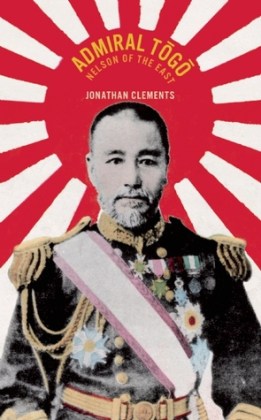
From Admiral Togo: Nelson of the East, by Jonathan Clements. Available now in the UK and soon in the US.

______

Togo the former samurai was brought face to face with a development of the new age – the motion picture. La Bataille (in America, Danger Line) directed by E.E. Violet, was the international star-studded epic of its day, the tale of the Japanese Marquis Yorisaka (Hayakawa Sessue) who suspects his wife of having an affair with the English captain Fergan (Felix Ford). The vengeful Yorisaka has Fergan transferred to his ship, and when wounded in action, orders the neutral Englishman to take charge of the ship. The film was an unabashed weepy, a refashioning of Othello, in which the wounded Marquis later discovers that his wife had been faithful to him, and seeks a tearful reconciliation. However, when screened to an audience of Japanese dignitaries by the well-meaning Viscount Ogasawara, the film’s scenes of naval combat had an unexpected effect on Admiral Togo. The sobbing Togo bolted from the theatre, confessing afterwards to Ogasawara: ‘Many of the men around me died in just that way. Do you think I can keep myself from weeping when I see the sight? It does not matter if it is a movie picture.’

___

And for readers in the London area there’s still time to book yourselves a place at my free lecture on Wednesday at the Japan Foundation, Johnny Chinaman: Admiral Togo and the British. I guarantee at least one joke at the expense of Essex.

Togo in America (1911)

9112825

From Admiral Togo: Nelson of the East, by Jonathan Clements. Out on the Kindle now in the UK and in the US.

______

The Americans were even more overwhelming in their reaction, leaving Togo taken aback at their enthusiasm and their energy. The pushy welcome began on the night that the Lusitania docked, when Togo found a midnight reception committee determined to whisk him onto land before dawn. Soon after, he faced a gesticulating, yelling wall of journalists and photographers, from whom his American minders selected a lucky foursome to take his picture. Togo stood to attention and stared grumpily into the cameras, only to discover that the paparazzi wanted him in a multiplicity of poses and aspects. He seemed particularly galled by the constant strobing of camera flashes. One single image, it seemed was not enough, and Togo suffered an excruciating fifteen minutes of man-handling and exhortations, until Chandler Hale, the Third Assistant Secretary of State, came to his rescue.

‘I have been beaten by the zeal of those cameramen,’ quipped Togo. ‘It is rather easier to fight the world squadrons than meeting those men.’

Faced with his customary silence, the American press filled in the blanks for themselves, with ruminations on the loneliness of command in the mysterious East, or patronising conjecture about what Togo might have said, had he been in a position to utter more than a few phrases. He was taken on a train to Washington, by a welcoming committee that plainly assumed he had never seen a train before, and whose excited fishing for compliments on American railways he found rudely obtuse.

The New York World concentrated on Togo’s encounter with local telephone exchange workers, whose place of work he visited on his way to the railway station. Dismissed as ‘Hello Girls’ in the early 20th century, switchboard operators were subject of contemporary gossip – a woman on the other end of a phone line, ready, in a certain sense, to do one’s bidding, and hence something of an erotic frisson. They were also habitually condescended to as bimbos, hence the World’s scoffing at the New York switchboard operators’ failure to remember to greet Togo with the correct cheer, which, the reporter assured his readers, was Banzai: ‘Ten Thousand Years’.

Other American crowds were soon educated by their press as to the expected form of address, and Togo was greeted with wild cries of Banzai everywhere he went. This verbal assault did not even escape him when riding in a government limousine, since on one occasion he found himself in an impromptu race with a car full of hysterical (and possibly drunken) flappers, who yelled Banzai at him and waved their handkerchiefs while the Admiral looked on in surprised amusement. At no point did Togo risk shaming his hosts by pointing out the unwelcome truth, which was that Banzai at the time was a military salute more appropriate to the gruff, tough army, whereas the more cultured Navy tended to salute with calls of Hoga: ‘Respectful Congratulations’.

The attention was clearly getting to Togo, as was the press’s constant demand that he say something, no matter how ill-informed or unfelt.

‘I have been frequently asked what I thought of America,’ he said with a rare scolding tone. ‘But isn’t it asking me too much? I have landed here only this morning, and I have nothing to tell.”

Welcome!

It was the best of shows. It was the worst of shows. Whenever I had to cover my tracks, I simply called it Schoolgirl Milky Crisis.

I have been writing about Japanese comics and animation for almost two decades, taking potshots at anime, manga and related fields, spreading scurrilous gossip and telling tall tales. And my friends in the business didn’t seem to mind, as long as they had plausible deniability, which meant that sometimes, even though the real name of a work was obvious to everyone, I needed to call it something else.

So I picked three random words out of nowhere: Schoolgirl Milky Crisis. At first, it was one of many fake titles, along with such creations as Warriors of the Test Card, Geek Gets Girls and Devil Devil Beast Beast. But there was something about Schoolgirl Milky Crisis that captured readers’ imaginations, and the non-existent show began to crop up regularly in my columns on the UK Sci Fi Channel’s website, in Newtype USA, and later in the Judge Dredd Megazine, NEO, and SFX Total Anime.

As time passed, colleagues approached me with woeful grievances and axes to grind. They would press documents into my hands naming names and stirring trouble. All they asked was that if I talked about this terrible show or that awful production experience, I should make sure everyone knew it was Schoolgirl Milky Crisis.

This blog is just a taste of the kind of things in the book that is due for publication in early 2009. The book contains serious newspaper articles, seminar speeches, frivolous web journalism and bitchy gossip from the specialist anime press. There is hard, useful information there, even in stories about gloves full of custard and snowball fights with martial artists. As part of the selection process, my editors and I have focussed on material that educates and informs, even if also discussing the ethics of sending celebrity guests to bondage clubs.

Schoolgirl Milky Start!

Jonathan.