Paper View

Weekly_Young_Magazine_10th_issue_(2011)2015 begins with an announcement from the Japanese publisher Kodansha that it plans by June to have all 22 of its manga magazines available as digital releases on the day of their print publication. The first three are already in e-stores – Kodansha has chosen to lead with the big hitters Young magazine and the weekly and monthly Shonen.

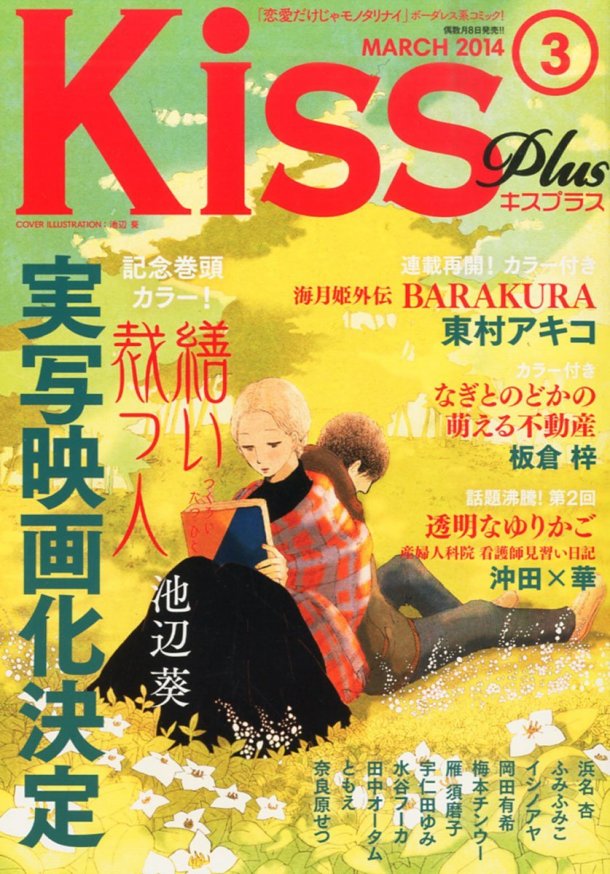
Of course, this has been a long time coming. The industry was subjected to an unexpected test in 2011, when paper shortages and transportation snarl-ups after the Tohoku Earthquake led several publishers to go straight to digital on a few titles. The “first three” are not even really first, since Morning magazine has been day-date digital since 2013. But Morning is a magazine for grown-ups, whereas this blanket policy will now incorporate all titles, including Afternoon, Evening, and Good Afternoon for the boys, and Be Love, Nakayoshi and Kiss for the girls.

As a spokesman for Kodansha recently confirmed, the big issue in recent years has not only been the logistics, but a basic change in commuter habits. In effect, it is a statement of faith that teens can, and will access their manga on iPads and laptops in increasing numbers. And, just maybe, that within a few years it will be time to phase out paper altogether. Kiss-Plus

When I first went to Japan in 1992, every carriage on the train was packed with people reading books and magazines. Just as in Europe, any railway station concourse was populated with news-stands offering something to keep you busy on your journey. So, too, were the recycling bins, as commuters discarded tonnes of paper daily. But the rise of the cellphone has completely changed that paradigm. Now there is often barely a single book in evidence per carriage, while everybody thumbs at their mobiles, playing Angry Birds or texting their mates.

Kodansha’s move seems to be a wise bet in ensuring that if the reader won’t buy a physical manga to read any more, they will still have the opportunity to squirt it onto their mobile device.

Will we soon see the death of the double-page splash, as editors fret over the size of phone screens? Are panels going to become squarer and less varied? Or will showmen editors start to offer audio effects and narration, leading not to more vibrant comics, but an excuse for cut-rate “anime” with significantly less animation? Digital manga are nothing new, but the drift towards all manga being digital may have some long-term stylistic effects.

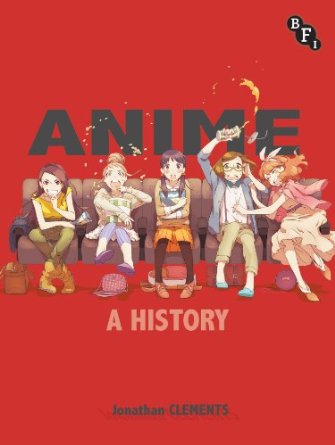
Jonathan Clements is the author of Anime: A History, and the co-author of The Anime Encyclopedia: A Century of Japanese Animation. This article first appeared in NEO 134, 2015.

Undercover Manga

shimajiro appI’ve been wondering for a while when the Doraemon bomb was going to go off. Every time I’ve been to China in the last three years, amid ever-escalating sabre-rattling over the Senkaku Islands, I have found the locals avidly denying any interest in Japanese culture. I have found media students unprepared to work on papers about anime, for fear that the word “Japan” will be on their resumé ever more. And I have watched, every day, as two Japanese invaders march in right under Chinese noses.

One is Shimajiro, an infant tiger cub who appears in a hybrid kids’ show that is part anime, part live-action play school. I’ve watched Shimajiro sing songs about London Bridge and demonstrate how to go to the toilet, and nobody has noticed that he’s really Japanese, because the broadcasters have stripped out the original live-action framing footage and replaced it with Chinese people. Also, they don’t make the mistake of calling him Shimajiro, either. In China, he is known as Qiao Hu Dao, the “brave and clever tiger.”

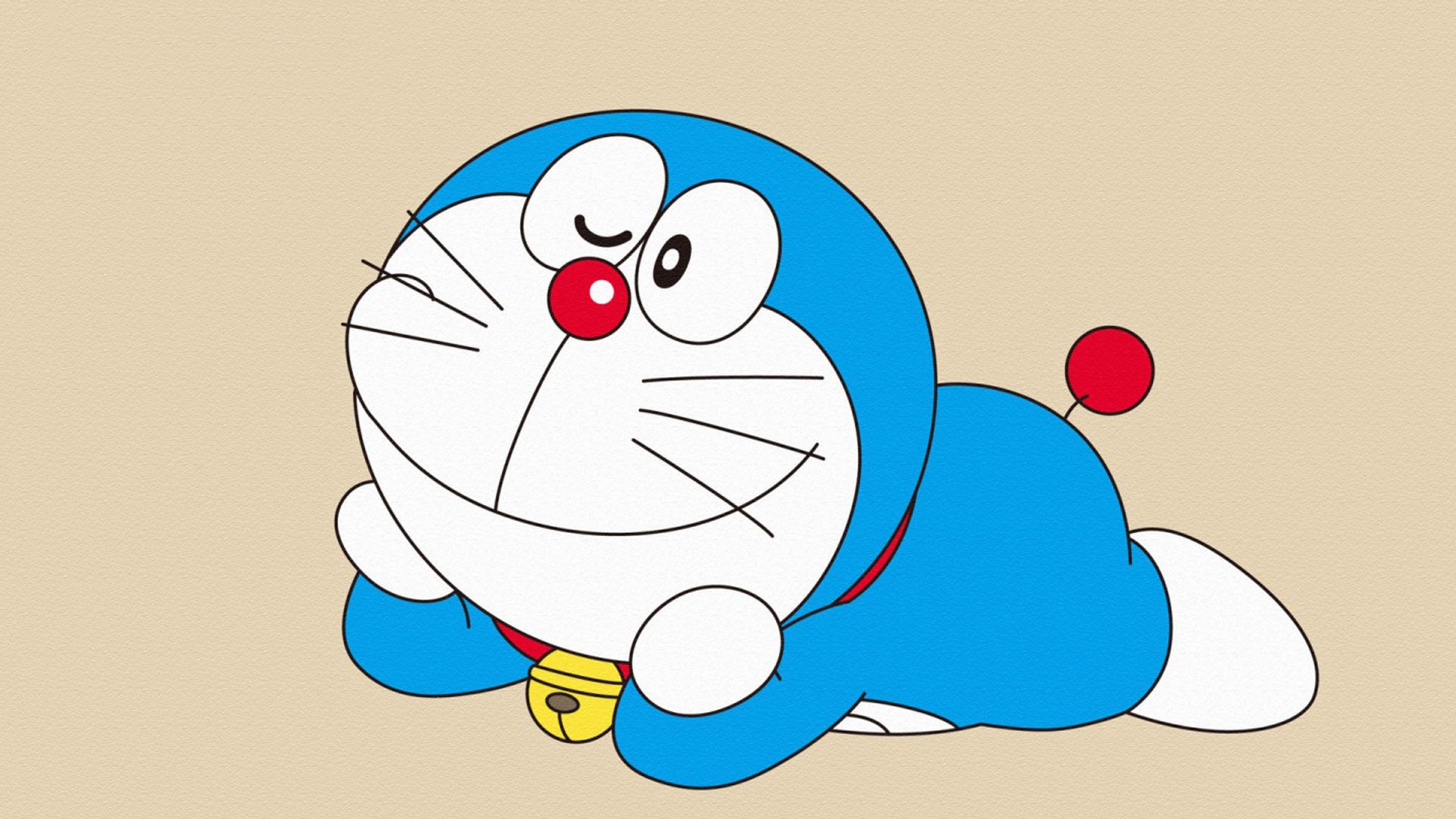
doraemonThe other is Doraemon, that time-travelling blue robot cat who recently enjoyed the surprising honour of a 12,000-page manga translation funded by Japanese government boondoggle money. Doraemon remains a popular movie and TV figure with anime audiences, but was also the subject of so much manga piracy in decades past that he is known by several different names in the Chinese world. My favourite is Ding Dang the Robot Cat (ding-dang, you see, being Mandarin for ding-dong, if you ever need it). He’s even the subject of an exhibition in Hong Kong, which trilled, unwisely, about his true origins.

The Japanese authorities, excited at the amount of love for Ding Dang all over the mainland, have made Doraemon a cultural ambassador, thereby pushing their soft power agenda by showing the Chinese that a perennial favourite was actually from the other side of the water. This has entertainingly backfired, with a schmuck-bait editorial in the Chengdu Daily pointing out the blindingly obvious – that Doraemon was an effort to make Japan look cute and less threatening – and several lesser newspapers getting increasingly irate about the idea, with the Global Times frothing “we must never let a little robotic cat take control of our minds.” Top tip.

This article first appeared in NEO 131, 2014. Jonathan Clements is the author of Anime: A History, in shops now (UK/US).

Manga Snapshot: Monthly Comic Ikki

With the news that the manga magazine Monthly Ikki is shutting down after over a decade, I reprint my Manga Snapshot column on it from 2010. I’m afraid I don’t have the original images so I have had to scrape up what I can from the interwebs.

——–
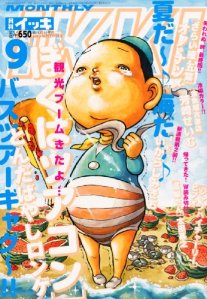
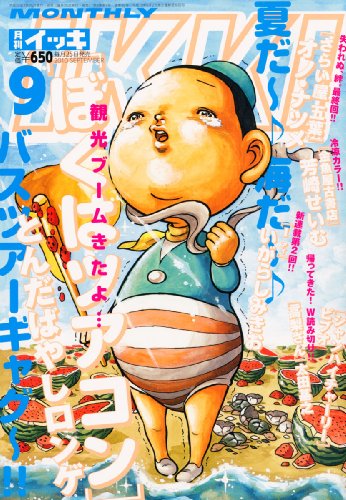
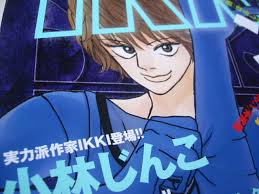
ikki coverIt’s another brick-sized manga magazine, but you’ll have trouble finding Ikki in a Japanese 7-11.  It’s calculatedly, studiously different from the manga norm, which is just how Ikki magazine likes it.

The Japanese Magazine Publishers Association only provides one set of data for the relatively niche Ikki, and that’s the news that it prints a monthly distribution of just 13,750 copies. In Japanese terms, that’s miniscule – in fact, it’s the smallest statistic for men’s manga in the JMPA listings. That doesn’t mean it’s the least popular magazine we have ever covered in Manga Snapshot, as undoubtedly some of the boys-love and other niche titles we’ve examined have similarly low figures that aren’t audited, but even so, whatever Ikki does, it does it for a tiny proportion of the manga-reading crowd.

Big Comic Spirits, the parent magazine that spawned it as a one-off special in 2000, and then as a regular venture since 2003, is largely (54.1%) read by 300,000 people in their twenties, with an impressive remainder (30%) in their thirties. But Big Comic Spirits has such a broad readership, including readers as young as 17 and as old as 50, that’s it hard to see at a glance which sector of that market Ikki might be hoping to tap. BCS even boasts of 30% female readers, many of whom are the wives of the main target audience, which perhaps explains why this spin-off takes comics rather more seriously than some other “men’s” titles, refusing to run the “gravure” images of semi-naked ladies to be found in rival titles like Young Champion Retsu. Instead, the title positions itself as something of a find for early adopters, with a strapline that proclaims: “This is still the dawn of comics.” The implication is that the century-old medium is still only finding its feet, and that Ikki might be the Garo or Comic Afternoon of its age, where all the innovative experiments and hot new artists can be found. Them’s fighting words for what at first appears to be Just Another Brick-Sized Manga Mag, but notably it was the editor of Ikki who was at the forefront of a recent lobbying of the Japanese government, defending the right of artists to freedom of expression in increasingly censorious times.

Adverts in Ikki are thin on the ground. There’s one for a teen movie and another for a sportswear manufacturer, so right-on that it merely gives us the logo and a footballer wearing some gear, but doesn’t bother to push the gear itself. And branding is part of the deal – Ikki sets itself up as a lifestyle, with official “Ikki shops” dotted around Japan (and one in Seoul) that appear to be the only place you can actually be sure to buy Ikki. And from the looks of them, they are bookstores and video shops; you’ll have trouble stumbling across Ikki unless you are already a habitual reader or cineaste. But you are also likely to buy Ikki if you are a budding manga artist – every now and then the magazine runs its Ikkiman competition, with the prize being a paid commission and the chance to pitch an ongoing series.
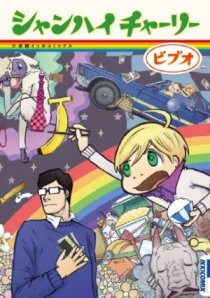
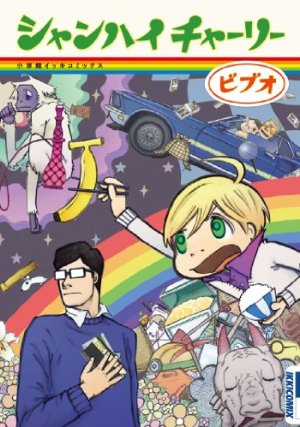
shangahi charlieShanghai Charlie by “Bibuo” has an opening chapter that introduces us to Charlie, a young boy, and “Shanghai”, his significantly older brother, who appears to be his legal guardian. Drab, everyday events like a trip to the supermarket are juxtaposed with Charlie’s dream existence, in which he plays with knights and dragons, and complains about his brother’s stingy decisions not to buy him extra sweets at the checkout. Shanghai Charlie is in love with childhood, told very much from Charlie’s point of view, but for the entertainment and education of readers much closer in age to the elder brother, and likely to have Charlies of their own. Charlie has tantrums and makes unfair accusations about his elders, but this is all part of the child’s worldview, and Shanghai Charlie exhorts its reader to remember that the irritating parasite who won’t eat his greens is also a dreamer and an explorer of the mind, who lives a different dream adventure every night, and ultimately only wants to feel safe and loved.

The winner of the most recent Ikkiman competition is the pseudonymous Ayumimi Yakahi whose manga Hamawou gets a chunky blue-tinted section in this issue. Yakahi herself sets her sights humbly low with her debut, noting: “I’ll be happy if you just read it to the end.” Her story is a sad elegy to modern city life, a perfectly normal tale in which all the parts are played by frogs and toads. Hamawou is in love with Renka, a bar-girl (well, barfrog) who stays out late drinking with fat company presidents, and tumbles home squiffy and giggling in the small hours, only to sleep it off during the day and head out again the next night. Hamawou, meanwhile, is reduced to driver, laundryman and occasional night-nurse, and slumps through the story with froggy eyes brimming with tears.
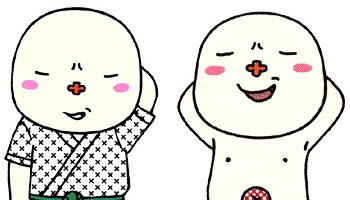
noramimiai5Such juxtapositions of the absurd and the mundane are a staple of avant-garde manga, and it should come as no surprise that more established creators have tried similar tactics. Noramimi by Kazuo Hara is, at one level, a kitchen sink drama about the people who run a merchandising goods franchise called Hello Kids. Think Hello Kitty, but with teddy bears and demons and God knows what else, and they all come to life and answer back, at least in the mind of the titular Noramimi. But this is all a lot more interesting than it sounds: infantilism, in Japanese studies, is often thrown around like a dirty word. Whenever I encounter it, it is usually with a resigned sigh as another a bunch of Japanese creatives act like children again. But here, in story after story in Ikki magazine, infantilism is instead a serious window into the minds of children.
clashA candidate for the best Japanese pun ever, Jingo Kobayashi’s Jumpin’ Gap Clash is the self-narrated misadventures of Taika Wakatsuki, an otaku and sometime sci-fi fan who is secretly excited by scenes of violence. That, at least, is what the “story so far” claims; in this chapter, Taika simply goes shopping. Notably, Taika has a little sister, Laika – once again, we see the adult world filtered through that of an infant dependent, as if the presence of a child were an entirely everyday occurrence in the lives of the readership.

Similar child-centred but adult-aimed stories can be found in Tales of the Unwanted by Tsunpei Sanyu, whose heavily pencil-shaded imagery concentrates on a different kind of lone wolf and cub – an outcast boy in the forest who befriends a wandering wild dog, and then runs into a peasant girl who has fled an unwelcome betrothal. The emphasis here is on making new networks even in rejecting the mainstream – strange attractors, if you will.

Meanwhile, in Buranko by the Thai artist Wissut Ponnimit, the story of a family stuck in the middle of first contact with alien invaders is told in a resolutely cartoony form like the most childish of Tezuka artwork. A very similar art style can be found in Wild Mountain by Hideyasu Moto, in which a meteorite crashes in Tokyo’s Nakano ward, creating an impromptu new district, packed with aliens and their own mayor, a beleaguered official called Sugahiko Suga.

Other tales in Ikki are relentlessly skewed older. Jiro Matsumoto’s Freezer posits a near-future society in which the government legalises revenge killings. As long as you have a legally sanctioned vendetta against a criminal, you can not only have them killed, but hire a licensed assassin (or “freezer”) to do it for you. What could possibly go wrong…? Well, everything, as it turns out, in a tale that marries Battle Royale to a police procedural, with a set of cold-hearted hunting rules that see convicts turned loose in public and made to run from assassins hired by aggrieved victims, whether or not the convict is truly guilty. As you might expect, this has already been turned into a movie, directed by Kazuyoshi Kumakiri in 2006.
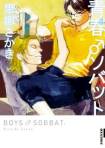
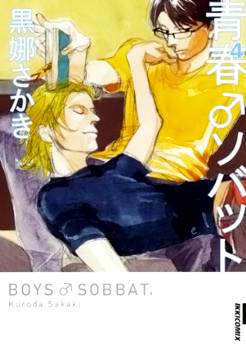
i114017Sakaki Kuroda’s Sobbat posits a former all-girls school that gets a sudden influx of boys in the upper years. And the boys, typically for the manga world, are less interested in their giggling sailor-suited classmates than they are in each other. Sobbat offers a defamiliarised perspective on high school romance and teenage angst, affording a girl-friendly glance at male obsessions, on the understanding that the men in question could not possibly be a threat to the female reader.

Nanki Sato and Akira Kizuki’s manga “Sex nanka Kyomi nai”, loosely translatable as No Sex, Please, is a genuinely charming journey through the mind of an aging man, as he re-evaluates his life and his youthful erotic obsessions. Neither prurient nor puerile, it uses a chance hearing of a much-loved song by a forgotten band to contrast our protagonist’s first sexual encounter with Michi, the teenage girl who would eventually become his wife, with the woman that she has become. Boobs are the issue of the day, as he recalls his relatively flat-chested college lover, and the more well-endowed wife who sleeps now by his side. No angst, merely a bemused meditation that men always want what they can’t have, and that his current sleeping partner is a very different woman to the one he married. And the realisation that that’s kind of cool. As with the child-centred stories above, it’s perfectly aimed at a thirtysomething audience, with some intriguing bedroom philosophy, and, well, let’s face it, two sex scenes.

The heroine of Silly Kodama by Kario Suzukin is a 17-year-old klutz whose main loves are bike-riding and baseball, who has accidentally swallowed a ball-like spirit creature – the titular kodama (“bullet”) – which causes her to act strangely, and interact with mythological creatures. The series allegorises many teenage growing pains, playfully suggesting that they are the work of malevolent or uncaring creatures from Japanese folktales, and inevitably leaving the exasperated protagonist to clear up the mess and misunderstandings.
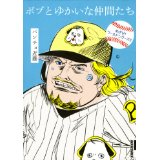
51WQYbgnOCL._AA160_Baseball, that baffling Japanese obsession, is soon back on the cards again, quite literally in the case of Bob (“with his funky company”) by Pancho Kondo. The story, crammed tightly into only a few pages, is about the eponymous Bob Hoffman and his fellow teammates on the Bullries Bulldogs baseball team, although this issue is taken up with Bob, Jo the second baseman and Kanegong the star player bickering over product placement and character merchandise. In a little bit of manga artist fun, creator Kondo decides to translate his character bios into English to decorate the margins in this issue. “I think,” he writes snickeringly “I can be irresponsible just like Jo, ’cause nobody reads this translated text anyway.” Well, except for the thousands of people who bought this issue of NEO. Your secret’s safe, Pancho!

Wombs by Yumiko Shirai is much more original, a subtle science fiction epic set on the colony world of Hekio, where a war has broken out between the first wave of human arrivals and later, less welcome interlopers. Citizens are co-opted into the military to fight in a war they really don’t want, with women drafted to bear children for the war effort. The result is an intriguing combination of Armitage III and TheHandmaid’s Tale, viewing anecdotes of pregnancy through the intriguing prism of a far-future tale of space colonisation.

Ikki certainly does its best to poke and prod, push and stretch the manga medium in new directions in the 21st century. Half a century after the avant garde first began turning comics on their head, Ikki is still at it, searching all the time (and occasionally a little too hard) for something completely different. Ultimately, Ikki isn’t quite as groundbreaking and innovative as it would like to be, but at least it’s trying – far better to set high standards for oneself than to languish in the stinky swamp of low expectations.

Jonathan Clements is the author of Anime: A History. This article first appeared in NEO #76, 2010. The Manga Snapshot column has been reviewing a different manga magazine every month since 2005.


All Aboard the Gravy Train

doraemonLike some magical artefact pulled from an Anywhere Door, the Doraemon manga suddenly arrives in English, in its entirety! Yes, that’s 12,000 pages of one of Japan’s best loved comics, a valuable missing piece of the manga puzzle.

Publishing Doraemon in its entirety is a big risk, but not as big as it once would have been. E-publishing means that the owners, Fujiko Pro don’t have to print ten thousand copies of a 12,000-page manga, but can store it on a hard-drive and wait for your money. More crucially, the long-running adventures of the time-travelling blue cat arrive part-funded by a Japanese government initiative.

It’s been five years since this column speculated about the likely bail-out package for Cool Japan (NEO #60). But finally we have the Japanese Contents Localisation or Promotion fund, or “J-LOP”, as it appears to have been termed by whimsical policy wonks with a love of Jennifer Lopez. One of the few schemes to survive the collapse of the Aso administration, J-LOP offers millions of pounds to subsidise the translation or promotion of Japanese works.

J-LOP is an impressive exercise in trickle-down economics, an incentive scheme for copyright owners (not publishers or distributors) to push their work in new markets. And while it can front up to 70% of the costs, the owners still have to come up with some of the cash themselves – this is mainly going to be a scheme that benefits the rich, in the expectation that their ventures generate employment for the rest of us.

So it’s a job creation scheme to attract foreign money, thereby creating work for Japanese tax-payers on which they can pay tax. It is, according to its website at j-lop.jp, also a tourism initiative, in order to keep foreign readers and viewers enthusiastic about Japanese stuff. One wonders if Doraemon is merely the first of many classics to get a leg-up, but I suspect that canny form-fillers will soon be at the trough, applying for subsidies not for worthy wallflowers, but for fan-bait that would have got translated anyway. A heroic tribunal will apparently be on hand to stop this happening. Now there’s an anime waiting to happen…

Jonathan Clements is the author of Anime: A History, published by the British Film Institute. This article first appeared in NEO #123, 2014.

Haruki Kadokawa’s Struggle

kadokawa pictureOver at the Encyclopedia of Science Fiction, the need to revise the entry for the blockbuster flop Virus led me to also write a new entry on its producer, the flamboyant, ever-entertaining Haruki Kadokawa. That’s him in the picture, dressed as a samurai on a Tokyo overpass, photographed by Annie Leibowitz, with a book title that’s the same in Japanese as Mein Kampf. Because if you’re that rich, you would, wouldn’t you?

Hugos and Gareths

More than one way to skin a catbus, in our 24th podcast

manga_uk_podcast_logo.jpgJeremy Graves is joined by Jerome Mazandarani, Andrew Hewson and Jonathan Clements, for a series of rants and ill-informed commentary about anime, manga, the storm over the Hugo Awards, and your most awkward convention moment. Download it HERE.

01:00 Delays, to Fairy Tail The Movie and Jormungand. Jonathan Clements is accused of being a complete Cnut. Stuff that will be happening at the Birmingham Comic Con and Kitacon.

04:00 Breaking out the world’s smallest violins for Torrent sites. and BBC3. The exciting world of “back catalogue”.

10:00 What counts as “good sales” in Japan? 500 Nutters? How can a film make a loss in cinemas but still profit its production committee? The mysterious case of Heartbeat and Emmerdale Farm (not anime, but just imagine…).

16:00 The Ghost in the Shell live-action movie, and the chances of everyone being crushingly disappointed again. Who would you pick to direct a notional GITS movie? As promised, a link to our interview with the director of The Raid.

19:00 Speaking of people called Gareth, we’re back to Godzilla. The chances of Martin Scorsese directing GITS (unlikely). The prospects for Tom Cruise’s Edge of Tomorrow, “based on the book that looks like a manga.” The chances of Kurt Sutter beating up Jerome, and a bizarre tangent about the script-writers for The Shield.

25:00 The politics of handing out a Lifetime Achievement Award to Katsuhiro Otomo, and other issues to do with enticing Japanese guests to foreign events.

29:40 The ridiculous scandal over the Hugo Awards, in which Jonathan Ross is appointed to host, SF fandom kicks off, Jonathan Ross withdraws, SF fandom kicks off again, and Jerome Mazandarani goes through the fall-out arising, beginning with the press coverage and working backwards.

41bkTuP9TdL._SY445_36:00 The ridiculous scandal over the Hugo Awards, this time from the perspective of Jonathan Clements, who has brought up the Worldcon twice before on this podcast and got nowhere. A very different version of events, beginning with the fight on the committee and working outwards (and ending with a plug for Anime: A History for Best Related Book).

44:00 The quest for panel parity, the gender division within fandom and whether or not that is reflected in film festival juries and, er… podcasts like this one. The hidden influence of Jonathan Ross on Ghost in the Shell: Innocence and its UK sales.

48:30 Will you be releasing season two of xxxHolic? And an answer that transforms into a plug for Blood C.

50:25 Pros and cons of releasing something on Blu-ray before DVD. Why do we have to keep releasing stuff on PAL when modern TVs can handle NTSC conversion…? Why not make everything a Combi-pack?

59:00 Netflix makes it to the Consumer Price Index, thereby suggesting that our secret masters believe “the next format is no format.” The problems of marketing collectibles to people who cannot afford to collect very much.

63:00 Releasing classic films on Blu-ray. The origins of the Blu in Blu-ray: can the Japanese just not spell?

64:00 Prospects for Star Blazers 2199, a.k.a. Space Cruiser Yamato 2199. Tweet us if you want it. #2199uk

kumadori.jpg65:20 How would Scottish independence affect an anime company, if at all?

69:00 Top of the Pod! This month: what’s your most awkward convention moment? Here’s a picture of Jeremy’s. Tell us yours by tweeting #mangatotp

The Podcast is available to download now HERE, or find it and an archive of previous shows at our iTunes page. For a detailed contents listing of previous podcasts, check out our Podcasts page.

WAai! Boys in Skirts

This blog only republishes a mere 10% of the wordcount I write for Neo magazine every month, but with the news just out that WAai! Boys in Skirts magazine has suspended publication, I’ll take the opportunity to upload my Manga Snapshot article about it from issue 92, back in 2012. As you can see, I was deeply suspicious of its motives, but also wary of the etiquette of even voicing that suspicion.

——

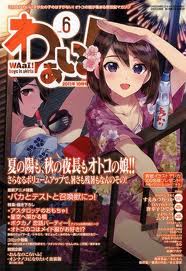
waai 6Issue #6

Debut Year: 2010

Page Count: 270

Publisher: Ichijinsha

Price: 950 yen (£7.96)

I Want to See Your Smiling Face, by Kamiyoshi, seemingly lifts its opening gambit from the Train Man series. A boy finds himself falling in love with the girl who often sits opposite him on the train to school. One day, he finally plucks up the courage to talk to her and ask her out, only for the “girl” to reveal that she is really a he. A standard school romance then unfolds, with a shared gender being the only discernable difference between this story and any other tale of snogging behind the bikesheds.

Just when you thought that the manga world couldn’t surprise you any more, there’s always some new odd niche that springs into life. And this month’s topic is the oddest yet. WAai! Boys in Skirts is exactly what it says on the cover: a manga magazine for and about transvestites!

I’m sure you’ll agree, this is something of a subgenre of a subgenre. But ever since spinning off from the boys’ magazine Comic REX in April 2010, WAai has still had enough faith in the size of its readership to punt out 270 pages of glossy, high-quality printing four times a year – that’s once per season, in order to ensure varying uses of colours and imagery. The cover to this issue by Akira Kasakabe has two attractive ladies in a state of summery deshabillé, sorting out their lippy and watching the midsummer fireworks. Oh, except they are not ladies. They are both blokes, it says here.

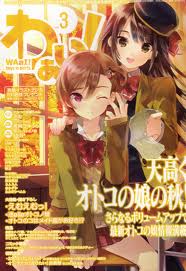
If at first you can’t believe your eyes, the strapline at the top makes it as clear as possible: “Inside this publication are cute kids, but they are not girls. This is a new magazine for otoko no ko of the new generation.” The Japanese otoko no ko literally means Man-Girl or Mannish Girl, but is it intended here to mean “ladyboy”? We are back in the fascinating world of the implied reader – is this a magazine for boys who like dressing up as girls, or is it a magazine for girls who like to look at boys dressed up as girls?

waai 2The advice page doesn’t help. Mitsuba, the pseudonymous author of Wanna Be a Pretty Girl, offers tips on make-up and hair stylings. Even if Mitsuba is actually a man, as her biography implies, there is nothing unusual in Japan about men hectoring women on their looks. Indeed, in the kabuki days, the onnagata female impersonators were widely regarded as the arbiters of taste for how women should behave. The title of Mitsuba’s column uses the verb naritai (“want to become”), but the nature of the “becoming” is nicely vague. Is this a column for plain janes who want some top tips, or is it actually a crash course in femininity for boys who want to look like girls?

In Reversible School Life, by Suemi Tsujikka, an all-boys’ school makes the odd decision to force half of its attendees to dress up as girls on any given day. Transfer student Shu is thrown in at the deep end, since he has no clue how to coordinate his clothes. He is aided and abetted by the more experienced Tsubaki, in a school story that dispenses with the usual “hidden boy” trope in favour of an environment in which cross-dressing is openly encouraged, in fact mandated, as part of school life. As with I Want to See Your Smiling Face, there is a sense that the protagonist is entirely clueless and lacking in experience. The usual mystery of unattainable girls is replaced here with boy-on-boy crushes, but also with initiation into the rules and regulations of living life as a woman. For the generation raised on the arcane taxonomy of Pokémon and the shifting fads of cosplay, perhaps cross-dressing really is the final frontier. It’ll probably keep some people busy for years. Just remember, boys, stripes aren’t slimming.

WAai’s niche is still small – it is half the size and double the price of mainstream magazines, and is not included in the online sales figures of the Japanese Magazine Publishers Association. But this is how all new niches start; the publisher Ichijinsha would be mad to print a million copies and hope that the readership to match it magically arrived out of nowhere.

The Japanese mainstream has treated the otoko no ko “phenomenon” with a degree of suspicion – perhaps wisely, considering the penchant of the media for making up new fads on the spot and hoping the herd will follow. In 2010, the Engan bus company offered spoof free tickets to transvestites as an April Fool’s joke. Later in the year, the same company offered a free ticket promotion for real, but only to female passengers who would dress up as sexy “moe” girls. The transvestites should sue!

The use of the term otoko no ko has been gaining ground in Japanese for the last ten years. But it’s only in the last two years that it has suddenly blossomed into a definable subculture, with its own publications, slang, traditions and inevitable media attention. WAai isn’t even the only magazine for otoko no ko. Already in the last year, the Japanese market has seen the arrival of Change H, Oto(star)ko and Otoko no Ko Club magazines. Meanwhile, Enterbrain has test-marketed the manga anthology Super Otoko no Ko Time, and Square Enix has tried Joso Shonen Anthology (Boys in Girls’ Clothing). Newtype, the trend-setting anime magazine, has already tested an experimental title for the otoko no ko market, with the release in August 2011 of a live-action photography special featuring boys dressed as girls. It sold out on the day of release – but was that a sign of an untapped market, or simply of deliberate under-printing to manufacture headlines?

Its aficionados are keen to point out that these characters are not transsexuals – they are transvestites, dolled up in women’s clothes as an attempt to show a sensitive side. They are, we are assured, boys who like the idea of softness and silkiness, experiments with lipstick and girlish pursuits – an assertion which places them firmly on a timeline that reaches back for several generations, to the manga revolutions of the 1960s that valorised flower-sniffing sensitive types in reaction to the ludicrously macho heroes of the day. Japanese Wikipedia even has its own page on the phenomenon, which goes to great pains to point out that otoko no ko have absolutely nothing to do with sexuality. Just because a boy wears women’s clothes, he is not homosexual, nor does he “want” to be a woman. The artwork in WAai makes that abundantly clear, with images of characters in bikinis and lingerie, pouting for the camera but displaying telltale flat chests and posing pouches that leave nothing to the imagination.

waai 4Meanwhile, many of the stories simply refashion old manga saws with all-male casts, such as Secret Devil-chan by Rumu. This is yet another magical-“girlfriend” tale, in which a hapless Japanese boy called So lands himself with a mini-skirted bedmate who turns out to be a cross-dressing devil-boy called Demon Kogure. School high jinks, knicker flashing and snogs soon ensue, while So’s girl-next-door (an actual girl) fumes at the arrival of her supernatural competition. To coin a phrase, it’s Urusei Yatsura with nobs on. Also, there are nuns in it.

In Past Future by Tsukasa Takatsuki, a girl called Mirai becomes increasingly irritated with her brother Kago’s habit of “borrowing” her clothes. She drags in her friend Ran in an attempt to wean Kago off, but instead inadvertently encourages him. Instead of chasing after Ran and trying to get into her knickers in an altogether different way, Kago instead starts asking her for fashion tips. Meanwhile, people keep shouting Mirai’s name all the time – it literally means “future”, and hence imparts a sci-fi resonance to everything that’s going on, even though it is resolutely set in the present-day era of iPhones and Nintendo DS. That’s as close as the mag gets to SF, although there is more scope for fantasy in the ghost-busting, tentacle-heavy tale Yorishiro, written and drawn by Muranako. Presumably, some of the “girls” in it are boys.

However, there is a flipside. Is this really a magazine for transvestites? The editorial content delivers one message, but the advertising tells a different story. If we want to be cynical for a moment, let’s not immediately assume that otoko no ko materials reflect a grass-roots demand that Japanese conglomerates are sweetly serving. Let’s instead assume that a bunch of large cosmetics companies have realised that heterosexual men represent a bogglingly large untapped market for sales of make-up. Has some bright spark at Shiseido or Nivea suggested that the marketing team take a step beyond “metrosexual” and try to flog lip-gloss and crimpers directly to absolutely everybody? WAai’s concept of femininity does appear oddly and over-enthusiastically consumerist. In other words, its attitude is that women are “made” by buying stuff. Shopping maketh the woman, in WAai’s eyes – it’s a beautician’s idea of beauty, and seems largely materialist and product-orientated.

This is a no-win situation for critics. If we question the motives of the publishers, we are attacking transvestites’ right to be different. But if we report on a “phenomenon” that isn’t really a phenomenon at all, but a cynical appropriation of a subculture as an excuse to bootstrap a new fashion fad, then we are mere stooges of the marketing machine. Meanwhile, it is arguably the height of cynicism to latch onto someone’s heartfelt beliefs and lifestyle, merely because you want to shift a job-lot of depilatory cream. If it’s “in” to be a transvestite this season, that’s all very well, but that’s like saying its fashionable to be Asian, or short-sighted, or tall. What happens next year?

waai 3Mitsuba’s make-up tips aside, why haven’t the WAai ad sales team placed oodles of adverts for face creams and blushers, make-up brushes and powdery things? WAai is a magazine with definite, blunt views on femininity, even though the advertisers aren’t playing along. Where are the adverts for clothes? Surely, the interests and concerns of the average transvestite (whatever that might mean) present myriads of possible attractions to several subcultures, but there is no evidence at all that anyone has taken the bait. Instead, the adverts in WAai are exactly the same sort of material you might expect to find in a teenage boys’ magazine – online gaming, and the Tora no Ana dojinshi shop.

Meanwhile, there is a heavy and frankly boyish concentration on new anime series, with larger-than-normal features dedicated to modern serials such as Astarotte and Baka & Test: Summon the Beasts. Games reviews also take up a substantial proportion of the front matter, including self-explanatory titles such as The Boy Loves Dressing Up as a Maid and Bokukano: Ladyboy Sex Chat.

Regular readers of this magazine may have noted on several occasions that the Japanese comics market is embroiled in a massive argument about the depiction of minors. Its most recent incarnation was in September 2011, when two members of the Japanese parliament presented a petition calling for anime, manga and games to adhere to the same sort of censorship rules as other publications. In other words, there is still a massive fight about the depiction of little girls in print, and it is your correspondent’s suspicion that a large part, if not all of the otoko no ko phenomenon is not about reader demand at all, but merely a new way of circumventing the censor. Just as white panties and blank crotches, tentacles and robots formed new and odd tropes in anime and manga, could it be that bluntly stating that these “girls” are really boys is a sneaky way for certain publishers to hang onto images of flat-chested dollymops, without incurring the wrath of future censors? If so, it’s a very sneaky trick, but let’s not assume it’s a sign of sea-change in attitudes towards cross-dressing… Unless it is.

Jonathan Clements is the author of Schoolgirl Milky Crisis: Adventures in the Anime and Manga Trade and Anime: A History. This article first appeared in NEO 92, 2012. The Manga Snapshot column has been reviewing a different manga magazine every month since 2005.

Assassin’s Creed: The Manga

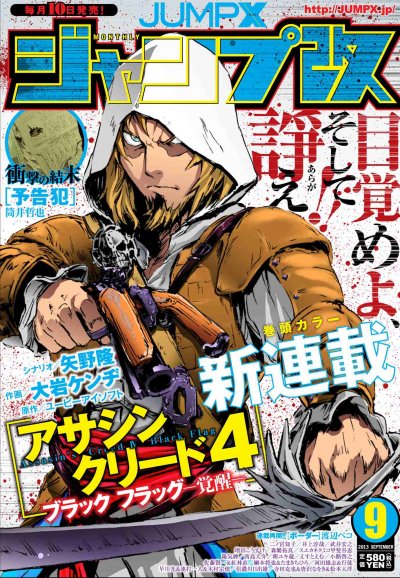
assassins creedMy article about the Assassin’s Creed manga, seemingly disowned by the original author, but smuggling in a distinctly Japanese bit of Mary Sue fan fiction, is up on the Manga UK blog.

I don’t write about Japanese comics very much online, as much of my monthly efforts go into the ongoing Manga Snapshot column in Neo magazine. This would have appeared there, too, were it not for some logistic issues that prioritised other titles ahead of it.

Barefoot and Ignorant

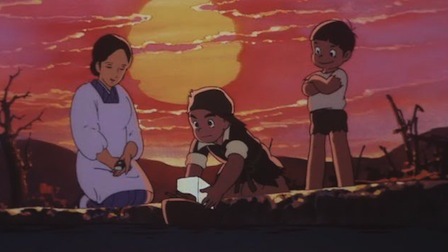
barefoot-genAnd we’re off to Matsue, an unassuming little city in Japan, where the local school board has responded to a suspicious “complaint”, and removed Keiji Nakazawa’s award-winning manga Barefoot Gen from its school libraries. This apparently, is for fear that “children would get the wrong perception about history” from reading a wartime story in which soldiers of the Imperial Japanese Army are shown to be committing atrocities in China.

Wait… what?  Isn’t that precisely what the Imperial Japanese Army was doing? Isn’t that precisely the context which led, ultimately, to the tragic, murderous mission of the Enola Gay in 1945? Now children in Matsue will be able to get the “right” idea about history, which apparently involves no mention of Nanjing, Manchuria or Shanghai, and a mendacious, facetious sense of victimhood based on the notion that the Japanese minded their own business until 1945, when American bombers suddenly appeared unbidden in a surprise attack and bombed them back to the Stone Age.

But not every Japanese high school is beholden to the whims of revisionist, right-wing nutters. Caught out by the media stink, the Matsue school board hastily backpedalled in late August, revoking the order due to “procedural” issues. Close by in Hiroshima, the home town of manga creator Keiji Nakazawa and the site of much of Barefoot Gen’s heart-rending drama, the harrowing manga is actually a set book for third-years at elementary schools. This is actually a far braver decision than Matsue’s craven censorship, because one would expect Hiroshima of all places to have a free pass on hating nuclear weapons. I’m sure nobody would have been much surprised if Hiroshima schools had plumped for a more victim-oriented version of their local history, but instead, they have admirably chosen a book that spends much of its first volume depicting the Japanese at war with themselves, daring to suggest that intellectual, sensible Japanese were railroaded and oppressed by war-mongering bullies who led their nation to ruin. Unfortunately, in Matsue at least, they still seem to be.

Matsue is twinned with Dublin. Any Irish readers might want to bring this up with their Lord Mayor, in the hope that the next civic goodwill trip leads to some stern questioning about what the school board thinks “history” is.

Jonathan Clements is the author of Anime: A History, available now from the British Film Institute. This article first appeared in NEO #116, 2013.