Sleeping with the Enemy

katilo-1024x773

All the Nordic countries had unique experiences in the Second World War. Sweden was neutral; Norway and Denmark were occupied by the Nazis; Iceland, rarely discussed, was occupied by the Allies. But Finland’s war was the most complex, abandoned by the Allies, left to fight alone against the Soviet Union, and entering a controversial pact with Germany, not as allies but as “co-belligerents” who happened to fight the same enemy. It was not the first time that Germany had proved to be Finland’s best friend in a time of need. The Finns ultimately turned against them in the little-discussed Lapland War, which destroyed every building north of Rovaniemi, and led to the bitter departure of some 700 Finnish women who refused to desert their German husbands.

Katja Kettu’s 2011 novel The Midwife (Kätilö) went out under that title in most of the 19 languages in which it was published, but seems to have been renamed Wildeye in attempts to flog it to the German- and English-speaking markets. Oddly, English seems to be one of the few major languages it hasn’t been translated into – perhaps there was some resistance among publishers to a romance that featured a Nazi male lead.

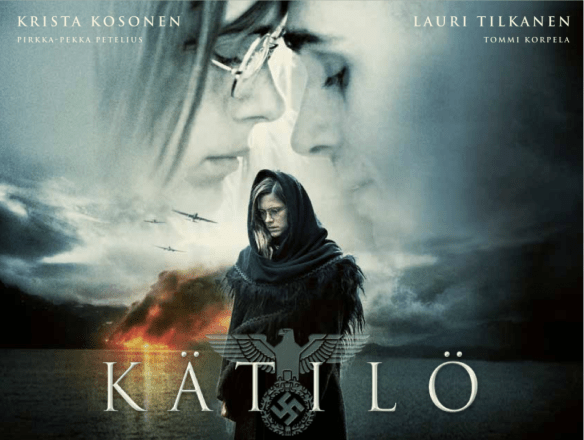
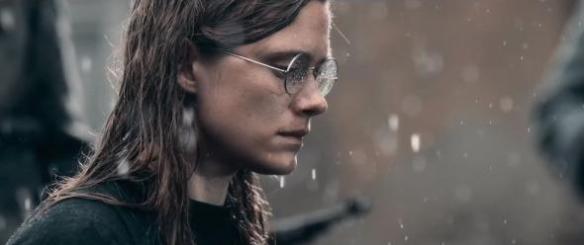
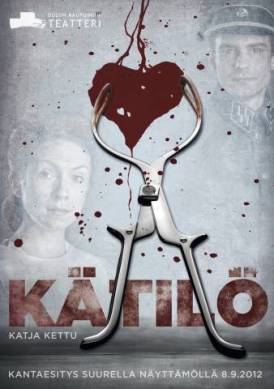
Antti Jokinen’s 2015 film version is now available to own (Time Travel Footnote, and now available in the UK, 2017)  – I could not face it raw in the cinema, but correctly guessed that it would have English subtitles on DVD. It is set in a Finland that no longer exists: that eastern arm stretching up to Petsamo and the Arctic coast, lopped off during World War Two and lost to Russia. Based on the depiction here, you’d be forgiven for thinking that the Finns were well rid of it – broad strokes swiftly delineate it as a grimy, miserable place populated with cackling, brown-toothed witches, racists, and thugs. Helena (the award-winning Krista Kosonen) is the closest thing that the locals have to a paramedic, forced to oversee difficult, bloody births in remote cottages. The film begins with one such event, swiftly followed by the locals’ stoic, heartless decision to drown the unfortunate infant in a swamp.

Helena is sick of it, too, and sees her chance to escape when she meets the steely blue-eyed gaze of Johann (Lauri Tilkanen), a half-Finnish German officer who has been posted to the nearby concentration camp of Titovka. At no point does the film claim to be a true story, although media coverage at the time of the novel’s publication suggests that it is partly based on the life of a real person – Kettu’s own grandmother. This opens up a whole can of worms by even suggesting that there were Nazi concentration camps on “Finnish” territory, where human experimentation (“Operation Cowshed”) was carried out on Russian prisoners and other undesirables. You would think someone would have brought this up before, if it were true!
1440647876163

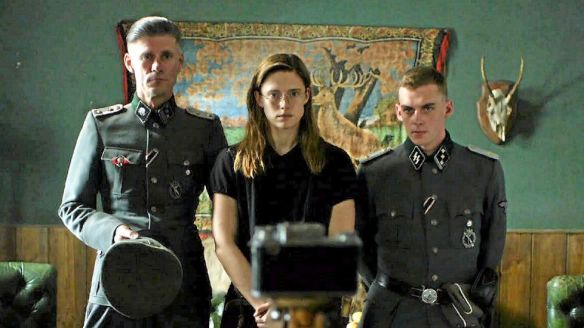
Soon the sole surviving employee with any medical training, Helena finds herself complicit in the shaving of prisoners’ heads and the administering of “medicines” that turn out to be lethal viruses. This is explosive material to introduce into modern times. The extent of Finland’s cooperation or collaboration with the Nazi regime has been a matter of much reconsideration in recent years, most notably in the anthology Finland’s Holocaust: Silences of History, which challenges the nation’s usual narrative of firm resistance. In a 2011 interview in Kuvalehti, Kettu noted that modern historiography was reluctant to admit that one’s grandfather or uncle might have been a killer or a rapist. Her take on this, however, is gendered and universal, that war makes killers and rapists of us all. Helena is certainly an inadvertent stooge at Titovka, administering poison to doomed prisoners, and posing unhappily with two SS officers for the Third Reich newsletter. Even most of the Nazis are unhappy about their duties, but get on with it anyway in a jobsworth, everyday evil that is somehow more chilling than the open malevolence of the camp commandant Gödel (Tommi Korpela, channelling Ralph Fiennes).

This is no Schindler’s List – Helena ultimately only manages to help herself and a single prisoner escape, abandoning the rest of the camp to their fate. But that is at least part of Kettu’s point, that her heroine is almost entirely powerless, stripped of agency, left with little to live for but her own survival, and little to hope for but her unlikely prince charming.

Jokinen’s camera-work does a beautiful job of capturing a lost Finland on the edge of Norway, one with actual mountains. As with Jalmari Helander’s Big Game, this is achieved by filming somewhere that isn’t actually Finland – in this case Lithuania, which is not only 30% cheaper for film productions, but cheaper to reach by plane than the real Lapland. He also artfully captures the desperately awful conditions of Helena’s daily life, so that her decision to move to a concentration camp is indeed regarded as a step up. When it comes to the war itself, the film allots its €8 million budget superbly in capturing a worm’s-eye view of the Lapland War. In one notable scene, Helena is caught in the middle of an aerial bombardment, literally unable to turn in any direction for fear of death, spun in circles by a series of explosions like a human pinball.
kristatrl

The film evokes elements of the novel’s cut-up format – each of its original six sections began with a flash forward of a starving Helena in the remote Dead Man’s Cabin, on the run from the war and waiting for Johann to show up at their agreed meeting point. Only then it would it jump back to her horrible life in 1940s Lapland, the brief flurry of joy at her romance with her dashing officer, and the collapse into hell of Operation Cowshed and the Lapland War.

Elements of it inadvertently recall earlier Finnish war films – there has in fact, been a degree of carping from online pundits that all Finnish war films are the same, and seemingly strive to fulfil an annual quota of grim sisu and pyrotechnics. This is a most unfair comment to level here, particularly in the case of Wildeye, which is not even the first film to give a Finnish woman’s perspective on WW2, but certainly does so in an original, if melancholy, manner. I will note, however, that those playing Finnish War Film Bingo will have plenty to keep them occupied nevertheless, including a gratuitous oral sex scene ripped off from Rukajärventie and three people in a shed recalling Käki (The Cuckoo). This isn’t even the first Nazi-Finnish romance movie either – the so-bad-it’s-good Sensuela managed to beat it by decades, and that was a remake.
katilo_juliste_hr

It also appears to have been a stage play.

From what I can glean from author interviews, Kettu never claimed that the Titovka concentration camp was a real place: her inspiration came from her grandmother’s letters about the war itself, the experience of stumbling across an abandoned hut on the Norwegian coast, and her childhood memories of playing in the ruins of a German prison camp near Rovaniemi. Instead, her interest was in telling the story of the human cost and effect of 200,000 German soldiers posted to Lapland, and their subsequent removal with extreme prejudice. The Lapland War is an embarrassment to the Finns, partly because it was one of those conflicts that effectively destroyed the place over which it was fought, displacing 168,000 residents, but also because it was a terrible betrayal of people who had been their friends.

The Titovka concentration camp is hence a handy device to confront the characters directly with the nature of Nazi evil, although it feels to me that this undermines one of the author’s intended points, that men like Johann were not goose-stepping fascists, but human beings caught up in a conflict not of their own making.

However, trawling through the Finnish-language web, I am surprised that nobody in Finland called the story out on its depiction of war crimes, which (commenters please correct me if I am wrong) seemed to have been invented by the author for dramatic effect, and yet are repeated in the film with an air of realism. Experience during the press junkets for my Mannerheim book taught me that many young Finns get far too much of their historical knowledge from movies and the internet, and are apt to accept any and all literary devices as representations of real events.

This is true all the world over, of course, and it is not the fault of Kettu or Jokinen that their book and film might be misinterpreted as more factual than they warrant. That would, perhaps, be something best addressed in DVD extras, but the version I bought in Finland offers nothing but a trailer, a teaser, and a picture gallery. For a subject that risks becoming so controversial, and so open to misinterpretation, this is a disappointment.

Jonathan Clements is the author of An Armchair Traveller’s History of Finland (Available from Amazon in the US/UK). The film was finally released in the UK in 2017 as Finland 1944, “based on true events”.

China Goes Global

51KIiTJn-HL._SX328_BO1204203200_Over at the All the Anime blog, I review Michael Curtin’s Playing to the World’s Biggest Audience, which is possibly the best book I have read on the Chinese film market.

“As Dan Harmon once said of Hollywood, if the food industry offered the same quality standards as movies, every third can of tuna would have a human finger in it.”

Crimson and the Reds

crimson peak

To China, where there are conniptions among Gothic-loving expats about the unavailability of Guillermo del Toro’s Crimson Peak in local cinemas. Initial coverage carped that the Chinese censor was “afraid of ghosts,” which are classified as an unwelcome superstition in the People’s Republic. In fact, the ban hammer was more likely to have come down because of the depiction of a particular relationship in the film [spoilers avoided], as well as the fact that it is scary. The Chinese censor is afraid of fear, for the simple reason that, under the yes/no Chinese classification system, films are either fine for all the family or for nobody at all.

Some of you may be wondering why this column so often drifts off into Chinese topics, when it is supposed to be about Japan. But China is becoming the prime mover of the contemporary film industry. It recently overtook Japan as the world’s second-largest movie market, and could be the biggest by 2018. There are a boggling ten new screens being added to the Chinese market every day. Craig Mazin, on the Scriptnotes podcast called this “the most profound change that has happened to the movie business since the creation of the movie business.” Chinese money is flooding into film production, and Chinese audiences can make or break a movie even if it flops in America.

220px-AoE_shuhua_milkThis in turn has led to the phenomenon of hyper-localisation, as supposedly “Hollywood” movies pander to unseen Chinese audiences. Iron Man gets a leg-up from some Chinese guy; the Transformers keep pushing a brand of Mongolian milk; Matt Damon doesn’t get off Mars without the Chinese lending a hand. And have you noticed there aren’t any Chinese baddies anymore?

Pickings have been historically low in the Chinese market. It is only recently that foreign rights holders have been able to cream 25% from their ticket sales, as opposed to the previous, paltry 13%, but 25% of the price on the door, for a film that can be digitally squirted at a million screens in a single day, is real money. Meanwhile, Japanese films, including anime, currently have to scramble against all other foreign films for one of the 34 slots available annually (14 of which have to be IMAX/3D). That was easy in the Miyazaki days, when any Ghibli got an instant thumbs-up. It’s substantially harder when most other Japanese “family” cartoons are hard-wired into a decade-long franchise, and Japan gets such bad press in China. Those China slots are the most valuable real estate in modern movies, and tits and tentacles won’t get a look-in. Does Japan have what it takes to elbow its way in, or is the Chinese market increasingly closed to it?

[Time Travel Footnote: After I filed this article, Julie Makinen of the LA Times published a piece about the Chinese market, revealing that 24 extra films had sneaked in as flat-fee exhibitions, which returned no profit to the owners beyond the original payment. The anime Doraemon was one of them].

Jonathan Clements is the author of Anime: A History. This article first appeared in NEO 146, 2016.

Variety is the Spice…

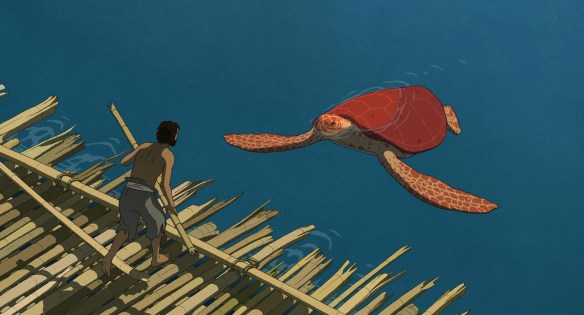
1024358-look-new-images-micha-l-dudok-de-wits-red-turtle

I’m taking the chance to publish the unexpurgated version of Mark Schilling’s interview with me for his piece last week in Variety. My comments were, naturally, reduced to a couple of soundbites, but I think some interesting things came up. Sometimes my brain doesn’t grind into action until it’s asked the right question, and some of my ideas here were straight off the cuff. The question was that old favourite, the “new Miyazaki” in the light of Michael Dudok de Wit’s forthcoming Red Turtle and Makoto Shinkai’s Your Name but as ever, I preferred to think of it not in terms of the creative abilities of modern animators, but of the ways in which the industry can find an equivalent revenue stream for the biggest money-spinner of the last generation.

Mark Schilling: In your view, has the torch truly been passed?

Jonathan Clements: No. There is no torch, at least not in the way that the public expects. Hayao Miyazaki wasn’t just a one-off, he was part of a trio. You can’t have the Miyazaki phenomenon without Isao Takahata and Toshio Suzuki as well. All three of them are retiring. Suzuki spent ten years not just looking for someone to take the torch, but examining the torch itself, trying to work out what parts of it could be replicated by other means. He concluded that there was no torch but the legacy of Ghibli itself, and that’s why the Ghibli Museum is so crucial to understanding the studio’s late period.

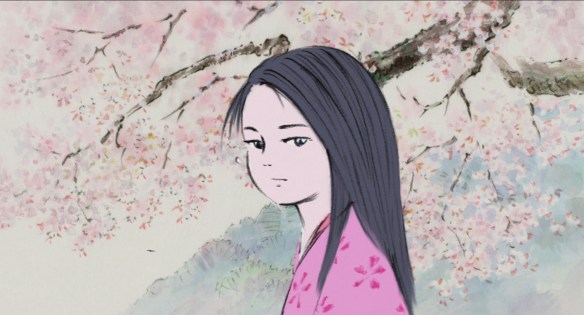
tale-of-princess-kaguya

Do you view Shinkai, de Wit and others as “Miyazaki heirs”?

Studio Ghibli spent a decade looking for some way of continuing Miyazaki’s momentum. Takahata couldn’t get the same numbers, although Suzuki did hope to hide that by releasing The Tale of the Princess Kaguya on the same bill as The Wind Rises. When Kaguya was delayed, its box office numbers made it very clear that Takahata didn’t have the following that Miyazaki had. None of the non-Hayao Miyazaki films from Ghibli have done Hayao Miyazaki numbers.

Toshio Suzuki tried everything in the noughties. He tried to lure big-name directors into Ghibli, but they didn’t gel with the studio. He tried to train up new apprentices, some of whom have gone on to make names for themselves elsewhere. But he couldn’t find a proper replacement for Miyazaki.

So Suzuki engineered Goro Miyazaki’s controversial directorial debut, and invited audiences to come and see the car-crash. That lured Miyazaki himself back for Ponyo. That’s where they started the “We Made This” alphabetical credit listings, which conveniently obscured the fact that Miyazaki didn’t actually direct Arrietty! He engineered the father-son team-up on Poppy Hill, and got audiences to see that. Then he lured Miyazaki back for absolutely anything he wanted, no matter how controversial, so he could go out with The Wind Rises. He’s played Miyazaki (and the public) like a fiddle! He’s managed to stretch the heritage of Ghibli since 2006 with only two genuine Hayao Miyazaki movies. But after The Wind Rises, it really is over. Ghibli has to admit it’s got no more features in it that are going to trounce the next five rivals at the Japanese box office. It’s a brutal, accountants’ decision, but it’s based on firm evidence from the last decade that not even the Ghibli name on a film will guarantee that it will match the success of a Hayao Miyazaki film.

Laputa_Robot_on_Roof_of_Museum_-_CopyBut that’s not good enough for distributors, and it’s not good enough for exhibitors. Cinemas are fixed sites, they need more product. July is going to happen whether or not the film studios have something suitable for a vacation tent-pole movie.

The Ghibli Museum turns over US$7.5 million a year, just on admissions. Throw in the restaurant and the gift shop, and the museum is making its owners a modest movie’s worth of revenue every year, just by managing Ghibli’s own legacy. It doesn’t need to make any more films – in fact, doing so would risk compromising the brand. It just needs to keep the conversation going. It needs people like us talking about it like it’s still there, so people remember they want to take their kids to see the giant fluffy Catbus.

So what does it mean when they say The Red Turtle is a coproduction? Is Ghibli just putting its name on it, like it did with the Japanese releases of Aardman films? I’m guessing that Ghibli is slightly more involved in investment than that, but not in actual animation. The Red Turtle will be imitation Ghibli, ‘inspired by Ghibli’, and it’s an experiment to see if a Ghibli imprimatur is enough to get a movie a healthy box office return; and if it doesn’t work, they’ve got plausible deniability to edge it out of the studio history. It’ll be a tenth of Miyazaki numbers, but it’ll keep that conversation going for another year. There will be a Red Turtle exhibition at the Ghibli Museum. Ghibli will keep trending. This is legacy management with very modest expectations. Everybody will be pleasantly surprised if The Red Turtle is a box office smash, but I don’t think anyone is expecting it.

This isn’t new. We’ve seen a lot of this lately, where studios will rent out their IP to someone else and take 5% off the top. A Nigerian Astro Boy? An Indian Star of the Giants? A Wachowski Speed Racer? Ghibli has shut down its feature production arm, but what the hell, if someone else wants to take the risk, Ghibli will put in 5% of the effort for 5% of the returns. This is anime Moneyball.

kimi

Is there a “Miyazaki tradition” being passed on, even though Ghibli is not making features with its own directors?

That’s the conversation Ghibli wants us to keep having. Come and see this movie, to see if the director is The One! Will he save us? Is he the anime messiah? Or are we stuck hereafter with otaku-bait that can’t fill a single cinema for more than a couple of weeks?

That’s why Toei’s risk with Shinkai is so interesting. Shinkai has no trouble pulling in audiences on the small circuit. A Shinkai movie is usually a much more bespoke event. He makes a lot of personal appearances when his films go on tour, so it’s not just a trip to the cinema, it’s a trip to the cinema to see the director and get him to sign the DVD.

“Events” are a small but growing part of the Japanese cinema model, because if you have a small otaku audience, then you want to make sure they spend triple the usual money on a trip to the cinema. It’s not just about popcorn, it’s about T-shirts and phone cases, and often the limited edition Blu-ray. You limit and target the availability of the merchandise, and you make sure that you provide an experience which can’t be pirated. People are ripping off the software all the time, but Shinkai’s not going to sign a pirate copy, not of his movie nor the novel spin-off. He’s not going to shake your hand while you’re downloading the torrent.

“Events” at the moment are worth less than 5% of Toei’s revenue, but that’s a huge increase on just five years ago. It’s taking Japanese cinema back a hundred years to the days of the benshi and a cinema experience as a form of live vaudeville. But Kimi no Na Wa is different because it’s being touted, as you say, as a summer tent-pole movie. Shinkai can’t go to every screening; they can’t spread him that thinly. They’ll do some glad-handing for the hard-core fans at the premiere events, and hope that there’s enough momentum to keep it going with the general public. Watch the marketing on Kimi no Na wa, because I bet Toei goes all-out on interactivity. I bet they steal an idea from Mai Mai Miracle and try to engage the consumers with lobby exhibits. I bet they come up with a hashtag on social media and try and drag everybody into it. They are going to have to do this, because most of the users are going to have to bring their own event.

Look at the title, for God’s sake! They’ve called it Kimi no Na wa because I bet you half the general public will think it’s a remake. There was a radio series of the same name in the 1950s, adapted for TV in the 1960s, and again in the 1990s. Half the eyeballs for this movie’s advertising will only look because they think it’s something else. Much of the social media trending for this film will be people telling their confused friends that it’s not what they think it is. That’s some smart mockbuster marketing to get their attention. Then the pressure’s on Shinkai to keep it.

doraemon

Or is the Miyazaki legacy (including his box office supremacy) in danger from not only Hollywood hits like Frozen, but also domestic trends?

I think everyone would love it if there were a domestic trend that could compete with Miyazaki’s numbers. I don’t think there is. Everyone has to dial down their expectations to a level where domestic anime earn the kind of money they did in the 1980s, not the 2000s (or rather, the kind of money that people have earned all the way through if they are not Hayao Miyazaki). That’s the problem with movie punditry. Everybody wants to talk about the outliers. The successes are outliers! Miyazaki was an outlier. The general trend is much more modest in terms of returns, and Miyazaki’s success has hidden that for a generation.

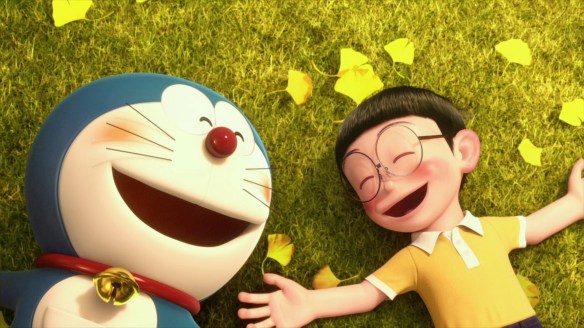
Frozen is a red herring – Disney cartoons have always outperformed domestic product at the Japanese box office, with the exception of Miyazaki movies. A much more long-term issue is CG, because the stats for CG make it abundantly obvious that Japanese movies are getting their ass kicked by computer animation. Japanese movies are still struggling to compete with CG, because even when they get a hit like Stand By Me Doraemon, it’s not exportable like a Miyazaki movie. Nobody wants it abroad because nobody knows what Doraemon is; part of the film’s domestic success was because of the blue-chip marketability of the Doraemon brand, which still doesn’t travel far outside Japan.

Of course, it does export to China, but what happened there? Stand By Me Doraemon wasn’t in the 34 movie quota for foreign movies in Chinese cinemas. The Japanese had to sell it for a lump-sum and take no further profits. That’s not growing a business, that’s treading water and hoping that something will happen.

China’s the elephant in the room in all of this, because it’s the largest possible new market for Japanese animation, but Japanese animation is made to feel very unwelcome in formal distribution channels. It’s censored, it’s banned, it’s shut out of theatre exhibition. There are only two brands that get any love in China: Studio Ghibli and Makoto Shinkai…

Jonathan Clements is the author of Anime: A History.

Faking It

mcm imageCosplay was not the centre of attention for once at the recent MCM Expo in London, when the copyright licensors of Tokyo Ghoul and Attack on Titan toured the dealers’ room in a carnival of garbage collection, rooting out and confiscating an estimated £20,000 worth of unlicensed merchandise. The unexpected entourage included reps from a Japanese company, the UK’s Anime Limited, a lawyer with a Powers of Attorney notice, and a trio of minions to cart away the swag. By the time the sweep was over, several dealers were shown the door with the full approval of MCM’s management, and the enforcers actually ran out of bin bags, leading to the delicious irony of a bootleg Tokyo Ghoul carry-all being commandeered to lug illegal Tokyo Ghoul merchandise

Gone are the days when some guy from Hong Kong could set up stall in a Birmingham hotel and flog a few lopsided Totoro knock-offs to fans on their way to the masquerade. In the last decade, industry and fandom have increasingly met each other halfway; MCM has become a prime retail location for copyright holders to sell direct to their punters, and to demand the right to do so without facing illegal competition. Meanwhile, such massive consumer events rely upon the continued cooperation of the anime business for guests, exclusives and the purchase of retail space. If you’re looking for pirate goods, MCM is definitely and officially the wrong place

“The first time we found someone [selling such items],” said Anime Limited’s Andrew Partridge, “I wondered if they knew what they were doing. By the time we took action I was sure of why and realised how much they made off selling products that hadn’t even been on the same island as the original creators, ever!” Notably, however, the legal powers invoked in this case only applies to two licences. There is plenty of scope for future clampdowns, although hopefully the dealers have already got the message

An assistant from one of the knock-off dealers, who asked not to be named, said that he appreciated the issues involved, although he considered the public shame of bin-bagging in full view to have been “a bit heavy-handed.” He noted that an equally pressing issue at some events has often been the unlicensed use of fan art on some dealers’ merchandise, and he hoped that the authorities would soon be policing that, too. But where will the small-time fan artists get their legal muscle….?

Jonathan Clements is the author of Anime: A History. This article first appeared in NEO #145, 2015.

Manga in America

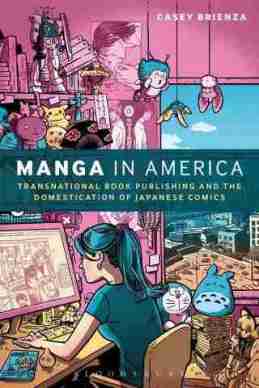
50375324Up now on the All the Anime blog, my review of Casey Brienza’s Manga in America, a detailed and beautifully researched account of the last decade of Japanese comics in translation.

“Brienza acknowledges the awful poison at the heart of the American manga industry, which is that it was colonised some 15 years ago by snake-oil salesmen and carpet-baggers determined to slap the word manga on anything that they did, out of a cynical desire to clamber aboard a bandwagon that promised, at the time, ‘double-digit growth.’ As I have pointed out on many previous occasions, this didn’t just confuse everybody as to what manga actually was, but also corrupted much of the available data. A manga is a Japanese comic, anybody who tells you otherwise is trying to sell you something.”

Martial Artistry

big troubleSpun off from my work on A Brief History of the Martial Arts, the Encyclopedia of Science Fiction gets to feel the benefit, with several new entries from me on Chinese authors. There’s a new thematic entry on Wuxia (martial arts fiction), as well as author entries on Louis Cha (a.k.a. Jin Yong), Ni Kuang and Wang Dulu, the author of Crouching Tiger, Hidden Dragon. I’ve now written well over 100,000 words in the SFE on the literature of China and Japan, and the work is still ongoing.

Dzen Hajku

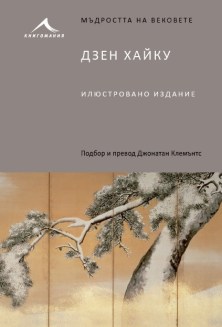
dzenhajku_9786191950720For what are undoubtedly thousands of my readers in Bulgarian, there is now a Bulgarian edition of my Moon in the Pines (a.k.a. Zen Haiku), translated by Nadiya Nicheva-Karastoicheva and published by Knigomania in Sophia.

“Jonathan Clements has selected the best of three centuries of haiku, including the work of classic poets such as Basho, Buson and Chiyo-Ni and rendered into English the elusive spiritual quality of the poems.” And… er… now someone else has rendered my renderings into Bulgarian.