The Luoyang Shovel

It is the afternoon and I am in a fallow field an hour outside Luoyang. I kneel down in the grass in front of what appears to be a large, football-sized pile of firm turds and announce that I am on an archaeological quest. I then pick up one of the turds and start breaking it apart with my hands.

They are the core samples from a Luoyang Shovel, a device originally developed by medieval grave-robbers for testing the land beneath their feet in search of treasure. Guo Zhenya’s is a three-metre pole, terminating in a long, curved trowel. You push it into the ground, wiggle it around, and withdraw a sausage-sized cylinder of earth, before plunging it in for another go, pushing deeper and deeper.

Mr Guo has an eye for subtle changes in colour. One trowel down, he is pointing to loose yellowish earth that is nothing but common topsoil, churned over every year by the plough. Another trowel down and we’re in darker more compacted earth, backfilled after the local archaeologists had finished excavating Erlitou. Another trowel down, and the backfilled earth reaches a line of sand, which marks the lowermost point of the dig. After this point, we are looking at terra incognita.

“The soil is turning reddish,” he observes. “We could be looking at a Han dynasty tomb. Yeah, this looks like shentu – disturbed ground.” Another few trowels, and we are almost all three metres of the Luoyang Shovel into the ground.

“No,” he says with a shrug. “False alarm. This darker soil is undisturbed. No human being has dug this deep in the last few thousand years. Nothing to see.” Mr Guo was one of the excavators in the Erlitou excavation that stripped this entire field wide open, uncovering a city from some 2,800 ago, laid out in a familiar square pattern, with a royal enclosure, a bronze foundry, and a temple. This was, people still believe, the likely site of the capital of the Xia, the earliest known Chinese dynasty, a people who had only just discovered bronze and seemed to lack any real writing. All we know about them we have got from legends collected in ancient Chinese classics.

Although the Erlitou site was discovered in 1959, excavation there was shut down a few years ago, one suspects because it failed to yield anything as photogenic as the Terracotta Army. It did produce “China’s First Dragon”, a staff or ceremonial item, the wood long rotted away, but retaining an intricate mosaic of turquoise stones, curling like an elephant’s trunk and terminating in a square, symbolic head. I’ve seen a picture of it, but the dragon is in Beijing, propping up an exhibit of ancient Chinese culture in the capital.

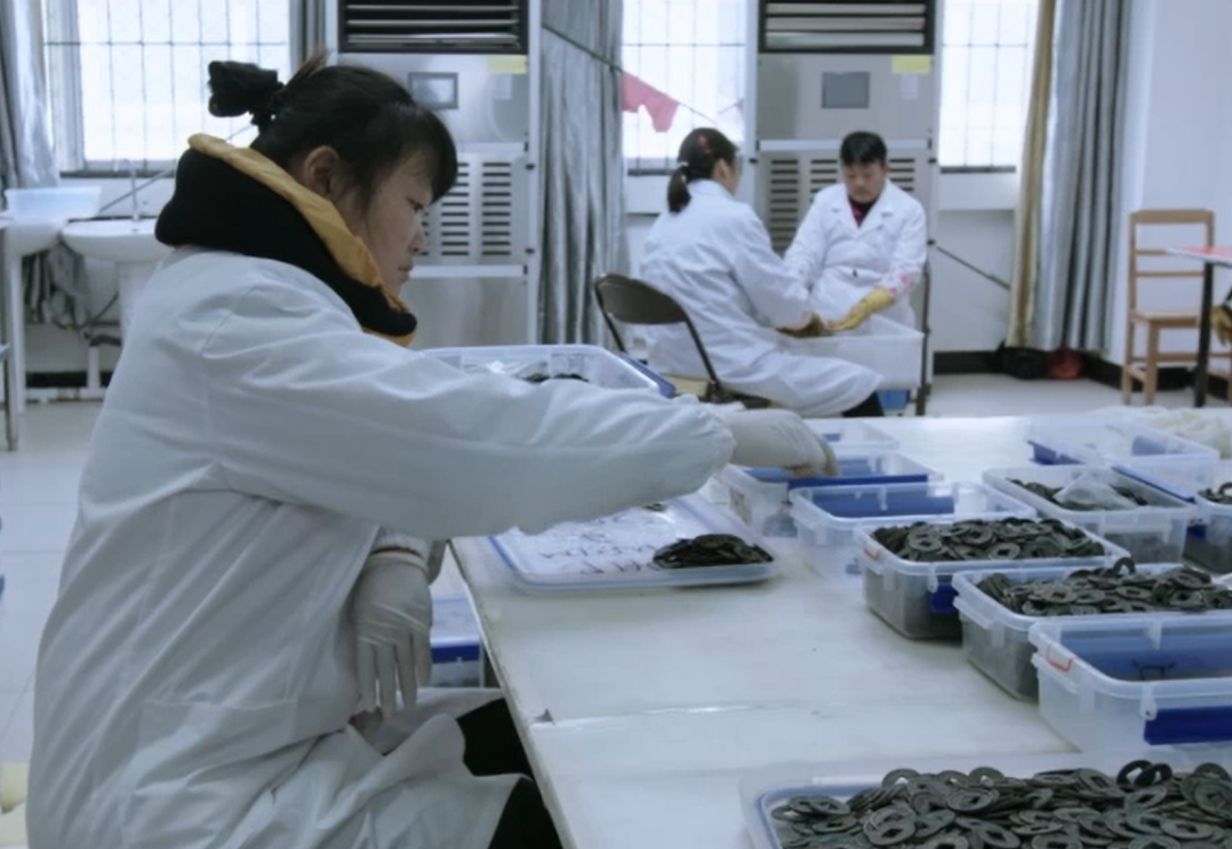
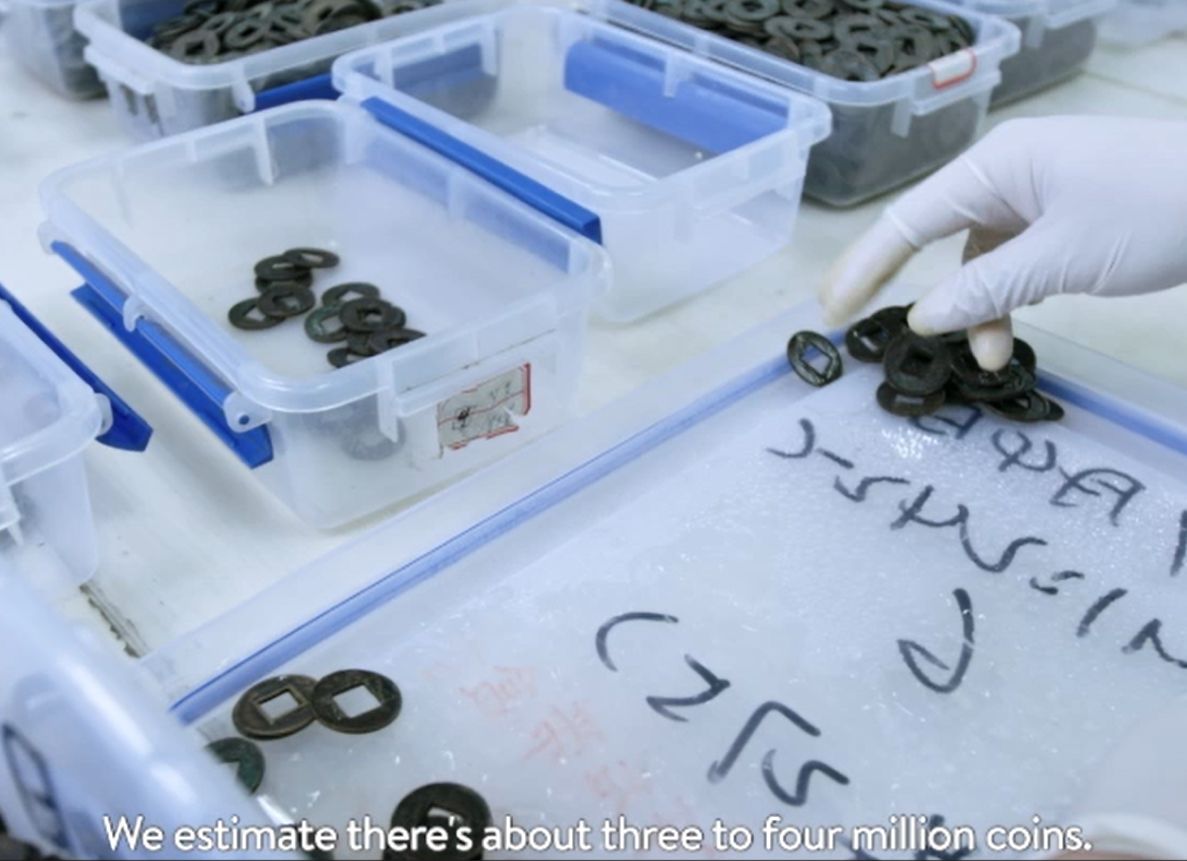
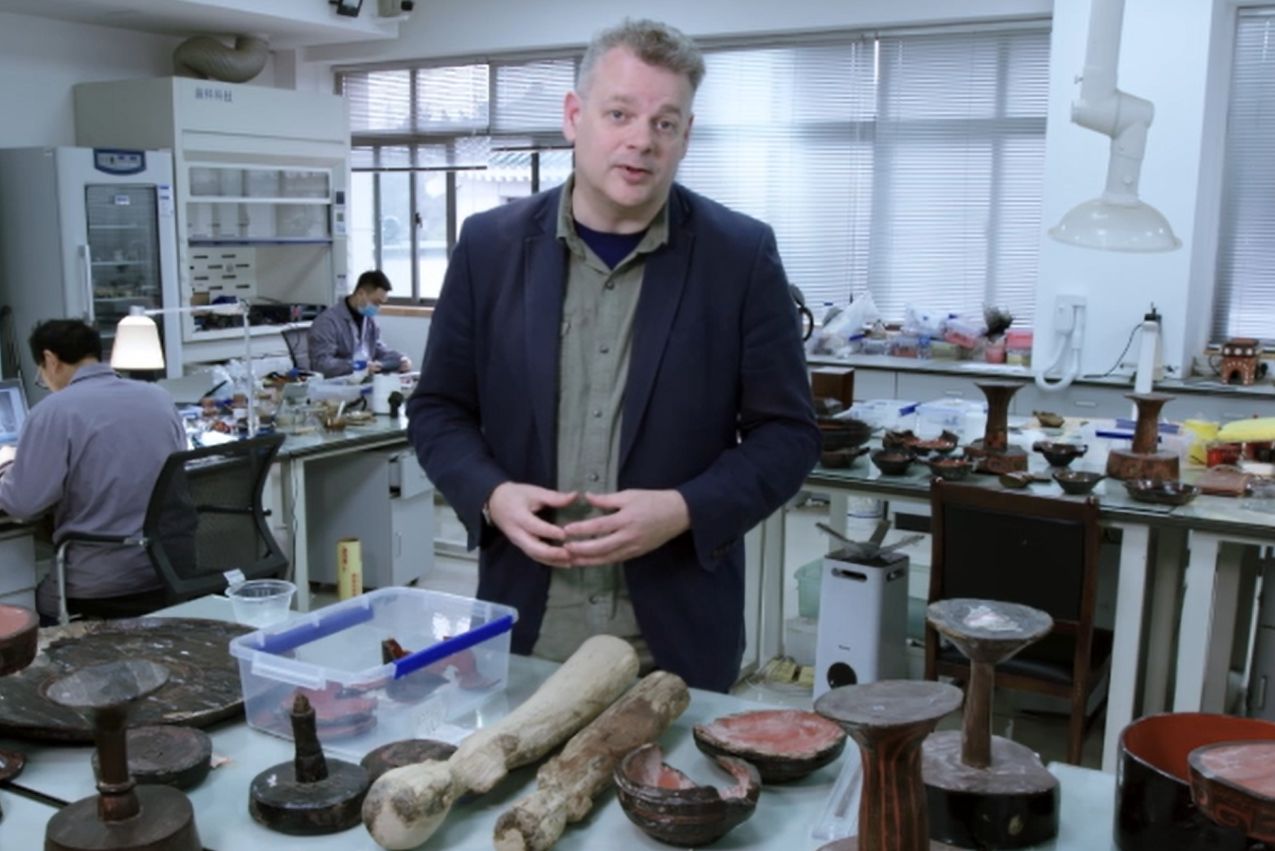
At the research institute, an army of workers are poring over the crates and crates of shards from the site, piecing together its pots, and trying to work out the nature of the bronze ceremonial artefacts that Erlitou seems to have supplied to the rest of the Yellow River floodplain. I’m here to interview the second most important man in Erlitou archaeology, the foremost authority having sworn off television appearances after a bad experience on someone’s late-night comedy chat show.

Zhao Haitao is soft-spoken and twitchy. It takes a while for me to draw him out of his shell, by asking questions about the site that make it clear I know what I am doing – the apparent trade value of turquoise, and the mystery that they have found cart tracks at Erlitou, but no evidence of horses.

“If you ask me,” says Dr Zhao, “the chariots here were pulled by slaves,” thereby literally putting the cart before the horse. I get him talking about pseudomorphs on Erlitou pottery, the potential for other finds on nearby sites, and the likely damage done to the north of the site by a shift in the flow of a nearby tributary of the Luo river, until he is laughing and joking, and holding out ancient ceremonial pots for me to touch.

I’ve noticed several times already on this trip that this is a new and unexpected service that I now perform – simply making it clear to the interviewees that there is someone on the other side who is listening to them and understanding what they are saying. That we are not a gaggle of uncaring camera-pointers with a fat white sock-puppet, but an award-winning crew with a public face who know the difference between the Sui and Tang dynasties; who understand the problems with rescue archaeology, and who don’t blink uncomprehendingly when hit with Chinese terms like liusongshi (turquoise) or renlache (man-pulled cart). I know these things because I was up at 4am reading the Erlitou chapters in the Cambridge Introduction to Chinese Archaeology on my Kindle, but that’s what I am paid for.

Another long day that comprises standing around for interminable hours, before being dragged by a shouty director to stand in front of a tree and extemporise a 30-second piece to camera about sustainability in the Tang economy. But I am doing my job, and coming up with several ideas for actual bits, including a semi-jokey bit where Mr Guo and I take the Luoyang Shovel out of the back of the Buick, its three-metre length seemingly never-ending, like people leaving a clown car.

Jonathan Clements is the author of A Brief History of China. These events formed part of Route Awakening S05E01 (2019).

That Hambroek Girl

Jan Willem Pieneman, “De zelfopoffering van predikant Hambroeck op Formosa” (1810)

Anthonius Hambroek was a Christian minister on Taiwan, who fatefully became embroiled in the negotiations between the besieged Europeans in Fort Zeelandia, and the Chinese who surrounded them. In a moment celebrated in paintings and plays, he returned to deliver bad news to the “pirate king” Koxinga, sure in the knowledge that he would be executed. Despite his daughters’ pleading, he went back to Koxinga and was never seen alive again. Later on, his daughters were among the Dutch girls handed out to Koxinga’s men as part of the spoils of war – one of them allegedly serving briefly as Koxinga’s own bedmate.

Pastor Hambroek’s sacrifice was one of the most iconic moments in the siege of Fort Zeelandia, an event already riddled with high drama and cinematic spectacle. It’s also become the lynchpin of many a fictional account, beginning with a Dutch stage play by Johannes Nomsz, Anthonius Hambroek, or the Siege of Fort Zeelandia (1775).

Dominicus Anthonius Peduzzi “Hambroeks zelfopoffering te Formosa” (1859)

Its most recent manifestation in popular culture is as the background to Yao-cheng Chen’s historical novel A Tale of Three Tribes in Dutch Formosa. Before he turned to fiction in his long retirement, Chen was a pioneering Taiwanese specialist in bone marrow transplants – a background that surprisingly produces one of the most gripping passages in his book. On hearing that one of the legendary ancestors of his own clan was a Dutch woman, he counts the incidences of ankylosing spondylitis (a type of arthritis), and determines that 4% of modern Taiwanese have a north European ancestor somewhere in their genes.

This is what inspired him to write his story, which comes deeply invested in the interlocking politics and tensions of the Dutch, Chinese and indigenous Formosans in the 17th century. They are, supposedly all given equal weight, although that Hambroek girl inevitably takes centre stage.

Who was she? In Nomsz’s play her name was Cornelia. In Joyce Bergveldt’s novel Lord of Formosa, her name is Johanna. In Chen’s book, her name is Christina, although her fate is kept discreetly off-stage, and instead we focus on her sister Maria, who may, or may not be, Chen’s own distant ancestor.

Chen realises that there’s a whole rack of Iliad allegories to be had, with a long siege, a vainglorious enemy and even a last-ditch hoped pinned on a ship called the Hector. His heroine, Maria Hambroek, archly observes that she is a bit like Cassandra, the seer cursed to always be ignored. I would suggest that there might have been more poetic currency to be had with her similarity to Briseis, the captive concubine whose fate is deeply entwined with that of the heroes.

One of the most compelling elements of the story of Koxinga’s invasion of Taiwan, for me at least, is the treatment of the Dutch women, a number of which were parcelled out among the Chinese. Modern authors seems to shy away from what this might have really meant; Bergveldt concocts a subplot in which Koxinga merely pretends to ravish a Hambroek girl as part of a bigger scheme; Chen is delicately coy about the sexual politics at play here, limiting himself to mentioning a few inter-racial “marriages”. Contemporary documentation, however, is considerably more forthcoming about it, particularly Frederik Coyett’s Neglected Formosa (1675), in which he mentions a number of Dutch girls returned pregnant to the East India Company at the final hostage exchange, as well as their widely varying reports of their treatment at the hands of the Chinese.

Dutch girls handed to soldiers who already had Chinese wives were often put to work as skivvies and slaves, complaining about months of hard labour under fierce mistresses. But this is where Chen’s Mills & Boon romanticism finds a legitimate purchase, since Coyett also reported that the Dutch girls who found themselves berthed with unmarried soldiers were “considerably caressed” and “did not complain too loudly, despite having half a Chinese in their belly.” He adds, in an arch footnote, that: “Those who had been kept honest by the ugliness of their faces, those were the women who were the loudest of all and who accused their companions of whoring and merry-making with the Chinese.”

I don’t know what really happened to that Hambroek girl. But I bet she had a story to tell.

Jonathan Clements is the author of Rebel Island: The Incredible History of Taiwan.

Bayside Shakedown

Disaffected computer salesman Shunsaku Aoshima (Yuji Oda) changes careers at the ripe age of 29, becoming a detective at the Wangan police station. Though he is initially ignored by most of the officers, he demonstrates an early skill for empathising with victims and is able to draw important evidence out of uncooperative interview subjects. His chief nemesis is Shinji Muroi (Toshiro Yanagiba), a self-made man from Akita, who has fought his way up through the Police Board Criminal Council despite snobbish opposition from the Tokyo University graduates who make up most of its numbers. Though the two men are permanently at odds, the emotional Shunsaku and the logical Shinji eventually form an uneasy partnership

Their friendship flourishes in the course of several episodes that introduce other members of the team. Old hand Heihachiro is due for retirement but trying to settle some of his outstanding cases. One comes back to haunt him, when an old adversary sends him a booby-trapped office chair, forcing him and Shunsaku to stay completely still while the rest of the office try to defuse the bomb—a steal from a similar setup in Lethal Weapon 3. Sumire is Shunsaku’s would-be love interest in the Department of Theft, whose cold exterior hides an abused past. She attracts a stalker who is convinced that she is the earthly incarnation of the anime character Pink Sapphire (a thinly veiled homage to Sailor Moon) whom Shunsaku and Shinji must stop before he turns into a killer.

Bayside Shakedown is one of the landmark Japanese TV shows of the 1990s. Though the high concept is nothing new, it struck a chord with the Friends and Ally McBeal generation, offering last-chance wish fulfilment for twentysomething viewers that there was still a possibility to change careers and start afresh. The glossy production values and pop video sensibilities glamorised the world of police work— the officers try very hard to play it young and cool. They achieve this through an unobtrusive anti-intellectualism that derides academic achievement in favour of simple attitude and instinct. When a team of criminal profilers arrive at Wangan, they are depicted as hapless college boys whose charts and graphs are no substitute for door-to-door enquiries and knowledge of the streets. There is similar comedy bungling from the Three Amigos, a group of unashamedly brown-nosing seniors who preside over the younger officers with an air of benevolent incompetence.

The series aims several pop culture references squarely at anime fans, including an arrest at an Image Club where visitors can hire prostitutes dressed as famous characters, and the regular recurrence of music from Shiro Sagisu’s soundtrack to Evangelion. Viewers are also advised to keep an eye out for each episode’s token foreigner, including ending-theme song collaborator Maxi Priest, though our personal favourite remains the suspect who can be heard loudly protesting, “But I am from Finland!”

Later episodes adopt a more serious tone, as the team go on the trail of a cop killer who has also seriously wounded police chief’s son Masayoshi Mashita, as well as with the promise of future collaboration between the lowly Shunsaku and the fast-tracking Shinji as he rises through the ranks.

The series stayed in the public eye through a novelisation and several seasonal TV movies, as well as a number of cinema spin-offs that kited it far into the 21st century. Twenty-eight years after it first appeared, it is fated to return yet again with leading man Oda now nearing sixty, cast in the upcoming Bayside Shakedown N.E.W. And for some utterly baffling reason, it has suddenly sidled onto Netflix, where its 4:3 screen size, predating the rise of the widescreen, and its leeched digital-video palette, make it look like what it is: an artefact from a bygone age.

But Bayside Shakedown was huge in its day – a hopeful second-chance for late twenty-somethings that propelled it into the status of a national phenomenon. With a peak audience share of 23.1%, its cinema adaptation was sure to be a hit, with the first movie becoming the third most high-earning domestic movie in Japanese cinemas. But although it was screened overseas on expat TV, and had its following among dorama fans in south-east Asia, it never seemed to attract the attention of the English-speaking world.

Twenty-five or so years ago, I went along to a London screening of the first Bayside Shakedown movie, put on for exhibitors ahead of the big buying frenzy at the upcoming MIP-TV in Cannes. A friend in the business said he’d add me to the guest list as a favour, so it’s not like I was sneaking in. It was a joyous continuation of the series, beginning with a wonderfully evocative depiction of contested jurisdiction, as police units on either side of a canal each try to prod a floating corpse over to the other side so it’s somebody else’s problem. It continued with a comedic account of class differences and office politics within a struggling police station, and finished with a sly reference that replayed the ending of Akira Kurosawa’s High & Low (1963).

The film was only marred for me by the occasional sound of seats flipping up, as one-by-one, the various exhibition reps decided the film wasn’t for them, and got up to leave. When the lights came up, I was alone in the theatre. I walked over to the distributor to confess that I was not a buyer for a video company.

“You are Jonathan Clements,” he said with a smile. “I know because you laughed at the Kurosawa gag. And you stayed to the end.”

Adapted from the Bayside Shakedown entry in The Dorama Encyclopedia: A Guide to Japanese Television Drama Since 1953 by Jonathan Clements and Motoko Tamamuro. Bayside Shakedown, much to everybody’s surprise, is suddenly available on Netflix.

Local Ghosts

On Christmas Day 1953, a huge fire tore through the slums and squats of Shek Kip Mei in Hong Kong. The blaze left 53,000 people homeless, and galvanised the authorities into a rapid building scheme to create new housing for the refugees and migrants that had been clogging the hillsides of the New Territories.

Mei Ho House is an unassuming apartment block in Berwick Street, but it is actually the last surviving example of these emergency housing blocks. Half of the H-block tower is a youth hostel today; the other wing has been preserved as a museum to daily life for thousands of Hong Kong residents in the 1950s, schooled in open-air rooftop classrooms, cooking on open fires on their balcony stoves, and sharing centralised washroom facilities at the building’s core.

The numbers of rehoused locals actually climbed higher in local reports, as they assimilated several thousand more refugees who were evicted from their shanty towns in order to make space for the “Mark I” estates like Mei Ho – several pundits noted that the speed of the government response might have been humanitarian, or might have been the sudden excuse to pull the trigger on an urban renewal project that was already in the pipeline.

A simple public housing project unpacks into the many stories of the 800,000 refugees who formed a third of Hong Kong’s populaton by 1957, a cataclysmic number of new mouths to feed and people to house. A section of the Mei Ho museum pauses to wonder how they were entertained, providing a wealth of stories about the Hong Kong film industry in the period.

For the older generation, newly uprooted from what had become the People’s Republic, the Hong Kong film industry offered a huge number of filmed performances of Cantonese operas – between 1913 and 1990, Hong Kong churned out 1,092 filmed versions of Cantonese opera – and that’s straight ports of the stage shows, not action-movie adaptations like 14 Amazons. Only 800 of these films survive today, but they are largely overlooked. Their heyday was in the 1950s, when the aging population of migrants in Hong Kong, including the tens of thousands of refugees fleeing the People’s Republic, thrilled to old-time entertainments – in 1958 alone, Hong Kong produced eighty-nine of them. A generation later, their grown-up children were entertained by a hybrid of the old stories with a new mode of filming, what you and I might call kung fu movies.

Upriver in Foshan, at the Guangdong Museum of Cantonese Opera, many of the galleries are dedicated to the cross-over between Cantonese Opera and Hong Kong film, not merely in subjects, but in performers. I recognise one of the actors immediately: the sign gives his name as Guan Dexing, but he is better known in Cantonese as Kwan Tak-hing, who played the hero Wong Feihong in 77 Hong Kong movies. I am, in fact, quite astonished that I have been in Foshan for two days and only once heard his famous theme song being played in a restaurant.

Wong Feihong has a whole museum dedicated to him inside Foshan’s Ancestor Temple – and his fame is widespread enough that it has separate galleries for his life story as told on television, in comics and in movies. The list merely of Wong Feihong movies is currently at 101, but the curators have left space on the wall for it to go up to 120.

But Wong is not the only figure to unite Hong Kong film and Cantonese Opera. At Guangzhou’s Museum of Cantonese Opera Art, there is an extended display on the Red Boats – itinerant troupes of opera performers, who plied the waters of the Pearl River Estuary and its tributaries, putting on shows, wowing the locals, and so it was said, harbouring dissidents and revolutionaries.

The model ship in Guangzhou even features a group of martial artists practising with a Wing Chun dummy on its stern, whereas the museum in Foshan dedicates an entire gallery to the most famous of the Red Boat performers, Li Wenmao, who briefly led a rebellion and declared himself king of part of South China, before a savage government reprisal wiped out the theatre in the region for a decade. Li’s generals, so it was said, went into battle in their Cantonese Opera costumes, which must have been a sight to see.

I’ve written several times about the Red Boats, mainly in my work for Arrow Films explaining all the real history behind their appearances in kung fu movies. There’s some fascinating stuff to be found out about life on these wandering minstrel ships, including timetables of shipboard life, and the logistics of being travelling players on the water. Most boats travelled in pairs – a Heaven and Earth boat that tended to reflect the division between drama players and the action troupe. The larger companies added a third vessel, the Picture Boat, which transported sets and extra props — the picture I have included below is a historical reconstruction, a screenshot from the Shaw Brothers film Executioners from Shaolin.

The average boat had its dockings booked two years in advance, and the culture is riddled with all sorts of interesting lore and ideas, such as the presence of four all-female troupes, and the fact that the term in Cantonese for a backstage prompter is a “local ghost.” The full list of Cantonese opera plays tops 11,000, but most Red Boat troupes had a revolving repertoire of just 18, of which ten were performed most often, with the final eight dragged out for special occasions. The first play performed in most venues was Tribute to the White Tiger, a staged fight between an actor and the spirit of onstage cock-up, who would depart chastened and defeated, and hence bless the performance. The last play performed each night was Sealing the Stage, a ten-second ritual in which a masked actor closed the performance and shut down the magic, in the fashion of Shakespeare’s “for their sake / In your fair minds let this acceptance take.”

Largely unexamined by theatre historians, for obvious reasons, are the Outline Plays, improvised operas for which the actors were handed a possibly randomised series of stock characters and situations and told to wing it. So there might be a board in the wings that reads (very hypothetically): “Comedy refugees from war / Farmboy argues with Uncle / takes them to the Hermit (old man with secret) / thence to harbour to seek passage with Pilot.” And if you were lucky, you might get something like the first thirty minutes of Star Wars. Sung. With six tones.

The Red Boats were wiped out in the Manchu retaliation after 1858, which toppled Li’s rebel state and murdered a million people in the region, outlawing theatre for a decade. They did return in the 20th century, and were a feature of local entertainment right up until 1938, when almost the entire fleet was unluckily anchored in Foshan harbour during a Japanese bombing raid. A cryptic comment in Toa Wong’s Time of the Red Boats notes: “The last known pair of Red Boats were spotted near Macau in 1951,” as if they might still be out there somewhere, haunting the coast.

Jonathan Clements is the author of A Brief History of China. He has recorded several film commentaries on Hong Kong movies, including Martial Arts of Shaolin, Heroes of the East and 14 Amazons. He is the writer and narrator of the Arrow documentary Rivers and Lakes: History, Myth and the Martial Arts Film.

The Qi’Ao Anti-British Skirmish

The seaside town of Zhuhai is famed for its seafood, its modernist clamshell opera house and its statue of a fisher girl, but my ongoing fascination with Red Tourism leads me to ignore all of that and instead go in search of the Zhuhai Martyrs Cemetery, a modest park with an on-site museum that proudly puts the city on the revolutionary map. For those who had never even heard of Zhuhai before it become one of the Special Economic Zones in the 1980s, the museum has a bunch of interesting stories, starting with the “Qi’ao Anti-British Skirmish” of autumn 1833, in which two Dutch cannons, said to have been liberated from Taiwan over a century earlier by local-born official Zhong Bao, were turned upon foreign opium-smugglers.

According to a 2016 article from the Guangzhou Ribao, the Manchu authorities had “not offered a single silver tael” for civil defence, turning the Qi’ao resistance into a moment of considerable historical moment, in which the Chinese people not only stood up for themselves eight years ahead of the Opium Wars, but did so with half a dozen locally-made guns and two antique cannons – the eight ordnance pieces are, supposedly, still there on the Qi’ao waterfront, elegantly rusting away.

The defence of Qi’ao was a response to years of harassment from opium smugglers, who used the nearby cape as an anchorage, and thought nothing of stealing supplies and livestock and terrorising the villagers. A statue to Cai Yi, one of the defenders, claims that his cannon emplacement sank two of the enemy, leading to his local sobriquet Shen Paoshou, the Divine Gunner. Another commemorates the local men and women, who are said to have held off the attackers with pitchforks and kitchen knives. The British, according to the Guangzhou Ribao, were eventually obliged to hand over 3,000 silver taels in compensation, which was used to restore the local temple of the Goddess of the Sea – and, I suspect, initiated a new era in which the smugglers still showed up, but with a degree more respect.

“Qi’ao has not fallen,” brags the local monument. “And we draw our swords and volunteer to slay the enemy together; the British army [sic] seeks death, and throws away their armour and flees for their lives. Four years of haze are swept away in one day, and the mountains and rivers are forever preserved and the sun and moon are shining again.”

And I’m still only three steps inside the front door!

Pride of place in the opening bas-relief is given to three local boys who were instrumental in the Chinese labour movement. Qi’ao-born Su Zhaozheng (1885-1929) [centre] was the Seaman’s Union leader who masterminded the Hong Kong strike of 1922, over inequities in Chinese pay. Without answers for their demands for 40% pay rises, 1,500 deckhands and stokers walked out in January. Numbers grew to 30,000 by the end of the month, paralysing the colony’s shipping. By February, the numbers had climbed to 50,000, and included workers in the food and transport sectors, and even civil servants at Government House. With Hong Kong shut down, the authorities passed an Emergency Regulations Ordinance allowing the chef executive to enact extreme measures in times of crisis. [As a pre-existing law from colonial times, it remains a “nuclear option” on the statute books in modern Hong Kong, and was recently invoked in 2019 to ban protestors from wearing face masks].

Governor Edward Stubbs imposed strict passport rules, leading to a performative attempt by local union members to walk to Guangzhou to collect their strike pay. Four were shot and killed as they approached a line of colonial troops.

Lin Weimin (1887-1927) [left] went to Hong Kong to work on foreign ship, but became a key figure in the Canton-Hong Kong General Strike of 1925, inspired by the shooting of anti-colonial protestors in Shanghai and Guangzhou. Fearing that the authorities were about to retaliate by poisoning the water supply, a quarter of a million Chinese labourers fled Hong Kong, again shutting the colony down. Notably, he started out as a left-wing Nationalist, before joining the Communist Party and effectively becoming its representative for Hong Kong until his death, apparently from overwork at 40.

Yang Pao’an (1896-1931) [right] was the sole survivor of nine children, who embraced Marxism in his twenties as the only form of “scientific socialism.” He was an early representative of the Communist Party within the Republican government, which ousted him in 1926 on the grounds that he was a subversive and Communist recruiter. He embarked upon writing a Marxist history of the world and was arrested in Shanghai for pamphleteering and sedition. He was executed at the Longhua Garrison Command, now the Longhua Martyrs Cemetery.

Like the cemetery outside, the museum divides its main curation into the fallen heroes of the Revolution, of the war of resistance to Japan, of the civil war with the Nationalists (which actively stretches into the 1950s), and a rather vaguely defined Any Other Business, which I suspect, as in Shanghai, celebrates local-born people who have died in civil actions such as fire-fighting or sea rescue.

In particular there is a wall-length painting of Communist gunboats repelling Nationalists from islands near Zhuhai, bursting with pew-pew energy, and focussing on the immense dichotomy between the plucky little PRC boats and the Nationalist ships they are fighting – a victorious spin on the story that I have normally heard told by the other side, as a lament about lost territory.

Jonathan Clements is the author of Rebel Island: The Incredible History of Taiwan and A Brief History of China.

Surviving in Cashless China 2025

Last year I wrote an article about the surprises of returning to mainland China after five years’ absence due to COVID and other circumstances. I’ve just come home from another trip in which I drew a lazy circle around south China’s “Great Bay Area”, up and around the Pearl River estuary. So this is your update about getting by as a visitor to a China that has tried to remove all cash from daily life: including ten apps that may make your life easier. I’ve also included a few details about the Special Administrative Regions of Hong Kong (which still takes cash and everyday credit and debit cards) and Macau (which is a law unto itself).

The official story is that services have to accept cash because not all old people have compatible phones. In reality, whereas you can usually pay in cash at a supermarket or train station information desk, you need to find a human who will take it from you, and they will need to find change. Meanwhile even buskers and beggars now have QR codes written on their buckets, and an irritating enshittification is underway in which some restaurants now want you to scan in a QR code and then do all your ordering and payment on their supposedly bespoke website. I was struggling to scroll down to the noodles in one cafe, when the old lady sitting next to me shouted: “I am not dogfarting around with this nonsense. Give me a paper menu.” They very swiftly provided her with one, so if you are old and angry, you can still get away with it.

On this most recent trip, I only used cash on three occasions — once when a pointlessly faffy restaurant website in Foshan wouldn’t load for long enough to let me pay for my noodles (I handed 51 kuai, the exact amount, to a waitress who may well have pocketed it); once to buy a mini Macanese flag at a souvenir shop in Macau; and once at the bizarrely old-school left luggage office at Hong Kong Airport Express station, which continues to insist on cash-only like it’s 1985.

ALIPAY. My default payment option in China, Alipay offers a visitors’ version that does not require a Chinese phone number. This only works in China, but as it requires a scan of your passport page and some warm-up box-ticking, it is best done before you arrive. Most shops and services take Alipay, and instead of the old “cash or card”, servers now normally say some variant of “Scan you or scan me?” referring to the barcode that activates the transfer. Alipay also has a Transport option that allows you to immediately join the local travel card network. So the moment I walked across the border in Shenzhen, I was able to create a Shenzhen Tong travel card on my Alipay, and use that instead of faffing around trying to find someone to sell me a real Shenzhen Tong card. As an additional bonus, fares are deducted from your standard Alipay account (which links to your credit or debit cards), so you don’t leave China with £20 unspent on a travel card you might not ever use again.

WEIXIN (WeChat). Most Chinese seem to prefer Weixin, which works just like Alipay and seems to have more supporters among some small shops and in certain areas of China. I found myself using it almost exclusively on my first trip to Guangzhou, where the locals seem to favour it. Weixin is fine for payments, and comes barnacled with a bunch of other things such as travel booking, which I don’t bother to use. It also has its own chat service, which often makes it the default app for taking down someone’s contact details. You can also see who else has WeChat near you, which inevitably means a bunch of hellos from under-dressed ladies each time I arrive in a new phone catchment area.

TRIP. For the last fifteen years, I have increasingly come to rely on Trip (formerly cTrip), a travel booking option that streamlines hotels, planes, and trains, as well as access to local attractions and experiences. I’ve used Trip to book me onto a bullet train at twenty minutes’ notice, and onto the Macau hydrofoil with no fuss. The app preloads travellers’ passport details, so your passport *is* your ticket on Chinese trains. To my great surprise, Trip also turned out to offer me better deals on hotels than a well-known chain’s own laughably titled “loyalty” scheme, of which I had been a member for many years. I love Trip so much that I even got it to book my hotels last time I was in London. Trip also has an unexpected bonus value in China, since it has a Map function that works behind the Great Firewall and not only shows you where you are, but items of interest nearby, which led me to several tourist sites on my most recent trip that I would not have otherwise known about.

OCTOPUS. The absolute joy of travelling in Hong Kong is the Octopus card. The version sold for tourists does not require a local phone number, and can be loaded onto your iPhone. Octopus is a reloadable travel card like London’s Oyster card, which works on trains, ferries, buses and the metro. It even works on the Peak funicular tram and the piddly little boat that putt-putts across Aberdeen harbour in three minutes. It can often also be used in place of other payments in 7-11s, restaurants and other shops. Nothing feels quite as welcoming as shambling off a plane at the airport and straight onto the express into Kowloon without a moment’s thought — the Octopus card makes a huge difference to Hong Kong’s ambience by making you feel like a local the moment you arrive.

ALOSIM. None of these digital apps work without an internet connection. You can pay for a travel connection from your usual service provider, but if you have an iPhone X or later you can load in an eSIM card that will handle all your data. I use aloSIM, which offers an Asia data package that works in 13 countries and regions, so there is no tech fiddling as I cross from Hong Kong to Shenzhen to Macau. I also use aloSIM everywhere else I travel, switching from their European, to American, to Asian data packages depending on where I am. It usually works out about half the price of getting the same service from my regular provider. If you use my customer code M74D4V9, both you and I will get a $3 discount.

EXPRESS VPN. If you use Gmail, or Facebook, or Google, you may find that these sites are blocked in China. To spare yourself the frustration of suddenly not being able to see your emails, Express VPN will create a tunnel made of Science, under the Great Firewall and onto a server in another country. If you want a free month on your first year’s subscription, you can use this link and I will get a free month, too.

METROMAN. For many years, I have had a growing number of Chinese metro maps proliferating on my phone. Now I just have Metroman, which corrals them all into one place, updates them when a new line suddenly appears, and allows you to plot likely routes before you head out for the day, instead of squinting at a map on a station concourse.

MOOVIT. I didn’t make huge use of Moovit on this recent trip, but on several occasions when I found myself in the middle of nowhere in a strange town, it was handy to be able to call up a free app that told where I could get to from the nearest bus stop.

PLECO. Not everybody reading this is going to be a Chinese speaker. But if you are, Pleco is an app that allows you to write unfamiliar words with your finger, and then look them up in a dictionary. It requires you to be able to work out the correct stroke order to enter your query, so it is not suitable for people who are new to the language.

MPAY. I would like to be able to sing the praises of MPay, a Macanese app that works in much the same way in Macau as Octopus works in Hong Kong. Except currently MPay requires you to have a Chinese, Macanese or Hong Kong phone number, so it was as much use to me as a dog filled with sand. I had no trouble using cash in Macau, but local cash machines only dish out money in large notes. Most places happily accept Hong Kong dollars as payment, but since Hong Kong dollars are worth 10% less than MOP$, everything comes attached to a “surprise” surcharge, like you are in America being having to come up with extra change for a sales tax. Of course, it’s not really a surprise — the Macanese are doing you a favour by taking foreign notes, but they could do everyone an even bigger favour by taking Octopus payments or just setting up an “MPay for Tourists” in the Octopus style. Hopefully there will be some good news about that next time.

Not all these apps will be ideal for everyone — not all of them were ideal for me! But as a Chinese speaker venturing into unfamiliar parts of the country, and trying to make the best of my time, many of them (except MPay) proved to be very useful indeed.

Jonathan Clements is the author of A Brief History of China.

Shaking That Arse

Early morning interview with our landlord, Tubby (his real name is Yu), a jolly little man half my height who will shortly become the village chairman. This makes him something of a heavy-hitter with the locals, and he truly appreciates the value of TV coverage, so he is ready and willing to talk about the history of the Miao, their affection for the pheasant as their totem animal, and sundry other organisational issues to do with the village. He even obliges us by running down the hill to tell the singing competition, which has been running right through the night, to bloody shut up for half an hour so we can film him in relative quiet. When they get shirty with him, he literally steals their microphone, strolling back to the house with it and telling us all will be well.

The Tubby interview is swift and efficient, and it gives us ample material to cover our B-rolls and cutaways. Despite the misery of filming here in what is now our fourth day of impenetrable fog, we have enough in the can now for this episode to work. The fog has become part of the story, as have the armies of amateur photographers getting in the way. There is even a rival Chinese film crew, dubbed Mr Osmo and the Neckbeards, since their chief cinematographer is wielding an Osmo – a tiny steadicam like a gun on gimbals, allowing for running shots and action.

Mrs Yu (Tubby’s wife) and Miss Yu (Tubby’s sister) take me out onto a clifftop to teach me how to walk like a woman. This takes longer than expected, as they have to put their glad rags on and do their hair, and then we have to wait for the air-raid sirens to stop. Today is the anniversary of the Japanese invasion of China, and sirens all over China are going off to remind people of who the enemy is.

“Left foot forward,” says Mrs Yu. “Now watch my arse. I wiggle it this way, and then that way, then this way, then that way.” It’s only when the cameraman reframes for a close-up that she realises she is volunteering to wiggle her bottom on camera for viewers in 30 countries.

The sisters-in-law then move onto the Phoenix Dance, that slow-motion invisible skipping rope motion that combines their wiggly walk with flapping arms and steps that go left-right-left-right-right-left-right-left-left, over and over again.

“Do you think they enjoy doing this?” wonders our fixer.

“I hope so,” I reply. “Because this lot don’t seem to do anything else.”

Mrs Yu is very excited about the electric kettle we have acquired in a vain attempt to have some warm water to wash in every day. She walks around the house caressing it like an adored pet. I have not washed properly for four days now. It is theoretically possible to barricade the door to the combined toilet-shower, strip off and use a kettle, but such an enterprise would require washing the floor first, and drying off afterwards, which since we are literally living inside a cloud, would be a futile exercise. As for going to the toilet, don’t get me started. I am happy if I manage to hit the hole and remember toilet paper.

“When we get to the Congjiang hotel tomorrow,” says the director dreamily, “I’m going to turn the lights low, put on some ambient background music, light some aromatic candles, and have a massive dump.”

Jonathan Clements is the author of A Brief History of China. These events featured in Route Awakening S03E06 (2017).

The Mark of Sin (1942)

Born in the early 1900s, Stiina (Irma Seikkula) is a foundling child, left on a doorstep in Helsinki’s Hermanni district, and taken in by Maria Berg (Anni Aitto). Maria is suffering from empty-nest syndrome after her grown-up son Martti (Tauno Majuri) has gone to sea. Stiina is christened at the same time as the neighbour’s son Vesa (Rauli Tuomi), and the two grow up more like siblings than strangers.

After her foster-mother dies, the adult Stiina is working at a grocery when Martti returns from sea. He is impressed with her sunny attitude and charitable acts, and recommends that she study home economics. At college, she shows sympathy and affection for an illegitimate child, remarking that she, too, bears the “Mark of Sin”, despite having no say in the matter herself.

Eventually, she discovers that the frail old lady Helviira (Henny Waljus) works as a backstreet abortionist, and is dying “haunted by the footsteps of all those I have killed.” Tragedy strikes when an abortion goes wrong and the patient, Stiina’s friend Martta (Heilka Helinä) died. The grieving pharmacist’s daughter, Kaarina (Emma Väänänen) reveals that Martta was her own illegitimate daughter, conceived with her fiancé Martti before he went to sea. Or at least, so she thinks. In fact, it is Stiina who was the infant handed to Helviira to dispose of, and Helviira who left the baby Stiina on Maria’s doorstep. Martti and Kaarina are reunited, and Stiina and Vesa are married, two whole families created out of chaos.

I can’t help but wonder if The Mark of Sin (Synnin puumerkki), like the same year’s Safety Valve, is another rumination on the generation that has grown up in Finland since women won the right to vote in 1907. Based on a 1928 novel of the same name by Laura Soinne, its narrative of illegitimacy and discrimination is intensely familiar from many a previous tale of foundlings and single mothers, but whereas such children were McGuffins and plot points in films like The Child is Mine (1940), here they are the protagonists and the agents of their own fate. Many of the tribulations that Stiina faces are rooted in the tensions of the gender divide – a pretty girl without financial security or an official guardian, she is regarded as an easy target by the menfolk of Finnish society. Some of them are genuinely predatory, others are simply unheeding of the pressures she is under simply by being born into her situation.

Writer-director Jorma Nortimo started out as an actor with the rival Suomen Filmiteollisuus studio, before moving into directing – The Mark of Sin was his first movie for Suomi-Filmi, and makes much of Hermanni, a one-time meat-packing district that has been the location of the city prison since 1888. Today, it is a warren of boxy apartment blocks, but Nortimo’s camera thrills in its clapper-board houses, allotments and laundry lines, back in the day when it was not-quite-town and not-quite-country, like so many of the characters that inhabit it.

The ease with which a novel can leap across the years is compromised on film, where one actor cannot play someone for their entire lifespan – although then again, they tried very hard with Ester Toivonen in Scorned (1939). Consequently, much of the establishing moments of the first 20 minutes are left in the hands of two child-actors, Suvi Soila (actually Suvi Orko, daughter of the producer Risto Orko),  and Orvo Kalevi, who appeared as Orvo Kontio in the same year’s Four Women.

It’s they who have to carry the narrative weight of Stiina being bullied as a child, and Vesa coming to her rescue; as well as the character-defining moment when Stiina tries to offer her button collection as payment for her foster-mother’s vital medicine, thereby winning the approval of the local pharmacist. But as critics were quick to point out, there are an awful lot of defining moments in this film. “There would be enough material for several different films,” observed Toini Aaltonen in the Suomen Sosialidemokraatti. “Towards the end, the viewer becomes so numb that they completely apathetically accept everything, no matter what happens. Nothing seems impossible anymore.”

Others were quick to point out that life in modern Finland was not quite so Dickensian for illegitimate children as the 1928 source material suggested, although I would counter that they might like to ask a few illegitimate children about that. I was present in the room on a fateful day in the 1990s when the father of my then-girlfriend realised that the man he had always thought of as his uncle had actually been his dad. It was a shocking revelation that stopped him in his tracks, as a whole bunch of familial slights and dramas, unspoken tensions and kindnesses suddenly made sense. It also opened a whole new can of worms, since the outed “uncle” had been a Catholic priest.

It all happened in mere seconds, before my very eyes, and it pole-axed him with a dramatic weight you only usually see in movies. It called into question his whole life, years of self-doubt, insecurities and gaslighting, as well as the often-odd behaviour of the people he now realised were his adoptive parents. All of this fell like an anvil on a man who had been born in the 1940s, a whole generation after Finnish critics were scoffing that the drama in The Mark of Sin was all outmoded and forgotten.

Jonathan Clements is the author of A Short History of Finland. He is watching all the Finnish films, so you don’t have to.

Subject to Change: Christ’s Samurai

Over at Russell Hogg’s history podcast Subject to Change, I keep things festive by discussing Japan’s Christian Century and the apocalyptic revolt that ended it in 1638. Part one features sneaky Jesuits, mass conversions, crucifixes as fashion statements and a secret Spanish plan to conquer China.

How did a street fight in Macao escalate into a naval battle off the coast of Nagasaki, leading to an executed nobleman and a fateful change in management in Shimabara? Features me impersonating Batman and speaking Spanish.

And then in part two we deal with the teenage messiah, the siege of Hara Castle, and the craziness of the Mirror of the Future, a supposed prophecy or, if you like, the departing curse of an angry Jesuit:

“When five by five years have passed / Japan will see a remarkable youth / All-knowing without study / See his sign in the sky / In East and West the clouds will burn / Dead trees shall put forth flowers / Men shall wear the Cross on their heads / And white flags shall flutter on the sea / Fires engulf fields and mountains, grass and trees / To usher in the return of Christ.”

Family Time (2023)

Grandma Ella (Leena Uotila) may be starting to lose her marbles, trilling with dead-eyed wonder at the height of the ceilings in the new Lahti Citymarket. Her daughter Susanna (Ria Kataja) wouldn’t know, because she “only shops for groceries in Sokos”, although what appears at first to be the airs and graces of a nouvelle riche turns out to be a matter of staff discount for a corporate minion. Each declaims random thoughts at the other as they muddle through the preparations for Christmas Eve, in Family Time (2023), a film that this chronological Finnish film blog will not get to in sequence for twenty years or more, but which your correspondent happened to stumble across on Finnair.

Grandpa Lasse (Tom Wentzel) heard a funny story at the fishing club. Daughter Susanna has got a promotion at the department store. Sister Helena (Elina Knihtilä) isn’t as impressed as Susanna thinks she should be. Helena’s son Simo (Sakari Topi) is just about to move out, considerably later than one might expect. Susanna’s kids just want a real Christmas where Grandpa doesn’t watch the telly with a beer in his hand. And Susanna’s husband Risto (Jarkko Pajunen) buries himself in tech support because at least that makes him useful. Literally nobody cares about what anyone else is doing, because nobody really wants to be there.

There is something of a shock for the Finnish film watcher who is hoisted suddenly out of this blog’s current location in the 1940s, to Tia Kouvo’s searing and empathetic study not so much of lost dreams, but of people who never got around to dreaming in the first place. Her modern-day Lahti is a soulless, joyless series of boxy supermarkets; her family gathering is a tense series of misunderstandings from a group of virtual strangers just waiting for it to end. This, then, is what is going to happen to the Family Suominen children when they grow up and have kids, and their kids have kids, and those kids don’t want to do anything but spin doughnuts in the Karkkianen car park.

Kouvo has an incisive eye for people who made a wrong turn so long ago that they can’t even remember which road they were on – a well-deserved win for her as both director and writer at this year’s Finnish academy awards, for this expansion of her 22-minute 2018 short. The film’s Finnish title, Mummola (“Grandma’s Place”) is supposed to invoke cosy winter reunions, but instead is revealed as a series of unwelcome culinary compromises, accompanied by a constant litany of people’s aches and pains. In English, it is called Family Time, alluding to an excruciating workplace workshop that Risto attends, in which he is exhorted to make the most of the eight hours a day that he isn’t sleeping or working. Risto does his best – he is the only person in the film seen reading a book – but even as he attempts to mansplain Isaac Asimov’s Foundation to his wife, she harrumphs that he has no interest in sex any more. Their subsequent confrontation in the garage, where the light sensor plunges everything into darkness unless someone is gesticulating wildly, is a study in pressure cooker drama and black humour.

Kouvo’s feature debut is a series of locked-off shots, the family often in shadow or off-screen, as a series of Pinteresque conflicts unfold. Nobody wants the awful Christmas dinner, Grandma has bought three packets of raisins “because they were cheap” but nobody got any walnuts. Grandpa isn’t just watching the rally in his pants (“NOBODY WANTS TO SEE YOUR BALLS!” shouts Grandma) but it’s a video of the rally, while his grand-daughter Hilla (Elli Pajanen) harangues him for not watching a Christmas movie at Christmas.

In one beautifully executed sequence, Risto and the kids tardily decorate the Christmas tree in silence while his off-screen wife and sister-in-law embark upon a nuclear argument about the difference between butter and margarine. Remarkably little happens in Family Time, but one is left with the impression that remarkably little has happened to these people for their whole lives. At least Hilla makes an attempt at being the voice of reason, gently chiding her grandfather for the amount of money she presumes he has thrown away on booze. These are quintessentially Finnish heroes, living embodiments of what Tolkien once called “sadly unsentimental lovers,” speaking wonderfully clear Finnish, for all you language students who want to be able to practice: “Grandpa shat on the carpet right in the middle of Hilla’s lovely song.”

Jonathan Clements is the author of A Short History of Finland. He is watching all the Finnish films so that you don’t have to.