 A few more entries from me up online at the Encyclopedia of Science Fiction, including one on the Japanese author Tomihiko Morimi, another on China’s Chen Jiatong, and a third on the 1930s Finnish film Our Boys in the Air.
At the SFE
Reply

A few more entries from me up online at the Encyclopedia of Science Fiction, including one on the Japanese author Tomihiko Morimi, another on China’s Chen Jiatong, and a third on the 1930s Finnish film Our Boys in the Air.
 I don’t imagine that this will be the last time this column talks about Cool Japan film financing boondoggles. It certainly isn’t the first – way back in NEO #60 we discussed the likelihood of bail-out packages; then in NEO #63 there was all that hoo-hah over the proposed Media Arts Centre. We’ve followed Japanese studios as they tentatively embraced not only crowd-funding but also charity for their underpaid staff, and the gravy train of J-LOP funding for copyright holders.
But producer Hironori Masuda has just behaved in a decidedly un-Japanese way by blowing the whistle on what he calls the “institutional corruption” of Cool Japan. The subject of his ire is ANEW, a film fund announced with great fanfare in 2011, promising $80 million for new projects. Recently rebuffed for a film funding application, Masuda followed the money trail, and discovered that there wasn’t any cash to be found. ANEW had been sold off in 2017 to venture capitalists for just $311,000, while all those millions injected into it to pay for movies had frittered away on administrative salaries and dead-ends.
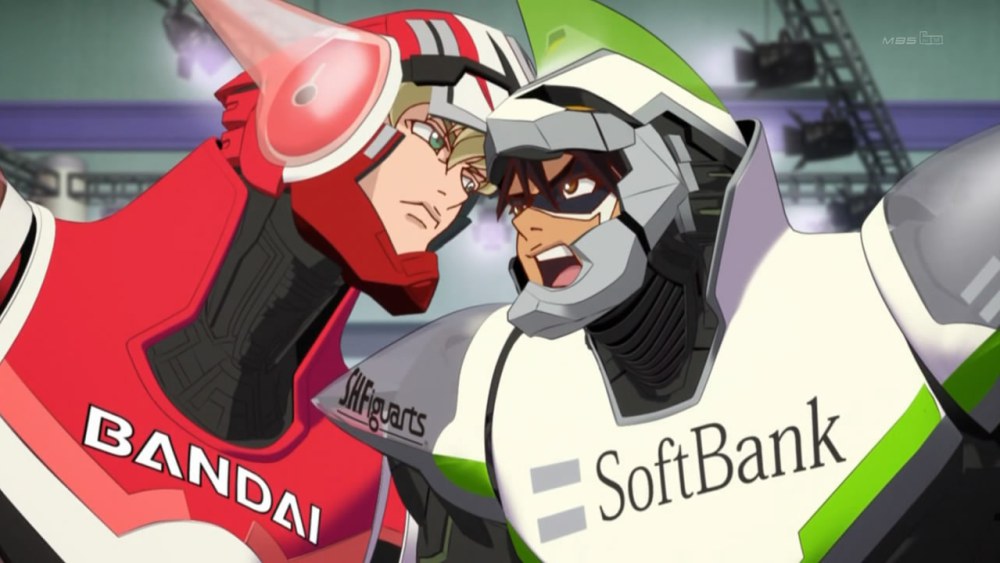
ANEW had five or six film projects under its aegis, including a putative live-action adaptation of the anime Tiger & Bunny, but none of them have come to fruition. Then again, isn’t this precisely what you expect to happen when government quangos dabble in media manipulation? Cool Japan has always been a marketing-focussed, image-obsessed concept, in which officialdom has lumbered far beyond the real achievers, trying to reverse-engineer their success. You can’t just make a new Pokémon happen. If you could, Bandai would have already done it. Nor does Japan go for those tax-break film initiatives that so many countries have successfully parleyed into movie success. There’s a reason The Walking Dead films in Atlanta – they get massive tax breaks, as long as they come to Georgia to spend their money. But that doesn’t work in Japan, where a tax break won’t take away the language barrier or the red tape. Instead, the Cool Japan policy wonks tried to make Cool Japan happen by starting their own movie projects.
Some might say that Masuda is just sulking because he didn’t get a piece of the pie, or that it was unrealistic all around for anyone to think that a mere handful of movie ideas might generate the next blockbuster. Regardless, after seven years, it seems that ANEW has absolutely nothing to show for all its investment, an amount of money that if spent more judiciously, could have paid for four Spirited Aways! Not even the Japanese government can create its own luck.
Jonathan Clements is the author of Anime: A History. This article first appeared in NEO #178, 2018.
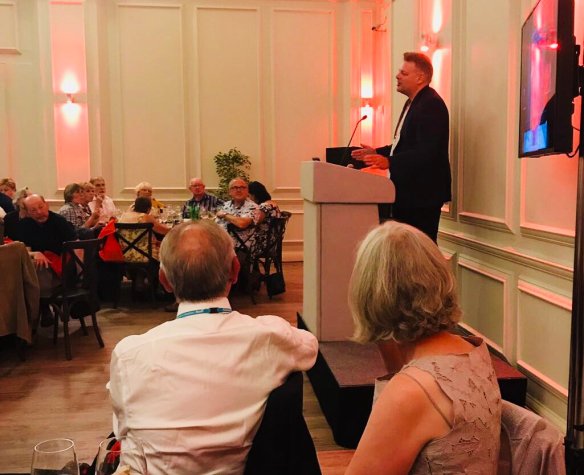
Back from the Liverpool World Museum, where I spoke this week about Chinese Bronze Age burial customs, the oddities of the Qin state in ancient China (including its most famous song), and the enduring mysteries of the Terracotta Warriors. The exhibition itself has lots of interesting and quirky pieces, including a cauldron like the one that Duke Wu dropped on his foot, a barbarian brooch from Qin’s contacts with the western nomads, and a statue of a goose from the First Emperor’s bronze menagerie.
I asked the crowd if they could remember what they were doing back in July 2005, when “You’re Beautiful” by James Blunt was number one, because that’s the timespan, just thirteen years, that separates the coronation of the First Emperor from the fall of his dynasty. The museum at the Terracotta Army site near Xi’an has already stood for twice as long as the dynasty it celebrates.
Drawing on the materials in my book on the First Emperor (which was doing a roaring trade in the museum shop, I am pleased to say), it’s only when you set the archaeology in context with the textual evidence from Qin documents (themselves often as recent a discovery as the Terracotta Warriors themselves), that the reason for every soldier having an individual face becomes clear.
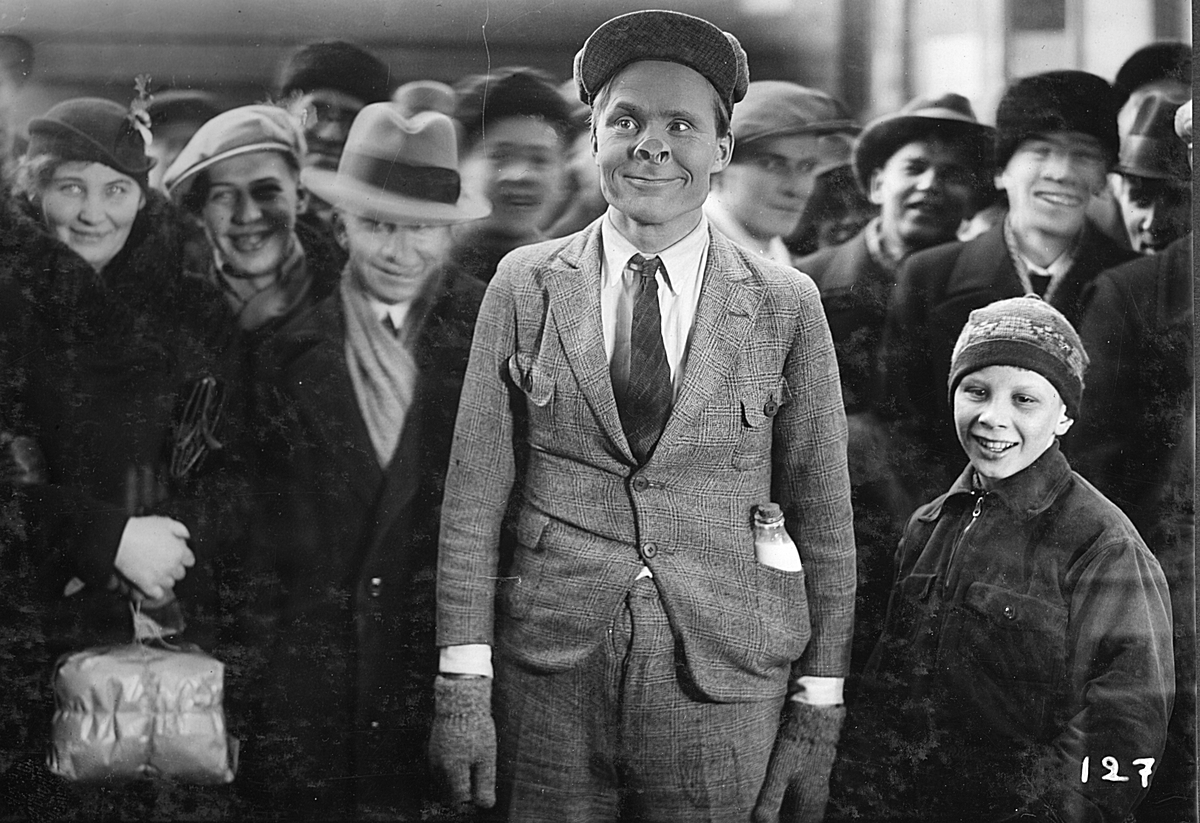 Boss-eyed wantwit Adalbert (Kaarlo Kartio) inherits nine thousand marks from his uncle. Deciding, for reasons unclear, that he really wants to open a milk shop, he finds a job at the swish Helsinki department store Sampo, in order to learn about sales. There, he is swiftly dragged into the schemes of the vivacious shop-girl Irja (Ester Toivonen), who persuades him to become the store’s in-house scapegoat. Whenever a customer has a complaint, Adalbert publicly takes the blame, thereby saving the more established staff from censure.
Adalbert soon tires of his role, but glumly agrees to work out two weeks’ mandatory notice, during which time Irja comes to realise the error of her ways, and that her suitor Mr Vaara (Jaakko Korhonen) is really the owner of the company, observing his wayward staff undercover.
Based on a 1930 stage play of the same name by Yrjö Soini (a.k.a. Agapetus), director Erkki Karu’s film displays an uncharacteristically ham-fisted grasp of the cinematic medium, alternating between locked-off shots of entire scenes from the stage version, occasionally invaded by sudden, poorly integrated close-ups. The contemporary Ilta Sanomat review pointedly noted its failure to utilise the potential of the movie camera. This looks and feels like what it is – an unimaginative restaging of the play, occasionally enlivened by location footage.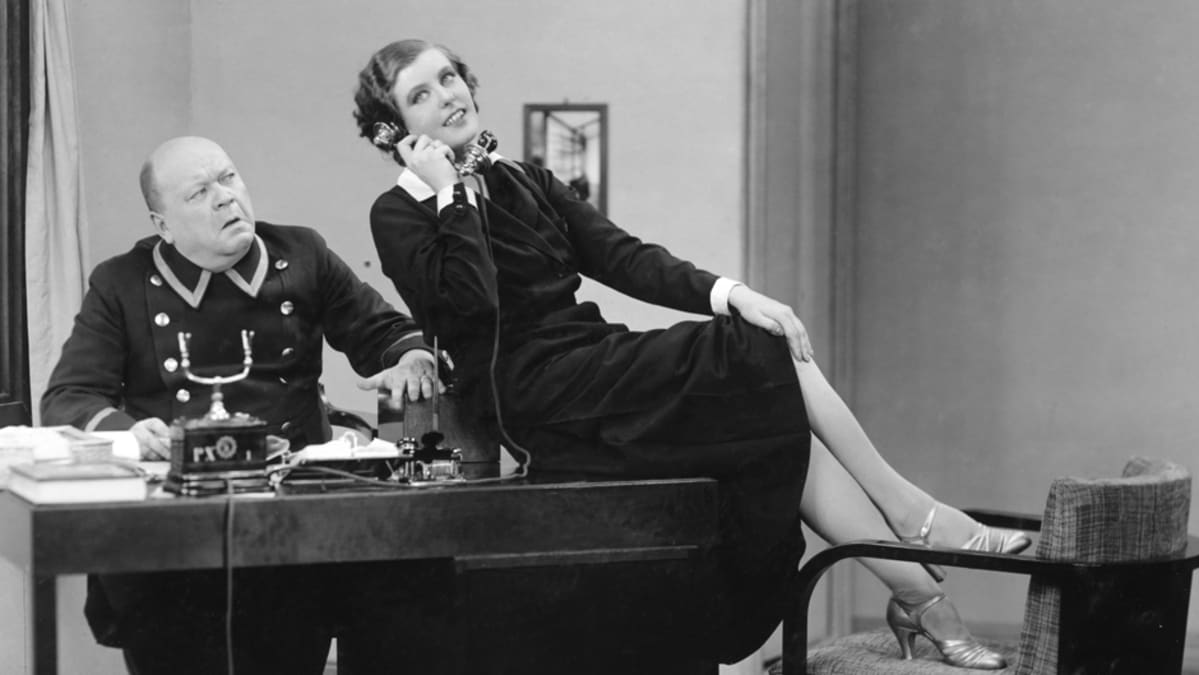 However, Syntipukki (Scapegoat) is notable for its location shots, not only of what was then Heikinkadu in central Helsinki (thirteen years before the street was renamed Mannerheimintie), but also of the famous Stockmann department store, which itself was only completed in 1930, and doubles for the fictional Sampo. There are some touching moments of local colour, particularly a sequence of an army of cleaners, bashful before the camera, as they arrive to prepare the store for its morning opening, and a bunch of naturalistically irritating schoolboys in the street, who have plainly ignored the director’s exhortations to neither look at the camera nor get in the actors’ way. In a remarkably confident decision on product placement, Stockmann embraced the idea of a film that showcased its flagship store, seemingly shrugging off the depiction of the staff within as work-shy and corrupt. Compare this to the more modern sensibilities of the Reebok corporation, which sued TriStar Pictures for $10 million in 1996 after the Tom Cruise vehicle Jerry Maguire took money for product placement and then had its cast repeatedly shout “Fuck Reebok!” on camera.
No such worries appear to have bothered Stockmann, which is presented as a lavish paradise of consumption, complete with sequences of a catwalk model show where Adalbert is pursued by a female contortionist, and a café performance by the singer Mary Hannikainen. The cobbled streets outside have altered remarkably little; the fixtures within are similarly unchanged, except the famous Stockmann Clock, which was not installed until 1965. Considering the fetish that every guidebook and language textbook has for wittering about this supposedly iconic meeting spot, it is strange indeed to see shots of the outside of the store that do not include it. As the good-hearted innocent Adalbert, Kaarlo Kartio is a holy fool, his nose pressed literally against the glass of the shop windows in a scene that both allegorises his outsider status and milks it for comedy value. He represents the vast majority of Helsinki urbanites, only recently arrived from a “countryside” that suddenly finds itself on the outskirts of a modern city, baffled by the customs and mores of the metropolis, even though many of the people around him are likely to be only a generation or less removed from similar rural backgrounds.
Jonathan Clements is the author of An Armchair Traveller’s History of Finland.
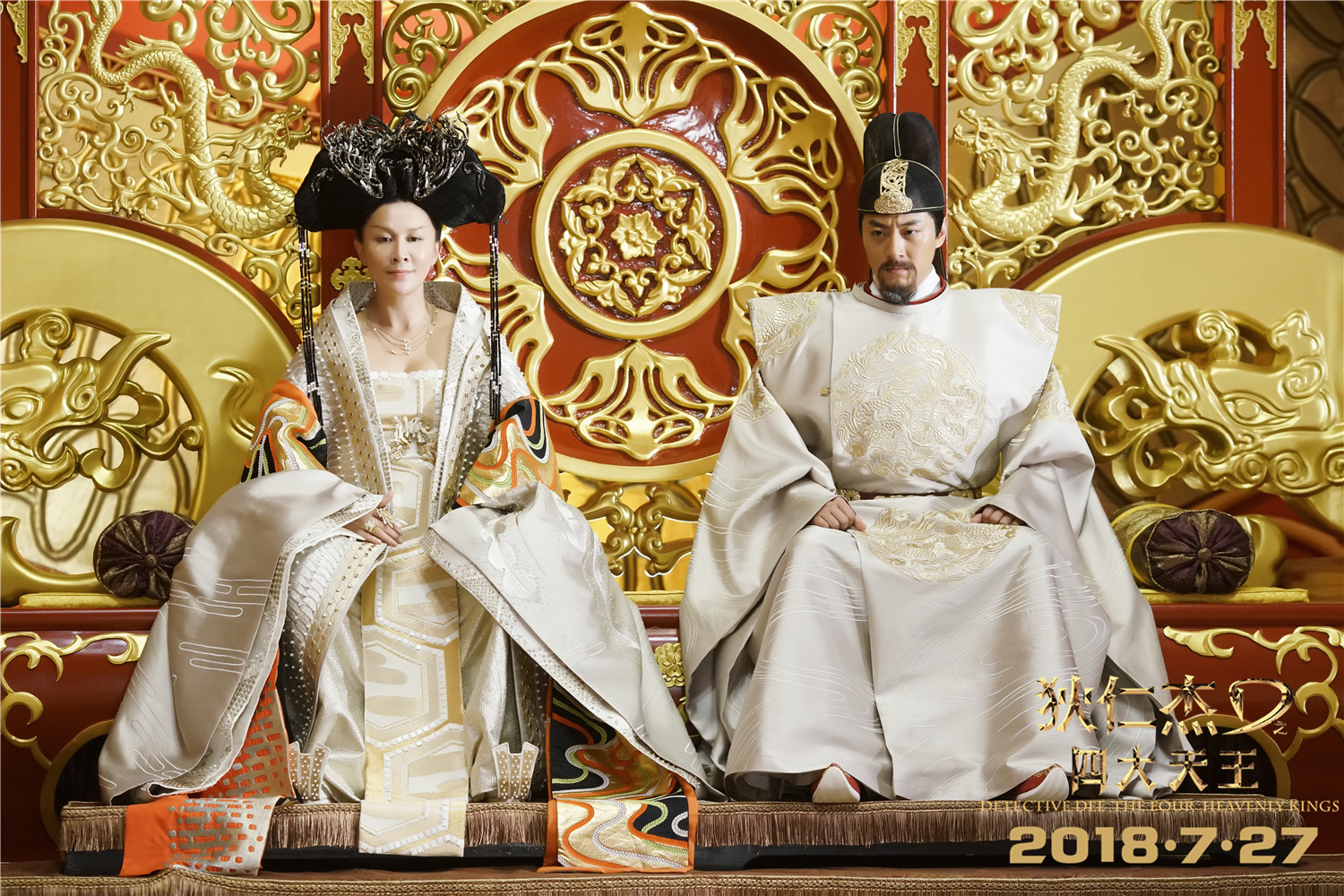 From Wu, by Jonathan Clements, available in the UK and the US. Recommended reading if you want to get the most out of Tsui Hark’s new Judge Dee movie, in which Empress Wu launches a vendetta against her former ally.
—-
Judge Dee was rounded up with a number of other officials, and escorted to the investigators’ head office by the Gate of Beautiful Scenery. Lai Chunchen informed his captives that they had one shot at mercy – under plea-bargaining terms that Empress Wu had recently approved, anyone who immediately pleaded guilty could have their sentences commuted from execution to banishment. With that in mind, Lai Chunchen asked Judge Dee if there was a conspiracy. Dee’s reply was blunt and sarcastic:
[Wu’s] Great Zhou revolution has occurred, and ten thousand things are changing. Old officials of the Tang dynasty like myself are soon to be executed. You bet there’s a conspiracy!
Lai Chunchen would have preferred a straight yes or no, but took Judge Dee’s response to be in the affirmative. Dee was locked up for processing, although his stance managed to impress some of his captors. One investigator, doubting very much that Dee would be detained long in exile, asked him if the judge would put a good word in for him on his return, to which the judge responded by literally banging his head against a wooden pillar while calling the investigator a series of rude names.
The Judge, however, was not going to go without a fight. Waiting for a moment when he was left alone, he wrote a letter to his son on the inner lining of his jacket, and then prevailed upon his captors to take the jacket back to his home, so that his family could take out the winter padding.
On finding the secret message, Dee’s son immediately applied for an audience with Wu herself, and showed the empress the accusing letter. Lai Chunchen was called to explain himself, but argued that the letter was a forgery, since he had no record of the judge’s clothes being sent back to his house. There, Dee’s case might have foundered before it could have truly begun, but for a slave who approached Wu himself. The ten-year-old boy was one of many palace servants who owed their position to the alleged misdeeds of their elder family members. Uncaring that his words could lead to his own torture or death, the boy announced that his family was innocent, and that he lived his life as a slave solely because of the persecutions and lies of the ‘cruel clerks.’
This dramatic turn of events forced Wu to summon Dee to the palace to explain himself. She asked the judge why he had pleaded guilty in the first place, to which Dee replied that it was the only way he could avoid torture and death”
 At Tonghuamen station in the Chinese city of Xi’an, a man is dressed as Doraemon, the big, fluffy blue cat, hero of many a manga series, and known in China as Ding-Dang, the Time Travelling Cat.
“DO YOU KNOW WHO I AM?” he yells at me through the mouth of his costume.
“Indeed I do,” I say, not stopping. He starts to scurry after me, his big clown-cat-feet flopping on the dusty pavement.
“SAY MY NAME, THEN! WHAT’S MY NAME?”
“Ding-Dang, the Time Travelling Cat.” I resist the urge to add that the Chinese media have recently outed Ding-Dang as an agent of Japanese oppression, with an insidious soft-power message designed to distract them from the ongoing dispute over the Senkaku Islands. Mainly because I don’t know the Chinese for soft power (it is ruan shili, for next time).
“NOT BAD! AND LET ME TELL YOU, LARGE FOREIGN FRIEND, YOU’LL WISH YOU HAD A TIME MACHINE IF YOU DON’T SIGN UP RIGHT NOW FOR ONE OF THE UNITS ON OFFER AT THE RENWEI TOWERS CITY DEVELOPMENT, COMING SOON RIGHT NEAR HERE.”
He has to shout because he is wearing an all-over velour suit designed to make him look like a giant blue cat. The thermometer is climbing towards 30 degrees today, so I think the heat might have driven him a little bit loopy.
“I’m not interested,” I say.
“TIME MACHINES AREN’T REALLY REAL, YOU KNOW. YOU CAN’T ACTUALLY GO BACK IN TIME AND SIGN UP FOR THIS OFFER LATER ON.”
“In which case, how did you get here, Ding-Dang?”
There is a pause, while Ding-Dang the Time Travelling Cat thinks about this.
“TO TELL THE TRUTH, I AM STUDYING FOR A DEGREE IN MARKETING. I AM REALLY HUMAN.”
“And if were you, Ding-Dang,” I add, “I’d be more worried about if you were legal.”
“OF COURSE I’M LEGAL—!”
“Because a Chinese court has just ruled that Robot Cat [Jiqimao], a trademark registered by a Fujian sportswear firm, is a blatant copy of Doraemon, so their right to use the image has been revoked, four years after they tried to register it.”
“Wow,” says Ding-Dang, his voice suddenly low and muffled. “They really did that…?”
“Yeah. Like nobody would notice!”
“Well, apparently nobody noticed for four years,” he observes.
“You got that right, Ding-Dang. I bet they wish they had a time machine now!”
Jonathan Clements is the author of Anime: A History. This article first appeared in NEO #177, 2018.
 I’ll be at Liverpool’s World Museum on 26th July as part of the entertainments for their Terracotta Warriors exhibition, talking about the place of the First Emperor’s tomb in the history of the Qin state, the curiosities of its construction, and the tragic events that followed the emperor’s death. Apparently there will be canapes.
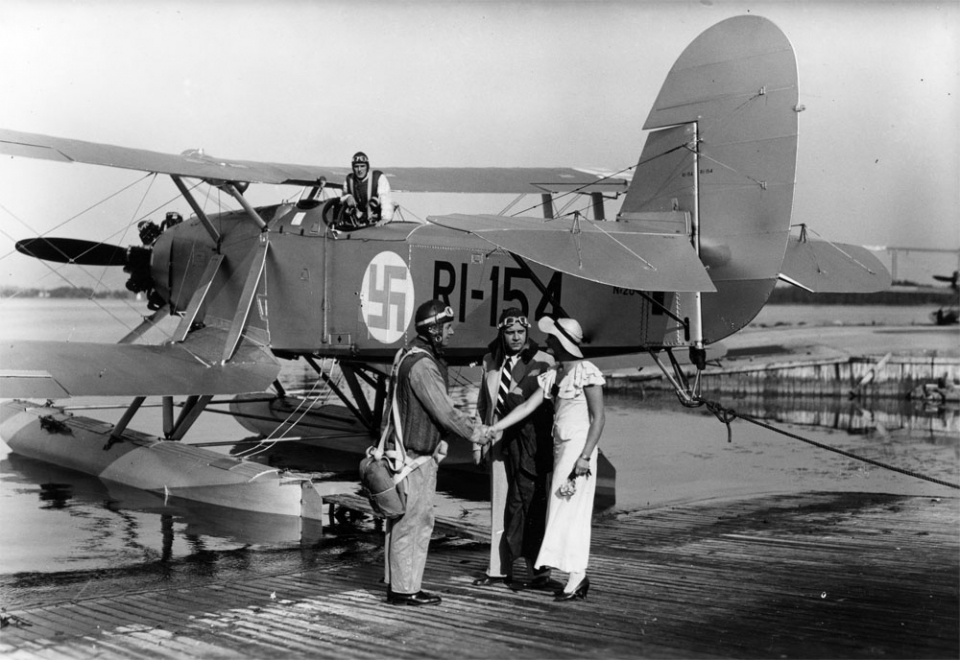 The men of the Finnish air force push their planes to their limits in long-distance tests, and train in preparation for future conflict. Pilots Jarmo (Joel Rinne, who would star three decades later as Inspector Palmu in the movie series of the same name) and Kalle (Fritz-Hugo Backman), are ahead in the distance challenge, but are forced to put their sea-plane down outside Vyborg for repairs. They are helped by local girl Kerttu (Marta Kontula, in legally actionable hotpants), with whom Jarmo soon falls in love. Kerttu happens to be the sister of his fellow pilot Erkki (Kaarlo Angerkoski), who himself is sweet on the starey-eyed Aino (Irja Simola, who looks at him the way a hungry dog looks at a sausage roll).
The pilots are roped into air reconnaissance during a forest fire, during which Erkki saves Aino’s sister Mirja from a burning building. In the process, he is hit on the head by a falling plank, and dreams of a future air assault on Finland. He wakes up to discover that all is well, although the storm clouds of war are gathering.
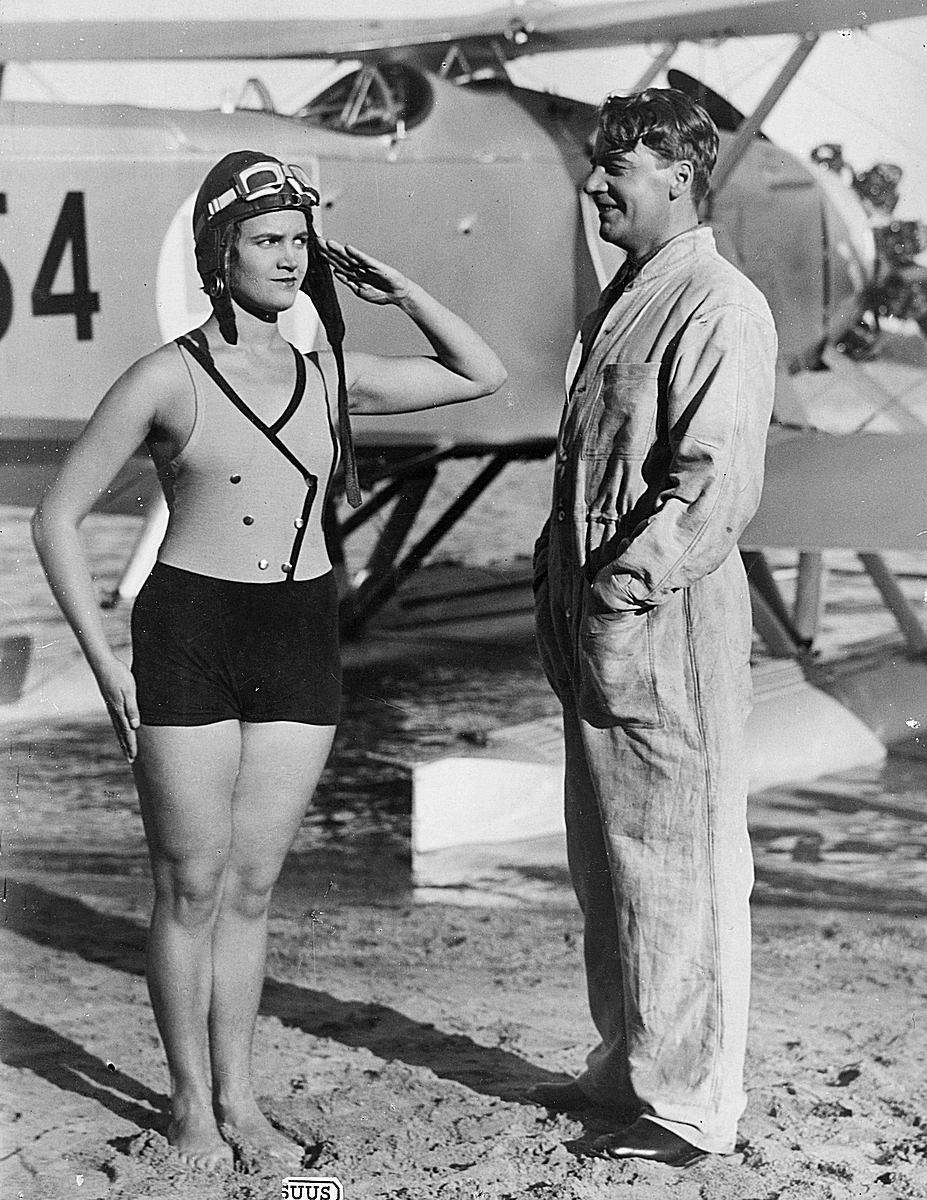 The first of the films included in the monster 232-disc Suomen Filmi Teollisuus box set, Our Boys in the Air, Us on the Ground (1934, Meidän poikamme ilmassa – me maassa) was actually the third in a trilogy of propaganda films made by director Erkki Karu, following on from Our Boys (1929) and Our Boys at Sea (1933). It presents a fascinating glimpse of Finland in the inter-war period, but has an impossible hill to climb in narrative and technical terms, since it was made in the shadow of Wings (1929), an American film on a similar topic, rightly lauded for incredible achievement – the winner of history’s first Oscar.
Karu had been forced off the board of Suomi Filmi, the company he had run for over a decade, unjustly carrying the blame for a slump in cinema attendance brought on by the Great Depression. With plenty to prove, he leapt back into action for his newly formed company with Our Boys in the Air, although it would prove to be one of his final films; he died in 1935, aged just 48. One of his leading men, Kaarlo Angerkoski, would not last much longer, dead from a heart attack at 33 four years later – the press blamed cigarettes and coffee.
Our Boys in the Air was made during the tense 1930s, during which the smart money in Finland was sure that the Soviet Union would stage an attack. It is hence less of a war film than a pre-war film, informing the population about military preparations and developments in technology. Under the guise of a lecture attended by the pilots, what appears to be an actual military training cartoon about relative bomb strengths is spliced directly into the film. Made with the cooperation of the actual Finnish Air Force, the film features prolonged aerial sequences, including a beauty pass across Hamina, the symmetrical, radial streets of which make for an attractive view, and Finland’s second city of Vyborg, fated to be lost to Russia in WW2.
There are many elements that mark the film out as a product of its age. The cast occasionally spring into song in exactly the same way that Finns don’t. The soundtrack is oddly lacking, with silent engines, slamming doors that make no noise, and very little foley – sometimes, all you hear are the actors’ voices. There is also a clear demarcation between actors trained in the theatre, who mug and twitch like they are on drugs, and stiffer amateurs who, ironically, come across as more naturalistic. One of these is Miss Finland 1933 (and Miss Europe 1934), Ester Toivonen, who was a teenager working in a bread shop only a couple of years earlier, but has been propelled in front of the camera by her beauty-queen career, and here plays a nurse, ahead of her first true starring role the following year, in Karu’s Scapegoat.
The film was praised in its day for the flying sequences, which even critics unswayed by its preachy nature had to admit were compelling. Today, however, it is most remarkable for the 25-minute dream sequence in its final act, in which the unconscious Erkki experiences a prophetic vision of bombing raids, anti-aircraft batteries, civilians in gas masks running for an air-raid shelter, and firemen digging survivors from the rubble.
“Thank God it was just a fever-dream, and not real,” observes Erkki’s father when he wakes, although it would all prove to be far too real in 1939, when Soviet planes bombed Helsinki. They are not bombs, joked the Russian minister Vyacheslav Molotov, they are just bread baskets. The Finns would respond in kind, claiming that the petrol bombs they threw at Russian tanks were just cocktails for Molotov.
Jonathan Clements is the author of An Armchair Traveller’s History of Finland.
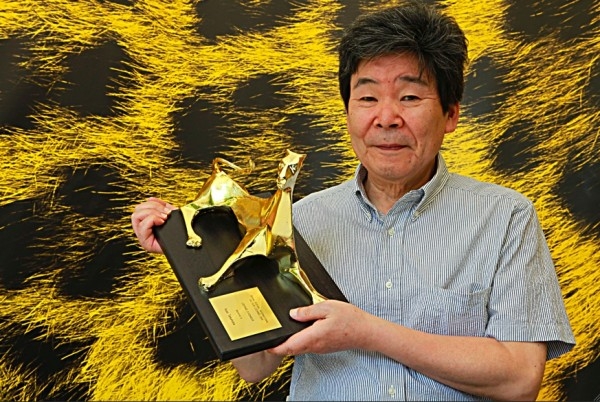 Look for the term Paku-san (“Mr Munchy”) – an affectionate nickname born of the late Isao Takahata’s habit of scoffing his toast on his early-morning studio rounds. It’s a common occurrence in Japanese-language reminiscences and studio memoirs. And reference to it often separated the wheat from the chaff in last month’s rondo of Takahata obituaries.
You’re in safe hands with NEO magazine, for which Andrew Osmond has fashioned a loving tribute this issue, but the coverage of Takahata in other publications has been of variable quality. It’s an interesting sampler not only of how far we’ve come (a lovely Guardian piece by Jasper Sharp, I see!), but of how far we haven’t – far too many clueless paste jobs from Wikipedia. Sadly, they don’t know who they are. Few obituarists, for example, noted that Takahata worked as a producer on both Nausicaa and Castle in the Sky, many accounts of his box-office “failure” Little Norse Prince, made under hostile studio conditions and effectively buried by its own distributors, were hopelessly garbled, seemingly by writers who thought it would be easy to cram such a full life of achievements into a simple list of films he directed.
One news-hound from a well-known British broadcaster inadvisably spammed anyone on Twitter who had mentioned Takahata, asking them if they wanted to come in for an interview. Unfortunately for him, this was all publicly visible, so would-be pundits could see him sucking up to Some Guy With a Blog with precisely the same enthusiasm as he was to Respected Filmmaker. In a marvellous gaffe, he also tried to get an interview with Roger Ebert, who has been dead for five years.
In obituary terms, Takahata might look like an easy grade. There is, after all, a lot of secondary material about him. It’s not like Akira Daikuhara, who died without half of the anime industry even knowing how to pronounce his name. But Takahata is still oddly under-represented in English-language interviews and books. At least one attempt to write a book-length study of Takahata’s work was thwarted in the early noughties by studio recalcitrance – it is not necessarily the fault of English-language authors that some figures are under-represented. Whatever the reason, there’s no BFI classic on Grave of the Fireflies or Princess Kaguya. There’s no translation (yet) of his collected essays, Things I Thought While Making Films. In criticism, as in life, Miyazaki got the attention first, and his friend and mentor was all too often tabled for later.
Jonathan Clements is the author of Anime: A History. This article first appeared in NEO #176, 2018.
 Shangguan Wan’er, it was said, wore her hair in a lopsided bob, in order to cover up the scar on her face from where Empress Wu went for her with a fruit knife. It was an argument over a boy, of course – the drunken Wu had been fondling a sleeping gigolo and bragging about how he made her heart melt, and Wan’er had foolishly reached out a hand to touch him. So, at least, reads the Secret Record of the Director of the Guiding the Immortal Cranes Bureau, a racy work of historical fiction purporting to have been written in the 900s, but more likely to date from a millennium later. It’s just one of the lascivious works cited in Rebecca Doran’s Transgressive Typologies: Constructions of Gender and Power in Early Tang China, the kind of book that makes you wonder why everyone isn’t studying Chinese history.
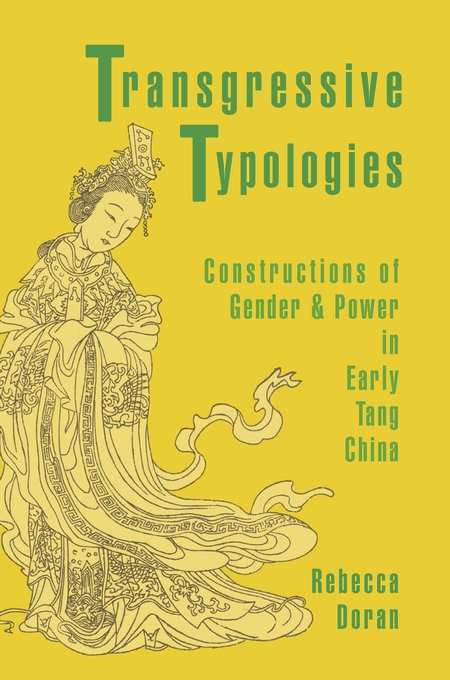 Doran is interested in what she calls “the historical period of female power”, from the time that the charismatic Wu Zhao was called back from a Buddhist nunnery as a new distraction for the Gaozong Emperor. She rose swiftly to power behind the throne, first as his empress, then as his interpreter following an unspecified illness likely to have been a debilitating stroke. She ruled behind the throne for the remainder of Gaozong’s life and the truncated reigns of two of their sons, before seizing power herself in the 690s. But Doran, like many other Tang historians, extends the period of female rule beyond the life of Wu, noting that an entire generation of women grew up during her reign, and came to regard equality, or more, as their birthright.
Shangguan Wan’er, Wu’s minister and speech writer, once regarded as the greatest poet of her generation, remained a power-broker after Wu’s death, and latched on to Wu’s grand-daughter Anle as a possible second empress regnant. Anle was brought down in a palace coup by Wu’s daughter and grandson, but the daughter, Princess Taiping, clung on to her own power base for several more years before her ally betrayed her. Depending on how you define it, the “historical period of female power” either spanned Wu’s adulthood and aftermath, c.650-713, or just the last two decades of that period – her years as empress regnant, and the “second generation” of the women who tried to emulate her. After 713, Wu would be vilified for twelve hundred years. It was only in the 20th century, and even then initially for shady political reasons, that Wu began to be reclaimed as a feminist icon, and her period in power regarded as anything but a woeful mistake.
Doran takes as her starting point the Biographies of Exemplary Women from the Han dynasty, because for centuries this book served as the template for good female behaviour. It was a touchstone for all the (male) historians who wrote about Wu and her imitators, and formed the basis of their disapproval. She also examines the life of Empress Dugu of the Northern Zhou, who controversially insisted on monogamy from her imperial husband – regarded by medieval protocol wonks as a “fatal mistake” sure to undermine palace harmony and dynastic vigour. In doing so, she points to the glorious chaos of the century before the Tang dynasty, when a series of tin-pot and occasionally barbaric dynasties contended to become the new Sons of Heaven, with a set of intrigues sufficient to make Game of Thrones look like Emmerdale.
Doran moves on to the reigns of Wu’s sons Zhongzong and Ruizong, and the kind of poetry and imagery that was popular in a world where their mother really ran the show. As Wu began manipulating the news of her era – Fortean phenomena, observations and media, all pointing to a coming paradigm shift – she pushed an agenda rooted in incredibly modern terms. As she argued at the epochal feng-shan sacrifice in her husband’s day, if the world was truly a constant cycle of yin and yang, dark and light, female and male, then women deserved an equal shot at public life, at power, and ceremonial roles. This, in the eyes of her chroniclers, was her dreadful sin, daring to push an equality agenda in a patriarchal world. Doran uncovers delightfully obsequious comments from fawning poets and courtiers, keen to praise Wu and her imitators for simply showing up, for their grace and their wondrous cultural achievements. She also delves deep into the surviving works of Shanggaun Wan’er, and their place in the history of Chinese poetry.
 Then things get weird, as Doran examines the Comprehensive Record of Affairs Within the Court and Without, a Tang dynasty fantasy in which a minister is sent to hell over a bureaucratic mistake, witnesses the future of the Ruizong Emperor, and is then restored to the human world in time to live through it all, like some medieval Chinese variant on Back to the Future. She also reports on a common Fortean phenomenon in Wu’s era – transsexual chickens, regarded by Wu’s cronies as examples of her greatness, and by her detractors as symbols of the awfulness of the age. In once farcical scene, a courtier recalls the presentation of a three-legged fowl to Wu, who insists it is an auspicious event worthy of note in the dynastic chronicles, even as her son Ruizong points out that one of the legs is clearly fake. Wu tells him to shut up, but even as she does, the leg falls off.
There’s something quite wonderful about Wu and her courtiers bickering about auspicious bullshit, and Doran’s ongoing citations of gossip and innuendo from the time, such as the nursery rhymes and pop songs that slyly alluded to palace putsches and scandals, and the stories written when later writers tried to grapple with the sheer oddness of her reign. Needless to say, much of the disapproval directed at Wu and her imitators would be framed in familiar, materialist terms, lampooning them for flighty, grasping, gold-digging consumption. Doran begins with a famous poem about Anle putting on her make-up as the soldiers bash down the door to her chambers, observing that there are similarities in the story with the “painted” Jezebel of the Bible. There’s plenty of fun to be had with what today would be called tabloid sniping at Anle and Taiping’s pimped-up chariots, ridiculously opulent palace cribs, and bling-bling fineries.
Doran finishes with a prolonged discussion of the “gender anarchy” of Wu’s era, as described by both apologists and attackers, a sort of topsy-turvy Saturnalia of sexually predatory women and ineffectual men, the elevation of bad-boys and charlatans, and (worst/best of all), the Office of the Crane, Wu’s 120-strong personal harem of pretty boys. One of whom, of course, was the cause of that fateful catfight between Wu and Wan’er. When he was inevitably butchered in the coup that ousted Wu in 705, Wan’er tenderly carried off his penis and presented it to the grieving Empress. That’s what it says in the Secret Record of the Director of the Guiding the Immortal Cranes Bureau, anyway.
Jonathan Clements is the author of Wu: The Chinese Empress Who Schemed, Seduced and Murdered Her Way to Become a Living God.

