I would very much like to be enjoying A Silent Voice, but I have a bunch of other things to worry about. Just before the lights go down in the cinema, I get the word that the promised 40-minute post-film Q&A had suddenly dropped to 20 minutes – shoving an extra half-hour onto a slot’s running time often disappears in the cracks between schedulers, projectionists, front-of-house and cleaners. The woman who tells me this also warns me that we are starting 15 minutes late, because someone who shall remain nameless went off to the bogs, and we couldn’t start the film without them.
Anime Limited want to film the Q&A event for a DVD extra. Kyoto Animation are in the house with their own camera. The director, Naoko Yamada, is sitting next to me and has no idea about the blind panic unfolding in my mind over the next two hours. She’s already sat through a 40-minute meeting where we talk over the likely questions, and her minders steer me towards the areas they most want to discuss. But now I am feverishly calculating and re-calculating the logistics.
How much time do I actually have? Assuming that I am not thrown out the moment I take the stage, is there enough time for audience questions at all? If I drop audience questions (and risk the wrath of fans), will there be still time to talk about the staff at Kyoto Animation, as I have been requested to do, or do we now have to make this all-Naoko, all the time? Maybe if I rush. Maybe if I just fire questions at her like an interrogator. Maybe if I drop all questions about the manga and pre-production and just get her talking about her work, I can salvage something.
The lights go up. I take to the stage and introduce the director of A Silent Voice, and catch myself glancing at my watch when the applause goes on too long. Too much applause will cost me another question.
The cameras are running, the audience are laughing. I even relax the interrogation a little and we seem to have time for audience questions. Later on, I find out why – the person tasked with signalling me that we are out of time has decided to simply lie about it. We run over, which means that cinema-goers two films behind us might find themselves hard-pressed to make it for the last bus. Someone is going to get into trouble over this, but it’s a judgement call that saves the event. For the half-hour that the event lasts, it all looks smooth. Nobody saw the negotiations beforehand, the fretting throughout the film, or the slap on the wrist that the distributor got from the Glasgow Film Festival authorities for playing havoc with their schedule. It’s our job to make this all look easy, but sometimes it really isn’t.
Jonathan Clements is the author of Anime: A History. This article first appeared in NEO #162, 2017.
Visitors this summer need not panic; although certain Finns may grumble, and locals themselves sometimes whine about their capital as if it were some sort of urban jungle, Helsinki is a charming city. Architects feted elsewhere in their Finnish hometowns have left many of their finest marks in the very buildings of the central district. Many of its sites are within walking distance, and a tourist bus line links the outliers and the cruise ship terminal. Buses and quaint trams ply similar routes, including one tram that is a travelling pub. Visitors should be warned: it lacks a travelling toilet. This, and further insights below, are extracted from A Short History of Finland by Jonathan Clements.
The visitor’s first sight of Helsinki, either descending from the airport bus or arriving by train, is liable to be Rautatientori (Railway Square), dominated by the temple-like railway station designed by Eliel Saarinen, its walls held aloft by great stone titans like heavy-metal rock gods. Animated and rendered a little cuter, these colossi often appear on posters and adverts for VR, the Finnish rail network. The author admits to a dorky thrill whenever he arrives at the station, as often one will catch a glimpse of the St Petersburg train at one of the platforms, adorned with alien Cyrillic, staffed by scowling baboushkas, and ready to depart for another world.
In the square outside the station’s east exit, outside the vampire’s castle that is the National Theatre, an odd statue of the author and playwright Aleksis Kivi shifts uncomfortably in his seat, as if he has just sat on something sticky. He faces the Ateneum, Helsinki’s National Gallery, and home to many of the most famous artworks of the National Romantic period.
A few steps to the south-west of the square is the southern end of Mannerheimintie, (Mannerheim Road), named for the country’s famous Regent and one-time President. This is the centre of Helsinki’s shopping district, boasting an iconic statue of blacksmiths at work, and the entrance to the Stockmann department store that sits beneath the Stockmann Clock. There is nothing particularly remarkable about the clock, but Finns seem to cling to it as a meeting place, and an encounter ‘beneath the Stockmann clock’ is an early phrase that torments many beginning students of Finnish.
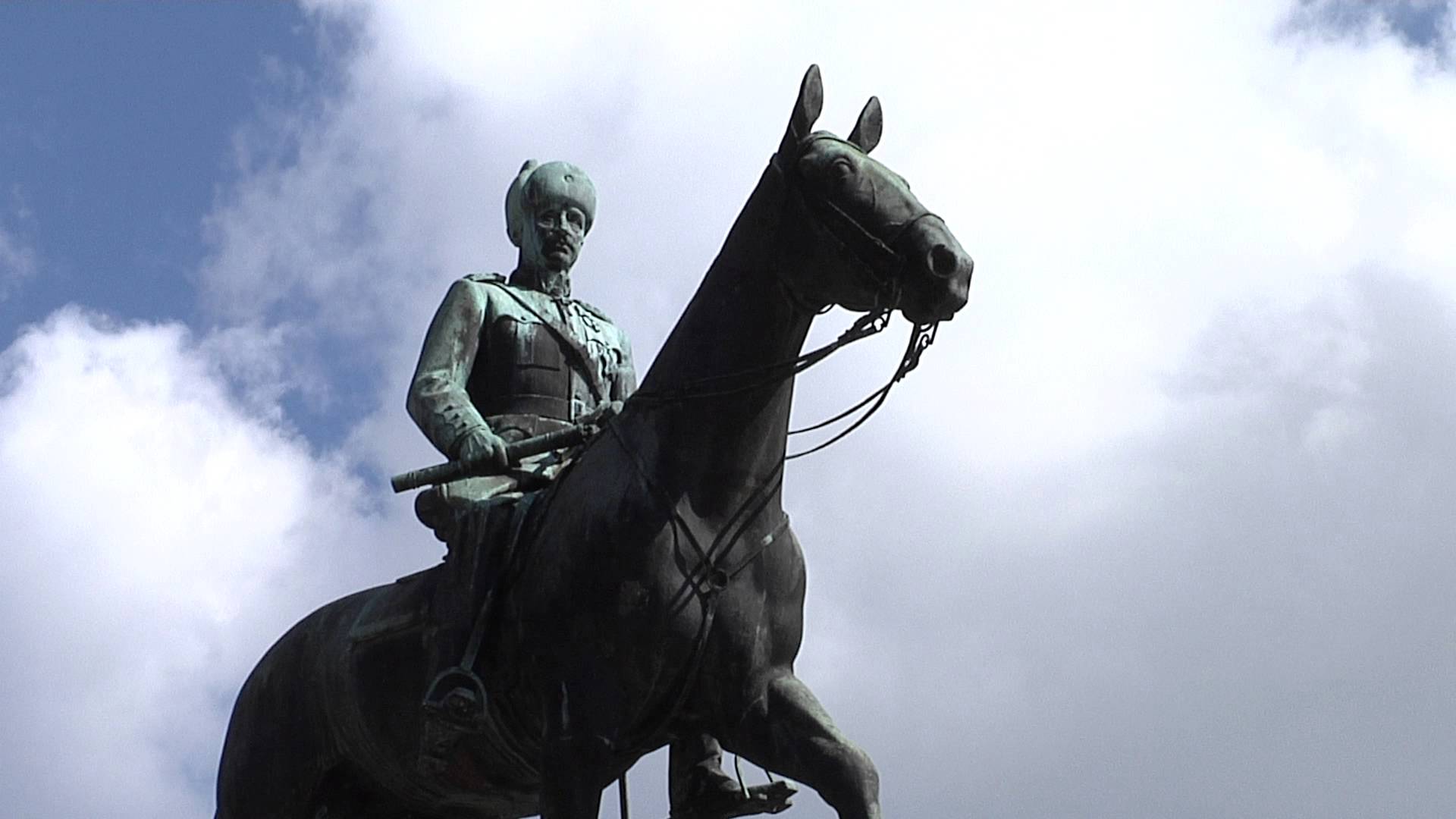
The Statue of Mannerheim on his horse is here, walking earnestly past the nearby parliament, rather than facing it or putting his back to it. Statues of other Finnish presidents lurk around the parliament steps like discombobulated party guests, staring dourly at the news crews shooting pick-ups, and across the road at Kiasma, the modern-art counterpart to the Ateneum.
With typical Finnish self-awareness, the Suomen Kansallismuseo (National Museum of Finland) is itself a museum exhibit, one wing of which is designed to look like a church, which stood it in good stead during the war, when its appearance may have warded off Russian bombers. It was also the site of some scuffles during the Finnish Revolution, and its front doors still proudly display the bullet holes shot in the windows, now preserved behind a second layer of glass. The lobby is decorated with frescoes depicting scenes from the Kalevala, painted by Akseli Gallen-Kallela, and that’s before you’ve even bought your ticket!
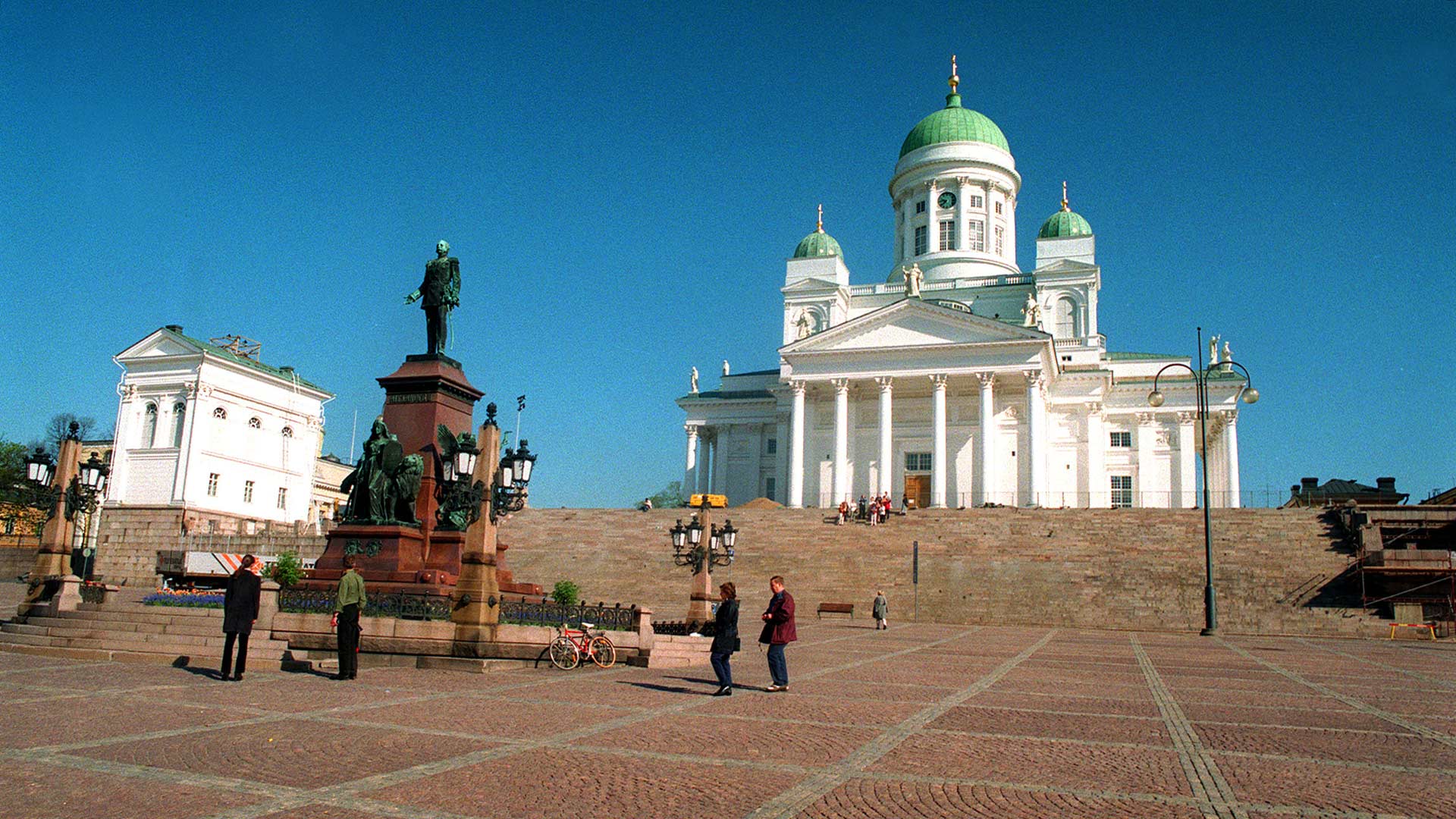
Russian-era Helsinki was famously designed in imitation of St Petersburg, leading to its substitution for that city as a film location during the Cold War. Although tour guides make much of this, anyone who has seen St Petersburg themselves will know that the resemblance is merely superficial. Watch one of the aforesaid films, such as Warren Beatty’s Reds (1981), and images of Helsinki are shot in close-up, offering little more than street-level backgrounds and cobbled streets. Commonly, ‘St Petersburg’ imagery in films derives from Senaatintori (Senate Square) at the city’s historical centre, with towering steps leading up to the Neo-Classical cupolas of Helsinki Cathedral. The cathedral is frankly more impressive on the outside than within, since its interior displays an austere Lutheranism, as if Ikea were put in charge of church design. In the centre of the square stands the Statue of Alexander II, ‘the Good Tsar’ who granted the Grand Duchy of Finland greater autonomy under Russia than it had ever enjoyed under Sweden. It is supposedly the only statue of a Tsar standing outside Russia, and is an enduring testament to the love that the Finns once had for the country to the east. As the Russification policies of his successors began to bite, Alexander’s statue became the site of a subtle, peaceful protest as Finns laid wreaths at his feet, mourning not only his death, but also the slow erosion of his kind policies.
From Senaatintori it is but a short walk to the cobbled harbour, the site of many a farmer’s market and coffee kiosk, and ferries. The site of Helsinki was originally called Vironniemi (Estonia Point), and its proximity to Tallinn is still reflected in the hydrofoil terminal that will whisk you away in just 90 minutes. For anyone who is inexplicably tired of the Finnish capital, Estonia beckons within commuting distance. The harbour sits at the end of the Esplanadi, twinned parallel north and south avenues that lead back to Mannerheimintie, and constitute some of Helsinki’s prime real estate – their meeting place, at Erottaja, is the most expensive spot on a Finnish Monopoly board. It is the site of several posh restaurants, the Swedish Theatre, and Havis Amanda. This naked nymph, sculpted by Ville Vallgren (see Gazetteer: Porvoo), reflects the artist’s Art Nouveau inspirations, and was the subject of scandalised tutting in the Finnish media when unveiled in 1908. A loving recreation of the gamine curves of a French teenager, it caused uproar among Finland’s newly enfranchised women voters but is now a much-loved part of the scenery, affectionately nicknamed Manta. Her fountain waters apocryphally grant sexual potency to anyone who thrice washes their face and shouts ‘Rakastaa!’ (Love), and her crowning with a white student’s cap marks the beginning of Walpurgisnacht celebrations (see National Holidays and Local Festivals: Vappu). What was once clearly a student prank is now televised annually.
The harbour is also the place to get the ferry to nearby Suomenlinna, the Fortress of Finland, which remains a quaint getaway for the marine-minded. It evokes the Swedish, Russian and Finnish eras with numerous installations, as well as a couple of military museums and the Vesikko, a WW2 submarine open to the public. Visitors can also poke around the largely ruined fortifications – don’t miss the King’s Gate, built in 1752 as a sufficiently royal arrival point for Swedish rulers. Nearby inscriptions note that King Adolf Frederick laid the first stone here, while a sad, uncompleted plaque leaves the date blank for King Gustav’s laying of the final stone (he never got around to it). Beneath a plaque announcing that these ‘wolf islands’ have been transformed into a fort for the Swedes, a second inscription intones these immortal words: ‘Eftervärld, stå här på egen botn, och lita icke på främmande hielp.’ It is a fine prophecy for the world that lay in wait for the Finns: ‘Those that come after us, stand here on your own foundation, and trust not in foreign help.’ Arrive at around 09:30 or 17:15 and you can watch the gigantic cruise ships squeeze through the narrow strait (‘Gustav’s Sword’) to Helsinki harbour.
Helsinki City Museum is not one but eight separate facilities dotted around the city, including several villas and burghers’ houses, and the Street Museum on Sofiankatu, which recreates town life in earlier times.
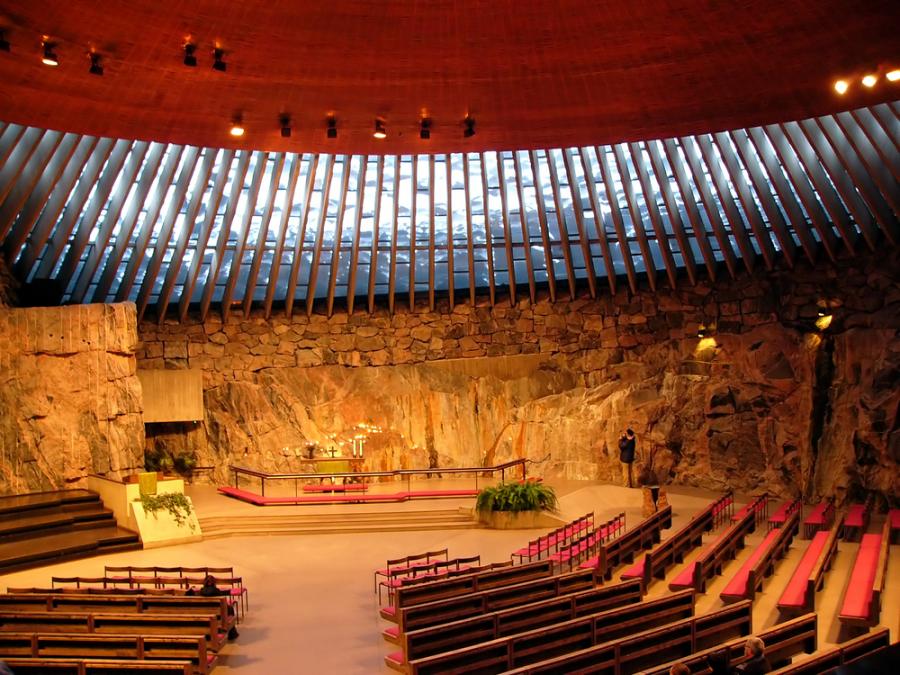
The Uspenski Cathedral, Orthodox counterpart to the Lutheran one, is a more sedate, red-brick affair, deriving its name from the Russian for ‘the Dormition of Mary’. Perhaps Helsinki’s most internationally well-known religious building is further out of the centre at the Tempeliaukion Kirkko (the Church in the Rock), which as the name implies, was hewn into the bedrock. For some reason, this site appears to attract more than its fair share of Japanese tourists.
Out in the Kaivopuisto district, where many foreign embassies and consulates can still be found, the Mannerheim Museum is sited inside the former president’s house. Beware: it is only open on Fridays, Saturdays and Sundays, and free-range visitors are not permitted. The admission fee includes a well-informed guide, although only speakers of Finnish, Swedish and English are liable to be available off the cuff. If you speak French, German, Spanish or Russian, it is best to book ahead. Another Finnish president, who defined the nation throughout the Cold War, is celebrated at the Urho Kekkonen Museum in Tamminiemi – you can book a guide any time but it is far cheaper to take the once-a-day scheduled English tour at 14:30. Finnish and Swedish tours are far more regular; German ones must be booked in advance.
These are but a fraction of the many sights that one can find in Helsinki, which is riddled with smaller museums celebrating everything from the post office to the power company to the Salvation Army. As one might expect from any capital, it is also richly endowed with living history. You can still have cocktails at the Hotel Torni, a favourite hang-out for Cold War spies, or stroll in Kaisaniemi Park, where the eleven-year-old Mannerheim won his first recorded victory – a snowball fight.
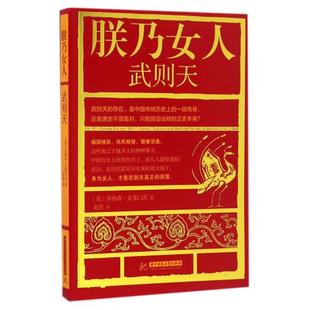
My biography of Empress Wu is finally available in the People’s Republic of China, in Chinese. No, I don’t know why, either. But there it is, looking all posh.
In 1910, after decades of intrigues, provocations and double-crosses, Japan formally annexed Korea. For the next 35 years, Korea showed up on maps as part of Japan, its capital Seoul renamed Keijo, its royal family whisked away to Tokyo as hostages, its people force-fed a diet of Japanese nationalism.
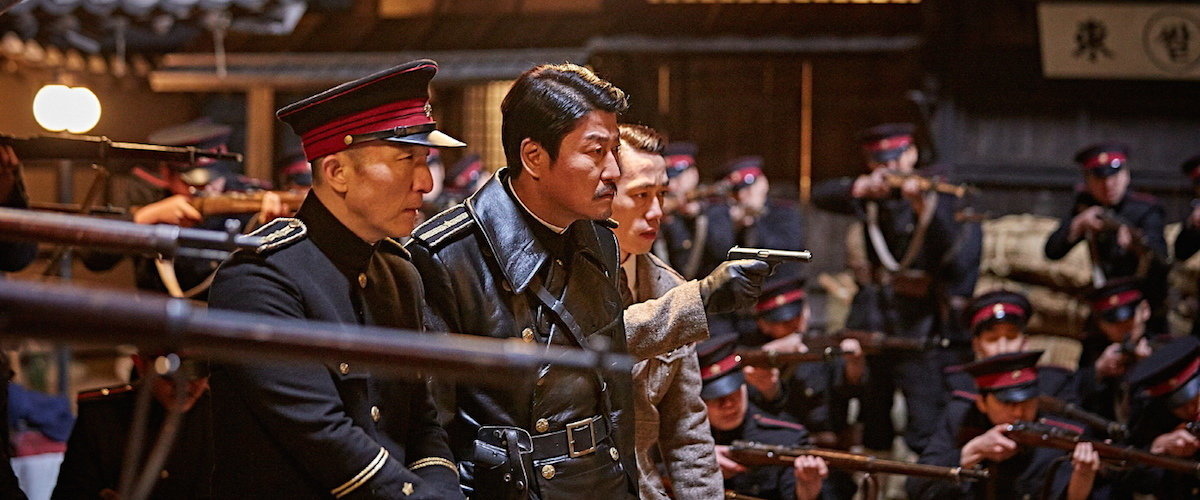
Detective inspector Lee (Song Kang-ho) is a good-hearted cop, who finds his loyalties tested when his Japanese masters task him with hunting down the resistance. Rebel mastermind Che-san (Lee Byung-hun) senses that Lee is on the verge of switching sides, and lures him ever closer to an explosives-smuggling ring that uses an antique shop as a front. But will Lee wake up to the cause and join the rebels, or will he hand over his countrymen to his dastardly Japanese bosses?
Director Kim Jee-woon returns to his native land, after helming Arnold Schwarzenegger in The Last Stand, for a gory, uncompromising glimpse of the rise of the Japanese war machine and the fires of the Korean resistance. Known simply as “Spy” (Miljeong) in its homeland, his beautifully grim, smoky vision of 1920s occupation has been released abroad with a far more evocative title, reflecting both its look and its loyalties: Age of Shadows.
“I’m drawn towards double agents,” comments Kim, pointing to people with divided loyalties who “act in secret while surrounded by enemies, standing at the borders of their turbulent age.” His film is all the more remarkable for being inspired by history, most notably the rise of the “Heroic Corps” (Uiyoldan). With dynasties collapsing in both Korea and China, and the Japanese plundering treasures from both, the real-life Heroic Corps did indeed use the antiques trade as a means of importing weapons from across the border. They carried out targeted assassinations of Japanese troops, high-level collaborators and a vaguely-defined subset of “traitors”.
Several schemes were thwarted by the authorities, but their first success came in 1923, with the bombing of the prominent Bell Street police station in central Seoul. The bomber, Kim Sang-ok, fought his way through a police cordon around his home, and committed suicide after a costly gun battle on the slopes of Mount Namsan. This all adds a touch of gritty realism to the film’s depiction of revolutionary intrigues, most notably a prolonged set-piece as agents desperately try track the glamorous but iron-willed arms smuggler, Gye-Soon (Han Ji-Min), on the Shanghai train.
“I wanted to capture the image of people navigating a tightrope between supporting or resisting Japanese colonial rule,” says Kim, “and being swept up in the consequences of setting one’s foot down on either side of the line.” Although it’s pretty clear which side of the line he is on – the Japanese are presented as unrelentingly cruel, old-school baddies. It shouldn’t come as a surprise that Age of Shadows is a Korean initiative, rather than a Japanese one. For a former coloniser to depict the period for entertainment purposes would seem gauche and indiscreet – how many English films have glorified the Irish War of Independence?
Far too many Korean movies are obsessed with a fratricidal, traitorous motif seemingly inspired by today’s North-South divide. But Age of Shadows makes it clear that Korean allegiances have been split for far longer, with the colonial regime struggling to hang onto its collaborators and root out its rebels. Antique dealer Woo-jin (Gong Yoo) is a Lovejoy charmer, trying to win over his police tail with honeyed words, dressing to impress in another historical touch – “I was fascinated to hear that real-life members of the resistance, never knowing which day might be their last, dressed each day with style,” the actor reveals.
For director Kim, the film was a chance to capture not only the atmosphere of the era, but also the lives of the founders of modern South Korea. “On the day before we started shooting, I visited the former office of the Korean Provisional Government in Shanghai,” he recalls. “It was so small that the bathroom was located right next to the dinner table. I wanted to suffuse the film with the emotion I felt, learning about the struggles of independence fighters who endeavoured to reclaim the spirit of a people who had lost their country.”
Jonathan Clements is the author of A Brief History of Japan. This article first appeared in Geeky Monkey #20, 2017.
Over at the All the Anime blog, I write an article about Naoko Yamada’s acclaimed film A Silent Voice.
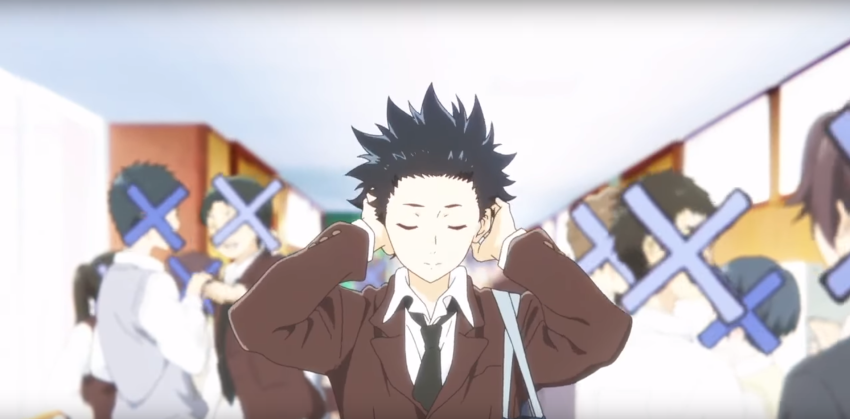
“A Silent Voice had a rollercoaster ride to success. Despite winning a Kodansha comics competition in 2008, it sat unpublished for three years as editors and lawyers debated its provocative stance. Disability drama is a recognised sub-genre in the Japanese media, but usually strives for a worthy, didactic message. The implied audience is all too often an ignoramus who needs to be educated about specific conditions. Such stories are often termed Pure dramas, deriving their name from the autism-related 1996 TV series of the same name. But A Silent Voice often focussed not on the saintly deaf girl but on the young thug who bullied her, along with his classmates’ casual disinterest. When it finally saw print in 2011, it did so with a ringing endorsement from the Japanese Federation of the Deaf: ‘Please publish it as it is and do not change a thing.'”
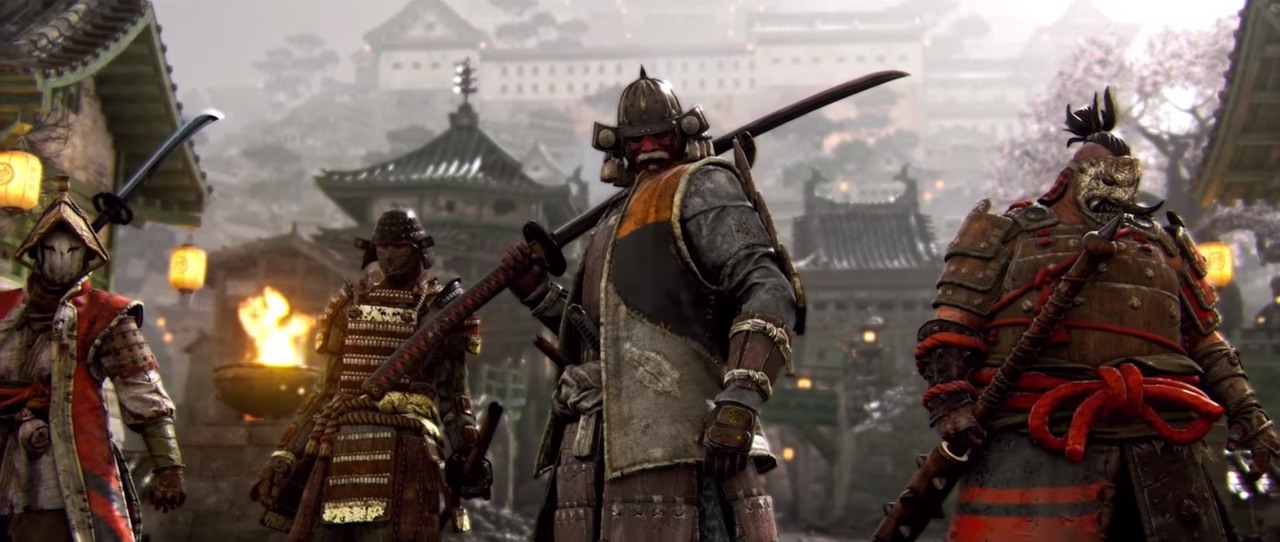
Over at Samuel Steele’s YouTube page, he interviews me about the technology and culture of the samurai. It’s “just a bit of fun” as the TV historians like to say, designed to think through some of the implications of the ideas behind the computer game For Honor, in which samurai, Vikings and knights duel for control of thinning resources. The interview is split into three parts, the first, largely on weapons and armour, the second, largely on “the warrior code” and the existence of the ninja, and the third on archery, women, and who would win in a stand-up fight.
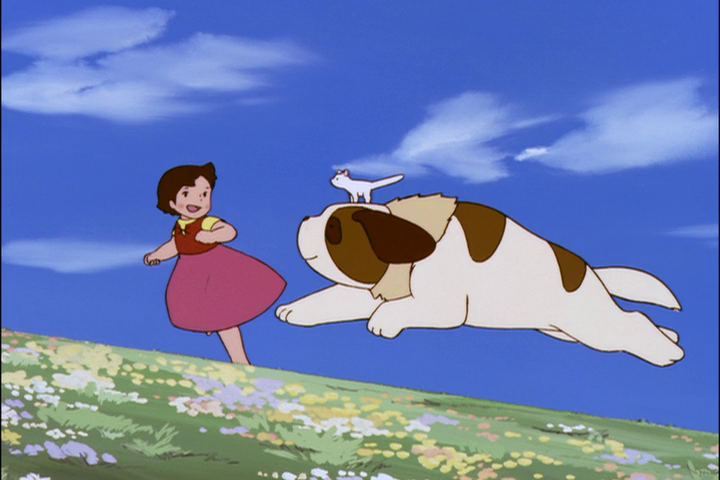
Over at the All the Anime website, I review Kaori Chiba’s new Japanese-language book on Heidi, Girl of the Alps, the landmark anime series that carved out an entire niche in evening programming.
“Chiba deals with the anime’s planning, the shooting of its pilot, and the crew’s location hunt in Switzerland, wherein Miyazaki, Takahata and their long-term collaborator Yoichi Kotabe descend like dervishes on the farmhouse of a baffled local family, demanding to photograph their kitchen table and their cows. From Maienfeld, they head up to Ulm and Frankfurt, soaking up the metropolitan imagery for Heidi’s later adventures in Germany.
“Chiba devotes ample space to the production of the first episode – the scoring of the music, the theme song, and the auditions for the voice actors, the character designs and the backgrounds. It’s only towards the end of the book that her account takes a darker tone, drawing on the complaints of the staff, particularly Miyazaki himself in many later articles and interviews, that television animation was a brutal, relentless, unending task, gobbling up talent and time. The animators put their all into Heidi, only to find that television networks greet its manifest quality with an indifferent shrug.”
This year’s Eurovision Song Contest is in Ukraine, land of some of the besteverEurovision mentalists. Sadly this year we’ve already lost Latvia’s disco-goth Sailor Moon and Montenegro’s ponytail whirling spacefarer, but there’s plenty of nutters left for Saturday..
This year is the year of the Man-Bun, with these monstrosities appearing on singers, dancers and band members. We also trial our new SHOW A LEG category, for any moment when someone has a single bare leg poking out their costume. This replaces our usual Mullet Dress category, since too many things that look like a mullet dress from a distance turn out to be miniskirts with bum veils. Yes, we have probably thought about this far too much.
Step One: you will probably need to be quite drunk. Step Two: The following sights will be seen during this Saturday’s Eurovision Song Contest. Can you see them first? Remember to shout it out. Party hosts will need to keep score of who gets what first, or otherwise dish out the forfeits to those that aren’t quick enough. As ever, there is more than one key change, and plenty of orbital cleavage, but this year you have to be quick to catch the subtlest of bimbles. Keep your eyes (or ears) open for any of the following. And when you notice it, SHOUT IT OUT!
In no particular order, in Saturday’s final you should look out for:
SHOW A LEG!
The Star Trek Away Team (science, command, security and… orange)
Tap that jug!
Hold my microphone for me
The one-legged hoppy dance
MAN-BUN!
Hands make a heart (several)
Singing in a boat
Conveyor belt dancing
It’s the man in the moon!
WINKING (a lot of winking this year)
COSTUME CHANGE
It’s the Eiffel Tower!
Suddenly shouts “SAMURAI!”
Yodelling
Mask made out of fairy lights
Bouquet throwing
KEY CHANGE! (every time you hear one)
Slapping a pond
Writing on people with chalk
DANCING GORILLA!
Walking on a line he just drew
Onstage cannons
Sign: “Feeling all alone and insecure.”
Big Giant Head
Girl standing in a kaleidoscope (you’ll see three of her)
Xena Warrior Princess voguing in the back (looky likee)
Fat man in half a leather jacket
Glitterboobs (Visible glitter on boobs)
FLAME ON! (every time there’s pyrotechnics)
Man with a horse’s head on top of a stepladder
Woman on a pedestal
Topless man/men
Mask made out of fairy lights
Brushes off imaginary dandruff (got to be quick with this one)
Bimbling*
ORBITAL CLEAVAGE**
Buddha Jazz Hands***
(*swaying one’s head from side to side in a snakey fashion)
(**ostentatious cleavage sufficient to see from a satellite in orbit, which, according to Eurovision bra consultant Tom Clancy, requires a minimum of C-cup)
(***the dancers all pile behind the singer in a line and then fling their arms out, creating a multi-limbed oriental deity-look)
BONUS SCORING
Cyprus gives Greece 12 points
Greece gives Cyprus 12 points
Finland gives Sweden 12 points
Britain scores nul points
Brazilian or Russian flag spotted in the audience.
Eastern European delegate makes ominous comment about friendship
Ukrainian hosts compliment themselves on their attractiveness
Apologies to American readers, who will have to just imagine what the world’s biggest, gayest song contest is like. Just imagine, for one day every year, Europe gets to behave the way that Japan does all the time.
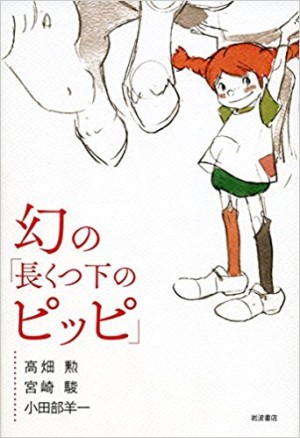
Up on the All the Anime blog, my article on the aborted Pippi Longstocking anime project that caused Hayao Miyazaki, Isao Takahata and Yoshio Kotabe to walk off their jobs at Toei and jump feet-first into the world of television.
“There is no real evidence for [Astrid] Lindgren’s reluctance at the Japanese end, apart from a cryptic comment from Tokyo Movie’s Keishi Yamazaki, who thought that she had once said in a TV programme that Japanese animation was ‘too violent’. Where on Earth she got that idea from in 1971 is anyone’s guess — I like to imagine a Stockholm tea-time coven of famous children’s authors, complaining about foreign cartoons.”

 I would very much like to be enjoying A Silent Voice, but I have a bunch of other things to worry about. Just before the lights go down in the cinema, I get the word that the promised 40-minute post-film Q&A had suddenly dropped to 20 minutes – shoving an extra half-hour onto a slot’s running time often disappears in the cracks between schedulers, projectionists, front-of-house and cleaners. The woman who tells me this also warns me that we are starting 15 minutes late, because someone who shall remain nameless went off to the bogs, and we couldn’t start the film without them.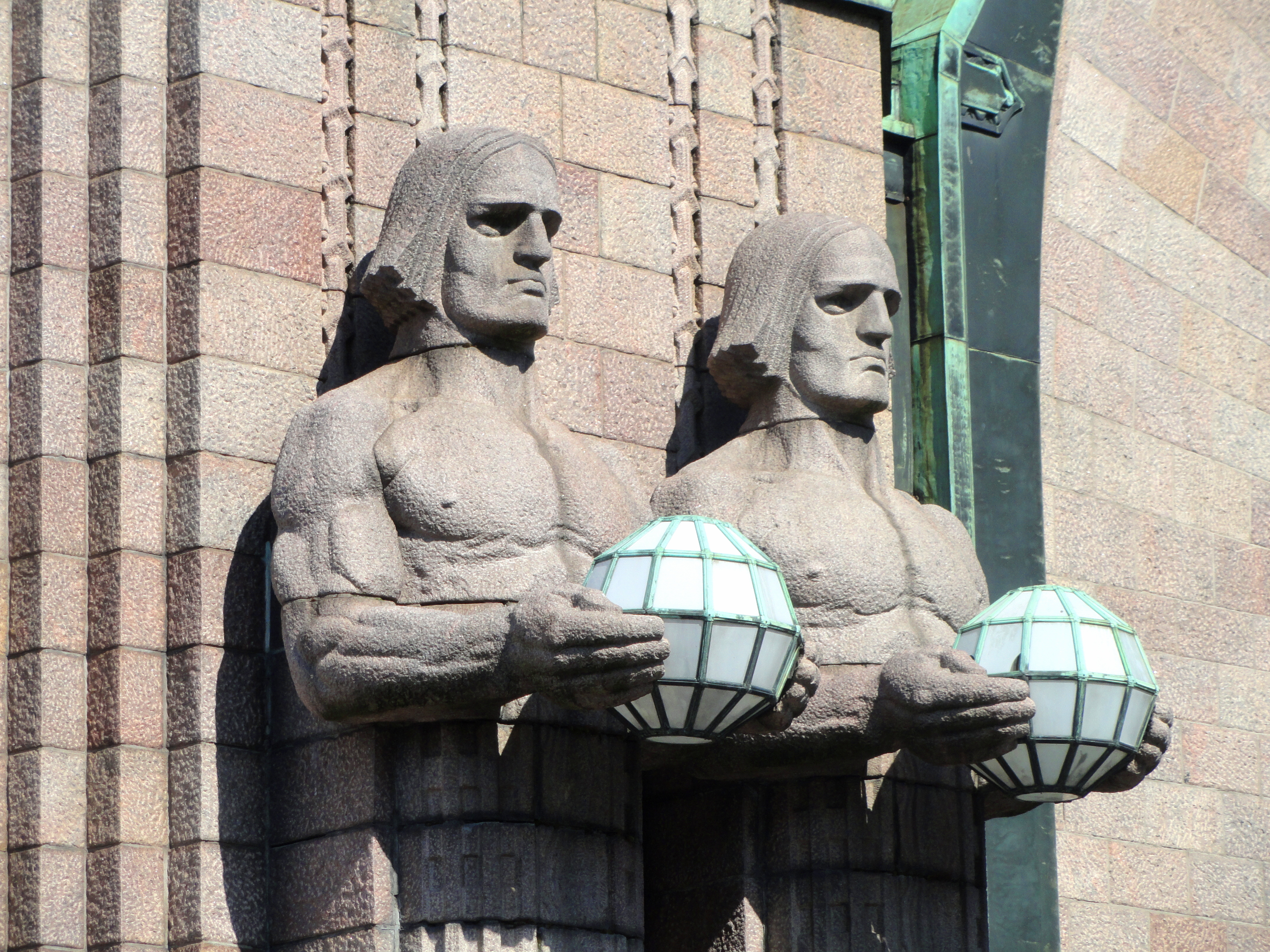



 The Official Schoolgirl Milky Crisis Blog