Sinners and Winners

News just in from the United States reveals that errors on the subtitles for the bespoke Garden of Sinners release have caused Aniplex USA to issue replacement discs for one of the DVDs.

There has been a round of exasperated tutting throughout fandom about this, with a recurring comment that if fans are paying the premium price of $190 for a box set, the least the release company can do is check the discs before sending them out. But from the sound of it, the error on Garden of Sinners was a reading glitch that many viewers might have even shrugged off. For those who bought their discs through the Right Stuf, replacements were sent out automatically, meaning in some cases that the discs arrived before fans had had the chance to put the defective original in the player to be shocked in the first place. And yes, mistakes happen, and Aniplex USA have rushed to correct theirs, which is surely better than just sniffing contemptuously and telling their consumers to like it or lump it.

Would that all film companies were as committed to aftercare as Aniplex. It would be nice, for example, if I woke up one morning to discover that had Kiseki mailed me a better quality DVD of Gunbuster and apologised for the piss-poor tape-transfer edition that they originally sold me.

There have been some awful mistakes in anime releases over the years, and many of them have been simply left. In the subtitle world, we’ve had to put up with spelling errors, mis-timings and that popular bugbear of modern fandom, “dubtitles”, when a voice-track rewrite is used to supply a very rough subtitle file, which often doesn’t match the Japanese at all.

What about it, Hollywood? It would be awfully sweet of Ridley Scott if he snuck into my house one night and left a gift-wrapped copy of Prometheus that has a coherent plot. But there’s a slippery slope right there… as film archivists start to argue about whether lighting and colour timing is right even on modern versions of classic movies, we might find ourselves in a situation where hypothetical tinkerers are replacing your discs every other week….

Jonathan Clements is the author of Schoolgirl Milky Crisis: Adventures in the Anime and Manga Trade. This article first appeared in NEO #108, 2013.

Tie Me Up, Tie Me Down

When advertisers and sponsors first became involved in the anime business, it was tentative and haphazard. Masaki Tsuji reports phone early calls arriving at TV Asahi from pencil manufacturers and card companies, who wanted to stick some of the earliest 1960s characters on their merchandise. When he picked up the phone, he realised that, quite by accident, the TV channel completely owned the relevant rights in Eightman. By the time of Sailor Moon, interests in tie-ins had ballooned to such an extent that one beleaguered Bandai official complained he had “literally no time to go to the toilet” when the phone was ringing. Literally…?

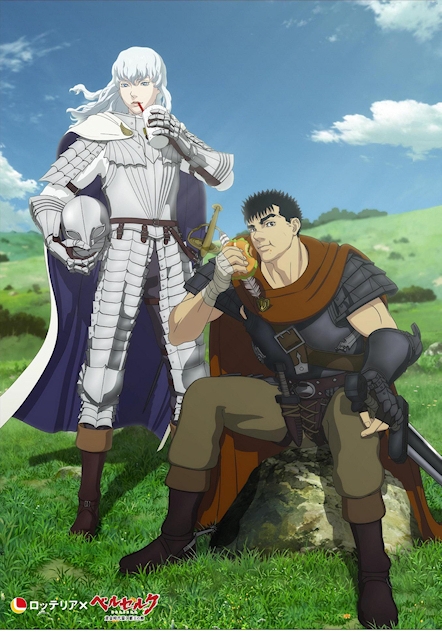
But how can sponsors get returns on their investment, apart from advertising in the commercial breaks? There is, of course, simple product placement, where cans of soft drink, storefronts and even blatant advertising billboards are placed in-shot. This is mostly harmless, although if you have a fantasy film like Berserk, it’s difficult to have the cast setting aside their roast dolphin for a Happy Meal. In such cases, extra artwork is often generated, such as the Lotteria tie-up campaign, which featured the powerful mercenary Guts and albino general Griffith tucking into a hamburger and a milkshake. The androgynous Griffith was also depicted with a shopping bag over his shoulder, looking like a Lady Who Lunches, in a campaign for a department store.

But some anime go beyond product placement into context integration – imagine a hypothetical anime movie, let’s call it Schoolgirl Milky Crisis Goes to London, where five minutes are set aside for characters to travel on a well-known airline, and then get mixed up trying to locate their hotel, causing them to repeat its name a dozen times. But this has been going on in anime for decades, most notably with the Gundam series, for which a company wanted its toys to be part of the story. Yoshiyuki Sadamoto once called Yoshiyuki Tomino the “pro’s pro”, for being able to take such behind-the-scenes demands and to fashion them into a story that still entertained the viewers. It’s being able to still be creative, amid such immovable limitations, that contributes to the unique look and style of anime.

Jonathan Clements is the author of Schoolgirl Milky Crisis: Adventures in the Anime and Manga Trade. This article first appeared in NEO #106, 2012.

2012: The Year in Anime Books

Possibly for the last time, we return to my annual round-up of books I have read about the animation industry in Japan. This year I have published several extensive reviews of some of my anime reading, including Marc Steinberg’s Anime’s Media Mix, Nobuyuki Tsugata’s Before the Dawn of TV Anime, Liliane Lurcat’s Alone With Goldorak, and Tobin’s book on the Pokemon phenomenon.

Behind the scenes, I have also been wading away through Japanese-language works on the subject, including two accounts of anime in China, Tomoyuki Aosaka’s Contents Business in China: Fluctuating Markets, Emerging Industry, and Homare Endo’s The New Breed of Chinese ‘Dongman’: Japanese Cartoons and Comics Animate China. Both authors must write in a tense environment, with evidence pointing to a strong potential market for Japanese animation and comics in China, but also to a strong anti-Japanese feeling all over China. It’s a fascinating dichotomy, where there is minimal evidence of anime and manga in Chinese stores, but anecdotal evidence everywhere you look that illegal downloaders and torrenters form a significant silent population. Meanwhile, even though only 35 foreign films are permitted in Chinese cinemas each year, you can guarantee that two of the slots otherwise reserved for Tom Cruise, or James Cameron, or Pixar, or whoever will go to the year’s Conan the Boy Detective film and the year’s One Piece movie. Anime and manga in China are not only on a critical cusp, but have been teetering there for the last decade and could still fall either way.

There was also an account of the life and work of Osamu Dezaki, and another about the achievements of Akiyuki Shinbo, adding welcome detail to the public profiles of two prolific directors. At the edge of the anime field, Yasuo Nagayama published an interesting “occasionalist” history of science fiction in Japan, concentrating not on the texts themselves but on the events that surrounded them. In the wrong hands, this could have all too easily turned into a tedious account of things that happened at conventions, but Nagayama keeps closely to his methodology, discussing not only the fan politics of the Japanese con scene, but also the effects of media fads and scares, and the public performances of popularity every time certain anime break box office records.

A few books disappointed me. A new work that purported to offer an insiders’ view of Sazae-san had nowhere near the detail I was hoping for, and Mitsuhisa Ishikawa’s account of his “revolution” at Production IG lacked the kind of nitty-gritty details that I personally go for. Much more fun was to be had in a series of books about the Japanese animation business, particularly the wonderful Otaku Marketing by the Nomura Research Institute, which offers hard data about the various types of otaku to be found in numerous consumer sectors, and how best to sell them stuff. Another book on the industry, This is the Anime Business, by Makoto Tada offered a run-down of the ten secret “Rules of the Devil” recited at the Dentsu corporation by its loyal minions. They are, apparently, a secret handbook to understanding the way the best animation studios work, too:

Rule 1: Work is something you should create not something that should be given.

Rule 2: Work is something where you take initiative and not something you do passively.

Rule 3: Tackle an important job. A small job will make you small.

Rule 4: Target a difficult job. You can progress by accomplishing it.

Rule 5: Once you tackle, don’t let it go. Hold on like grim death, until you achieve the target.

Rule 6: Drag the people around you. It will be worlds apart between the one who drags and who is dragged in a long term.

Rule 7: Plan. If you have a long-term plan, patience, devices, correct effort and hope will be born.

Rule 8: Have confidence. Without confidence, your work does not have punch or tenacity or even depth.

Rule 9: Use your brain in full all the time. Be always on the alert. Don’t slip your guard. That is what service is.

Rule 10: Don’t be afraid of friction. Friction is the mother of progress and manure of drive. Otherwise you will be obsequious and irresolute.

If it seems like I am reading less anime books than usual this year, it’s because this year saw me come to the end of the long writing process on my doctorate. I handed it in back in July, and the prospect of reading it so terrified my superviser that he ran away to China. As a result, it’s still languishing at the faculty waiting for the committee to get its act together; I didn’t help matters by running for China myself for four months this year, making it a little difficult to turn up for my viva; I shall have to sort out all of that in the new year, or else I shall never be Dr Clements. Meanwhile, the book version, some 60,000 words longer (in fact, as one wag commented, a whole other PhD worth of stuff) makes its way through the peer review process at the British Film Institute. I am just about to deliver the second draft of that, and with any luck you should see the published result – ANIME: A History of the Japanese Animation Industry, published in late 2013. As the name implies it is a massive chronicle of animation in Japan since the year 1909 (yes, 1909, you will have to read it to find out why), based almost entirely on the Japanese-language testimonials of the actual creators, rather than the speculations of foreign pundits. If you are the kind of person who has read this far on this blog, then I think you will like it very much.

Nakama Britannica

The folks over at Nakama Britannica have moved heaven and earth to get their podcast interview with me, Jonathan Clements, out in time for Scotland Loves Anime. If you’re at all interested in the history and direction of the anime industry, there is a lot of information in here, real-world statistics and behind-the-scenes gossip. You can download the podcast here.

0:00 The loss of Schoolgirl Milky Crisis, the great unseen anime, disappeared from the record in an unfortunate boating accident. Scotland Loves Anime — the logistics of getting Japanese guests to Glasgow. And a quick plug for my latest book, the new translation of the Art of War.

10:00 What is anime? Nowhere near as dull a question as it sounds, leading to all sorts of gossip about the battle for anime’s soul between the spirits of Osamu Tezuka and Hayao Miyazaki. Includes the words: “Communists”, “witchhunts” and “crappy”.

20:00 Anime as Soft Power. The size of otakudom. The meaning of TV ratings. How anime form follows function. How much is the anime business worth? Includes the words: “chimpanzee”, “over-engineering” and “popular”.

30:00 What is a silver otaku? The impact of Heidi and Yamato.The phenomenology of fandom and misremembering Evangelion and Gundam. The influence of Tadao Nagahama and Yoshiyuki Tomino. Includes the words “pander”, “toss” and “Aznable”.

40:00 Traditional concepts of storytelling, and how unlikely you are to find them. How “traditional” was the Hakkenden. The ethics of tying anime directors to chairs and slapping them. Noh drama and Gasaraki. Jinzo Toriumi’s Introduction to Anime Scenario Writing. Includes the words: “fallacy”, “posh” and “pervy”.

47:00 Wimmin. Do 125 million Japanese people all like hentai? The demographics of female anime fans and the birth of Noitamina. Fujiko Mine and the line between sexy and sexist. The role of women within the anime industry. Includes the words: “mind bleach”, “boobs” and “jellyfist”.

57:00 The chivalry of chauvinism and its impact on anime staff rosters. The evolutionary role of colour recognition. Women in powerful positions, like CLAMP. Includes the words: “xerography”, “concordance” and “primal.”

67:00 Aloha Higa and the unpleasantness over Polar Bear Cafe. How many fingers am I holding up? Includes the words: “sod off”, “Disney”, and “torpid”.

69:00 The nature of originality: giant robots and schoolgirl witches. Downton Abbey the anime, and what a production committee might do to it. Creativity within limits. Includes the words: “tropes”, “Metallica” and “Minovsky particles”.

73:00 Three trends for the future: Kickstarter, mobiles and China. The size of the informal anime market. Issues for intellectual property. What’s changed in Sino-Japanese relations since the publication of the Dorama Encyclopedia. Includes the words: “crowd-sourcing”, “Margaret Thatcher cyborg”, and “sandwich-making”.

84:00 The Death Note backlash in north-east China. Cosplay in China. And goodbye. Includes the words “boobs” and “grabbed”.

Amazeballs

The Manga UK podcast is back for its eighth episode, in which Jerome Mazandarani offers sage advice on dealing with school bullies, Andrew Partridge of Scotland Loves Anime plugs his film festival in Edinburgh and Glasgow, Jeremy Graves on what’s coming up at the MCM Expo, and Jonathan Clements on the dangers of sharing a bed with a third-degree blackbelt. And when Jerome is suddenly caught short, Andrew Hewson steps in to the breach.

0:00:00 – 0:04:55 : Pre-Show chatter.

0:04:55 – 0:24:03 : New releases, production snafus, the certification of Madoka Magica, and how new releases ‘sound’, Ninja Scroll and why pre-ordering is a good idea.

0:24:03 – 00:38:35  Manga UK & Kaze UK plans for London MCM Expo, free hugs at conventions,

00:38:35 – 00:49:28 A preview of Scotland Loves Anime in Glasgow and Edinburgh. Also, reasons why “amazeballs” really is a word.

00:49:38 – 1:28:19 [END] Ask Manga UK, featuring questions on older series, licensing titles, best sellers and more! Favourite manga, including Domu and Shooting Stars in the Twilight. The history of Dark Horse Comics in the UK, and their strange transformation. Details of Toshio Maeda at the Expo, and how not to ask him for a “controversial” image. The problems caused by middlemen in acquiring anime rights. Sales figures for Manga Entertainment’s top sellers, including Akira, Naruto and a couple of surprises.

Available to download now, or find it and an archive of previous shows at our iTunes page. For a detailed contents listing of previous podcasts, check out our Podcasts page.

Before the Dawn

Nobuyuki Tsugata has already published books on the careers of Osamu Tezuka and the pioneering animation of Seitaro Kitayama, as well as broader studies of anime history as a whole. Last year he co-edited Anime-gaku, the first truly successful attempt to discursively construct ‘anime studies’ as an object of knowledge, delineating Japanese animation as a field of academic enquiry in and of itself, rather than as a subset of film, business, culture, media or any other discipline. And while far too many of his international colleagues continue to fritter away their lives in endless studies of What Some Fans I Met Think of Some Anime They’ve Seen, Tsugata continues to soldier on in the dusty archives of anime history and biography, rescuing forgotten sectors of the business, and mounting persuasive arguments that expand the nature of anime as we know it.

As so often happens in the media, artistic heritage is often left in the hands of the people who made it in the first place – usually because nobody else really cares until it’s too late. Japanese animation history is dominated by the twin big-bangs of Toei Animation and Osamu Tezuka’s Mushi Pro, in part because they resulted in works and workflows that can still be found today. What about all those other studios that fell by the wayside or didn’t have a publicity-hungry manager at the helm? What about all those studios that churned out work that never got collated on DVD or shown at film festivals?
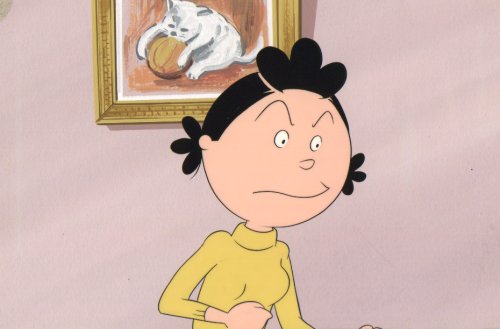
As Tsugata notes in the introduction to his latest Japanese-language book, Before the Dawn of Television Anime, it’s like some areas on the map of anime history are still marked terra incognita. Many people have at least heard of TCJ (Television Corporation of Japan), mainly because this commercial animation company, since renamed Eiken, is still at work today, most famously as the production house that makes the TV series Sazae-san. But TCJ’s advertising past, usually dismissed in a single line before discussion of its TV programming output, was truly massive, amounting to more than 1400 cartoon adverts between 1954 and 1960 (and more than 2200 if you include those live ads for which TCJ provided animated diagrams or titles).

Tsugata’s focus is not merely on forgotten byways of anime history, but also on forgotten geography. Although it is widely known that the Japanese animation industry, along with many other forms of production, relocated to the Kansai region after the devastating Tokyo Earthquake of 1923, Tsugata argues that Kansai remained the centre of Japanese animation for the next three decades, only ceding primacy to Tokyo with the establishment of Toei Animation in 1956. His narrative picks delicately at the Tokyo-centred bias of other Japanese books, pointing out that many landmark events in Japanese media, including, for example, the irresistible rise of Osamu Tezuka, actually ‘happened’ in Kansai. He also notes that Toei’s own press and self-commemoration has largely overshadowed the achievements of Saga Studio, a Kansai start-up, also established in 1956, which played a highly influential role in the first decade of Japanese animated commercials.

Tsugata diligently chronicles the perils of anime historiography. The men and women who churned out thousands of cartoon commercials in Kansai were not part of the academic conversation about what anime was. Hardly anyone has bothered to remember their work, because their work was usually the bit that happened in between the TV shows, and before the main features that anime historians actually bother to write about. This is despite the fact that the Kansai area studios turned an impressive buck, undeniably formed a part of the 1950s zeitgeist, and displayed a mastery and economy of line that must have made animation in the 1950s look considerably less ‘Japanese’ than it did after 1963. Tsugata’s cover includes one such image from several dotted throughout his book: a charming, dynamic layout of a pilot scattering leaflets from his plane, drawn as part of an Osaka Eiga commercial for a local prefectural election.

Tsugata has never been afraid of doing the legwork, scraping information from wherever he can. In his biography of Seitaro Kitayama, he famously reconstructed part of Kitayama’s 1920s studio output in true Blade Runner style, by enlarging a staff photograph to read the schedule stuck to the wall in the background. For Before the Dawn of Television Anime, he diligently tracks down the surviving industry veterans, now with an average age of seventy, and gathers testimonials that restore much of the Kansai story to narratives of anime history.

These teams, often working out of pokey six-mat rooms and identifiable only by the occasional initials in the corners of their sketches, were responsible for the animation in some of the iconic Japanese adverts of the 20th century, including commercials for Nisshin Cup Noodles, Vick’s Cough Drops and Matsushita Electrics. Some of their works were 90-second narratives, others merely ten instructional seconds inside a commercial filed as “live action”, but with a little animated section explaining how cockroach spray works, or how menthol clears out your tubes. They were also responsible for the creation of iconic characters such as Yanbo and Mabo, the twin tykes who shilled for Yanma Diesel, ubiquitous in the 1960s but forgotten now because they didn’t appear in the kind of anime that gets archived or remembered.

Tsugata’s narrative also fills in a gap in accounts of “art” animation, revealing how art-house animators like the award-winning Renzo Kinoshita actually paid the bills while tinkering with their high-brow creations. Far too many researchers seem to assume that art-house animators spend all day sitting in garrets playing with sandtables, supported by some magical and secret government super-subsidy, whereas many of them, including the Oscar-winning Kunio Kato, have day-jobs that often get left off the resumés that are sent to film festivals. I wish such information was made available more frequently, as it might smack a degree of realism into the aspirations of some arts students. Tsugata does not shy away from it, and reveals that far from working in an adman vacuum, the animators of the Kansai set had strong and often reciprocal connections with big-name animators like Noburo Ofuji and Hakusan Kimura (himself the founder of Osaka Eiga in 1960).

Tsugata finishes with an outline of the vestiges of the old Kansai anime tradition, as kept alive by such companies as today’s Kyoto Animation. He also returns to a subject familiar from some of his earlier books: the little-discussed admission that even the big names in Tokyo were keen on ad revenue to pay the bills. Tsugata has argued before that Toei Animation itself was set up partly in anticipation of the money that could be made from the expansion of commercial Japanese television in the 1950s, and staff from Mushi Pro have admitted that they used to get paid a lot better making adverts with Astro Boy in them, than they did making Astro Boy itself.

His conclusion recalled a passage I had read elsewhere, in the posthumously published memoirs of the animator Soji Ushio, who had once decided to visit the famous canal-side studio building where the renowned Iwao Ashida had made many of the big animated splashes of the 1950s. Instead, when he arrived at the address, the canal had been filled in, the studio itself had been turned into a tatami shop, and there was no sign of the man whose company Ashida Manga Eiga had once been the biggest name in the Japanese animation medium. How soon they forget.

Jonathan Clements is the author of Schoolgirl Milky Crisis: Adventures in the Anime and Manga Trade.


Akira Daikuhara 1917-2012

For those that didn’t see it, my obituary of the animator Akira Daikuhara went up online at the Manga UK blog the day after the Japanese animators’ union announced his death. I’d been interested in him for a while, mainly because he was as “old as anime itself”, but also because I realised that he had been edged out of many histories because nobody knew how to pronounce his name. Honestly, I am still not sure myself.