My review of Keiichi Hara’s Colorful is now up on the Manga UK blog. It’s one of the most thoughtful and mature anime movies of recent years, and well worth a look if you are in any of the towns being visited by this year’s Japan Foundation tour.
Tag Archives: anime
Lost Sols?
Anime Sols, established with the cooperation of a whole gaggle of anime studios, exploits all the best benefits of living in a digital age. A limited number of episodes of each anime show get streamed, for free, online with English subtitles. If you like what you see, you get to bid for a series of crowd-funding packages. Fully aware that these anime shows are of limited interest to a worldwide audience, Anime Sols sets its bar for success healthily low, with each serial’s block of episodes going to DVD as soon as they have a mere 1000 orders – this, in turn, exploits mastering houses’ new willingness to turn around small print-runs cheaply.
What could possibly go wrong? Well, as regular readers of this column will already know, it’s not necessarily that easy to get 1000 anime fans to put their money where their mouth is. As head honcho Sam Pinansky reported last month, Yatterman not only failed to get 1000 backers before its deadline on Anime Sols, but proved to be so unappealing that barely 40 people even watched it past the fourth episode!
Fandom was awash with recriminations – if only they’d picked a different show; if only fans could have bid from certain foreign territories (the UK, for example was excluded). But maybe people just weren’t that into Yatterman. Case closed. The project was cancelled, and the rights holders of Yatterman got a tiny reward – the chance to re-use those subtitles on a future Japan-only DVD release.
But Anime Sols is run by smart people, who were plainly disappointed but not undaunted. And I’d like to encourage everyone to regard Yatterman not as a failure, but as valuable data about anime’s appeal, or lack of it. It’s good, for the industry in general, for the Japanese to be confronted with how few people actually give a toss about some of their more obscure shows. And it’s good for fandom to be confronted with a put-up-or-shut-up ultimatum about making stuff happen. A few weeks later, Anime Sols offered Creamy Mami in the same way, and achieved its funding target with four days to spare.
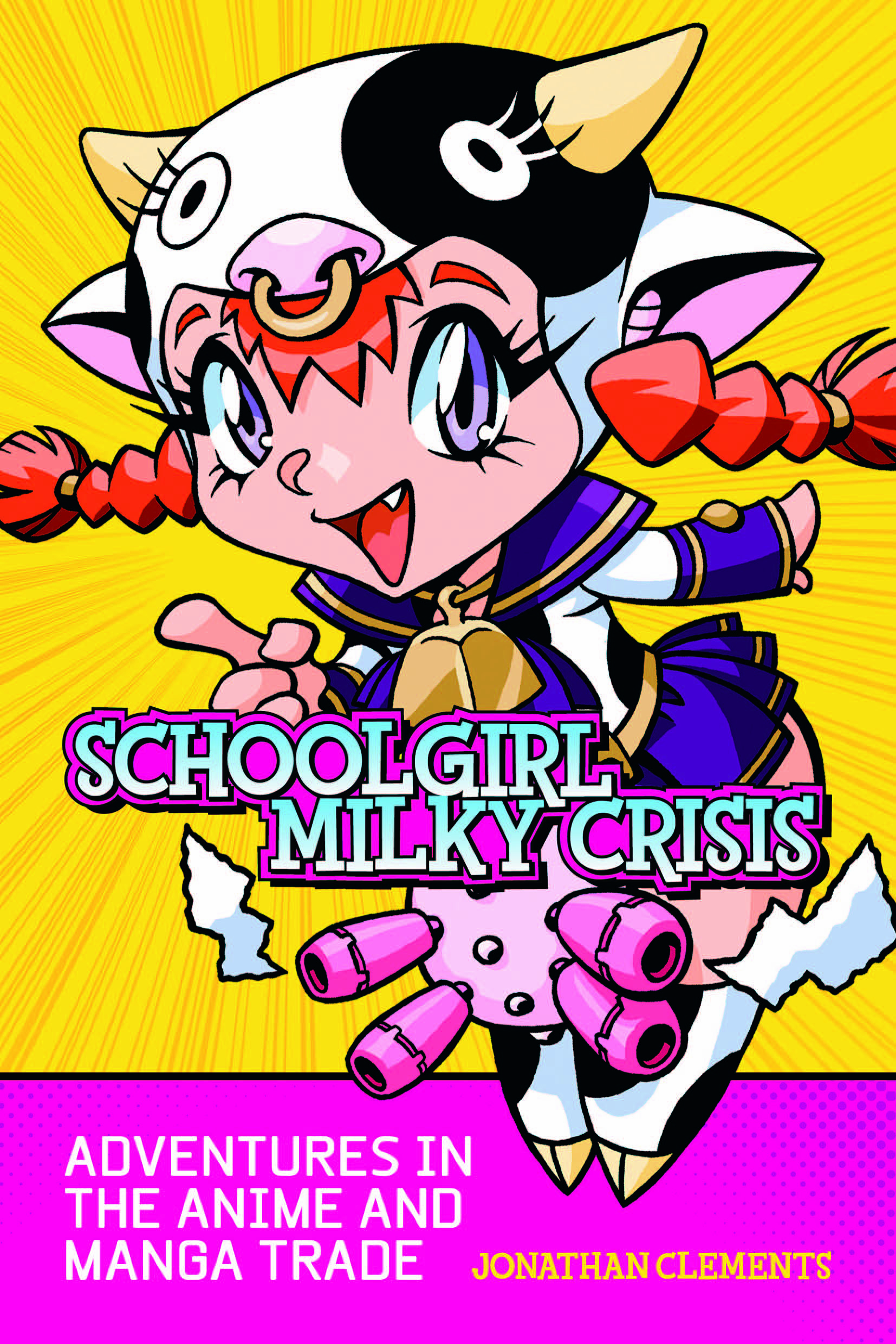
Jonathan Clements is the author of Schoolgirl Milky Crisis: Adventures in the Anime and Manga Trade. This article first appeared in NEO #115, 2013.
Gongqi Jun
Out today and purchased this very morning by your correspondent from a petrified newsagent on Chang’an Avenue in Xi’an, the 7th October coverdated issue of China’s Lifeweek magazine, which features an incredible sixty-page article on Hayao Miyazaki, Studio Ghibli and the greats of anime and manga. Yes, that’s Miyazaki on the cover, gritting his teeth through the pain of wearing a ridiculous hat that bears the Studio Ghibli fashion logo, referred throughout the massive article as shenjiang (“divine/inspired craftsman”).
It doesn’t surprise me that the Chinese would run features on the man whose name they pronounce as Gongqi Jun. After all, his films have entered the country legitimately through their Disney associations, and are as beloved among Chinese viewers as they are anywhere else in the world. Nor, I suppose, does it much surprise me that Miyazaki’s much-publicised retirement should be an excuse for a retrospective that encompasses his collaborators Toshio Suzuki and Isao Takahata. What boggles me is quite so much space not only on them, but on their controversial latest film, the philosophy of their company, the rapid globalisation of their brand (with special reference to the influence of Pixar) and the other titles that form part of Japanese animation and manga exports – particularly Akira, Ghost in the Shell and Dragon Ball
Lifeweek is a large-circulation periodical in the People’s Republic, available on every street corner, and in times when the media seem obsessed with sabre-rattling over the Senkaku Islands, devotes a quarter of this latest issue to the celebration of Japanese soft power. It outs Doraemon, known to many Chinese as “Ding Dang the time-travelling cat”, as a Japanese product, and runs potted pieces on other anime creators of note – Osamu Tezuka, Leiji Matsumoto, Katsuhiro Otomo, Mamoru Oshii and Makoto Shinkai. And then there’s the traditional stuff about anime taking the world by storm, illustrated as usual by pictures of teenage girls dressed as elves, standing in a car park.
It’s a fantastic splash for anime in the Chinese media, and presumably meets with the full approval of the government censor. Now is a perfectly reasonable time to celebrate anime, but one can’t help but wonder if the enthusiasm masks something else – a sense that Miyazaki’s retirement leaves a vacuum that a canny Chinese entrepreneur might hope to fill. Lifeweek offers a 60-page blueprint for taking one nation’s cartoons to the world, but you can’t plan for genius and you can never guarantee success.
Jonathan Clements is the author of Anime: A History, available to pre-order now from the British Film Institute.
Japanese Cinema in the Digital Age
My review of Mitsuyo Wada-Marciano’s account of Japanese cinema and new media is online now at the Manga UK blog. Recommended for anyone who writes about this stuff for a living.
Astro Bwana
Tezuka Productions is threatening to flog off Astro Boy to a number of emerging markets, not as a cartoon for dubbing, but as an idea to be entirely remade.
According to Variety, Tezuka’s general manager Yoshihiro Shimizu is already in talks with Nigeria’s Channel TV, as the first of several possible markets that might buy Astro Boy the idea, rather than the cartoon itself. So Swahili telly gets a superhero called Nyota Mvulana or something similar, and nobody knows it was Japanese to begin with.
Why are they doing this? This is a concerted effort by Tezuka Pro to get its nose into a Cool Japan trough of arts funding for a minimum amount of effort. Making an all-new cartoon will still cost money. But emailing old scripts to a new business partner will cost nothing, and still counts on some level as a form of cultural production. So let the Nigerians do all the work, and you can collect your 5% licensing fee, and your government grant without having to lift a finger.
But this also offers fantastic chances for true localisation. Just as Suraj the Rising Star threw away the baseball and the Japanese setting to turn Star of the Giants into an Indian rags-to-riches story about cricket, a whole bunch of anime storylines can be rendered entirely local. This helps remove a Japanese identity that, in some countries, would be unwelcome, ungracious or ill-advised.
The Japanese-ness of Japanese animation has been obscured from much of its viewing public for much of its existence. Maybe we’ll look on the period from 1989-2019 as an anomaly, where people actually noticed it. Torajiro, the pre-school tiger who forms the epicentre of a media mix including daycare franchises and language schools, already has a large following in China, but under a Chinese name.
I wonder where this will end up? An Islamic Naruto set in medieval Spain? Ghost in the Shell relocated to a future Argentina? Rose of Versailles repurposed for 19th century Arabia? How about pretending everyone in Science Ninja-team Gatchaman is actually American? Oh, wait…
Jonathan Clements is the author of Schoolgirl Milky Crisis: Adventures in the Anime and Manga Trade. This article first appeared in NEO #114, 2013.
Ryutaro Nakamura 1955-2013
For those who missed it last week on the Manga UK blog, my obituary for Ryutaro Nakamura, the director of Serial Experiments Lain.
Premises, Premises
Right, I said, I see that you are writing an article about why anime has disappeared from TV screens. Great to have attention from the mainstream press, and yes, I will happily help you out. After all, there’s no such publicity as bad publicity, right…? However, I am not sure that you are asking the right questions. I am not sure that I accept your premises.
Firstly, is anime really not on television any more? I’ve just flicked around and I’ve found Pokémon and Dragon King airing right now. I’ve found a rack of Studio Ghibli movies airing on Channel Four. I’ve found an obscure cable channel pumping out Ghost in the Shell: Stand Alone Complex.
I think there is a story here, but I think you’re looking in the wrong place. The story appears to be not that anime is in trouble, but that anime is doing fine, while television itself is in trouble. If anime fans are early adopters, and one in ten UK residents are torrenting, doesn’t that tell you a whole lot about how fans are accessing this material? Particularly when we consider that so many anime television shows in Japan are aired in the graveyard slot when nobody is watching. So if nobody is watching them in Japan, why do we expect them to be on in primetime here?
Look, I said. Why don’t you talk to Joe Bloggs from well-known Anime Channel? Here’s his email address. He will tell you about the anime channel that he set up, and give you precise reasons why it shut down. And while you’re at it, why don’t you talk to John Smith at Anime Company? Here’s his email address. He will tell you that his company is now bypassing TV entirely and offering direct anime broadcasts to X-boxes, downloads from iTunes and free try-before-you-buy streaming from his own website. Let me put it like this, your premise is that more anime should be on television. I suggest that anime is finding another way to reach fandom, and that television doesn’t have a whole lot to do with it any more. That is sure to be an interesting thing for your tech-savvy readers to think about over their cornflakes.
Alternatively, if that doesn’t sound good to you, why don’t you just pick someone at random in a comics shop, ask them for their opinion, and fill up a quarter of your article with whatever they say? I am sure that the readership of your newspaper won’t mind. It certainly won’t get me into trouble when I am the only person from the anime industry quoted in your article. If anyone complains, you can say that you “didn’t have enough time” to interview everyone worth interviewing. That is sure to impress everyone (er… me) who gave freely of their own time to help you out before you collected the money for writing your article. And yes, that might be why I so often get an awful sinking feeling when approached by mainstream journalists who want to talk about anime, when I realise that I don’t merely have to provide answers, but also the questions. And even then, it’s no guarantee they’ll talk sense.
This article first appeared in NEO #76, 2010. Jonathan Clements is the author of Schoolgirl Milky Crisis: Adventures in the Anime and Manga Trade.
Indian Spin
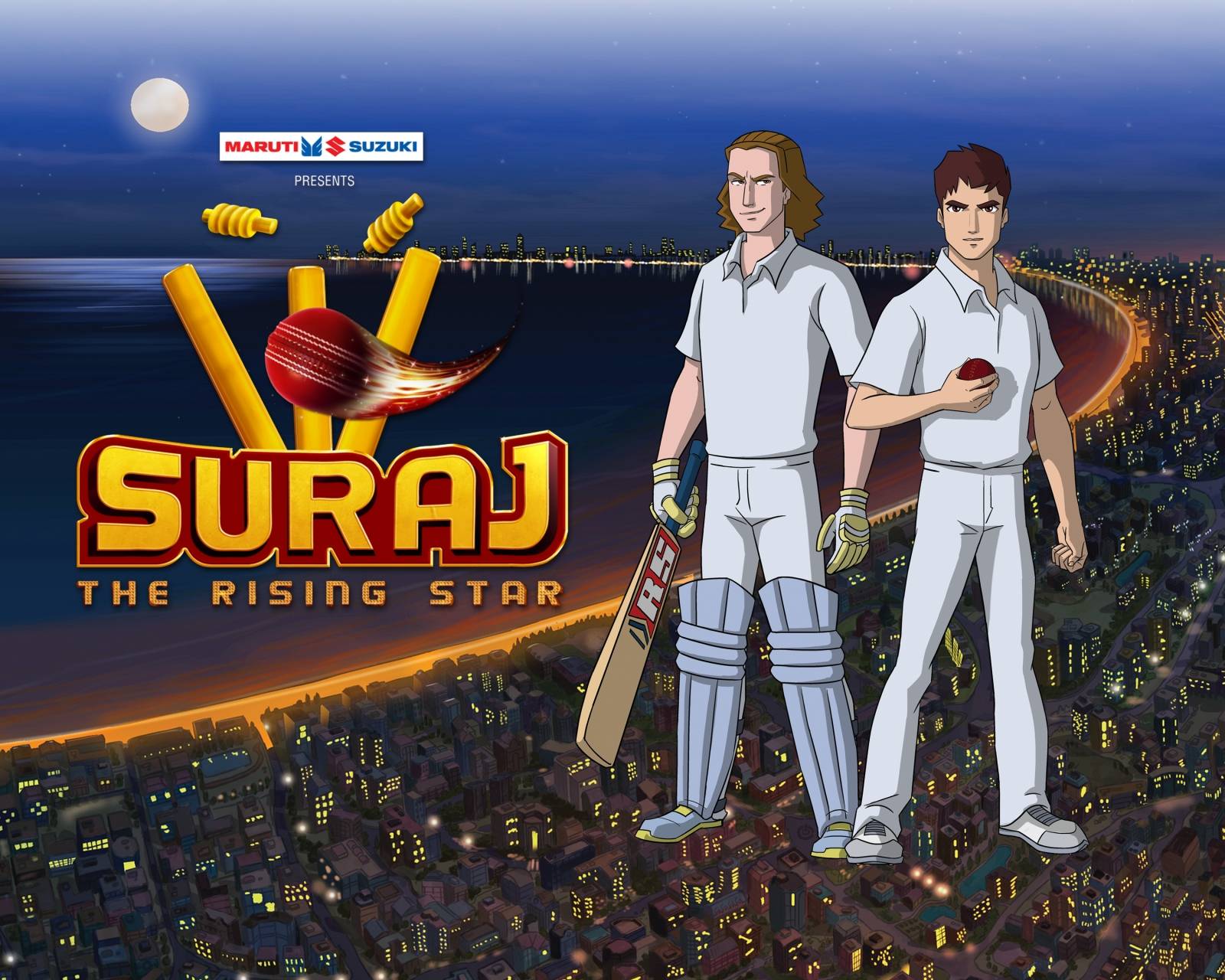
Suraj is a poor boy growing up in Mumbai, under the watchful eye of his sister Shanti and widowed father Shyam. Dad was once a promising cricketer, and is obsessed with turning his son into a world-class player with a harsh training regime. Inexplicably fair-haired rich kid Vikram is an ace batsman from a family of wealth and privilege, who fears the potential of his slumdog rival, and determines to thwart him at every turn as they fight their way through the ranks of Indian cricket, hoping to qualify for the national team.
Suraj the Rising Star is not Japanese, but although it’s made in India for the Colors network, it is based firmly on the classic anime series Star of the Giants. Repurposing the original’s baseball story with wickets and stumps, Suraj allows Japanese investors to capitalise on a tried and tested formula in a new territory, without having to meet any of the standards required of “real” anime.
Story-wise at least, the tropes and scenes in Suraj have been hammered out and refined over several TV serials and many imitators. But Suraj has very little of the dizzying animation techniques of the 1968 original, and often features sequences in which the characters barely move. Backgrounds smudge all too often into impressionistic blurs when Suraj runs jerkily to bowl or catch, and the imagery often drifts perilously close to something someone might have knocked up on Microsoft Paint. But this is precisely the sort of criticism levelled against early anime in Japan, while young fans lapped up the new storytelling medium.
One is swiftly drawn away from the clunky animation to peripheral areas of studied difference – the subcontinental twang of the music, and the casual contrast of glittering modernity with ramshackle slums. Suraj is openly aspirational towards middle-class affluence, signified in repeated product-placement shots of All Nippon Airlines planes soaring above the slums, new-fangled Nissin cup noodles, Daikin aircon units and Maruti Suzuki cars that motor past swish Maruti Suzuki showrooms. Yes, it’s pretty easy to tell who the sponsors are. Suraj is still Japanese where it counts.
Jonathan Clements is the author of Schoolgirl Milky Crisis: Adventures in the Anime and Manga Trade. This article first appeared in NEO #111, 2013.
UPDATE (12th June 2013): Now they’re trying to sell an Astro Boy remake to Nigeria.
Piece on Earth
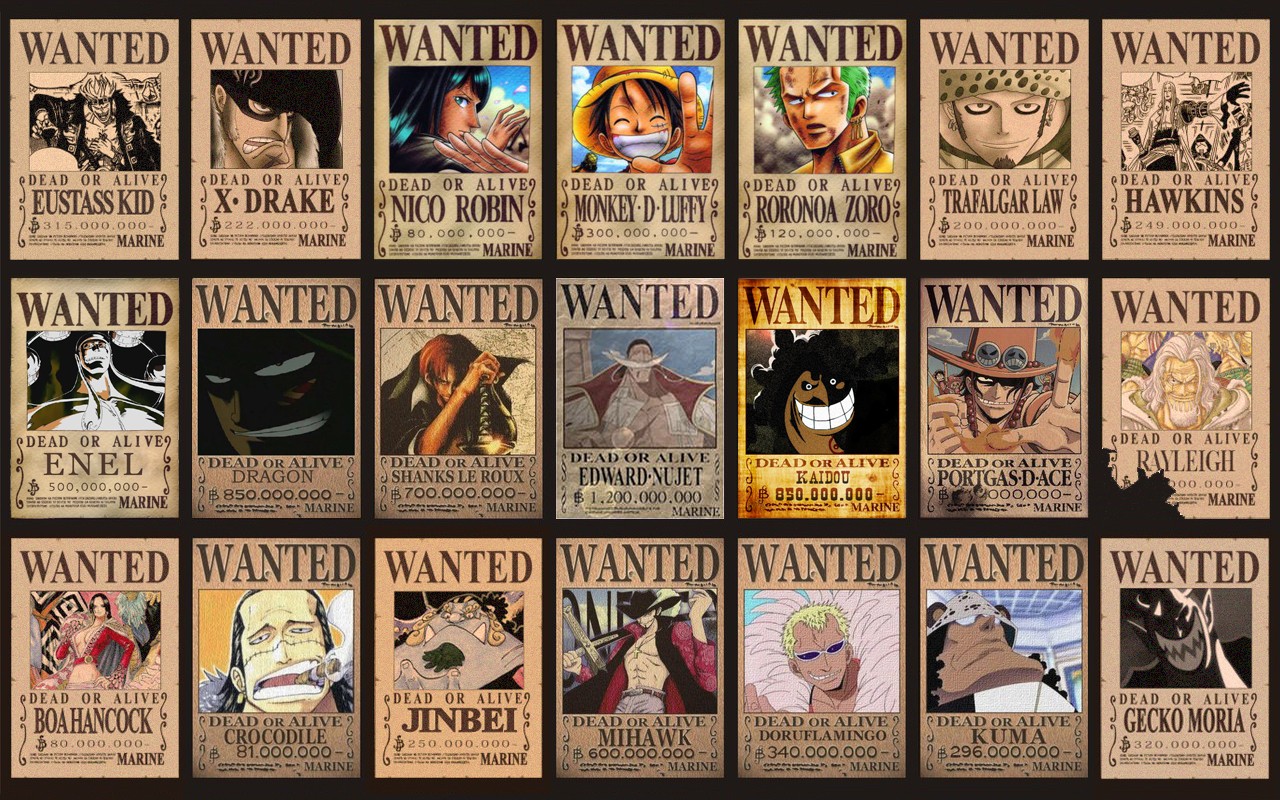
The news that Manga Entertainment have licensed One Piece for the UK brings one of the last unreleased anime greats to these shores. Its absence has been noticeable for the last decade – One Piece is often the tentpole and keystone of foreign anime fandoms. It’s also the real money-spinner, selling in its millions. Although it’s sure not to go quite as wide in Britain, it will certainly bring in some new fans.
I’m at the end of my four-month exile in China, where Japanese animation is largely absent from the mainstream. Effectively banned from broadcast or sales since 2006, the sole showings in legal Chinese stores are the Studio Ghibli catalogue, which sneaks in via Disney. But pirate shops are loaded with shelves of Japanese material, usually spun off legal releases in Hong Kong or Taiwan. And I keep jumping in surprise on the Beijing metro when adverts leap out of the dark to sell me One Piece… the games.
On the streets of Xi’an, the lower-rent hawkers have taken images from One Piece and Dragon Ball Z, mounted them on plywood and cut them into jigsaws. Manga, however, are largely invisible, since much of modern Chinese teenagers’ entertainment is sourced illegally and digitally – I would need to get into their bedrooms to see if they are reading scanlations, and the police won’t let me. But the widespread visibility of those titles in particular suggests a cultural affinity – Dragon Ball had its distant origins as a retelling of the Chinese legend of the Monkey King, and so, too, did One Piece. In other words, even though they are foreign, they don’t feel that way to the Chinese.
The catch-all Chinese title for this is dongman, literally ‘animation and comics’, although suggestively Japanese animation and comics. Dongman shops are all over China, but many concentrate not on anime and manga themselves, but on gaming spin-offs. It’s the games that seem to lead the way here, encouraging Chinese kids to seek out the originals. But when they find them, there is no way of paying for them legally. And so, the great tale of anime pirates gets pirated.
Jonathan Clements is the author of Schoolgirl Milky Crisis: Adventures in the Anime and Manga Trade. This article first appeared in NEO #109, 2013.
The Left Side of the Beast
Gossip galore in Manga UK’s 17th podcast… or should that be ON our 17th podcast

Jeremy Graves and Jerome Mazandarani (with Jonathan Clements of Schoolgirl Milky Crisis joining from the interwebs) are on hand to discuss new releases, upcoming releases, behind-the-scenes gossip, and a whole bunch of topics from Tom Cruise to the Tibet Code in our latest podcast, available to download now.
00:00 Jeremy’s grovelling apology for audio issues that probably only exist in his head.
01:00 Reasons why Jonathan Clements is like Jack Reacher, none of which anyone believes. Jerome’s claim that 1990s fashions are coming back, and celebrations of thirteen years married to Mrs Jerome.
03:20 Horizon in/on the Middle of Nowhere, and translation issues arising. So much anguish over one bloody preposition, leading to cancelled printing runs, recalled designs, and a run-in with the BBFC. The politics of advanced information sheets at film fairs, and the dangers of being the poor sod who has to translate them. The bad old days of the “spotting list”.
17:00 Jerome’s interest in the animated film based on George Akiyama’s Asura.
19:00 And we finally, officially start, with news that Andrew Hewson has sold his mum into white slavery in Marrakesh. Shopping recommendations in Perth for all of our… dozens of Western Australian listeners.
21:00 New releases since our last podcast, including Naruto Shippuden Box Set 12, Mardock Scramble: Second Combustion, Code Geass Season 2, FMA Conqueror Of Shamballa on BD, FMA Movie Double Pack on BD, Oblivion Island, Persona 4 Box 2, Redakai Vol.1, Okami-san & Her Seven Companions, Nura Rise Of The Yokai Clan, Loups=Garous, Fractale, King of Thorn and Tiger & Bunny Vol.2. And a shout-out to HMV, still fighting the bricks-and-mortar corner on a high street hopefully near you.
25:00 Redakai crops up in Asda, and Halo 4: Forward Unto Dawn, coming out on the 27th May, and Warhammer 40K: Ultramarines coming soon, and Jerome’s man-love for Sean Pertwee.
28:00 Another plug for Supernatural the Anime series, coming from Warners and exclusive to Amazon UK on 27th May.
31:00 Upcoming Manga UK releases 29th April: Fullmetal Alchemist Brotherhood Vol.3 on Bluray; 6th May: Penguin Drum Part 1 on DVD; 13th May: Street Fighter II The Movie on Bluray,; Dragonball Z Season 7, Bleach Complete Series 10 on DVD and the sub-only releases of Black Rock Shooter on DVD; 20th May: K-On! Season 2 Part 1 on DVD, Hellsing Ultimate 5-8 on DVD and Bluray, and an announcement of something else. No, wait, it’s not an announcement. As you were.
33:00 Cat Planet Cuties delayed till 8th July, because of a subtitling issue, with a bonus explanation of the difference between NTSC and PAL. The pitfalls of screening anime without watching them first, as confessed by Jerome.
38:40 Fullmetal Alchemist Brotherhood Complete Blu-ray box, will now be appearing in a slightly different format, due to matters beyond our control.
44:00 A Ghost in the Shell Stand Alone Complex blu-ray box set – is it possible, and how much would people pay for it? Is £35 too much…?
48:00 Jonathan reports on Dublin’s Japanese Film Festival, and why so many Japanese people turned up to watch the films.
53:00 Oriental DreamWorks announces that it’s doing The Tibet Code as its first live-action film in China; we discuss what it is about and why it could be a whole new can of worms regarding author He Ma, and allegations over the casting. Iron Man 3 and Skyfall and their odd Chinese sequences.
63:00 Tom Cruise options Yukikaze; although the anime is not available in the UK, you can order yourself the original novel in English right now!
67:00 Guillermo del Toro options Naoki Urasawa’s Monster.
72:00. Ask Manga UK. A list of titles that listeners would like to see in the UK, and Jerome dodging giving straight answers to a bunch of them.
76:00 What determines which shows get a Blu-ray release? It’s all about commerciability, which is apparently a word.
80:00 What is your favourite special feature on DVDs?
83:00 What’s the chance of seeing Naruto Shippuden Movie 3: The Will of Fire?
84:00 Do you think the time from Japanese air-date to DVD release in English is too slow…?
90:00 And we’re done.
The Podcast is available to download now HERE, or find it and an archive of previous shows at our iTunes page. For a detailed contents listing of previous podcasts, check out our Podcasts page.